Home

/

Symptoms

/

Brain Fog

Brain Fog

Not a diagnosis, but not imaginary either. Most causes are identifiable on a blood test.

cant concentrate, foggy head, memory problems, cant think straight, forgetful

£40 · 20 minutes

Same-day availability

Assessed by a GMC-registered GP, not a symptom checker

Honest about what needs to be seen in person

Tests and referrals arranged where they are needed

Your NHS records in the room, with your consent

Clinically reviewed by Dr Mohammad Khan · Last reviewed

August 23, 2026

Book a consultation

A 20-minute appointment with a GMC-registered GP for £40. Same-day appointments are usually available, 6am to 10pm, seven days a week.

Private GP care led personally by Dr Mohammad Zubair Khan, GMC 7563469.

Why patients choose Cheshire Clinics

GMC registered doctors badge - every Cheshire Clinics consultation is with a General Medical Council registered GP

GMC-registered

Care led personally by Dr Khan

Royal College of General Practitioners badge - RCGP trained private GP consultations at Cheshire Clinics

RCGP-trained

Attentive, unhurried care that listens properly

Google five star reviews badge - Cheshire Clinics private GP online

Highly rated by patients

Five-star Google reviews from the people we have looked after

Care Quality Commission registered badge - Cheshire Clinics online GP service is registered with the CQC, England's independent regulator of health and social care

CQC-registered

Registered with the Care Quality Commission

Same-Day Appointments
Sick Notes
Private Prescriptions
Blood Tests
Menopause & HRT
Weight Management
Mental Health
Specialist Referrals
Same-Day Appointments
Sick Notes
Private Prescriptions
Blood Tests
Menopause & HRT
Weight Management
Mental Health
Specialist Referrals
Important

When to get urgent help

Call 999 for sudden confusion, difficulty speaking or understanding speech, weakness on one side, or a sudden severe headache. These suggest a stroke.

Seek prompt assessment for cognitive difficulty that is progressive — getting steadily worse over months — or where you are getting lost in familiar places, struggling with everyday tasks you could always do, or where family have noticed a change you have not.

Brain fog that fluctuates and comes with fatigue behaves differently from cognitive decline that only moves one way. The second needs assessing properly.

Overview

"Brain fog" is not a medical diagnosis, which is why people are sometimes told it is nothing. It is, however, a genuine and recognisable symptom — slowed thinking, poor concentration, losing words mid-sentence, walking into a room and forgetting why.

It is also one of the more satisfying symptoms to investigate, because a large proportion of cases have a cause that is identifiable on a blood test and correctable.

What it could be

Hormonalperimenopause is far and away the most commonly missed cause in women over 40, and brain fog is frequently the symptom that bothers them most. Underactive thyroid slows cognition alongside everything else.

DeficiencyB12, iron and vitamin D. All common, all cheap to test.

Sleepsleep apnoea is substantially underdiagnosed, particularly in women, and fragmented sleep produces exactly this picture. Insomnia likewise.

Mental healthdepression, anxiety and burnout all impair concentration measurably.

Otherundiagnosed ADHD, particularly in women reaching their thirties and forties; post-viral fatigue including after COVID; medication side effects; alcohol; coeliac disease.

What you can do now

Start with sleep — and specifically, with whether you snore

Poor sleep is the commonest cause of brain fog and the most fixable, but the version people miss is obstructive sleep apnoea: repeatedly stopping breathing overnight, waking unrefreshed after a full night, and functioning at half capacity all day without ever feeling short of sleep.

Ask whoever you sleep beside whether you snore heavily, gasp, or stop breathing. If you snore, wake with a headache or dry mouth, and could doze off in the afternoon given the chance, this is worth pursuing properly — treating it transforms people's cognition in a way nothing else on this page does.

Go through your medicine cabinet

A great deal of brain fog is pharmacological, and it is rarely the first thing anyone thinks of:

  • Sedating antihistamines — chlorphenamine, promethazine, and the "night" versions of cold and painkiller preparations
  • Gabapentin, pregabalin, amitriptyline, and older bladder medicines
  • Opioid painkillers, including codeine in over-the-counter combinations
  • Benzodiazepines and "z-drugs" for sleep
  • Alcohol — including moderate regular drinking, whose cognitive effect the following day is consistently underestimated. Cannabis likewise

Get the blood tests that actually explain it

A small number of ordinary, cheap tests account for a large share of genuinely reversible brain fog: thyroid function, B12 and folate, ferritin, vitamin D, HbA1c, and coeliac screening. Low B12 and an underactive thyroid in particular produce exactly this symptom and are entirely treatable.

Consider the causes that are commonly missed

  • Perimenopause. Brain fog and word-finding difficulty are among the most distressing perimenopausal symptoms and among the least talked about — and they can appear years before periods change, in women in their early forties. Many women reach this page convinced they have early dementia. They do not
  • Undiagnosed ADHD, which is frequently recognised only in adulthood — particularly in women — and is regularly described by the person themselves as brain fog
  • Depression and anxiety, which impair concentration and memory directly, not merely as a matter of motivation
  • Long COVID and other post-viral states, where cognitive difficulty is one of the most persistent features

If it followed a virus: pace, do not push

This is the single most important self-management point for post-viral brain fog, and the instinct runs exactly the wrong way.

If pushing through leaves you markedly worse a day or two later — what is called post-exertional malaise — then the graded "work harder at it" approach makes things worse rather than better. Work out roughly what you can do without paying for it afterwards, then deliberately stay inside that, mental effort included. Recovery comes from consistency below the threshold, not from testing it.

Practical adjustments that help this week

  • Put your memory outside your head. One list, one calendar, alarms for everything. This is not defeat; it frees up the capacity you have
  • Do the hard thinking in your best two hours, whenever those are, and protect them
  • Single-task. Switching between things is disproportionately costly when you are foggy
  • Move daily, even briefly. Eat regularly — fog is much worse on an erratic blood sugar
  • Cut caffeine after midday if sleep is fragmented

Get seen sooner if

  • Other people are noticing before you do
  • You are getting lost in familiar places, or struggling with tasks you have done for years
  • There is new confusion, personality change, or difficulty finding common words in conversation
  • There is weakness, numbness, visual change or a persistent headache alongside it

Not sure what is causing it?

Book a consultation

How we assess it

Twenty minutes matters here, because the history is the whole thing — when it started, what else changed at the same time, how you sleep, what you take, and in women over 40, where you are in your cycle.

Testing is broad because the causes are: our fatigue panel covers thyroid function, B12 and folate, ferritin, vitamin D, HbA1c and coeliac screening in one visit. Where perimenopause is plausible we add hormone testing, though in women over 45 the diagnosis is clinical.

We always ask about snoring and witnessed breathing pauses, because sleep apnoea is common, missed, and completely treatable.

Common questions

Is brain fog a real thing, or am I just tired?

It is a real and recognisable symptom, even though it is not a diagnosis in itself. People describe it consistently: thinking through treacle, losing words mid-sentence, rereading the same paragraph, walking into rooms and forgetting why, finding ordinary work effortful in a way it never used to be.

It has causes, most of them identifiable and many of them treatable. It is not a character failing, and it is not something to be talked out of.

What tests are worth doing?

Thyroid function, B12 and folate, ferritin, vitamin D, HbA1c, full blood count, kidney and liver function, and coeliac screening.

That panel finds the reversible causes. Our tiredness panel covers most of it in one appointment. Note that "normal" B12 near the bottom of the range can still be symptomatic — the reference range is wide and worth interpreting rather than glancing at.

Is this early dementia?

In the overwhelming majority of people asking that question, no — and the distinction is reasonably clear.

Brain fog: you are acutely aware of it, it fluctuates from day to day, it is worse when you are tired or stressed, and the information is usually there if you slow down and reach for it. Insight is intact — the fact that you are worried is itself somewhat reassuring.

What warrants proper assessment: other people noticing before you do, getting lost in familiar places, repeating questions within a single conversation, struggling with long-familiar tasks, difficulty finding common everyday words, or personality change. That pattern deserves formal assessment, and there is a great deal to be gained from doing it — several causes of memory decline are treatable.

Could this be the perimenopause?

Very possibly, and it is one of the most under-recognised causes there is. Cognitive symptoms — fog, word-finding trouble, losing the thread — are common in perimenopause, can start in the early forties while periods are still regular, and are often the symptom women find most frightening because they read it as early dementia.

It is not. HRT frequently improves it substantially, and diagnosis over 45 is made on symptoms rather than a blood test, since hormone levels swing too widely to be informative.

Could it be ADHD?

It is worth considering, particularly if the difficulty is long-standing rather than new, and if it is about starting things, sustaining attention on the dull ones, and losing track rather than about being slowed down. Many adults — disproportionately women — are diagnosed late, having spent years describing it as brain fog or assuming they were simply disorganised. An assessment gives a proper answer either way.

Will exercise help, or make it worse?

It depends entirely on whether you have post-exertional malaise, and getting this wrong causes real harm.

For fog from poor sleep, low mood, stress or deconditioning, regular moderate exercise helps considerably. But for post-viral fog where exertion reliably leaves you worse a day or two later, pushing through makes things worse, and pacing within your limits is the correct approach. Work out which situation you are in before committing to a programme.

How long does it take to lift?

It depends on the cause, and honest ranges help. Treating B12 deficiency or an underactive thyroid: weeks to a few months. Starting HRT for perimenopausal fog: often noticeable within weeks. Treating sleep apnoea: sometimes within days, and the change can be dramatic. Post-viral fog: slower, measured in months, and improving unevenly rather than steadily.

What is not helpful is being told to live with it before those causes have been looked for.

Dr Mohammad Zubair Khan, GMC-registered private GP and founder of Cheshire Clinics

Clinically reviewed by Dr Mohammad Zubair Khan, GMC 7563469

Last reviewed

August 23, 2026

How it works

What happens when you book

£40 for a 20-minute appointment with a GMC-registered GP, 6am to 10pm, seven days a week. Membership is optional and never required.
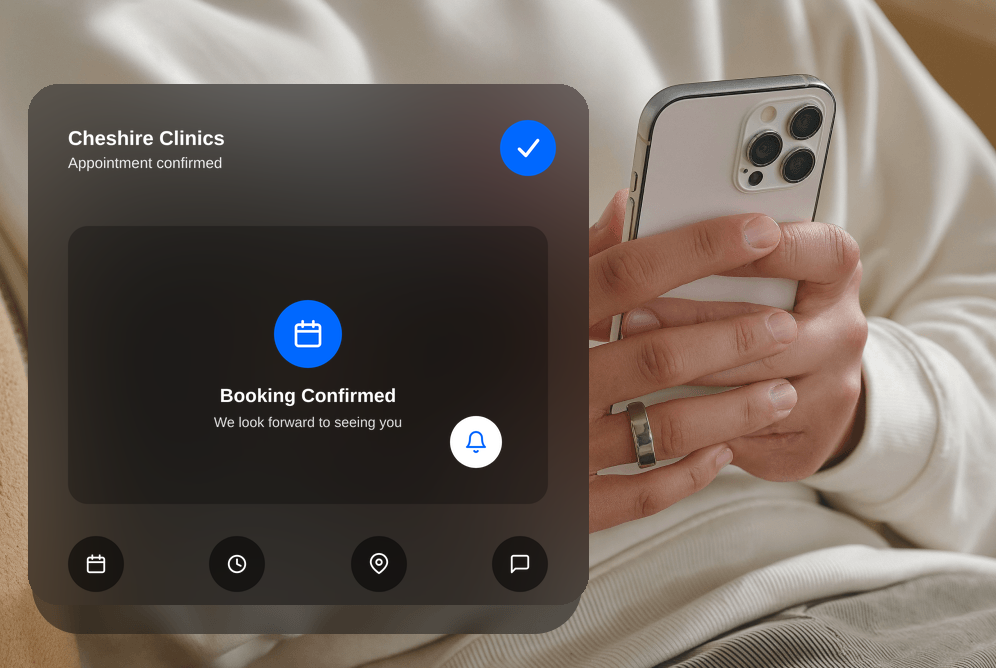
Cheshire Clinics online GP appointment booking confirmation on mobile
01

Book your appointment

Pick a time that suits you — 6am to 10pm, seven days a week, including weekends and bank holidays. £40 for 20 minutes, self-pay, with no insurance to arrange.
5–10 minutes
Online video consultation with a GMC-registered private GP
02

Meet your GP

A 20-minute video or phone consultation with a GMC-registered GP — long enough for a proper conversation about your symptoms, your history and what matters to you.
20 minutes
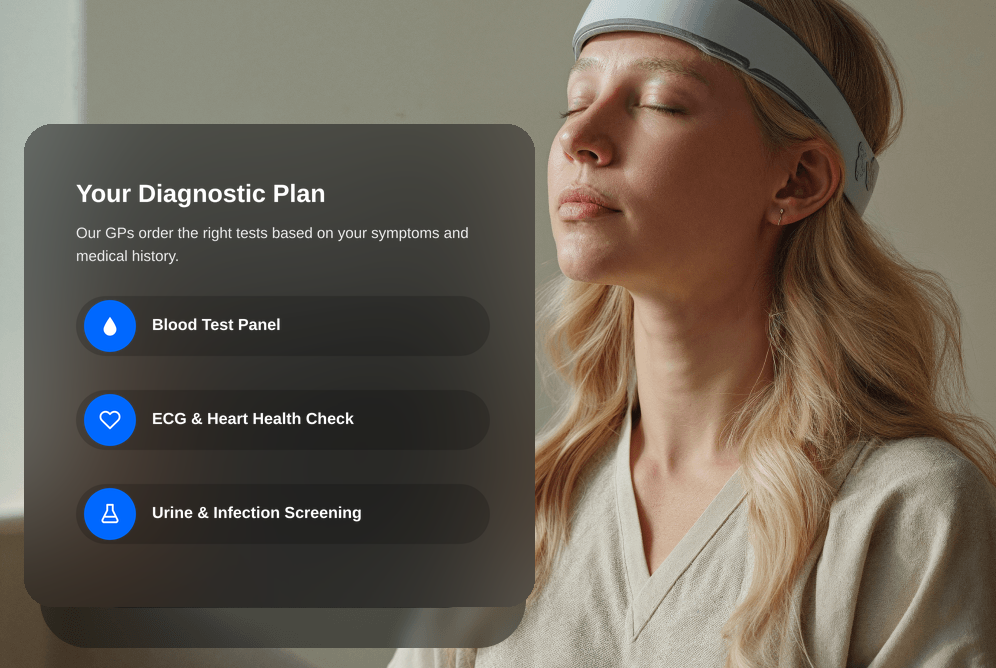
Diagnostic testing plan including blood test panel, ECG and urine screening
03

Tests and referrals, if you need them

Where testing will actually answer the question, we arrange it — blood tests and health screening through our laboratory partner, or a referral for ultrasound, X-ray, CT or MRI through private imaging providers. We will also tell you when a scan is not the right next step.
1–7 days
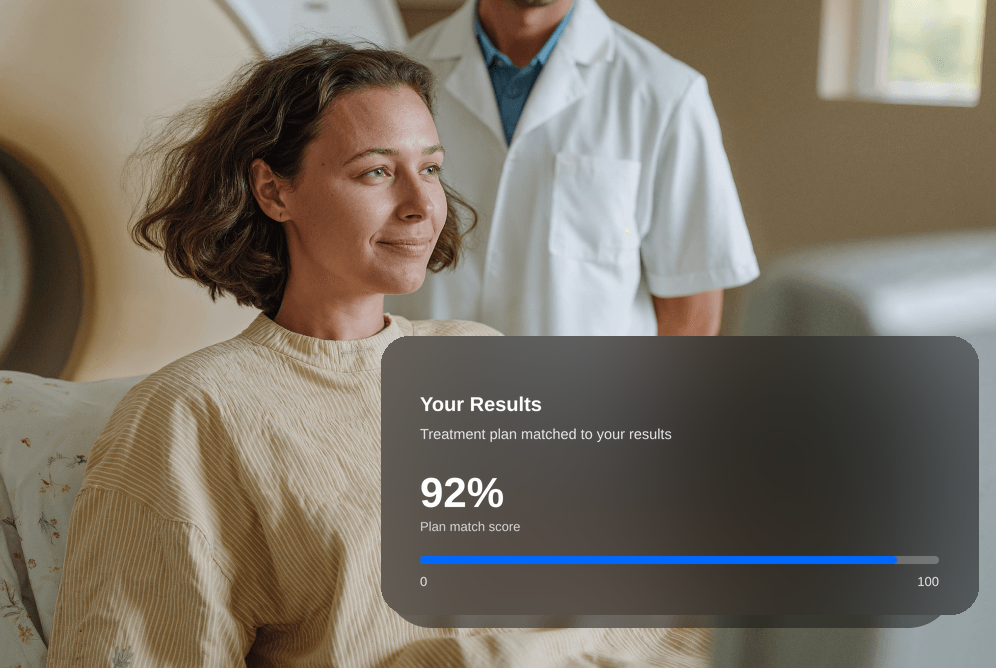
Personalised results and treatment plan from a private GP consultation
04

Results and next steps

Your GP talks you through what the results mean and agrees the next step with you. Every consultation ends with your treatment plan in writing, and any prescription goes to your own pharmacy.
20 minutes
GP follow-up reminder for ongoing care and progress monitoring
05

Ongoing care and follow-up

Follow-up appointments, progress monitoring and ongoing advice — including saying plainly when something needs in-person or NHS care instead.

Ongoing

How we compare

Time to be seen

Appointment length

Your NHS record in the room

Written treatment plan

Told when a test isn’t needed

Cost

Varies by practice

Typically 10 minutes

Yes, your full record

Not routinely

Usually

Free

Same day

Often 10 to 15 minutes

Usually not

Sometimes charged

Varies by provider

Often a subscription

Questions about our service

How quickly can I be seen?

Same-day access is usually available, from 6am to 10pm, seven days a week. You choose a time that suits you rather than waiting on hold at 8am.

Will I see the same doctor each time?

Yes. Care is led personally by Dr Mohammad Khan, so you are not passed between clinicians. Continuity is the point of a small practice: someone who knows your history and is listening attentively rather than working through a checklist.

Can you see my NHS records?

Yes, with your consent. We can access your Summary Care Record during the consultation, so your current medications, allergies and significant history are in the room. That means fewer questions you have already answered elsewhere, and safer prescribing.

Are you trying to replace my NHS GP?

No. We are not here to replace GPs, only to support them. Your NHS practice remains responsible for your ongoing care, and with your consent we write to them after the consultation. We are useful when you need to be seen sooner, or want more time than a standard appointment allows.

What is included in the appointment?

Twenty unhurried minutes and a comprehensive assessment. A written treatment plan is included, along with any prescription, sick note or referral letter arising from the consultation, at no extra charge.

How much does it cost?

£40 for 20 minutes, self-pay. Membership is optional and never required. Priced for fairness, because we are not here to charge extortionate amounts for access to a doctor.

What does “treatable online” actually mean?

It means the diagnosis can usually be made from your history and photographs, and that treatment can be arranged safely without examining you. Where a condition is not marked treatable online, it is because examination is the diagnosis — listening to a chest, feeling an abdomen, examining an ear or a joint — or because a procedure or device is needed.

Can you prescribe antibiotics?

Yes, where there is a genuine bacterial infection — cellulitis, impetigo, bacterial urine infections, confirmed strep throat. We will also frequently tell you that you do not need one. Most sore throats, coughs, colds and earaches are viral, and an antibiotic gives you the side effects with none of the benefit.

What if the GP cannot help with what I need?

If your problem turns out to be genuinely outside what we can do remotely, the doctor will tell you straight away, point you to the right service, and refund your fee in full. We would rather do that than fill twenty minutes to justify the charge.

What should I do in an emergency?

Call 999 or go to A&E — do not book an online appointment and do not wait for a reply to an email. For urgent problems that are not emergencies, NHS 111 is available 24 hours a day, online or by phone, and can direct you to the right service.

Patient reviews

What our patients say

No reviews published yet.
Ready to see a GP?20 minutes with a GMC-registered doctor. £40, usually same day.
Book a consultation