Home

/

Services

/

Online GP Consultation (Video)

Online GP Consultation (Video)

A 20-minute video appointment with a GMC-registered GP. £40, with any sick note, prescription or referral letter included.

£40

20 minutes

Documents issued within 10 minutes of your consultation ending

Unhurried care from a GMC-registered GP

6am to 10pm, seven days a week

Prescriptions, sick notes and referral letters included

Your NHS records in the room, with your consent

Clinically reviewed by Dr Mohammad Khan · Last reviewed

August 23, 2026

Book a consultation

A 20-minute appointment with a GMC-registered GP for £40. Same-day appointments are usually available, 6am to 10pm, seven days a week.

Private GP care led personally by Dr Mohammad Zubair Khan, GMC 7563469.

Why patients choose Cheshire Clinics

GMC registered doctors badge - every Cheshire Clinics consultation is with a General Medical Council registered GP

GMC-registered

Care led personally by Dr Khan

Royal College of General Practitioners badge - RCGP trained private GP consultations at Cheshire Clinics

RCGP-trained

Attentive, unhurried care that listens properly

Google five star reviews badge - Cheshire Clinics private GP online

Highly rated by patients

Five-star Google reviews from the people we have looked after

Care Quality Commission registered badge - Cheshire Clinics online GP service is registered with the CQC, England's independent regulator of health and social care

CQC-registered

Registered with the Care Quality Commission

Same-Day Appointments
Sick Notes
Private Prescriptions
Blood Tests
Menopause & HRT
Weight Management
Mental Health
Specialist Referrals
Same-Day Appointments
Sick Notes
Private Prescriptions
Blood Tests
Menopause & HRT
Weight Management
Mental Health
Specialist Referrals

Overview

Speak to a GMC-registered GP by secure video, from wherever you are in England or Wales. Appointments last 20 minutes — long enough to talk properly, rather than the rushed ten minutes you may be used to.

The £40 fee covers the consultation and any documents that come out of it: a sick note, a private prescription, or a referral letter to a specialist.

What's included

Everything below is covered by the £40. There is no separate charge for paperwork.

The appointment

  • A full 20 minutes with a GMC-registered GP
  • History, assessment and a clear explanation of what is going on
  • Your treatment plan in writing, covering what was discussed and agreed

Any documents that follow

What you pay separately

  • Medication, charged by the pharmacy that dispenses it
  • Tests and scans, priced by the provider and always quoted first

How it works

1. Book a time that suits you

Choose your slot and pay at booking. Appointments run 6am to 10pm, seven days a week. You will get a confirmation email with a link to join.

2. Join from wherever you are

Any phone, tablet or computer with a camera. Somewhere private is all you need — no app to install, no waiting room.

3. Talk properly

Twenty minutes is long enough for the GP to ask the second and third question, not just the first.

4. Leave with a plan

Documents are issued within about ten minutes of the consultation ending, and a written summary goes to you the same day.

Ready to book this?

Book a consultation

What to expect

Twenty minutes is longer than most people are used to, and the shape of it is fairly consistent.

The first two or three minutes

The GP will ask what brought you, and then — this is the important one — what you are worried it might be. That second question is not small talk. Being reassured about the wrong thing is one of the commonest ways an appointment fails, and it is avoided by saying the worry out loud early.

If you have more than one problem, say so at the start rather than at the end. Twenty minutes will usually cover two properly; four is a different conversation and it is better to plan it than discover it at minute eighteen.

The middle

Questions, and some of them will not obviously relate to what you came about — alcohol, smoking, what else you take including anything bought over the counter, what runs in the family. These are not filler. A great many diagnoses turn on a detail nobody thought was relevant.

Where something can be looked at, the GP will ask you to show it: a rash in daylight near a window, a swelling with a coin beside it for scale, how you move a painful joint, how you use an inhaler. You may be asked to fetch your medication boxes. Most people cannot recall doses accurately, and at home the cupboard is a few steps away.

The last five minutes

What the GP thinks is going on, what happens next, and — the part worth listening for — what should bring you back sooner. Every reasonable plan has a point at which it needs revisiting, and knowing that in advance is what stops people waiting too long.

Then your questions. It is entirely normal to say "can you go over that again" or "I did not follow that", and it is far better than nodding and looking it up afterwards.

If it turns out this is the wrong appointment

The GP will tell you in the first few minutes, not the last. Where something genuinely needs examining, or belongs in A&E, or should go through your NHS practice, saying so early is the useful thing — not working around it for twenty minutes.

Who it's for

This is the right appointment for most things you would normally see a GP about.

Book this if you have

  • A new symptom you want assessed properly
  • A condition that has not settled and needs review
  • Something you have been putting off because you could not get seen
  • A situation needing documentation — a sick note, a prescription, a referral

Choose something else if

  • It is an emergency — call 999
  • You need urgent advice tonight and cannot wait — call 111
  • You already have results to discuss — book a results review instead

After your appointment

Within about ten minutes

Any documents arising — a sick note, a private prescription, a referral letter — are issued digitally. A prescription goes to whichever pharmacy you choose; you collect and pay the pharmacy for the medicine itself.

The same day

A written summary of what was discussed and agreed. People retain remarkably little of a consultation, particularly a worrying one, so having it in writing matters more than it sounds.

If tests were arranged

You will be told where to go and what it costs before anything is booked. Results come back to the GP who requested them, and are explained rather than emailed as a PDF — a number inside the reference range is not automatically fine, and that interpretation is the point.

Never assume no news is good news. If you have not heard by the date you were given, contact us.

Your NHS GP

With your consent we will write to your registered practice, and we would encourage it. Your NHS record goes back decades and ours does not; keeping the two joined up is a safety feature rather than a formality. You can decline, and we will say so on the record if you do.

If you do not improve

You will have been given a specific point at which to come back — a number of days, or a particular change. Take that seriously rather than waiting to see.

A brief follow-up message about the same problem is included; a new problem, or a review that needs another proper assessment, is a new appointment. And if something changes sharply, that is 111 or 999 rather than waiting for a slot.

What this service cannot do

The one thing a video consultation cannot do is examine you. No listening to your chest, feeling your abdomen, looking in an ear or a throat, or taking your blood pressure. Most of general practice does not turn on those findings — but some of it does, and where yours does, the GP will tell you in the first few minutes rather than the last, and direct you to where you can be examined properly.

This is not an emergency service. Call 999 for chest pain, difficulty breathing, stroke symptoms, severe bleeding, or a rash that does not fade under a glass. Call 111 when you need advice before we open. We run 6am to 10pm; outside those hours nobody here is monitoring messages.

Prescribing we do not do, whatever the circumstances: opioid painkillers, benzodiazepines, z-drugs for sleep, and stimulants. Remote consultation is not a safe setting for controlled drugs, and it applies to every patient without exception.

We do not have your NHS record. We work from what you tell us and what you bring — so bring your medication list, allergies and any recent results. With your consent we will write to your registered GP after the consultation, and we would encourage it: continuity is a safety feature, not a formality.

We are not a replacement for a registered GP. Long-term conditions needing regular monitoring, recall for screening and vaccination, and complex multi-drug regimes belong with a practice that holds your full record. We work alongside that, not instead of it.

Common questions

Do I need to be registered with an NHS GP to use this?

No. But we would strongly encourage you to be registered, and we will say so if you are not. NHS registration gives you a continuous lifelong record, vaccination and screening recall, and access to referral pathways we cannot use. We work alongside that, not instead of it.

Will you tell my GP?

Only with your consent, and we will ask. Most people agree, and it is the safer choice — a practice that does not know what you have been prescribed elsewhere is working with an incomplete picture. If you would rather we did not, that is your decision and it is recorded.

What if I turn out to need examining?

The GP will say so, usually within the first few minutes, and direct you to where it can be done — an NHS appointment, an urgent care centre, or A&E depending on what it is. You still had a clinical assessment and a clear direction, which is often the thing that was actually missing. Where a consultation ends in the first couple of minutes because it plainly should not be remote, we will refund it.

Can I get antibiotics?

Where they are genuinely indicated, yes, and the prescription is issued within about ten minutes. Where they are not, you will get an explanation instead.

Paying for the appointment does not buy a prescription — the fee covers the assessment. Most coughs, sore throats and colds are viral, and antibiotics for those cause side effects without shortening anything. A delayed prescription, to be collected only if things have not improved in 48 hours, is often the sensible middle ground and we are happy to issue one.

Which medicines will you never prescribe?

Opioid painkillers, benzodiazepines, z-drugs for sleep, and stimulants — without exception. Remote consultation is not a safe setting for controlled drugs. This is not a judgement about any individual patient; it applies to everybody.

Can I book on behalf of someone else?

You can book and pay for another adult, but they need to be present for the consultation and to consent themselves. For children, a parent or guardian with parental responsibility needs to be present throughout.

Is it really a full 20 minutes?

Yes, and it is the substantive difference from a standard ten-minute appointment. Ten minutes is enough to address the first thing someone mentions; it is rarely enough to take a full history, review a medication list and reach a considered answer. A great many appointments end with the real problem unraised, and that is a structural issue rather than a failing of the doctor.

Where can I be when I take the call?

Anywhere in England or Wales with a private, quiet space and a decent connection. Not a car park or an open-plan office — people censor what they say when they can be overheard, and the censored part is frequently the important part.

What about my records and confidentiality?

Consultations are confidential and records are held securely under UK GDPR. You can request a copy of your record at any time. Nothing goes to your employer, your insurer or your NHS practice without your explicit consent — with the narrow exceptions that apply to every doctor, where there is a serious risk to you or someone else.

Dr Mohammad Zubair Khan, GMC-registered private GP and founder of Cheshire Clinics

Clinically reviewed by Dr Mohammad Zubair Khan, GMC 7563469

Last reviewed

August 23, 2026

How it works

What happens when you book

£40 for a 20-minute appointment with a GMC-registered GP, 6am to 10pm, seven days a week. Membership is optional and never required.
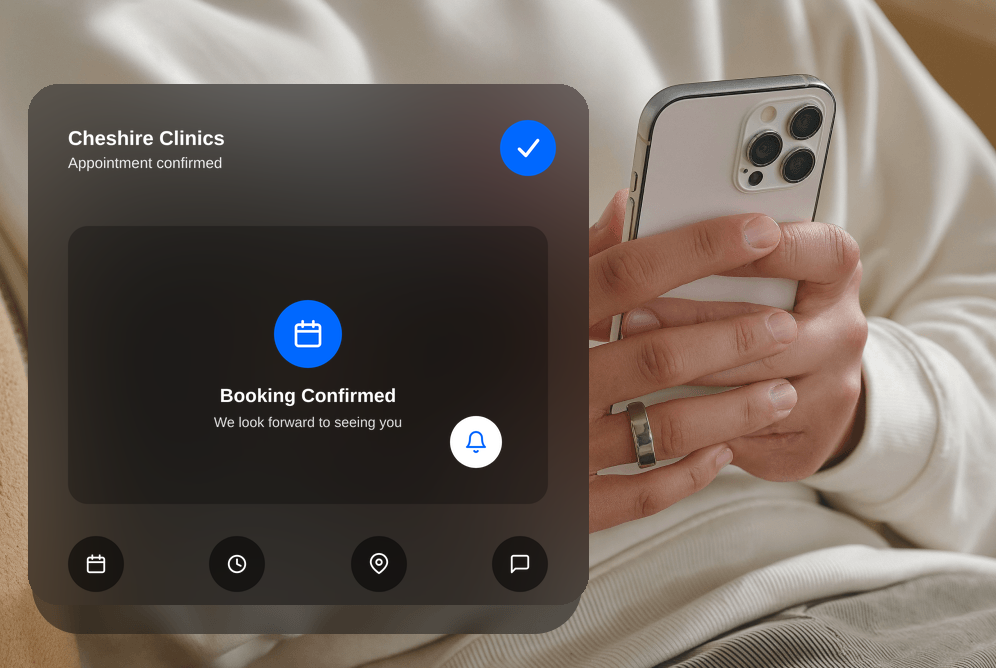
Cheshire Clinics online GP appointment booking confirmation on mobile
01

Book your appointment

Pick a time that suits you — 6am to 10pm, seven days a week, including weekends and bank holidays. £40 for 20 minutes, self-pay, with no insurance to arrange.
5–10 minutes
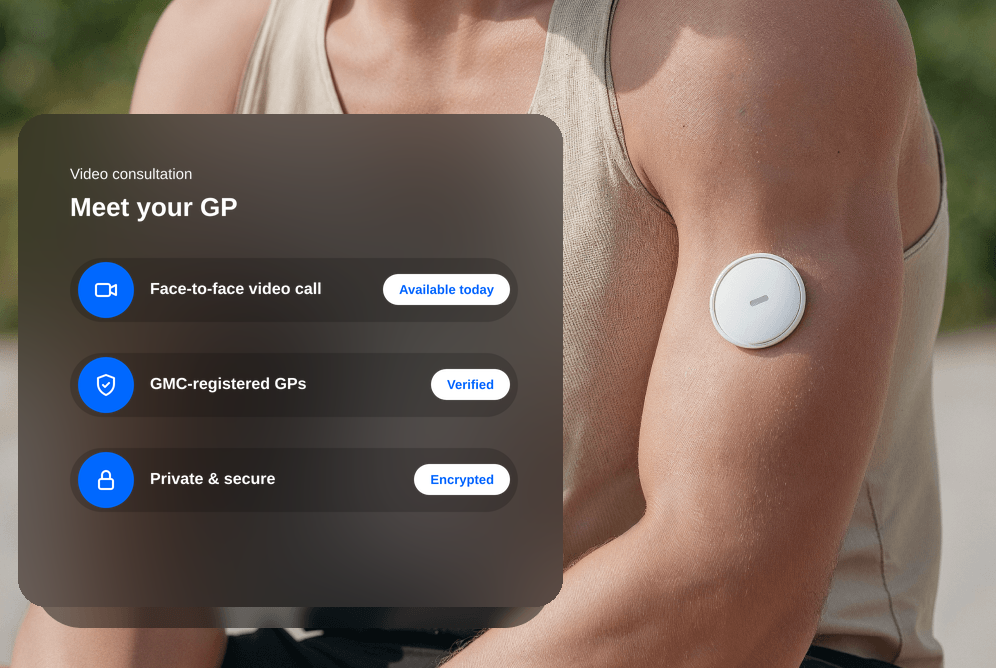
Online video consultation with a GMC-registered private GP
02

Meet your GP

A 20-minute video or phone consultation with a GMC-registered GP — long enough for a proper conversation about your symptoms, your history and what matters to you.
20 minutes
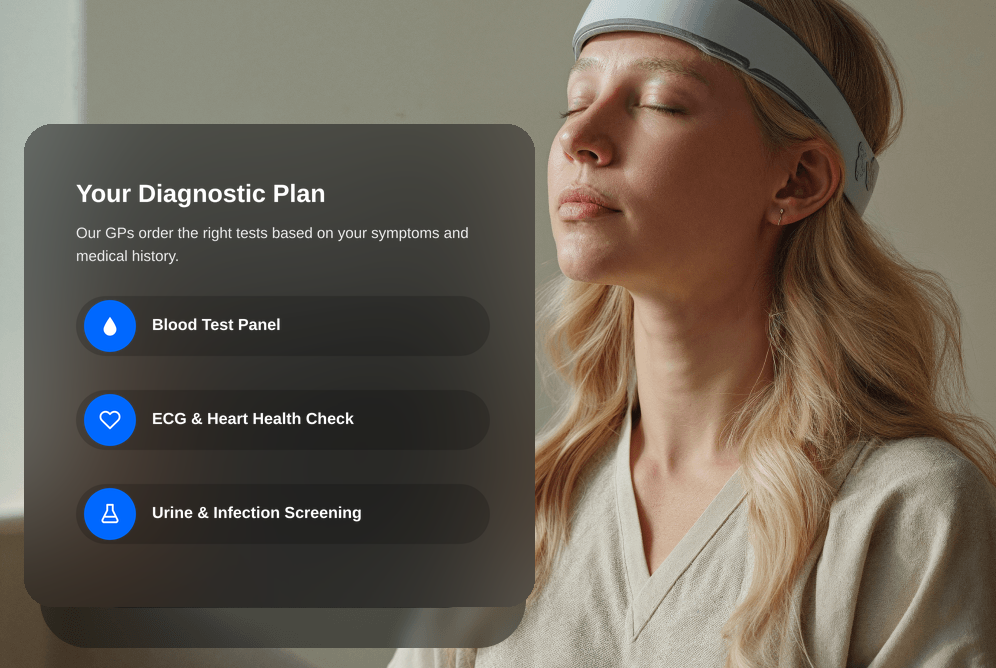
Diagnostic testing plan including blood test panel, ECG and urine screening
03

Tests and referrals, if you need them

Where testing will actually answer the question, we arrange it — blood tests and health screening through our laboratory partner, or a referral for ultrasound, X-ray, CT or MRI through private imaging providers. We will also tell you when a scan is not the right next step.
1–7 days
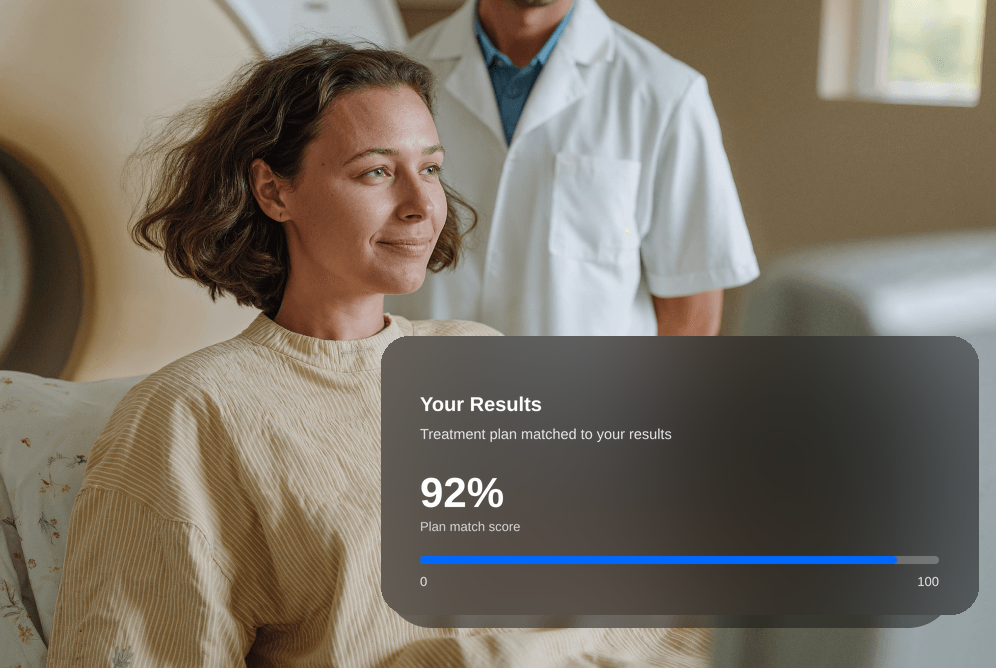
Personalised results and treatment plan from a private GP consultation
04

Results and next steps

Your GP talks you through what the results mean and agrees the next step with you. Every consultation ends with your treatment plan in writing, and any prescription goes to your own pharmacy.
20 minutes
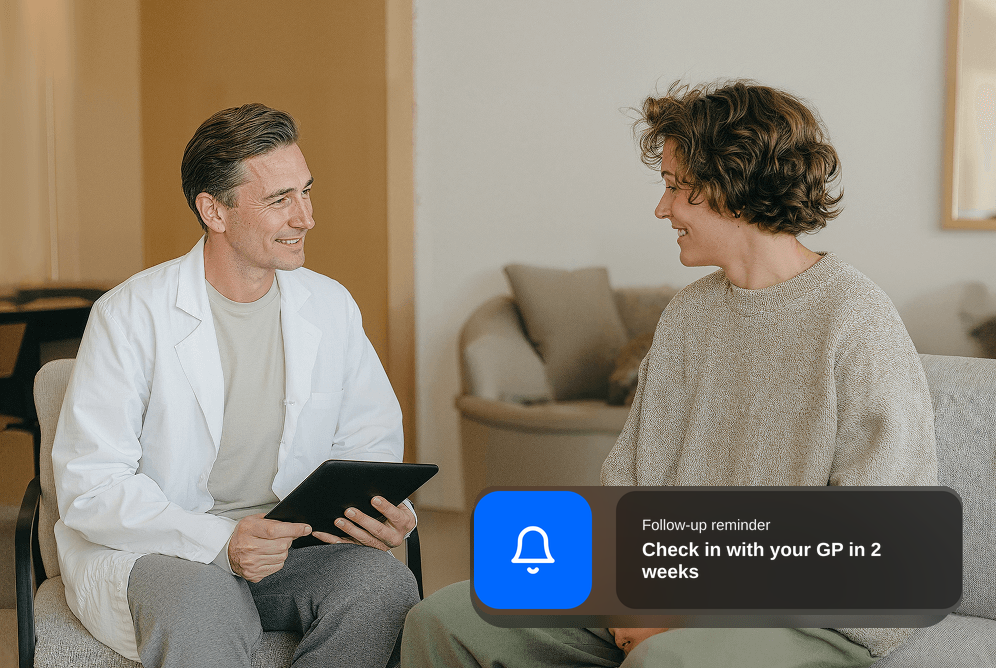
GP follow-up reminder for ongoing care and progress monitoring
05

Ongoing care and follow-up

Follow-up appointments, progress monitoring and ongoing advice — including saying plainly when something needs in-person or NHS care instead.

Ongoing

How we compare

Time to be seen

Appointment length

Your NHS record in the room

Written treatment plan

Told when a test isn’t needed

Cost

Varies by practice

Typically 10 minutes

Yes, your full record

Not routinely

Usually

Free

Same day

Often 10 to 15 minutes

Usually not

Sometimes charged

Varies by provider

Often a subscription

Questions about our service

How quickly can I be seen?

Same-day access is usually available, from 6am to 10pm, seven days a week. You choose a time that suits you rather than waiting on hold at 8am.

Will I see the same doctor each time?

Yes. Care is led personally by Dr Mohammad Khan, so you are not passed between clinicians. Continuity is the point of a small practice: someone who knows your history and is listening attentively rather than working through a checklist.

Can you see my NHS records?

Yes, with your consent. We can access your Summary Care Record during the consultation, so your current medications, allergies and significant history are in the room. That means fewer questions you have already answered elsewhere, and safer prescribing.

Are you trying to replace my NHS GP?

No. We are not here to replace GPs, only to support them. Your NHS practice remains responsible for your ongoing care, and with your consent we write to them after the consultation. We are useful when you need to be seen sooner, or want more time than a standard appointment allows.

What is included in the appointment?

Twenty unhurried minutes and a comprehensive assessment. A written treatment plan is included, along with any prescription, sick note or referral letter arising from the consultation, at no extra charge.

How much does it cost?

£40 for 20 minutes, self-pay. Membership is optional and never required. Priced for fairness, because we are not here to charge extortionate amounts for access to a doctor.

What does “treatable online” actually mean?

It means the diagnosis can usually be made from your history and photographs, and that treatment can be arranged safely without examining you. Where a condition is not marked treatable online, it is because examination is the diagnosis — listening to a chest, feeling an abdomen, examining an ear or a joint — or because a procedure or device is needed.

Can you prescribe antibiotics?

Yes, where there is a genuine bacterial infection — cellulitis, impetigo, bacterial urine infections, confirmed strep throat. We will also frequently tell you that you do not need one. Most sore throats, coughs, colds and earaches are viral, and an antibiotic gives you the side effects with none of the benefit.

What if the GP cannot help with what I need?

If your problem turns out to be genuinely outside what we can do remotely, the doctor will tell you straight away, point you to the right service, and refund your fee in full. We would rather do that than fill twenty minutes to justify the charge.

What should I do in an emergency?

Call 999 or go to A&E — do not book an online appointment and do not wait for a reply to an email. For urgent problems that are not emergencies, NHS 111 is available 24 hours a day, online or by phone, and can direct you to the right service.

Patient reviews

What our patients say

No reviews published yet.
Ready to see a GP?20 minutes with a GMC-registered doctor. £40, usually same day.
Book a consultation