Home

/

Compare

/

Online GP vs In-Person GP

Online GP vs In-Person GP

Remote care is better than most people expect for some things, and worse than some services admit for others.

£40 · 20 minutes

Same-day availability

6am to 10pm, seven days

Prices checked against the source, with the date shown

We say plainly where the other option is stronger

Verifiable facts only — no logos, no adjectives

Clinically reviewed by a GMC-registered GP

Clinically reviewed by Dr Mohammad Khan · Last reviewed

August 29, 2026

Book a consultation

A 20-minute appointment with a GMC-registered GP for £40. Same-day appointments are usually available, 6am to 10pm, seven days a week.

Private GP care led personally by Dr Mohammad Zubair Khan, GMC 7563469.

Why patients choose Cheshire Clinics

GMC registered doctors badge - every Cheshire Clinics consultation is with a General Medical Council registered GP

GMC-registered

Care led personally by Dr Khan

Royal College of General Practitioners badge - RCGP trained private GP consultations at Cheshire Clinics

RCGP-trained

Attentive, unhurried care that listens properly

Google five star reviews badge - Cheshire Clinics private GP online

Highly rated by patients

Five-star Google reviews from the people we have looked after

Care Quality Commission registered badge - Cheshire Clinics online GP service is registered with the CQC, England's independent regulator of health and social care

CQC-registered

Registered with the Care Quality Commission

Same-Day Appointments
Sick Notes
Private Prescriptions
Blood Tests
Menopause & HRT
Weight Management
Mental Health
Specialist Referrals
Same-Day Appointments
Sick Notes
Private Prescriptions
Blood Tests
Menopause & HRT
Weight Management
Mental Health
Specialist Referrals

Overview

Remote consultation is not a lesser version of seeing a doctor in a room. For a large share of general practice it is equivalent, and for some things it is better. For others it cannot substitute at all, and we would rather be specific about which is which than reassuring.

At a glance

  • History-taking — equivalent, and often better with more time
  • Skin conditions — often better remotely, with good photographs in natural light
  • Mental health — equivalent, and many people speak more freely from home
  • Medication review — equivalent, and easier with your boxes to hand
  • Results interpretation — equivalent
  • Listening to a chest, feeling an abdomen, examining a joint — not possible remotely
  • Internal examinations — not possible remotely
  • Blood pressure, temperature, weight — possible where you have a home monitor
  • Unwell babies and young children — in person

Price check

£40 for 20 minutes, remote

Varies by provider

View the source

Where Cheshire Clinics is stronger

Photographs beat description. For a rash, a mole or a wound, a clear photograph taken in daylight gives more diagnostic information than a patient's verbal description in a surgery — and it can be looked at twice.

People disclose more from home. This is consistently observed in remote consultation. Sensitive symptoms — sexual health, mental health, alcohol — are raised more readily from a private room than across a desk.

No travel, no waiting room, no infection risk. Particularly relevant if you are unwell, immunosuppressed or caring for someone.

Your own medication in front of you. Most people cannot recall doses accurately. At home, the boxes are in the cupboard.

Geography stops mattering. The same service reaches Widnes, Stoke-on-Trent and a student in Newcastle equally.

Where they are stronger

Examination. A doctor cannot listen to your chest, palpate your abdomen, examine a joint, look inside an ear, or perform an internal examination through a screen. Where the diagnosis depends on any of those, in-person care is not merely preferable — it is the only correct option, and we will say so and refund you.

Unwell children. Assessing how sick a small child is relies heavily on physical signs. We see children of any age, but any unwell or feverish infant needs to be seen in person the same day — and a baby under three months with a fever needs in-person assessment straight away, whoever they see.

The gestalt of seeing someone. Experienced clinicians pick up a great deal from how a person walks in, their colour, their breathing. Video captures some of this. Not all of it.

Procedures. Vaccinations, coil fittings, cryotherapy, wound care, spirometry, ECGs. All in person.

Emergencies. Anything urgent needs a physical service, immediately.

Still deciding?

Book a consultation

Who each suits best

Remote works well for

  • Skin conditions, with photographs
  • Mental health and medication reviews
  • Contraception, HRT and menopause care
  • Discussing and interpreting test results
  • Medical letters, fit notes and referrals
  • Sexual health, where self-taken swabs are as accurate as clinic ones
  • "Does this need to be seen today, or can it wait?"

Go in person for

  • Anything needing examination to diagnose
  • Any unwell or feverish baby, and any baby under three months with a fever
  • Any child who is very unwell, at any age
  • Chest pain, severe breathlessness, or suspected stroke — call 999
  • Procedures, vaccinations and dressings
  • Acute abdominal pain

Where your problem needs a hand rather than a screen, the useful thing a remote service can do is recognise that quickly and route you properly — not attempt it anyway.

How to decide

Remote works well for

  • Anything managed on history and blood results — thyroid, cholesterol, diabetes, menopause, gout, vitamin deficiencies. The consultation is the conversation, and nothing is lost
  • Mental health. Many people speak more freely from their own home than across a desk
  • Skin, with good photographs. A well-lit close-up is often clearer than a glance under a fluorescent light
  • Medication reviews, results interpretation, second opinions and referral letters
  • Inhaler technique — genuinely better on video, because we can watch you do it

You need to be seen in person for

  • Anything requiring a physical examination — listening to the chest or heart, feeling an abdomen, examining an ear or a joint, a rectal or intimate examination
  • Acute abdominal pain, where examination is most of the diagnosis
  • A child who is unwell rather than one with a simple rash or a query
  • Anyone who is significantly unwell — that is A&E or 111, not any appointment
  • Procedures — immunisations, coils, implants, dressings, cryotherapy

The honest test

Ask whether the answer turns on something a doctor needs to touch or hear. If it does, remote care can start the process but cannot finish it.

We will tell you when that is the case rather than working around it, and we would rather say so in the first five minutes than at the end.

Common questions

How do I know if my problem suits a video appointment?

Ask whether a physical examination is likely to change the answer. If the diagnosis rests on listening, feeling or looking inside something, you need to be seen.

If it rests on your history and some blood tests, remote is equivalent.

Can you examine me at all?

Only what is visible. Skin, a rash, a swelling, how you move, how you breathe, how you look — all assessable on camera.

We cannot listen to your chest, feel your abdomen, or look in an ear.

What if you decide I need examining?

We will tell you, and we will say where to go — your own GP, a walk-in service, or A&E depending on urgency.

That is a legitimate outcome of a consultation, not a failure of one.

Is a phone call as good as video?

Usually not. Video adds a great deal — how someone looks, breathes, moves, and whether the picture matches the words.

For anything visual, or for inhaler technique, it is not close.

How should I photograph a skin problem?

Natural daylight, no flash, one photograph from about 30cm and one from further back for context, with something for scale.

Take them before the appointment rather than trying to angle a laptop mid-consultation.

What if my internet drops out?

We continue by telephone. A poor connection is not a reason to lose the appointment.

Do I need to be at home?

Somewhere private and quiet, where you can speak freely. A car park is workable; an open-plan office is not.

If you might need to show us something, plan for that too.

Is it safe for a child?

For a rash, a query, or a straightforward question, yes.

An unwell child should be seen in person. Assessing how ill a child is depends on things a camera does not convey reliably, and we would not attempt it.

Dr Mohammad Zubair Khan, GMC-registered private GP and founder of Cheshire Clinics

Clinically reviewed by Dr Mohammad Zubair Khan, GMC 7563469

Last reviewed

August 29, 2026

How it works

What happens when you book

£40 for a 20-minute appointment with a GMC-registered GP, 6am to 10pm, seven days a week. Membership is optional and never required.
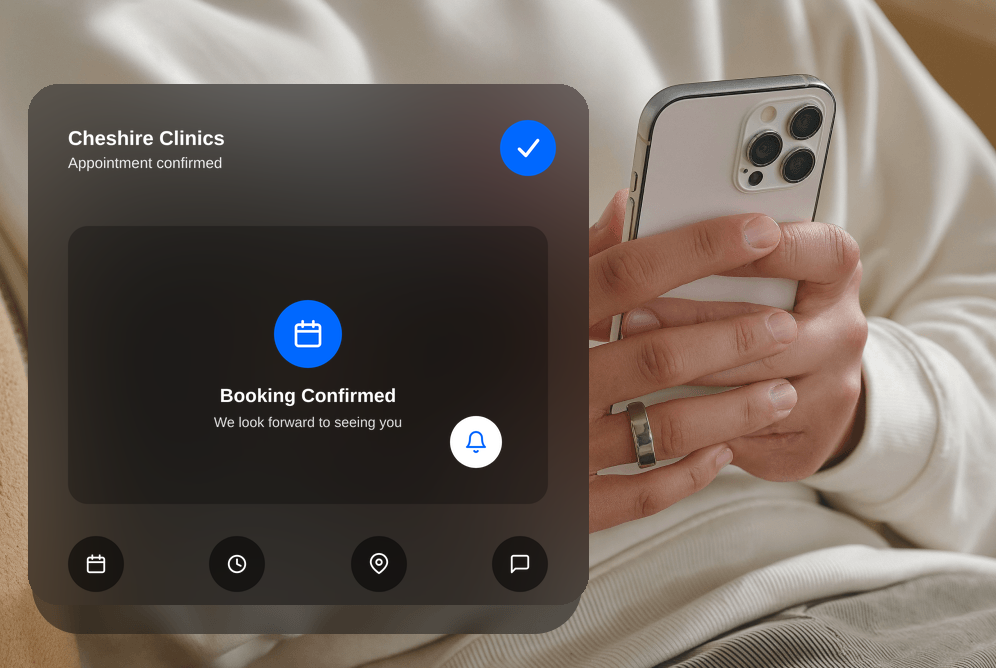
Cheshire Clinics online GP appointment booking confirmation on mobile
01

Book your appointment

Pick a time that suits you — 6am to 10pm, seven days a week, including weekends and bank holidays. £40 for 20 minutes, self-pay, with no insurance to arrange.
5–10 minutes
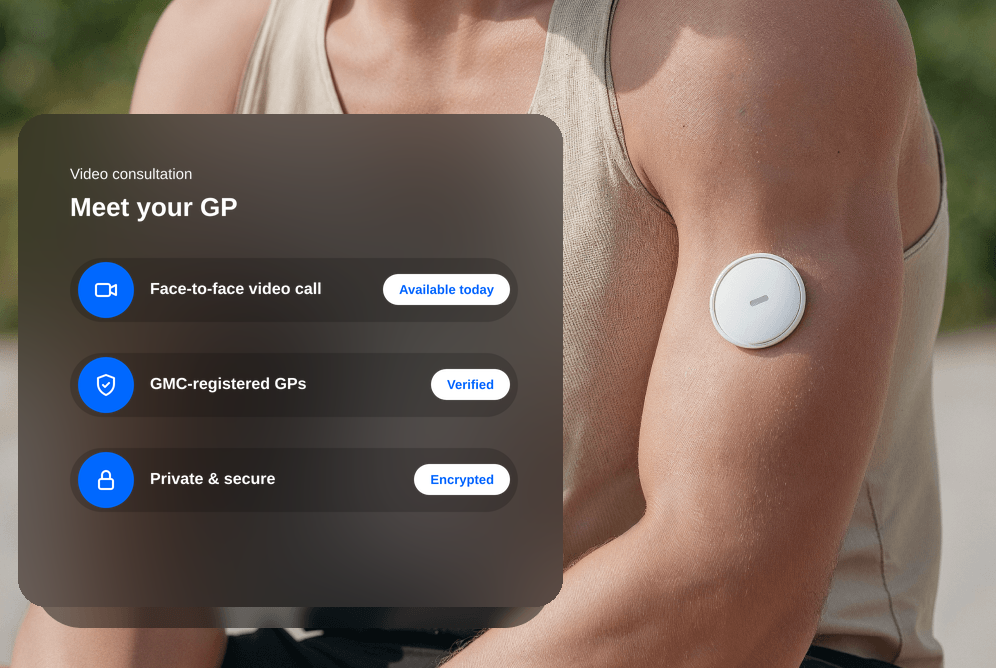
Online video consultation with a GMC-registered private GP
02

Meet your GP

A 20-minute video or phone consultation with a GMC-registered GP — long enough for a proper conversation about your symptoms, your history and what matters to you.
20 minutes
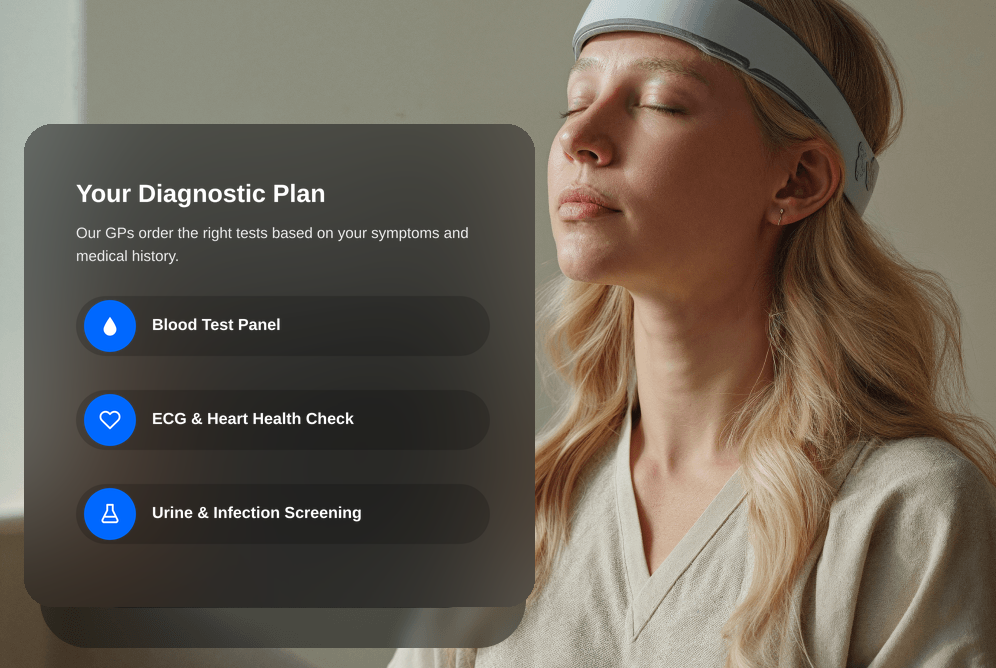
Diagnostic testing plan including blood test panel, ECG and urine screening
03

Tests and referrals, if you need them

Where testing will actually answer the question, we arrange it — blood tests and health screening through our laboratory partner, or a referral for ultrasound, X-ray, CT or MRI through private imaging providers. We will also tell you when a scan is not the right next step.
1–7 days
Personalised results and treatment plan from a private GP consultation
04

Results and next steps

Your GP talks you through what the results mean and agrees the next step with you. Every consultation ends with your treatment plan in writing, and any prescription goes to your own pharmacy.
20 minutes
GP follow-up reminder for ongoing care and progress monitoring
05

Ongoing care and follow-up

Follow-up appointments, progress monitoring and ongoing advice — including saying plainly when something needs in-person or NHS care instead.

Ongoing

Questions about our service

How quickly can I be seen?

Same-day access is usually available, from 6am to 10pm, seven days a week. You choose a time that suits you rather than waiting on hold at 8am.

Will I see the same doctor each time?

Yes. Care is led personally by Dr Mohammad Khan, so you are not passed between clinicians. Continuity is the point of a small practice: someone who knows your history and is listening attentively rather than working through a checklist.

Can you see my NHS records?

Yes, with your consent. We can access your Summary Care Record during the consultation, so your current medications, allergies and significant history are in the room. That means fewer questions you have already answered elsewhere, and safer prescribing.

Are you trying to replace my NHS GP?

No. We are not here to replace GPs, only to support them. Your NHS practice remains responsible for your ongoing care, and with your consent we write to them after the consultation. We are useful when you need to be seen sooner, or want more time than a standard appointment allows.

What is included in the appointment?

Twenty unhurried minutes and a comprehensive assessment. A written treatment plan is included, along with any prescription, sick note or referral letter arising from the consultation, at no extra charge.

How much does it cost?

£40 for 20 minutes, self-pay. Membership is optional and never required. Priced for fairness, because we are not here to charge extortionate amounts for access to a doctor.

What does “treatable online” actually mean?

It means the diagnosis can usually be made from your history and photographs, and that treatment can be arranged safely without examining you. Where a condition is not marked treatable online, it is because examination is the diagnosis — listening to a chest, feeling an abdomen, examining an ear or a joint — or because a procedure or device is needed.

Can you prescribe antibiotics?

Yes, where there is a genuine bacterial infection — cellulitis, impetigo, bacterial urine infections, confirmed strep throat. We will also frequently tell you that you do not need one. Most sore throats, coughs, colds and earaches are viral, and an antibiotic gives you the side effects with none of the benefit.

What if the GP cannot help with what I need?

If your problem turns out to be genuinely outside what we can do remotely, the doctor will tell you straight away, point you to the right service, and refund your fee in full. We would rather do that than fill twenty minutes to justify the charge.

What should I do in an emergency?

Call 999 or go to A&E — do not book an online appointment and do not wait for a reply to an email. For urgent problems that are not emergencies, NHS 111 is available 24 hours a day, online or by phone, and can direct you to the right service.

Patient reviews

What our patients say

No reviews published yet.
Ready to see a GP?20 minutes with a GMC-registered doctor. £40, usually same day.
Book a consultation