Bones, joints and muscles icon - arthritis, sprains and joint pain assessed by an online GP at Cheshire Clinics
Treatable online

Back Pain

Most back pain improves. Staying active does more than resting, and imaging usually does not help.

£40 · 20 minutes

Same-day availability

6am to 10pm, seven days

Assessed and treated by a GMC-registered GP

Prescriptions, sick notes and referral letters included

A written treatment plan after every appointment

Your NHS records in the room, with your consent

Clinically reviewed by Dr Mohammad Khan · Last reviewed

August 23, 2026

Book a consultation

A 20-minute appointment with a GMC-registered GP for £40. No membership required.

Private GP care led personally by Dr Mohammad Zubair Khan, GMC 7563469.

Why patients choose Cheshire Clinics

GMC registered doctors badge - every Cheshire Clinics consultation is with a General Medical Council registered GP

GMC-registered

Care led personally by Dr Khan

Royal College of General Practitioners badge - RCGP trained private GP consultations at Cheshire Clinics

RCGP-trained

Attentive, unhurried care that listens properly

Google five star reviews badge - Cheshire Clinics private GP online

Highly rated by patients

Five-star Google reviews from the people we have looked after

Care Quality Commission registered badge - Cheshire Clinics online GP service is registered with the CQC, England's independent regulator of health and social care

CQC-registered

Registered with the Care Quality Commission

Same-Day Appointments
Sick Notes
Private Prescriptions
Blood Tests
Menopause & HRT
Weight Management
Mental Health
Specialist Referrals
Same-Day Appointments
Sick Notes
Private Prescriptions
Blood Tests
Menopause & HRT
Weight Management
Mental Health
Specialist Referrals

Overview

Back pain is one of the commonest reasons people see a doctor, and the great majority of it is non-specific low back pain — no single damaged structure to point at, and a good outlook. Most people improve substantially within six weeks.

Before anything else, one emergency. Back pain with numbness in the saddle area, difficulty passing urine or loss of bladder or bowel control, numbness or weakness in both legs, or new loss of sexual sensation may be cauda equina syndrome. Go to A&E immediately. Hours matter, and delay causes permanent loss of bladder, bowel and sexual function. Do not wait for an appointment, and do not wait until morning.

Two things that change outcomes for everyone else:

1. Stay active. Bed rest makes back pain worse, not better. This reverses what many people were told years ago, and it is one of the best-established findings in the field.

2. Do not chase a scan. Imaging for ordinary back pain does not improve outcomes and frequently makes them worse — because "disc bulges", "degeneration" and "wear and tear" appear on the scans of most people with no pain at all. Reading those words about your own spine reliably makes people move less and hurt more.

And one that is routinely missed: back pain starting under the age of 45 with morning stiffness lasting over half an hour, which improves with movement rather than rest, may be inflammatory — a different condition, with a different treatment, and an average diagnostic delay of years.

Common symptoms

Ordinary mechanical back pain

  • Pain in the lower back, sometimes spreading to the buttocks or upper thighs
  • Worse with certain movements or positions; eased by others
  • Stiffness, particularly after sitting or first thing — but loosening within minutes, not half an hour
  • Often follows an awkward movement, a period of unusual activity, or nothing identifiable at all
  • Fluctuates: better days and worse days

Inflammatory back pain — the pattern that gets missed

Worth checking against, because axial spondyloarthritis takes years to diagnose on average:

  • Started before the age of 45, and came on gradually
  • Morning stiffness lasting more than 30 minutes
  • Improves with exercise, not with rest — the reverse of mechanical pain
  • Wakes you in the second half of the night, and you get up and move about
  • Persisting more than three months
  • Responds well to anti-inflammatories
  • Sometimes with psoriasis, inflammatory bowel disease, or episodes of a painful red eye

Cauda equina syndrome — A&E, immediately

  • Numbness or altered sensation in the saddle area — inner thighs, genitals, around the back passage. Ask yourself whether toilet paper feels normal
  • Difficulty starting to pass urine, not feeling the bladder fill, or losing control
  • Loss of bowel control, or not feeling a bowel motion pass
  • Numbness or weakness in both legs
  • New loss of sexual sensation, or erectile difficulty

Other features needing assessment

  • New back pain over 55 or under 20
  • Pain in the mid-back (thoracic) rather than the lower back
  • A history of cancer, particularly breast, prostate, lung, kidney or thyroid
  • Unexplained weight loss, fever or night sweats
  • Pain that is constant, progressive, and worse at night — not eased by any position
  • Recent significant trauma — or minor trauma in someone with osteoporosis or on steroids
  • Progressive leg weakness, or a foot dragging
  • Intravenous drug use, or immunosuppression

Causes and risk factors

Non-specific low back pain

The commonest by far. It involves muscles, joints, discs, ligaments and the nervous system together — which is precisely why a scan rarely identifies "the" cause, and why looking for one is unhelpful.

Specific causes

  • Sciatica — nerve root irritation causing pain down the leg. See our sciatica page
  • Spinal stenosis — typically over 60, with leg pain on walking that eases on sitting or leaning forward
  • Axial spondyloarthritis — inflammatory, as above
  • Vertebral fracture — in osteoporosis, sometimes after minimal trauma or none
  • Infection, or cancer spread to the spine — uncommon, and the reason the red flags exist

What increases the risk

  • Previous episodes — the strongest single predictor
  • Sedentary work and prolonged sitting
  • Heavy manual work, lifting and vibration
  • Excess weight, and low general fitness
  • Smoking
  • Poor sleep
  • Psychological factors — stress, low mood, and fear of movement. These are among the strongest predictors of pain becoming persistent, and saying so is not the same as saying the pain is imaginary

What matters more than posture

Worth saying, because it removes a lot of unnecessary guilt: there is no single "correct" posture, and sitting badly does not damage your spine. The evidence for posture as a cause of back pain is weak. The best position is the next one — changing position regularly matters far more than holding any particular one.

Why persistent pain is not the same as ongoing damage

In long-standing back pain the nervous system becomes more sensitive — pain signals amplify even after tissues have healed. The pain is entirely real; it is just no longer a reliable measure of harm. This is why gradually increasing activity is safe and helpful even when it hurts, and why understanding it genuinely reduces pain.

How it is diagnosed

Back pain is diagnosed from the history, and a video consultation covers that well. The purpose of assessment is to identify the small number who need something different — not to find a structure to blame.

What we ask

  • The cauda equina questions, in every case: bladder, bowel, saddle sensation, both legs, sexual function
  • Where the pain is, and whether it goes below the knee
  • Morning stiffness — and specifically, how long before it loosens
  • Does it improve with movement or with rest?
  • Night pain, and whether it wakes you
  • Age at onset
  • Cancer history, weight loss, fever, steroid use, drug use
  • Any leg weakness, numbness or foot dragging
  • Work, and what you cannot currently do
  • Mood, sleep, and what you are worried it might be — which is a clinically useful question, not a polite one

Imaging — and why we usually will not arrange it

X-rays and MRI scans do not improve outcomes in ordinary back pain, and they carry a genuine downside. Degeneration, disc bulges and "wear and tear" are found in the majority of people who have no pain whatsoever. Being told your spine shows these things measurably increases fear, reduces activity, and worsens outcomes.

Imaging is warranted for: red flags, suspected cauda equina, suspected fracture, suspected infection or cancer, or where surgery is genuinely being considered.

Blood tests

Where inflammatory or serious causes are possible: inflammatory markers, full blood count, vitamin D, calcium, and a PSA in men where the picture warrants it.

What needs in-person assessment

Any red flag, any neurological deficit, and any suspicion of cauda equina — which goes straight to A&E, not to a referral. We will say so immediately and without hedging.

How we treat it online

1. Keep moving — the single most important thing

  • Do not rest in bed. Bed rest weakens muscles, stiffens joints and prolongs pain. This reverses older advice and the evidence is strong
  • Continue normal activity as far as pain allows, and return to work early — including modified duties. Being at work is part of recovery, not a risk to it
  • Walk. Change position often
  • Hurt does not equal harm. Moving with some discomfort is safe and is how recovery happens

2. Pain relief

  • Anti-inflammatories — ibuprofen or naproxen — at the lowest effective dose for the shortest period, with stomach protection where needed. These are first-line
  • Paracetamol alone is not recommended for low back pain — the evidence does not support it, which surprises people
  • A short course of a muscle relaxant occasionally, for severe spasm — days, not weeks
  • Topical anti-inflammatory gel
  • Heat packs, which genuinely help

3. What we will not prescribe

  • Opioids — codeine, tramadol, morphine — for ongoing back pain. They work poorly for it, cause dependence and constipation, and prolonged use makes pain worse rather than better. This is a firm position, and it is national guidance
  • Repeat courses of diazepam
  • Gabapentin or pregabalin for non-specific back pain, where they do not work

4. Exercise and physiotherapy — the treatment with the best evidence

Exercise is the most effective long-term treatment there is, and the type matters less than doing it. Walking, swimming, Pilates, yoga, strength work — whichever you will keep up. Physiotherapy, and manual therapy alongside exercise, help. In many areas you can self-refer to NHS physiotherapy without going through a GP.

5. Where pain persists

For pain lasting beyond three months, the most effective approaches combine exercise with a psychologically informed programme addressing fear of movement. That is not a suggestion the pain is imaginary — it is the treatment with the best evidence for persistent pain, and it works.

6. Inflammatory back pain

If the pattern fits, we arrange inflammatory markers and refer to rheumatology. This matters: axial spondyloarthritis has an average diagnostic delay measured in years, and effective treatments exist that change the course of the disease.

7. What we can do practically

Same-day prescriptions, a sick note where needed, a letter for workplace adjustments, physiotherapy referral, and imaging or specialist referral where genuinely indicated.

Bones, joints and muscles consultation - private GP assessment for musculoskeletal pain and sports injury at Cheshire Clinics

Ready to talk to a GP about this?

Book a consultation
Important

When to seek urgent help

Go to A&E immediately — do not wait — for any of these:

  • Numbness or altered feeling in the saddle area — inner thighs, genitals, around the back passage
  • Difficulty passing urine, not feeling your bladder fill, or losing bladder control
  • Loss of bowel control, or being unable to feel a bowel motion pass
  • Numbness or weakness in both legs
  • New loss of sexual sensation, or new erectile difficulty with back pain

This is cauda equina syndrome. Delay of hours causes permanent loss of bladder, bowel and sexual function. Go to A&E and say those words — do not wait for a GP appointment, and do not wait until morning.

Call 999 for: back pain with chest pain, severe abdominal pain, collapse, or a tearing sensation — which can indicate an aortic emergency.

Seek same-day medical advice for:

  • Back pain with fever, or feeling systemically unwell
  • Progressive weakness in a leg, or a foot that drags
  • Severe pain after significant trauma — or after minor trauma if you have osteoporosis or take steroids
  • Back pain in anyone with a history of cancer
  • Severe unrelenting pain not eased by any position

Book an appointment for:

  • Back pain not improving after four to six weeks
  • New back pain over 55, or under 20
  • Pain in the mid-back rather than the lower back
  • Morning stiffness lasting more than 30 minutes, pain that improves with exercise and wakes you in the second half of the night, in someone under 45 — which may be inflammatory and needs rheumatology
  • Pain going below the knee, with numbness or tingling
  • Unexplained weight loss or night sweats
  • Recurrent episodes affecting work or sleep
  • Needing a sick note or workplace adjustments

Prevention and self-care

During a flare

  • Keep moving. Short walks, gentle movement, changing position regularly
  • Anti-inflammatories regularly for a few days rather than sporadically
  • Heat packs; a hot shower before moving in the morning
  • Sleep however is comfortable — there is no correct sleeping position. A pillow between or under the knees often helps
  • Keep going to work if you can, with adjustments
  • Expect a flare to settle over days to weeks. Flares are part of the pattern, not a sign of new damage

Preventing the next one

  • Regular exercise — the single most effective preventive measure. Any kind, consistently
  • Build core and back strength gradually
  • Stay at a healthy weight; stop smoking
  • Sleep properly — poor sleep amplifies pain measurably
  • Break up long periods of sitting; move every 30 minutes or so
  • Lift sensibly — close to the body, using your legs. But do not become afraid of bending or lifting; backs are built for it, and avoidance weakens them

Two beliefs worth letting go of

"I have a bad back and must protect it." Avoidance and bracing lead to weaker muscles, more stiffness and more pain. Gradually loading the back is what makes it more resilient.

"My scan shows degeneration, so I am damaged." Those findings are present in most pain-free people of the same age — like grey hair on the inside. They are a poor predictor of pain, and treating them as a diagnosis has been shown to make people worse.

Getting back to activity

Start below what you think you can manage, and build by roughly 10% a week. Some increase in pain during activity is expected and is not damage — what matters is that it settles within a day. Consistency beats intensity by a wide margin.

Know the emergency signs

Worth memorising, because it is the one thing on this page where timing genuinely changes the outcome:

Numbness in the saddle area — difficulty passing urine or losing control — loss of bowel control — numbness or weakness in both legs — new loss of sexual sensation. Any of these: A&E now.

NHS or private

The evidence on back pain points somewhere unwelcome: most of what people pay for does not help, and most of what helps is free.

Staying active and continuing normal activity is the treatment, and bed rest actively delays recovery. Most acute back pain improves substantially within six weeks whatever is done.

NHS physiotherapy is free and in many areas takes self-referral without needing a GP appointment — the fastest route to the intervention with the best evidence.

What is worth saying plainly is that imaging usually makes things worse rather than better. NICE recommends against routine imaging for non-specific low back pain, and that is not cost-cutting: MRI in people over 30 shows disc bulges and degeneration in large numbers of people with no pain at all. Being told you have degenerative changes worsens outcomes — it increases fear, reduces activity, and leads to procedures that do not help.

Private MRI is heavily marketed for back pain and is rarely the right purchase. We will not arrange one without a clinical reason.

Where a consultation is genuinely worth paying for is excluding the small number of serious causes, a proper explanation of why hurting does not mean damage, and getting you into physiotherapy.

What needs emergency assessment: numbness around the genitals or back passage, difficulty passing urine, or new incontinence — cauda equina syndrome is a surgical emergency measured in hours.

Evidence and guidelines

NICE NG59, Low back pain and sciatica in over 16s, is the governing guideline. It recommends self-management, staying active and exercise as first-line, and explicitly advises against routine imaging in non-specialist settings.

NG59 recommends against offering paracetamol alone, opioids for chronic back pain, and a range of interventions — including acupuncture, ultrasound, TENS and spinal injections for non-specific low back pain — on the basis that evidence does not support them.

NG59 recommends NSAIDs at the lowest effective dose for the shortest time, with consideration of gastroprotection.

NG59 uses the STarT Back risk stratification tool to match treatment intensity to risk of persistent disability.

NICE and national safety guidance on cauda equina syndrome define the emergency features listed above, requiring immediate hospital assessment and emergency MRI.

Common questions

What is the one thing I must not ignore?

Numbness in the saddle area, any change in bladder or bowel control, weakness or numbness in both legs, or new loss of sexual sensation. That combination may be cauda equina syndrome, and it is a genuine emergency — go to A&E immediately, not tomorrow. Delay of hours can cause permanent loss of bladder and bowel function. Everything else on this page can wait for an appointment.

Should I rest?

No — and this is the biggest change from the advice people were given years ago. Bed rest weakens muscles, stiffens joints and prolongs the pain. Keep moving within what you can manage, keep going to work if possible, and change position often. Hurting is not the same as harming.

Shouldn't I have a scan?

Usually not, and it is worth explaining why rather than just refusing. "Disc bulges", "degeneration" and "wear and tear" appear on the scans of most people who have no pain at all — they are like grey hair on the inside. Being told your spine shows them measurably increases fear, reduces activity and worsens outcomes. Scans are for red flags, suspected fracture or infection, or where surgery is genuinely on the table.

Can I have something stronger than ibuprofen?

Almost certainly not codeine or tramadol. Opioids work poorly for back pain, cause dependence and constipation, and prolonged use makes pain worse rather than better — this is national guidance rather than caution on our part. Anti-inflammatories are first-line, and exercise is the treatment with the best long-term evidence. Interestingly, paracetamol alone is not recommended for low back pain.

Is it my posture?

Probably not, and this removes a lot of guilt. The evidence linking posture to back pain is weak, and there is no single correct way to sit. What helps is changing position regularly — the best posture is the next one. Ergonomics are about comfort, not about preventing damage.

Could this be arthritis in my spine?

There is one pattern worth checking. If your back pain started before 45, came on gradually, gives you more than 30 minutes of morning stiffness, improves with exercise rather than rest, and wakes you in the second half of the night — that suggests inflammatory back pain rather than mechanical. It needs blood tests and rheumatology, and the average delay to diagnosis is measured in years, so it is worth raising specifically.

Why does it still hurt when the scan is normal?

Because in persistent pain the nervous system becomes more sensitive, amplifying signals even after tissues have healed. The pain is entirely real — it is simply no longer a reliable measure of damage. That is why gradually increasing activity is safe even when it hurts, and why programmes combining exercise with understanding pain work better than more scans.

Will it come back?

Quite possibly — back pain tends to come in episodes, and a flare is not a sign of new damage. Regular exercise is the single most effective way of reducing how often and how badly they happen. Having a plan for flares — keep moving, anti-inflammatories for a few days, heat, don't panic — makes them considerably shorter.

Dr Mohammad Zubair Khan, GMC-registered private GP and founder of Cheshire Clinics
Clinically reviewed by Dr Mohammad Zubair Khan, GMC 7563469
Last reviewed

August 23, 2026

How it works

What happens when you book

£40 for a 20-minute appointment with a GMC-registered GP, 6am to 10pm, seven days a week. Membership is optional and never required.
Cheshire Clinics online GP appointment booking confirmation on mobile
01

Book your appointment

Pick a time that suits you — 6am to 10pm, seven days a week, including weekends and bank holidays. £40 for 20 minutes, self-pay, with no insurance to arrange.
5–10 minutes
Online video consultation with a GMC-registered private GP
02

Meet your GP

A 20-minute video or phone consultation with a GMC-registered GP — long enough for a proper conversation about your symptoms, your history and what matters to you.
20 minutes
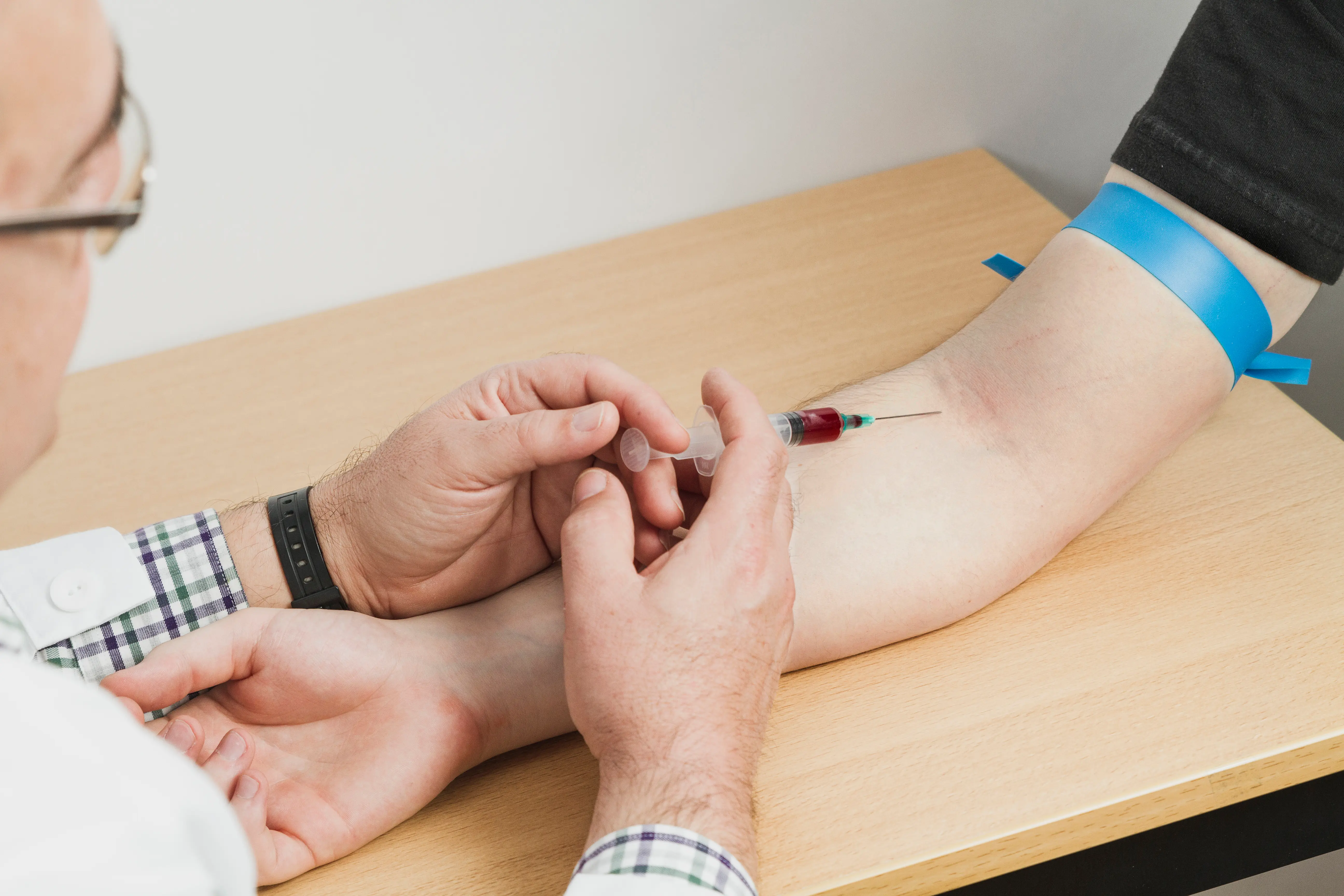
Diagnostic testing plan including blood test panel, ECG and urine screening
03

Tests and referrals, if you need them

Where testing will actually answer the question, we arrange it — blood tests and health screening through our laboratory partner, or a referral for ultrasound, X-ray, CT or MRI through private imaging providers. We will also tell you when a scan is not the right next step.
1–7 days
Personalised results and treatment plan from a private GP consultation
04

Results and next steps

Your GP talks you through what the results mean and agrees the next step with you. Every consultation ends with your treatment plan in writing, and any prescription goes to your own pharmacy.
20 minutes
GP follow-up reminder for ongoing care and progress monitoring
05

Ongoing care and follow-up

Follow-up appointments, progress monitoring and ongoing advice — including saying plainly when something needs in-person or NHS care instead.

Ongoing

How we compare

Time to be seen

Appointment length

Your NHS record in the room

Written treatment plan

Told when a test isn’t needed

Cost

Varies by practice

Typically 10 minutes

Yes, your full record

Not routinely

Usually

Free

Same day

Often 10 to 15 minutes

Usually not

Sometimes charged

Varies by provider

Often a subscription

Questions about our service

How quickly can I be seen?

Same-day access is usually available, from 6am to 10pm, seven days a week. You choose a time that suits you rather than waiting on hold at 8am.

Will I see the same doctor each time?

Yes. Care is led personally by Dr Mohammad Khan, so you are not passed between clinicians. Continuity is the point of a small practice: someone who knows your history and is listening attentively rather than working through a checklist.

Can you see my NHS records?

Yes, with your consent. We can access your Summary Care Record during the consultation, so your current medications, allergies and significant history are in the room. That means fewer questions you have already answered elsewhere, and safer prescribing.

Are you trying to replace my NHS GP?

No. We are not here to replace GPs, only to support them. Your NHS practice remains responsible for your ongoing care, and with your consent we write to them after the consultation. We are useful when you need to be seen sooner, or want more time than a standard appointment allows.

What is included in the appointment?

Twenty unhurried minutes and a comprehensive assessment. A written treatment plan is included, along with any prescription, sick note or referral letter arising from the consultation, at no extra charge.

How much does it cost?

£40 for 20 minutes, self-pay. Membership is optional and never required. Priced for fairness, because we are not here to charge extortionate amounts for access to a doctor.

What does “treatable online” actually mean?

It means the diagnosis can usually be made from your history and photographs, and that treatment can be arranged safely without examining you. Where a condition is not marked treatable online, it is because examination is the diagnosis — listening to a chest, feeling an abdomen, examining an ear or a joint — or because a procedure or device is needed.

Can you prescribe antibiotics?

Yes, where there is a genuine bacterial infection — cellulitis, impetigo, bacterial urine infections, confirmed strep throat. We will also frequently tell you that you do not need one. Most sore throats, coughs, colds and earaches are viral, and an antibiotic gives you the side effects with none of the benefit.

What if the GP cannot help with what I need?

If your problem turns out to be genuinely outside what we can do remotely, the doctor will tell you straight away, point you to the right service, and refund your fee in full. We would rather do that than fill twenty minutes to justify the charge.

What should I do in an emergency?

Call 999 or go to A&E — do not book an online appointment and do not wait for a reply to an email. For urgent problems that are not emergencies, NHS 111 is available 24 hours a day, online or by phone, and can direct you to the right service.

Patient reviews

What our patients say

No reviews published yet.
Ready to see a GP?20 minutes with a GMC-registered doctor. £40, usually same day.
Book a consultation