Home

/

Tests & scans

/

Full Health Check / Health MOT

Full Health Check / Health MOT

Two tiers of comprehensive health check — one for a baseline, one for when something is wrong and nobody has found it.

Quoted after consultation

Results usually within 3 working days

Blood sample

Referred by a GMC-registered GP, results reviewed by the same doctor

Taken at a partner site near you

Results explained in plain English, not just a number

Your NHS records in the room, with your consent

Clinically reviewed by Dr Mohammad Khan · Last reviewed

August 23, 2026

Book a consultation

A 20-minute appointment with a GMC-registered GP for £40. Same-day appointments are usually available, 6am to 10pm, seven days a week.

Private GP care led personally by Dr Mohammad Zubair Khan, GMC 7563469.

Why patients choose Cheshire Clinics

GMC registered doctors badge - every Cheshire Clinics consultation is with a General Medical Council registered GP

GMC-registered

Care led personally by Dr Khan

Royal College of General Practitioners badge - RCGP trained private GP consultations at Cheshire Clinics

RCGP-trained

Attentive, unhurried care that listens properly

Google five star reviews badge - Cheshire Clinics private GP online

Highly rated by patients

Five-star Google reviews from the people we have looked after

Care Quality Commission registered badge - Cheshire Clinics online GP service is registered with the CQC, England's independent regulator of health and social care

CQC-registered

Registered with the Care Quality Commission

Same-Day Appointments
Sick Notes
Private Prescriptions
Blood Tests
Menopause & HRT
Weight Management
Mental Health
Specialist Referrals
Same-Day Appointments
Sick Notes
Private Prescriptions
Blood Tests
Menopause & HRT
Weight Management
Mental Health
Specialist Referrals

Overview

A health check is worth having for one of two quite different reasons, and they call for different panels.

The first is that you feel well and want a baseline — something to measure against in five years, and a check that nothing is quietly developing. The second is that you do not feel right, you have been told your results are normal, and you want someone to look properly.

We offer both. The value in either case is the review, not the numbers: every result is gone through with a GP who explains what matters to you, what is normal variation, and what needs following up.

What this test measures

Standard Health Check

Full blood count, liver and kidney function, cholesterol with apolipoproteins and a cardiovascular risk score, HbA1c with insulin and C-peptide, thyroid function, iron status, metabolic syndrome markers, urinalysis and tumour markers.

Around 100 markers, weighted toward cardiovascular and metabolic risk — which is what most people are actually screening for.

Advanced Health Check

Everything above, plus the things that explain symptoms rather than predict risk: full hormone profile, vitamin B12, folate and antioxidant status, coeliac antibodies, H. pylori, thyroid antibodies, immunoglobulins and inflammatory markers, pancreatic enzymes and parathyroid hormone.

Over 150 markers.

Why you might need it

Choose the Standard tier for: a general baseline, a family history of heart disease or diabetes, reaching an age where you want a benchmark, or an employer or insurer asking for a health assessment.

Choose the Advanced tier for: persistent fatigue with no explanation, unexplained weight change, brain fog or low mood, recurrent digestive symptoms, joint aches, or a set of "normal" results elsewhere that did not match how you feel.

What's included

Which one should I have?

Standard if you feel well and want a baseline, or you have a family history of heart disease or diabetes you want to get ahead of. This is the right choice for most people under 45 with no symptoms.

Advanced if you have symptoms nobody has explained — persistent fatigue, weight change, brain fog, low mood, joint aches — or if a basic panel elsewhere came back normal and you are not satisfied that it answered the question.

What the Advanced tier adds

  • Full hormone profile — testosterone, SHBG and free androgen index, plus oestradiol, FSH, LH, progesterone and prolactin
  • Nutritional status — vitamin B12, folate and total antioxidant status
  • Coeliac antibodies — an easily missed cause of fatigue, bloating and iron deficiency
  • H. pylori — the treatable bacterial cause of persistent indigestion
  • Thyroid antibodies — autoimmune thyroid disease that a TSH alone will not show
  • Immunoglobulins, complement and inflammatory markers
  • Pancreatic enzymes and parathyroid hormone

Included in both

  • A referral to a Randox Health clinic for the sample
  • A full results review with a GMC-registered GP
  • A written plan for anything that needs following up

If your main concern is unexplained tiredness specifically, say so at your consultation — there is a more focused and less expensive panel built for exactly that, and it may serve you better than either of these.

Ready to arrange this test?

Book a consultation

How the referral works

Partner site:

Randox Health

Your consultation establishes which panel is appropriate. A referral is issued for you to attend a Randox Health clinic for the sample, and results are returned to us for review.

Preparation required

A 10 to 12 hour fast is usually required for accurate cholesterol and glucose results. Water is fine. Confirm at your consultation before fasting.

Understanding your results

The arithmetic of a large panel

Reference ranges are defined so that about 5 per cent of healthy people fall outside them on any single test.

Run thirty tests on a well person and the chance of at least one being flagged is high — close to certain on the largest panels. That is not a fault in the laboratory; it is how the ranges are constructed.

Which is why a results review matters more than the panel. Knowing which flagged result is noise and which is signal is the entire value.

What actually turns up

Most commonly: raised cholesterol, prediabetic HbA1c, mildly abnormal liver enzymes, vitamin D deficiency and iron deficiency.

Two of those are genuinely useful. Prediabetes leads to the free NHS Diabetes Prevention Programme, which roughly halves progression. Fatty liver — the usual explanation for mildly raised enzymes — improves substantially with around 7 to 10 per cent weight loss.

The number this panel cannot give you

Blood pressure. It is the single most valuable measurement for long-term health, it is silent, and we cannot take it remotely.

Many pharmacies check it free without an appointment. If you do one thing after reading this page, do that.

A completely normal set of results

Genuinely reassuring for what was measured, and a useful baseline to compare against in future — a trend across years is worth considerably more than any single set.

It does not mean you are healthy in the broader sense. Smoking, alcohol, weight, activity and sleep shape long-term health far more than any of these markers, and none of them appears on the report.

What this test cannot tell you

The evidence, stated plainly

General health checks in people without symptoms have been studied repeatedly and have not been shown to reduce death or serious illness.

What they reliably produce is borderline results, repeat tests, occasional scans, and anxiety — in people who were well when they started.

We state this on a page selling the test, because the alternative is selling it on an implication we know to be false.

What a "full" health check does not include

  • Cancer screening. No blood panel screens reliably for cancer. The programmes that work — bowel, breast, cervical — are free and separate
  • Blood pressure, weight and any physical examination
  • Sleep apnoea, which is common, underdiagnosed and behind a great deal of fatigue
  • Mental health, which affects more people, more of the time, than most of what is measured here

"Full" describes the panel, not your health.

The tumour markers in this panel

The Standard tier includes tumour markers because they come with the Randox panel, not because they screen for cancer. They do not.

CA-125, CEA and CA19-9 are raised by a long list of benign conditions, and in people with no symptoms a flagged result far more often leads to scans and worry than to a diagnosis.

We go through what they do and do not mean before you test, and we would advise against paying extra for any panel sold on the strength of them.

Where testing is genuinely worth it

Symptoms, a family history, or a specific question. A targeted test asking something real beats a broad panel asking nothing.

Costs explained

What you pay

  • £40 for the consultation
  • The panel, quoted before it is arranged
  • £40 for the results review

The free version, which covers most of this

The NHS Health Check — free every five years for adults aged 40 to 74. Cholesterol, blood pressure, diabetes risk, BMI and a cardiovascular risk score, which is the substance of what a paid panel offers, plus the blood pressure we cannot take.

Uptake is low, largely because people do not know they are eligible. If you are in that age band and have not had one, that is the better place to start.

The free things worth more than any panel

  • Bowel screening from 50 — a home kit, proven to save lives, and widely not returned
  • Cervical screening from 25, which prevents cancer rather than detecting it
  • Breast screening from 50
  • A pharmacy blood pressure check, no appointment needed
  • The NHS Diabetes Prevention Programme, free with a prediabetic HbA1c

Where the fee earns its place

Where you have a symptom, a family history, or a question — and want twenty minutes to go through it. The consultation is the product; the panel is the supporting evidence.

Where not to spend money

  • Annual repeat panels when well and previously normal. Very low yield, meaningful false positive rate
  • Tumour marker panels sold as cancer screening
  • Whole-body MRI or CT screening, which finds incidental abnormalities in a large share of people and has never been shown to help
  • Extensive vitamin and mineral panels beyond D, B12, folate and iron

Common questions

Is a full health check worth having?

If you feel well and have no particular risk factors — probably not, and we will tell you so.

General health screening has not been shown to reduce death or serious illness, and large panels reliably produce borderline results that lead to further testing.

If you have symptoms, a family history or a specific question, that is different — then testing is targeted and worth doing.

Why do several of my results show as abnormal?

Because of how reference ranges work. Around 5 per cent of healthy people fall outside the range on any given test.

Run thirty tests and at least one flagged result is close to certain, even in someone entirely well. Most need nothing more than a repeat.

Does it check for cancer?

No. No blood panel screens reliably for cancer, and tumour markers are not screening tests — in people without symptoms they cause more harm through false positives than they prevent.

The screening that works — bowel, breast and cervical — is free, targeted and separate.

What is the free equivalent?

The NHS Health Check, every five years for ages 40 to 74.

It covers cholesterol, blood pressure, diabetes risk, BMI and a cardiovascular risk score — the core of what a paid panel offers, plus the blood pressure measurement we cannot do.

Most people who are eligible have not had one, simply because nobody told them.

Do I need to fast?

A 10 to 12 hour fast is usually required, water only, because glucose and triglycerides are both affected by recent eating.

Confirm the exact requirement at your consultation, and if you take insulin or a sulfonylurea, speak to us first — fasting needs planning.

What is the single most useful thing on this page?

Getting your blood pressure checked, and it is free.

It matters more for long-term health than almost anything in the panel, it causes no symptoms, and pharmacies do it without an appointment. We cannot measure it remotely, which is why we keep saying it.

What tends to get found?

Raised cholesterol, prediabetes, mildly abnormal liver enzymes, and vitamin D or iron deficiency.

Prediabetes and fatty liver are the two most useful, because both have a clear, free, effective response — the NHS Diabetes Prevention Programme, and modest weight loss.

How often should I repeat it?

Not annually, if you are well and the last set was normal. The yield is very low and the false-positive rate is not.

Every few years, or when something changes, is a more sensible rhythm — and a trend over time is worth more than any single set of numbers.

Should I get a whole-body scan as well?

No, and we will not refer for one.

Whole-body MRI and CT screening find incidental abnormalities in a large proportion of people, almost all harmless, and have never been shown to save lives. What they reliably generate is follow-up scans.

Dr Mohammad Zubair Khan, GMC-registered private GP and founder of Cheshire Clinics

Clinically reviewed by Dr Mohammad Zubair Khan, GMC 7563469

Last reviewed

August 23, 2026

How it works

What happens when you book

£40 for a 20-minute appointment with a GMC-registered GP, 6am to 10pm, seven days a week. Membership is optional and never required.
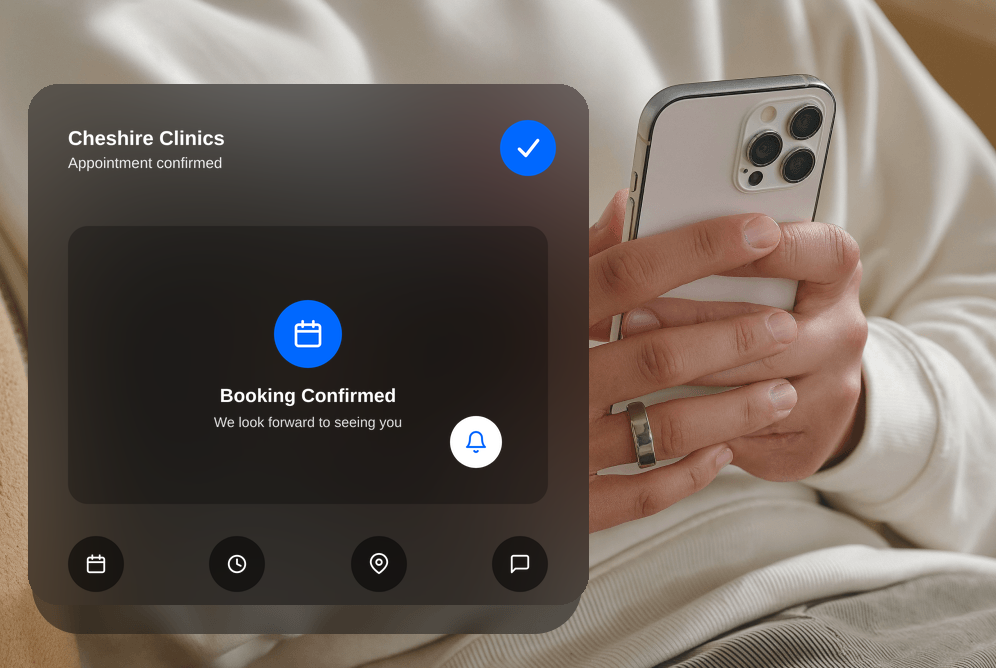
Cheshire Clinics online GP appointment booking confirmation on mobile
01

Book your appointment

Pick a time that suits you — 6am to 10pm, seven days a week, including weekends and bank holidays. £40 for 20 minutes, self-pay, with no insurance to arrange.
5–10 minutes
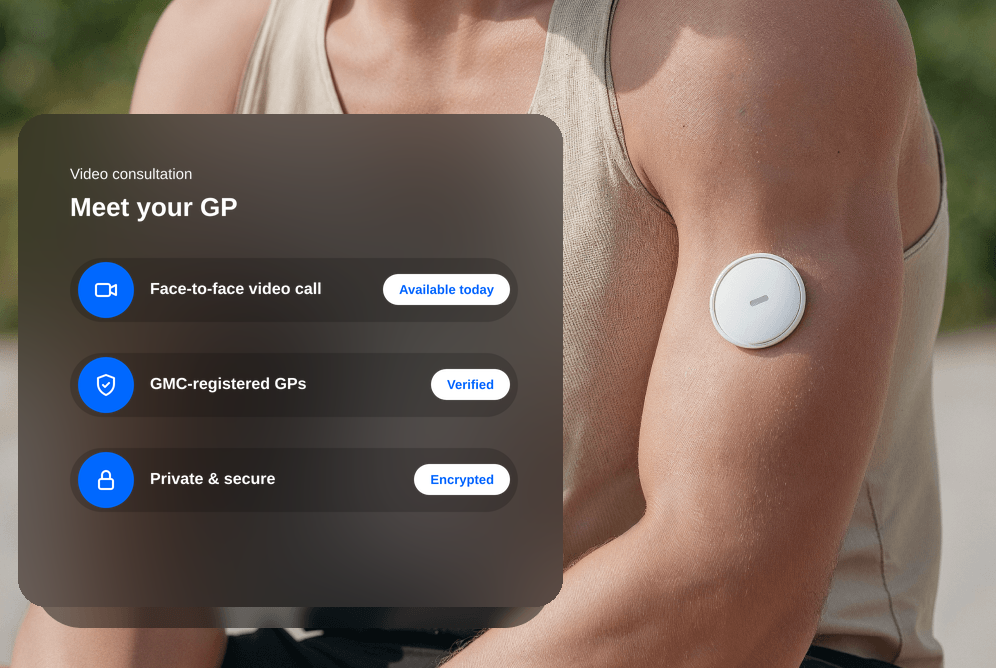
Online video consultation with a GMC-registered private GP
02

Meet your GP

A 20-minute video or phone consultation with a GMC-registered GP — long enough for a proper conversation about your symptoms, your history and what matters to you.
20 minutes
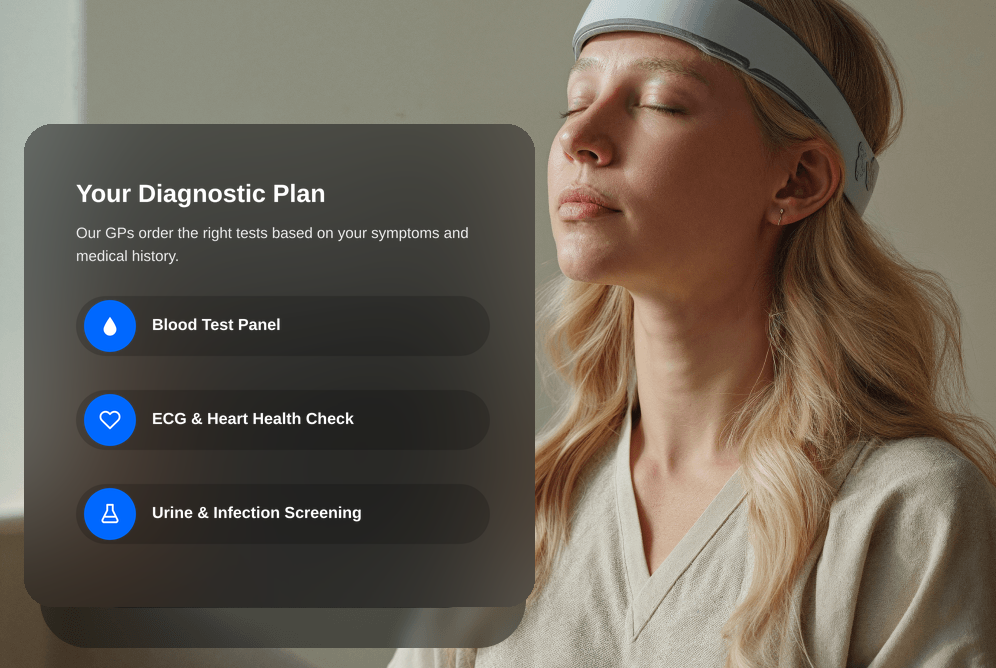
Diagnostic testing plan including blood test panel, ECG and urine screening
03

Tests and referrals, if you need them

Where testing will actually answer the question, we arrange it — blood tests and health screening through our laboratory partner, or a referral for ultrasound, X-ray, CT or MRI through private imaging providers. We will also tell you when a scan is not the right next step.
1–7 days
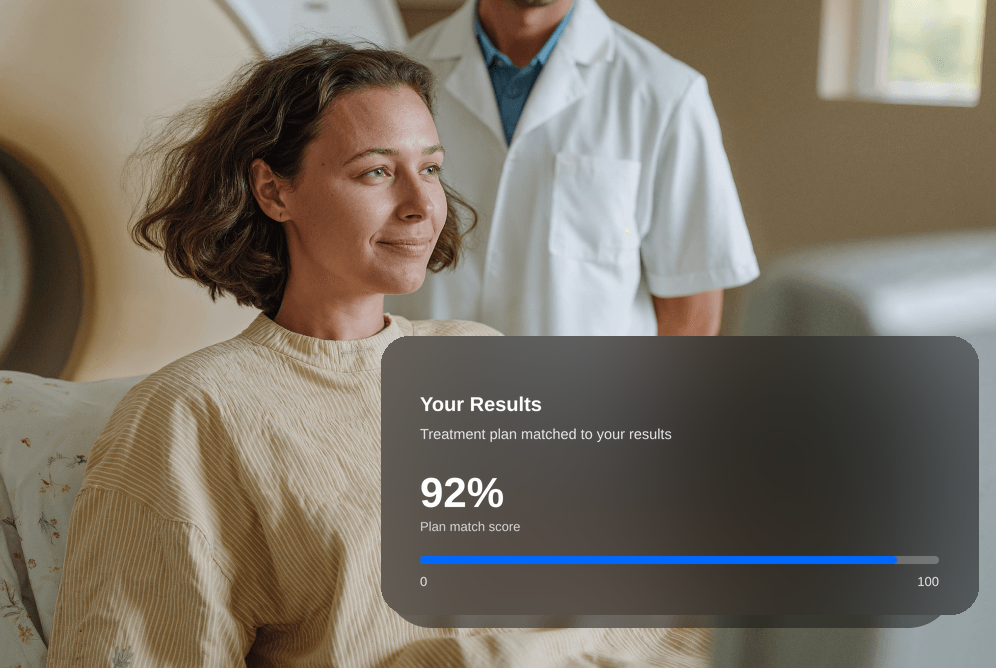
Personalised results and treatment plan from a private GP consultation
04

Results and next steps

Your GP talks you through what the results mean and agrees the next step with you. Every consultation ends with your treatment plan in writing, and any prescription goes to your own pharmacy.
20 minutes
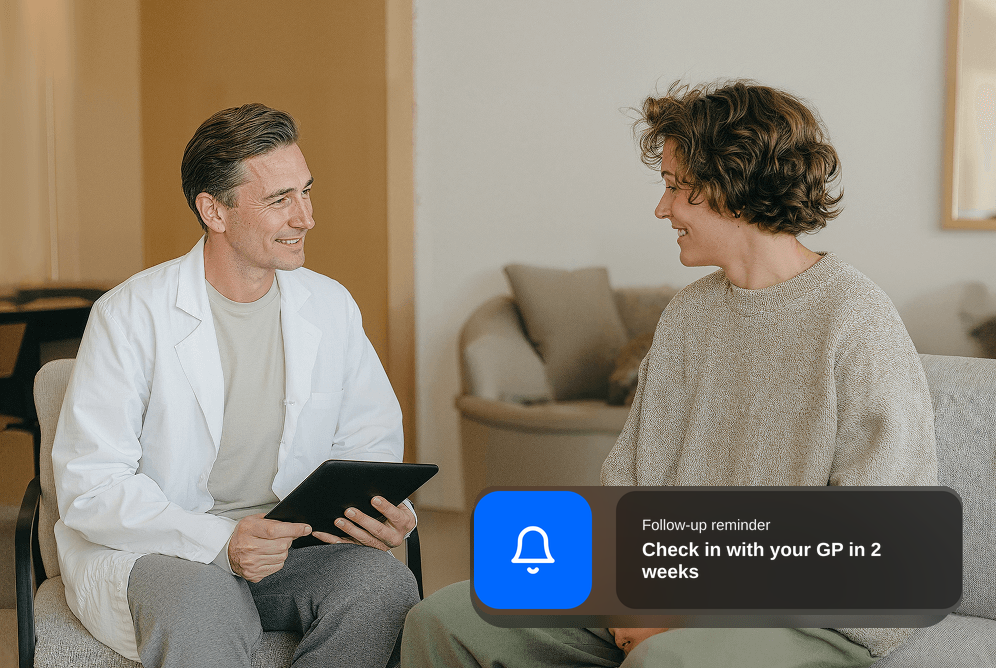
GP follow-up reminder for ongoing care and progress monitoring
05

Ongoing care and follow-up

Follow-up appointments, progress monitoring and ongoing advice — including saying plainly when something needs in-person or NHS care instead.

Ongoing

How we compare

Time to be seen

Appointment length

Your NHS record in the room

Written treatment plan

Told when a test isn’t needed

Cost

Varies by practice

Typically 10 minutes

Yes, your full record

Not routinely

Usually

Free

Same day

Often 10 to 15 minutes

Usually not

Sometimes charged

Varies by provider

Often a subscription

Questions about our service

How quickly can I be seen?

Same-day access is usually available, from 6am to 10pm, seven days a week. You choose a time that suits you rather than waiting on hold at 8am.

Will I see the same doctor each time?

Yes. Care is led personally by Dr Mohammad Khan, so you are not passed between clinicians. Continuity is the point of a small practice: someone who knows your history and is listening attentively rather than working through a checklist.

Can you see my NHS records?

Yes, with your consent. We can access your Summary Care Record during the consultation, so your current medications, allergies and significant history are in the room. That means fewer questions you have already answered elsewhere, and safer prescribing.

Are you trying to replace my NHS GP?

No. We are not here to replace GPs, only to support them. Your NHS practice remains responsible for your ongoing care, and with your consent we write to them after the consultation. We are useful when you need to be seen sooner, or want more time than a standard appointment allows.

What is included in the appointment?

Twenty unhurried minutes and a comprehensive assessment. A written treatment plan is included, along with any prescription, sick note or referral letter arising from the consultation, at no extra charge.

How much does it cost?

£40 for 20 minutes, self-pay. Membership is optional and never required. Priced for fairness, because we are not here to charge extortionate amounts for access to a doctor.

What does “treatable online” actually mean?

It means the diagnosis can usually be made from your history and photographs, and that treatment can be arranged safely without examining you. Where a condition is not marked treatable online, it is because examination is the diagnosis — listening to a chest, feeling an abdomen, examining an ear or a joint — or because a procedure or device is needed.

Can you prescribe antibiotics?

Yes, where there is a genuine bacterial infection — cellulitis, impetigo, bacterial urine infections, confirmed strep throat. We will also frequently tell you that you do not need one. Most sore throats, coughs, colds and earaches are viral, and an antibiotic gives you the side effects with none of the benefit.

What if the GP cannot help with what I need?

If your problem turns out to be genuinely outside what we can do remotely, the doctor will tell you straight away, point you to the right service, and refund your fee in full. We would rather do that than fill twenty minutes to justify the charge.

What should I do in an emergency?

Call 999 or go to A&E — do not book an online appointment and do not wait for a reply to an email. For urgent problems that are not emergencies, NHS 111 is available 24 hours a day, online or by phone, and can direct you to the right service.

Patient reviews

What our patients say

No reviews published yet.
Ready to see a GP?20 minutes with a GMC-registered doctor. £40, usually same day.
Book a consultation