Home

/

Heart & Circulation

/

High Cholesterol

Treatable online

High Cholesterol

Total cholesterol alone tells you very little. The breakdown and your overall risk are what matter.

£40 · 20 minutes

Same-day availability

6am to 10pm, seven days

Assessed and treated by a GMC-registered GP

Prescriptions, sick notes and referral letters included

A written treatment plan after every appointment

Your NHS records in the room, with your consent

Clinically reviewed by Dr Mohammad Khan · Last reviewed

August 23, 2026

Book a consultation

A 20-minute appointment with a GMC-registered GP for £40. No membership required.

Private GP care led personally by Dr Mohammad Zubair Khan, GMC 7563469.

Why patients choose Cheshire Clinics

GMC registered doctors badge - every Cheshire Clinics consultation is with a General Medical Council registered GP

GMC-registered

Care led personally by Dr Khan

Royal College of General Practitioners badge - RCGP trained private GP consultations at Cheshire Clinics

RCGP-trained

Attentive, unhurried care that listens properly

Google five star reviews badge - Cheshire Clinics private GP online

Highly rated by patients

Five-star Google reviews from the people we have looked after

Care Quality Commission registered badge - Cheshire Clinics online GP service is registered with the CQC, England's independent regulator of health and social care

CQC-registered

Registered with the Care Quality Commission

Same-Day Appointments
Sick Notes
Private Prescriptions
Blood Tests
Menopause & HRT
Weight Management
Mental Health
Specialist Referrals
Same-Day Appointments
Sick Notes
Private Prescriptions
Blood Tests
Menopause & HRT
Weight Management
Mental Health
Specialist Referrals

Overview

Cholesterol is essential — it builds cell membranes and hormones. The problem is the balance, and specifically LDL, which deposits in artery walls.

A single total cholesterol number is close to meaningless on its own. What matters is the breakdown, the ratio, and how it combines with your age, blood pressure, smoking status and family history to produce an actual risk figure.

Common symptoms

None. Raised cholesterol produces no symptoms whatsoever until it causes a cardiovascular event.

The exception is familial hypercholesterolaemia, an inherited condition affecting roughly 1 in 250 people, which can cause visible signs — fatty deposits around the eyes or in tendons — and carries very high risk from a young age.

Causes and risk factors

  • Diet high in saturated fat
  • Excess weight and inactivity
  • Genetics — familial hypercholesterolaemia is significantly underdiagnosed
  • Underactive thyroid, which raises cholesterol and is easily missed
  • Type 2 diabetes and kidney disease
  • Some medications

How it is diagnosed

A full lipid profile, not a single number

Total cholesterol on its own is close to meaningless. What matters is the breakdown:

  • LDL — the fraction that deposits in artery walls, and the main treatment target
  • Non-HDL cholesterol — total minus HDL, now preferred in UK practice because it captures all the harmful fractions together
  • HDL, and the total-to-HDL ratio
  • Triglycerides, which relate closely to alcohol, weight and blood sugar

Fasting is usually unnecessary

Non-fasting samples are acceptable for routine lipid testing and are what UK guidance now uses.

Where triglycerides are markedly raised, a fasting repeat is worth doing — those move most with recent eating.

The number is not the decision

Treatment depends on your ten-year cardiovascular risk, not on cholesterol alone. That calculation combines age, sex, blood pressure, smoking, diabetes, weight, ethnicity and family history.

Two people with identical cholesterol can have very different risks and therefore very different advice. A cholesterol result without a risk score is half an answer.

What else gets checked

Thyroid function — an underactive thyroid raises cholesterol, and treating it can resolve the problem without a statin. This is missed regularly.

HbA1c, kidney and liver function, all of which affect the decision.

Where family history changes things

Familial hypercholesterolaemia affects roughly 1 in 250 people and is substantially underdiagnosed. Very high cholesterol from a young age, or relatives with heart attacks before 60, warrants specialist assessment — free on the NHS, and it matters for your children too.

Lipoprotein(a) is largely genetic, not measured in standard testing, and worth considering where family history is strong.

How we treat it online

A full lipid profile gives total, LDL, HDL, non-HDL and triglycerides. Where family history is strong, an extended panel adding lipoprotein(a) is worth considering — Lp(a) is largely genetic and is not measured in standard testing.

Your results review includes a formal ten-year risk calculation, because the treatment decision depends on overall risk rather than the cholesterol number alone. Thyroid function is checked, since an underactive thyroid raises cholesterol and treating it can resolve the problem.

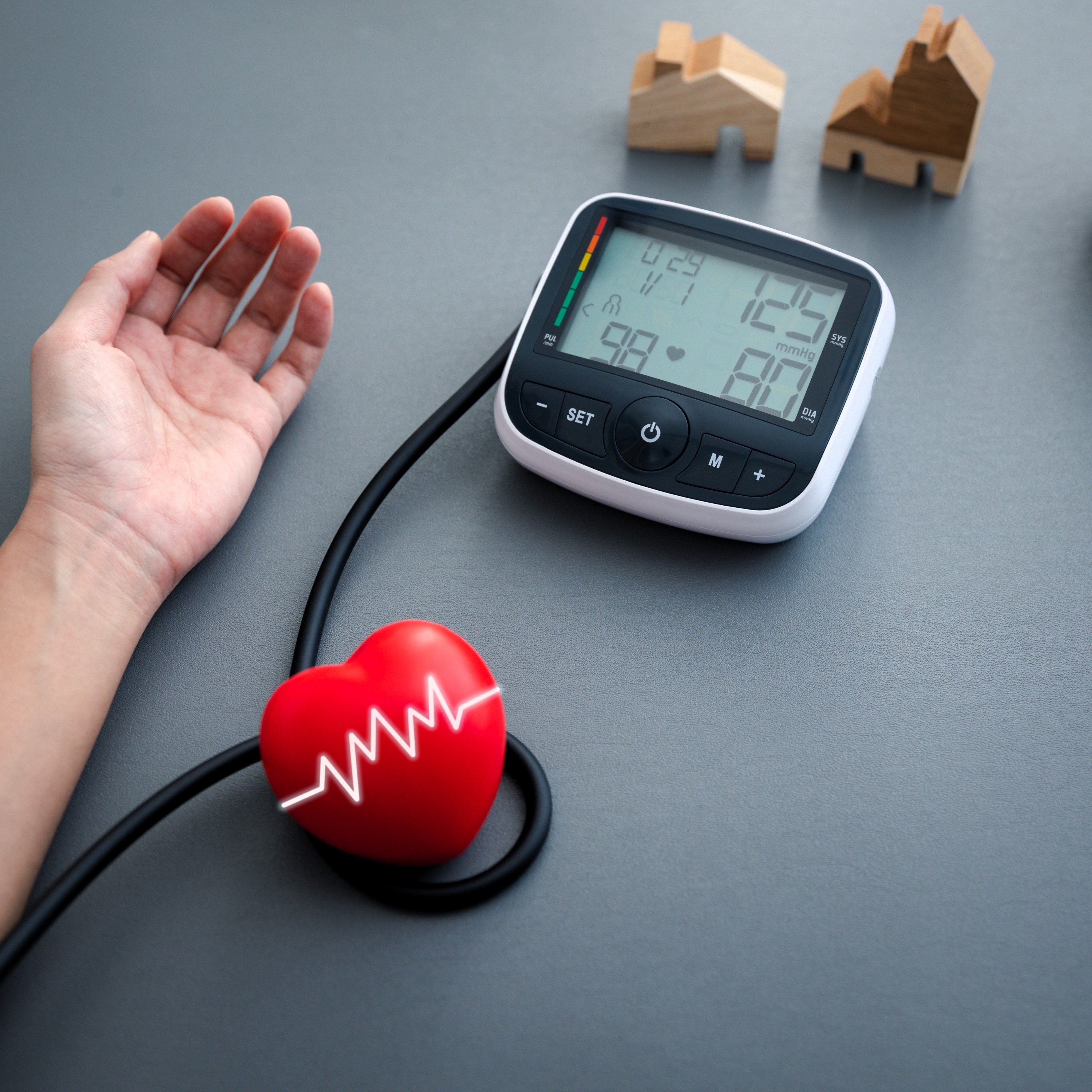
Heart and circulation consultation - private GP assessment for blood pressure, cholesterol and cardiovascular risk at Cheshire Clinics

Ready to talk to a GP about this?

Book a consultation
Important

When to seek urgent help

Cholesterol itself is not an emergency. Its consequences are.

Call 999 for chest pain or tightness, particularly with breathlessness, sweating or pain spreading to the arm or jaw.

Prevention and self-care

What actually changes the number

  • Replacing saturated fat with unsaturated — this does more than simply eating less fat. Olive oil, nuts, oily fish rather than butter, pastry and processed meat
  • Soluble fibre — oats, beans, lentils, apples. Genuinely lowers LDL rather than merely being virtuous
  • Losing excess weight, and reducing alcohol, which lowers triglycerides quickly
  • Exercise, which raises HDL and lowers triglycerides

What matters more than the diet

Stopping smoking. It does relatively little to cholesterol and a great deal to the risk cholesterol is being treated to reduce.

Plant stanols and sterols

These do work — the fortified spreads and drinks lower LDL modestly and measurably.

They are also expensive for the effect, and they do not replace a statin where one is indicated.

What does not work

  • Red yeast rice — which contains a natural statin at an unregulated and unpredictable dose, with the same side effects and none of the quality control
  • Garlic, and most cholesterol supplements
  • Removing all dietary cholesterol — eggs and prawns matter far less than saturated fat does

The free route

The NHS Health Check, free every five years from 40 to 74, includes cholesterol, blood pressure and a cardiovascular risk score — which is most of what a paid panel gives you.

NHS or private

NHS care for cholesterol is free and thorough — the lipid profile, the QRISK cardiovascular assessment, statins as very cheap generics, and monitoring. The NHS Health Check for people aged 40 to 74 is free and includes all of this, and is worth taking up when offered.

The most useful point is that the cholesterol number on its own means very little. Treatment decisions are based on overall cardiovascular risk — QRISK3 — which combines cholesterol with age, blood pressure, smoking, diabetes, family history and other factors. A raised cholesterol in a low-risk 35-year-old and the same figure in a 65-year-old smoker are entirely different situations.

That is why buying a private cholesterol test in isolation rarely helps. The number without the risk calculation cannot be acted on sensibly, and QRISK is free and takes two minutes.

Where a private consultation genuinely earns its fee is having the statin conversation properly — absolute rather than relative risk, what the evidence actually shows about muscle symptoms, and what happens if you do nothing. That conversation is regularly rushed, and it is why a great many people stop statins without discussing it.

The one thing worth flagging: very high cholesterol, particularly alongside a family history of heart disease before the age of 60, may be familial hypercholesterolaemia — an inherited condition that is substantially under-diagnosed in the UK. It warrants NHS lipid clinic referral and testing of close relatives, since each first-degree relative has a one in two chance of carrying it.

Evidence and guidelines

NICE NG238, Cardiovascular disease: risk assessment and reduction, including lipid modification, is the governing guideline. It recommends using QRISK3 to estimate 10-year cardiovascular risk and offering atorvastatin 20mg for primary prevention where risk is 10% or above.

NG238 recommends statins be considered even below that threshold where informed preference and clinical judgement support it, and sets out a target of more than 40% reduction in non-HDL cholesterol.

NG238 covers secondary prevention with atorvastatin 80mg, and the addition of ezetimibe, and NICE technology appraisals cover inclisiran and PCSK9 inhibitors through specialist services.

NICE CG71, Familial hypercholesterolaemia, recommends suspecting FH where total cholesterol is above 7.5 mmol/L with a family history of premature coronary disease, and offering specialist assessment and cascade testing of relatives.

NG238 also addresses statin muscle symptoms, recommending discussion and re-challenge rather than automatic discontinuation.

Common questions

My cholesterol is high. Do I need a statin?

It depends on your overall risk, not on the number. A ten-year cardiovascular risk score is what decides it.

Someone with moderately raised cholesterol and no other risk factors may need nothing. Someone with the same result who smokes and has high blood pressure may benefit substantially.

Do I need to fast before the test?

Usually no. Non-fasting samples are acceptable for routine lipid testing.

A fasting repeat is worth doing if triglycerides come back markedly raised, since those are most affected by recent eating.

Are statins safe?

They are among the best-studied medicines in use, and serious side effects are rare.

Muscle aches are the common complaint — and in blinded trials, most people who report them on a statin report them on placebo too. That does not mean the ache is imagined; it means the statin is often not the cause.

Where symptoms are genuine, switching statin or lowering the dose usually resolves them. Stopping without saying anything is the outcome worth avoiding.

I eat well and exercise. Why is mine high?

Cholesterol is substantially genetic. Diet influences it, but it does not determine it.

Very high levels in someone with a good diet raise the question of familial hypercholesterolaemia, which affects around 1 in 250 people and is badly underdiagnosed.

Could something else be raising it?

An underactive thyroid, which is common and easily checked. Treating it can normalise cholesterol without any lipid medication at all.

Also poorly controlled diabetes, kidney disease, and some medications.

What is non-HDL cholesterol?

Total cholesterol minus HDL — so it captures all the harmful fractions in one figure.

UK practice now favours it over LDL because it does not require fasting and reflects risk slightly better.

Is high HDL protective?

Higher HDL is associated with lower risk, but raising it with medication has not been shown to help.

Treat the LDL and non-HDL — that is where the benefit lies.

Should my children be tested?

If familial hypercholesterolaemia is suspected or confirmed in you, yes. It is inherited, and identifying it early changes outcomes considerably.

NHS genetic and lipid clinics do this free, and testing relatives is a routine part of the pathway.

Dr Mohammad Zubair Khan, GMC-registered private GP and founder of Cheshire Clinics
Clinically reviewed by Dr Mohammad Zubair Khan, GMC 7563469
Last reviewed

August 23, 2026

How it works

What happens when you book

£40 for a 20-minute appointment with a GMC-registered GP, 6am to 10pm, seven days a week. Membership is optional and never required.
Cheshire Clinics online GP appointment booking confirmation on mobile
01

Book your appointment

Pick a time that suits you — 6am to 10pm, seven days a week, including weekends and bank holidays. £40 for 20 minutes, self-pay, with no insurance to arrange.
5–10 minutes
Online video consultation with a GMC-registered private GP
02

Meet your GP

A 20-minute video or phone consultation with a GMC-registered GP — long enough for a proper conversation about your symptoms, your history and what matters to you.
20 minutes
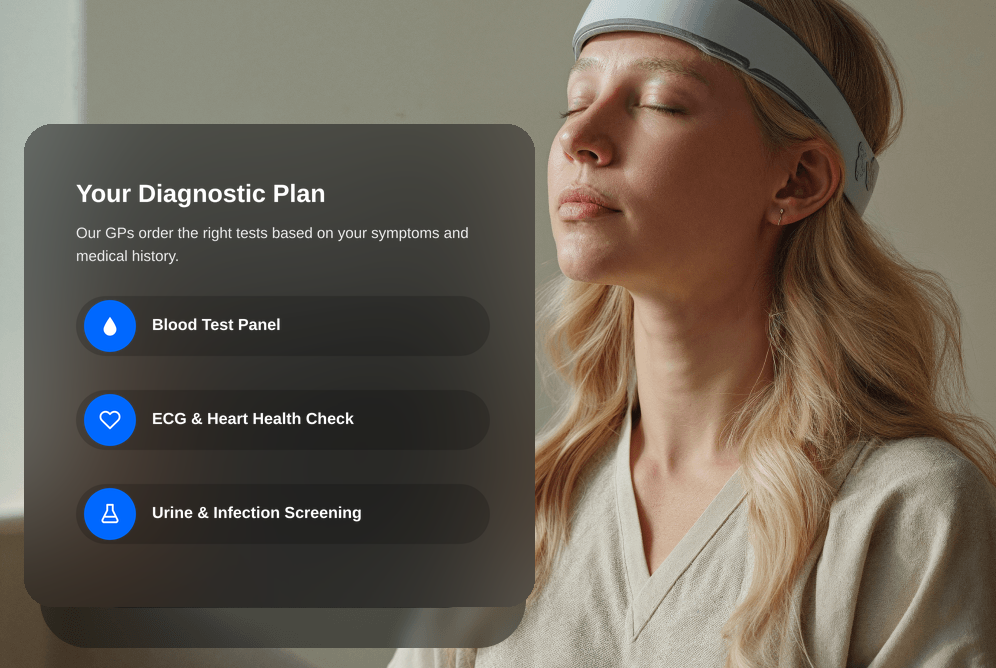
Diagnostic testing plan including blood test panel, ECG and urine screening
03

Tests and referrals, if you need them

Where testing will actually answer the question, we arrange it — blood tests and health screening through our laboratory partner, or a referral for ultrasound, X-ray, CT or MRI through private imaging providers. We will also tell you when a scan is not the right next step.
1–7 days
Personalised results and treatment plan from a private GP consultation
04

Results and next steps

Your GP talks you through what the results mean and agrees the next step with you. Every consultation ends with your treatment plan in writing, and any prescription goes to your own pharmacy.
20 minutes
GP follow-up reminder for ongoing care and progress monitoring
05

Ongoing care and follow-up

Follow-up appointments, progress monitoring and ongoing advice — including saying plainly when something needs in-person or NHS care instead.

Ongoing

How we compare

Time to be seen

Appointment length

Your NHS record in the room

Written treatment plan

Told when a test isn’t needed

Cost

Varies by practice

Typically 10 minutes

Yes, your full record

Not routinely

Usually

Free

Same day

Often 10 to 15 minutes

Usually not

Sometimes charged

Varies by provider

Often a subscription

Questions about our service

How quickly can I be seen?

Same-day access is usually available, from 6am to 10pm, seven days a week. You choose a time that suits you rather than waiting on hold at 8am.

Will I see the same doctor each time?

Yes. Care is led personally by Dr Mohammad Khan, so you are not passed between clinicians. Continuity is the point of a small practice: someone who knows your history and is listening attentively rather than working through a checklist.

Can you see my NHS records?

Yes, with your consent. We can access your Summary Care Record during the consultation, so your current medications, allergies and significant history are in the room. That means fewer questions you have already answered elsewhere, and safer prescribing.

Are you trying to replace my NHS GP?

No. We are not here to replace GPs, only to support them. Your NHS practice remains responsible for your ongoing care, and with your consent we write to them after the consultation. We are useful when you need to be seen sooner, or want more time than a standard appointment allows.

What is included in the appointment?

Twenty unhurried minutes and a comprehensive assessment. A written treatment plan is included, along with any prescription, sick note or referral letter arising from the consultation, at no extra charge.

How much does it cost?

£40 for 20 minutes, self-pay. Membership is optional and never required. Priced for fairness, because we are not here to charge extortionate amounts for access to a doctor.

What does “treatable online” actually mean?

It means the diagnosis can usually be made from your history and photographs, and that treatment can be arranged safely without examining you. Where a condition is not marked treatable online, it is because examination is the diagnosis — listening to a chest, feeling an abdomen, examining an ear or a joint — or because a procedure or device is needed.

Can you prescribe antibiotics?

Yes, where there is a genuine bacterial infection — cellulitis, impetigo, bacterial urine infections, confirmed strep throat. We will also frequently tell you that you do not need one. Most sore throats, coughs, colds and earaches are viral, and an antibiotic gives you the side effects with none of the benefit.

What if the GP cannot help with what I need?

If your problem turns out to be genuinely outside what we can do remotely, the doctor will tell you straight away, point you to the right service, and refund your fee in full. We would rather do that than fill twenty minutes to justify the charge.

What should I do in an emergency?

Call 999 or go to A&E — do not book an online appointment and do not wait for a reply to an email. For urgent problems that are not emergencies, NHS 111 is available 24 hours a day, online or by phone, and can direct you to the right service.

Patient reviews

What our patients say

No reviews published yet.
Ready to see a GP?20 minutes with a GMC-registered doctor. £40, usually same day.
Book a consultation