Home

/

Conditions

/

Heart & Circulation

Heart & Circulation

Blood pressure, cholesterol, palpitations and cardiovascular risk.

£40 · 20 minutes

Same-day availability

6am to 10pm, seven days

Assessed and treated by a GMC-registered GP

Prescriptions, sick notes and referral letters included

A written treatment plan after every appointment

Your NHS records in the room, with your consent

Clinically reviewed by Dr Mohammad Zubair Khan · Last reviewed

August 29, 2026

Book a consultation

A 20-minute appointment with a GMC-registered GP for £40. Same-day appointments are usually available, 6am to 10pm, seven days a week.

Private GP care led personally by Dr Mohammad Zubair Khan, GMC 7563469.

Why patients choose Cheshire Clinics

GMC registered doctors badge - every Cheshire Clinics consultation is with a General Medical Council registered GP

GMC-registered

Care led personally by Dr Khan

Royal College of General Practitioners badge - RCGP trained private GP consultations at Cheshire Clinics

RCGP-trained

Attentive, unhurried care that listens properly

Google five star reviews badge - Cheshire Clinics private GP online

Highly rated by patients

Five-star Google reviews from the people we have looked after

Care Quality Commission registered badge - Cheshire Clinics online GP service is registered with the CQC, England's independent regulator of health and social care

CQC-registered

Registered with the Care Quality Commission

Same-Day Appointments
Sick Notes
Private Prescriptions
Blood Tests
Menopause & HRT
Weight Management
Mental Health
Specialist Referrals
Same-Day Appointments
Sick Notes
Private Prescriptions
Blood Tests
Menopause & HRT
Weight Management
Mental Health
Specialist Referrals

Overview

Cardiovascular disease is largely silent until it isn't. High blood pressure and raised cholesterol cause no symptoms for years, which is exactly why they are worth measuring rather than waiting to feel.

Most of what matters here can be assessed remotely: a blood panel, a blood pressure reading you take at home, and a proper risk calculation that accounts for your age, family history and lifestyle.

What we can and cannot do

Where remote care is genuinely good here

Cardiovascular risk is one of the few areas where remote assessment is better rather than merely equivalent, because the measurements that matter are a blood sample and a reading you take at home.

  • Home blood pressure readings are more informative than a clinic reading taken while you are mildly anxious about being in a clinic. White-coat effect is real and leads to unnecessary treatment
  • A full cardiovascular blood panel — lipids, HbA1c, kidney and liver function — arranged locally
  • A formal QRISK3 risk calculation, explained, with the number shown to you with and without treatment
  • Prescribing and titrating blood pressure and cholesterol medication against your own readings
  • Twenty minutes to go through risk in absolute numbers rather than headlines, which is the conversation that usually gets compressed

What we cannot do

  • Assess chest pain. Any chest pain that could be cardiac needs same-day in-person assessment, and often 999 — an ECG, examination and blood tests, none of which happen over video
  • Perform an ECG, listen to your heart, or examine your pulse
  • Diagnose or manage atrial fibrillation, heart failure or valve disease — all need in-person assessment and cardiology input. We can refer
  • Assess a suspected clot. Calf swelling or sudden breathlessness needs urgent in-person assessment

What we will say plainly

If you should be doing this through your NHS GP, we will tell you. Blood pressure and cholesterol are treated free with structured annual review, the medicines are among the cheapest in existence, and it is lifelong care that is better joined-up in one place.

What we offer is speed, unhurried time, and a proper review for someone who has been on a repeat prescription for years without one.

Not sure which condition page you need?

Book a consultation
Important

When to see a GP

Call 999 now

  • Chest pain or tightness — particularly with breathlessness, sweating, nausea, or pain spreading to the arm, neck or jaw
  • Sudden weakness or numbness on one side, drooping face, or difficulty speaking — act FAST, and note the time it started
  • Sudden severe breathlessness, or breathlessness lying flat
  • Blackout or collapse, particularly during exertion
  • A blood pressure reading of 180/120 or above with headache, chest pain, visual disturbance or weakness

Do not book an appointment to check whether chest pain is serious. Heart attacks are regularly mistaken for indigestion, and an antacid relieving it proves nothing.

Be seen the same day

  • New or rapidly worsening breathlessness, or ankle swelling that has come on over days
  • Palpitations with dizziness, chest pain or breathlessness
  • Calf pain, swelling or tenderness in one leg — possible clot

Worth an appointment

  • Home blood pressure readings consistently at or above 135/85
  • A cholesterol result you have been given but never had explained
  • Palpitations without other symptoms, particularly if they are new
  • A family history of heart attack or stroke under 60, which changes your risk calculation substantially and is frequently not asked about
  • Breathlessness on exertion that is worse than it was a year ago
  • Being on blood pressure or cholesterol medication that has never been properly reviewed

The thing worth acting on before symptoms

High blood pressure and raised cholesterol cause no symptoms for years. Around a third of UK adults with high blood pressure do not know they have it, and it is the single largest modifiable risk factor for stroke.

There is no feeling to wait for. That is the argument for measuring rather than monitoring how you feel.

Self-care and free help

Things that work, and cost nothing

  • Salt. The biggest single lever on blood pressure — and most of it is not the salt cellar but bread, sauces, processed meat and ready meals. Reading labels changes more than cooking without salt
  • Alcohol, which raises blood pressure directly and is frequently the whole explanation for a stubborn reading
  • Isometric exercise — wall squats, handgrip — which has surprisingly strong evidence for lowering blood pressure and is badly under-used
  • Replacing saturated fat with unsaturated fat, which is the dietary change with the best cholesterol evidence
  • Stopping smoking, which does more for cardiovascular risk than any tablet

Free and cheap routes worth using first

  • The NHS Health Check — free every five years for adults aged 40 to 74 in England, and it covers blood pressure, cholesterol and diabetes risk. Substantially under-taken
  • Free blood pressure checks at most pharmacies, no appointment needed
  • NHS stop smoking services — free, structured, often including free medication, and they roughly triple your chances
  • Prescription prepayment certificates in England, or free prescriptions in Scotland, Wales and Northern Ireland

The one purchase worth making

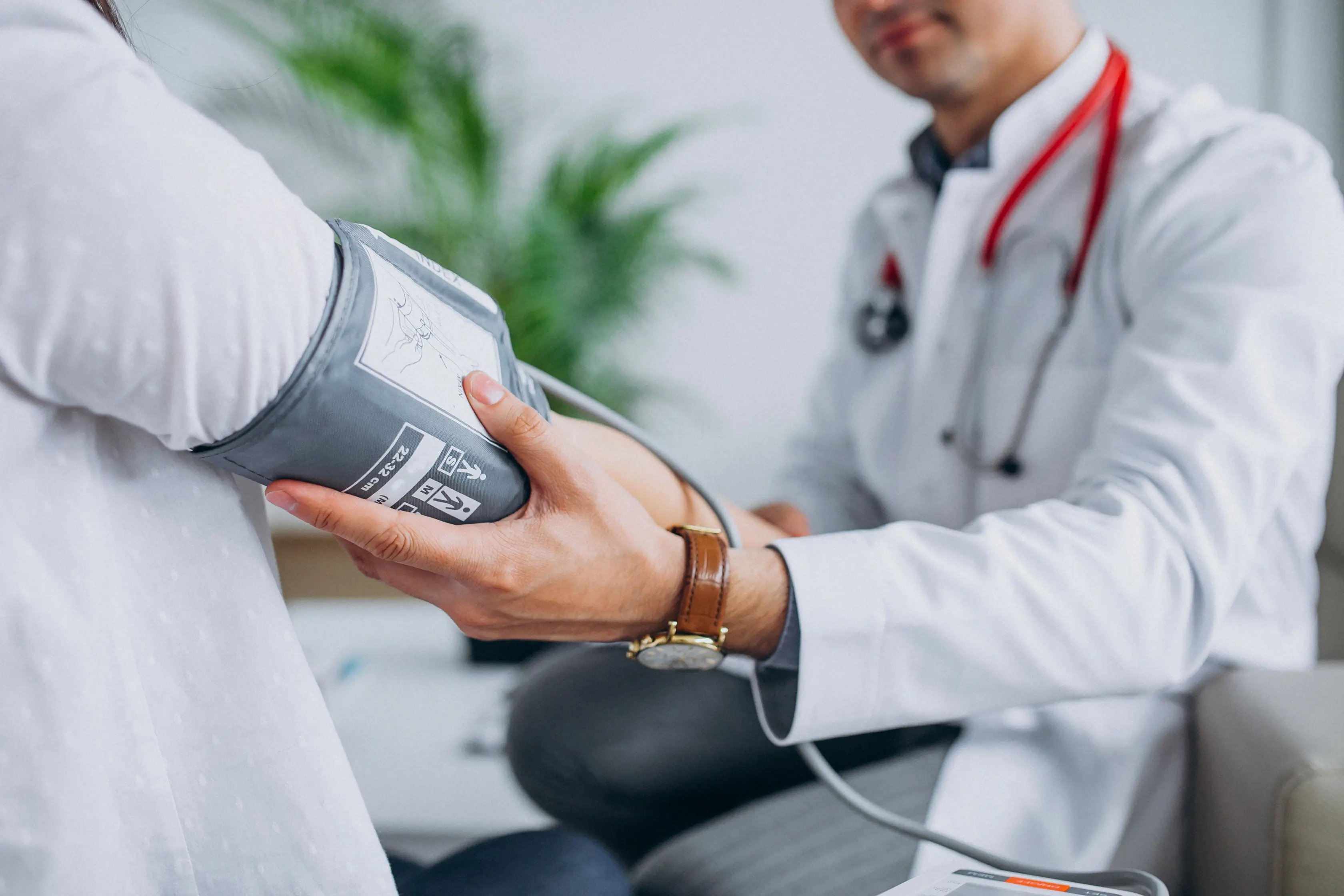
A validated upper-arm blood pressure monitor. Modest cost, and the readings it gives are more useful than anything measured in a clinic room.

Check it appears on the British and Irish Hypertension Society validated list, and get the cuff size right — a cuff that is too small gives falsely high readings. Do not buy a wrist monitor, whatever the packaging claims.

Where not to spend money

Supplements marketed for blood pressure or cholesterol. Red yeast rice, which is an unregulated statin with no dosing control. Omega-3 for cholesterol lowering. And expensive private cardiac screening packages before you have had a risk calculation and a lipid profile, which cost a fraction and answer the question.

Common questions

I feel fine. Why would I check anything?

Because that is exactly how cardiovascular disease behaves until it doesn't. High blood pressure and raised cholesterol produce no symptoms for years.

Headaches and nosebleeds are not reliable signs, and people who treat by how they feel stop taking treatment when they feel well — which is when it is working.

Should I take a statin?

That depends on your overall cardiovascular risk, not on your cholesterol number alone. Age, blood pressure, smoking, diabetes and family history all feed into it.

We calculate QRISK3 and show you the figure with and without treatment, so the decision is made on your actual numbers rather than a result that looked high on a printout.

Why do you want readings from home rather than taking mine?

Because home readings are the better measurement, and because we cannot take yours remotely. Twice daily for seven days, upper-arm monitor, discard day one.

Clinic readings are raised in a substantial proportion of people simply by being in a clinic.

Does a family history really matter?

Considerably — and it is frequently not asked about. A parent or sibling with a heart attack or stroke before 60 changes your risk calculation meaningfully.

Very high cholesterol plus early heart disease in the family should prompt assessment for familial hypercholesterolaemia, which affects roughly 1 in 250 people, is substantially underdiagnosed, and means testing relatives too.

Will I be on tablets for life?

Usually — it is control rather than cure, and both blood pressure and cholesterol rise again when treatment stops.

Some people do come off blood pressure treatment after substantial weight loss, stopping drinking, or treating sleep apnoea. That is a planned decision with monitoring, not something to try alone.

My ankles are swollen since starting amlodipine.

Common and dose-related, and it often improves when a second drug is added rather than the dose being pushed higher.

A dry persistent cough on an ACE inhibitor is the other one — about 1 in 10 people, and it resolves on switching to an ARB. People put up with both for months before mentioning them.

Is erectile dysfunction connected to my heart?

Frequently, yes. The arteries supplying the penis are smaller than the coronary arteries and narrow detectably earlier — ED can precede a cardiac event by three to five years.

That makes it an opportunity rather than only a problem, which is why treating it without asking why is a missed one.

What about palpitations?

Palpitations with dizziness, chest pain, breathlessness or blackout need urgent in-person assessment.

Palpitations alone are often benign — caffeine, alcohol, anxiety, an overactive thyroid, anaemia — but they may be atrial fibrillation, which needs an ECG and cannot be diagnosed remotely. We can assess the likely cause and refer.

Can you order a private scan or ECG?

We can refer for imaging and cardiology assessment, and we can arrange the blood tests.

What we would discourage is buying an expensive cardiac screening package before a risk calculation and a lipid profile — those cost a fraction and answer the question for most people.

Dr Mohammad Zubair Khan, GMC-registered private GP and founder of Cheshire Clinics

Clinically reviewed by Dr Mohammad Zubair Khan, GMC 7563469

Last reviewed

August 29, 2026

How it works

What happens when you book

£40 for a 20-minute appointment with a GMC-registered GP, 6am to 10pm, seven days a week. Membership is optional and never required.
Cheshire Clinics online GP appointment booking confirmation on mobile
01

Book your appointment

Pick a time that suits you — 6am to 10pm, seven days a week, including weekends and bank holidays. £40 for 20 minutes, self-pay, with no insurance to arrange.
5–10 minutes
Online video consultation with a GMC-registered private GP
02

Meet your GP

A 20-minute video or phone consultation with a GMC-registered GP — long enough for a proper conversation about your symptoms, your history and what matters to you.
20 minutes
Diagnostic testing plan including blood test panel, ECG and urine screening
03

Tests and referrals, if you need them

Where testing will actually answer the question, we arrange it — blood tests and health screening through our laboratory partner, or a referral for ultrasound, X-ray, CT or MRI through private imaging providers. We will also tell you when a scan is not the right next step.
1–7 days
Personalised results and treatment plan from a private GP consultation
04

Results and next steps

Your GP talks you through what the results mean and agrees the next step with you. Every consultation ends with your treatment plan in writing, and any prescription goes to your own pharmacy.
20 minutes
GP follow-up reminder for ongoing care and progress monitoring
05

Ongoing care and follow-up

Follow-up appointments, progress monitoring and ongoing advice — including saying plainly when something needs in-person or NHS care instead.

Ongoing

How we compare

Time to be seen

Appointment length

Your NHS record in the room

Written treatment plan

Told when a test isn’t needed

Cost

Varies by practice

Typically 10 minutes

Yes, your full record

Not routinely

Usually

Free

Same day

Often 10 to 15 minutes

Usually not

Sometimes charged

Varies by provider

Often a subscription

Questions about our service

How quickly can I be seen?

Same-day access is usually available, from 6am to 10pm, seven days a week. You choose a time that suits you rather than waiting on hold at 8am.

Will I see the same doctor each time?

Yes. Care is led personally by Dr Mohammad Khan, so you are not passed between clinicians. Continuity is the point of a small practice: someone who knows your history and is listening attentively rather than working through a checklist.

Can you see my NHS records?

Yes, with your consent. We can access your Summary Care Record during the consultation, so your current medications, allergies and significant history are in the room. That means fewer questions you have already answered elsewhere, and safer prescribing.

Are you trying to replace my NHS GP?

No. We are not here to replace GPs, only to support them. Your NHS practice remains responsible for your ongoing care, and with your consent we write to them after the consultation. We are useful when you need to be seen sooner, or want more time than a standard appointment allows.

What is included in the appointment?

Twenty unhurried minutes and a comprehensive assessment. A written treatment plan is included, along with any prescription, sick note or referral letter arising from the consultation, at no extra charge.

How much does it cost?

£40 for 20 minutes, self-pay. Membership is optional and never required. Priced for fairness, because we are not here to charge extortionate amounts for access to a doctor.

What does “treatable online” actually mean?

It means the diagnosis can usually be made from your history and photographs, and that treatment can be arranged safely without examining you. Where a condition is not marked treatable online, it is because examination is the diagnosis — listening to a chest, feeling an abdomen, examining an ear or a joint — or because a procedure or device is needed.

Can you prescribe antibiotics?

Yes, where there is a genuine bacterial infection — cellulitis, impetigo, bacterial urine infections, confirmed strep throat. We will also frequently tell you that you do not need one. Most sore throats, coughs, colds and earaches are viral, and an antibiotic gives you the side effects with none of the benefit.

What if the GP cannot help with what I need?

If your problem turns out to be genuinely outside what we can do remotely, the doctor will tell you straight away, point you to the right service, and refund your fee in full. We would rather do that than fill twenty minutes to justify the charge.

What should I do in an emergency?

Call 999 or go to A&E — do not book an online appointment and do not wait for a reply to an email. For urgent problems that are not emergencies, NHS 111 is available 24 hours a day, online or by phone, and can direct you to the right service.

Patient reviews

What our patients say

No reviews published yet.
Ready to see a GP?20 minutes with a GMC-registered doctor. £40, usually same day.
Book a consultation