Home

/

Hormones & Metabolism

/

Type 2 Diabetes

Hormones and metabolism icon - diabetes, thyroid and metabolic conditions assessed by an online GP at Cheshire Clinics
Treatable online

Type 2 Diabetes

Often silent for years. Prediabetes is the stage where it is still genuinely reversible.

£40 · 20 minutes

Same-day availability

6am to 10pm, seven days

Assessed and treated by a GMC-registered GP

Prescriptions, sick notes and referral letters included

A written treatment plan after every appointment

Your NHS records in the room, with your consent

Clinically reviewed by Dr Mohammad Khan · Last reviewed

August 23, 2026

Book a consultation

A 20-minute appointment with a GMC-registered GP for £40. No membership required.

Private GP care led personally by Dr Mohammad Zubair Khan, GMC 7563469.

Why patients choose Cheshire Clinics

GMC registered doctors badge - every Cheshire Clinics consultation is with a General Medical Council registered GP

GMC-registered

Care led personally by Dr Khan

Royal College of General Practitioners badge - RCGP trained private GP consultations at Cheshire Clinics

RCGP-trained

Attentive, unhurried care that listens properly

Google five star reviews badge - Cheshire Clinics private GP online

Highly rated by patients

Five-star Google reviews from the people we have looked after

Care Quality Commission registered badge - Cheshire Clinics online GP service is registered with the CQC, England's independent regulator of health and social care

CQC-registered

Registered with the Care Quality Commission

Same-Day Appointments
Sick Notes
Private Prescriptions
Blood Tests
Menopause & HRT
Weight Management
Mental Health
Specialist Referrals
Same-Day Appointments
Sick Notes
Private Prescriptions
Blood Tests
Menopause & HRT
Weight Management
Mental Health
Specialist Referrals

Overview

Type 2 diabetes develops when the body becomes resistant to insulin and the pancreas cannot keep up. It develops slowly, often over years, and many people have it for a considerable time before diagnosis.

The stage before it — prediabetes — is where the opportunity lies. At that point the process is frequently reversible, and reversible is a word that stops applying later.

Common symptoms

  • Increased thirst and passing urine more often, particularly at night
  • Fatigue
  • Unexplained weight loss
  • Blurred vision
  • Cuts and infections healing slowly
  • Recurrent thrush
  • Tingling or numbness in the feet

Many people have no symptoms at all, which is why testing rather than waiting is the point.

Causes and risk factors

  • Excess weight, particularly abdominal
  • Inactivity
  • Family history — a strong factor
  • South Asian, Black African and Caribbean heritage — risk rises at a considerably lower BMI, and onset is often a decade earlier
  • Previous gestational diabetes
  • PCOS
  • Age over 40, or over 25 in higher-risk groups

How it is diagnosed

HbA1c is the main test

HbA1c reflects your average blood sugar over roughly three months, so it cannot be skewed by what you ate yesterday or by a stressful morning. That is why it has largely replaced fasting glucose.

  • 48 mmol/mol or above — diabetes. In someone without symptoms, confirmed on a second sample
  • 42 to 47 — prediabetes, and the stage that matters most on this page
  • Below 42 — normal

Where HbA1c is unreliable

It measures haemoglobin, so anything that alters red cell lifespan distorts it.

  • Anaemia, particularly iron deficiency, which can falsely raise it
  • Recent blood loss or transfusion
  • Sickle cell trait, thalassaemia and other haemoglobin variants
  • Pregnancy, and advanced kidney or liver disease

In those situations a fasting glucose or glucose tolerance test is used instead, and it is worth saying if any apply to you.

What insulin and C-peptide add

Insulin resistance develops years before blood sugar itself becomes abnormal. Measuring insulin and C-peptide alongside HbA1c shows the process while it is still early — and early is where it is reversible.

The diagnosis worth not missing

Rapid weight loss, marked thirst, and diabetes appearing in someone slim or young may be type 1 rather than type 2 — which needs insulin urgently and is dangerous if treated as type 2.

And new diabetes over 50 with unexplained weight loss warrants looking further, because it can be an early sign of pancreatic disease.

How we treat it online

HbA1c shows your average blood sugar over about three months, so it cannot be skewed by what you ate yesterday. Measuring insulin and C-peptide alongside reveals insulin resistance, which develops years before blood sugar itself becomes abnormal.

Where results show prediabetes, the consultation focuses on what actually reverses it. Where diabetes is confirmed, we cover treatment, monitoring, and referral into structured support.

Hormones and metabolism consultation - private GP assessment for diabetes, thyroid and hormonal symptoms at Cheshire Clinics

Ready to talk to a GP about this?

Book a consultation
Important

When to seek urgent help

Seek urgent care for very high blood sugar with vomiting, abdominal pain, rapid breathing, drowsiness or a fruity smell on the breath — that may be diabetic ketoacidosis, which is a medical emergency.

Also urgent: any foot ulcer, wound or area of discolouration that is not healing.

Prevention and self-care

Prediabetes is the opportunity

At the prediabetic stage the process is frequently reversible, and that word stops applying later.

The NHS Diabetes Prevention Programme is free, runs for nine months, and roughly halves progression to type 2 diabetes in people who complete it. If your HbA1c is 42 to 47, ask about it — it is the single highest-value thing available and it costs nothing.

What works

  • Weight loss. Around 5 to 10 per cent produces a substantial fall in blood sugar. Larger, sustained loss can put established type 2 diabetes into remission
  • Reducing refined carbohydrate and sugary drinks, which does more than reducing fat
  • Exercise, including resistance work. Muscle is where glucose goes — building it improves insulin sensitivity directly
  • Sleep. Short sleep and untreated sleep apnoea both worsen insulin resistance measurably

Remission is real

Substantial weight loss can return blood sugar to non-diabetic levels without medication. That is not a fringe claim — it is established, and it is more achievable earlier in the condition.

Remission is not cure. Monitoring continues, because the tendency remains.

The checks that prevent the complications

Free on the NHS and worth attending without fail: annual retinal screening, annual foot checks, and kidney monitoring.

Diabetic eye screening prevents avoidable blindness, and attendance is imperfect. It is the appointment least worth missing.

NHS or private

NHS diabetes care is free, structured, and genuinely comprehensive — annual review, retinal screening, foot checks, kidney monitoring, dietitian access, structured education programmes such as DESMOND, and all medication. Anyone with diabetes on medication also gets free NHS prescriptions for everything in England via a medical exemption certificate.

For a lifelong condition needing coordinated monitoring, the NHS is unambiguously the right home for this, and we would not try to replace it.

The single most important free thing is the NHS Diabetes Prevention Programme, for people with prediabetes — which substantially reduces progression to type 2 diabetes, and which people frequently do not take up.

The other under-known fact is that type 2 diabetes can go into remission, particularly within the first few years, through substantial weight loss. The NHS Type 2 Diabetes Path to Remission Programme provides that free in eligible areas.

Where a private consultation adds something is speed of diagnosis when symptoms suggest it, a proper conversation about what an HbA1c actually means, and reviewing whether weight-management treatment is appropriate alongside — though for many people the NHS route offers that too, with dietetic support attached.

What needs emergency assessment: vomiting with abdominal pain and rapid breathing, drowsiness or confusion, or a foot ulcer or infection — which needs same-day attention.

Evidence and guidelines

NICE NG28, Type 2 diabetes in adults: management, is the governing guideline. It sets HbA1c targets, recommends metformin as first-line, and — following its 2022 update — recommends SGLT2 inhibitors alongside metformin for people with cardiovascular disease or high cardiovascular risk.

NG28 recommends structured education at or around diagnosis, and covers annual review including kidney function, foot assessment and retinal screening.

NICE NG238 covers cardiovascular risk reduction in diabetes, including statin therapy.

NICE PH38 and the NHS Diabetes Prevention Programme underpin the recommendation for people with non-diabetic hyperglycaemia.

The DiRECT trial established that substantial weight loss can achieve remission of type 2 diabetes, which underpins the NHS Path to Remission Programme.

NICE NG19 covers diabetic foot problems, requiring same-day referral for suspected foot infection or ulceration.

Common questions

My HbA1c is 44. What does that mean?

Prediabetes — a warning, not a diagnosis.

Ask about the NHS Diabetes Prevention Programme, which is free and roughly halves progression in those who complete it. This is the stage where what you do makes the most difference.

Can type 2 diabetes be reversed?

It can go into remission, yes — with substantial, sustained weight loss.

It works better the earlier it is attempted, and remission means blood sugar back in the normal range without medication rather than the tendency having gone. Monitoring continues.

Do I need to fast for the test?

Not for HbA1c, which is the usual test and reflects three months rather than this morning.

I have anaemia. Does that affect my HbA1c?

Yes, and it is worth flagging. Iron deficiency can falsely raise HbA1c, and other conditions affecting red cells distort it in both directions.

Sickle cell trait and thalassaemia also affect it, in which case a different test is used.

I am slim. How can I have type 2 diabetes?

You can — particularly if you are of South Asian, Black African or Caribbean heritage, where it develops at considerably lower body weight and often a decade earlier.

Being slim also raises the question of type 1, especially with rapid weight loss and marked thirst. That distinction matters urgently, because type 1 needs insulin.

Will I end up on insulin?

Many people never do. Type 2 diabetes is progressive, so treatment often intensifies over years — but starting insulin is not a failure and not inevitable.

Is metformin worth taking?

It is well established, inexpensive and effective, and it does not cause low blood sugar on its own.

Stomach upset is common initially and usually settles, and the slow-release form is better tolerated — worth asking about rather than stopping.

Long-term metformin depletes B12, which should be checked periodically and frequently is not.

Which free checks should I make sure I get?

Annual eye screening, annual foot checks, and kidney monitoring — all free, and all aimed at the complications rather than the number.

Eye screening is the one people skip and the one that prevents avoidable sight loss.

Do I need to avoid all sugar?

Sugary drinks are worth removing entirely — they raise blood sugar fast and add nothing.

Beyond that, total refined carbohydrate matters more than sugar specifically, and unnecessarily restrictive diets tend not to last.


Dr Mohammad Zubair Khan, GMC-registered private GP and founder of Cheshire Clinics
Clinically reviewed by Dr Mohammad Zubair Khan, GMC 7563469
Last reviewed

August 23, 2026

How it works

What happens when you book

£40 for a 20-minute appointment with a GMC-registered GP, 6am to 10pm, seven days a week. Membership is optional and never required.
Cheshire Clinics online GP appointment booking confirmation on mobile
01

Book your appointment

Pick a time that suits you — 6am to 10pm, seven days a week, including weekends and bank holidays. £40 for 20 minutes, self-pay, with no insurance to arrange.
5–10 minutes
Online video consultation with a GMC-registered private GP
02

Meet your GP

A 20-minute video or phone consultation with a GMC-registered GP — long enough for a proper conversation about your symptoms, your history and what matters to you.
20 minutes
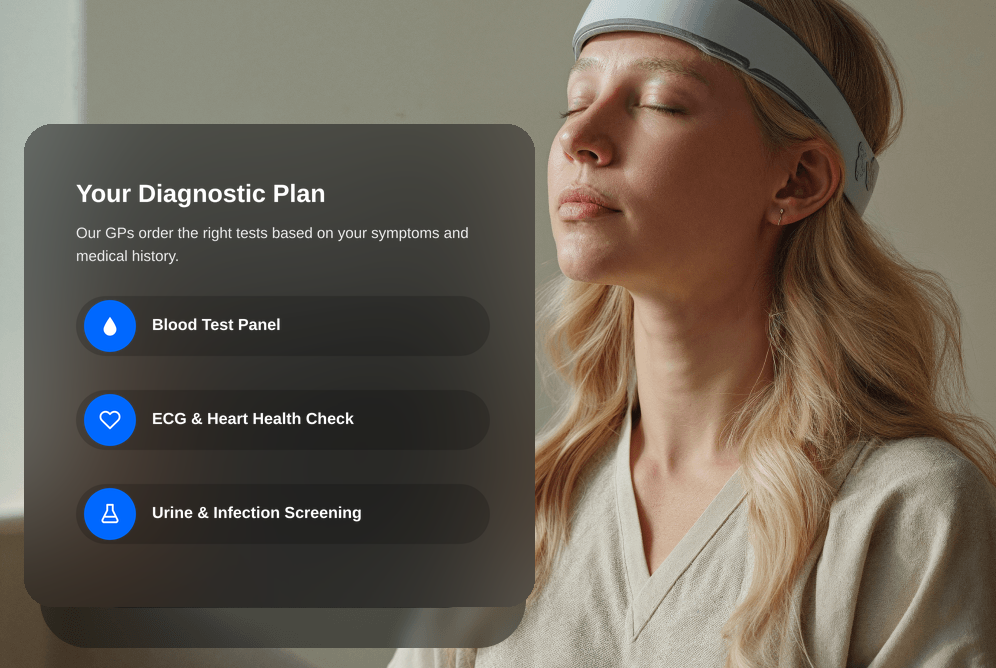
Diagnostic testing plan including blood test panel, ECG and urine screening
03

Tests and referrals, if you need them

Where testing will actually answer the question, we arrange it — blood tests and health screening through our laboratory partner, or a referral for ultrasound, X-ray, CT or MRI through private imaging providers. We will also tell you when a scan is not the right next step.
1–7 days
Personalised results and treatment plan from a private GP consultation
04

Results and next steps

Your GP talks you through what the results mean and agrees the next step with you. Every consultation ends with your treatment plan in writing, and any prescription goes to your own pharmacy.
20 minutes
GP follow-up reminder for ongoing care and progress monitoring
05

Ongoing care and follow-up

Follow-up appointments, progress monitoring and ongoing advice — including saying plainly when something needs in-person or NHS care instead.

Ongoing

How we compare

Time to be seen

Appointment length

Your NHS record in the room

Written treatment plan

Told when a test isn’t needed

Cost

Varies by practice

Typically 10 minutes

Yes, your full record

Not routinely

Usually

Free

Same day

Often 10 to 15 minutes

Usually not

Sometimes charged

Varies by provider

Often a subscription

Questions about our service

How quickly can I be seen?

Same-day access is usually available, from 6am to 10pm, seven days a week. You choose a time that suits you rather than waiting on hold at 8am.

Will I see the same doctor each time?

Yes. Care is led personally by Dr Mohammad Khan, so you are not passed between clinicians. Continuity is the point of a small practice: someone who knows your history and is listening attentively rather than working through a checklist.

Can you see my NHS records?

Yes, with your consent. We can access your Summary Care Record during the consultation, so your current medications, allergies and significant history are in the room. That means fewer questions you have already answered elsewhere, and safer prescribing.

Are you trying to replace my NHS GP?

No. We are not here to replace GPs, only to support them. Your NHS practice remains responsible for your ongoing care, and with your consent we write to them after the consultation. We are useful when you need to be seen sooner, or want more time than a standard appointment allows.

What is included in the appointment?

Twenty unhurried minutes and a comprehensive assessment. A written treatment plan is included, along with any prescription, sick note or referral letter arising from the consultation, at no extra charge.

How much does it cost?

£40 for 20 minutes, self-pay. Membership is optional and never required. Priced for fairness, because we are not here to charge extortionate amounts for access to a doctor.

What does “treatable online” actually mean?

It means the diagnosis can usually be made from your history and photographs, and that treatment can be arranged safely without examining you. Where a condition is not marked treatable online, it is because examination is the diagnosis — listening to a chest, feeling an abdomen, examining an ear or a joint — or because a procedure or device is needed.

Can you prescribe antibiotics?

Yes, where there is a genuine bacterial infection — cellulitis, impetigo, bacterial urine infections, confirmed strep throat. We will also frequently tell you that you do not need one. Most sore throats, coughs, colds and earaches are viral, and an antibiotic gives you the side effects with none of the benefit.

What if the GP cannot help with what I need?

If your problem turns out to be genuinely outside what we can do remotely, the doctor will tell you straight away, point you to the right service, and refund your fee in full. We would rather do that than fill twenty minutes to justify the charge.

What should I do in an emergency?

Call 999 or go to A&E — do not book an online appointment and do not wait for a reply to an email. For urgent problems that are not emergencies, NHS 111 is available 24 hours a day, online or by phone, and can direct you to the right service.

Patient reviews

What our patients say

No reviews published yet.
Ready to see a GP?20 minutes with a GMC-registered doctor. £40, usually same day.
Book a consultation