Home

/

Men's Health

/

Erectile Dysfunction

Treatable online

Erectile Dysfunction

Common, treatable, and sometimes the earliest warning sign of heart disease.

£40 · 20 minutes

Same-day availability

6am to 10pm, seven days

Assessed and treated by a GMC-registered GP

Prescriptions, sick notes and referral letters included

A written treatment plan after every appointment

Your NHS records in the room, with your consent

Clinically reviewed by Dr Mohammad Khan · Last reviewed

August 23, 2026

Book a consultation

A 20-minute appointment with a GMC-registered GP for £40. No membership required.

Private GP care led personally by Dr Mohammad Zubair Khan, GMC 7563469.

Why patients choose Cheshire Clinics

GMC registered doctors badge - every Cheshire Clinics consultation is with a General Medical Council registered GP

GMC-registered

Care led personally by Dr Khan

Royal College of General Practitioners badge - RCGP trained private GP consultations at Cheshire Clinics

RCGP-trained

Attentive, unhurried care that listens properly

Google five star reviews badge - Cheshire Clinics private GP online

Highly rated by patients

Five-star Google reviews from the people we have looked after

Care Quality Commission registered badge - Cheshire Clinics online GP service is registered with the CQC, England's independent regulator of health and social care

CQC-registered

Registered with the Care Quality Commission

Same-Day Appointments
Sick Notes
Private Prescriptions
Blood Tests
Menopause & HRT
Weight Management
Mental Health
Specialist Referrals
Same-Day Appointments
Sick Notes
Private Prescriptions
Blood Tests
Menopause & HRT
Weight Management
Mental Health
Specialist Referrals

Overview

Erectile dysfunction is difficulty getting or maintaining an erection firm enough for sex, persisting over time. Occasional difficulty is universal and means nothing; a consistent pattern over three months or more is worth assessing.

It is common and becomes more so with age — affecting a meaningful minority of men in their forties and the majority by their seventies — but it is never simply "getting older", and it is never simply a sexual problem.

An erection is a vascular event. It depends on healthy blood vessels widening on demand, and the arteries involved are among the narrowest in the body. That is why erectile dysfunction is frequently the earliest visible sign of cardiovascular disease, appearing on average three to five years before a cardiac event in men who go on to have one. Treating the symptom and ignoring that is a missed opportunity of a fairly serious kind.

So a proper consultation does two things: it gets you effective treatment, which usually works well; and it checks the blood vessels, blood pressure, cholesterol and blood sugar that the symptom is pointing at — which is what our Well Man panel is for.

Common symptoms

  • Difficulty getting an erection
  • Difficulty maintaining one long enough for sex
  • Reduced firmness
  • Reduced sexual desire, which is a different problem and points more towards hormones, mood or relationship factors than to blood vessels

The two questions that sort out the cause

1. Do you still get spontaneous erections — overnight, or on waking?

If yes, the mechanism works, and the cause is more likely psychological or situational. If those have faded away over months or years, that points to a physical, usually vascular, cause.

2. Did it start suddenly or gradually?

  • Sudden onset, tied to a particular event, partner or period of stress, and variable between situations — suggests a psychological component
  • Gradual decline over a year or more, consistent in all situations, with morning erections fading — suggests a physical cause

These are not mutually exclusive. A physical problem very commonly acquires a layer of performance anxiety on top, and treating only one half leaves people stuck.

Causes and risk factors

Vascular — the largest group

Medication — common, and often reversible

This is the first thing worth reviewing, because a change can resolve the problem entirely:

  • Beta blockers and thiazide diuretics — the two blood pressure drugs most associated with it
  • SSRI antidepressants, where sexual side effects are common and frequently unmentioned at the time of prescribing
  • Finasteride, used for hair loss and prostate enlargement
  • Some antipsychotics, and long-term opioids

Hormonal

Low testosterone — less often the cause than the internet suggests, and typically accompanied by low desire and fatigue rather than erectile difficulty alone. Thyroid disease and raised prolactin are less common but worth excluding.

Psychological

Performance anxiety, depression, stress, relationship difficulties, and — increasingly recognised in younger men — the effect of heavy pornography use on arousal expectations. These are genuine causes, not a label applied when tests are normal.

Other

  • Prostate surgery or pelvic radiotherapy
  • Neurological conditions including multiple sclerosis and spinal injury
  • Sleep apnoea, which is strongly associated and very commonly undiagnosed
  • Alcohol, and recreational drug use
  • Peyronie's disease — curvature with a palpable firm area, which needs a different approach

How it is diagnosed

The diagnosis is made from the history. What matters is establishing the type and identifying the underlying risk, and that is done with questions and blood tests rather than examination.

What should be measured in every man with new ED

  • Blood pressure
  • Full lipid profile — not total cholesterol alone
  • HbA1c, to identify diabetes or pre-diabetes
  • Morning testosterone, taken before 11am. Testosterone follows a daily rhythm and an afternoon sample is not interpretable — a great many men are told their level is low on the basis of a sample that should never have been taken at that hour
  • Thyroid function, and kidney and liver function
  • A formal cardiovascular risk score, which converts those numbers into a decision about whether treatment is warranted

Our Well Man panel covers this set in one visit.

Where testosterone is low

A single low result is not a diagnosis. It requires two morning samples, plus LH, FSH and prolactin to establish whether the problem is in the testes or the pituitary. Treating on one afternoon reading is how men end up on lifelong therapy they did not need.

What needs examining in person

Penile curvature or a palpable plaque, testicular abnormality, and prostate assessment where urinary symptoms coexist. We refer for these rather than working around them.

How we treat it online

This assesses well remotely — it is a history-based diagnosis, blood tests can be arranged, and many men find a private video appointment considerably easier than raising it in a ten-minute face-to-face slot.

1. Review the medication list first

Before anything is added, what you already take is reviewed. Switching a beta blocker or thiazide, or adjusting an antidepressant, resolves the problem in a proportion of men without any new drug at all.

2. PDE5 inhibitors

Sildenafil, tadalafil and similar drugs work for the large majority of men.

  • Sildenafil — taken about an hour before sex, lasting four to six hours, and less effective with a heavy or fatty meal
  • Tadalafil — effective for up to 36 hours, unaffected by food, and available as a low daily dose that removes the need to plan. Many men strongly prefer this
  • They do not create an erection on their own. Sexual stimulation is still required, and this is the commonest reason men conclude the tablet did not work
  • Try a full dose on at least four to eight separate occasions before deciding it has failed. A great many men abandon treatment after one disappointing attempt at a low dose

3. The absolute safety rule

Never take these with nitrates — GTN spray or tablets for angina, isosorbide, nicorandil, or recreational poppers. The combination can cause a catastrophic and potentially fatal fall in blood pressure. Anyone with unstable angina, a recent heart attack or stroke, or significant heart failure needs assessment before these are prescribed at all.

This is one of the clearest arguments against buying them online without a consultation — quite apart from the question of what is actually in an unregulated tablet.

4. Treating the cause, not only the symptom

Where blood pressure, cholesterol or blood sugar are raised, we treat those — which improves erectile function and, more importantly, changes what happens over the next decade.

5. Where we refer

Vacuum devices, injection therapy, Peyronie's disease, and surgical options go to urology. Where a psychological component predominates, psychosexual therapy is genuinely effective and we can refer for it — it is not a consolation prize.

Men's health consultation - private GP video appointment for prostate, testosterone and men's health concerns at Cheshire Clinics

Ready to talk to a GP about this?

Book a consultation
Important

When to seek urgent help

Go to A&E immediately for an erection lasting more than four hours (priapism), particularly if painful. This is a urological emergency — after four to six hours permanent tissue damage begins, and delay causes lasting loss of function. It is a recognised risk of injection therapy and, rarely, of tablets.

Call 999 for chest pain, severe breathlessness, or collapse — particularly after taking a PDE5 inhibitor, and above all if you have also taken any nitrate medication.

Seek prompt assessment for:

  • Erectile dysfunction developing alongside chest pain or breathlessness on exertion, which needs cardiac assessment before anything else
  • Sudden loss of vision or hearing after taking a PDE5 inhibitor — rare, but stop the drug and seek help the same day
  • A new testicular lump or swelling
  • ED with numbness in the groin or saddle area, or with bladder or bowel changes — which suggests a spinal cause
  • New penile curvature with pain or a firm lump

Book a routine consultation for consistent difficulty over three months, ED that has appeared alongside new medication, ED with low mood or loss of desire, or ED in a man under 40 — where an underlying cause is more likely and more important to find.

Prevention and self-care

This is the unusual area of medicine where what motivates you and what matters clinically are the same thing. Everything below improves erectile function and reduces cardiovascular risk.

The changes with real evidence

  • Stop smoking. Nicotine constricts blood vessels directly, and vascular function measurably improves within weeks of stopping
  • Regular aerobic exercise. There is good trial evidence for erectile function specifically — this is not generic advice. Around 40 minutes of moderate activity, four times a week, produces measurable improvement
  • Lose excess weight. Weight loss improves erectile function in overweight men, partly through better vascular health and partly because fat tissue converts testosterone to oestrogen
  • Reduce alcohol. It impairs performance immediately and, at sustained high intake, lowers testosterone
  • Treat blood pressure, cholesterol and blood sugar. Controlling these protects the small arteries that erections depend on

Sleep

Testosterone is produced predominantly during sleep. Chronic short sleep lowers it measurably. Untreated sleep apnoea is strongly associated with ED and is very commonly undiagnosed — if you snore heavily, wake unrefreshed or have been told you stop breathing at night, that is worth investigating in its own right.

The psychological side

  • Performance anxiety is self-reinforcing. One difficult occasion creates anxiety, which causes another, and the cycle establishes itself quickly. Recognising it is most of the way to breaking it
  • Taking penetration off the table for a period, deliberately, often resolves it faster than trying harder
  • Talking to your partner tends to reduce the pressure rather than increase it, though it rarely feels that way beforehand
  • Heavy pornography use can shift arousal expectations, particularly in younger men. Reducing it is worth trying where the pattern fits

What not to buy

Do not buy erection medication from unregulated websites. Counterfeit tablets are widespread, contents are unpredictable, and the reason a prescription exists is the nitrate interaction — which can kill. Herbal "natural Viagra" products have repeatedly been found to contain undeclared sildenafil at unknown doses.

NHS or private

Sildenafil is available over the counter from pharmacies as Viagra Connect, and generic sildenafil on prescription is very cheap. Your NHS GP treats erectile dysfunction free, and NHS prescriptions for sildenafil are available to anyone — the old restriction to specific conditions was removed.

So the medication itself is not what a private consultation is for.

What it is for is the thing most services skip entirely: erectile dysfunction is a cardiovascular symptom. The arteries supplying the penis are narrower than the coronary arteries, so ED frequently appears two to five years before a heart attack or stroke. It is an early warning, and treating it without assessing cardiovascular risk misses the point of the presentation.

That assessment — blood pressure, lipids, HbA1c, testosterone — is where a consultation genuinely earns its fee, and it is what the online pill retailers do not do.

Where money is wasted: “ED supplements” and testosterone boosters, and shockwave therapy sold privately, where evidence remains limited.

The safety point that matters: never combine sildenafil or tadalafil with nitrates — including GTN spray and recreational poppers — which can cause a catastrophic fall in blood pressure.

Sudden-onset ED, particularly in a younger man with no risk factors, is more likely psychological, and that needs a different conversation rather than a stronger tablet.

Evidence and guidelines

NICE Clinical Knowledge Summary, Erectile dysfunction, is the principal reference. It recommends assessing cardiovascular risk in all men presenting with ED, since it is an independent marker of cardiovascular disease — the basis for the central point above.

CKS recommends measuring morning testosterone, alongside HbA1c, lipids and blood pressure, as part of initial assessment.

CKS recommends a PDE5 inhibitor as first-line treatment for most men, and notes that NHS prescribing restrictions on sildenafil were lifted, allowing generic sildenafil on the NHS.

CKS is explicit that PDE5 inhibitors are contraindicated with nitrates and nicorandil, and cautions on recent stroke or myocardial infarction and significant hypotension.

British Society for Sexual Medicine guidelines cover second-line options and the assessment of psychogenic ED, where sudden onset and preserved nocturnal erections are characteristic.

Common questions

Is this just part of getting older?

No. ED becomes more common with age because vascular disease, diabetes and medication use become more common with age — not because ageing causes it directly. It is a signal worth investigating at any age, and it is treatable at any age.

Why do I need blood tests for a sexual problem?

Because in most men this is a blood vessel problem, and blood vessels are not confined to one organ. The arteries involved in an erection are narrower than the coronary arteries, so they show narrowing first — which is why ED tends to precede a cardiac event by several years. Those years are the opportunity, and blood tests are how you use them.

The tablet did not work. What now?

Usually one of four things. The dose was too low; you tried it too few times — four to eight attempts at a full dose is the fair test; you took sildenafil after a heavy meal; or there was no sexual stimulation, which these drugs require. If a proper trial genuinely fails, alternatives and referral exist. Roughly seven in ten men respond to a PDE5 inhibitor used correctly.

Is it all in my head?

Sometimes, often partly, rarely entirely. Morning erections and sudden situational onset both point to a psychological component — and psychological causes are real, common, and treatable, not a way of saying nothing is wrong. Most men have some element of both, which is why treating only one half tends to disappoint.

Can I buy Viagra online without seeing anyone?

You can, and we would advise against it. Counterfeits are common, and the reason these drugs are prescription-only is the interaction with nitrates, which can cause a fatal drop in blood pressure. There is also the point that buying a tablet skips the assessment that might have found the diabetes or the raised blood pressure underneath.

Do I need testosterone?

Probably not. Low testosterone is a less frequent cause than online marketing implies, and it usually presents with low desire and fatigue rather than erectile difficulty alone. It requires two morning samples with pituitary hormones before anyone should be treating it. A single afternoon reading is not a basis for lifelong therapy.

Will my partner think it is about them?

Frequently, unless you say otherwise — which is one of the more painful and avoidable parts of this. Explaining that it is a circulation problem, and that you are having it looked at, generally reduces the tension considerably.

Can it be reversed?

Often, yes. Where it is medication-related, changing the drug can resolve it. Where it is lifestyle and vascular, stopping smoking, exercising and losing weight produce genuine measurable improvement. Where it is psychological, therapy works. Treatment is not necessarily permanent.

Dr Mohammad Zubair Khan, GMC-registered private GP and founder of Cheshire Clinics
Clinically reviewed by Dr Mohammad Zubair Khan, GMC 7563469
Last reviewed

August 23, 2026

How it works

What happens when you book

£40 for a 20-minute appointment with a GMC-registered GP, 6am to 10pm, seven days a week. Membership is optional and never required.
Cheshire Clinics online GP appointment booking confirmation on mobile
01

Book your appointment

Pick a time that suits you — 6am to 10pm, seven days a week, including weekends and bank holidays. £40 for 20 minutes, self-pay, with no insurance to arrange.
5–10 minutes
Online video consultation with a GMC-registered private GP
02

Meet your GP

A 20-minute video or phone consultation with a GMC-registered GP — long enough for a proper conversation about your symptoms, your history and what matters to you.
20 minutes
Diagnostic testing plan including blood test panel, ECG and urine screening
03

Tests and referrals, if you need them

Where testing will actually answer the question, we arrange it — blood tests and health screening through our laboratory partner, or a referral for ultrasound, X-ray, CT or MRI through private imaging providers. We will also tell you when a scan is not the right next step.
1–7 days
Personalised results and treatment plan from a private GP consultation
04

Results and next steps

Your GP talks you through what the results mean and agrees the next step with you. Every consultation ends with your treatment plan in writing, and any prescription goes to your own pharmacy.
20 minutes
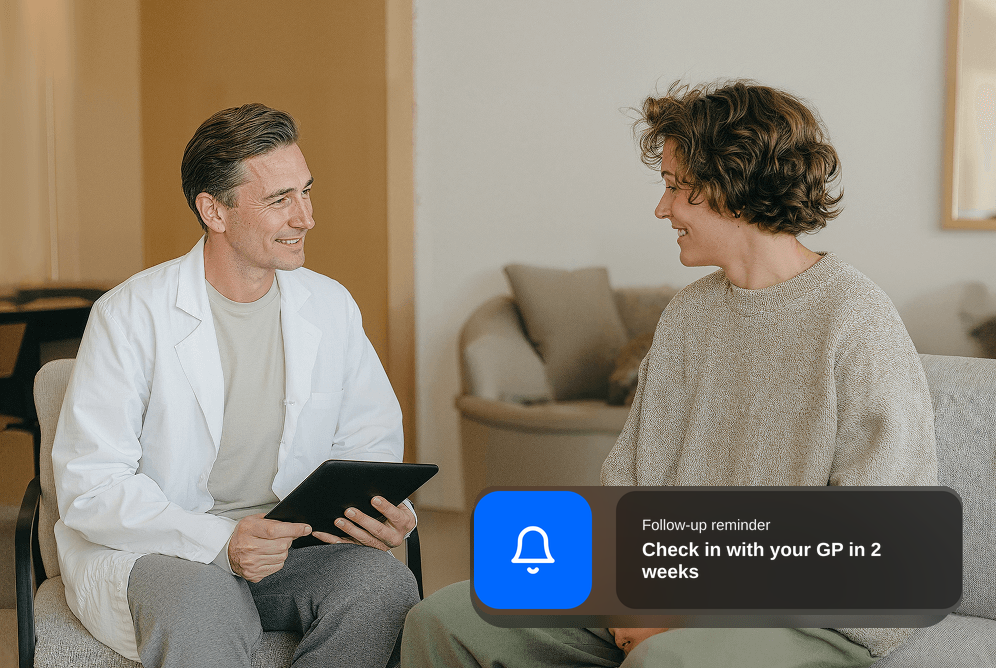
GP follow-up reminder for ongoing care and progress monitoring
05

Ongoing care and follow-up

Follow-up appointments, progress monitoring and ongoing advice — including saying plainly when something needs in-person or NHS care instead.

Ongoing

How we compare

Time to be seen

Appointment length

Your NHS record in the room

Written treatment plan

Told when a test isn’t needed

Cost

Varies by practice

Typically 10 minutes

Yes, your full record

Not routinely

Usually

Free

Same day

Often 10 to 15 minutes

Usually not

Sometimes charged

Varies by provider

Often a subscription

Questions about our service

How quickly can I be seen?

Same-day access is usually available, from 6am to 10pm, seven days a week. You choose a time that suits you rather than waiting on hold at 8am.

Will I see the same doctor each time?

Yes. Care is led personally by Dr Mohammad Khan, so you are not passed between clinicians. Continuity is the point of a small practice: someone who knows your history and is listening attentively rather than working through a checklist.

Can you see my NHS records?

Yes, with your consent. We can access your Summary Care Record during the consultation, so your current medications, allergies and significant history are in the room. That means fewer questions you have already answered elsewhere, and safer prescribing.

Are you trying to replace my NHS GP?

No. We are not here to replace GPs, only to support them. Your NHS practice remains responsible for your ongoing care, and with your consent we write to them after the consultation. We are useful when you need to be seen sooner, or want more time than a standard appointment allows.

What is included in the appointment?

Twenty unhurried minutes and a comprehensive assessment. A written treatment plan is included, along with any prescription, sick note or referral letter arising from the consultation, at no extra charge.

How much does it cost?

£40 for 20 minutes, self-pay. Membership is optional and never required. Priced for fairness, because we are not here to charge extortionate amounts for access to a doctor.

What does “treatable online” actually mean?

It means the diagnosis can usually be made from your history and photographs, and that treatment can be arranged safely without examining you. Where a condition is not marked treatable online, it is because examination is the diagnosis — listening to a chest, feeling an abdomen, examining an ear or a joint — or because a procedure or device is needed.

Can you prescribe antibiotics?

Yes, where there is a genuine bacterial infection — cellulitis, impetigo, bacterial urine infections, confirmed strep throat. We will also frequently tell you that you do not need one. Most sore throats, coughs, colds and earaches are viral, and an antibiotic gives you the side effects with none of the benefit.

What if the GP cannot help with what I need?

If your problem turns out to be genuinely outside what we can do remotely, the doctor will tell you straight away, point you to the right service, and refund your fee in full. We would rather do that than fill twenty minutes to justify the charge.

What should I do in an emergency?

Call 999 or go to A&E — do not book an online appointment and do not wait for a reply to an email. For urgent problems that are not emergencies, NHS 111 is available 24 hours a day, online or by phone, and can direct you to the right service.

Patient reviews

What our patients say

No reviews published yet.
Ready to see a GP?20 minutes with a GMC-registered doctor. £40, usually same day.
Book a consultation