Home

/

Heart & Circulation

/

High Blood Pressure

Treatable online

High Blood Pressure

Almost always symptomless, and one of the largest preventable causes of stroke and heart attack.

£40 · 20 minutes

Same-day availability

6am to 10pm, seven days

Assessed and treated by a GMC-registered GP

Prescriptions, sick notes and referral letters included

A written treatment plan after every appointment

Your NHS records in the room, with your consent

Clinically reviewed by Dr Mohammad Khan · Last reviewed

August 23, 2026

Book a consultation

A 20-minute appointment with a GMC-registered GP for £40. No membership required.

Private GP care led personally by Dr Mohammad Zubair Khan, GMC 7563469.

Why patients choose Cheshire Clinics

GMC registered doctors badge - every Cheshire Clinics consultation is with a General Medical Council registered GP

GMC-registered

Care led personally by Dr Khan

Royal College of General Practitioners badge - RCGP trained private GP consultations at Cheshire Clinics

RCGP-trained

Attentive, unhurried care that listens properly

Google five star reviews badge - Cheshire Clinics private GP online

Highly rated by patients

Five-star Google reviews from the people we have looked after

Care Quality Commission registered badge - Cheshire Clinics online GP service is registered with the CQC, England's independent regulator of health and social care

CQC-registered

Registered with the Care Quality Commission

Same-Day Appointments
Sick Notes
Private Prescriptions
Blood Tests
Menopause & HRT
Weight Management
Mental Health
Specialist Referrals
Same-Day Appointments
Sick Notes
Private Prescriptions
Blood Tests
Menopause & HRT
Weight Management
Mental Health
Specialist Referrals

Overview

High blood pressure causes no symptoms in almost everyone who has it. That is the entire problem — it is diagnosed by measurement or not at all, and untreated it is among the largest preventable causes of stroke, heart attack, kidney disease and vascular dementia.

Around one in four UK adults has it, and a substantial proportion do not know.

Common symptoms

Usually none. Blood pressure is not something you can feel, and waiting for symptoms means waiting for damage.

Very high readings can cause headache, visual disturbance, nosebleeds or breathlessness — but these indicate severe hypertension needing urgent attention, not typical raised blood pressure.

Causes and risk factors

  • Age — risk rises steadily from 40 onward
  • Family history
  • Excess weight, particularly around the middle
  • Salt intake, alcohol, inactivity
  • Sleep apnoea, frequently missed
  • South Asian and Black African or Caribbean heritage — higher risk, often earlier
  • Some medications, including NSAIDs and certain contraceptives

How it is diagnosed

One high reading diagnoses nothing

Blood pressure varies constantly — with stress, pain, caffeine, a full bladder, and with being in a clinic at all.

Diagnosis needs readings over time, and home readings are more reliable than clinic ones. White-coat effect is real and substantial: a meaningful proportion of people with raised clinic readings have entirely normal blood pressure at home.

How to measure it properly at home

  • An upper-arm monitor, not a wrist one. Around £20, and validated models are listed by the British and Irish Hypertension Society
  • Sit quietly for five minutes first, back supported, feet flat, arm at heart level
  • No caffeine or exercise for 30 minutes, and empty your bladder
  • Two readings a minute apart, morning and evening, for seven days. Discard day one and average the rest

That week of readings is worth more than any single measurement anyone takes of you.

What gets checked alongside

Blood pressure is never assessed in isolation, because treatment depends on total cardiovascular risk rather than the number alone.

  • Kidney function and urine protein — kidneys both cause and suffer from high blood pressure
  • Cholesterol and HbA1c, which feed the risk calculation
  • A formal ten-year risk score, which is what actually decides whether medication is worthwhile

Where a cause should be looked for

Diagnosis under 40, very high readings, or blood pressure that resists three medications warrants looking for an underlying cause — kidney disease, hormonal conditions, and sleep apnoea, which is common, treatable, and frequently missed.

How we treat it online

Diagnosis needs readings over time, not a single measurement — and home readings are more reliable than clinic ones, which are inflated by white-coat effect. A home monitor costs around £20 and is genuinely worth having.

The consultation covers your readings, calculates your ten-year cardiovascular risk properly, and arranges kidney function and cholesterol testing, since these change what treatment is appropriate.

Treatment is medication where indicated, alongside the changes that genuinely move the number.

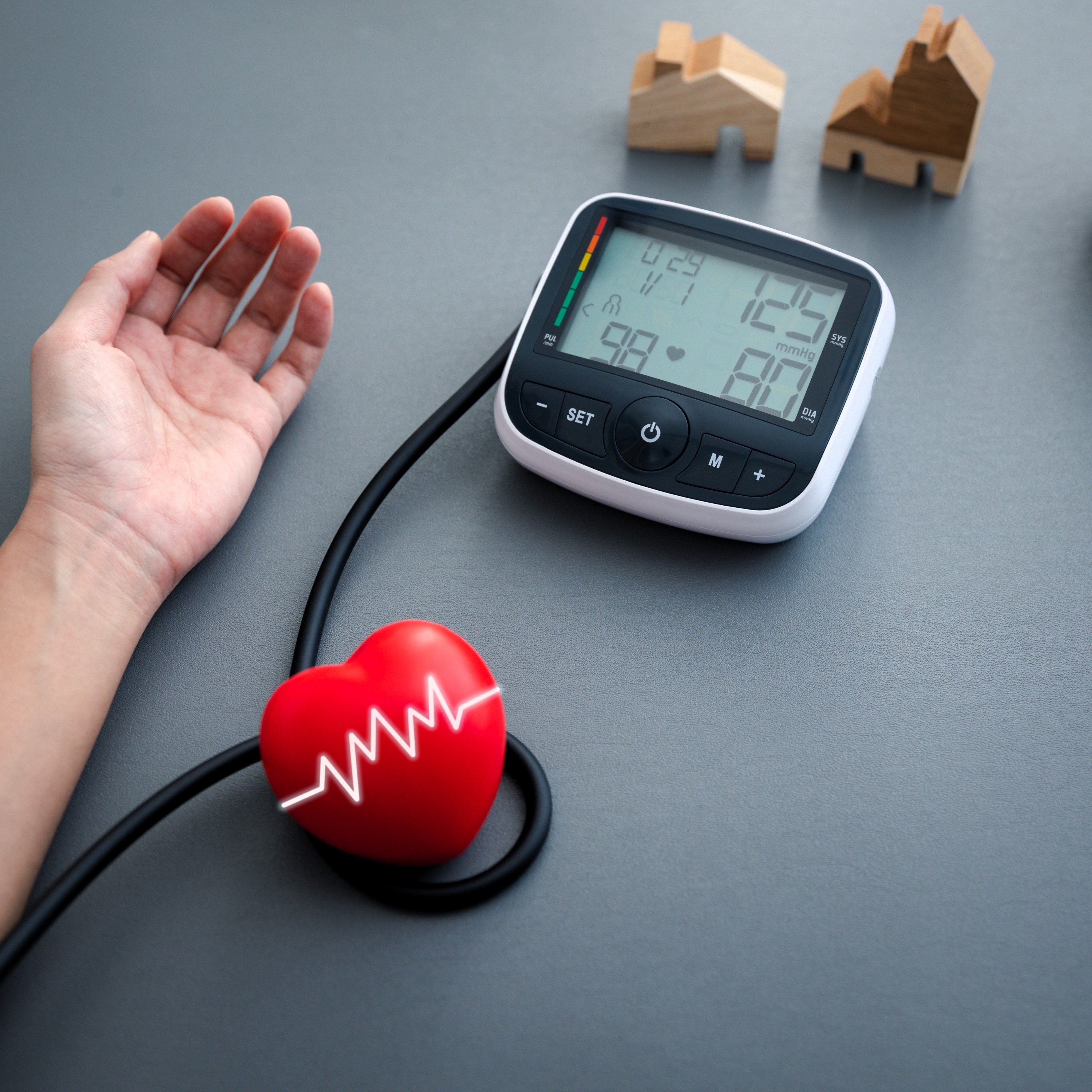
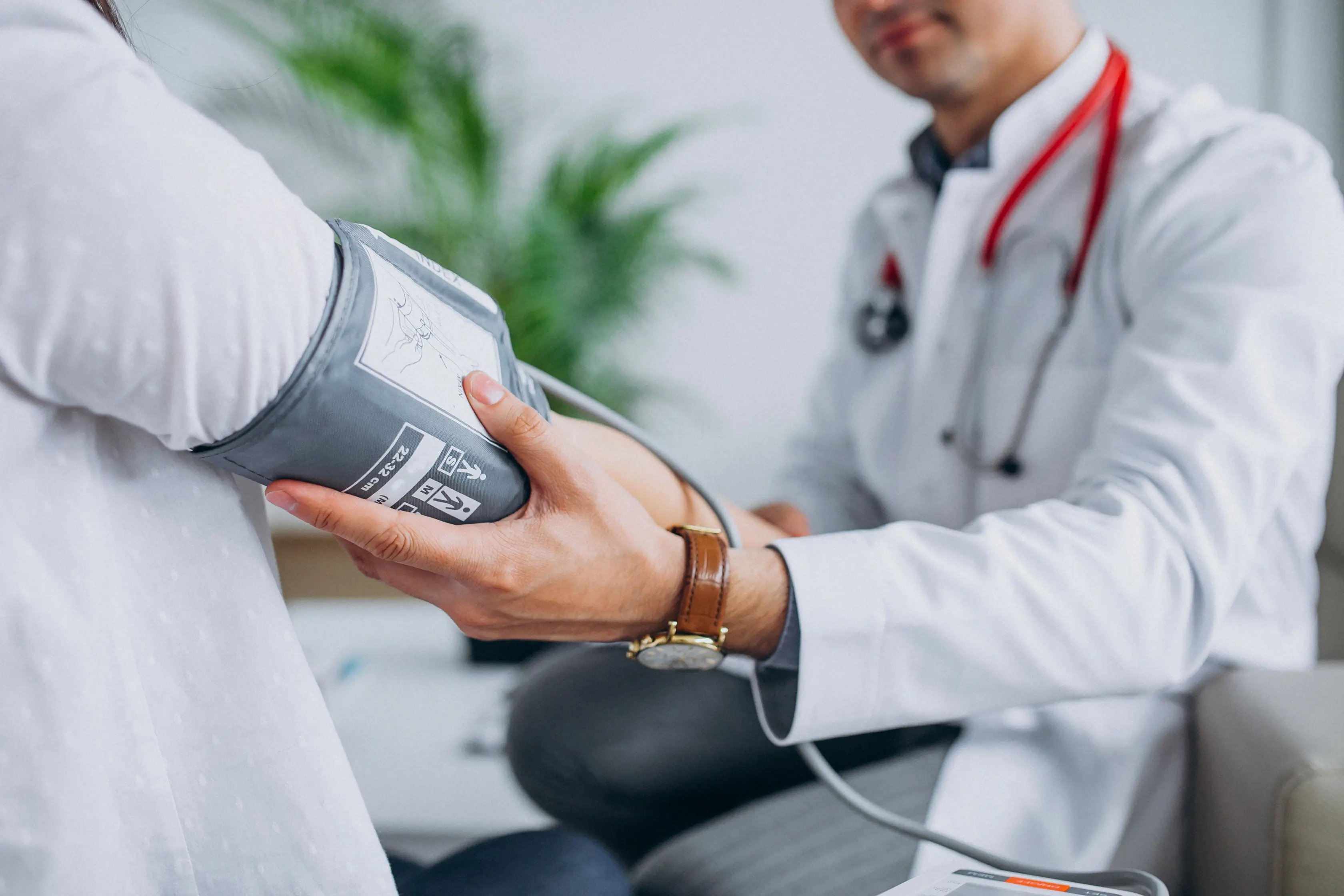
Heart and circulation consultation - private GP assessment for blood pressure, cholesterol and cardiovascular risk at Cheshire Clinics

Ready to talk to a GP about this?

Book a consultation
Important

When to seek urgent help

Call 999 for chest pain, sudden severe headache, weakness or numbness on one side, difficulty speaking, or sudden visual loss.

A reading of 180/120 or above with symptoms needs same-day medical attention. Without symptoms it still needs urgent review.

Prevention and self-care

What moves the number most

  • Salt. The majority comes from processed food, bread and eating out rather than the salt cellar — so reading labels does more than removing the shaker
  • Weight. Losing even a modest amount produces a measurable fall
  • Alcohol. One of the most underestimated contributors, and cutting back works quickly
  • Exercise. 150 minutes a week of moderate activity lowers blood pressure meaningfully
  • Stopping smoking. It does not lower blood pressure much directly, but it removes the risk that blood pressure is being treated to reduce

Things worth knowing

Liquorice raises blood pressure genuinely and substantially in some people, and is a recognised cause of resistant hypertension.

Regular NSAIDs — ibuprofen, naproxen — raise it too, which matters if you take them for chronic pain.

Decongestants and some cold remedies do the same.

Free things worth using

  • Pharmacy blood pressure checks, free and without an appointment
  • The NHS Health Check, free every five years from 40 to 74
  • Free NHS stop-smoking support

On stopping medication

Blood pressure medication treats rather than cures — the number rises again if you stop, which is not a sign it was not working.

Where weight loss or lifestyle change has been substantial, dose reduction is genuinely possible, but it is done deliberately and with monitoring, not by simply stopping.

NHS or private

NHS care for high blood pressure is free, comprehensive, and genuinely good — diagnosis, monitoring, all the medications as cheap generics, and annual review including bloods and cardiovascular risk assessment. For a long-term condition needing lifelong monitoring, the NHS is the right home for this, and we would say so.

The most useful purchase is not a consultation. A validated home blood pressure monitor costs around twenty to thirty pounds, and home readings are more reliable than clinic ones — they exclude white coat hypertension, which affects a substantial minority and leads to unnecessary treatment.

Check it is validated by the British and Irish Hypertension Society; many cheap wrist monitors are not, and an inaccurate monitor is worse than none.

Where a private consultation is genuinely useful is interpreting home readings, discussing whether treatment is warranted, and reviewing cardiovascular risk properly — which takes longer than ten minutes and is often rushed.

Free and more effective than people expect: reducing salt, reducing alcohol, regular activity, and weight loss where relevant. Salt reduction alone produces a meaningful fall in blood pressure, and most dietary salt comes from processed food rather than the salt cellar.

A blood pressure of 180/120 or above, particularly with headache, chest pain, breathlessness or visual symptoms, needs same-day assessment.

If you are aged 40 to 74 and have no diagnosed cardiovascular condition, the NHS Health Check is free every five years and covers blood pressure, cholesterol and diabetes risk. Ask your own practice before paying for a private health screen — it duplicates most of it.

Evidence and guidelines

NICE NG136, Hypertension in adults: diagnosis and management, is the governing guideline. It recommends ambulatory or home blood pressure monitoring to confirm the diagnosis rather than relying on clinic readings, which is the basis for the point above.

NG136 sets treatment thresholds — offering treatment at stage 1 hypertension in people under 80 with cardiovascular disease, diabetes, kidney disease, target organ damage or a 10-year QRISK of 10% or more.

NG136 sets out the treatment steps by age and ethnicity — ACE inhibitor or ARB for those under 55, calcium channel blocker for those 55 and over or of Black African or African-Caribbean family origin.

NG136 recommends assessing target organ damage — urine ACR, bloods, ECG and fundoscopy — at diagnosis.

NG136 defines accelerated hypertension requiring same-day referral, underpinning the urgent advice above.

Common questions

I feel fine. Do I really need treatment?

Feeling fine is the normal experience of high blood pressure — it causes no symptoms in almost everyone until it causes a stroke or a heart attack.

Treatment is not for how you feel now. It is for what happens in fifteen years.

My readings are fine at home but high at the surgery.

That is white-coat effect and it is extremely common. Home readings are the more reliable of the two.

Bring a week of properly taken home readings — they carry more weight than anything measured in a clinic.

Which monitor should I buy?

An upper-arm cuff, around £20, from the validated list published by the British and Irish Hypertension Society.

Avoid wrist monitors — position affects them too much to be reliable.

Will I be on tablets for life?

Usually, yes — but not always, and not necessarily at the same dose.

Substantial weight loss or a big change in alcohol intake can allow the dose to come down. That is done with monitoring rather than by stopping and hoping.

What is a normal reading?

Below 140/90 measured in a clinic, or below 135/85 at home, is the usual treatment threshold for most adults — with lower targets for some, including people with diabetes or kidney disease.

Your target is individual, and depends on age and overall risk.

Does stress cause it?

Stress raises blood pressure at the moment you are stressed. Whether chronic stress causes sustained hypertension is less clear.

What is clear is that stress drives the things that do — poor sleep, alcohol, weight gain, inactivity.

Could something else be causing it?

Worth looking for if you are under 40, your readings are very high, or three medications are not controlling it.

Sleep apnoea is the commonest missed cause, and treating it can improve blood pressure substantially.

Are the side effects worth it?

Most people take these medicines without difficulty — and where side effects occur, switching within or between drug classes usually resolves them.

A dry cough on an ACE inhibitor is common and easily fixed by changing class. Do not simply stop and say nothing; there are several alternatives.

Dr Mohammad Zubair Khan, GMC-registered private GP and founder of Cheshire Clinics
Clinically reviewed by Dr Mohammad Zubair Khan, GMC 7563469
Last reviewed

August 23, 2026

How it works

What happens when you book

£40 for a 20-minute appointment with a GMC-registered GP, 6am to 10pm, seven days a week. Membership is optional and never required.
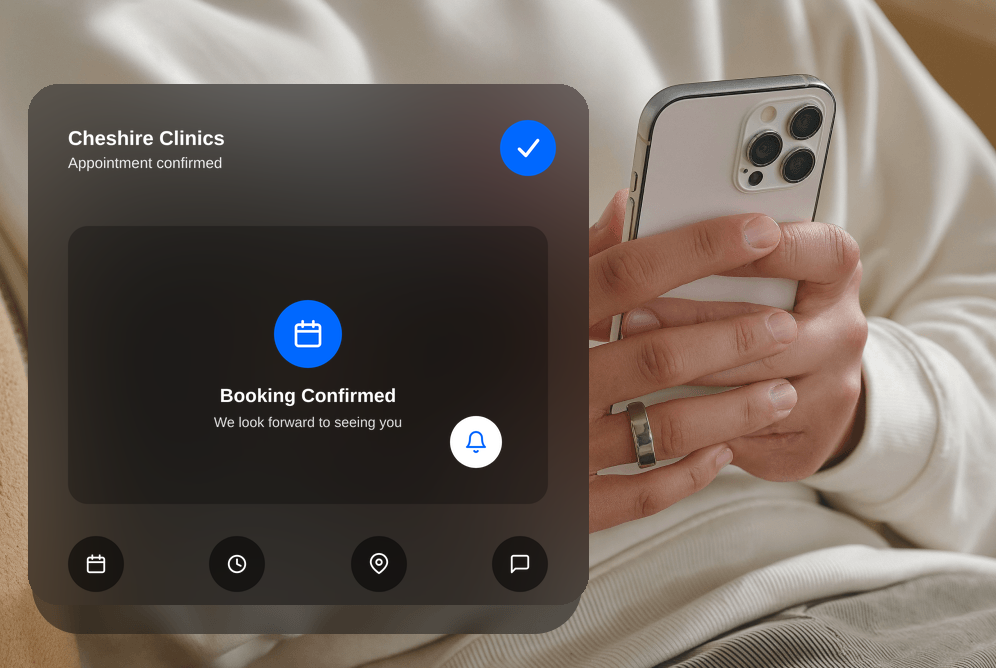
Cheshire Clinics online GP appointment booking confirmation on mobile
01

Book your appointment

Pick a time that suits you — 6am to 10pm, seven days a week, including weekends and bank holidays. £40 for 20 minutes, self-pay, with no insurance to arrange.
5–10 minutes
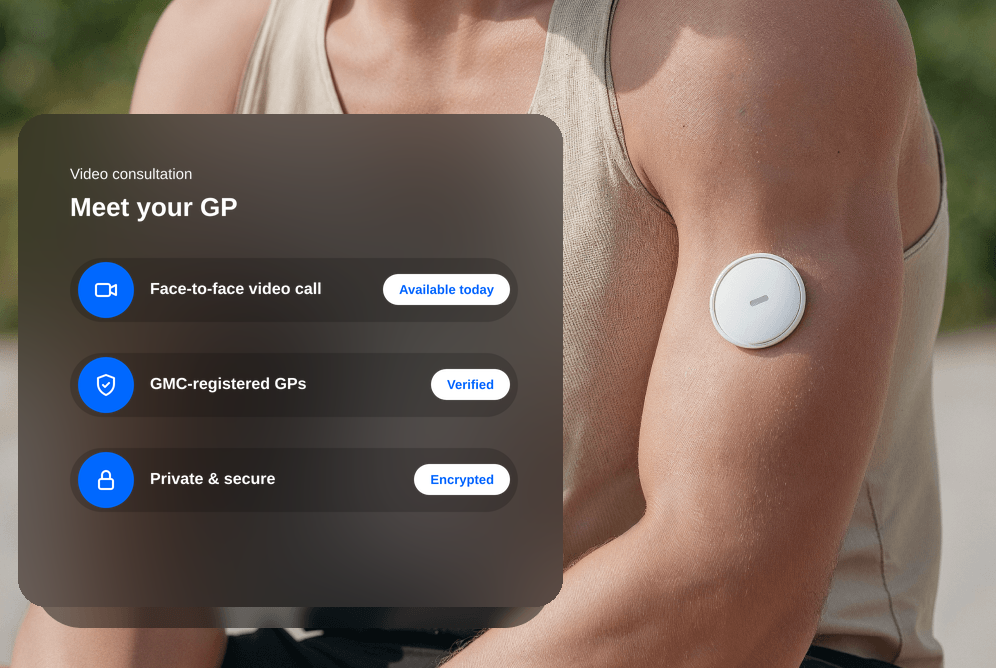
Online video consultation with a GMC-registered private GP
02

Meet your GP

A 20-minute video or phone consultation with a GMC-registered GP — long enough for a proper conversation about your symptoms, your history and what matters to you.
20 minutes
Diagnostic testing plan including blood test panel, ECG and urine screening
03

Tests and referrals, if you need them

Where testing will actually answer the question, we arrange it — blood tests and health screening through our laboratory partner, or a referral for ultrasound, X-ray, CT or MRI through private imaging providers. We will also tell you when a scan is not the right next step.
1–7 days
Personalised results and treatment plan from a private GP consultation
04

Results and next steps

Your GP talks you through what the results mean and agrees the next step with you. Every consultation ends with your treatment plan in writing, and any prescription goes to your own pharmacy.
20 minutes
GP follow-up reminder for ongoing care and progress monitoring
05

Ongoing care and follow-up

Follow-up appointments, progress monitoring and ongoing advice — including saying plainly when something needs in-person or NHS care instead.

Ongoing

How we compare

Time to be seen

Appointment length

Your NHS record in the room

Written treatment plan

Told when a test isn’t needed

Cost

Varies by practice

Typically 10 minutes

Yes, your full record

Not routinely

Usually

Free

Same day

Often 10 to 15 minutes

Usually not

Sometimes charged

Varies by provider

Often a subscription

Questions about our service

How quickly can I be seen?

Same-day access is usually available, from 6am to 10pm, seven days a week. You choose a time that suits you rather than waiting on hold at 8am.

Will I see the same doctor each time?

Yes. Care is led personally by Dr Mohammad Khan, so you are not passed between clinicians. Continuity is the point of a small practice: someone who knows your history and is listening attentively rather than working through a checklist.

Can you see my NHS records?

Yes, with your consent. We can access your Summary Care Record during the consultation, so your current medications, allergies and significant history are in the room. That means fewer questions you have already answered elsewhere, and safer prescribing.

Are you trying to replace my NHS GP?

No. We are not here to replace GPs, only to support them. Your NHS practice remains responsible for your ongoing care, and with your consent we write to them after the consultation. We are useful when you need to be seen sooner, or want more time than a standard appointment allows.

What is included in the appointment?

Twenty unhurried minutes and a comprehensive assessment. A written treatment plan is included, along with any prescription, sick note or referral letter arising from the consultation, at no extra charge.

How much does it cost?

£40 for 20 minutes, self-pay. Membership is optional and never required. Priced for fairness, because we are not here to charge extortionate amounts for access to a doctor.

What does “treatable online” actually mean?

It means the diagnosis can usually be made from your history and photographs, and that treatment can be arranged safely without examining you. Where a condition is not marked treatable online, it is because examination is the diagnosis — listening to a chest, feeling an abdomen, examining an ear or a joint — or because a procedure or device is needed.

Can you prescribe antibiotics?

Yes, where there is a genuine bacterial infection — cellulitis, impetigo, bacterial urine infections, confirmed strep throat. We will also frequently tell you that you do not need one. Most sore throats, coughs, colds and earaches are viral, and an antibiotic gives you the side effects with none of the benefit.

What if the GP cannot help with what I need?

If your problem turns out to be genuinely outside what we can do remotely, the doctor will tell you straight away, point you to the right service, and refund your fee in full. We would rather do that than fill twenty minutes to justify the charge.

What should I do in an emergency?

Call 999 or go to A&E — do not book an online appointment and do not wait for a reply to an email. For urgent problems that are not emergencies, NHS 111 is available 24 hours a day, online or by phone, and can direct you to the right service.

Patient reviews

What our patients say

No reviews published yet.
Ready to see a GP?20 minutes with a GMC-registered doctor. £40, usually same day.
Book a consultation