Heart Failure

A misleading name. The heart has not failed, it is pumping less efficiently and modern treatment works well.

£40 · 20 minutes

Same-day availability

6am to 10pm, seven days

Assessed and treated by a GMC-registered GP

Prescriptions, sick notes and referral letters included

A written treatment plan after every appointment

Your NHS records in the room, with your consent

Clinically reviewed by Dr Mohammad Khan · Last reviewed

August 30, 2026

Book a consultation

A 20-minute appointment with a GMC-registered GP for £40. No membership required.

Private GP care led personally by Dr Mohammad Zubair Khan, GMC 7563469.

Why patients choose Cheshire Clinics

GMC registered doctors badge - every Cheshire Clinics consultation is with a General Medical Council registered GP

GMC-registered

Care led personally by Dr Khan

Royal College of General Practitioners badge - RCGP trained private GP consultations at Cheshire Clinics

RCGP-trained

Attentive, unhurried care that listens properly

Google five star reviews badge - Cheshire Clinics private GP online

Highly rated by patients

Five-star Google reviews from the people we have looked after

Care Quality Commission registered badge - Cheshire Clinics online GP service is registered with the CQC, England's independent regulator of health and social care

CQC-registered

Registered with the Care Quality Commission

Same-Day Appointments
Sick Notes
Private Prescriptions
Blood Tests
Menopause & HRT
Weight Management
Mental Health
Specialist Referrals
Same-Day Appointments
Sick Notes
Private Prescriptions
Blood Tests
Menopause & HRT
Weight Management
Mental Health
Specialist Referrals

Overview

The name is the first problem. Heart failure does not mean the heart has stopped or is about to. It means the heart is not pumping as efficiently as it should, so the body compensates — and the symptoms come largely from that compensation.

Around a million people in the UK live with it. Modern treatment has changed the outlook substantially over the last two decades, and someone diagnosed today has a considerably better prospect than the name suggests.

There are two broad types, and the distinction matters because the treatments differ. In one the heart muscle is weakened and pumps out too little with each beat. In the other the pumping strength is preserved but the heart has become stiff and fills poorly — this type is commoner in older people, in women, and alongside high blood pressure and diabetes, and it is more often missed.

Common symptoms

The three that matter most are breathlessness, ankle swelling and fatigue. Individually they are common and unremarkable; together they are worth a blood test.

  • Breathlessness — initially on exertion, later on less and less
  • Breathlessness lying flat, so you need more pillows than you used to. This is a genuinely useful clue and people rarely mention it unless asked
  • Waking at night short of breath, needing to sit up or open a window
  • Swollen ankles and legs, worse by the evening and better by morning
  • Fatigue and reduced exercise tolerance, often the earliest change
  • Weight gain over days rather than weeks — fluid, not fat
  • A persistent cough, sometimes worse lying down
  • Reduced appetite, bloating, or a swollen abdomen

The pillow question and the weight question are the two most informative things you can be asked, and both are easy to answer before an appointment.

Causes and risk factors

  • Coronary artery disease and previous heart attack — the commonest cause in the UK
  • High blood pressure, particularly when long-standing and poorly controlled
  • Atrial fibrillation, especially when the rate has been fast for months
  • Heart valve disease
  • Diabetes
  • Alcohol in sustained excess, which can weaken heart muscle directly and is partly reversible on stopping
  • Cardiomyopathy, including inherited forms and one occurring around pregnancy
  • Thyroid disease, in both directions
  • Some chemotherapy drugs, which is why cardiac monitoring forms part of cancer care
  • Iron deficiency — both a cause of decompensation and a treatable problem in its own right, and one of the most under-recognised aspects of heart failure care

How it is diagnosed

The blood test is the gateway

NT-proBNP is the test that opens or closes the question. It is a marker released when the heart muscle is under strain, and UK guidance uses it to decide who needs an echocardiogram and how urgently.

  • Above 2,000 ng/L — specialist assessment and echocardiogram within two weeks
  • Between 400 and 2,000 ng/L — within six weeks
  • Below 400 ng/L — heart failure is unlikely, and another explanation should be sought

That last line is genuinely useful. A normal NT-proBNP largely rules heart failure out, which spares a great many people an unnecessary wait and points the investigation elsewhere.

What can make the result misleading

Obesity lowers NT-proBNP, so a borderline result in someone with a high BMI carries more weight than the number suggests. Atrial fibrillation, kidney impairment and older age raise it without heart failure being present.

The echocardiogram confirms it

An ultrasound of the heart measures the ejection fraction — the proportion of blood pumped out with each beat — and looks at the valves and the heart muscle. This is what separates the reduced-ejection type from the preserved-ejection type, and that distinction determines treatment.

What else is checked

ECG, full blood count, kidney and thyroid function, HbA1c and iron studies. Iron deficiency is present in a large proportion of people with heart failure and treating it improves symptoms independently — it is one of the most consistently missed opportunities in this condition.

What gets mistaken for it

Lung disease, obesity, anaemia, thyroid disease, kidney disease and simple deconditioning all cause breathlessness. Ankle swelling alone is far more often venous insufficiency, a calcium channel blocker such as amlodipine, or immobility than it is the heart.

How we treat it online

Heart failure cannot be diagnosed remotely, and it should not be managed remotely as a first line either. Diagnosis needs a blood test, an echocardiogram and an examination, and treatment is titrated by a specialist team.

What a consultation can properly do

  • Take the history that decides whether this needs investigating — the pillow question, the overnight breathlessness, the pattern of ankle swelling, and how quickly it has changed
  • Arrange the NT-proBNP blood test, which is the gateway investigation. A normal result makes heart failure very unlikely; a raised one determines how quickly you need an echocardiogram
  • Check the things that mimic or worsen itanaemia, thyroid function, kidney function. Breathlessness with ankle swelling is not always the heart
  • Review medication that makes heart failure worse, which is a genuinely common and fixable problem. Anti-inflammatories cause fluid retention and are frequently being taken without anyone connecting the two
  • Explain a diagnosis you already have — including the difference between the two types, and what your ejection fraction figure actually means
  • Cardiology referral

What we will not do

We do not initiate or titrate heart failure medication remotely. Those drugs are started and adjusted with close monitoring of kidney function and potassium, usually by a specialist heart failure nurse, and that is the right place for it.

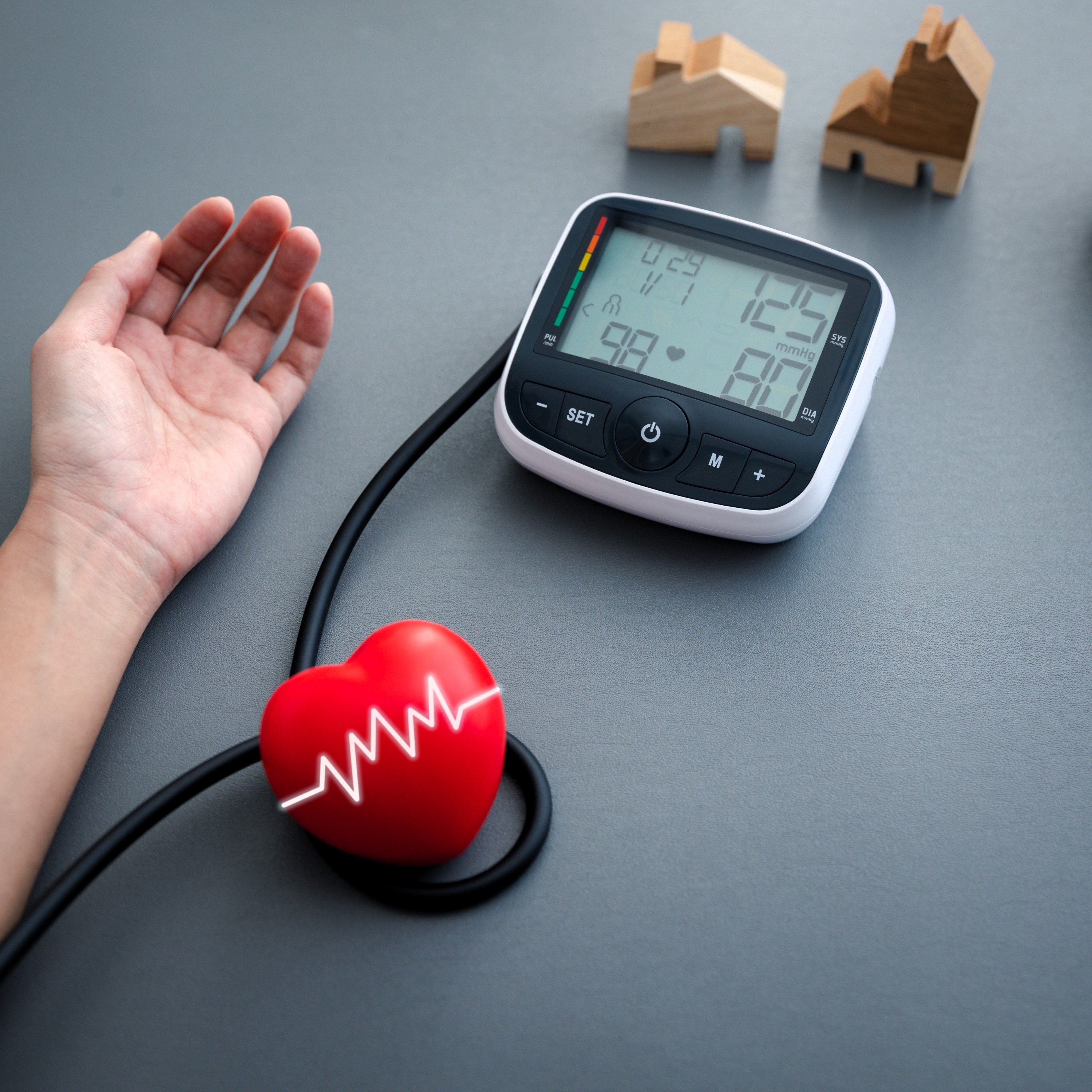
Heart and circulation consultation - private GP assessment for blood pressure, cholesterol and cardiovascular risk at Cheshire Clinics
Important

When to seek urgent help

Call 999 if:

  • You are severely breathless at rest, or cannot speak in full sentences
  • You are coughing up frothy or pink-tinged sputum
  • There is chest pain, or your lips look blue
  • You have collapsed or feel you are about to

Seek same-day assessment if:

  • You have gained more than about 2kg in two or three days — that is fluid, and it is the earliest reliable warning of decompensation
  • Ankle or leg swelling has worsened noticeably
  • You need more pillows than usual, or are waking short of breath
  • Your exercise tolerance has dropped over days rather than months

Book a routine consultation for: gradual breathlessness on exertion with ankle swelling that has developed over weeks or months and not yet been assessed, or to discuss an existing diagnosis.

Prevention and self-care

Weigh yourself. It is the single most useful thing you can do.

Same scales, same time each morning, after the toilet and before breakfast, and write it down. A gain of 2kg or more over two or three days means fluid is accumulating, and acting on it early frequently prevents a hospital admission.

Many people are given a diuretic plan to adjust themselves on that basis. If you have not been offered one, it is worth asking.

The rest of what helps

  • Take the medication consistently. Modern heart failure drugs measurably extend life, and the benefit depends on staying on them at the right dose
  • Salt. Reducing it reduces fluid retention. Most of it comes from bread, processed meat and ready meals rather than the salt cellar
  • Fluid. Some people are given a restriction; many are not, and it is not universally required. Follow the advice you were actually given rather than assuming
  • Exercise. Cardiac rehabilitation improves symptoms and quality of life in heart failure. It is free on the NHS and badly under-used — rest is not the treatment it was once thought to be
  • Alcohol. If alcohol caused the cardiomyopathy, stopping can genuinely improve heart function
  • Flu and pneumococcal vaccination — free, and worth having. A chest infection is a common trigger for decompensation

What to avoid

Anti-inflammatory painkillers such as ibuprofen and naproxen. They cause fluid retention, work against diuretics and can precipitate an admission. This is one of the commonest avoidable causes of heart failure worsening, and it is rarely explained clearly.

Effervescent and soluble tablets, which can carry a surprising sodium load.

NHS or private

What the NHS does, free

Essentially all of the care that matters in heart failure, and it does it well.

  • NT-proBNP blood test and echocardiogram, on a defined two- or six-week pathway depending on the result
  • Specialist heart failure nurses — arguably the most valuable part of the service, and something private general practice has no equivalent to. They titrate medication, monitor bloods and are contactable when things change
  • Cardiology follow-up, device therapy and transplant assessment where needed
  • Cardiac rehabilitation
  • Free prescriptions if you qualify for a medical exemption certificate
  • Free flu and pneumococcal vaccination

If heart failure is suspected or confirmed, the NHS pathway is where you should be. We would say that plainly rather than compete with it.

Where paying adds something

  • Getting the NT-proBNP done quickly when breathlessness is worrying you and an appointment is weeks away
  • Excluding the mimics fast — anaemia, thyroid disease and kidney impairment all present identically
  • Understanding your diagnosis. Ejection fraction, the difference between the two types, and what each of your four medicines is for. Heart failure is explained badly more often than almost any other condition
  • A medication review where something you take for another reason — an anti-inflammatory in particular — may be undermining the treatment

Evidence and guidelines

This page follows NICE NG106, Chronic heart failure in adults: diagnosis and management.

What the guidance actually says

  • Measure NT-proBNP in anyone with suspected heart failure. Above 2,000 ng/L, refer for specialist assessment and echocardiography within two weeks; 400 to 2,000 ng/L, within six weeks
  • An NT-proBNP below 400 ng/L makes heart failure unlikely, and an alternative diagnosis should be considered
  • Diagnosis requires echocardiography — symptoms and a blood test alone are not sufficient
  • First-line treatment for heart failure with reduced ejection fraction is an ACE inhibitor and a beta blocker, licensed for heart failure, started at low dose and titrated up. A mineralocorticoid receptor antagonist is added where symptoms persist
  • Specialist multidisciplinary heart failure teams should manage care, including nurse-led titration and monitoring
  • Supervised exercise-based cardiac rehabilitation is recommended for people with stable heart failure
  • Iron deficiency should be looked for and corrected, as it independently worsens symptoms

A note on the drugs

Beta blockers used in heart failure are specific licensed ones started at very low dose and increased slowly under supervision. This is not the same as taking a beta blocker for another reason, and the distinction matters.

Reviewed against NICE NG106 current at the date shown above.

Common questions

Does heart failure mean my heart is about to stop?

No, and the name is genuinely misleading. It means the heart is pumping less efficiently than it should, not that it is failing to work.

Many people live for many years with well-treated heart failure, and treatment has improved substantially.

What does my ejection fraction number mean?

It is the proportion of blood pumped out with each beat. Normal is roughly 50 to 70%.

A low number does not map neatly onto how you feel — some people with a low ejection fraction manage well, and some with a normal one are very symptomatic.

Why do I need to weigh myself every day?

Because sudden weight gain is fluid, and it is the earliest warning you get. More than 2kg over two or three days means act now.

Catching it early often avoids an admission, and it is the most useful thing you can do at home.

Can I take ibuprofen?

Best avoided. Anti-inflammatories cause fluid retention, oppose your diuretic and can trigger a deterioration.

This is one of the commonest avoidable causes of worsening heart failure, and it is often bought over the counter without anyone knowing.

Should I rest more?

No — the opposite. Exercise-based cardiac rehabilitation improves symptoms and quality of life in stable heart failure.

The old advice to rest has been overturned, and rehab remains badly under-used.

Do I need to restrict fluids?

Not everyone does. It is advised in some situations and not others.

Follow the plan you were actually given rather than restricting on your own — unnecessary restriction causes its own problems.

Could this be something else?

Quite possibly. Breathlessness with ankle swelling can be lung disease, anaemia, thyroid disease, kidney problems, or a side effect of amlodipine.

That is exactly what the NT-proBNP test is for — a low result points the search elsewhere.

Can it be reversed?

Sometimes, and it is worth asking. Heart failure caused by alcohol, by a fast uncontrolled heart rhythm, or by a treatable valve problem can improve substantially when the cause is addressed.

Should I have the flu jab?

Yes — you are eligible for it free, along with the pneumococcal vaccine.

Chest infections are a common trigger for decompensation, so this is prevention rather than a formality.

Dr Mohammad Zubair Khan, GMC-registered private GP and founder of Cheshire Clinics
Clinically reviewed by Dr Mohammad Zubair Khan, GMC 7563469
Last reviewed

August 30, 2026

How it works

What happens when you book

£40 for a 20-minute appointment with a GMC-registered GP, 6am to 10pm, seven days a week. Membership is optional and never required.
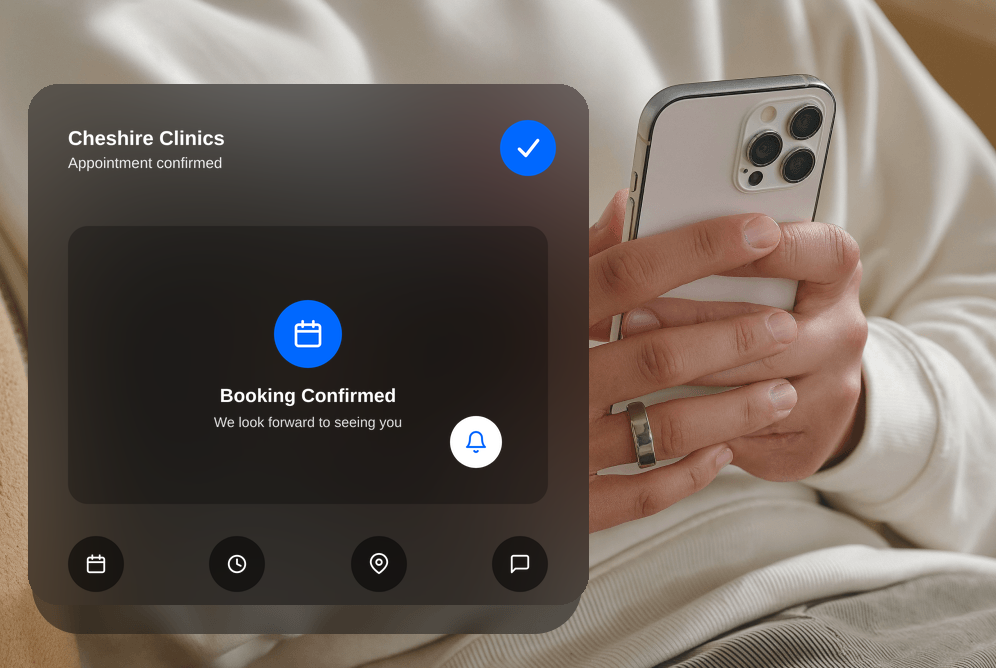
Cheshire Clinics online GP appointment booking confirmation on mobile
01

Book your appointment

Pick a time that suits you — 6am to 10pm, seven days a week, including weekends and bank holidays. £40 for 20 minutes, self-pay, with no insurance to arrange.
5–10 minutes
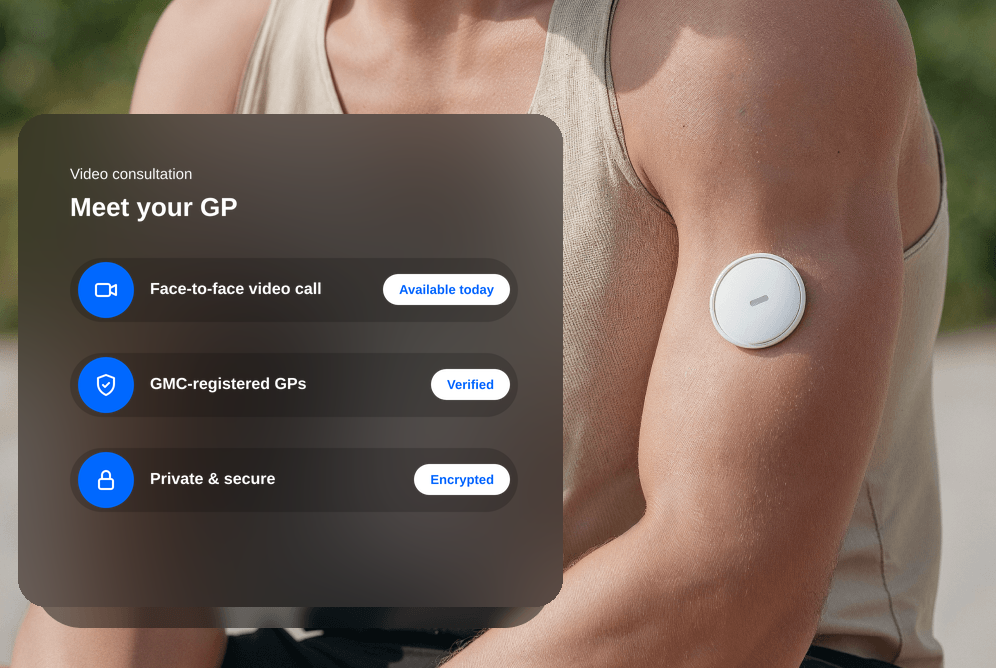
Online video consultation with a GMC-registered private GP
02

Meet your GP

A 20-minute video or phone consultation with a GMC-registered GP — long enough for a proper conversation about your symptoms, your history and what matters to you.
20 minutes
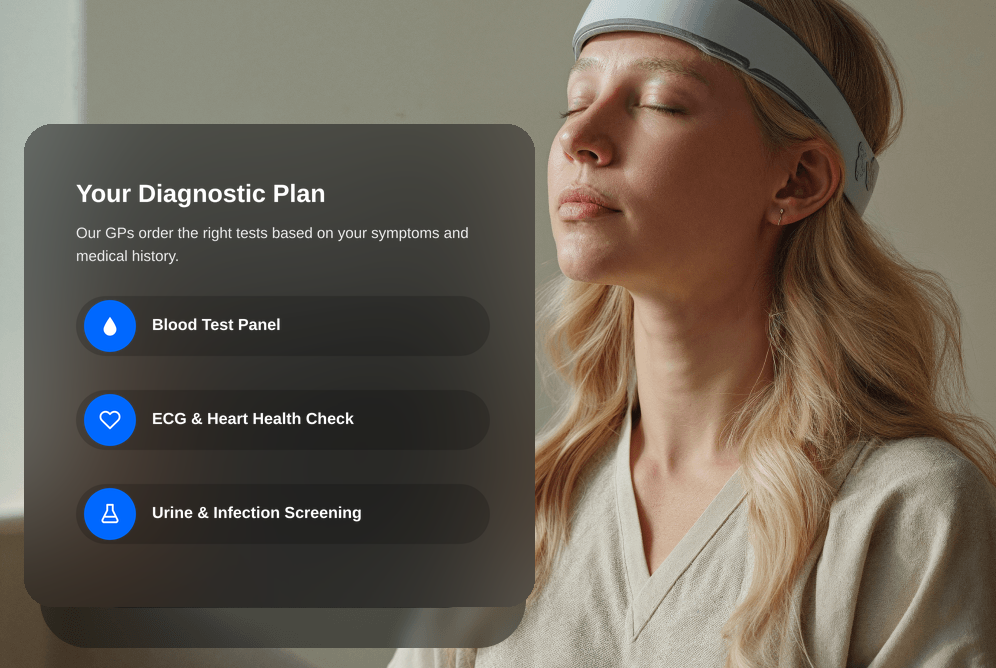
Diagnostic testing plan including blood test panel, ECG and urine screening
03

Tests and referrals, if you need them

Where testing will actually answer the question, we arrange it — blood tests and health screening through our laboratory partner, or a referral for ultrasound, X-ray, CT or MRI through private imaging providers. We will also tell you when a scan is not the right next step.
1–7 days
Personalised results and treatment plan from a private GP consultation
04

Results and next steps

Your GP talks you through what the results mean and agrees the next step with you. Every consultation ends with your treatment plan in writing, and any prescription goes to your own pharmacy.
20 minutes
GP follow-up reminder for ongoing care and progress monitoring
05

Ongoing care and follow-up

Follow-up appointments, progress monitoring and ongoing advice — including saying plainly when something needs in-person or NHS care instead.

Ongoing

How we compare

Time to be seen

Appointment length

Your NHS record in the room

Written treatment plan

Told when a test isn’t needed

Cost

Varies by practice

Typically 10 minutes

Yes, your full record

Not routinely

Usually

Free

Same day

Often 10 to 15 minutes

Usually not

Sometimes charged

Varies by provider

Often a subscription

Questions about our service

How quickly can I be seen?

Same-day access is usually available, from 6am to 10pm, seven days a week. You choose a time that suits you rather than waiting on hold at 8am.

Will I see the same doctor each time?

Yes. Care is led personally by Dr Mohammad Khan, so you are not passed between clinicians. Continuity is the point of a small practice: someone who knows your history and is listening attentively rather than working through a checklist.

Can you see my NHS records?

Yes, with your consent. We can access your Summary Care Record during the consultation, so your current medications, allergies and significant history are in the room. That means fewer questions you have already answered elsewhere, and safer prescribing.

Are you trying to replace my NHS GP?

No. We are not here to replace GPs, only to support them. Your NHS practice remains responsible for your ongoing care, and with your consent we write to them after the consultation. We are useful when you need to be seen sooner, or want more time than a standard appointment allows.

What is included in the appointment?

Twenty unhurried minutes and a comprehensive assessment. A written treatment plan is included, along with any prescription, sick note or referral letter arising from the consultation, at no extra charge.

How much does it cost?

£40 for 20 minutes, self-pay. Membership is optional and never required. Priced for fairness, because we are not here to charge extortionate amounts for access to a doctor.

What does “treatable online” actually mean?

It means the diagnosis can usually be made from your history and photographs, and that treatment can be arranged safely without examining you. Where a condition is not marked treatable online, it is because examination is the diagnosis — listening to a chest, feeling an abdomen, examining an ear or a joint — or because a procedure or device is needed.

Can you prescribe antibiotics?

Yes, where there is a genuine bacterial infection — cellulitis, impetigo, bacterial urine infections, confirmed strep throat. We will also frequently tell you that you do not need one. Most sore throats, coughs, colds and earaches are viral, and an antibiotic gives you the side effects with none of the benefit.

What if the GP cannot help with what I need?

If your problem turns out to be genuinely outside what we can do remotely, the doctor will tell you straight away, point you to the right service, and refund your fee in full. We would rather do that than fill twenty minutes to justify the charge.

What should I do in an emergency?

Call 999 or go to A&E — do not book an online appointment and do not wait for a reply to an email. For urgent problems that are not emergencies, NHS 111 is available 24 hours a day, online or by phone, and can direct you to the right service.

Patient reviews

What our patients say

No reviews published yet.
Ready to see a GP?20 minutes with a GMC-registered doctor. £40, usually same day.
Book a consultation