Home

/

Symptoms

/

Shortness of Breath

Can signal something serious

Shortness of Breath

New or worsening breathlessness always deserves an explanation. Several of its causes are entirely treatable.

breathless, cant breathe properly, out of breath, difficulty breathing

£40 · 20 minutes

Same-day availability

Assessed by a GMC-registered GP, not a symptom checker

Honest about what needs to be seen in person

Tests and referrals arranged where they are needed

Your NHS records in the room, with your consent

Clinically reviewed by Dr Mohammad Khan · Last reviewed

August 23, 2026

Book a consultation

A 20-minute appointment with a GMC-registered GP for £40. Same-day appointments are usually available, 6am to 10pm, seven days a week.

Private GP care led personally by Dr Mohammad Zubair Khan, GMC 7563469.

Why patients choose Cheshire Clinics

GMC registered doctors badge - every Cheshire Clinics consultation is with a General Medical Council registered GP

GMC-registered

Care led personally by Dr Khan

Royal College of General Practitioners badge - RCGP trained private GP consultations at Cheshire Clinics

RCGP-trained

Attentive, unhurried care that listens properly

Google five star reviews badge - Cheshire Clinics private GP online

Highly rated by patients

Five-star Google reviews from the people we have looked after

Care Quality Commission registered badge - Cheshire Clinics online GP service is registered with the CQC, England's independent regulator of health and social care

CQC-registered

Registered with the Care Quality Commission

Same-Day Appointments
Sick Notes
Private Prescriptions
Blood Tests
Menopause & HRT
Weight Management
Mental Health
Specialist Referrals
Same-Day Appointments
Sick Notes
Private Prescriptions
Blood Tests
Menopause & HRT
Weight Management
Mental Health
Specialist Referrals
Important

When to get urgent help

Call 999 if you are:

  • Struggling to breathe, or cannot speak in full sentences
  • Blue around the lips or fingertips
  • Breathless with chest pain
  • Suddenly breathless, particularly after a flight, surgery or immobility — this may be a clot on the lung
  • Breathless with swelling of the lips, tongue or throat — this is anaphylaxis
  • Confused or drowsy with it

Seek same-day care for breathlessness with fever, coughing up blood, or new ankle swelling.

An asthma attack where the reliever inhaler is not working needs 999, not an appointment.

Overview

Breathlessness is normal on exertion and abnormal when it appears at rest, comes on suddenly, or arrives at a level of activity that never used to cause it.

That last one is the most useful marker and the most commonly ignored — people adjust their lives gradually around it and only notice in hindsight. If you have stopped doing something because of your breathing, that counts.

What it could be

Lungsasthma, COPD, chest infection, and less commonly pulmonary fibrosis or a clot on the lung.

Heart — heart failure, which classically causes breathlessness lying flat and ankle swelling; irregular heart rhythms; angina.

Bloodanaemia, which is common, easily tested and fully treatable. Breathlessness on exertion with fatigue and pallor is the classic picture.

Metabolic and hormonaloveractive thyroid, and an excess weight contribution that is often the whole explanation.

Anxietypanic and hyperventilation are genuine causes, but should be a diagnosis reached after excluding the others, not before.

Deconditioning — the commonest cause of all, and the most reversible.

What you can do now

The test that tells you how urgent this is

Try to speak a full sentence out loud.

  • Cannot complete a sentence, or gasping between words — call 999
  • Short sentences only, or breathless at rest — same-day assessment
  • Breathless only on exertion, and able to talk normally — book an appointment

It is a better guide than any number, and it is what an ambulance call handler will ask you.

While waiting for help

  • Sit upright, leaning slightly forward with your arms resting on a table or your knees. This position genuinely improves breathing mechanics — it is what people with lung disease adopt instinctively
  • Loosen tight clothing; open a window
  • Use your reliever inhaler if you have one — for an asthma attack, up to 10 puffs through a spacer, one puff at a time
  • Try to slow the breathing out rather than gulping air in
  • Unlock the door if you are alone

Counting your breathing rate — genuinely useful

Count breaths for a full minute while sitting quietly. Above about 20 to 22 breaths a minute in an adult is significant, and it is one of the most useful things you can tell us or a paramedic.

If it is anxiety or hyperventilation

Breathe out for longer than you breathe in — in for four, out for six or seven. Do not breathe into a paper bag; that advice is outdated and can be dangerous if the cause turns out not to be hyperventilation.

If you have asthma or COPD

Follow your written action plan if you have one. If you are using your reliever more than usual, that is a warning sign in itself — not something to manage by simply using more.

What not to do

  • Do not lie flat if that makes it worse — that pattern is itself important information
  • Do not drive yourself to hospital
  • Do not wait to see how it goes overnight. Breathlessness reliably worsens in the small hours, and that is the worst time to be making decisions

Not sure what is causing it?

Book a consultation

How we assess it

A consultation covers the pattern — sudden or gradual, at rest or on exertion, worse lying flat, with or without cough, wheeze or swelling. That history narrows it substantially.

We arrange full blood count and ferritin, since anaemia is common and correctable, thyroid function, and chest X-ray where indicated. For suspected asthma we arrange spirometry, which needs an in-person test.

What we cannot do: listen to your chest or measure your oxygen saturation. Both matter here more than in most presentations, so where the picture is at all acute we will direct you to in-person assessment rather than working around it.

Common questions

How breathless is too breathless?

Use speech as the measure. If you cannot complete a full sentence, call 999. If you can manage only short sentences, or you are breathless sitting still, get assessed the same day. Breathlessness only on exertion, with normal speech, can wait for an appointment — but should not be ignored, particularly if it is new or worsening.

What position helps most?

Sitting upright and leaning slightly forward, with your arms supported on a table or your knees. It lets the accessory breathing muscles work properly and measurably reduces the effort of breathing. People with long-standing lung disease find this position for themselves; most other people never think of it.

Should I use a paper bag if I'm hyperventilating?

No — that advice is outdated and potentially dangerous. If the cause is not actually hyperventilation, rebreathing lowers your oxygen. Slow, deliberate breathing with a longer out-breath than in-breath is safer and works better.

Is a home oxygen monitor worth having?

If you have a lung condition, yes — they are inexpensive and useful. One caveat that matters: pulse oximeters overestimate oxygen levels in people with darker skin, sometimes enough to conceal a genuinely low reading. Never let a reassuring number override how hard you are actually working to breathe.

I only get breathless lying down.

That is a specific and important pattern. Breathlessness on lying flat, or waking in the night gasping and needing to sit up, points towards the heart rather than the lungs — fluid redistributing when you lie down. It is worth mentioning explicitly, because it changes what gets tested.

Could it just be that I'm unfit or overweight?

Possibly, and that is a legitimate explanation — but only after the others have been considered. The pattern that matters is change: if you could manage the stairs six months ago and now cannot, that is worth investigating regardless of your weight or fitness. Anaemia, asthma, heart failure and thyroid disease are all common and all easily tested for.

Can breathlessness be anxiety?

Yes, and it is common — typically with tingling in the hands and around the mouth, a sense of not being able to fill your lungs, and a rapid onset. But anxiety is a diagnosis reached after physical causes have been considered, particularly the first time, and people with anxiety get asthma and clots like everyone else.

When is it a blood clot?

Suspect one with sudden breathlessness, sharp chest pain worse on breathing in, and particularly a swollen or painful calf — or after a long flight, recent surgery, immobility, pregnancy, or starting the combined pill. That combination is a 999 call, not an appointment.

Dr Mohammad Zubair Khan, GMC-registered private GP and founder of Cheshire Clinics

Clinically reviewed by Dr Mohammad Zubair Khan, GMC 7563469

Last reviewed

August 23, 2026

How it works

What happens when you book

£40 for a 20-minute appointment with a GMC-registered GP, 6am to 10pm, seven days a week. Membership is optional and never required.
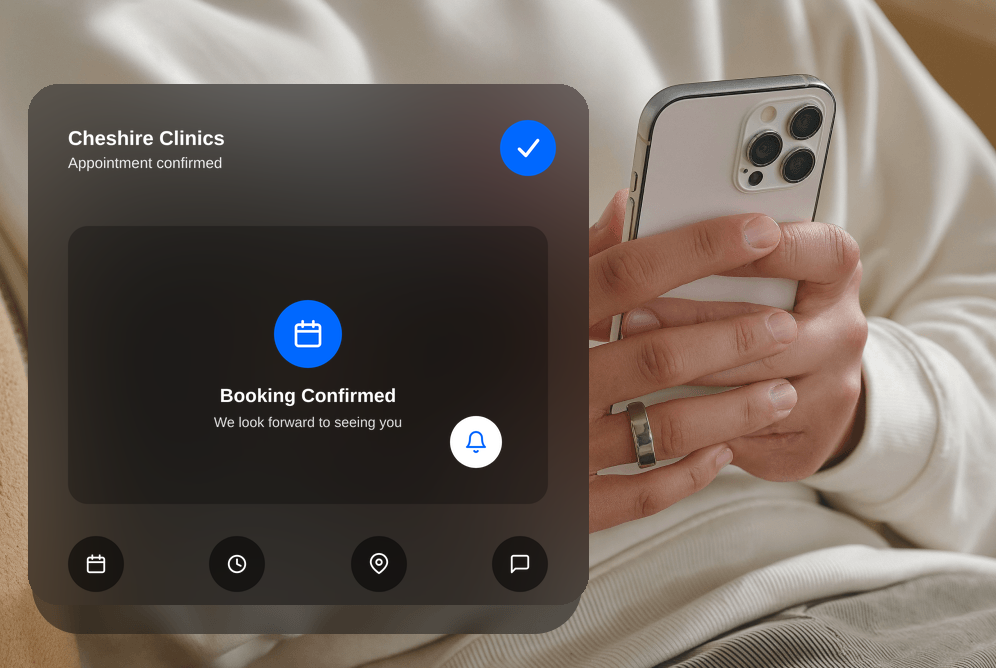
Cheshire Clinics online GP appointment booking confirmation on mobile
01

Book your appointment

Pick a time that suits you — 6am to 10pm, seven days a week, including weekends and bank holidays. £40 for 20 minutes, self-pay, with no insurance to arrange.
5–10 minutes
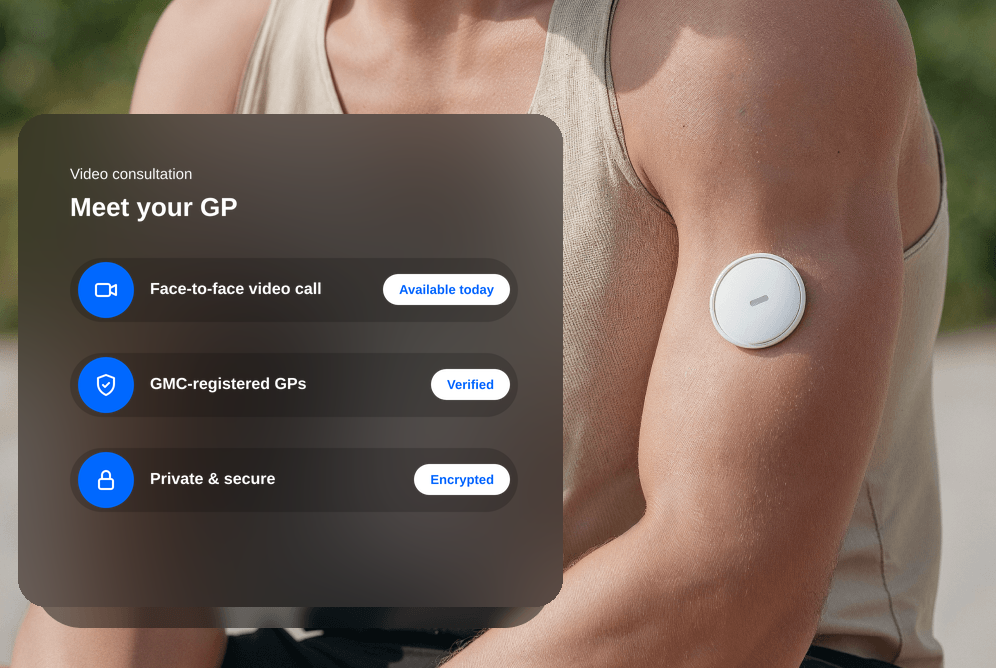
Online video consultation with a GMC-registered private GP
02

Meet your GP

A 20-minute video or phone consultation with a GMC-registered GP — long enough for a proper conversation about your symptoms, your history and what matters to you.
20 minutes
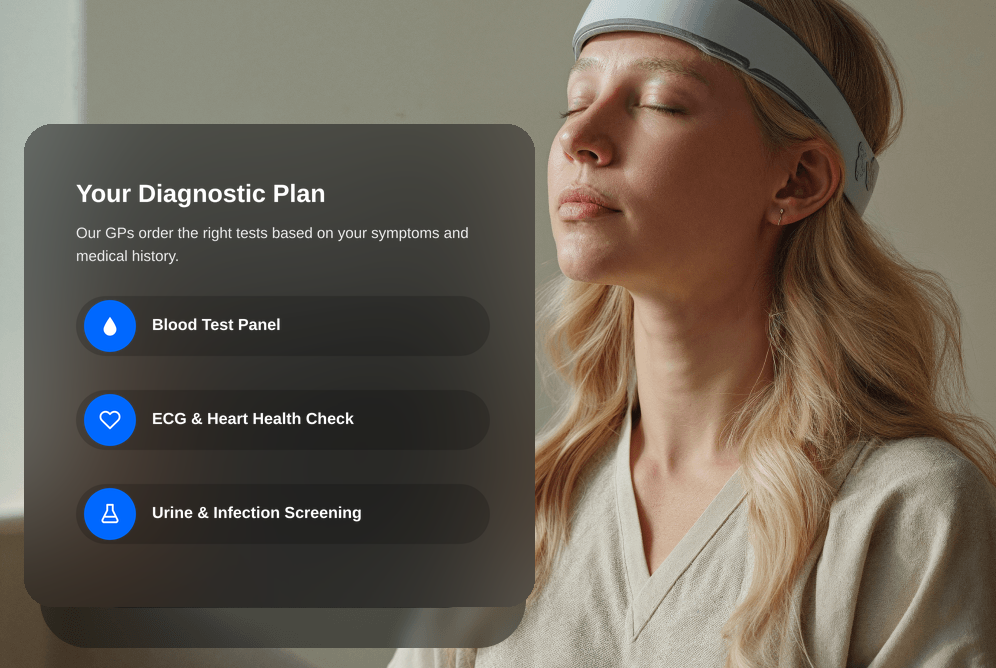
Diagnostic testing plan including blood test panel, ECG and urine screening
03

Tests and referrals, if you need them

Where testing will actually answer the question, we arrange it — blood tests and health screening through our laboratory partner, or a referral for ultrasound, X-ray, CT or MRI through private imaging providers. We will also tell you when a scan is not the right next step.
1–7 days
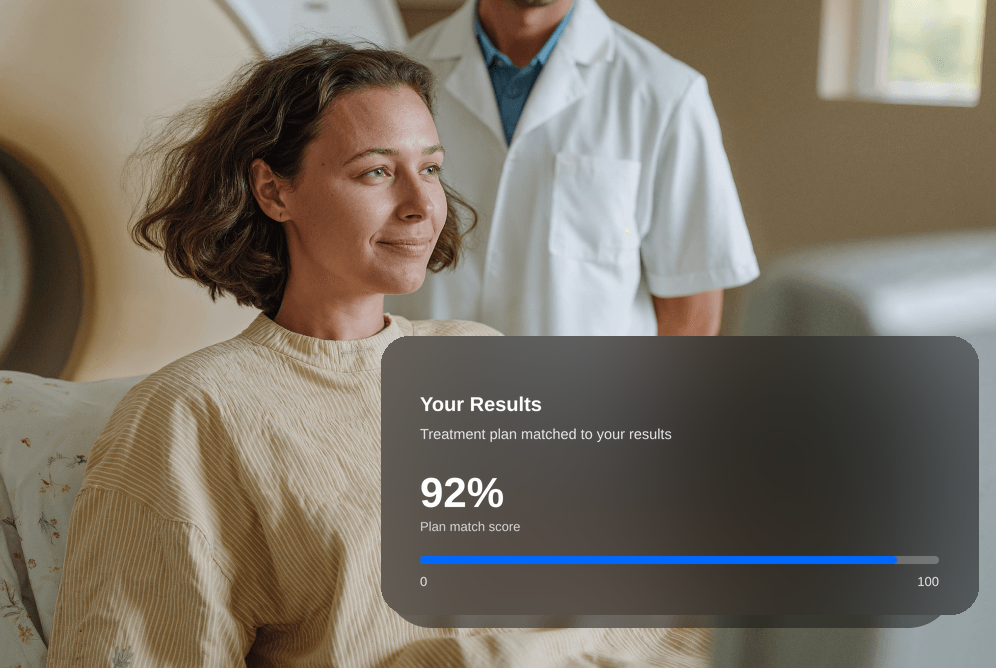
Personalised results and treatment plan from a private GP consultation
04

Results and next steps

Your GP talks you through what the results mean and agrees the next step with you. Every consultation ends with your treatment plan in writing, and any prescription goes to your own pharmacy.
20 minutes
GP follow-up reminder for ongoing care and progress monitoring
05

Ongoing care and follow-up

Follow-up appointments, progress monitoring and ongoing advice — including saying plainly when something needs in-person or NHS care instead.

Ongoing

How we compare

Time to be seen

Appointment length

Your NHS record in the room

Written treatment plan

Told when a test isn’t needed

Cost

Varies by practice

Typically 10 minutes

Yes, your full record

Not routinely

Usually

Free

Same day

Often 10 to 15 minutes

Usually not

Sometimes charged

Varies by provider

Often a subscription

Questions about our service

How quickly can I be seen?

Same-day access is usually available, from 6am to 10pm, seven days a week. You choose a time that suits you rather than waiting on hold at 8am.

Will I see the same doctor each time?

Yes. Care is led personally by Dr Mohammad Khan, so you are not passed between clinicians. Continuity is the point of a small practice: someone who knows your history and is listening attentively rather than working through a checklist.

Can you see my NHS records?

Yes, with your consent. We can access your Summary Care Record during the consultation, so your current medications, allergies and significant history are in the room. That means fewer questions you have already answered elsewhere, and safer prescribing.

Are you trying to replace my NHS GP?

No. We are not here to replace GPs, only to support them. Your NHS practice remains responsible for your ongoing care, and with your consent we write to them after the consultation. We are useful when you need to be seen sooner, or want more time than a standard appointment allows.

What is included in the appointment?

Twenty unhurried minutes and a comprehensive assessment. A written treatment plan is included, along with any prescription, sick note or referral letter arising from the consultation, at no extra charge.

How much does it cost?

£40 for 20 minutes, self-pay. Membership is optional and never required. Priced for fairness, because we are not here to charge extortionate amounts for access to a doctor.

What does “treatable online” actually mean?

It means the diagnosis can usually be made from your history and photographs, and that treatment can be arranged safely without examining you. Where a condition is not marked treatable online, it is because examination is the diagnosis — listening to a chest, feeling an abdomen, examining an ear or a joint — or because a procedure or device is needed.

Can you prescribe antibiotics?

Yes, where there is a genuine bacterial infection — cellulitis, impetigo, bacterial urine infections, confirmed strep throat. We will also frequently tell you that you do not need one. Most sore throats, coughs, colds and earaches are viral, and an antibiotic gives you the side effects with none of the benefit.

What if the GP cannot help with what I need?

If your problem turns out to be genuinely outside what we can do remotely, the doctor will tell you straight away, point you to the right service, and refund your fee in full. We would rather do that than fill twenty minutes to justify the charge.

What should I do in an emergency?

Call 999 or go to A&E — do not book an online appointment and do not wait for a reply to an email. For urgent problems that are not emergencies, NHS 111 is available 24 hours a day, online or by phone, and can direct you to the right service.

Patient reviews

What our patients say

No reviews published yet.
Ready to see a GP?20 minutes with a GMC-registered doctor. £40, usually same day.
Book a consultation