Home

/

Services

/

Women's Health Consultation

Women's Health Consultation

An unhurried appointment for women's health concerns, with onward tests, treatment or referral arranged as needed.

£40

20 minutes

Documents issued within 10 minutes of your consultation ending

Unhurried care from a GMC-registered GP

6am to 10pm, seven days a week

Prescriptions, sick notes and referral letters included

Your NHS records in the room, with your consent

Clinically reviewed by Dr Mohammad Khan · Last reviewed

August 23, 2026

Book a consultation

A 20-minute appointment with a GMC-registered GP for £40. Same-day appointments are usually available, 6am to 10pm, seven days a week.

Private GP care led personally by Dr Mohammad Zubair Khan, GMC 7563469.

Why patients choose Cheshire Clinics

GMC registered doctors badge - every Cheshire Clinics consultation is with a General Medical Council registered GP

GMC-registered

Care led personally by Dr Khan

Royal College of General Practitioners badge - RCGP trained private GP consultations at Cheshire Clinics

RCGP-trained

Attentive, unhurried care that listens properly

Google five star reviews badge - Cheshire Clinics private GP online

Highly rated by patients

Five-star Google reviews from the people we have looked after

Care Quality Commission registered badge - Cheshire Clinics online GP service is registered with the CQC, England's independent regulator of health and social care

CQC-registered

Registered with the Care Quality Commission

Same-Day Appointments
Sick Notes
Private Prescriptions
Blood Tests
Menopause & HRT
Weight Management
Mental Health
Specialist Referrals
Same-Day Appointments
Sick Notes
Private Prescriptions
Blood Tests
Menopause & HRT
Weight Management
Mental Health
Specialist Referrals

Overview

Twenty minutes is enough time to be properly heard, which matters for concerns that are easy to dismiss in a ten-minute slot.

Common reasons for booking include periods and hormonal symptoms, contraception, menopause, and urinary or pelvic concerns.

What's included

  • A 20-minute consultation with a GMC-registered GP
  • Time to describe symptoms properly rather than picking the most urgent one
  • Any prescription or referral arising
  • Blood tests where useful — see the Well Woman panel
  • Your treatment plan in writing, sent after every consultation

How it works

1. Book without justifying it

No receptionist triage, no explaining why you need an appointment.

2. Twenty minutes

Long enough to cover more than one thing, which matters because women's health concerns rarely arrive one at a time.

3. Investigation where appropriate

Hormone testing, iron studies or thyroid function are commonly arranged. Scans are referred where needed.

4. A plan you were part of making

Ready to book this?

Book a consultation

What to expect

Bring more than one thing if you have more than one thing

Women's health concerns rarely arrive singly, and the ten-minute appointment format forces people to pick. Say at the start how many things you want to cover and the GP will help you decide what fits — rather than you discovering at minute eighteen that the important one is still unsaid.

What to have ready

  • Your cycle dates, or the app. Actual dates settle in seconds what a description takes minutes to approximate
  • A symptom diary if you have one — for pelvic pain or perimenopause it is the single most persuasive thing you can bring, particularly the column recording what you could not do
  • Your contraception, and when it was started or last changed
  • Any previous results, and the date of your last cervical screening

Expect to be told when a test is not needed

Over 45, the menopause is diagnosed on symptoms rather than blood tests — hormone levels swing so widely week to week that a single normal result excludes nothing. If you were expecting bloods to confirm it, expect instead to be told why they would not.

We would rather explain that than take payment for a test that cannot answer the question.

Expect to be asked what you have already been told

And by whom, and whether it fitted. This is asked deliberately. Women's symptoms — particularly pain, fatigue and anything hormonal — are dismissed at a well-documented rate, and "it was put down to stress" is a clinically relevant piece of history rather than a complaint.

What can and cannot be looked at

Skin, swelling and visible changes photograph well. Breast tissue, the cervix and anything internal cannot be assessed remotely by anyone, and where those are needed the useful thing this appointment does is arrange them quickly rather than approximate them.

Who it's for

Common reasons women book

Worth saying plainly

Women's symptoms are dismissed at a well-documented rate — particularly pain, fatigue and anything hormonal. Twenty minutes and a clinician who is not watching the clock changes what gets taken seriously.

After your appointment

If you started HRT

Give it three months before judging it. Breast tenderness, bloating and some irregular bleeding are common in the first weeks and usually settle. Needing the dose or the route adjusted is normal rather than a sign it is not working — most people are not on their final regime at the first attempt.

Two practical things: HRT is not a contraceptive, and contraception is still needed for two years after your last period under 50, or one year over 50. And report any new or persistent unscheduled bleeding after the first few months, which needs assessing rather than tolerating.

If tests were arranged, the timing matters

  • FSH, LH and oestradiol — days 2 to 5 of your cycle, if you are still having periods
  • Progesterone to confirm ovulation — seven days before your period is due, which is day 21 only in a 28-day cycle
  • Thyroid, prolactin, ferritin and testosterone — any time

Taking a cycle-timed test on the wrong day produces a result that has to be repeated.

If contraception was started or changed

You will have been told when cover begins — immediate or after seven days, depending on the method and where you are in your cycle. Check that you understood which applies, because it is the commonest source of unintended pregnancy after a switch. Ask about the missed-pill rules for your specific method rather than assuming they are the same.

Things that do not wait for a routine appointment

  • Any bleeding after the menopause — however light, however brief. Urgent, always
  • A new breast lump or change — in-person assessment, and we arrange the referral
  • Bleeding after sex, or bleeding in pregnancy

Cervical screening

If yours is due, it is free on the NHS and we will tell you so rather than sell you an alternative. It is a physical procedure that cannot be done remotely, and it is one of the more valuable things the NHS offers.

What this service cannot do

A great deal of women's health assesses well remotely. Some of it genuinely does not, and we would rather be specific than vague.

What needs examination in person — by anyone, not just by us:

  • Any new breast lump or change. No photograph substitutes for a clinician feeling the tissue. We will assess your risk, take a proper history and arrange breast clinic referral promptly, but we will not reassure you from a description
  • Cervical screening. Smear tests require a physical procedure. If you are due one, it is free on the NHS and we will say so
  • Coil and implant fitting or removal, which we can refer for
  • Internal examination for pelvic pain, which some causes require

Bleeding that needs assessment rather than a routine appointment: any bleeding after the menopause, bleeding after sex, or bleeding in pregnancy. These need prompt attention, and we will direct you accordingly rather than book you in three days' time.

We do not provide maternity care, and anyone pregnant should be under midwifery services. We can help with problems in early pregnancy and with prescribing questions, but we do not replace antenatal care.

On menopause specifically: if you are over 45, a blood test is usually not needed — it is a clinical diagnosis, and a single normal result excludes nothing. We will not sell you a test you do not need to reach the same conclusion.

Common questions

Do I need a blood test to diagnose the menopause?

Over 45, usually not — and this is worth knowing before you pay for one. Perimenopause is a clinical diagnosis made on symptoms. Hormone levels fluctuate so much from week to week that a single normal result excludes nothing at all.

Under 45 testing is worthwhile, and under 40 it is important — premature ovarian insufficiency is a different situation with different implications, and it needs identifying.

Can I start HRT at the first appointment?

Often yes, where the picture is clear and there is nothing that would make it unsuitable. The consultation covers your symptoms, your history, migraine, clot risk, blood pressure and family history, and then which preparation and route suits you.

Transdermal oestrogen — patch, gel or spray — does not carry the clot risk that oral oestrogen does, which means many women who have been told they cannot have HRT actually can.

Is HRT safe? I was told it causes breast cancer.

That belief traces to one 2002 study whose results were widely misapplied, and it is worth reading what that study actually found.

The short version: the increase reported was a relative figure, the absolute numbers were small, the participants averaged 63 and were mostly a decade past menopause, and the preparations used are not the ones typically prescribed in the UK now. The oestrogen-only arm showed no increase at all.

There is a real risk and it should be weighed — alongside genuine benefits including symptom control and fracture reduction. It should not be decided by a headline.

Can you do my smear test?

No — it is a physical procedure, and it is free on the NHS. If yours is due we will say so and encourage you to book it. Cervical screening prevents cancer rather than merely detecting it, and it is among the more valuable things available to you at no cost.

Can you fit or remove a coil or implant?

No — both need doing in person. We can discuss whether it is the right method, refer you for fitting, and manage problems and side effects afterwards. Many sexual health clinics fit them free.

I have been told before that it is just stress.

That is worth telling us, and it is a piece of clinical history rather than a grievance.

Stress and low mood are real explanations that deserve treatment in their own right — but they are usually a conclusion reached after excluding the physical causes, not instead of it. Thyroid disease, iron deficiency, coeliac disease, perimenopause and sleep apnoea all produce a picture that gets attributed to stress, and all are found with ordinary blood tests.

How heavy is too heavy for a period?

If your period dictates what you can do, it is too heavy. That is the practical definition and it is more useful than any measurement.

Concrete markers: soaking through protection in under two hours, needing double protection, passing clots larger than a 10p piece, or flooding onto clothes or bedding. Heavy periods are the leading cause of iron deficiency in women and are routinely normalised for years — ask for ferritin, not just a haemoglobin, and know that effective treatments exist.

Can you see me if I am pregnant?

For general health problems and prescribing questions in pregnancy, yes — and knowing what is safe to take is a common and reasonable reason to book.

We do not provide maternity care, and anyone pregnant should be under midwifery services. Bleeding, severe pain, reduced fetal movements or anything acute goes to your midwife or the early pregnancy unit, not to us.

Dr Mohammad Zubair Khan, GMC-registered private GP and founder of Cheshire Clinics

Clinically reviewed by Dr Mohammad Zubair Khan, GMC 7563469

Last reviewed

August 23, 2026

How it works

What happens when you book

£40 for a 20-minute appointment with a GMC-registered GP, 6am to 10pm, seven days a week. Membership is optional and never required.
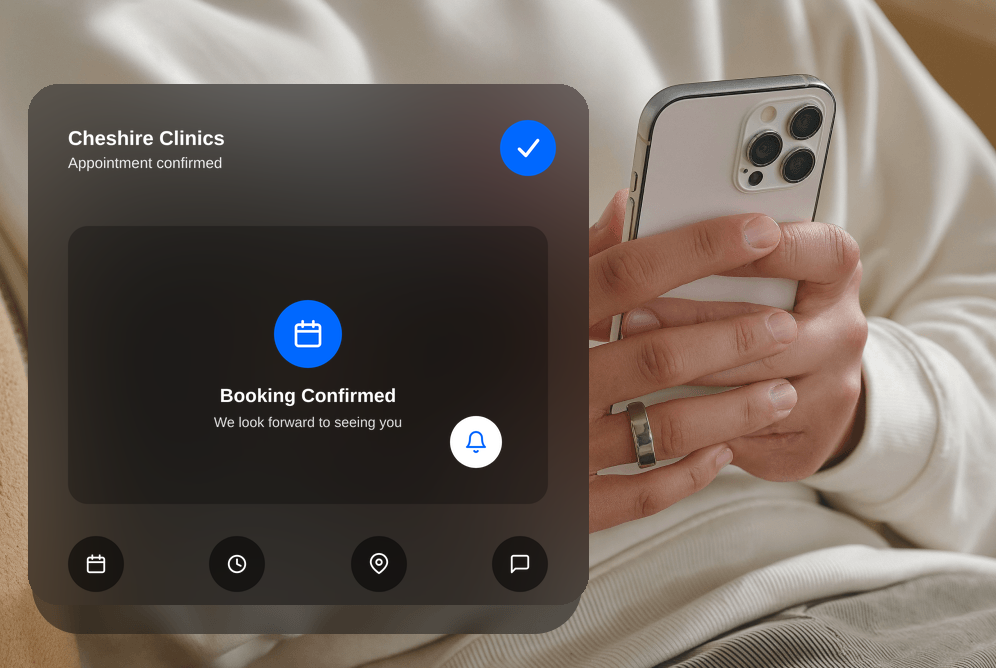
Cheshire Clinics online GP appointment booking confirmation on mobile
01

Book your appointment

Pick a time that suits you — 6am to 10pm, seven days a week, including weekends and bank holidays. £40 for 20 minutes, self-pay, with no insurance to arrange.
5–10 minutes
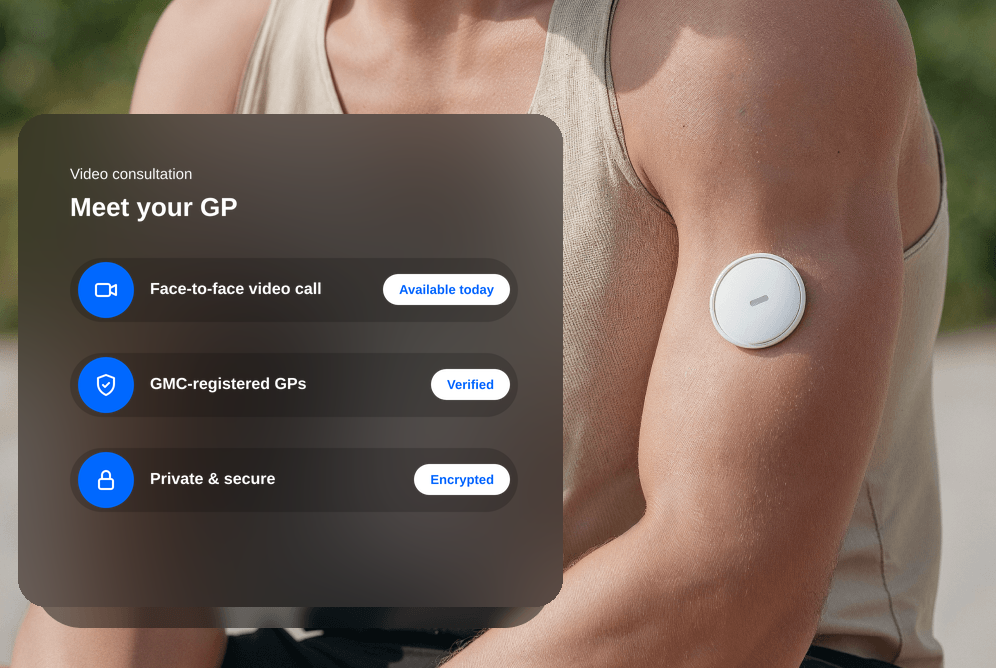
Online video consultation with a GMC-registered private GP
02

Meet your GP

A 20-minute video or phone consultation with a GMC-registered GP — long enough for a proper conversation about your symptoms, your history and what matters to you.
20 minutes
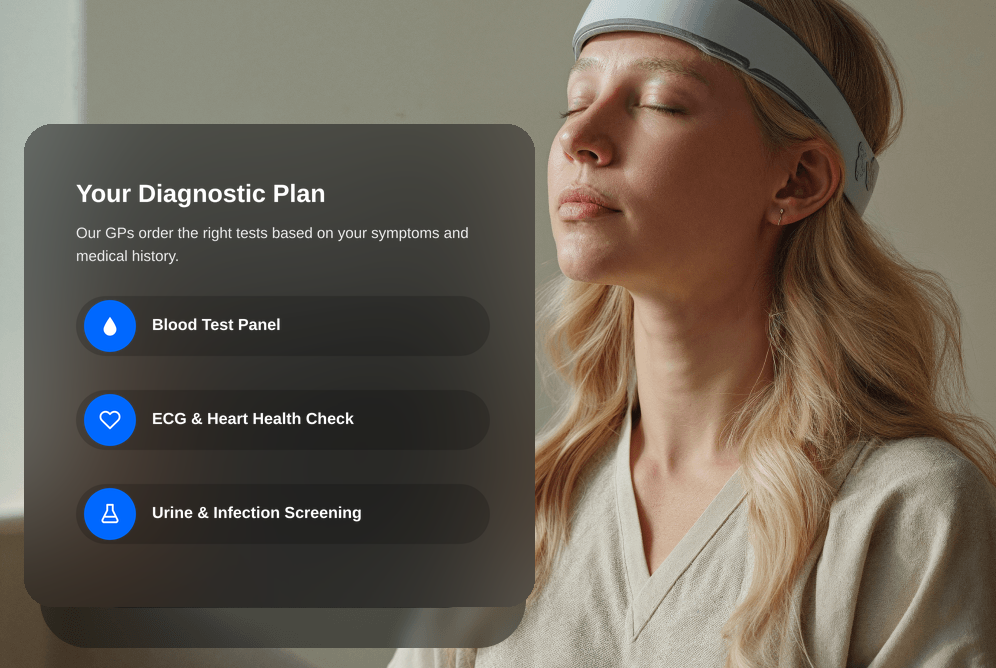
Diagnostic testing plan including blood test panel, ECG and urine screening
03

Tests and referrals, if you need them

Where testing will actually answer the question, we arrange it — blood tests and health screening through our laboratory partner, or a referral for ultrasound, X-ray, CT or MRI through private imaging providers. We will also tell you when a scan is not the right next step.
1–7 days
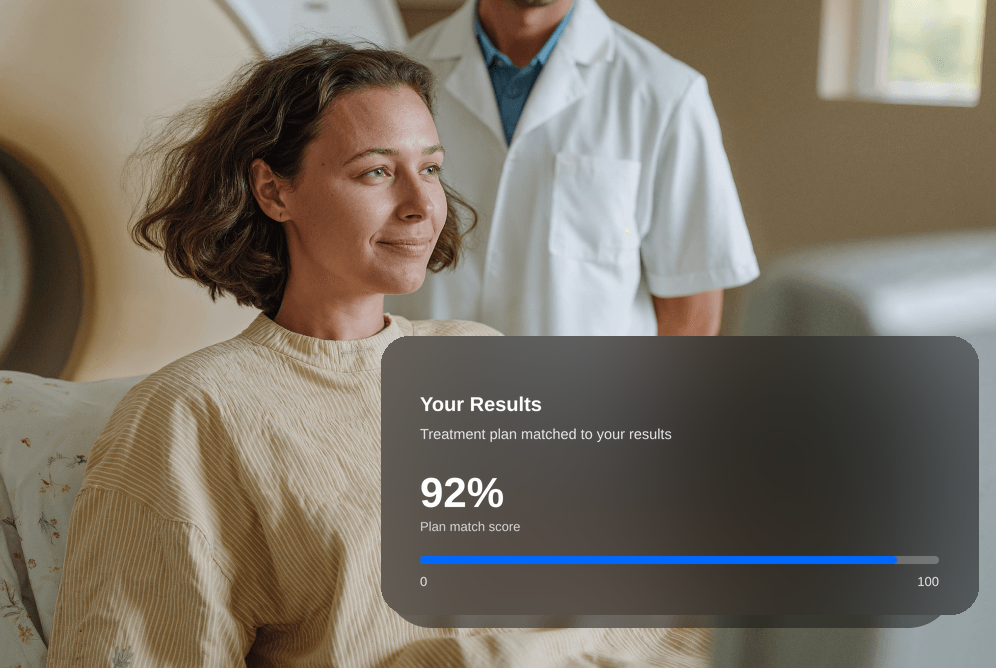
Personalised results and treatment plan from a private GP consultation
04

Results and next steps

Your GP talks you through what the results mean and agrees the next step with you. Every consultation ends with your treatment plan in writing, and any prescription goes to your own pharmacy.
20 minutes
GP follow-up reminder for ongoing care and progress monitoring
05

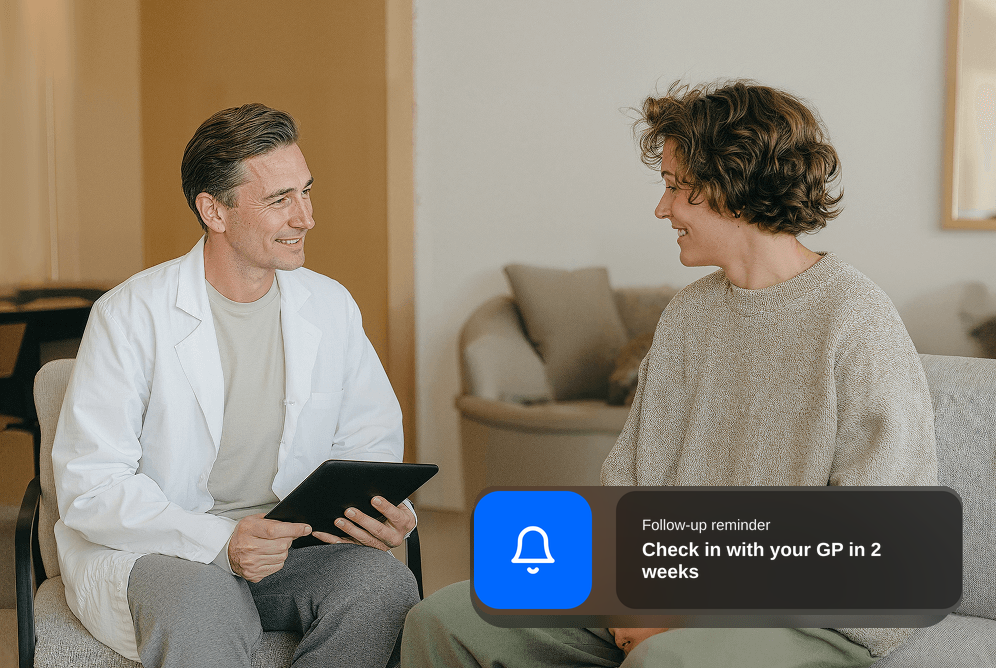
Ongoing care and follow-up

Follow-up appointments, progress monitoring and ongoing advice — including saying plainly when something needs in-person or NHS care instead.

Ongoing

How we compare

Time to be seen

Appointment length

Your NHS record in the room

Written treatment plan

Told when a test isn’t needed

Cost

Varies by practice

Typically 10 minutes

Yes, your full record

Not routinely

Usually

Free

Same day

Often 10 to 15 minutes

Usually not

Sometimes charged

Varies by provider

Often a subscription

Questions about our service

How quickly can I be seen?

Same-day access is usually available, from 6am to 10pm, seven days a week. You choose a time that suits you rather than waiting on hold at 8am.

Will I see the same doctor each time?

Yes. Care is led personally by Dr Mohammad Khan, so you are not passed between clinicians. Continuity is the point of a small practice: someone who knows your history and is listening attentively rather than working through a checklist.

Can you see my NHS records?

Yes, with your consent. We can access your Summary Care Record during the consultation, so your current medications, allergies and significant history are in the room. That means fewer questions you have already answered elsewhere, and safer prescribing.

Are you trying to replace my NHS GP?

No. We are not here to replace GPs, only to support them. Your NHS practice remains responsible for your ongoing care, and with your consent we write to them after the consultation. We are useful when you need to be seen sooner, or want more time than a standard appointment allows.

What is included in the appointment?

Twenty unhurried minutes and a comprehensive assessment. A written treatment plan is included, along with any prescription, sick note or referral letter arising from the consultation, at no extra charge.

How much does it cost?

£40 for 20 minutes, self-pay. Membership is optional and never required. Priced for fairness, because we are not here to charge extortionate amounts for access to a doctor.

What does “treatable online” actually mean?

It means the diagnosis can usually be made from your history and photographs, and that treatment can be arranged safely without examining you. Where a condition is not marked treatable online, it is because examination is the diagnosis — listening to a chest, feeling an abdomen, examining an ear or a joint — or because a procedure or device is needed.

Can you prescribe antibiotics?

Yes, where there is a genuine bacterial infection — cellulitis, impetigo, bacterial urine infections, confirmed strep throat. We will also frequently tell you that you do not need one. Most sore throats, coughs, colds and earaches are viral, and an antibiotic gives you the side effects with none of the benefit.

What if the GP cannot help with what I need?

If your problem turns out to be genuinely outside what we can do remotely, the doctor will tell you straight away, point you to the right service, and refund your fee in full. We would rather do that than fill twenty minutes to justify the charge.

What should I do in an emergency?

Call 999 or go to A&E — do not book an online appointment and do not wait for a reply to an email. For urgent problems that are not emergencies, NHS 111 is available 24 hours a day, online or by phone, and can direct you to the right service.

Patient reviews

What our patients say

No reviews published yet.
Ready to see a GP?20 minutes with a GMC-registered doctor. £40, usually same day.
Book a consultation