Home

/

Women's Health

/

Perimenopause

Women's health icon - menopause, HRT and gynaecological symptoms assessed by an online GP at Cheshire Clinics
Treatable online

Perimenopause

The years before periods stop — when symptoms start but the connection often isn't made.

£40 · 20 minutes

Same-day availability

6am to 10pm, seven days

Assessed and treated by a GMC-registered GP

Prescriptions, sick notes and referral letters included

A written treatment plan after every appointment

Your NHS records in the room, with your consent

Clinically reviewed by Dr Mohammad Khan · Last reviewed

August 23, 2026

Book a consultation

A 20-minute appointment with a GMC-registered GP for £40. No membership required.

Private GP care led personally by Dr Mohammad Zubair Khan, GMC 7563469.

Why patients choose Cheshire Clinics

GMC registered doctors badge - every Cheshire Clinics consultation is with a General Medical Council registered GP

GMC-registered

Care led personally by Dr Khan

Royal College of General Practitioners badge - RCGP trained private GP consultations at Cheshire Clinics

RCGP-trained

Attentive, unhurried care that listens properly

Google five star reviews badge - Cheshire Clinics private GP online

Highly rated by patients

Five-star Google reviews from the people we have looked after

Care Quality Commission registered badge - Cheshire Clinics online GP service is registered with the CQC, England's independent regulator of health and social care

CQC-registered

Registered with the Care Quality Commission

Same-Day Appointments
Sick Notes
Private Prescriptions
Blood Tests
Menopause & HRT
Weight Management
Mental Health
Specialist Referrals
Same-Day Appointments
Sick Notes
Private Prescriptions
Blood Tests
Menopause & HRT
Weight Management
Mental Health
Specialist Referrals

Overview

Perimenopause is the transition leading up to menopause, and it commonly lasts four to eight years. Periods are still happening — which is precisely why the symptoms so often get attributed to stress, work or age instead.

Hormone levels do not decline smoothly. They fluctuate erratically, which is why symptoms can be severe one month and absent the next.

Common symptoms

  • Periods changing — heavier, lighter, closer together or further apart
  • Worsening PMS, sometimes severely
  • Sleep breaking down before anything else changes
  • Anxiety or low mood arriving without an obvious cause
  • Brain fog and word-finding difficulty
  • Night sweats, often before daytime flushes
  • Joint aches and fatigue

Causes and risk factors

Fluctuating and gradually declining oestrogen as ovarian function winds down. It typically begins in the mid-forties but can start in the late thirties.

Smoking brings menopause forward by roughly two years on average. A family history is a reasonable guide to timing.

How it is diagnosed

On symptoms, not on hormones

Perimenopause is diagnosed clinically. Because hormone levels swing erratically during the transition — that erratic swinging is the perimenopause — a single blood test captures one moment and settles nothing.

A normal FSH does not exclude it. Over 45 with typical symptoms, no test is needed at all.

The pattern that gives it away

Cycle change plus symptoms that vary across the month. Periods becoming closer together, heavier, or unpredictable, alongside sleep breaking down, mood shifting, or brain fog arriving — and all of it worse in the run-up to a period.

A symptom diary kept across three cycles is more informative than any blood test, and it is free.

Where testing helps

  • Under 45, where early menopause needs confirming
  • Under 40, where premature ovarian insufficiency needs specialist referral
  • On hormonal contraception, which suppresses the hormones being measured and makes results uninterpretable

What to exclude

Thyroid disease and iron deficiency, both common in the forties and both producing the same fatigue, low mood and poor concentration.

Heavy periods cause iron deficiency, which then causes fatigue — so the two frequently travel together and treating only one leaves you halfway.

How we treat it online

The first task is often simply naming it. A great many women arrive having been treated for anxiety or insomnia for two years without anyone raising perimenopause.

Treatment can start during perimenopause — you do not have to wait until periods stop. HRT is effective, and contraception is still needed until twelve months after your last period.

Thyroid disease produces near-identical symptoms and is worth excluding.

Women's health consultation - private GP video appointment for periods, menopause, HRT and PCOS at Cheshire Clinics

Ready to talk to a GP about this?

Book a consultation
Important

When to seek urgent help

Bleeding between periods, after sex, or periods that have become very heavy — soaking through protection hourly or passing large clots — need assessment rather than being written off as perimenopausal.

Prevention and self-care

What helps most

  • Protecting sleep. Sleep usually breaks first and everything else worsens with it — mood, concentration, tolerance for symptoms
  • Exercise, particularly strength work. Bone loss starts now, not at menopause
  • Reducing alcohol and caffeine, both of which worsen night sweats and fragment sleep
  • Tracking your cycle and symptoms, which makes the pattern visible and is what most convinces a sceptical clinician

Contraception still matters

Pregnancy is still possible until twelve months after your last period — or two years if you are under 50.

HRT is not contraception. That catches people out.

The hormonal coil is worth knowing about: it manages heavy periods, provides contraception, and can serve as the progesterone part of HRT — three problems, one device.

Heavy periods are not something to endure

Periods that soak through protection hourly, contain large clots, or stop you leaving the house are not simply perimenopause. They are treatable, and they cause the iron deficiency that makes the fatigue worse.

Where to get help free

NHS GPs prescribe HRT, and the HRT prepayment certificate covers a year of prescriptions for a single payment.

NHS Talking Therapies takes self-referrals — useful, because perimenopausal mood change is frequently treated as primary depression when it is not.

NHS or private

The most useful thing about perimenopause is recognising it, and that costs nothing. It commonly begins in the early to mid forties, periods may still be regular, and the symptoms that dominate are frequently not hot flushes — they are anxiety, low mood, poor sleep, brain fog, joint aches and irritability. Those get attributed to stress, work, or depression for years.

That misattribution has real consequences. Women in perimenopause are commonly offered antidepressants for what is a hormonal transition. NICE is explicit that SSRIs should not be offered as first-line for low mood arising from menopause, and HRT frequently helps where an antidepressant has not.

Your NHS GP can diagnose and treat perimenopause free, and the HRT prepayment certificate in England makes ongoing treatment inexpensive.

A blood test is not usually the answer. Hormone levels fluctuate wildly in perimenopause, so a normal FSH does not exclude it — and testing frequently causes confusion rather than clarity. Private clinics that sell hormone panels are selling reassurance rather than information.

Where paying is genuinely worth it is twenty minutes to work through whether this is perimenopause, and to discuss contraception — which is still needed, and where the hormonal coil often solves two problems at once.

Evidence and guidelines

NICE NG23, Menopause: diagnosis and management, is the governing guideline. It defines perimenopause and recommends diagnosis based on vasomotor symptoms and irregular periods in women over 45, without laboratory testing.

NG23 is explicit that FSH levels fluctuate during perimenopause and that a single normal result does not exclude the diagnosis.

NG23 recommends against offering SSRIs or SNRIs as first-line treatment for low mood arising as part of the menopause — the basis for the point above about antidepressants.

NG23 recommends HRT for vasomotor symptoms and notes it may improve associated low mood, with CBT as an alternative or adjunct.

FSRH (Faculty of Sexual and Reproductive Healthcare) guidance covers contraception in the perimenopause, including when contraception can be stopped and the use of the levonorgestrel intrauterine system as the progestogen component of HRT.

Common questions

I still have periods. Can it be perimenopause?

Yes — that is exactly what perimenopause is. Periods continuing is why the connection so often is not made, and why women are treated for anxiety or insomnia for two years first.

My blood test was normal. Does that rule it out?

No. Hormones fluctuate erratically through the transition, so one sample can look entirely normal in someone with unmistakable symptoms.

Your symptoms are the diagnosis. A normal FSH should not be used to refuse you treatment.

Can I start HRT before my periods stop?

Yes. You do not have to wait, and waiting has no clinical advantage.

You will still need contraception, since HRT does not provide it.

Why is my anxiety suddenly so much worse?

Falling and fluctuating oestrogen affects mood regulation directly, and anxiety arriving in your forties without an obvious cause is a common presentation.

It is frequently treated as primary anxiety — which is worth questioning if it started alongside cycle changes or worsens premenstrually.

Could this be my thyroid?

Possibly, and it should be checked. An underactive thyroid produces near-identical symptoms and is treated entirely differently.

Iron deficiency does the same, and heavy perimenopausal periods are a common cause of it.

How long does perimenopause last?

Commonly four to eight years. That is long enough that "waiting it out" is not a neutral choice.

Is it too early for me at 42?

No. Perimenopause commonly begins in the mid-forties and can start in the late thirties.

Under 45 is worth investigating properly rather than dismissing, because early menopause is managed differently.

What is the single most useful thing I can bring to an appointment?

A three-month symptom and cycle diary. It converts "I have not felt right" into a pattern, and a pattern is considerably harder to dismiss.

Dr Mohammad Zubair Khan, GMC-registered private GP and founder of Cheshire Clinics
Clinically reviewed by Dr Mohammad Zubair Khan, GMC 7563469
Last reviewed

August 23, 2026

How it works

What happens when you book

£40 for a 20-minute appointment with a GMC-registered GP, 6am to 10pm, seven days a week. Membership is optional and never required.
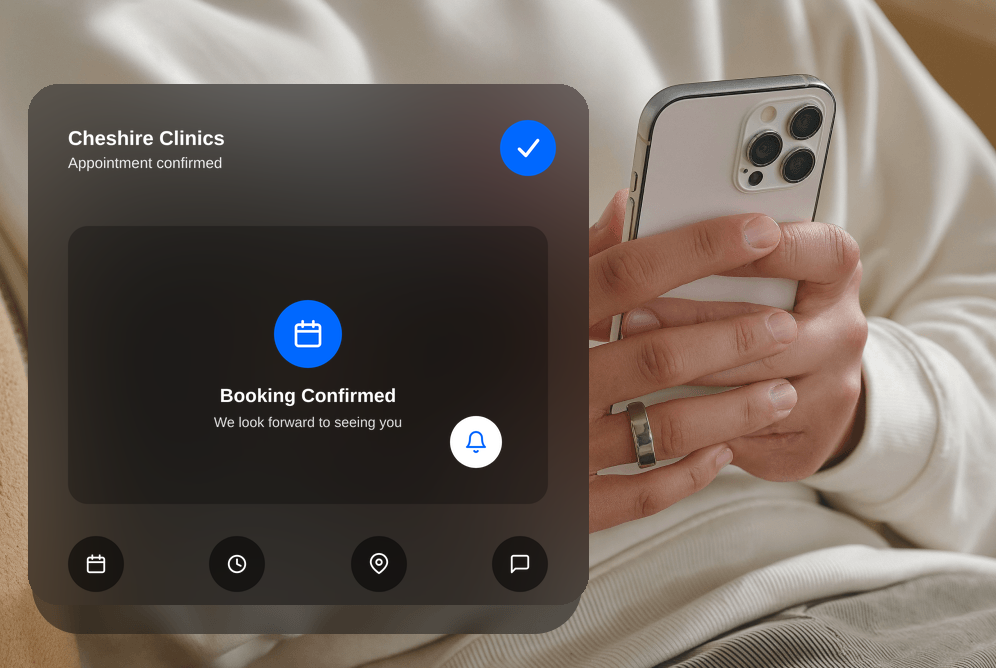
Cheshire Clinics online GP appointment booking confirmation on mobile
01

Book your appointment

Pick a time that suits you — 6am to 10pm, seven days a week, including weekends and bank holidays. £40 for 20 minutes, self-pay, with no insurance to arrange.
5–10 minutes
Online video consultation with a GMC-registered private GP
02

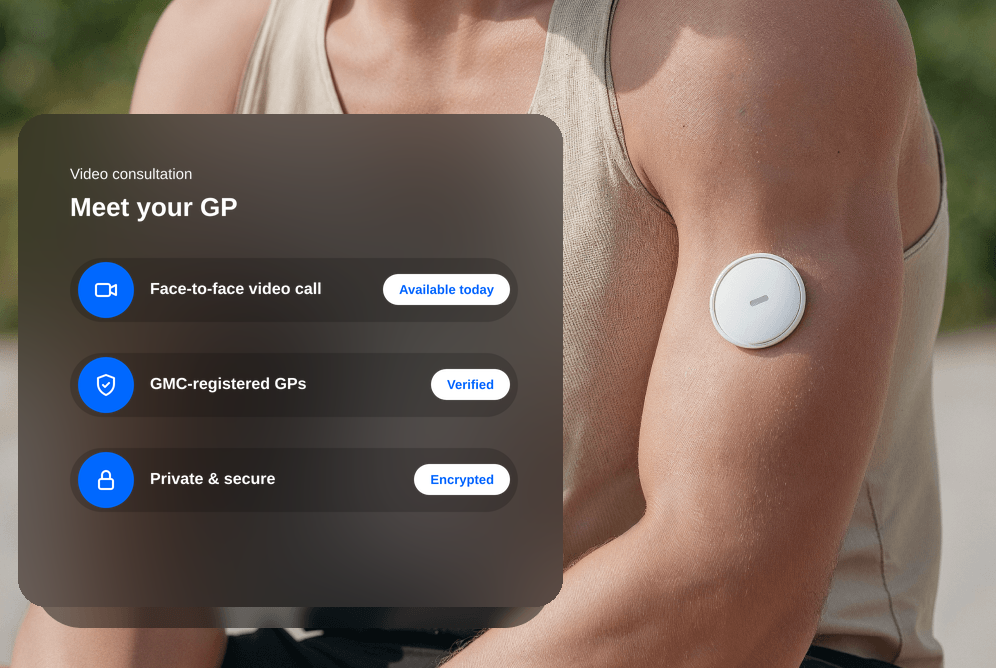
Meet your GP

A 20-minute video or phone consultation with a GMC-registered GP — long enough for a proper conversation about your symptoms, your history and what matters to you.
20 minutes
Diagnostic testing plan including blood test panel, ECG and urine screening
03

Tests and referrals, if you need them

Where testing will actually answer the question, we arrange it — blood tests and health screening through our laboratory partner, or a referral for ultrasound, X-ray, CT or MRI through private imaging providers. We will also tell you when a scan is not the right next step.
1–7 days
Personalised results and treatment plan from a private GP consultation
04

Results and next steps

Your GP talks you through what the results mean and agrees the next step with you. Every consultation ends with your treatment plan in writing, and any prescription goes to your own pharmacy.
20 minutes
GP follow-up reminder for ongoing care and progress monitoring
05

Ongoing care and follow-up

Follow-up appointments, progress monitoring and ongoing advice — including saying plainly when something needs in-person or NHS care instead.

Ongoing

How we compare

Time to be seen

Appointment length

Your NHS record in the room

Written treatment plan

Told when a test isn’t needed

Cost

Varies by practice

Typically 10 minutes

Yes, your full record

Not routinely

Usually

Free

Same day

Often 10 to 15 minutes

Usually not

Sometimes charged

Varies by provider

Often a subscription

Questions about our service

How quickly can I be seen?

Same-day access is usually available, from 6am to 10pm, seven days a week. You choose a time that suits you rather than waiting on hold at 8am.

Will I see the same doctor each time?

Yes. Care is led personally by Dr Mohammad Khan, so you are not passed between clinicians. Continuity is the point of a small practice: someone who knows your history and is listening attentively rather than working through a checklist.

Can you see my NHS records?

Yes, with your consent. We can access your Summary Care Record during the consultation, so your current medications, allergies and significant history are in the room. That means fewer questions you have already answered elsewhere, and safer prescribing.

Are you trying to replace my NHS GP?

No. We are not here to replace GPs, only to support them. Your NHS practice remains responsible for your ongoing care, and with your consent we write to them after the consultation. We are useful when you need to be seen sooner, or want more time than a standard appointment allows.

What is included in the appointment?

Twenty unhurried minutes and a comprehensive assessment. A written treatment plan is included, along with any prescription, sick note or referral letter arising from the consultation, at no extra charge.

How much does it cost?

£40 for 20 minutes, self-pay. Membership is optional and never required. Priced for fairness, because we are not here to charge extortionate amounts for access to a doctor.

What does “treatable online” actually mean?

It means the diagnosis can usually be made from your history and photographs, and that treatment can be arranged safely without examining you. Where a condition is not marked treatable online, it is because examination is the diagnosis — listening to a chest, feeling an abdomen, examining an ear or a joint — or because a procedure or device is needed.

Can you prescribe antibiotics?

Yes, where there is a genuine bacterial infection — cellulitis, impetigo, bacterial urine infections, confirmed strep throat. We will also frequently tell you that you do not need one. Most sore throats, coughs, colds and earaches are viral, and an antibiotic gives you the side effects with none of the benefit.

What if the GP cannot help with what I need?

If your problem turns out to be genuinely outside what we can do remotely, the doctor will tell you straight away, point you to the right service, and refund your fee in full. We would rather do that than fill twenty minutes to justify the charge.

What should I do in an emergency?

Call 999 or go to A&E — do not book an online appointment and do not wait for a reply to an email. For urgent problems that are not emergencies, NHS 111 is available 24 hours a day, online or by phone, and can direct you to the right service.

Patient reviews

What our patients say

No reviews published yet.
Ready to see a GP?20 minutes with a GMC-registered doctor. £40, usually same day.
Book a consultation