Women's health icon - menopause, HRT and gynaecological symptoms assessed by an online GP at Cheshire Clinics
Treatable online

Menopause

The symptoms, why they happen, and what actually helps — with an honest account of HRT risks and benefits.

£40 · 20 minutes

Same-day availability

6am to 10pm, seven days

Assessed and treated by a GMC-registered GP

Prescriptions, sick notes and referral letters included

A written treatment plan after every appointment

Your NHS records in the room, with your consent

Clinically reviewed by Dr Mohammad Khan · Last reviewed

August 23, 2026

Book a consultation

A 20-minute appointment with a GMC-registered GP for £40. No membership required.

Private GP care led personally by Dr Mohammad Zubair Khan, GMC 7563469.

Why patients choose Cheshire Clinics

GMC registered doctors badge - every Cheshire Clinics consultation is with a General Medical Council registered GP

GMC-registered

Care led personally by Dr Khan

Royal College of General Practitioners badge - RCGP trained private GP consultations at Cheshire Clinics

RCGP-trained

Attentive, unhurried care that listens properly

Google five star reviews badge - Cheshire Clinics private GP online

Highly rated by patients

Five-star Google reviews from the people we have looked after

Care Quality Commission registered badge - Cheshire Clinics online GP service is registered with the CQC, England's independent regulator of health and social care

CQC-registered

Registered with the Care Quality Commission

Same-Day Appointments
Sick Notes
Private Prescriptions
Blood Tests
Menopause & HRT
Weight Management
Mental Health
Specialist Referrals
Same-Day Appointments
Sick Notes
Private Prescriptions
Blood Tests
Menopause & HRT
Weight Management
Mental Health
Specialist Referrals

Overview

Menopause is the point at which periods stop permanently, confirmed once you have gone twelve months without one. The average age in the UK is 51.

The symptoms, though, begin long before that — often in your mid-forties — and it is that earlier phase, perimenopause, that catches most people out. Because periods are still happening, the connection frequently is not made.

Common symptoms

  • Hot flushes and night sweats
  • Sleep disturbance, particularly waking at 3am
  • Brain fog, poor concentration, losing words
  • Low mood, irritability or anxiety that feels out of character
  • Joint aches, often mistaken for arthritis
  • Vaginal dryness, discomfort during sex, urinary symptoms
  • Reduced libido
  • Palpitations

Fewer than half of women experience the classic hot flushes as their main symptom. Mood, sleep and cognitive symptoms are extremely common and are the ones most often attributed to something else.

Causes and risk factors

Menopause happens when the ovaries stop producing oestrogen. It is a normal life stage, not a disease.

It can happen earlier following surgery to remove the ovaries, after chemotherapy or radiotherapy, or spontaneously — premature ovarian insufficiency affects around 1 in 100 women under 40 and needs treating rather than accepting.

How it is diagnosed

Over 45, it is a clinical diagnosis

If you are over 45 with typical symptoms, no blood test is needed — UK guidance says so explicitly. The history is the diagnosis.

A normal FSH does not rule menopause out, and this specific misunderstanding causes real harm: it is routinely used to refuse treatment to women whose symptoms are unmistakable. Hormones fluctuate so widely through the transition that one sample can read premenopausal in March and postmenopausal in May.

Where testing genuinely helps

  • Under 45, where early menopause needs confirming — that changes management, because HRT is then usually continued to at least the natural age of menopause to protect bone and heart
  • Under 40, where premature ovarian insufficiency needs proper diagnosis and specialist referral
  • Where periods have stopped for another possible reason — thyroid disease, raised prolactin, PCOS

What gets checked alongside

Thyroid function and ferritin. An underactive thyroid and iron deficiency produce almost exactly the same picture — fatigue, low mood, poor concentration, hair thinning, feeling cold — and both are common at this age.

Attributing everything to hormones without checking those two is the commonest error made here.

What does not diagnose it

Salivary hormone testing and "hormone balance" panels have no validated basis. They are used almost entirely to sell compounded bioidentical hormones — unregulated, and specifically advised against by the British Menopause Society.

How we treat it online

In women over 45 with typical symptoms, menopause is diagnosed clinically — on your history, not a blood test. Hormone levels fluctuate week to week and can be actively misleading.

Under 45, or with irregular cycles, hormone testing genuinely helps.

Treatment options are discussed in full: HRT in its various forms, non-hormonal alternatives, and what the evidence actually says about risk. A review at three months follows, because the first preparation is frequently not the final one.

Women's health consultation - private GP video appointment for periods, menopause, HRT and PCOS at Cheshire Clinics

Ready to talk to a GP about this?

Book a consultation
Important

When to seek urgent help

Report any bleeding after menopause — that is, any vaginal bleeding twelve months or more after your last period. It is usually benign, but it always needs investigating and should not wait.

Also seek advice promptly for unexpected bleeding on HRT that persists beyond the first few months, or for calf pain, chest pain or sudden breathlessness.

Prevention and self-care

The things that genuinely help

  • Regular exercise, including weight-bearing and resistance work. It protects bone, improves sleep and mood, and is the single most useful non-medical intervention
  • Alcohol and caffeine both worsen hot flushes and disrupt sleep further — reducing them is unglamorous and effective
  • Layered clothing, a cooler bedroom, a fan. Practical, and it works
  • Stopping smoking, which worsens flushes and accelerates bone loss

Bone and heart, which matter more than the flushes

Bone loss accelerates sharply in the years after menopause, and cardiovascular risk rises too. Both are silent, and both are the reason menopause care is about more than symptom control.

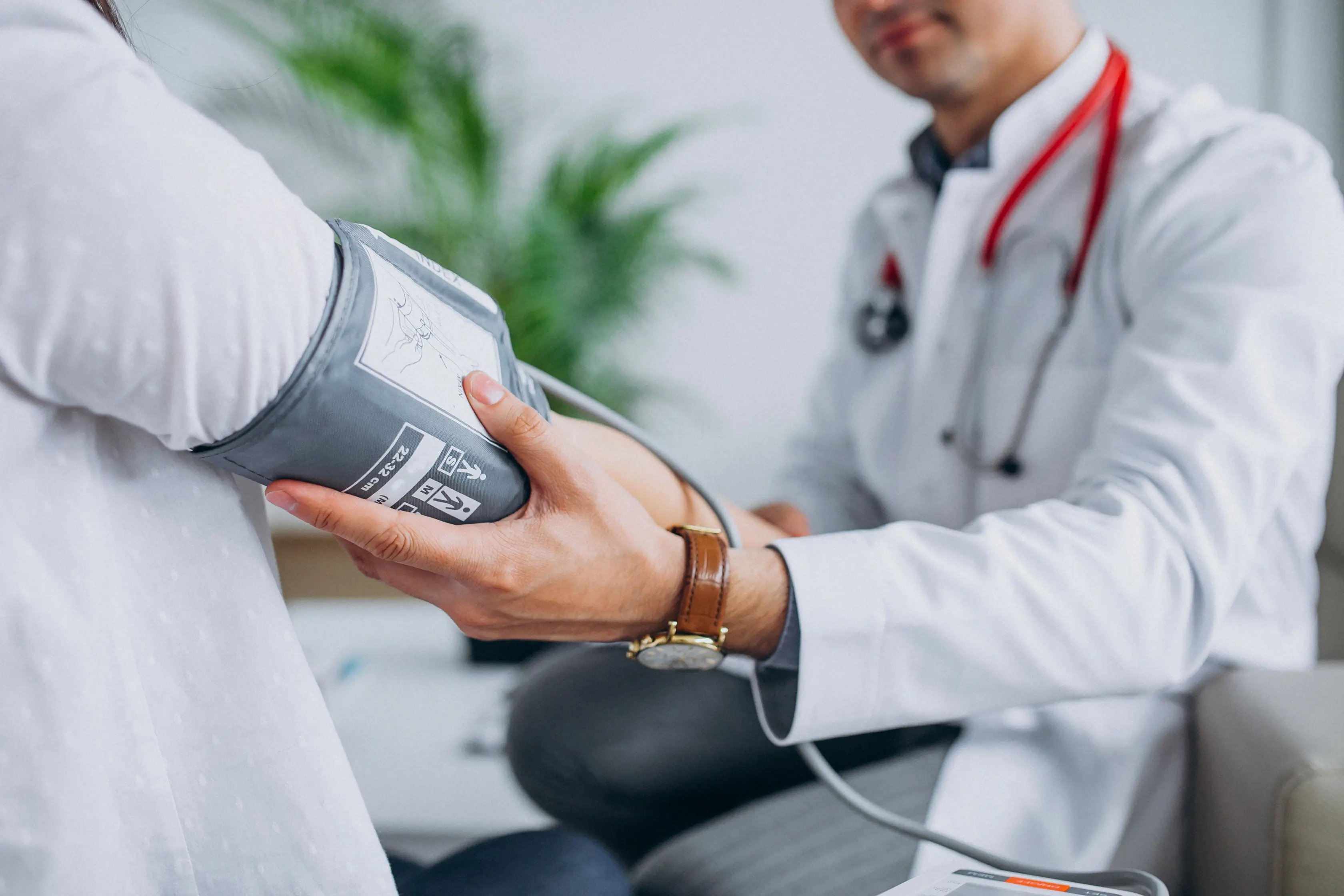
Weight-bearing exercise, adequate vitamin D and calcium, and knowing your blood pressure are the practical steps. A free pharmacy blood pressure check is a good place to start.

Vaginal symptoms deserve their own mention

Vaginal dryness and urinary symptoms do not improve on their own and they do not settle with time — unlike flushes, which usually do.

Vaginal oestrogen is highly effective, is used by almost everyone who needs it without difficulty, and carries a different and much lower risk profile than systemic HRT. It can be used alongside HRT or on its own, including by many women who cannot take systemic treatment.

It is under-prescribed, largely because it is under-asked-about.

The cost point worth knowing

The HRT prepayment certificate covers all your HRT prescriptions for a year for one payment. For most women it is a substantial saving, and it is badly under-claimed.

NHS or private

HRT is free on the NHS, and since 2023 England has had an HRT prepayment certificate costing roughly the price of two prescriptions and covering all HRT for a year. NHS prescriptions are free in Wales. Anyone paying per item for HRT in England should check this — it saves a substantial amount and is widely unknown.

Your NHS GP can prescribe HRT, and most menopause care belongs there. There is no blood test needed to diagnose menopause in women over 45 — it is a clinical diagnosis based on symptoms, and FSH testing in that age group is explicitly not recommended, which matters because private clinics sometimes sell it.

Where a private consultation genuinely helps is time. Menopause is not a ten-minute problem: it involves weighing symptoms, risks, preparations, routes and what you actually want from treatment. Twenty minutes allows that conversation properly.

What we will be honest about: compounded “bioidentical” hormones sold by private clinics are not recommended — they are unregulated, unmonitored for purity, and there is no evidence they are safer than regulated body-identical HRT, which is available on the NHS. Salivary hormone testing has no clinical value.

Where private care is worth paying for: a complex history — previous breast cancer, clotting disorders, migraine with aura — where a specialist menopause opinion is genuinely useful, and NHS menopause clinic waits are long.

Evidence and guidelines

NICE NG23, Menopause: diagnosis and management, is the governing guideline. It states menopause should be diagnosed clinically without laboratory tests in women over 45 with typical symptoms, and reserves FSH testing for women under 45 or with atypical presentations.

NG23 sets out the benefits and risks of HRT, including that transdermal oestrogen does not carry the increased venous thromboembolism risk associated with oral preparations — relevant to route choice.

NG23 recommends discussing the small increased breast cancer risk with combined HRT in absolute rather than relative terms, and notes that oestrogen-only HRT carries little or no increased risk.

NICE and the British Menopause Society both advise against compounded bioidentical hormones and salivary hormone testing, which is the basis for the position above.

NG23 also covers non-hormonal options and CBT for vasomotor symptoms and low mood.

Common questions

Do I need a blood test to be diagnosed?

Over 45 with typical symptoms, no. The diagnosis is clinical and HRT can be started without one.

A normal result should never be used to refuse you treatment.

How long do symptoms last?

On average around seven years, and for some women considerably longer. "It will pass" is true eventually and not much comfort in year four.

Vaginal and urinary symptoms are the exception — they persist and worsen without treatment rather than settling.

Is HRT safe?

For most women starting under 60 or within ten years of menopause, the benefits outweigh the risks. That is the current UK position and it is a meaningful shift from what many people absorbed twenty years ago.

Combined HRT carries a small increase in breast cancer risk that falls after stopping; oestrogen-only carries little or none. Against that sit symptom control, bone protection and quality of life.

It is a genuine decision, and being frightened out of treatment by a headline is its own harm.

Will I put on weight?

HRT does not cause weight gain. Weight tends to redistribute around the middle at this stage of life regardless, driven by falling oestrogen and age.

Some women find HRT makes it easier to manage, by improving sleep and energy enough to exercise.

Can I start HRT if my periods have not stopped?

Yes. Treatment can begin during perimenopause — you do not have to wait until periods stop.

You still need contraception until twelve months after your last period, and HRT does not provide it.

What if HRT does not suit me?

The first preparation is frequently not the final one, and switching type, dose or route resolves most problems.

Non-hormonal options exist too — including CBT, which has good evidence for flushes and for sleep, and certain non-hormonal medicines.

Could this be my thyroid instead?

Possibly, and it is worth excluding. An underactive thyroid produces near-identical symptoms and is entirely treatable in a different way.

Iron deficiency does the same, and both are common in women of this age.

Any bleeding after menopause — what should I do?

Get it checked, always. Any bleeding twelve months or more after your last period needs investigating, however light and however brief.

It is usually not cancer — but it is the symptom that finds the cases that matter, and it should never be watched and waited on.

Dr Mohammad Zubair Khan, GMC-registered private GP and founder of Cheshire Clinics
Clinically reviewed by Dr Mohammad Zubair Khan, GMC 7563469
Last reviewed

August 23, 2026

How it works

What happens when you book

£40 for a 20-minute appointment with a GMC-registered GP, 6am to 10pm, seven days a week. Membership is optional and never required.
Cheshire Clinics online GP appointment booking confirmation on mobile
01

Book your appointment

Pick a time that suits you — 6am to 10pm, seven days a week, including weekends and bank holidays. £40 for 20 minutes, self-pay, with no insurance to arrange.
5–10 minutes
Online video consultation with a GMC-registered private GP
02

Meet your GP

A 20-minute video or phone consultation with a GMC-registered GP — long enough for a proper conversation about your symptoms, your history and what matters to you.
20 minutes
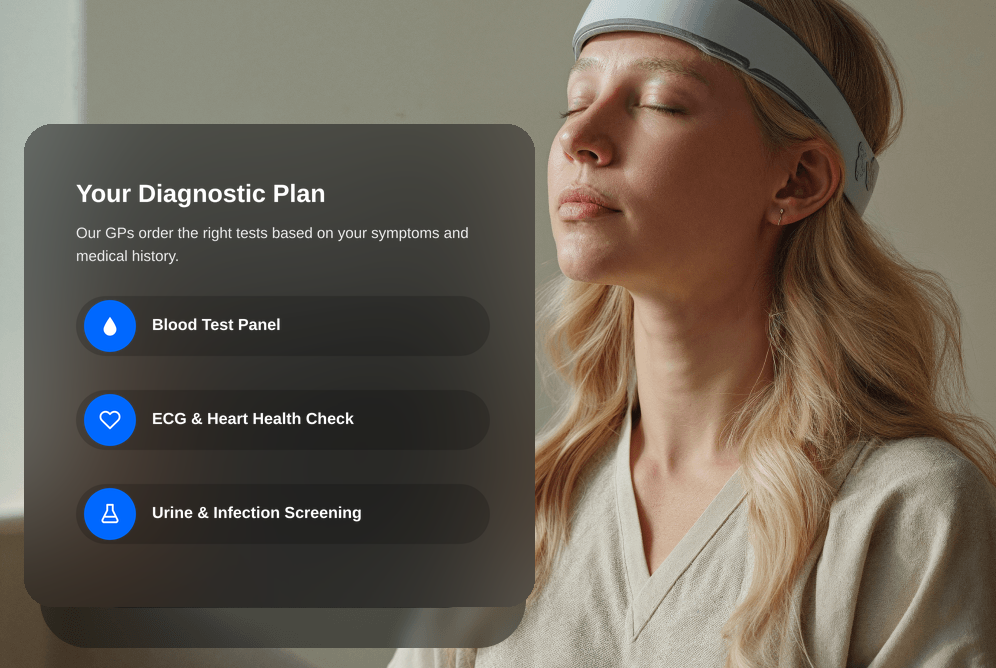
Diagnostic testing plan including blood test panel, ECG and urine screening
03

Tests and referrals, if you need them

Where testing will actually answer the question, we arrange it — blood tests and health screening through our laboratory partner, or a referral for ultrasound, X-ray, CT or MRI through private imaging providers. We will also tell you when a scan is not the right next step.
1–7 days
Personalised results and treatment plan from a private GP consultation
04

Results and next steps

Your GP talks you through what the results mean and agrees the next step with you. Every consultation ends with your treatment plan in writing, and any prescription goes to your own pharmacy.
20 minutes
GP follow-up reminder for ongoing care and progress monitoring
05

Ongoing care and follow-up

Follow-up appointments, progress monitoring and ongoing advice — including saying plainly when something needs in-person or NHS care instead.

Ongoing

How we compare

Time to be seen

Appointment length

Your NHS record in the room

Written treatment plan

Told when a test isn’t needed

Cost

Varies by practice

Typically 10 minutes

Yes, your full record

Not routinely

Usually

Free

Same day

Often 10 to 15 minutes

Usually not

Sometimes charged

Varies by provider

Often a subscription

Questions about our service

How quickly can I be seen?

Same-day access is usually available, from 6am to 10pm, seven days a week. You choose a time that suits you rather than waiting on hold at 8am.

Will I see the same doctor each time?

Yes. Care is led personally by Dr Mohammad Khan, so you are not passed between clinicians. Continuity is the point of a small practice: someone who knows your history and is listening attentively rather than working through a checklist.

Can you see my NHS records?

Yes, with your consent. We can access your Summary Care Record during the consultation, so your current medications, allergies and significant history are in the room. That means fewer questions you have already answered elsewhere, and safer prescribing.

Are you trying to replace my NHS GP?

No. We are not here to replace GPs, only to support them. Your NHS practice remains responsible for your ongoing care, and with your consent we write to them after the consultation. We are useful when you need to be seen sooner, or want more time than a standard appointment allows.

What is included in the appointment?

Twenty unhurried minutes and a comprehensive assessment. A written treatment plan is included, along with any prescription, sick note or referral letter arising from the consultation, at no extra charge.

How much does it cost?

£40 for 20 minutes, self-pay. Membership is optional and never required. Priced for fairness, because we are not here to charge extortionate amounts for access to a doctor.

What does “treatable online” actually mean?

It means the diagnosis can usually be made from your history and photographs, and that treatment can be arranged safely without examining you. Where a condition is not marked treatable online, it is because examination is the diagnosis — listening to a chest, feeling an abdomen, examining an ear or a joint — or because a procedure or device is needed.

Can you prescribe antibiotics?

Yes, where there is a genuine bacterial infection — cellulitis, impetigo, bacterial urine infections, confirmed strep throat. We will also frequently tell you that you do not need one. Most sore throats, coughs, colds and earaches are viral, and an antibiotic gives you the side effects with none of the benefit.

What if the GP cannot help with what I need?

If your problem turns out to be genuinely outside what we can do remotely, the doctor will tell you straight away, point you to the right service, and refund your fee in full. We would rather do that than fill twenty minutes to justify the charge.

What should I do in an emergency?

Call 999 or go to A&E — do not book an online appointment and do not wait for a reply to an email. For urgent problems that are not emergencies, NHS 111 is available 24 hours a day, online or by phone, and can direct you to the right service.

Patient reviews

What our patients say

No reviews published yet.
Ready to see a GP?20 minutes with a GMC-registered doctor. £40, usually same day.
Book a consultation