Home

/

Symptoms

/

Excessive Sweating

Can signal something serious

Excessive Sweating

Localised sweating is usually a treatable nuisance. Sweating all over, or drenching night sweats, is a different question.

sweating a lot, hyperhidrosis, night sweats, sweaty hands, sweaty armpits, drenching sweats

£40 · 20 minutes

Same-day availability

Assessed by a GMC-registered GP, not a symptom checker

Honest about what needs to be seen in person

Tests and referrals arranged where they are needed

Your NHS records in the room, with your consent

Clinically reviewed by Dr Mohammad Khan · Last reviewed

August 30, 2026

Book a consultation

A 20-minute appointment with a GMC-registered GP for £40. Same-day appointments are usually available, 6am to 10pm, seven days a week.

Private GP care led personally by Dr Mohammad Zubair Khan, GMC 7563469.

Why patients choose Cheshire Clinics

GMC registered doctors badge - every Cheshire Clinics consultation is with a General Medical Council registered GP

GMC-registered

Care led personally by Dr Khan

Royal College of General Practitioners badge - RCGP trained private GP consultations at Cheshire Clinics

RCGP-trained

Attentive, unhurried care that listens properly

Google five star reviews badge - Cheshire Clinics private GP online

Highly rated by patients

Five-star Google reviews from the people we have looked after

Care Quality Commission registered badge - Cheshire Clinics online GP service is registered with the CQC, England's independent regulator of health and social care

CQC-registered

Registered with the Care Quality Commission

Same-Day Appointments
Sick Notes
Private Prescriptions
Blood Tests
Menopause & HRT
Weight Management
Mental Health
Specialist Referrals
Same-Day Appointments
Sick Notes
Private Prescriptions
Blood Tests
Menopause & HRT
Weight Management
Mental Health
Specialist Referrals
Important

When to get urgent help

Call 999 if

  • Sudden sweating with chest pain, breathlessness, nausea or a feeling of dread — this can be a heart attack, and sweating is one of its more reliable accompanying features

Same-day assessment for

  • Sweating with fever and feeling very unwell
  • Sweating with confusion or drowsiness
  • Sweating with a very fast or irregular heart rate
  • Sweating in someone on insulin or a sulfonylurea, where low blood sugar is possible — treat with fast-acting carbohydrate first

Assessment within a couple of weeks for

  • Drenching night sweats that soak the sheets or nightclothes, over several weeks
  • Night sweats with unexplained weight loss, fever, or persistent swollen glands — this triad needs investigating, as it can indicate lymphoma or tuberculosis
  • New generalised sweating with weight loss, tremor or palpitations — possible overactive thyroid
  • Sweating with a persistent cough or coughing up blood

Overview

Sweating is normal and necessary. What brings people to a doctor is sweating that is out of proportion to temperature or activity, or that has changed.

The most useful distinction is between localised and generalised sweating.

Localised sweating — confined to the armpits, palms, soles or face — is usually primary hyperhidrosis. It is a genuine condition, it is not caused by anything else, and it is treatable, often more effectively than people expect.

Generalised sweating — all over, or waking you drenched at night — is more likely to reflect something systemic, and that is where the assessment focuses.

What it could be

Localised — usually primary hyperhidrosis

  • Primary focal hyperhidrosis — typically starts in adolescence, affects armpits, palms, soles or face symmetrically, often runs in families, and does not occur during sleep. That last feature is a useful discriminator

Generalised — common causes

  • Menopause and perimenopause — hot flushes and night sweats. Very common, and frequently the answer in women in their forties and fifties
  • Medication — antidepressants, particularly SSRIs and venlafaxine, are a leading cause. Also over-replacement of levothyroxine, opioids, and some diabetes medicines. See the list on this page
  • Anxiety
  • Alcohol, and alcohol withdrawal
  • Overactive thyroid — with weight loss, tremor, palpitations and heat intolerance
  • Low blood sugar, in anyone on insulin or a sulfonylurea
  • Obesity, and obstructive sleep apnoea

Less common but important

  • Lymphoma — drenching night sweats with weight loss, fever and swollen glands. The combination matters more than any single feature
  • Tuberculosis — night sweats with cough and weight loss
  • Chronic infection, including endocarditis
  • Low testosterone in men
  • Phaeochromocytoma — rare, with episodic sweating, headache and palpitations
  • Some cancers, and neurological conditions including Parkinson's disease

What you can do now

For localised sweating — a genuine treatment ladder

  1. Aluminium chloride antiperspirant, such as Driclor or Anhydrol Forte. Available over the counter, and considerably stronger than ordinary antiperspirant. Apply to completely dry skin at bedtime, wash off in the morning — applying to damp skin causes stinging and is why people abandon it
  2. Start every night, then reduce to twice weekly once controlled
  3. Iontophoresis for hands and feet — tap water electrolysis, effective and available as home devices
  4. Prescription options, including glycopyrronium and oxybutynin
  5. Botulinum toxin injections, which are highly effective for armpits and last months. Available on the NHS in some areas for severe cases

Most people never get past ordinary antiperspirant, and the aluminium chloride step alone transforms it for many.

Practical measures

  • Natural fibres, and loose clothing
  • Absorbent underarm pads and moisture-wicking socks
  • Reduce caffeine, alcohol and spicy food if they trigger it

For night sweats

  • A cooler bedroom, layered bedding you can shed, and cotton nightwear
  • Reduce evening alcohol — a very common and easily missed contributor
  • Keep a record of how often you have to change the sheets, which is genuinely useful information for a consultation

If an antidepressant is the cause

Do not stop it — raise it. Sweating is a recognised effect, dose reduction or a switch often resolves it, and stopping abruptly causes discontinuation symptoms.

Not sure what is causing it?

Book a consultation

How we assess it

What a consultation covers

  • Localised or all over — the first and most useful question
  • Does it happen during sleep? Primary hyperhidrosis characteristically does not
  • Are night sweats drenching enough to change the sheets or nightclothes? That degree is what matters, not simply feeling warm
  • When it started, and whether anything has changed
  • Weight, appetite, fever, glands and cough
  • Your full medicine list — antidepressants in particular
  • Alcohol intake, honestly
  • Menstrual status and menopausal symptoms
  • Effect on work, hands, clothing and social life — which is what determines whether treatment is worth pursuing

What we may arrange

Thyroid function, full blood count, inflammatory markers, HbA1c, liver function and, in men, testosterone.

Where menopause is likely, the diagnosis over 45 is clinical and does not require blood tests.

The limits of a video consultation

We cannot feel for enlarged glands or an enlarged spleen, or examine the thyroid. Where drenching night sweats occur with weight loss or lumps, that examination matters and we will arrange to have it done.

For localised hyperhidrosis, remote assessment works well — the history is diagnostic and the treatment ladder is straightforward.

Common questions

When are night sweats worrying?

When they are drenching — soaking sheets or nightclothes — over several weeks, and particularly with weight loss, fever or persistent swollen glands. Feeling warm at night is common and not the same thing.

Is hyperhidrosis treatable?

Yes, and better than most people realise. Aluminium chloride antiperspirant, iontophoresis, prescription tablets and botulinum toxin form a genuine ladder. Most people have only tried ordinary deodorant.

Why does my antiperspirant sting?

Almost always because it went on damp skin. Aluminium chloride must be applied to completely dry skin at bedtime and washed off in the morning. That change alone makes it tolerable.

Could my antidepressant be causing this?

Very likely if you take an SSRI or venlafaxine — sweating is a well-recognised effect. Raise it rather than stopping the tablet; a dose change or switch usually helps.

Is this the menopause?

Quite possibly, if you are in your forties or fifties. Over 45 the diagnosis is clinical and needs no blood test. HRT is highly effective for flushes and night sweats.

Could it be my thyroid?

Worth checking, particularly with weight loss, tremor, palpitations or heat intolerance. It is a simple blood test and an easily treatable cause.

I sweat only from my hands and it affects my work.

That is primary palmar hyperhidrosis, and it is treatable. Iontophoresis is particularly effective for hands, and the impact on work and daily life is a legitimate reason to pursue treatment properly.

Dr Mohammad Zubair Khan, GMC-registered private GP and founder of Cheshire Clinics

Clinically reviewed by Dr Mohammad Zubair Khan, GMC 7563469

Last reviewed

August 30, 2026

How it works

What happens when you book

£40 for a 20-minute appointment with a GMC-registered GP, 6am to 10pm, seven days a week. Membership is optional and never required.
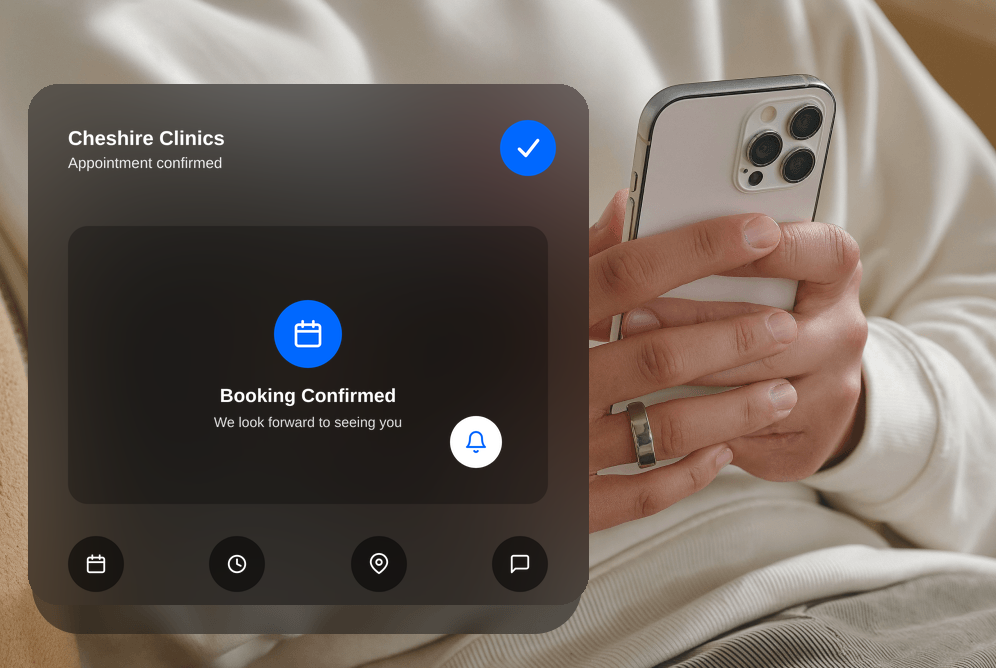
Cheshire Clinics online GP appointment booking confirmation on mobile
01

Book your appointment

Pick a time that suits you — 6am to 10pm, seven days a week, including weekends and bank holidays. £40 for 20 minutes, self-pay, with no insurance to arrange.
5–10 minutes
Online video consultation with a GMC-registered private GP
02

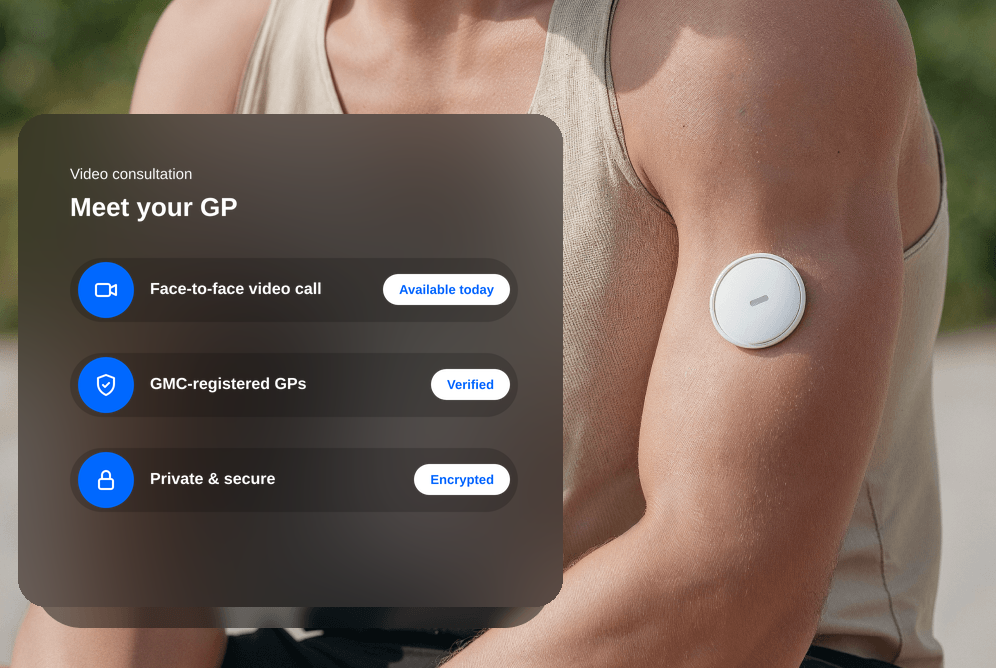
Meet your GP

A 20-minute video or phone consultation with a GMC-registered GP — long enough for a proper conversation about your symptoms, your history and what matters to you.
20 minutes
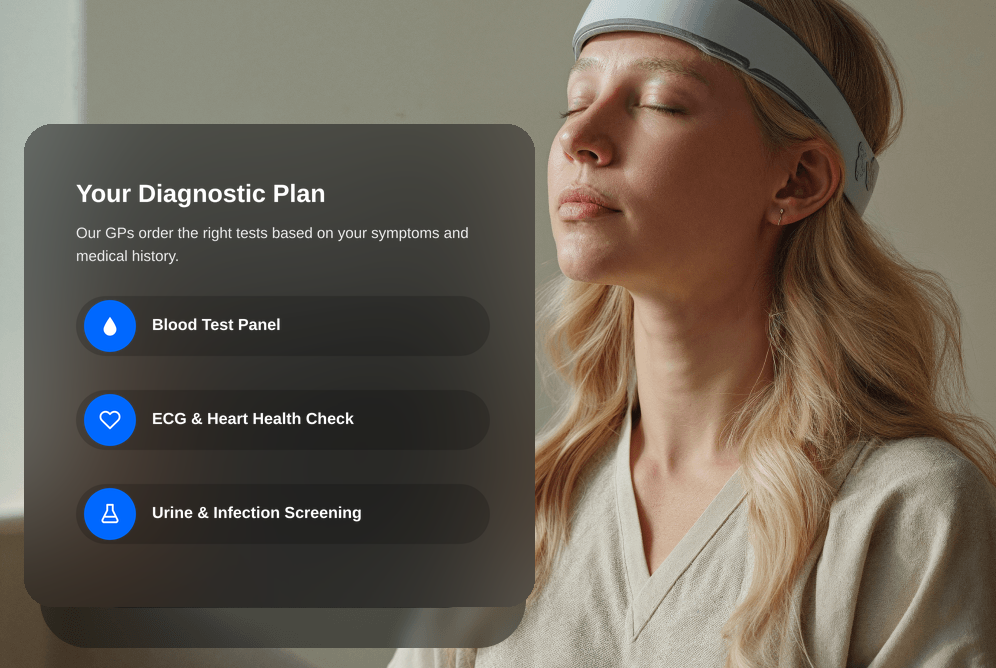
Diagnostic testing plan including blood test panel, ECG and urine screening
03

Tests and referrals, if you need them

Where testing will actually answer the question, we arrange it — blood tests and health screening through our laboratory partner, or a referral for ultrasound, X-ray, CT or MRI through private imaging providers. We will also tell you when a scan is not the right next step.
1–7 days
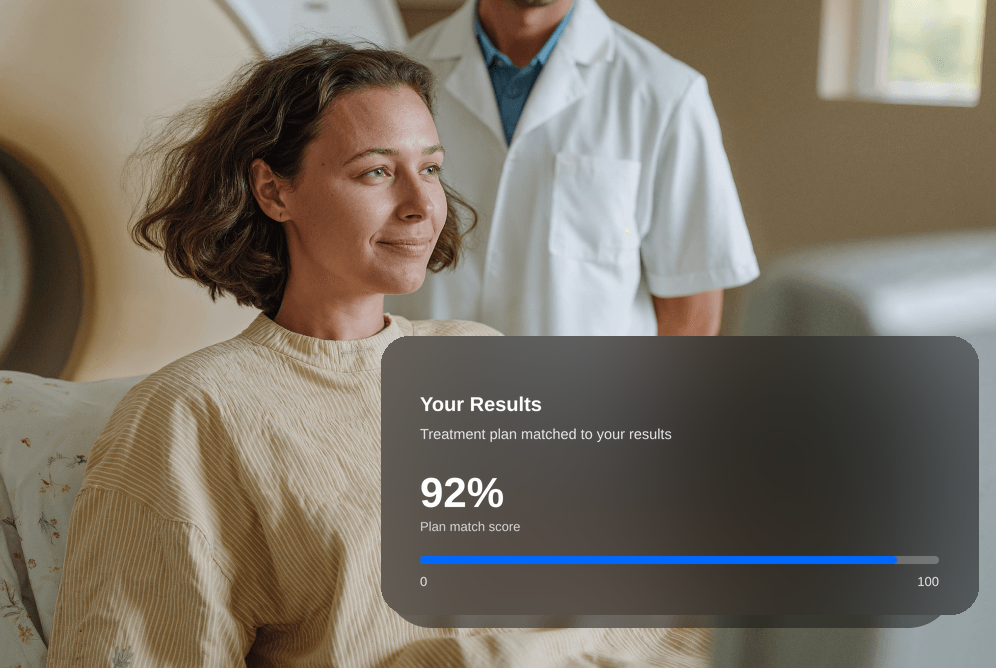
Personalised results and treatment plan from a private GP consultation
04

Results and next steps

Your GP talks you through what the results mean and agrees the next step with you. Every consultation ends with your treatment plan in writing, and any prescription goes to your own pharmacy.
20 minutes
GP follow-up reminder for ongoing care and progress monitoring
05

Ongoing care and follow-up

Follow-up appointments, progress monitoring and ongoing advice — including saying plainly when something needs in-person or NHS care instead.

Ongoing

How we compare

Time to be seen

Appointment length

Your NHS record in the room

Written treatment plan

Told when a test isn’t needed

Cost

Varies by practice

Typically 10 minutes

Yes, your full record

Not routinely

Usually

Free

Same day

Often 10 to 15 minutes

Usually not

Sometimes charged

Varies by provider

Often a subscription

Questions about our service

How quickly can I be seen?

Same-day access is usually available, from 6am to 10pm, seven days a week. You choose a time that suits you rather than waiting on hold at 8am.

Will I see the same doctor each time?

Yes. Care is led personally by Dr Mohammad Khan, so you are not passed between clinicians. Continuity is the point of a small practice: someone who knows your history and is listening attentively rather than working through a checklist.

Can you see my NHS records?

Yes, with your consent. We can access your Summary Care Record during the consultation, so your current medications, allergies and significant history are in the room. That means fewer questions you have already answered elsewhere, and safer prescribing.

Are you trying to replace my NHS GP?

No. We are not here to replace GPs, only to support them. Your NHS practice remains responsible for your ongoing care, and with your consent we write to them after the consultation. We are useful when you need to be seen sooner, or want more time than a standard appointment allows.

What is included in the appointment?

Twenty unhurried minutes and a comprehensive assessment. A written treatment plan is included, along with any prescription, sick note or referral letter arising from the consultation, at no extra charge.

How much does it cost?

£40 for 20 minutes, self-pay. Membership is optional and never required. Priced for fairness, because we are not here to charge extortionate amounts for access to a doctor.

What does “treatable online” actually mean?

It means the diagnosis can usually be made from your history and photographs, and that treatment can be arranged safely without examining you. Where a condition is not marked treatable online, it is because examination is the diagnosis — listening to a chest, feeling an abdomen, examining an ear or a joint — or because a procedure or device is needed.

Can you prescribe antibiotics?

Yes, where there is a genuine bacterial infection — cellulitis, impetigo, bacterial urine infections, confirmed strep throat. We will also frequently tell you that you do not need one. Most sore throats, coughs, colds and earaches are viral, and an antibiotic gives you the side effects with none of the benefit.

What if the GP cannot help with what I need?

If your problem turns out to be genuinely outside what we can do remotely, the doctor will tell you straight away, point you to the right service, and refund your fee in full. We would rather do that than fill twenty minutes to justify the charge.

What should I do in an emergency?

Call 999 or go to A&E — do not book an online appointment and do not wait for a reply to an email. For urgent problems that are not emergencies, NHS 111 is available 24 hours a day, online or by phone, and can direct you to the right service.

Patient reviews

What our patients say

No reviews published yet.
Ready to see a GP?20 minutes with a GMC-registered doctor. £40, usually same day.
Book a consultation