Home

/

Services

/

Capacity Assessment

Capacity Assessment

A Mental Capacity Act assessment for a specific decision, carried out by video with a written report.

£40

20 minutes

Report usually issued the same day

Unhurried care from a GMC-registered GP

6am to 10pm, seven days a week

Prescriptions, sick notes and referral letters included

Your NHS records in the room, with your consent

Clinically reviewed by Dr Mohammad Khan · Last reviewed

August 23, 2026

Book a consultation

A 20-minute appointment with a GMC-registered GP for £40. Same-day appointments are usually available, 6am to 10pm, seven days a week.

Private GP care led personally by Dr Mohammad Zubair Khan, GMC 7563469.

Why patients choose Cheshire Clinics

GMC registered doctors badge - every Cheshire Clinics consultation is with a General Medical Council registered GP

GMC-registered

Care led personally by Dr Khan

Royal College of General Practitioners badge - RCGP trained private GP consultations at Cheshire Clinics

RCGP-trained

Attentive, unhurried care that listens properly

Google five star reviews badge - Cheshire Clinics private GP online

Highly rated by patients

Five-star Google reviews from the people we have looked after

Care Quality Commission registered badge - Cheshire Clinics online GP service is registered with the CQC, England's independent regulator of health and social care

CQC-registered

Registered with the Care Quality Commission

Same-Day Appointments
Sick Notes
Private Prescriptions
Blood Tests
Menopause & HRT
Weight Management
Mental Health
Specialist Referrals
Same-Day Appointments
Sick Notes
Private Prescriptions
Blood Tests
Menopause & HRT
Weight Management
Mental Health
Specialist Referrals

Overview

Capacity is decision-specific and time-specific. Someone may have capacity to decide where they live but not to manage complex finances, and capacity can fluctuate.

An assessment therefore addresses one particular decision at one particular time — which is why we need to know exactly what the decision is before the appointment.

What's included

  • A 20-minute video assessment with a GMC-registered GP
  • Assessment against the two-stage test in the Mental Capacity Act 2005
  • A written report setting out the findings and reasoning
  • Same-day issue where possible

How it works

1. Tell us the specific decision

"Capacity to decide whether to move into residential care" or "capacity to manage their own finances" — not simply "a capacity assessment". The decision defines the assessment.

2. Send supporting information

Any diagnosis, recent letters, and an account from family or carers about how the person manages day to day.

3. The assessment

The GP assesses whether the person can understand the information relevant to the decision, retain it, weigh it up, and communicate their choice.

4. Written report

Setting out the conclusion and the reasoning behind it.

Ready to book this?

Book a consultation

What to expect

The decision has to be named first

This is what determines whether the assessment can be done at all. Capacity is decision-specific: someone may have capacity to decide where they live but not to manage complex investments, and the assessment addresses one decision at one point in time.

So tell us "capacity to decide whether to move into residential care" or "capacity to manage their own bank account and bills" — not "a capacity assessment". A report answering an unspecified question is of no use to anybody.

Send information beforehand

  • Any diagnosis and recent clinic or hospital letters
  • An account from family or carers of how the person manages day to day — often the most informative thing we receive
  • What has prompted the question now, and who is asking
  • Medication, since several classes affect cognition

The two-stage test

The assessment follows the Mental Capacity Act 2005:

  1. Is there an impairment of, or disturbance in, the functioning of the mind or brain?
  2. If so, does it mean the person cannot understand the relevant information, retain it long enough to decide, weigh it up, or communicate their decision?

All four elements are tested, and failing any one is enough. Retention need only last long enough to make the decision — forgetting afterwards does not itself indicate a lack of capacity.

How the assessment is conducted

Every practicable step is taken to help the person decide before concluding they cannot. That is a legal requirement, not a courtesy: plain language, information in manageable pieces, breaks, a supporter present, and where possible the time of day the person is at their best.

Part of the assessment is usually conducted with the person alone where it is safe and practicable. Relatives are welcome to support, but a decision cannot be assessed properly if it is being answered by somebody else in the room.

An unwise decision is not an incapable one

The starting point in law is that the person has capacity. Nobody has to prove they are capable, and someone is entitled to make a choice their family considers a mistake. We assess the process of deciding, not the wisdom of the conclusion.

Who it's for

Commonly needed for

  • Decisions about care and accommodation
  • Managing finances and property
  • Consent to treatment
  • Supporting a best-interests decision

Practical requirements

The person being assessed must be able to take part in a video consultation, with support from a relative or carer if needed. Where sensory impairment or distress makes remote assessment unreliable, we will say so rather than produce a report that would not stand up.

Where a specialist is needed instead

Testamentary capacity — capacity to make a will — and Lasting Power of Attorney certification carry a higher evidential bar and are often challenged later. Those are usually better handled by a solicitor-instructed specialist assessor, and we will advise accordingly.

After your appointment

The report

Usually issued the same day. It sets out the specific decision assessed, the information given and how it was presented, what the person said in their own words, the finding against each of the four elements, the conclusion, and the reasoning.

It records what the assessment found — including where that is not the finding the person requesting it was hoping for. If capacity is present, the report says so, and the fee applies exactly as it would either way.

The report has a shelf life

Capacity fluctuates, particularly with delirium, infection, medication changes and progressive illness. A report is a finding about one decision at one time, so a months-old assessment should not be relied on for a decision being taken now, and a solicitor or local authority may well say the same.

If capacity is found to be absent

The decision then has to be made in the person's best interests under section 4 of the Act — taking into account their past and present wishes, beliefs and values, and consulting those close to them.

  • An attorney under a registered Lasting Power of Attorney, or a court-appointed deputy, may already have authority for that type of decision
  • Where nobody is available to consult, an Independent Mental Capacity Advocate (IMCA) must be instructed for serious medical treatment or a change of accommodation
  • Contested or high-value decisions go to the Court of Protection

If capacity is found to be present

The person makes their own decision, and that is the end of the matter — including where relatives disagree with it. What can be offered is support to decide well: information in a clearer form, more time, or someone independent to talk it through with.

Safeguarding

Where we suspect coercion or financial abuse, we have a duty to act and we will — referring to the local authority safeguarding team, and telling the person and the referrer that we have done so.

If a different assessment is needed

We will say so and explain why rather than produce a report that would not withstand challenge. That applies to testamentary capacity, LPA certification, and Mental Health Act work.

What this service cannot do

The starting point in law is that the person has capacity. Under the Mental Capacity Act 2005 nobody has to prove they are capable, and an unwise decision is not the same as an incapable one. Someone is entitled to choose what their family considers a mistake. We assess whether the person can understand, retain, weigh and communicate — not whether their conclusion is the sensible one.

We assess the person, not the request. Where a family or a professional is hoping for a particular finding, the report will say what the assessment found. If we conclude that capacity is present, that is what the report records, and the fee applies as it would either way.

Assessments we cannot carry out remotely, or at all:

  • Deprivation of Liberty and Mental Health Act assessments, which require a Section 12 approved clinician
  • Testamentary capacity and Lasting Power of Attorney certification, where a solicitor-instructed specialist is the right route, as these are the ones later challenged in court
  • Anyone who cannot meaningfully take part in a video call — through significant sensory impairment, agitation, or advanced illness. A report built on an assessment that did not work properly is worse than no report

If we suspect coercion or financial abuse, we have a safeguarding duty and will act on it. We would tell the person and the referrer that we were doing so.

Common questions

What exactly is being assessed?

One named decision, at one point in time — whether the person can understand the relevant information, retain it long enough to decide, weigh it up, and communicate their choice.

Capacity is not a global status. Someone can have capacity for one decision and not another on the same afternoon, which is why the decision must be specified before booking.

My relative is making a terrible decision. Does that show they lack capacity?

No, and this is the most important thing on the page. The Mental Capacity Act is explicit: an unwise decision is not an incapable one.

People are entitled to make choices their families find alarming — about money, about where they live, about risk. The assessment examines how the decision is being made, not whether it is the choice you would make.

What if you find they do have capacity?

The report says so, and the fee applies exactly as it would either way. We assess the person, not the request — a service that produced whichever finding the referrer wanted would be worthless to everyone, including in court.

Can you assess capacity to make a will?

No — testamentary capacity is a different legal test (the Banks v Goodfellow criteria, not the Mental Capacity Act) and these assessments are the ones most often challenged after death.

That needs a solicitor-instructed specialist assessor, usually in person. We will tell you this rather than take the booking.

Can you certify a Lasting Power of Attorney?

Not remotely. LPA certificate provision requires the certificate provider to discuss the LPA with the donor in private and be satisfied they understand it, and it is deliberately held to a high standard because it is scrutinised later.

Use a solicitor or an in-person assessor. A certificate later found inadequate can invalidate the whole instrument, long after the person can no longer make another.

Can you do a Mental Health Act or DoLS assessment?

No. Those require a Section 12 approved clinician and, for DoLS, a Best Interests Assessor appointed by the supervisory body. Neither can be done privately by video.

Does the person have to consent to being assessed?

They should be asked, and told what it is for and who will see the report. Assessing someone who is actively refusing is rarely appropriate or useful.

Where they cannot consent, the assessment can still proceed if it is in their best interests — which it usually is, since the alternative is a decision made about them with no evidence at all.

Can family be present?

Yes, for support — but part of the assessment is usually conducted with the person alone where it is safe and practicable. A relative answering on the person's behalf, however well meant, makes the assessment impossible.

What if my relative cannot manage a video call?

Then remote assessment is the wrong route and we will say so. Significant hearing or visual impairment, marked agitation, or advanced illness all make a video assessment unreliable.

A report built on an assessment that did not work properly is worse than no report, because decisions get taken on it. In-person assessment through the person's GP, the memory service, or a solicitor-instructed assessor is the right answer.

How long does the report stay valid?

There is no fixed period, and capacity fluctuates. Delirium, infection, a medication change or progressive illness can all shift it within days.

Treat it as a finding about that decision at that time. For a decision being taken now, a months-old report may reasonably be questioned by a solicitor or local authority.

What happens if capacity is absent?

The decision is then made in the person's best interests under the Act — weighing their past and present wishes, beliefs and values, and consulting those close to them. A registered attorney or court-appointed deputy may already hold authority; contested decisions go to the Court of Protection.

Will the report be accepted by a solicitor or local authority?

It sets out the statutory test, the evidence and the reasoning, which is what makes any capacity report usable — but the body relying on it decides that.

Where an instructing party has specified an in-person assessment or a particular type of assessor, follow that, and check before booking rather than after.

Dr Mohammad Zubair Khan, GMC-registered private GP and founder of Cheshire Clinics

Clinically reviewed by Dr Mohammad Zubair Khan, GMC 7563469

Last reviewed

August 23, 2026

How it works

What happens when you book

£40 for a 20-minute appointment with a GMC-registered GP, 6am to 10pm, seven days a week. Membership is optional and never required.
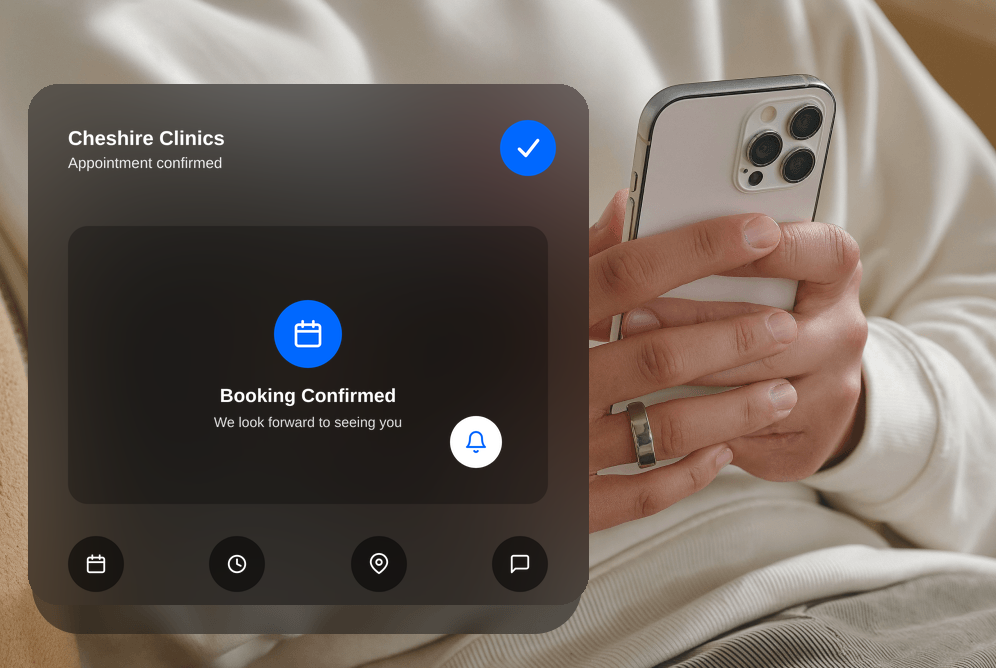
Cheshire Clinics online GP appointment booking confirmation on mobile
01

Book your appointment

Pick a time that suits you — 6am to 10pm, seven days a week, including weekends and bank holidays. £40 for 20 minutes, self-pay, with no insurance to arrange.
5–10 minutes
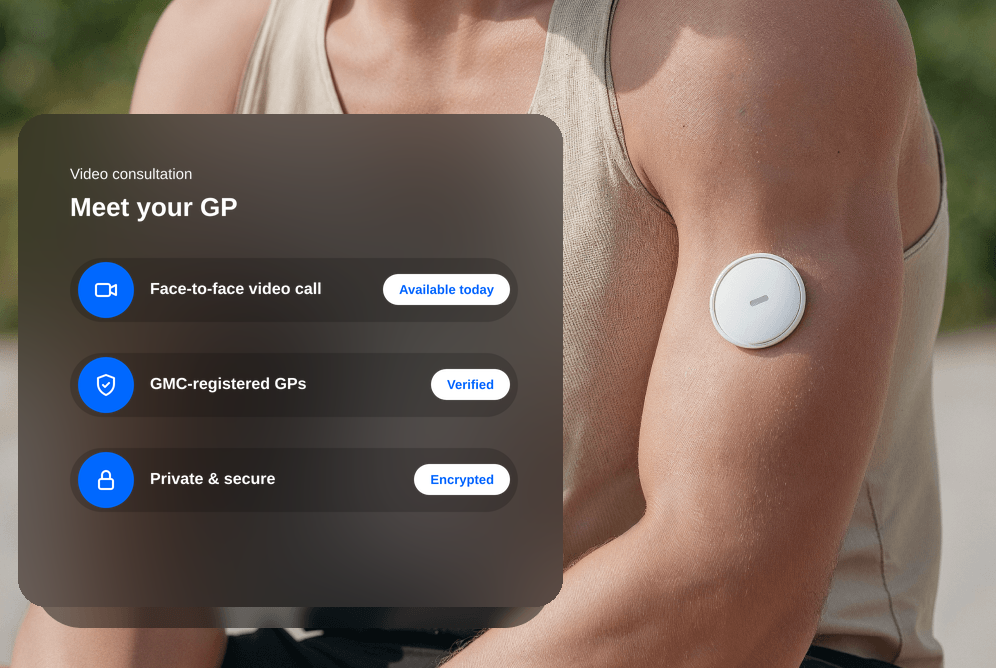
Online video consultation with a GMC-registered private GP
02

Meet your GP

A 20-minute video or phone consultation with a GMC-registered GP — long enough for a proper conversation about your symptoms, your history and what matters to you.
20 minutes
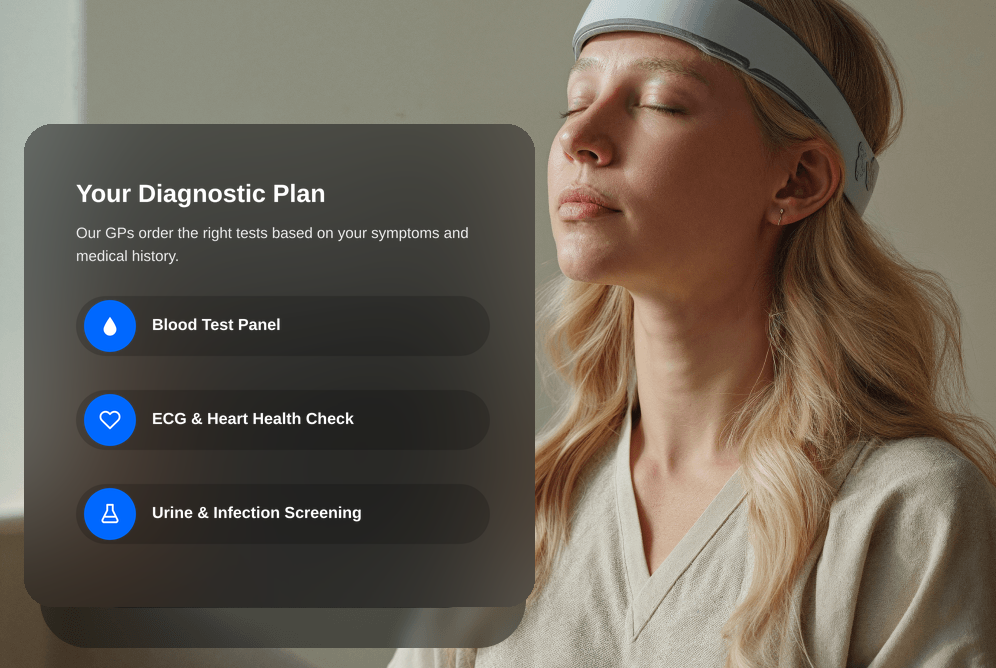
Diagnostic testing plan including blood test panel, ECG and urine screening
03

Tests and referrals, if you need them

Where testing will actually answer the question, we arrange it — blood tests and health screening through our laboratory partner, or a referral for ultrasound, X-ray, CT or MRI through private imaging providers. We will also tell you when a scan is not the right next step.
1–7 days
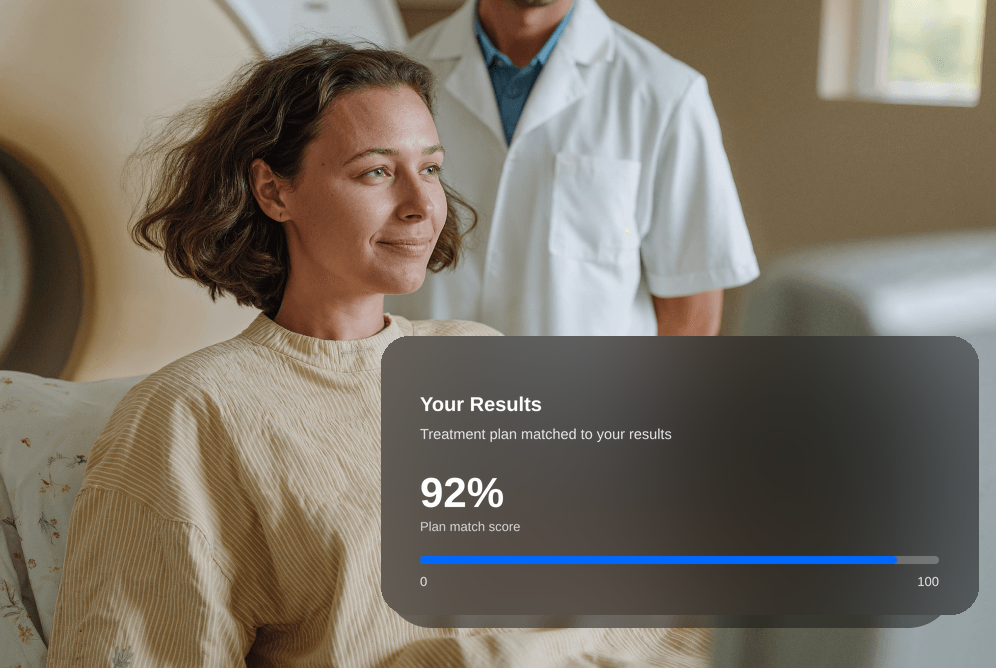
Personalised results and treatment plan from a private GP consultation
04

Results and next steps

Your GP talks you through what the results mean and agrees the next step with you. Every consultation ends with your treatment plan in writing, and any prescription goes to your own pharmacy.
20 minutes
GP follow-up reminder for ongoing care and progress monitoring
05

Ongoing care and follow-up

Follow-up appointments, progress monitoring and ongoing advice — including saying plainly when something needs in-person or NHS care instead.

Ongoing

How we compare

Time to be seen

Appointment length

Your NHS record in the room

Written treatment plan

Told when a test isn’t needed

Cost

Varies by practice

Typically 10 minutes

Yes, your full record

Not routinely

Usually

Free

Same day

Often 10 to 15 minutes

Usually not

Sometimes charged

Varies by provider

Often a subscription

Questions about our service

How quickly can I be seen?

Same-day access is usually available, from 6am to 10pm, seven days a week. You choose a time that suits you rather than waiting on hold at 8am.

Will I see the same doctor each time?

Yes. Care is led personally by Dr Mohammad Khan, so you are not passed between clinicians. Continuity is the point of a small practice: someone who knows your history and is listening attentively rather than working through a checklist.

Can you see my NHS records?

Yes, with your consent. We can access your Summary Care Record during the consultation, so your current medications, allergies and significant history are in the room. That means fewer questions you have already answered elsewhere, and safer prescribing.

Are you trying to replace my NHS GP?

No. We are not here to replace GPs, only to support them. Your NHS practice remains responsible for your ongoing care, and with your consent we write to them after the consultation. We are useful when you need to be seen sooner, or want more time than a standard appointment allows.

What is included in the appointment?

Twenty unhurried minutes and a comprehensive assessment. A written treatment plan is included, along with any prescription, sick note or referral letter arising from the consultation, at no extra charge.

How much does it cost?

£40 for 20 minutes, self-pay. Membership is optional and never required. Priced for fairness, because we are not here to charge extortionate amounts for access to a doctor.

What does “treatable online” actually mean?

It means the diagnosis can usually be made from your history and photographs, and that treatment can be arranged safely without examining you. Where a condition is not marked treatable online, it is because examination is the diagnosis — listening to a chest, feeling an abdomen, examining an ear or a joint — or because a procedure or device is needed.

Can you prescribe antibiotics?

Yes, where there is a genuine bacterial infection — cellulitis, impetigo, bacterial urine infections, confirmed strep throat. We will also frequently tell you that you do not need one. Most sore throats, coughs, colds and earaches are viral, and an antibiotic gives you the side effects with none of the benefit.

What if the GP cannot help with what I need?

If your problem turns out to be genuinely outside what we can do remotely, the doctor will tell you straight away, point you to the right service, and refund your fee in full. We would rather do that than fill twenty minutes to justify the charge.

What should I do in an emergency?

Call 999 or go to A&E — do not book an online appointment and do not wait for a reply to an email. For urgent problems that are not emergencies, NHS 111 is available 24 hours a day, online or by phone, and can direct you to the right service.

Patient reviews

What our patients say

No reviews published yet.
Ready to see a GP?20 minutes with a GMC-registered doctor. £40, usually same day.
Book a consultation