Is a questionnaire service unsafe?
Not inherently, and it would be unfair to say so. Regulated questionnaire services are subject to the same oversight, and for repeat supply of an established medicine they work.
The risk is narrower than "unsafe": it is that a form cannot follow up an unexpected answer.
Does someone actually review my answers?
On a legitimate UK service, yes — a prescriber reviews them before anything is issued.
If a site issues prescription medicine with no clinician involved at all, that is a warning sign, not a feature.
What can a video appointment do that a form cannot?
Ask the second question. A clinician who hears something that does not add up can follow it; a form moves to the next field.
It can also see you — a rash, a swelling, your breathing, how you use an inhaler.
Is it cheaper to use a questionnaire?
Usually yes, sometimes substantially. That is a real advantage and worth weighing.
For a repeat of something stable, paying £40 for twenty minutes you do not need is poor value, and we would say so.
Can I be refused after filling in a form?
Yes, and a good service will refuse where the answers do not support supply.
The problem is that a refusal usually ends there, without anyone working out what you should do instead.
What if I answer something wrongly?
A form takes your answer at face value. In a conversation, an answer that does not fit gets explored.
That is the substance of the difference, and it matters most for the people who least realise it.
Which should I use for weight loss medication?
Not a questionnaire alone. Weight gain has a long list of causes worth excluding first, several of them treatable.
A form that asks your height and weight cannot do that, and it will not tell you it did not try.
Do you offer a questionnaire option?
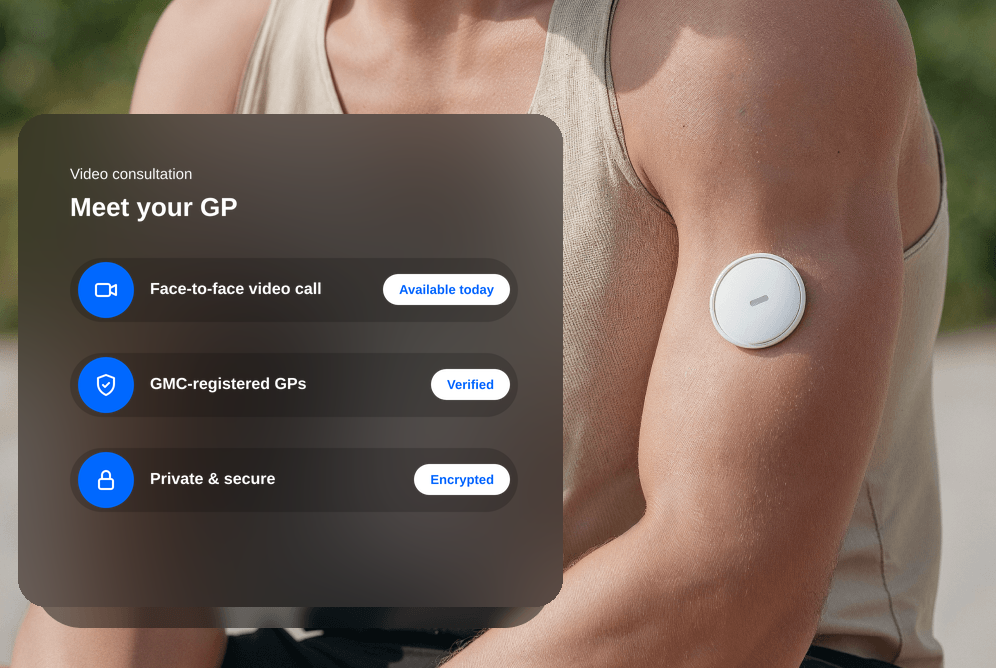
No. Every consultation here is a twenty-minute video appointment with a GMC-registered GP.
That is a deliberate choice rather than a limitation — and for some straightforward needs it makes us the more expensive option.