Asthma and COPD icon - online GP consultation for breathing and chest conditions at Cheshire Clinics
Treatable online

COPD

Not reversible, but very much treatable — and stopping smoking is the only thing that changes its course.

£40 · 20 minutes

Same-day availability

6am to 10pm, seven days

Assessed and treated by a GMC-registered GP

Prescriptions, sick notes and referral letters included

A written treatment plan after every appointment

Your NHS records in the room, with your consent

Clinically reviewed by Dr Mohammad Khan · Last reviewed

August 23, 2026

Book a consultation

A 20-minute appointment with a GMC-registered GP for £40. No membership required.

Private GP care led personally by Dr Mohammad Zubair Khan, GMC 7563469.

Why patients choose Cheshire Clinics

GMC registered doctors badge - every Cheshire Clinics consultation is with a General Medical Council registered GP

GMC-registered

Care led personally by Dr Khan

Royal College of General Practitioners badge - RCGP trained private GP consultations at Cheshire Clinics

RCGP-trained

Attentive, unhurried care that listens properly

Google five star reviews badge - Cheshire Clinics private GP online

Highly rated by patients

Five-star Google reviews from the people we have looked after

Care Quality Commission registered badge - Cheshire Clinics online GP service is registered with the CQC, England's independent regulator of health and social care

CQC-registered

Registered with the Care Quality Commission

Same-Day Appointments
Sick Notes
Private Prescriptions
Blood Tests
Menopause & HRT
Weight Management
Mental Health
Specialist Referrals
Same-Day Appointments
Sick Notes
Private Prescriptions
Blood Tests
Menopause & HRT
Weight Management
Mental Health
Specialist Referrals

Overview

COPD covers chronic bronchitis and emphysema — lung damage that narrows the airways and destroys the air sacs, making it progressively harder to breathe out. Unlike asthma, the obstruction is largely fixed rather than variable.

Around 1.2 million people in the UK have a diagnosis, and a similar number are thought to have it without knowing. It is one of the most under-diagnosed conditions in general practice, largely because breathlessness gets attributed to age or weight, and a persistent morning cough gets called a smoker's cough and accepted.

Two things drive everything on this page.

Stopping smoking is the only intervention that changes the course of the disease. Inhalers relieve symptoms; none of them slows the decline in lung function. Stopping does, at any stage and at any age — which makes it the single most valuable thing available.

Pulmonary rehabilitation is as effective as most drug treatment and is massively under-used. A structured exercise and education programme improves breathlessness, exercise capacity and quality of life more than adding another inhaler usually does. Most people with COPD have never been offered it, and many who are offered it decline because nobody explained what it does.

Common symptoms

  • Breathlessness on exertion, gradually worsening over years — first on hills and stairs, then on the flat
  • A chronic cough, often productive, typically worst in the morning
  • Regular phlegm
  • Wheeze
  • Frequent chest infections, particularly in winter — and repeated "winter bronchitis" is very often undiagnosed COPD
  • Fatigue and unintended weight loss in more advanced disease

How breathlessness is graded

The MRC scale is used because it tracks function rather than feeling:

  1. Breathless only on strenuous exercise
  2. Short of breath hurrying, or walking up a slight hill
  3. Walks slower than others of the same age, or stops for breath walking at own pace
  4. Stops for breath after about 100 metres or a few minutes on the flat
  5. Too breathless to leave the house, or breathless dressing

From grade 3 upwards, pulmonary rehabilitation is indicated — and that is precisely the point at which most people are simply given another inhaler.

What distinguishes it from asthma

  • Onset usually after 35, with a smoking or exposure history
  • Symptoms persistent and slowly progressive, rather than variable
  • Little day-to-day or night-time variation
  • Breathlessness rather than intermittent wheeze dominates

Causes and risk factors

  • Smoking — responsible for the large majority of cases in the UK. Not everyone who smokes develops COPD, and susceptibility varies genetically, but the relationship is direct and dose-related
  • Occupational exposure — dusts, fumes, chemicals and vapours. Mining, construction, farming, welding and textile work all carry risk, and occupational COPD is under-recognised. It may also carry entitlement to industrial injuries benefit, which is worth knowing
  • Biomass fuel smoke — cooking or heating on open fires, a major global cause and relevant to people who spent childhood or early adulthood abroad
  • Air pollution
  • Second-hand smoke
  • Childhood respiratory infections and low birth weight, which reduce peak lung function
  • Alpha-1 antitrypsin deficiency — an inherited condition to consider in anyone diagnosed under 45, in a non-smoker, or with a strong family history. It is a simple blood test, it is frequently never done, and identifying it changes management and matters for relatives

What makes it worse

Continued smoking; chest infections — each exacerbation causes a step down in lung function that does not fully recover, which is why preventing them matters more than treating them; cold weather and pollution; and untreated reflux, which is a common and reversible aggravator.

How it is diagnosed

COPD cannot be diagnosed on symptoms alone, and it cannot be diagnosed remotely. It requires spirometry — breathing tests measuring how much air you can force out and how fast — showing obstruction that does not fully reverse after a bronchodilator.

We are direct about this: we will not label anyone with COPD without spirometry, because both over- and under-diagnosis are common and the label carries consequences for insurance, employment and treatment.

What a remote consultation does contribute

  • Establishing the history, the exposure, and the pattern — and deciding whether spirometry is warranted
  • Arranging spirometry and interpreting the result
  • Checking inhaler technique on video, which is at least as important in COPD as in asthma
  • Reviewing and optimising treatment for anyone already diagnosed — which is the majority of COPD care
  • Referring for pulmonary rehabilitation, which is where the largest gains are

Other tests

  • Chest X-ray — not to diagnose COPD but to exclude other causes, and lung cancer risk is raised in this group
  • Full blood count — for anaemia, and for the eosinophil count, which now guides whether a steroid inhaler is appropriate
  • Alpha-1 antitrypsin in anyone under 45, non-smokers, or with a family history
  • BMI, which independently predicts outcome
  • Screening for anxiety and depression, both of which are substantially more common in COPD and consistently untreated

How we treat it online

1. Stopping smoking — the only disease-modifying treatment

No inhaler slows the decline in lung function. Stopping does, at any age and any stage. Combining medication with behavioural support roughly triples the success rate compared with willpower alone, and NHS stop smoking services are free. This is not a moral point — it is the intervention with by far the largest effect available.

2. Inhalers — and technique first

  • A short-acting reliever for symptoms as needed
  • Long-acting bronchodilators — a LAMA and LABA combination — as the mainstay of regular treatment
  • Inhaled steroids are not for everyone with COPD. They help where there is asthma overlap or a raised blood eosinophil count, and in others they increase the risk of pneumonia without adding benefit. Being on a steroid inhaler is worth reviewing rather than assuming
  • Technique and device choice matter as much as the drug. Some devices need a fast sharp breath, others a slow steady one, and using the wrong technique wastes the dose. On video the GP can watch and correct it

3. Pulmonary rehabilitation — ask for this

A six to eight week programme of supervised exercise and education. It improves breathlessness and exercise capacity more than most drug changes, reduces admissions, and improves mood. It is indicated from MRC grade 3, is available on the NHS, and is dramatically under-referred. If you have never been offered it, ask.

4. Preventing exacerbations

  • Vaccination — annual flu, pneumococcal, COVID and, for eligible ages, RSV. These prevent the infections that permanently reduce lung function
  • A rescue pack — a course of antibiotics and steroids kept at home with a written plan, so treatment starts within hours rather than days. This works well and requires clear instructions on when to use it, which we provide in writing
  • Treating reflux, which commonly aggravates cough and breathlessness

5. What we cannot do

We cannot perform spirometry, measure your oxygen levels, or examine your chest. Anyone acutely unwell, with low oxygen, or needing oxygen assessment needs in-person care, and we will direct you there.

Respiratory and chest consultation - private GP assessment for cough, breathlessness and asthma at Cheshire Clinics

Ready to talk to a GP about this?

Book a consultation
Important

When to seek urgent help

Call 999 for:

  • Severe breathlessness at rest, or being unable to speak in full sentences
  • Blue or grey lips, tongue or fingers
  • Confusion, drowsiness or agitation — in COPD these can indicate rising carbon dioxide and are serious
  • Chest pain, or coughing up significant blood
  • A sudden severe worsening with sharp chest pain — possible collapsed lung, which is more common in COPD

Seek same-day assessment for an exacerbation:

  • Breathlessness clearly worse than your usual
  • Sputum increasing in volume, or turning green or yellow
  • New or worsening wheeze and chest tightness
  • Fever, or feeling generally unwell
  • Needing your reliever far more than usual
  • Ankle swelling that is new or increasing

Act early. Exacerbations treated within the first day or two resolve faster and cause less lasting damage. If you have a rescue pack and your plan says to start it, start it — and tell someone you have.

Book a routine review if: you have never had spirometry but have been told you have COPD; you have never been offered pulmonary rehabilitation; you have had two or more exacerbations in a year; your inhaler technique has never been watched; you are on a steroid inhaler and have never had it reviewed; or you are still smoking and would like help — which is always available without any lecture attached.

Prevention and self-care

The two that matter most

  • Stop smoking. Nothing else you do comes close. Free NHS support plus medication gives the best odds
  • Do pulmonary rehabilitation if offered — and ask if it has not been. People frequently decline it assuming it will be too hard. It is designed for people who are breathless, it is supervised, and the improvement in what you can do is often the biggest change in years

Keep moving

Breathlessness makes people avoid exertion; inactivity deconditions the muscles; deconditioned muscles need more oxygen; breathlessness worsens. Breaking that spiral is the single most useful daily habit. Walking daily, within your limits, is genuinely treatment rather than advice.

Breathing techniques worth learning

  • Pursed-lip breathing — breathe in through the nose, out slowly through pursed lips as if blowing out a candle. It keeps the airways open longer and reduces trapped air. It works immediately and costs nothing
  • Positions of ease — leaning forward with forearms on a table or on your knees, which lets the accessory muscles work more efficiently
  • A handheld fan directed at the face measurably reduces the sensation of breathlessness — a small, evidence-supported trick that is rarely mentioned

Day to day

  • Keep vaccinations up to date
  • Know your rescue pack plan and keep it in date
  • Watch your weight in both directions — excess weight worsens breathlessness, and being underweight independently worsens outcome in COPD
  • Avoid cold air and high pollution days; use a scarf over the mouth in winter
  • Rinse your mouth after a steroid inhaler

Mood

Anxiety and depression affect a large proportion of people with COPD and are routinely untreated. Breathlessness causes anxiety, and anxiety worsens breathlessness — so treating it improves the breathing, not just the mood. It is worth raising.

NHS or private

NHS COPD care is free and comprehensive, and it contains the two interventions that genuinely change outcomes — both of which are free and both of which are under-used.

The first is stopping smoking. It is the only intervention that slows the decline in lung function, and NHS stop smoking services roughly triple success rates compared with willpower alone. No inhaler does what quitting does.

The second is pulmonary rehabilitation — and this is the most under-used effective treatment in respiratory medicine. A structured six to twelve week exercise and education programme, free on the NHS, improves breathlessness and quality of life more than any inhaler. Uptake is poor, partly because people assume exercise will make breathlessness worse. It does the opposite.

Free vaccinations matter too — annual flu, pneumococcal and COVID vaccines reduce exacerbations and admissions.

Where a private consultation adds something is a prompt review, checking inhaler technique, and reviewing whether a rescue pack is appropriate.

What we will not do is issue repeated rescue packs of steroids and antibiotics without review. Recurrent courses of oral steroids carry real cumulative harm, and repeated exacerbations mean the underlying treatment needs revisiting.

Increasing breathlessness with confusion, drowsiness, blue lips or chest pain needs emergency assessment.

Evidence and guidelines

NICE NG115, Chronic obstructive pulmonary disease in over 16s: diagnosis and management, is the governing guideline. It requires spirometry showing persistent airflow obstruction for diagnosis, and recommends smoking cessation support as the highest-value intervention.

NG115 recommends pulmonary rehabilitation for anyone with functional breathlessness — typically MRC grade 3 and above — and after hospitalisation for an exacerbation.

NG115 sets out inhaled therapy by phenotype, including the assessment of asthmatic features or steroid responsiveness in deciding on inhaled corticosteroids.

NG114, COPD exacerbations: antimicrobial prescribing, covers rescue medication and cautions against unnecessary antibiotic use.

NG115 recommends annual influenza and pneumococcal vaccination, and covers assessment for long-term oxygen therapy — which is specialist-led and is not something to arrange privately.

Common questions

Is it too late to stop smoking?

No — and this is the most important answer here. Stopping slows the decline in lung function at any age and any stage of COPD. It is the only intervention that changes the course of the disease; every inhaler treats symptoms. Even after decades of smoking, stopping now measurably changes what the next ten years look like.

What actually is pulmonary rehabilitation?

A supervised six to eight week programme of exercise and education, designed specifically for people who are breathless. It improves breathlessness, exercise capacity and mood more than most medication changes, and reduces hospital admissions. It is free on the NHS and hugely under-offered — if nobody has mentioned it, ask.

Why has my steroid inhaler been stopped?

Because inhaled steroids are not appropriate for everyone with COPD. They help where there are asthma features or a raised eosinophil count; in others they increase pneumonia risk without benefit. Stepping down is a deliberate, evidence-based decision rather than a cost-saving one.

Is COPD the same as asthma?

No. Asthma is variable and largely reversible, often starts young, and varies day to day and at night. COPD is persistent and progressive, usually starts after 35, and is mostly caused by smoking or exposure. Some people have features of both, which changes the treatment — which is why spirometry rather than assumption is what settles it.

Will I end up on oxygen?

Most people with COPD never need it. Home oxygen is for a specific group with persistently low blood oxygen levels, and it is assessed formally rather than given for breathlessness. Breathlessness and low oxygen are not the same thing — many very breathless people have entirely normal levels.

Should I avoid exercise if it makes me breathless?

No, and this is the trap. Avoiding exertion leads to deconditioning, which makes you more breathless at lower levels of activity, so you do less. Being breathless during exercise is not harming your lungs. Staying active within your limits is one of the most effective things you can do.

What is a rescue pack?

A course of antibiotics and steroid tablets kept at home so you can start treatment within hours of an exacerbation rather than waiting days. It works well with a clear written plan on exactly when to use it — and it is not for use at the first sniffle. We write the plan down.

I was diagnosed young and never smoked. Why?

Worth investigating properly. Alpha-1 antitrypsin deficiency is an inherited cause to consider in anyone diagnosed under 45 or in a non-smoker, and it is a simple blood test that is frequently never done. Occupational exposure and childhood biomass smoke are other explanations. The answer matters for you and for your relatives.


Dr Mohammad Zubair Khan, GMC-registered private GP and founder of Cheshire Clinics
Clinically reviewed by Dr Mohammad Zubair Khan, GMC 7563469
Last reviewed

August 23, 2026

How it works

What happens when you book

£40 for a 20-minute appointment with a GMC-registered GP, 6am to 10pm, seven days a week. Membership is optional and never required.
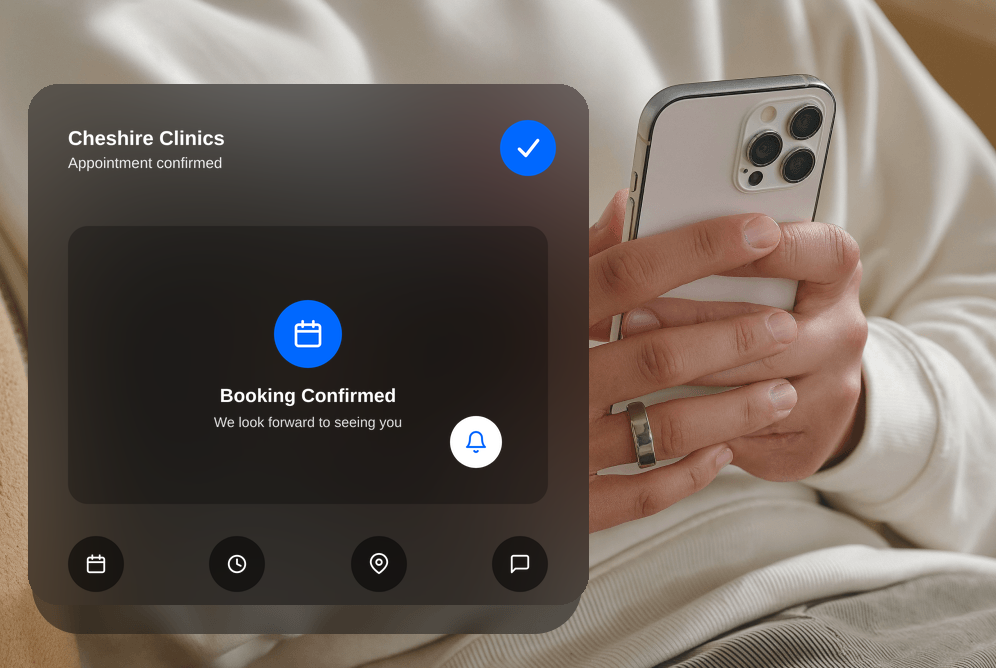
Cheshire Clinics online GP appointment booking confirmation on mobile
01

Book your appointment

Pick a time that suits you — 6am to 10pm, seven days a week, including weekends and bank holidays. £40 for 20 minutes, self-pay, with no insurance to arrange.
5–10 minutes
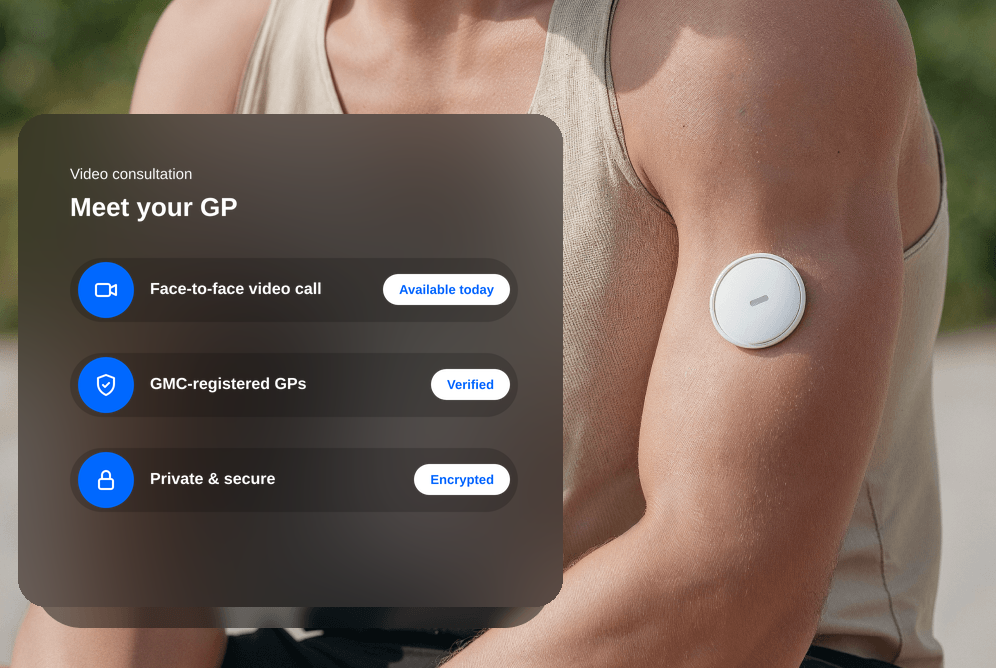
Online video consultation with a GMC-registered private GP
02

Meet your GP

A 20-minute video or phone consultation with a GMC-registered GP — long enough for a proper conversation about your symptoms, your history and what matters to you.
20 minutes
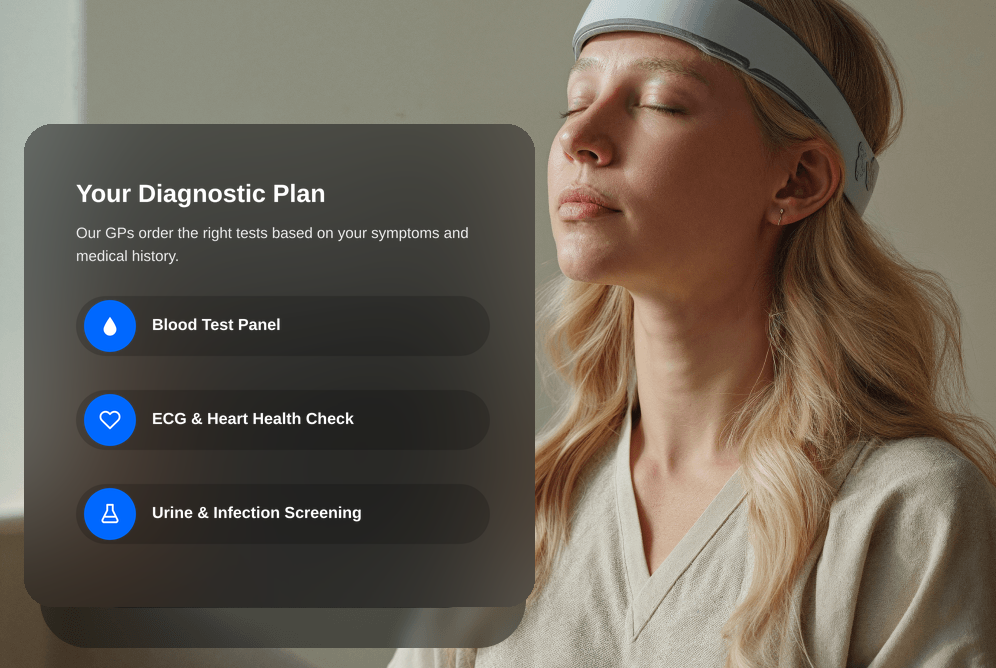
Diagnostic testing plan including blood test panel, ECG and urine screening
03

Tests and referrals, if you need them

Where testing will actually answer the question, we arrange it — blood tests and health screening through our laboratory partner, or a referral for ultrasound, X-ray, CT or MRI through private imaging providers. We will also tell you when a scan is not the right next step.
1–7 days
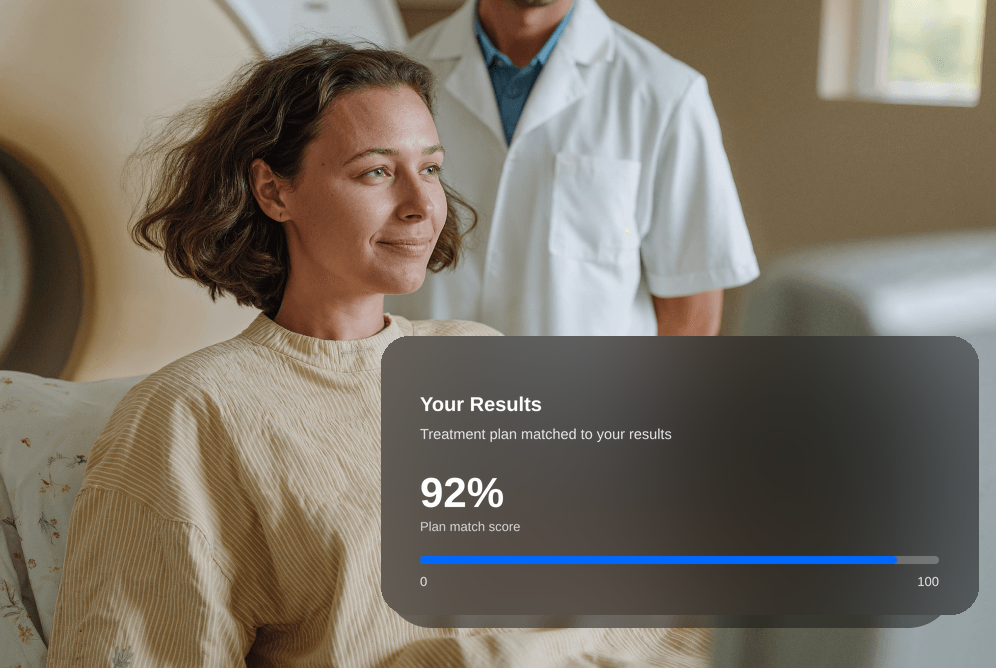
Personalised results and treatment plan from a private GP consultation
04

Results and next steps

Your GP talks you through what the results mean and agrees the next step with you. Every consultation ends with your treatment plan in writing, and any prescription goes to your own pharmacy.
20 minutes
GP follow-up reminder for ongoing care and progress monitoring
05

Ongoing care and follow-up

Follow-up appointments, progress monitoring and ongoing advice — including saying plainly when something needs in-person or NHS care instead.

Ongoing

How we compare

Time to be seen

Appointment length

Your NHS record in the room

Written treatment plan

Told when a test isn’t needed

Cost

Varies by practice

Typically 10 minutes

Yes, your full record

Not routinely

Usually

Free

Same day

Often 10 to 15 minutes

Usually not

Sometimes charged

Varies by provider

Often a subscription

Questions about our service

How quickly can I be seen?

Same-day access is usually available, from 6am to 10pm, seven days a week. You choose a time that suits you rather than waiting on hold at 8am.

Will I see the same doctor each time?

Yes. Care is led personally by Dr Mohammad Khan, so you are not passed between clinicians. Continuity is the point of a small practice: someone who knows your history and is listening attentively rather than working through a checklist.

Can you see my NHS records?

Yes, with your consent. We can access your Summary Care Record during the consultation, so your current medications, allergies and significant history are in the room. That means fewer questions you have already answered elsewhere, and safer prescribing.

Are you trying to replace my NHS GP?

No. We are not here to replace GPs, only to support them. Your NHS practice remains responsible for your ongoing care, and with your consent we write to them after the consultation. We are useful when you need to be seen sooner, or want more time than a standard appointment allows.

What is included in the appointment?

Twenty unhurried minutes and a comprehensive assessment. A written treatment plan is included, along with any prescription, sick note or referral letter arising from the consultation, at no extra charge.

How much does it cost?

£40 for 20 minutes, self-pay. Membership is optional and never required. Priced for fairness, because we are not here to charge extortionate amounts for access to a doctor.

What does “treatable online” actually mean?

It means the diagnosis can usually be made from your history and photographs, and that treatment can be arranged safely without examining you. Where a condition is not marked treatable online, it is because examination is the diagnosis — listening to a chest, feeling an abdomen, examining an ear or a joint — or because a procedure or device is needed.

Can you prescribe antibiotics?

Yes, where there is a genuine bacterial infection — cellulitis, impetigo, bacterial urine infections, confirmed strep throat. We will also frequently tell you that you do not need one. Most sore throats, coughs, colds and earaches are viral, and an antibiotic gives you the side effects with none of the benefit.

What if the GP cannot help with what I need?

If your problem turns out to be genuinely outside what we can do remotely, the doctor will tell you straight away, point you to the right service, and refund your fee in full. We would rather do that than fill twenty minutes to justify the charge.

What should I do in an emergency?

Call 999 or go to A&E — do not book an online appointment and do not wait for a reply to an email. For urgent problems that are not emergencies, NHS 111 is available 24 hours a day, online or by phone, and can direct you to the right service.

Patient reviews

What our patients say

No reviews published yet.
Ready to see a GP?20 minutes with a GMC-registered doctor. £40, usually same day.
Book a consultation