Home

/

Symptoms

/

Persistent Cough

Can signal something serious

Persistent Cough

Three weeks is the threshold. Beyond that, a cough is a symptom rather than a leftover.

cough that wont go away, chronic cough, coughing for weeks, dry cough

£40 · 20 minutes

Same-day availability

Assessed by a GMC-registered GP, not a symptom checker

Honest about what needs to be seen in person

Tests and referrals arranged where they are needed

Your NHS records in the room, with your consent

Clinically reviewed by Dr Mohammad Khan · Last reviewed

August 23, 2026

Book a consultation

A 20-minute appointment with a GMC-registered GP for £40. Same-day appointments are usually available, 6am to 10pm, seven days a week.

Private GP care led personally by Dr Mohammad Zubair Khan, GMC 7563469.

Why patients choose Cheshire Clinics

GMC registered doctors badge - every Cheshire Clinics consultation is with a General Medical Council registered GP

GMC-registered

Care led personally by Dr Khan

Royal College of General Practitioners badge - RCGP trained private GP consultations at Cheshire Clinics

RCGP-trained

Attentive, unhurried care that listens properly

Google five star reviews badge - Cheshire Clinics private GP online

Highly rated by patients

Five-star Google reviews from the people we have looked after

Care Quality Commission registered badge - Cheshire Clinics online GP service is registered with the CQC, England's independent regulator of health and social care

CQC-registered

Registered with the Care Quality Commission

Same-Day Appointments
Sick Notes
Private Prescriptions
Blood Tests
Menopause & HRT
Weight Management
Mental Health
Specialist Referrals
Same-Day Appointments
Sick Notes
Private Prescriptions
Blood Tests
Menopause & HRT
Weight Management
Mental Health
Specialist Referrals
Important

When to get urgent help

Seek urgent assessment for:

  • Coughing up blood — at any age, any amount
  • A cough lasting more than three weeks with unexplained weight loss
  • Cough with persistent hoarseness beyond three weeks
  • Cough with chest pain, or breathlessness that is worsening
  • Cough with fever and feeling significantly unwell
  • A new cough in a smoker or ex-smoker over 40

These combinations warrant an urgent chest X-ray, which your NHS GP can arrange on an urgent pathway. We will write to them the same day.

Overview

A cough after a viral illness commonly lasts two to three weeks and occasionally longer — that is normal and not a sign of anything wrong.

Three weeks is the useful threshold. Beyond that, a cough stops being the tail end of something and becomes a symptom in its own right, and it is worth knowing which of a fairly short list is causing it.

What it could be

The big three, accounting for most chronic cough

  • Postnasal drip — from allergic rhinitis or sinusitis. Throat clearing, worse lying down, a sensation of mucus at the back of the throat
  • Asthma — particularly cough-variant asthma, where a dry night-time cough is the only symptom and there is no wheeze at all. Frequently missed
  • Acid reflux — reflux causes cough without any heartburn at all in a substantial minority

Other causesCOPD; ACE inhibitor blood pressure medication, which causes a dry cough in around one in ten people and is entirely reversible by switching; smoking; whooping cough, which is commoner in adults than most people think; and post-infectious cough.

Needing exclusion — lung cancer and tuberculosis. Both uncommon, both the reason the three-week rule exists.

What you can do now

Check your medication list first — seriously

If you take ramipril, lisinopril, perindopril or any other ACE inhibitor for blood pressure, that is very possibly your cough.

It affects a substantial minority of people taking these drugs, it is a dry tickly cough with no other symptoms, and — the part that catches people out — it can start months or even years after beginning the medicine, so the connection is rarely made. It is one of the commonest reasons for a chronic cough being investigated at length when a simple medication switch would have resolved it.

Do not stop it yourself. Raise it, and an alternative that does not cause cough can usually be substituted. The cough then settles over a few weeks.

Time the cough properly

  • Under three weeks — almost always a viral infection
  • Three to eight weeks — usually post-viral. Irritating but common, and it does resolve
  • Over eight weeks — a chronic cough, which has a specific short list of causes and warrants proper assessment rather than more cough medicine

Note the pattern — it usually names the cause

  • Worse at night or after exercise, with any wheeze — think asthma
  • Worse lying flat, with throat clearing or a hoarse voice — think reflux
  • Constant need to clear the throat, catarrh dripping back — think post-nasal drip
  • Productive, with breathlessness, in a smoker — think COPD

These three — asthma, reflux and post-nasal drip — account for the large majority of chronic coughs in non-smokers with a normal chest X-ray.

What actually helps

  • Honey and lemon in hot water performs about as well as shop-bought cough syrup, and costs nothing. This is a genuine finding, not a folk remedy
  • Steam inhalation, and keeping well hydrated
  • Stop smoking and stop vaping. A smoker's cough often improves markedly within weeks of stopping — and a cough that changes in a long-term smoker is the one that needs urgent assessment
  • If reflux is likely: nothing to eat for three hours before bed, and raise the head of the bed

What not to do

  • Do not take codeine linctus or other suppressants for weeks. They mask the symptom without treating anything, and codeine is addictive
  • Do not push for antibiotics. Most persistent coughs are not bacterial, and antibiotics will not shorten a post-viral one
  • Do not ignore a cough because you have "always had a bit of a cough" — the change is the signal

Get seen urgently if

  • You are coughing up blood — at any age, any amount, once is enough
  • The cough comes with weight loss, night sweats or fever — this combination raises the question of TB, which is rising again in the UK
  • You are breathless at rest, or have chest pain
  • You are over 40, smoke or used to, and the cough has lasted more than three weeks

Not sure what is causing it?

Book a consultation

How we assess it

The pattern narrows it substantially — dry or productive, worse at night or on waking, seasonal, related to exercise or cold air, and crucially what medication you take. Stopping an ACE inhibitor resolves a surprising number of chronic coughs and is the first thing worth checking.

We arrange chest X-ray where the cough has lasted beyond three weeks or has any concerning feature, plus blood count and allergy testing where relevant. For suspected asthma we arrange spirometry.

Treatment is targeted at the cause rather than the cough. Cough suppressants treat the symptom and leave the reason in place.

Common questions

How long should a cough last?

Longer than most people expect. A cough after a viral infection commonly lasts three to eight weeks, and that is normal rather than a sign of anything sinister — the airways stay irritable long after the virus has gone. Beyond eight weeks it counts as a chronic cough and should be assessed properly.

The exception is anyone over 40 who smokes or used to: three weeks is the threshold there, and a chest X-ray is warranted.

Could it be my blood pressure tablets?

Quite possibly, and this is the most easily fixed cause on the list. ACE inhibitors — ramipril, lisinopril, perindopril, enalapril and others ending in "-pril" — cause a persistent dry cough in a significant minority of users. It can begin months or years into taking them, which is exactly why the link gets missed and people end up with X-rays and inhalers instead of a prescription change. Raise it; do not stop the tablet unilaterally.

I coughed up some blood. How urgent is that?

Urgent — get it assessed this week, even if it was a single small streak and even if it has not happened again. Most causes turn out to be a burst small vessel from forceful coughing or a chest infection, but coughing up blood is a recognised presenting symptom of lung cancer and of TB, and it is never watched and waited on.

Do I need antibiotics?

Almost certainly not. The overwhelming majority of coughs — including ones that produce green or yellow phlegm, which people find hard to believe — are viral. Colour tells you very little about whether an infection is bacterial. Antibiotics for a viral cough cause side effects and drive resistance without shortening the illness by a day.

Do I need a chest X-ray?

Reasonable for a cough lasting more than three weeks in a current or former smoker, for anyone over 40 with a new persistent cough, and for anyone coughing up blood, losing weight, or having night sweats. A normal chest X-ray does not end the enquiry — the common causes of chronic cough do not show up on one — but it is the right starting point.

Could it be asthma if I don't wheeze?

Yes — cough-variant asthma is exactly that: asthma where cough is the only symptom. Suspect it if the cough is worse at night, after exercise, in cold air, or around dust and animals. It is diagnosed with breathing tests and often confirmed by a trial of inhaled treatment.

What about whooping cough?

It is not just a childhood illness, and it is very much still around — including in vaccinated adults, whose immunity wanes. The pattern is a cough lasting weeks to months in violent bouts, sometimes ending in vomiting or a sharp intake of breath, and it is known as the hundred-day cough for good reason. Worth considering in any adult with a prolonged paroxysmal cough, particularly if they have been around a child with one.

Should I be thinking about TB?

Occasionally, yes. TB has been rising in the UK, and the pattern to know is a cough lasting more than three weeks alongside fever, drenching night sweats and weight loss. It is more likely with a history of living in or travelling to a high-prevalence country, or close contact with someone who has had it. It is entirely curable, and it needs identifying rather than treating as a chest infection.

Dr Mohammad Zubair Khan, GMC-registered private GP and founder of Cheshire Clinics

Clinically reviewed by Dr Mohammad Zubair Khan, GMC 7563469

Last reviewed

August 23, 2026

How it works

What happens when you book

£40 for a 20-minute appointment with a GMC-registered GP, 6am to 10pm, seven days a week. Membership is optional and never required.
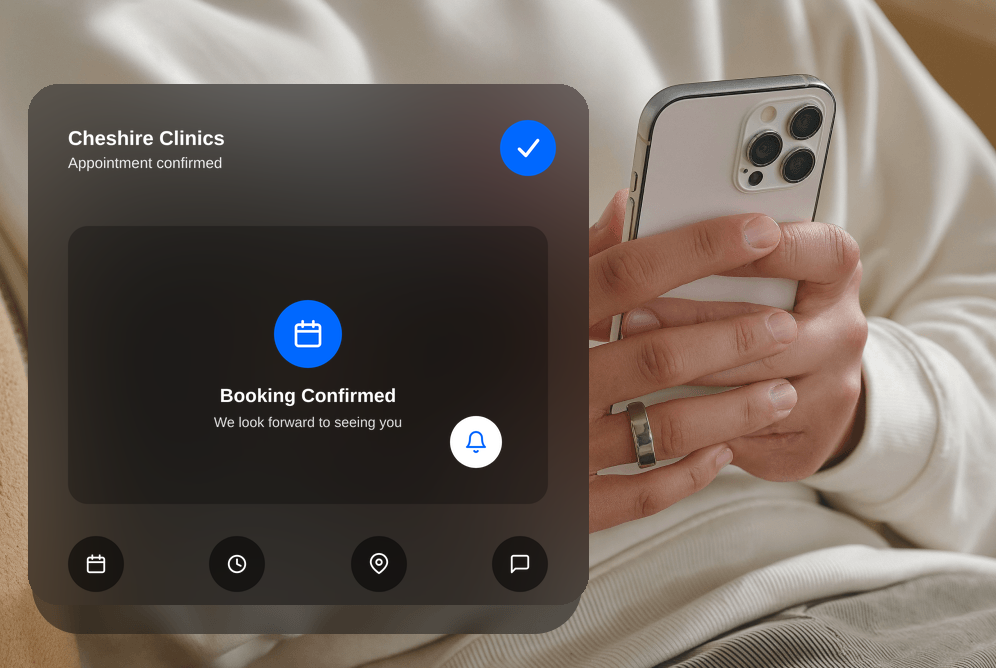
Cheshire Clinics online GP appointment booking confirmation on mobile
01

Book your appointment

Pick a time that suits you — 6am to 10pm, seven days a week, including weekends and bank holidays. £40 for 20 minutes, self-pay, with no insurance to arrange.
5–10 minutes
Online video consultation with a GMC-registered private GP
02

Meet your GP

A 20-minute video or phone consultation with a GMC-registered GP — long enough for a proper conversation about your symptoms, your history and what matters to you.
20 minutes
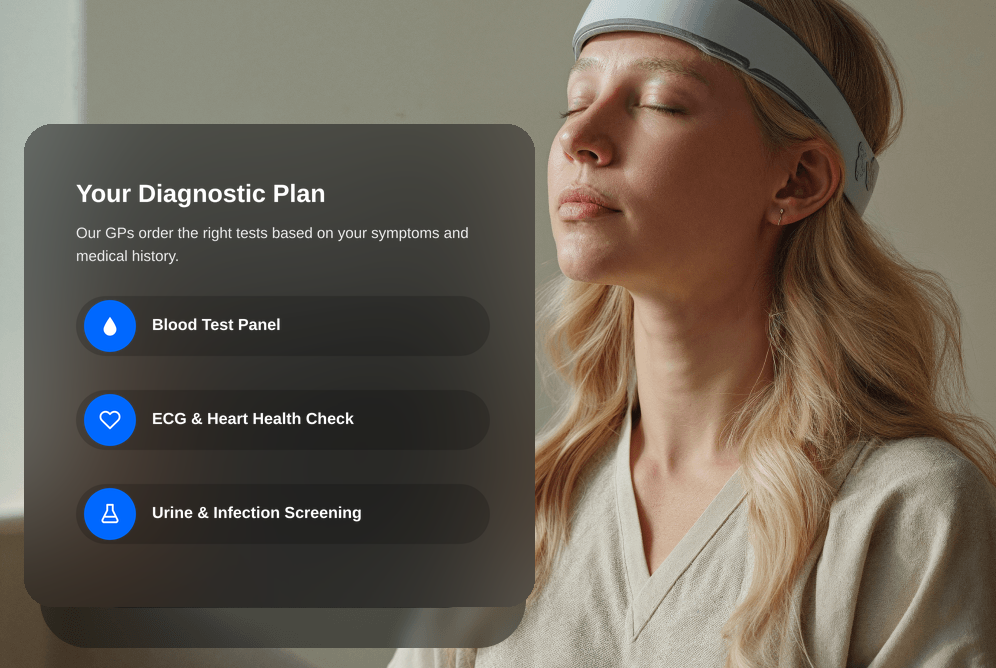
Diagnostic testing plan including blood test panel, ECG and urine screening
03

Tests and referrals, if you need them

Where testing will actually answer the question, we arrange it — blood tests and health screening through our laboratory partner, or a referral for ultrasound, X-ray, CT or MRI through private imaging providers. We will also tell you when a scan is not the right next step.
1–7 days
Personalised results and treatment plan from a private GP consultation
04

Results and next steps

Your GP talks you through what the results mean and agrees the next step with you. Every consultation ends with your treatment plan in writing, and any prescription goes to your own pharmacy.
20 minutes
GP follow-up reminder for ongoing care and progress monitoring
05

Ongoing care and follow-up

Follow-up appointments, progress monitoring and ongoing advice — including saying plainly when something needs in-person or NHS care instead.

Ongoing

How we compare

Time to be seen

Appointment length

Your NHS record in the room

Written treatment plan

Told when a test isn’t needed

Cost

Varies by practice

Typically 10 minutes

Yes, your full record

Not routinely

Usually

Free

Same day

Often 10 to 15 minutes

Usually not

Sometimes charged

Varies by provider

Often a subscription

Questions about our service

How quickly can I be seen?

Same-day access is usually available, from 6am to 10pm, seven days a week. You choose a time that suits you rather than waiting on hold at 8am.

Will I see the same doctor each time?

Yes. Care is led personally by Dr Mohammad Khan, so you are not passed between clinicians. Continuity is the point of a small practice: someone who knows your history and is listening attentively rather than working through a checklist.

Can you see my NHS records?

Yes, with your consent. We can access your Summary Care Record during the consultation, so your current medications, allergies and significant history are in the room. That means fewer questions you have already answered elsewhere, and safer prescribing.

Are you trying to replace my NHS GP?

No. We are not here to replace GPs, only to support them. Your NHS practice remains responsible for your ongoing care, and with your consent we write to them after the consultation. We are useful when you need to be seen sooner, or want more time than a standard appointment allows.

What is included in the appointment?

Twenty unhurried minutes and a comprehensive assessment. A written treatment plan is included, along with any prescription, sick note or referral letter arising from the consultation, at no extra charge.

How much does it cost?

£40 for 20 minutes, self-pay. Membership is optional and never required. Priced for fairness, because we are not here to charge extortionate amounts for access to a doctor.

What does “treatable online” actually mean?

It means the diagnosis can usually be made from your history and photographs, and that treatment can be arranged safely without examining you. Where a condition is not marked treatable online, it is because examination is the diagnosis — listening to a chest, feeling an abdomen, examining an ear or a joint — or because a procedure or device is needed.

Can you prescribe antibiotics?

Yes, where there is a genuine bacterial infection — cellulitis, impetigo, bacterial urine infections, confirmed strep throat. We will also frequently tell you that you do not need one. Most sore throats, coughs, colds and earaches are viral, and an antibiotic gives you the side effects with none of the benefit.

What if the GP cannot help with what I need?

If your problem turns out to be genuinely outside what we can do remotely, the doctor will tell you straight away, point you to the right service, and refund your fee in full. We would rather do that than fill twenty minutes to justify the charge.

What should I do in an emergency?

Call 999 or go to A&E — do not book an online appointment and do not wait for a reply to an email. For urgent problems that are not emergencies, NHS 111 is available 24 hours a day, online or by phone, and can direct you to the right service.

Patient reviews

What our patients say

No reviews published yet.
Ready to see a GP?20 minutes with a GMC-registered doctor. £40, usually same day.
Book a consultation