Home

/

Tests & scans

/

Allergy Testing

Allergy Testing

Allergen-specific IgE testing guided by your history, rather than a scattergun panel that tells you nothing useful.

Quoted after consultation

Results usually next working day

Blood sample

Referred by a GMC-registered GP, results reviewed by the same doctor

Taken at a partner site near you

Results explained in plain English, not just a number

Your NHS records in the room, with your consent

Clinically reviewed by Dr Mohammad Khan · Last reviewed

August 23, 2026

Book a consultation

A 20-minute appointment with a GMC-registered GP for £40. Same-day appointments are usually available, 6am to 10pm, seven days a week.

Private GP care led personally by Dr Mohammad Zubair Khan, GMC 7563469.

Why patients choose Cheshire Clinics

GMC registered doctors badge - every Cheshire Clinics consultation is with a General Medical Council registered GP

GMC-registered

Care led personally by Dr Khan

Royal College of General Practitioners badge - RCGP trained private GP consultations at Cheshire Clinics

RCGP-trained

Attentive, unhurried care that listens properly

Google five star reviews badge - Cheshire Clinics private GP online

Highly rated by patients

Five-star Google reviews from the people we have looked after

Care Quality Commission registered badge - Cheshire Clinics online GP service is registered with the CQC, England's independent regulator of health and social care

CQC-registered

Registered with the Care Quality Commission

Same-Day Appointments
Sick Notes
Private Prescriptions
Blood Tests
Menopause & HRT
Weight Management
Mental Health
Specialist Referrals
Same-Day Appointments
Sick Notes
Private Prescriptions
Blood Tests
Menopause & HRT
Weight Management
Mental Health
Specialist Referrals

Overview

Allergy testing is only useful when guided by your history. Testing a broad panel of foods in someone with no suggestive history produces false positives, unnecessary dietary restriction, and no benefit at all.

So the consultation comes first: what happens, how quickly after exposure, how consistently, and how severe. That conversation determines what is worth testing — and sometimes the answer is that testing will not change anything.

What this test measures

Allergen-specific IgE antibodies to the allergens identified from your history, and total IgE as a measure of overall allergic tendency.

Testing can cover inhaled allergens such as pollens, house dust mite, animal dander and moulds, along with common food allergens and insect venom.

Why you might need it

Suspected allergy with a clear pattern of reaction, persistent rhinitis, or a previous significant reaction needing clarification.

What's included

Included: total IgE, plus allergen-specific IgE testing selected according to your history.

The exact panel is chosen at your consultation rather than sold as a fixed bundle, because the useful test is the one that matches your symptoms.

IgG food intolerance tests are not supported by evidence and we do not offer them.

Ready to arrange this test?

Book a consultation

How the referral works

Partner site:

Randox Health

Consultation to take a proper allergy history and decide what is worth testing, referral to a Randox Health clinic for the sample, then a results review interpreting each result against your symptoms.

Where reactions have been severe, or where the picture is complex, we refer you to an allergy or immunology service instead — that is the right route and we will say so.

Preparation required

No fasting required, and antihistamines do not affect blood testing.

Anyone with a history of anaphylaxis needs specialist immunology assessment rather than blood testing alone, and should carry an adrenaline auto-injector in the meantime.

Understanding your results

A positive test is not an allergy

This is the point everything else depends on. Specific IgE testing shows sensitisation — that your immune system recognises a substance. Plenty of people are sensitised to things they eat and touch with no reaction whatsoever.

Allergy is diagnosed by the history: what happened, how soon, and how consistently. The blood test supports that story or fails to. It cannot tell it on its own.

Cutting out a food because of a positive test alone is how people end up with unnecessarily restricted diets — and, in children, how genuine tolerance is sometimes lost.

What the numbers mean, roughly

Higher IgE levels correlate with a higher probability of genuine reaction, but they do not predict severity. A low-level positive can precede a serious reaction and a high one can be clinically silent.

Nobody can tell you from a blood test how bad your next reaction will be. Any clinic implying otherwise is overselling.

Cross-reactivity explains a lot of confusing results

Birch pollen allergy causes positive results to apple, hazelnut, carrot and celery — usually producing only oral itching with raw versions, and no reaction at all when cooked.

House dust mite cross-reacts with shellfish, and latex with banana, avocado and kiwi. A puzzling panel often makes complete sense once the history is heard.

A negative result

A negative test alongside a convincing history does not close the question. Some genuine allergies are missed, particularly to less common triggers and to substances not on the panel at all.

What this test cannot tell you

What this test cannot tell you

  • Whether you are allergic. It shows sensitisation; allergy is a clinical diagnosis
  • How severe a reaction would be. Level does not predict severity, and this is frequently implied otherwise
  • Anything about food intolerance, which is a completely different mechanism with no blood test
  • Anything about non-IgE reactions — delayed reactions, coeliac disease, lactose intolerance, or reactions to food additives

The tests we will not offer

IgG food intolerance panels have no scientific validity. IgG to a food indicates exposure, not intolerance — it is essentially a record of what you eat.

They routinely return a dozen "positives" and lead to unnecessary and sometimes harmful restriction, particularly in children. Allergy UK, the BSACI and the equivalent bodies internationally all advise against them.

Also without basis: hair analysis, kinesiology, VEGA testing, bioresonance and "leaky gut" panels. We say this plainly because these are marketed hard at exactly the people reading this page.

What we cannot do remotely

Skin prick testing and food challenges — which are frequently the more informative tests, and which need specialist supervision.

We also cannot assess an acute reaction. If you are having one now, that is 999.

Costs explained

What you pay

  • £40 for the consultation — which for allergy is genuinely the useful part, because the history does most of the diagnostic work
  • The test, quoted before it is arranged
  • £40 for the results review

The free route

NHS allergy testing is free where a genuine allergy is suspected, and NHS allergy clinics can do the things we cannot: skin prick testing, supervised food challenges, and immunotherapy.

Anaphylaxis, or any suspected severe allergy, should go through the NHS — including adrenaline auto-injector prescription and training, which needs to be done properly.

Antihistamines are cheap over the counter, and often considerably cheaper than a prescription charge. Pharmacy First can help with hay fever without an appointment.

Where not to spend money

  • IgG food intolerance tests, at any price. They have no validity, and the money buys a restricted diet you did not need
  • Hair analysis, kinesiology, VEGA and bioresonance testing — none has any evidential basis
  • Large screening panels with no symptoms. Breadth generates positives to things you eat happily, and each one is a worry you did not have before
  • "Gut healing" and "leaky gut" protocols sold on the back of an intolerance panel

Common questions

Does a positive result mean I am allergic?

No — it means you are sensitised. Many people test positive to foods they eat regularly with no problem at all.

Allergy is diagnosed from what actually happens when you are exposed, and the test supports that history rather than replacing it.

Do not cut a food out on the strength of a positive test alone.

Does the number tell me how severe my allergy is?

No. Higher levels mean a higher probability of a genuine reaction, but they do not predict severity.

A low-level positive can precede a serious reaction, which is why anyone with a history of severe reaction needs specialist assessment regardless of the number.

Can you test for food intolerance?

No, and neither can anyone else — there is no validated blood test for it.

IgG food intolerance panels are not valid. IgG to a food shows you have eaten it, not that you react to it. They generate long lists of "positives" and lead to unnecessary restriction.

Intolerance is identified by structured elimination and reintroduction, ideally with a dietitian.

What about lactose intolerance or coeliac disease?

Different mechanisms entirely, and not covered by allergy testing.

Coeliac disease has its own specific test — and it only works if you are still eating gluten. Lactose intolerance is usually diagnosed by trial of exclusion.

Why did I test positive to foods I eat with no problem?

Usually cross-reactivity. Birch pollen allergy produces positives to apple, hazelnut, carrot and celery, generally causing only oral itching with raw food and nothing at all when cooked.

Dust mite cross-reacts with shellfish; latex with banana, avocado and kiwi. A confusing panel usually makes sense once the history is heard.

Do I need to stop antihistamines first?

Not for a blood test — antihistamines do not affect IgE levels.

They do affect skin prick testing, which needs them stopped several days beforehand. Different test, different rule.

I had a severe reaction. Is a blood test enough?

No — you need specialist allergy assessment, and it is free on the NHS.

Anyone with a history of anaphylaxis needs an adrenaline auto-injector, training in using it, and a written emergency plan. That is not something to arrange around a blood test.

And if you are having a reaction now — swelling, difficulty breathing, feeling faint — call 999.

My child tested positive. Should we remove the food?

Not on a test result alone, and this matters a great deal in children.

Unnecessary exclusion can cause loss of tolerance, making a genuine allergy more likely rather than less — and it risks nutritional gaps during growth.

Children with suspected food allergy should be assessed by a paediatric allergy service, which is free.

Do I need to fast?

No. No fasting, and no need to stop antihistamines.

Dr Mohammad Zubair Khan, GMC-registered private GP and founder of Cheshire Clinics

Clinically reviewed by Dr Mohammad Zubair Khan, GMC 7563469

Last reviewed

August 23, 2026

How it works

What happens when you book

£40 for a 20-minute appointment with a GMC-registered GP, 6am to 10pm, seven days a week. Membership is optional and never required.
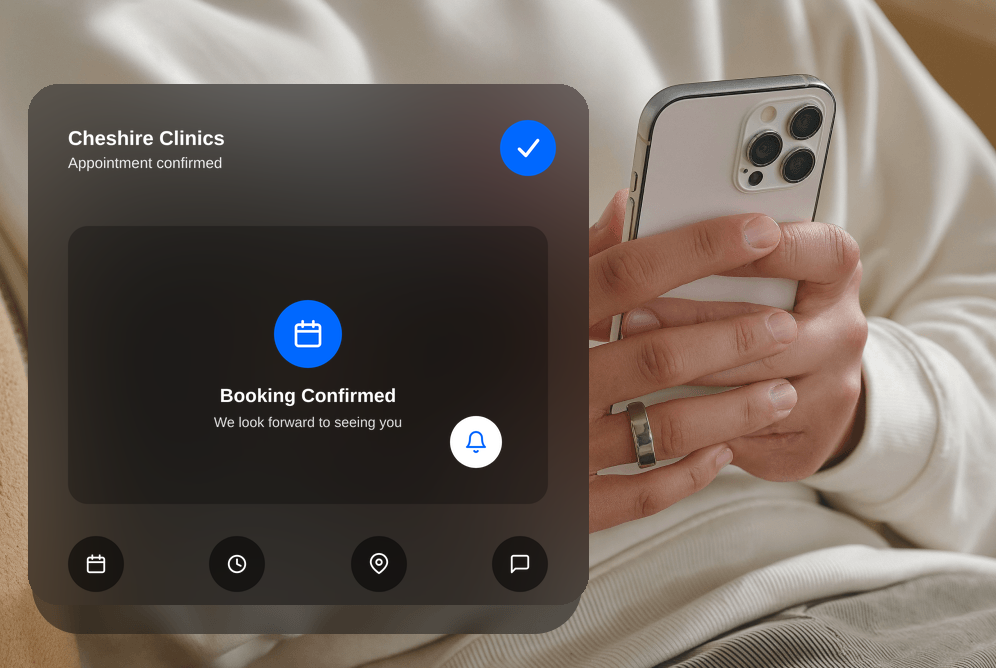
Cheshire Clinics online GP appointment booking confirmation on mobile
01

Book your appointment

Pick a time that suits you — 6am to 10pm, seven days a week, including weekends and bank holidays. £40 for 20 minutes, self-pay, with no insurance to arrange.
5–10 minutes
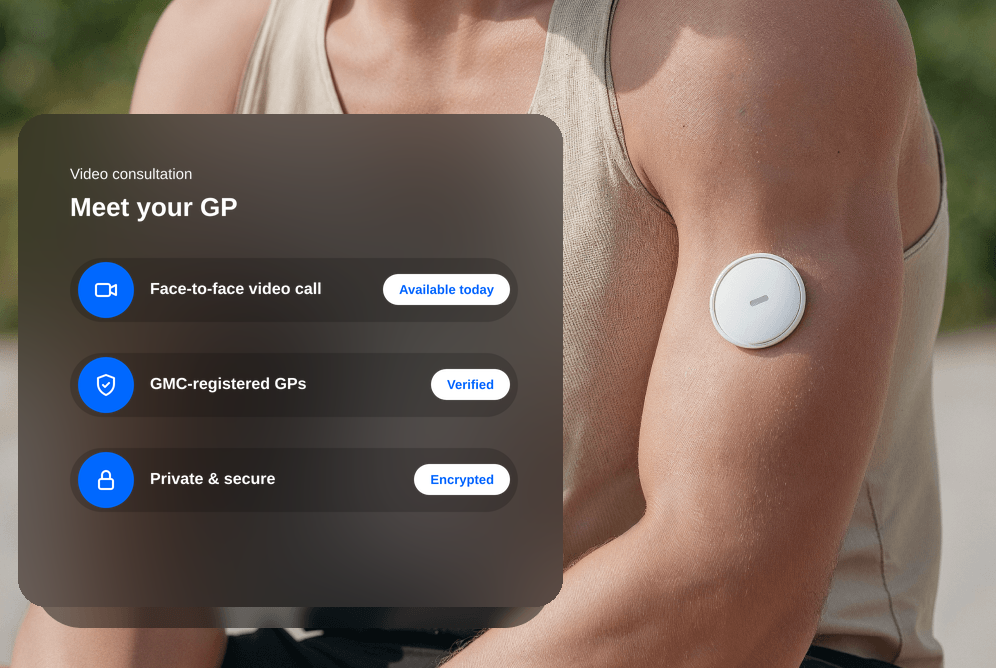
Online video consultation with a GMC-registered private GP
02

Meet your GP

A 20-minute video or phone consultation with a GMC-registered GP — long enough for a proper conversation about your symptoms, your history and what matters to you.
20 minutes
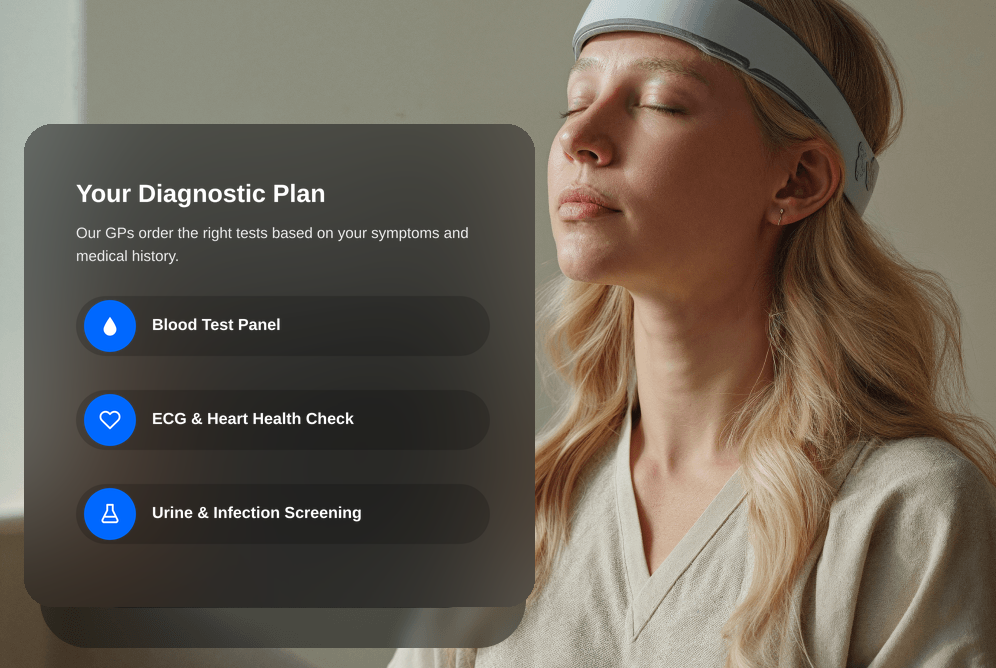
Diagnostic testing plan including blood test panel, ECG and urine screening
03

Tests and referrals, if you need them

Where testing will actually answer the question, we arrange it — blood tests and health screening through our laboratory partner, or a referral for ultrasound, X-ray, CT or MRI through private imaging providers. We will also tell you when a scan is not the right next step.
1–7 days
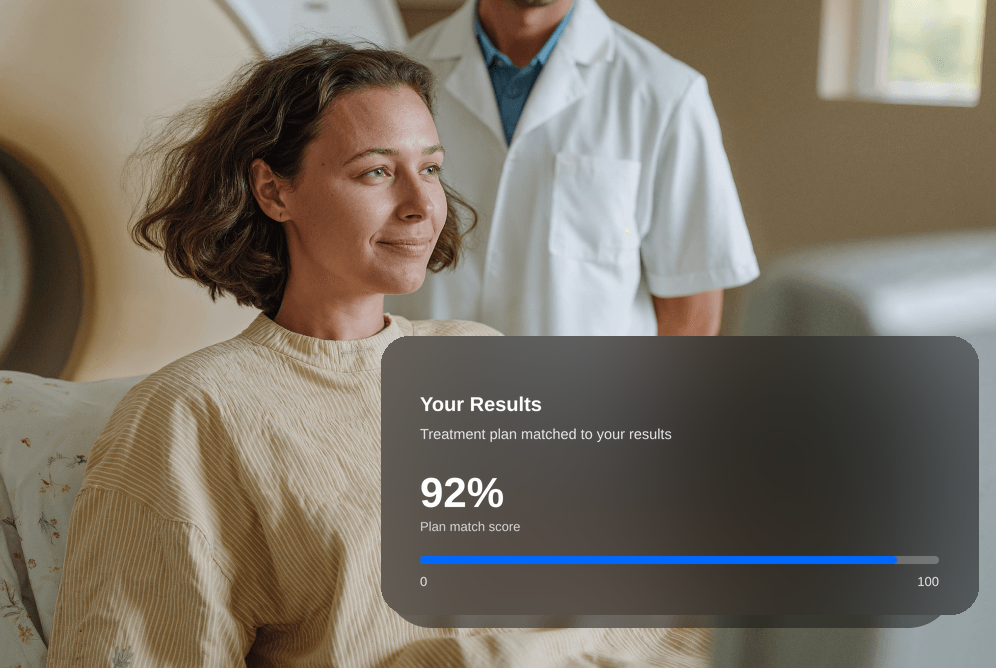
Personalised results and treatment plan from a private GP consultation
04

Results and next steps

Your GP talks you through what the results mean and agrees the next step with you. Every consultation ends with your treatment plan in writing, and any prescription goes to your own pharmacy.
20 minutes
GP follow-up reminder for ongoing care and progress monitoring
05

Ongoing care and follow-up

Follow-up appointments, progress monitoring and ongoing advice — including saying plainly when something needs in-person or NHS care instead.

Ongoing

How we compare

Time to be seen

Appointment length

Your NHS record in the room

Written treatment plan

Told when a test isn’t needed

Cost

Varies by practice

Typically 10 minutes

Yes, your full record

Not routinely

Usually

Free

Same day

Often 10 to 15 minutes

Usually not

Sometimes charged

Varies by provider

Often a subscription

Questions about our service

How quickly can I be seen?

Same-day access is usually available, from 6am to 10pm, seven days a week. You choose a time that suits you rather than waiting on hold at 8am.

Will I see the same doctor each time?

Yes. Care is led personally by Dr Mohammad Khan, so you are not passed between clinicians. Continuity is the point of a small practice: someone who knows your history and is listening attentively rather than working through a checklist.

Can you see my NHS records?

Yes, with your consent. We can access your Summary Care Record during the consultation, so your current medications, allergies and significant history are in the room. That means fewer questions you have already answered elsewhere, and safer prescribing.

Are you trying to replace my NHS GP?

No. We are not here to replace GPs, only to support them. Your NHS practice remains responsible for your ongoing care, and with your consent we write to them after the consultation. We are useful when you need to be seen sooner, or want more time than a standard appointment allows.

What is included in the appointment?

Twenty unhurried minutes and a comprehensive assessment. A written treatment plan is included, along with any prescription, sick note or referral letter arising from the consultation, at no extra charge.

How much does it cost?

£40 for 20 minutes, self-pay. Membership is optional and never required. Priced for fairness, because we are not here to charge extortionate amounts for access to a doctor.

What does “treatable online” actually mean?

It means the diagnosis can usually be made from your history and photographs, and that treatment can be arranged safely without examining you. Where a condition is not marked treatable online, it is because examination is the diagnosis — listening to a chest, feeling an abdomen, examining an ear or a joint — or because a procedure or device is needed.

Can you prescribe antibiotics?

Yes, where there is a genuine bacterial infection — cellulitis, impetigo, bacterial urine infections, confirmed strep throat. We will also frequently tell you that you do not need one. Most sore throats, coughs, colds and earaches are viral, and an antibiotic gives you the side effects with none of the benefit.

What if the GP cannot help with what I need?

If your problem turns out to be genuinely outside what we can do remotely, the doctor will tell you straight away, point you to the right service, and refund your fee in full. We would rather do that than fill twenty minutes to justify the charge.

What should I do in an emergency?

Call 999 or go to A&E — do not book an online appointment and do not wait for a reply to an email. For urgent problems that are not emergencies, NHS 111 is available 24 hours a day, online or by phone, and can direct you to the right service.

Patient reviews

What our patients say

No reviews published yet.
Ready to see a GP?20 minutes with a GMC-registered doctor. £40, usually same day.
Book a consultation