Home

/

Tests & scans

/

Coeliac Screening

Coeliac Screening

Coeliac antibody screening, with the crucial detail people get wrong: you must still be eating gluten.

Quoted after consultation

Results usually within 2 working days

Blood sample

Referred by a GMC-registered GP, results reviewed by the same doctor

Taken at a partner site near you

Results explained in plain English, not just a number

Your NHS records in the room, with your consent

Clinically reviewed by Dr Mohammad Khan · Last reviewed

August 23, 2026

Book a consultation

A 20-minute appointment with a GMC-registered GP for £40. Same-day appointments are usually available, 6am to 10pm, seven days a week.

Private GP care led personally by Dr Mohammad Zubair Khan, GMC 7563469.

Why patients choose Cheshire Clinics

GMC registered doctors badge - every Cheshire Clinics consultation is with a General Medical Council registered GP

GMC-registered

Care led personally by Dr Khan

Royal College of General Practitioners badge - RCGP trained private GP consultations at Cheshire Clinics

RCGP-trained

Attentive, unhurried care that listens properly

Google five star reviews badge - Cheshire Clinics private GP online

Highly rated by patients

Five-star Google reviews from the people we have looked after

Care Quality Commission registered badge - Cheshire Clinics online GP service is registered with the CQC, England's independent regulator of health and social care

CQC-registered

Registered with the Care Quality Commission

Same-Day Appointments
Sick Notes
Private Prescriptions
Blood Tests
Menopause & HRT
Weight Management
Mental Health
Specialist Referrals
Same-Day Appointments
Sick Notes
Private Prescriptions
Blood Tests
Menopause & HRT
Weight Management
Mental Health
Specialist Referrals

Overview

Coeliac disease is an autoimmune reaction to gluten that damages the lining of the small intestine. It affects roughly 1 in 100 people in the UK, and the majority are undiagnosed — average time to diagnosis is more than a decade, and many spend years labelled with IBS first.

It is not an allergy and not an intolerance. That distinction matters, because it changes both how it is tested for and how strictly it must be managed.

What this test measures

Tissue transglutaminase IgA antibodies (tTG-IgA) — the standard first-line test. In someone eating gluten it is highly sensitive.

Total IgA — measured alongside, and this is the part most often skipped. Around 1 person in 500 is IgA deficient, and in those people the tTG-IgA test reads negative whether or not they have coeliac disease. Without checking total IgA, a negative result in that group is meaningless, and an alternative IgG-based test is needed instead.

What the blood test cannot do is confirm the diagnosis. In adults, a positive antibody result needs endoscopy with duodenal biopsy to confirm — and you must still be eating gluten when that happens, which is why the order of events matters so much.

Why you might need it

  • Bloating, abdominal pain, wind, diarrhoea or constipation
  • Persistent fatigue — frequently the dominant symptom, and sometimes the only one
  • Iron, B12 or folate deficiency that keeps coming back despite replacement — one of the strongest pointers
  • Unintentional weight loss
  • Recurrent mouth ulcers
  • An intensely itchy blistering rash on elbows or knees — dermatitis herpetiformis
  • Unexplained infertility or recurrent miscarriage
  • Osteoporosis at a young age
  • Type 1 diabetes or autoimmune thyroid disease — coeliac clusters with both
  • A first-degree relative with coeliac disease, who has around a 1 in 10 risk
  • Anyone with IBS-type symptoms — UK guidance recommends testing, and it is often not done

What's included

Included: tissue transglutaminase IgA antibodies, with total IgA measured alongside.

The total IgA matters: around one person in 500 is IgA deficient, and in those people the standard coeliac test reads negative regardless of whether they have the condition. Without checking it, a negative result cannot be trusted.

Ready to arrange this test?

Book a consultation

How the referral works

Partner site:

Randox Health

1. Consultation — and the timing question comes first. You must be eating gluten in more than one meal a day for at least six weeks before the test. If you have already cut it out, the test will very likely come back negative regardless of the truth — which is exactly what happens to people who removed gluten because it seemed to help. That is the single commonest reason coeliac disease is missed, and we would rather delay testing than produce a falsely reassuring result.

2. Referral. To a Randox Health clinic. We usually request ferritin, B12 and folate and full blood count alongside, since deficiencies are the norm rather than the exception.

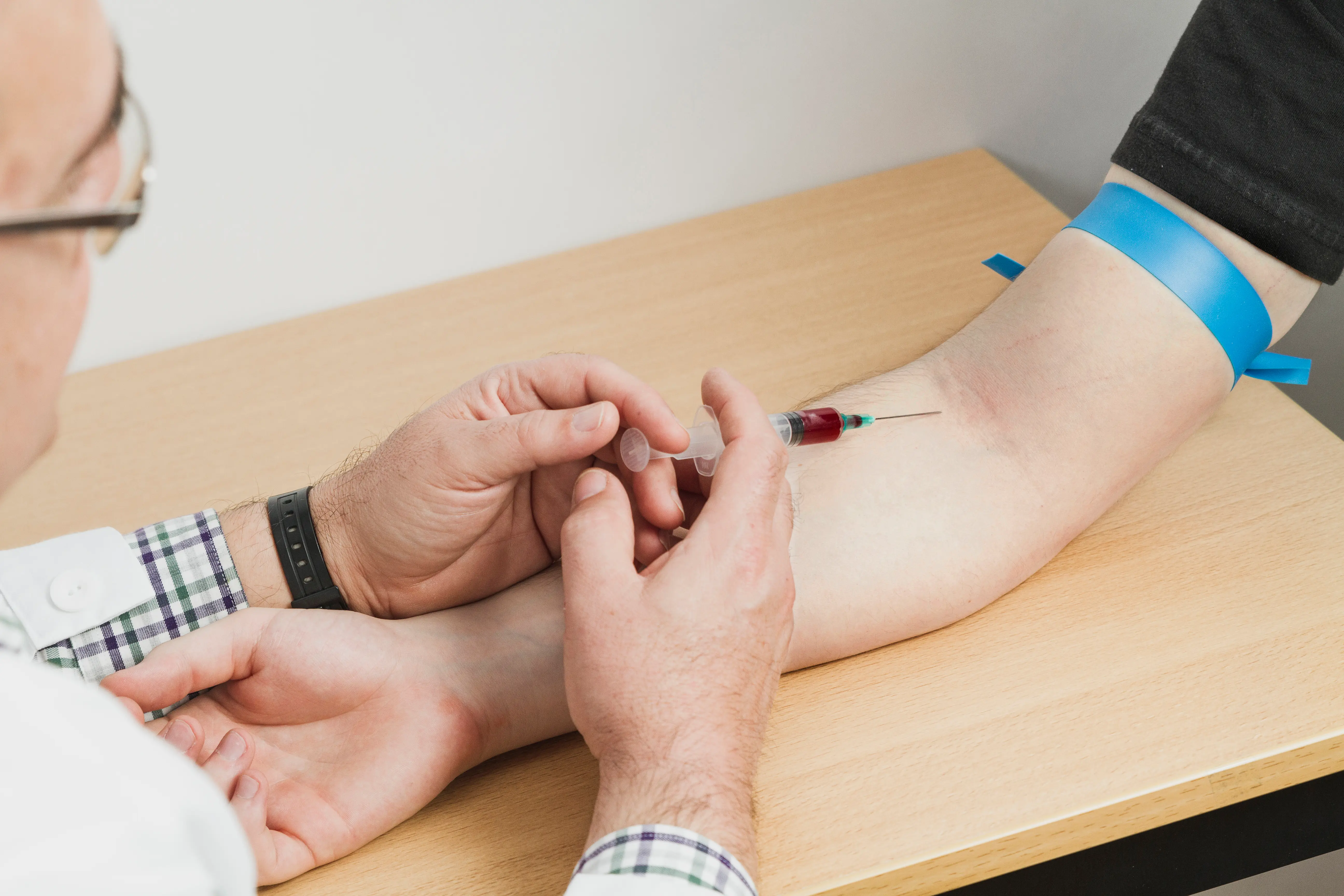
3. The sample. A single blood draw, no fasting.

4. Results review. A positive result means gastroenterology referral for confirmatory biopsy — still eating gluten until it is done. A confirmed diagnosis means a strict lifelong gluten-free diet, dietitian input, bone density assessment and ongoing monitoring, and we set all of that out rather than leaving you with a result.

Preparation required

You must be eating gluten in more than one meal a day for at least six weeks before the test. No fasting required.

Understanding your results

The one rule that governs this test

You must be eating gluten for the test to work. More than one meal a day containing gluten, for at least six weeks beforehand.

If you have already cut it out, the test will read negative regardless of whether you have coeliac disease — the antibodies fall once the trigger is removed. People lose the diagnosis this way constantly, and getting it back means eating gluten again for six weeks, which nobody wants to do twice.

Why total IgA is measured alongside

Around one person in 500 is IgA deficient, and in those people the standard coeliac antibody reads negative whether or not they have the condition.

Without checking total IgA, a negative result cannot be trusted. It is a cheap addition and it is frequently omitted.

A positive result is not the end of the process

Coeliac disease is confirmed by biopsy in adults — a gastroscopy taking samples from the small bowel. A raised antibody makes it likely; the biopsy establishes it.

And critically: keep eating gluten until the biopsy is done. Stopping between the blood test and the endoscopy can normalise the bowel lining and cost you the diagnosis at the final step.

Why the diagnosis matters beyond symptoms

Untreated coeliac disease causes osteoporosis, iron and B12 deficiency, infertility and a small increase in certain cancers — in people who may have few gut symptoms at all.

A formal diagnosis also brings prescribable gluten-free food in some areas, annual follow-up, bone density monitoring, and screening for first-degree relatives, who carry roughly a 1 in 10 risk. Self-diagnosing by cutting out gluten gets you none of that.

What this test cannot tell you

What this test cannot tell you

  • Anything reliable if you have already stopped eating gluten. The single most important limitation, and the commonest reason a result is meaningless
  • Whether you have non-coeliac gluten sensitivity, which is a real phenomenon with no blood test. It is a diagnosis reached after coeliac disease and other causes are excluded
  • Whether you have a wheat allergy, which is a different immune mechanism entirely
  • Whether your bowel is damaged. That is the biopsy's job

False negatives happen

A small proportion of people with coeliac disease have a negative antibody test even while eating gluten — particularly children under two and people with IgA deficiency.

Where the clinical suspicion is strong, a negative result should not close the question.

What this test is not for

It is not a food intolerance test, and it does not screen for gluten sensitivity in general. IgG food intolerance panels have no scientific validity and we do not offer them — a point worth making here specifically, because they are marketed hardest at exactly the people asking this question.

Costs explained

What you pay

  • £40 for the consultation
  • The test, quoted before it is arranged — tTG IgA with total IgA measured alongside
  • £40 for the results review

Free NHS route, and why it matters here

Coeliac screening is free on the NHS with relevant symptoms, and the confirmatory gastroscopy is an NHS procedure.

This is one test where the NHS pathway is genuinely the better route end to end, because a private antibody result still needs an NHS endoscopy to confirm — and the follow-up, bone monitoring, dietitian access and family screening all sit there.

Where we are useful is speed, and making sure the test is done correctly — on gluten, with total IgA included.

The cost of getting this wrong

Cutting out gluten before testing costs you the diagnosis, and with it the annual follow-up, bone density monitoring, prescribable food where available, and screening for your children and siblings.

It is the most expensive free mistake on this page.

Where not to spend money

  • IgG food intolerance tests — no validity, and they lead to unnecessary restriction
  • Home coeliac test kits, which do not measure total IgA and cannot be interpreted safely
  • Expensive gluten-free products before a diagnosis, which is both costly and makes testing impossible

Common questions

I have already stopped eating gluten. Can I still be tested?

Not reliably — and this is the most important thing on the page.

The test will read negative whether or not you have coeliac disease, because the antibodies fall once gluten is removed.

To test properly you would need to eat gluten in more than one meal a day for at least six weeks. That is unpleasant if it makes you unwell, which is exactly why testing first matters.

Why does the diagnosis matter if I feel better without gluten?

Because coeliac disease is not simply a food intolerance, and the label changes what happens next.

A formal diagnosis brings annual follow-up, bone density monitoring, dietitian access, prescribable gluten-free food in some areas, and screening for first-degree relatives — who carry roughly a 1 in 10 risk.

Self-diagnosing gets you none of that, and untreated coeliac disease causes osteoporosis, deficiencies and fertility problems even in people with few gut symptoms.

What is total IgA and why is it included?

Around one person in 500 is IgA deficient, and in those people the standard coeliac test reads negative regardless.

Without measuring total IgA, a negative result cannot be trusted — and it is frequently left out.

Do I need an endoscopy?

In adults, yes — biopsy remains the confirmatory test. A raised antibody makes coeliac disease likely; the biopsy establishes it.

And keep eating gluten until the biopsy is done. Stopping in between can normalise the bowel lining and cost you the diagnosis at the last step.

What if the test is negative but I still react to wheat?

That is a recognised situation. Non-coeliac gluten sensitivity is real, though there is no blood test for it — it is diagnosed by exclusion.

It may also not be the gluten. Fructans in wheat cause identical symptoms in many people with IBS, which is why a low-FODMAP approach sometimes works where gluten-free alone does not.

Should my children be tested?

First-degree relatives carry roughly a 1 in 10 risk, so testing is recommended — particularly with symptoms, poor growth or unexplained anaemia.

They need to be eating gluten for the test to mean anything.

Can coeliac disease start in adulthood?

Yes — it is frequently diagnosed in adults, including in people in their sixties and seventies. It is not a childhood condition that you either have or do not.

It also presents without obvious gut symptoms surprisingly often — as unexplained iron deficiency, fatigue, osteoporosis, mouth ulcers or infertility.

Are home test kits any good?

Not reliably. Most do not measure total IgA, which means a negative cannot be interpreted — and none replaces the biopsy.

A positive home test still needs proper assessment, and a negative one may be false.

Should I be checked for anything else?

Yes — coeliac disease travels with other autoimmune conditions, particularly thyroid disease and type 1 diabetes, and it causes iron, B12, folate and vitamin D deficiency.

Which is why we generally request those alongside rather than one at a time.

Dr Mohammad Zubair Khan, GMC-registered private GP and founder of Cheshire Clinics

Clinically reviewed by Dr Mohammad Zubair Khan, GMC 7563469

Last reviewed

August 23, 2026

How it works

What happens when you book

£40 for a 20-minute appointment with a GMC-registered GP, 6am to 10pm, seven days a week. Membership is optional and never required.
Cheshire Clinics online GP appointment booking confirmation on mobile
01

Book your appointment

Pick a time that suits you — 6am to 10pm, seven days a week, including weekends and bank holidays. £40 for 20 minutes, self-pay, with no insurance to arrange.
5–10 minutes
Online video consultation with a GMC-registered private GP
02

Meet your GP

A 20-minute video or phone consultation with a GMC-registered GP — long enough for a proper conversation about your symptoms, your history and what matters to you.
20 minutes
Diagnostic testing plan including blood test panel, ECG and urine screening
03

Tests and referrals, if you need them

Where testing will actually answer the question, we arrange it — blood tests and health screening through our laboratory partner, or a referral for ultrasound, X-ray, CT or MRI through private imaging providers. We will also tell you when a scan is not the right next step.
1–7 days
Personalised results and treatment plan from a private GP consultation
04

Results and next steps

Your GP talks you through what the results mean and agrees the next step with you. Every consultation ends with your treatment plan in writing, and any prescription goes to your own pharmacy.
20 minutes
GP follow-up reminder for ongoing care and progress monitoring
05

Ongoing care and follow-up

Follow-up appointments, progress monitoring and ongoing advice — including saying plainly when something needs in-person or NHS care instead.

Ongoing

How we compare

Time to be seen

Appointment length

Your NHS record in the room

Written treatment plan

Told when a test isn’t needed

Cost

Varies by practice

Typically 10 minutes

Yes, your full record

Not routinely

Usually

Free

Same day

Often 10 to 15 minutes

Usually not

Sometimes charged

Varies by provider

Often a subscription

Questions about our service

How quickly can I be seen?

Same-day access is usually available, from 6am to 10pm, seven days a week. You choose a time that suits you rather than waiting on hold at 8am.

Will I see the same doctor each time?

Yes. Care is led personally by Dr Mohammad Khan, so you are not passed between clinicians. Continuity is the point of a small practice: someone who knows your history and is listening attentively rather than working through a checklist.

Can you see my NHS records?

Yes, with your consent. We can access your Summary Care Record during the consultation, so your current medications, allergies and significant history are in the room. That means fewer questions you have already answered elsewhere, and safer prescribing.

Are you trying to replace my NHS GP?

No. We are not here to replace GPs, only to support them. Your NHS practice remains responsible for your ongoing care, and with your consent we write to them after the consultation. We are useful when you need to be seen sooner, or want more time than a standard appointment allows.

What is included in the appointment?

Twenty unhurried minutes and a comprehensive assessment. A written treatment plan is included, along with any prescription, sick note or referral letter arising from the consultation, at no extra charge.

How much does it cost?

£40 for 20 minutes, self-pay. Membership is optional and never required. Priced for fairness, because we are not here to charge extortionate amounts for access to a doctor.

What does “treatable online” actually mean?

It means the diagnosis can usually be made from your history and photographs, and that treatment can be arranged safely without examining you. Where a condition is not marked treatable online, it is because examination is the diagnosis — listening to a chest, feeling an abdomen, examining an ear or a joint — or because a procedure or device is needed.

Can you prescribe antibiotics?

Yes, where there is a genuine bacterial infection — cellulitis, impetigo, bacterial urine infections, confirmed strep throat. We will also frequently tell you that you do not need one. Most sore throats, coughs, colds and earaches are viral, and an antibiotic gives you the side effects with none of the benefit.

What if the GP cannot help with what I need?

If your problem turns out to be genuinely outside what we can do remotely, the doctor will tell you straight away, point you to the right service, and refund your fee in full. We would rather do that than fill twenty minutes to justify the charge.

What should I do in an emergency?

Call 999 or go to A&E — do not book an online appointment and do not wait for a reply to an email. For urgent problems that are not emergencies, NHS 111 is available 24 hours a day, online or by phone, and can direct you to the right service.

Patient reviews

What our patients say

No reviews published yet.
Ready to see a GP?20 minutes with a GMC-registered doctor. £40, usually same day.
Book a consultation