Home

/

Heart & Circulation

/

Stroke and TIA

Stroke and TIA

A TIA is a warning shot. Symptoms that resolved still need assessing within 24 hours, because the next one may not resolve.

£40 · 20 minutes

Same-day availability

6am to 10pm, seven days

Assessed and treated by a GMC-registered GP

Prescriptions, sick notes and referral letters included

A written treatment plan after every appointment

Your NHS records in the room, with your consent

Clinically reviewed by Dr Mohammad Khan · Last reviewed

August 30, 2026

Book a consultation

A 20-minute appointment with a GMC-registered GP for £40. No membership required.

Private GP care led personally by Dr Mohammad Zubair Khan, GMC 7563469.

Why patients choose Cheshire Clinics

GMC registered doctors badge - every Cheshire Clinics consultation is with a General Medical Council registered GP

GMC-registered

Care led personally by Dr Khan

Royal College of General Practitioners badge - RCGP trained private GP consultations at Cheshire Clinics

RCGP-trained

Attentive, unhurried care that listens properly

Google five star reviews badge - Cheshire Clinics private GP online

Highly rated by patients

Five-star Google reviews from the people we have looked after

Care Quality Commission registered badge - Cheshire Clinics online GP service is registered with the CQC, England's independent regulator of health and social care

CQC-registered

Registered with the Care Quality Commission

Same-Day Appointments
Sick Notes
Private Prescriptions
Blood Tests
Menopause & HRT
Weight Management
Mental Health
Specialist Referrals
Same-Day Appointments
Sick Notes
Private Prescriptions
Blood Tests
Menopause & HRT
Weight Management
Mental Health
Specialist Referrals

Overview

A stroke happens when the blood supply to part of the brain is cut off, either by a clot or by a bleed. Brain tissue starts dying within minutes, which is why stroke is treated as one of the most time-critical emergencies in medicine.

A transient ischaemic attack — a TIA — produces the same symptoms, but they resolve, usually within an hour and always within 24 hours.

The phrase "mini-stroke" does real harm. It suggests something minor that has passed. What a TIA actually is, is a warning: it means an artery supplying the brain has become unstable, and it identifies someone at substantially raised risk of a full stroke in the days immediately afterwards.

That is why symptoms which have completely resolved still need assessing within 24 hours. The urgency is not about what happened. It is about what happens next, and how much of it is preventable.

Common symptoms

Act FAST

  • F — Face. Has their face fallen on one side? Can they smile?
  • A — Arms. Can they raise both arms and keep them there?
  • S — Speech. Is it slurred, or are they struggling to find words or understand you?
  • T — Time. If you see any single one of these, call 999 immediately.

Symptoms FAST does not cover

A significant minority of strokes do not show face, arm or speech signs, and these are the ones that get to hospital late:

  • Sudden loss or blurring of vision, or a curtain coming down over one eye
  • Sudden numbness or weakness anywhere — leg, one side of the body
  • Sudden severe dizziness, unsteadiness or difficulty walking
  • Sudden confusion, or difficulty understanding what is being said
  • A sudden severe headache unlike any you have had, sometimes described as a thunderclap
  • Difficulty swallowing

Sudden onset is the common thread. Symptoms that come on over seconds to minutes, rather than gradually, are the ones to act on.

Causes and risk factors

  • High blood pressure — the single largest modifiable risk factor for stroke
  • Atrial fibrillation, which raises stroke risk around five-fold and is often silent. Treating it with anticoagulation prevents a large share of strokes
  • Smoking
  • High cholesterol
  • Diabetes
  • Narrowing of the carotid arteries in the neck
  • Obesity, physical inactivity and excess alcohol
  • Previous stroke or TIA
  • The combined pill in someone who has migraine with aura — a specific and important combination that raises stroke risk and is the reason the aura question is asked before prescribing
  • Increasing age, family history, and being of South Asian, African or Caribbean heritage

How it is diagnosed

In the emergency

An urgent CT or MRI brain scan is done to distinguish a clot from a bleed, because the treatments are opposite — one is dissolved, the other must not be. That scan is why every stroke goes to hospital rather than anywhere else.

Clot-busting treatment has a narrow time window, and mechanical clot retrieval a somewhat longer one. Every minute of delay costs brain tissue, which is the whole reason for the 999 rule.

After a TIA

Assessment in a specialist TIA clinic within 24 hours, which typically includes:

  • Brain imaging, usually MRI
  • Carotid ultrasound, to look for narrowing in the neck arteries. Significant narrowing may warrant surgery, and doing it early matters
  • ECG, and often prolonged heart monitoring, specifically hunting for paroxysmal atrial fibrillation. AF that comes and goes is a common cause and is easily missed on a single ECG
  • Blood tests — full blood count, glucose, HbA1c, lipids, kidney function
  • Blood pressure

A note on risk scores

The ABCD2 score is no longer recommended for deciding who needs urgent assessment after a TIA. Everyone with a suspected TIA needs specialist assessment within 24 hours, regardless of how low-risk they appear. This changed, and the older approach still surfaces.

What mimics it

Migraine with aura, seizures, low blood sugar, and inner-ear causes of vertigo can all resemble a TIA. Distinguishing them is a specialist job — the safe assumption in the moment is stroke.

How we treat it online

Stroke and TIA are emergencies. There is no version of this that an online consultation can manage, and we will not pretend otherwise.

If symptoms are happening now, or happened today, stop reading and call 999. If they resolved within the last week, you need to be assessed within 24 hours — contact 111 or your GP today, or attend A&E.

Where a consultation genuinely helps

Its role here is entirely before or after the event.

  • Risk reduction before anything happens. Blood pressure, cholesterol, HbA1c, a formal QRISK3, smoking, alcohol and weight. This is where strokes are actually prevented, and it is unglamorous work that gets skipped
  • Investigating palpitations that might be undiagnosed atrial fibrillation — the single most treatable stroke risk factor there is
  • The contraception and migraine question. If you get migraine with aura and take the combined pill, that combination should be reviewed. It is a genuine and avoidable risk, and it is missed regularly
  • After a TIA or stroke, explaining what happened, what the medication is for, and what the realistic recovery looks like — conversations that are frequently rushed in a busy clinic
  • Supporting return to work, and the letters that go with it
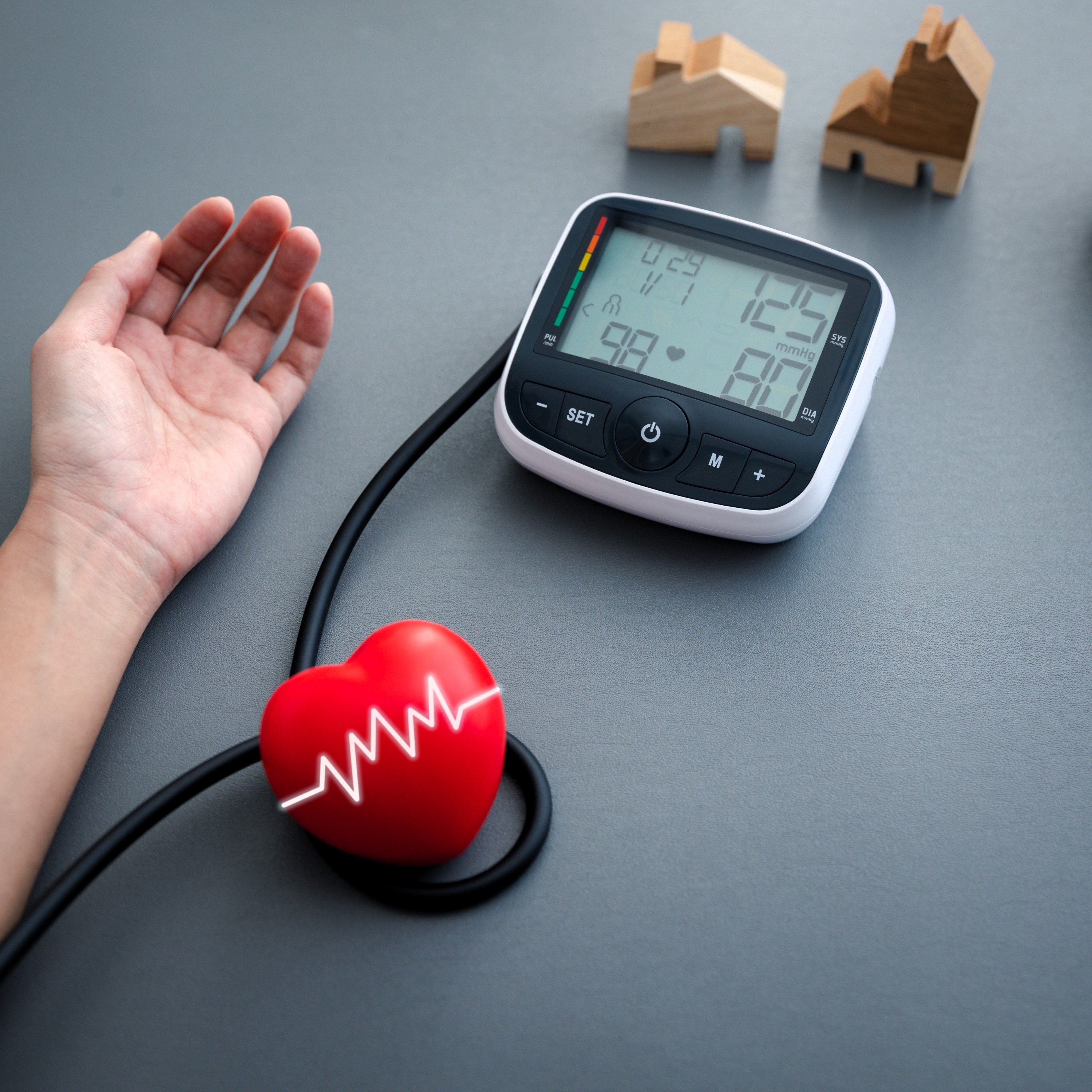
Heart and circulation consultation - private GP assessment for blood pressure, cholesterol and cardiovascular risk at Cheshire Clinics
Important

When to seek urgent help

Call 999 immediately — do not wait, do not drive, do not ring the GP — if there is:

  • Face drooping on one side
  • Arm weakness on one side
  • Slurred or confused speech
  • Sudden loss of vision in one or both eyes
  • Sudden severe headache with no clear cause
  • Sudden numbness, unsteadiness or difficulty walking

Even if the symptoms go away, call 999 while they are happening. You cannot tell a stroke from a TIA at the time — that distinction is only made afterwards, once you know whether it resolved.

If symptoms have already resolved

You still need specialist assessment within 24 hours. Contact 111 or your GP the same day, or attend A&E. Take a single 300mg aspirin immediately unless you are allergic or have been told not to.

The risk of a full stroke is highest in the first few days after a TIA, and prompt treatment reduces it substantially. This is not a wait-and-see situation.

Do not drive until you have been assessed and told it is safe.

Prevention and self-care

The four that do most of the work

  • Blood pressure. The single biggest lever. Home readings on a validated upper-arm monitor are more reliable than clinic readings, and treating hypertension well prevents more strokes than anything else available
  • Atrial fibrillation. If you have it, anticoagulation reduces stroke risk substantially. If you might have it, find out — feel your pulse, and get an irregular one checked
  • Smoking. Stopping produces a measurable fall in risk. NHS stop smoking services are free and roughly triple your chance of success
  • Cholesterol. A statin where your calculated risk warrants it

The rest

  • Alcohol within 14 units a week, spread out
  • Physical activity — 150 minutes of moderate activity a week
  • Diet — a Mediterranean pattern has the best evidence; reducing salt lowers blood pressure directly
  • Diabetes control
  • Take the NHS Health Check if you are 40 to 74. It is free, it happens every five years, and it exists precisely for this

If you have had a TIA or stroke

  • Take the preventive medication consistently. Antiplatelets, statins and blood pressure treatment after a stroke are among the highest-value medicines anyone takes
  • Do not stop the statin because your cholesterol is now normal — it is normal because of the statin, and the benefit is in plaque stability rather than the number
  • Driving. You must not drive for at least one month after a stroke or TIA, and must inform the DVLA in some circumstances. Check your own situation rather than assuming
  • Ask about stroke association services and rehabilitation — both are under-used

NHS or private

The NHS does this, and no private service comes close

Stroke is the clearest example on this entire website of something where paying privately would actively harm you.

  • 999 and hyperacute stroke units — clot-busting treatment and mechanical clot retrieval, available within minutes of arrival. There is no private equivalent, and there is no scenario where a video consultation is the right response to stroke symptoms
  • TIA clinics within 24 hours, with imaging, carotid scans and cardiac monitoring, free
  • Carotid surgery where indicated, urgently
  • Stroke rehabilitation — physiotherapy, occupational therapy, speech and language therapy
  • Secondary prevention medication, free with a medical exemption certificate after a stroke
  • NHS Health Check at 40 to 74, free, five-yearly

If you are having symptoms, call 999. If you had symptoms that resolved, ring 111 today. Do not book anything with us instead.

Where paying has a legitimate place

  • Risk assessment while you are well — a proper QRISK3 with lipids and HbA1c, particularly with a family history
  • Investigating palpitations quickly, to find or exclude AF
  • Reviewing contraception where you get migraine with aura, which is a genuine and avoidable stroke risk
  • Understanding what you were told after a TIA or stroke, when the clinic appointment was short and a great deal was said at once

Evidence and guidelines

This page follows NICE NG128, Stroke and transient ischaemic attack in over 16s: diagnosis and initial management.

What the guidance actually says

  • Anyone with suspected TIA should be assessed by a stroke specialist within 24 hours of symptom onset. This applies regardless of apparent risk
  • Do not use ABCD2 to stratify risk or to decide who is assessed urgently — a change from earlier practice that is still not universally applied
  • Give aspirin 300mg immediately after suspected TIA unless contraindicated
  • Suspected acute stroke requires immediate admission to a hyperacute stroke unit and urgent brain imaging, to distinguish infarction from haemorrhage before any treatment
  • Do not lower blood pressure acutely in most cases of acute stroke, which is counterintuitive and is a hospital decision rather than a home one
  • Carotid imaging should be done urgently in people with TIA or non-disabling stroke who would be candidates for carotid surgery

On prevention

NICE NG136 covers hypertension, and NG238 cardiovascular risk assessment and lipid modification. Blood pressure control and anticoagulation in atrial fibrillation — per NICE NG196 — are the two interventions that prevent the most strokes.

Reviewed against NICE NG128, NG136, NG196 and NG238 current at the date shown above.

Common questions

The symptoms went away. Do I still need to do anything?

Yes, urgently — within 24 hours. That is a TIA, and the risk of a full stroke is highest in the first few days afterwards.

Resolution is not reassurance. It is the window in which a stroke can still be prevented.

Why is it called a mini-stroke if it is serious?

Because the term is a poor one, and it causes real delay. Nothing about a TIA is minor except its duration.

Treat it as a warning that something is unstable, not as an event that has passed.

Should I take aspirin?

Yes — a single 300mg dose immediately after a suspected TIA, unless you are allergic or have been told not to.

This is standard guidance and it is often not known. Then seek assessment the same day.

Can a stroke be treated if I get there fast?

Often, yes, and this is why the 999 rule exists. Clot-busting treatment and mechanical clot removal both work within defined time windows.

Every minute of delay costs brain tissue. Calling an ambulance rather than driving in gets treatment started sooner.

Can I drive afterwards?

Not for at least a month after a stroke or TIA, and longer in some cases. The DVLA must be told in certain circumstances.

Check your own position rather than assuming — the rules differ for car and lorry licences.

Could my migraines be TIAs?

Migraine with aura can look similar, and distinguishing them is a specialist job.

Migraine aura typically builds over minutes and spreads; stroke symptoms are maximal at onset. If you are unsure, treat it as a stroke.

I get migraine with aura and take the pill. Does that matter?

Yes, and it is worth acting on. That combination raises stroke risk, and the combined pill is contraindicated where aura is present.

Other methods remain available — this is a switch, not the end of contraception.

Will I recover fully?

Outcomes vary enormously, from complete recovery to lasting disability. Speed of treatment is one of the strongest predictors.

Recovery continues for many months, and rehabilitation genuinely changes what that recovery looks like.

What is the most useful thing I can do to prevent one?

Know your blood pressure, and treat it if it is high. Nothing else comes close at a population level.

After that: check your pulse for atrial fibrillation, and stop smoking.

Dr Mohammad Zubair Khan, GMC-registered private GP and founder of Cheshire Clinics
Clinically reviewed by Dr Mohammad Zubair Khan, GMC 7563469
Last reviewed

August 30, 2026

How it works

What happens when you book

£40 for a 20-minute appointment with a GMC-registered GP, 6am to 10pm, seven days a week. Membership is optional and never required.
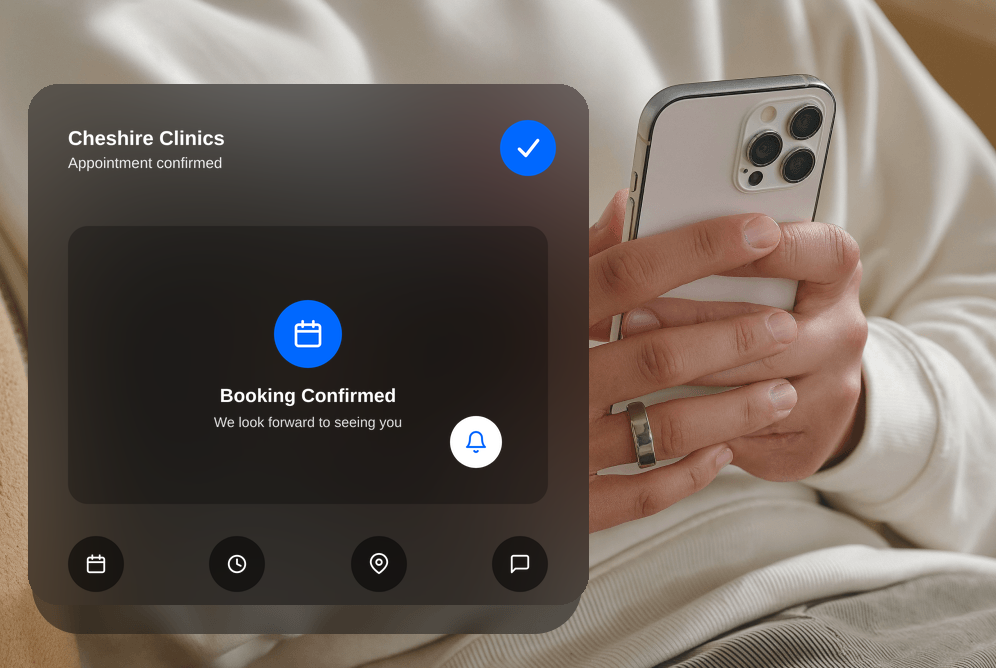
Cheshire Clinics online GP appointment booking confirmation on mobile
01

Book your appointment

Pick a time that suits you — 6am to 10pm, seven days a week, including weekends and bank holidays. £40 for 20 minutes, self-pay, with no insurance to arrange.
5–10 minutes
Online video consultation with a GMC-registered private GP
02

Meet your GP

A 20-minute video or phone consultation with a GMC-registered GP — long enough for a proper conversation about your symptoms, your history and what matters to you.
20 minutes
Diagnostic testing plan including blood test panel, ECG and urine screening
03

Tests and referrals, if you need them

Where testing will actually answer the question, we arrange it — blood tests and health screening through our laboratory partner, or a referral for ultrasound, X-ray, CT or MRI through private imaging providers. We will also tell you when a scan is not the right next step.
1–7 days
Personalised results and treatment plan from a private GP consultation
04

Results and next steps

Your GP talks you through what the results mean and agrees the next step with you. Every consultation ends with your treatment plan in writing, and any prescription goes to your own pharmacy.
20 minutes
GP follow-up reminder for ongoing care and progress monitoring
05

Ongoing care and follow-up

Follow-up appointments, progress monitoring and ongoing advice — including saying plainly when something needs in-person or NHS care instead.

Ongoing

How we compare

Time to be seen

Appointment length

Your NHS record in the room

Written treatment plan

Told when a test isn’t needed

Cost

Varies by practice

Typically 10 minutes

Yes, your full record

Not routinely

Usually

Free

Same day

Often 10 to 15 minutes

Usually not

Sometimes charged

Varies by provider

Often a subscription

Questions about our service

How quickly can I be seen?

Same-day access is usually available, from 6am to 10pm, seven days a week. You choose a time that suits you rather than waiting on hold at 8am.

Will I see the same doctor each time?

Yes. Care is led personally by Dr Mohammad Khan, so you are not passed between clinicians. Continuity is the point of a small practice: someone who knows your history and is listening attentively rather than working through a checklist.

Can you see my NHS records?

Yes, with your consent. We can access your Summary Care Record during the consultation, so your current medications, allergies and significant history are in the room. That means fewer questions you have already answered elsewhere, and safer prescribing.

Are you trying to replace my NHS GP?

No. We are not here to replace GPs, only to support them. Your NHS practice remains responsible for your ongoing care, and with your consent we write to them after the consultation. We are useful when you need to be seen sooner, or want more time than a standard appointment allows.

What is included in the appointment?

Twenty unhurried minutes and a comprehensive assessment. A written treatment plan is included, along with any prescription, sick note or referral letter arising from the consultation, at no extra charge.

How much does it cost?

£40 for 20 minutes, self-pay. Membership is optional and never required. Priced for fairness, because we are not here to charge extortionate amounts for access to a doctor.

What does “treatable online” actually mean?

It means the diagnosis can usually be made from your history and photographs, and that treatment can be arranged safely without examining you. Where a condition is not marked treatable online, it is because examination is the diagnosis — listening to a chest, feeling an abdomen, examining an ear or a joint — or because a procedure or device is needed.

Can you prescribe antibiotics?

Yes, where there is a genuine bacterial infection — cellulitis, impetigo, bacterial urine infections, confirmed strep throat. We will also frequently tell you that you do not need one. Most sore throats, coughs, colds and earaches are viral, and an antibiotic gives you the side effects with none of the benefit.

What if the GP cannot help with what I need?

If your problem turns out to be genuinely outside what we can do remotely, the doctor will tell you straight away, point you to the right service, and refund your fee in full. We would rather do that than fill twenty minutes to justify the charge.

What should I do in an emergency?

Call 999 or go to A&E — do not book an online appointment and do not wait for a reply to an email. For urgent problems that are not emergencies, NHS 111 is available 24 hours a day, online or by phone, and can direct you to the right service.

Patient reviews

What our patients say

No reviews published yet.
Ready to see a GP?20 minutes with a GMC-registered doctor. £40, usually same day.
Book a consultation