Metformin

First-line for type 2 diabetes and widely used in PCOS. The gut side effects are largely avoidable with the right approach.

Diabetes & Weight

Glucophage

Explained by a GMC-registered GP, not a leaflet

Honest about what we can and cannot prescribe remotely

Side effects given the same weight as benefits

Your NHS records in the room, with your consent

Clinically reviewed by Dr Mohammad Khan · Last reviewed

August 24, 2026

Book a consultation

A 20-minute appointment with a GMC-registered GP for £40. Same-day appointments are usually available, 6am to 10pm, seven days a week.

Private GP care led personally by Dr Mohammad Zubair Khan, GMC 7563469.

Why patients choose Cheshire Clinics

GMC registered doctors badge - every Cheshire Clinics consultation is with a General Medical Council registered GP

GMC-registered

Care led personally by Dr Khan

Royal College of General Practitioners badge - RCGP trained private GP consultations at Cheshire Clinics

RCGP-trained

Attentive, unhurried care that listens properly

Google five star reviews badge - Cheshire Clinics private GP online

Highly rated by patients

Five-star Google reviews from the people we have looked after

Care Quality Commission registered badge - Cheshire Clinics online GP service is registered with the CQC, England's independent regulator of health and social care

CQC-registered

Registered with the Care Quality Commission

Same-Day Appointments
Sick Notes
Private Prescriptions
Blood Tests
Menopause & HRT
Weight Management
Mental Health
Specialist Referrals
Same-Day Appointments
Sick Notes
Private Prescriptions
Blood Tests
Menopause & HRT
Weight Management
Mental Health
Specialist Referrals

What it is

Metformin is a biguanide. It reduces the amount of glucose the liver releases, improves how well the body responds to its own insulin, and slightly reduces glucose absorption from the gut.

It has been in use since the 1950s, it is inexpensive, and it does not cause hypoglycaemia on its own — which together make it the first-line treatment for type 2 diabetes worldwide.

What it is used for

  • Type 2 diabetes — first-line drug treatment
  • Prediabetes, where lifestyle change alone has not been enough
  • PCOS — for insulin resistance, cycle regularity and sometimes fertility, though this is outside the UK licence and prescribed on clinical judgement
  • Reducing weight gain caused by some antipsychotic medicines

How to take it

Always with or immediately after food. On an empty stomach it causes considerably more nausea and diarrhoea.

Start low and increase slowly — typically one tablet daily for a week or two before going up. Most of the gut side effects that make people abandon metformin come from starting at too high a dose too quickly.

Swallow modified-release tablets whole. If standard metformin upsets your stomach, the modified-release form is much better tolerated and is worth asking about rather than giving up on the drug.

If you miss a dose, take the next one as normal.

Need this reviewed or prescribed?

Book a consultation

Side effects

Gut effects are the main issue: nausea, diarrhoea, abdominal discomfort, wind and a metallic taste. They affect a large minority, are worst at the start, and usually settle within a few weeks. Taking it with food, escalating slowly, and switching to modified-release resolve most cases.

B12 deficiency is the under-recognised one. Long-term metformin reduces B12 absorption, and the resulting deficiency causes fatigue and tingling that can be mistaken for diabetic neuropathy — leading to the wrong treatment. B12 should be checked periodically in anyone on long-term metformin, and frequently is not.

Lactic acidosis is very rare but serious. It occurs almost exclusively where metformin has accumulated because of kidney impairment or dehydration. Deep rapid breathing, severe weakness, muscle pain and vomiting need emergency assessment.

Not suitable if

  • You have significant kidney impairment — metformin is cleared by the kidneys and dose limits apply as function declines
  • You have acute conditions that can affect kidney function, including severe dehydration or serious infection
  • You have severe liver impairment or heart failure with poor tissue perfusion
  • You drink alcohol heavily

Sick day rules matter and are frequently never given. Stop metformin temporarily if you are vomiting, have significant diarrhoea, or are otherwise dehydrated, and restart when you are eating and drinking normally.

It also needs pausing around scans using iodinated contrast dye.

Interactions and monitoring

Before starting and periodically after: kidney function — this is the one that determines whether metformin is safe and at what dose.

HbA1c every three to six months to assess control.

B12 periodically with long-term use.

Interactions: alcohol, iodinated contrast media, diuretics, ACE inhibitors and NSAIDs where they affect kidney function, and steroids which raise glucose.

Can we prescribe this?

Yes, where clinically appropriate. Diabetes and PCOS both assess well remotely because they are managed on blood results and history.

What that involves: HbA1c, kidney function and a lipid profile before starting; a discussion of diet and activity that is not a token one, since they remain the foundation of treatment; slow dose escalation; and repeat bloods to confirm effect.

What must still happen in person: diabetic foot checks and retinal screening. Neither can be done remotely by anyone, and both are essential parts of diabetes care. We will tell you what you still need and where it fits rather than leave you assuming a remote review covers everything.

This page is information, not an offer to supply.

Cost and supply

Metformin is one of the cheapest medicines in the world. It is long off patent, and the standard tablet costs very little.

On a private prescription the drug cost plus dispensing fee is usually less than the England NHS prescription charge of around £10. NHS prescriptions are free in Wales, and in England people with treated diabetes qualify for a medical exemption certificate — free NHS prescriptions for everything, not just the diabetes drugs. That is worth applying for, and a surprising number of people never do.

Standard versus modified release

The modified-release version costs more and is no more effective, but it causes considerably less diarrhoea and nausea.

That is a fair reason to pay the difference if the standard tablet is making you miserable — and switching to it is a far better answer than abandoning the drug.

Where not to spend

  • Berberine, marketed online as "nature's metformin". Unregulated potency, real interactions, no monitoring
  • Continuous glucose monitors in type 2 diabetes not treated with insulin. Interesting, occasionally motivating, and rarely worth the ongoing cost

Stopping or switching

Metformin needs no taper and causes no withdrawal. Blood glucose simply drifts back up over weeks.

Sick day rules — the part that matters

Stop metformin while you are dehydrated: vomiting, diarrhoea, or a fever where you are not drinking properly. Restart once you have been eating and drinking normally for 24 to 48 hours.

This is not caution for its own sake. Metformin is cleared by the kidneys, and if the kidneys are struggling it accumulates, which is how the rare but serious lactic acidosis happens.

Also pause it before a scan using iodinated contrast dye, and before surgery. The department should tell you — but ask, because they often assume someone else has.

Before you conclude you cannot tolerate it

Most people who stop metformin do so because of diarrhoea, and most of those never tried the two things that fix it: taking it with food, and switching to the modified-release preparation.

Start low and increase slowly — going straight to a full dose is the commonest avoidable cause of intolerable side effects.

Switching

Metformin usually stays in place when another drug is added rather than being replaced, because it remains first-line and works differently from most alternatives.

Common questions

Why does it upset my stomach?

Metformin works partly in the gut, so nausea, loose stools and wind are common early on.

Take it with or just after food, start at a low dose, and increase slowly. If that is not enough, the modified-release version is much better tolerated.

Does it cause hypos?

On its own, essentially no. Metformin lowers glucose without pushing insulin, so it does not cause low blood sugar the way gliclazide or insulin can.

Combined with those drugs, hypos become possible — the risk comes from the partner drug.

Will it make me lose weight?

Usually a small amount, a few kilograms at most. It is weight-neutral to mildly helpful rather than a weight loss drug.

Anyone promising more than that from metformin alone is overselling it.

Why do I need B12 checked?

Long-term metformin reduces B12 absorption, and low B12 causes fatigue, pins and needles and poor concentration.

It is very frequently missed, and mistaken for diabetic nerve damage — which matters, because one is reversible and the other largely is not.

Should I stop it if I have a stomach bug?

Yes, while you are vomiting or have diarrhoea and are not drinking well. Restart after a day or two of normal eating.

Also pause before a contrast scan or surgery.

Can I drink alcohol?

In moderation. Heavy or binge drinking meaningfully increases the risk of lactic acidosis and should be avoided.

Why am I on it for PCOS?

Because PCOS usually involves insulin resistance, and improving that can help cycle regularity and, in some cases, ovulation.

It is not a licensed use, and the evidence is more modest than the internet suggests — worth knowing before you expect too much.

Do I need it forever?

Not necessarily. Substantial weight loss can put type 2 diabetes into remission, and metformin can then be reduced or stopped.

That has to be guided by HbA1c, not by feel.

Dr Mohammad Zubair Khan, GMC-registered private GP and founder of Cheshire Clinics

Clinically reviewed by Dr Mohammad Zubair Khan, GMC 7563469

Last reviewed

August 24, 2026

How it works

What happens when you book

£40 for a 20-minute appointment with a GMC-registered GP, 6am to 10pm, seven days a week. Membership is optional and never required.
Cheshire Clinics online GP appointment booking confirmation on mobile
01

Book your appointment

Pick a time that suits you — 6am to 10pm, seven days a week, including weekends and bank holidays. £40 for 20 minutes, self-pay, with no insurance to arrange.
5–10 minutes
Online video consultation with a GMC-registered private GP
02

Meet your GP

A 20-minute video or phone consultation with a GMC-registered GP — long enough for a proper conversation about your symptoms, your history and what matters to you.
20 minutes
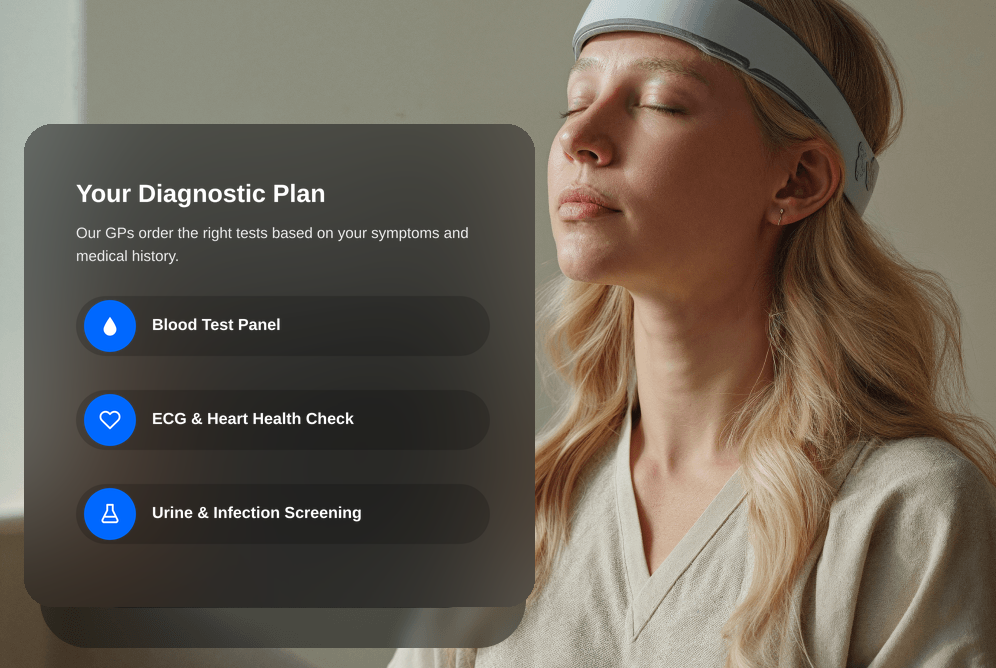
Diagnostic testing plan including blood test panel, ECG and urine screening
03

Tests and referrals, if you need them

Where testing will actually answer the question, we arrange it — blood tests and health screening through our laboratory partner, or a referral for ultrasound, X-ray, CT or MRI through private imaging providers. We will also tell you when a scan is not the right next step.
1–7 days
Personalised results and treatment plan from a private GP consultation
04

Results and next steps

Your GP talks you through what the results mean and agrees the next step with you. Every consultation ends with your treatment plan in writing, and any prescription goes to your own pharmacy.
20 minutes
GP follow-up reminder for ongoing care and progress monitoring
05

Ongoing care and follow-up

Follow-up appointments, progress monitoring and ongoing advice — including saying plainly when something needs in-person or NHS care instead.

Ongoing

How we compare

Time to be seen

Appointment length

Your NHS record in the room

Written treatment plan

Told when a test isn’t needed

Cost

Varies by practice

Typically 10 minutes

Yes, your full record

Not routinely

Usually

Free

Same day

Often 10 to 15 minutes

Usually not

Sometimes charged

Varies by provider

Often a subscription

Questions about our service

How quickly can I be seen?

Same-day access is usually available, from 6am to 10pm, seven days a week. You choose a time that suits you rather than waiting on hold at 8am.

Will I see the same doctor each time?

Yes. Care is led personally by Dr Mohammad Khan, so you are not passed between clinicians. Continuity is the point of a small practice: someone who knows your history and is listening attentively rather than working through a checklist.

Can you see my NHS records?

Yes, with your consent. We can access your Summary Care Record during the consultation, so your current medications, allergies and significant history are in the room. That means fewer questions you have already answered elsewhere, and safer prescribing.

Are you trying to replace my NHS GP?

No. We are not here to replace GPs, only to support them. Your NHS practice remains responsible for your ongoing care, and with your consent we write to them after the consultation. We are useful when you need to be seen sooner, or want more time than a standard appointment allows.

What is included in the appointment?

Twenty unhurried minutes and a comprehensive assessment. A written treatment plan is included, along with any prescription, sick note or referral letter arising from the consultation, at no extra charge.

How much does it cost?

£40 for 20 minutes, self-pay. Membership is optional and never required. Priced for fairness, because we are not here to charge extortionate amounts for access to a doctor.

What does “treatable online” actually mean?

It means the diagnosis can usually be made from your history and photographs, and that treatment can be arranged safely without examining you. Where a condition is not marked treatable online, it is because examination is the diagnosis — listening to a chest, feeling an abdomen, examining an ear or a joint — or because a procedure or device is needed.

Can you prescribe antibiotics?

Yes, where there is a genuine bacterial infection — cellulitis, impetigo, bacterial urine infections, confirmed strep throat. We will also frequently tell you that you do not need one. Most sore throats, coughs, colds and earaches are viral, and an antibiotic gives you the side effects with none of the benefit.

What if the GP cannot help with what I need?

If your problem turns out to be genuinely outside what we can do remotely, the doctor will tell you straight away, point you to the right service, and refund your fee in full. We would rather do that than fill twenty minutes to justify the charge.

What should I do in an emergency?

Call 999 or go to A&E — do not book an online appointment and do not wait for a reply to an email. For urgent problems that are not emergencies, NHS 111 is available 24 hours a day, online or by phone, and can direct you to the right service.

Patient reviews

What our patients say

No reviews published yet.
Ready to see a GP?20 minutes with a GMC-registered doctor. £40, usually same day.
Book a consultation