Home

/

Treatments

/

Smoking Cessation

Smoking Cessation

Evidence-based support to stop smoking, combining behavioural strategy with prescribed or replacement treatment.

£40 consultation

Everyday & Long-Term

Assessed and prescribed by a GMC-registered GP

Prescriptions sent electronically to a pharmacy

Monitoring and follow-up included where it is needed

Your NHS records in the room, with your consent

Clinically reviewed by Dr Mohammad Khan · Last reviewed

August 23, 2026

Book a consultation

A 20-minute appointment with a GMC-registered GP for £40. Same-day appointments are usually available, 6am to 10pm, seven days a week.

Private GP care led personally by Dr Mohammad Zubair Khan, GMC 7563469.

Why patients choose Cheshire Clinics

GMC registered doctors badge - every Cheshire Clinics consultation is with a General Medical Council registered GP

GMC-registered

Care led personally by Dr Khan

Royal College of General Practitioners badge - RCGP trained private GP consultations at Cheshire Clinics

RCGP-trained

Attentive, unhurried care that listens properly

Google five star reviews badge - Cheshire Clinics private GP online

Highly rated by patients

Five-star Google reviews from the people we have looked after

Care Quality Commission registered badge - Cheshire Clinics online GP service is registered with the CQC, England's independent regulator of health and social care

CQC-registered

Registered with the Care Quality Commission

Same-Day Appointments
Sick Notes
Private Prescriptions
Blood Tests
Menopause & HRT
Weight Management
Mental Health
Specialist Referrals
Same-Day Appointments
Sick Notes
Private Prescriptions
Blood Tests
Menopause & HRT
Weight Management
Mental Health
Specialist Referrals

Overview

Stopping smoking is the single most effective thing most people can do for their health, and combining medication with behavioural support roughly triples the chance of success compared with willpower alone.

What it is

Options include nicotine replacement in combination, prescription treatments where appropriate, and a structured plan around a quit date.

Who it's suitable for

Book if

  • You want to stop and want it to work this time
  • You have tried before and it did not stick
  • You are using vapes and want to come off nicotine altogether

Previous attempts are not failures

Most people who stop successfully have several attempts behind them. Each one teaches you where the difficulty is. Starting again is not going backwards.

Please also know

Free NHS stop smoking services are genuinely excellent, and in many areas provide both medication and structured behavioural support at no cost. If that is available and suits you, take it — we will say so.

What we offer is speed and an appointment outside working hours.

How treatment works

1. Set a quit date

Two to three weeks ahead. Long enough to prepare, short enough not to lose momentum.

2. Combine treatments

A long-acting patch for background craving, plus a fast-acting form — gum, lozenge, spray or inhalator — for breakthrough urges. Combination works considerably better than either alone, and is the step most people skip.

3. Plan for the triggers

The first cigarette of the day, alcohol, driving, breaks at work. These are predictable, which means they can be planned for.

4. Follow-up

Support plus medication roughly triples the success rate compared with willpower alone. Follow-up is the support half.

Ready to start treatment?

Book a consultation

What's included

  • A 20-minute consultation to build a plan around a quit date
  • Discussion of nicotine replacement in combination — patch plus a fast-acting form
  • A private prescription where a prescription treatment is appropriate
  • Follow-up, which roughly doubles the chance of success

Safety and side effects

Nicotine replacement can cause skin irritation, mouth irritation or vivid dreams. Prescription options have their own profiles, discussed at consultation.

Not suitable if

Some prescription options are not suitable with a history of seizures or certain mental health conditions. Free NHS stop smoking services are also available and are genuinely good — the GP will say so if that is the better route for you.

Monitoring and follow-up

Follow-up is half the treatment

Medication plus behavioural support roughly triples the success rate compared with willpower alone. Follow-up is the support half, and skipping it wastes most of the benefit of the medication.

  • Around the quit date — checking the plan and the nicotine replacement combination
  • Week 1 and week 2 — the hardest fortnight, and when most attempts end
  • Week 4, then 12four weeks smoke-free is the recognised marker of a successful quit

What to expect, and when it ends

  • Cravings peak in the first three days and are mostly gone by three to four weeks. Individual cravings last only a few minutes, however overwhelming they feel
  • Irritability, poor concentration and low mood — usually settling within two to four weeks
  • Coughing more for a few weeks, which is the lungs clearing and is a good sign rather than a bad one
  • Mouth ulcers, oddly common and temporary

Medication doses often need changing

Under-dosing nicotine replacement is the commonest reason it appears not to work. If you are still craving badly, the answer is usually more, not less.

Use the patch plus a fast-acting form — gum, lozenge, spray or inhalator. The combination is considerably more effective than either alone, and it is the step most people skip.

Two medical points worth knowing

  • Stopping smoking changes how some medicines are handled by the body — notably clozapine, olanzapine, theophylline and warfarin. Doses may need adjusting, so tell us what you take
  • Asthma and COPD often improve within weeks, and inhaler doses may need reviewing

A slip is not a failure

One cigarette does not undo a quit — treating it as total failure does. Come back, work out what the trigger was, and carry on.

Most people who stop successfully have several attempts behind them. Each one teaches you where the difficulty is, and starting again is not going backwards.

Mood

Low mood in the first weeks is common and usually settles. If it does not, or if you have thoughts of harming yourself, say so — that needs addressing rather than enduring.

Alternatives

Free NHS stop smoking services are excellent — start there

We would rather say this plainly. Local NHS services provide structured behavioural support and, in many areas, free medication and nicotine replacement. They have the best success rates of anything available, and they cost nothing.

You can self-refer. What we offer is speed and appointments outside working hours — which matters if you cannot get to a weekday clinic.

Nicotine replacement — use it properly

Combination is the point: a 16- or 24-hour patch for background craving plus a fast-acting form — gum, lozenge, mouth spray, inhalator or nasal spray — for breakthrough urges.

  • All of it is available over the counter, and much of it free through NHS services
  • Chew gum slowly and park it against the cheek; chewing it like ordinary gum causes hiccups and does not deliver nicotine properly
  • Under-dosing is the commonest error. Nicotine replacement is far safer than smoking, and using too little is what makes people conclude it does not work

Prescription options

Bupropion, and other prescription treatments where appropriate — not suitable with a history of seizures or eating disorders, and requiring discussion of mood effects before starting.

Vaping, honestly

Substantially less harmful than smoking and among the more effective quitting aids — the evidence on that is reasonably clear. Not harmless, and the long-term picture is not yet known.

  • If it gets you off cigarettes, it is a gain — the comparison is with smoking, not with nothing
  • Aim to come off nicotine eventually, reducing strength gradually
  • Never start vaping if you do not smoke, and keep it away from young people

What else helps

  • Behavioural support, in any form — group, one-to-one, telephone or app. It is the component with the strongest evidence after medication
  • Planning for predictable triggers: the first cigarette of the day, alcohol, driving, breaks at work
  • Telling people you are stopping, and removing every ashtray and lighter

What does not work

Cutting down without a quit date — people compensate by inhaling more deeply, and most never actually stop. Hypnotherapy, acupuncture and laser "therapy" — no good evidence, and often expensive. Heated tobacco, which is still tobacco.

Costs explained

What you pay us

  • £40 for the consultation, building the plan around a quit date
  • £40 for follow-up, which is the part that roughly doubles your chance of success

The free route is better — and we will say so

NHS stop smoking services provide structured behavioural support and, in many areas, free medication and nicotine replacement. They have the best success rates available, and they cost nothing. You can self-refer.

If that is accessible to you, take it. We offer speed and evening or weekend appointments, which matters for shift workers and people who cannot reach a weekday clinic — not a better treatment.

What you pay elsewhere

  • Nicotine replacement is available over the counter, and often free through NHS services. Own-brand patches and gum are the same nicotine
  • Prescription treatments are inexpensive generics. We earn nothing from what is prescribed

The arithmetic, which is worth doing

Twenty cigarettes a day costs several thousand pounds a year. Whatever you spend on stopping — appointments, patches, gum — is recovered within weeks, and it is the single most cost-effective health intervention there is.

If cost is the barrier to nicotine replacement, say so, because free routes exist and it is worth finding them rather than under-dosing.

Where not to spend money

  • Hypnotherapy, acupuncture and laser "stop smoking" treatments — no good evidence, and often several hundred pounds
  • Expensive branded nicotine products when own-brand is identical
  • Heated tobacco products, which are marketed as safer and are still tobacco

The false economy

Under-dosing nicotine replacement to save money is why most attempts with it fail. Nicotine replacement is far safer than smoking, and using enough of it — patch plus a fast-acting form — is what makes it work.

Common questions

What actually works?

Medication plus behavioural support, which roughly triples success compared with willpower alone.

Willpower alone works for a small minority. Combining a patch with a fast-acting nicotine product, plus follow-up, is what shifts the odds — and both halves matter.

Should I use the NHS service instead?

If you can, yes — and we will tell you so. NHS stop smoking services are free, structured, often provide free medication, and have the best success rates available. You can self-refer.

We offer speed and appointments outside working hours. That is the difference, not the quality of the treatment.

Is nicotine replacement safe?

Far safer than smoking, and the risk comparison is not close. Nicotine is what makes cigarettes addictive; the tar and combustion products are what cause the harm.

Under-dosing is the commonest mistake. If you are still craving badly, you probably need more, not less.

Patch or gum?

Both — that is the point. A patch for background craving, plus a fast-acting form for breakthrough urges. Combination is considerably more effective than either alone, and it is the step most people skip.

Chew gum slowly and park it against your cheek. Chewing it normally causes hiccups and delivers little nicotine.

Is vaping a reasonable way to stop?

Yes — it is substantially less harmful than smoking and among the more effective quitting aids. The evidence on that is reasonably clear.

It is not harmless, and the long-term picture is not yet known. Aim to come off nicotine eventually by reducing the strength gradually. And never start if you do not smoke.

How long do cravings last?

They peak in the first three days and are largely gone by three to four weeks.

An individual craving lasts only a few minutes, however permanent it feels. That fact is genuinely useful in the moment.

Will I put on weight?

Many people gain a few kilograms, mostly from appetite returning and from nicotine's effect on metabolism ending.

The health benefit of stopping vastly outweighs it — you would need to gain a great deal of weight to offset the gain from quitting. Nicotine replacement blunts it, and the weight can be addressed afterwards. Stopping first is the right order.

I have tried before and failed. Is there any point?

Yes — and previous attempts make success more likely, not less. Most people who stop permanently have several attempts behind them.

Each attempt teaches you where the difficulty is. Starting again is not going backwards.

I have slipped and had one. Have I ruined it?

No. One cigarette does not undo a quit — treating it as total failure does.

Work out what the trigger was, plan for it, and carry on from today.

Does stopping affect my other medication?

Yes, and it is worth knowing. Smoking affects how the body handles several medicines — notably clozapine, olanzapine, theophylline and warfarin — and doses may need adjusting when you stop.

Tell us everything you take.

How quickly do things improve?

Faster than people expect. Heart rate and blood pressure fall within a day; carbon monoxide clears within 48 hours; circulation and lung function improve over weeks to months.

Coughing more for a few weeks is the lungs clearing — a good sign rather than a setback.

Dr Mohammad Zubair Khan, GMC-registered private GP and founder of Cheshire Clinics

Clinically reviewed by Dr Mohammad Zubair Khan, GMC 7563469

Last reviewed

August 23, 2026

How it works

What happens when you book

£40 for a 20-minute appointment with a GMC-registered GP, 6am to 10pm, seven days a week. Membership is optional and never required.
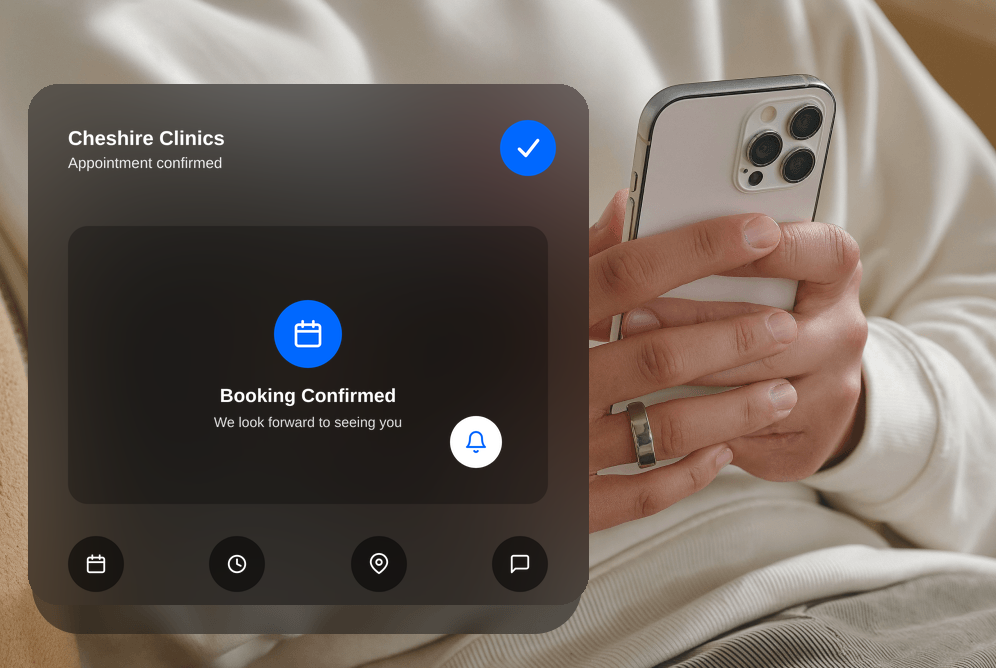
Cheshire Clinics online GP appointment booking confirmation on mobile
01

Book your appointment

Pick a time that suits you — 6am to 10pm, seven days a week, including weekends and bank holidays. £40 for 20 minutes, self-pay, with no insurance to arrange.
5–10 minutes
Online video consultation with a GMC-registered private GP
02

Meet your GP

A 20-minute video or phone consultation with a GMC-registered GP — long enough for a proper conversation about your symptoms, your history and what matters to you.
20 minutes
Diagnostic testing plan including blood test panel, ECG and urine screening
03

Tests and referrals, if you need them

Where testing will actually answer the question, we arrange it — blood tests and health screening through our laboratory partner, or a referral for ultrasound, X-ray, CT or MRI through private imaging providers. We will also tell you when a scan is not the right next step.
1–7 days
Personalised results and treatment plan from a private GP consultation
04

Results and next steps

Your GP talks you through what the results mean and agrees the next step with you. Every consultation ends with your treatment plan in writing, and any prescription goes to your own pharmacy.
20 minutes
GP follow-up reminder for ongoing care and progress monitoring
05

Ongoing care and follow-up

Follow-up appointments, progress monitoring and ongoing advice — including saying plainly when something needs in-person or NHS care instead.

Ongoing

How we compare

Time to be seen

Appointment length

Your NHS record in the room

Written treatment plan

Told when a test isn’t needed

Cost

Varies by practice

Typically 10 minutes

Yes, your full record

Not routinely

Usually

Free

Same day

Often 10 to 15 minutes

Usually not

Sometimes charged

Varies by provider

Often a subscription

Questions about our service

How quickly can I be seen?

Same-day access is usually available, from 6am to 10pm, seven days a week. You choose a time that suits you rather than waiting on hold at 8am.

Will I see the same doctor each time?

Yes. Care is led personally by Dr Mohammad Khan, so you are not passed between clinicians. Continuity is the point of a small practice: someone who knows your history and is listening attentively rather than working through a checklist.

Can you see my NHS records?

Yes, with your consent. We can access your Summary Care Record during the consultation, so your current medications, allergies and significant history are in the room. That means fewer questions you have already answered elsewhere, and safer prescribing.

Are you trying to replace my NHS GP?

No. We are not here to replace GPs, only to support them. Your NHS practice remains responsible for your ongoing care, and with your consent we write to them after the consultation. We are useful when you need to be seen sooner, or want more time than a standard appointment allows.

What is included in the appointment?

Twenty unhurried minutes and a comprehensive assessment. A written treatment plan is included, along with any prescription, sick note or referral letter arising from the consultation, at no extra charge.

How much does it cost?

£40 for 20 minutes, self-pay. Membership is optional and never required. Priced for fairness, because we are not here to charge extortionate amounts for access to a doctor.

What does “treatable online” actually mean?

It means the diagnosis can usually be made from your history and photographs, and that treatment can be arranged safely without examining you. Where a condition is not marked treatable online, it is because examination is the diagnosis — listening to a chest, feeling an abdomen, examining an ear or a joint — or because a procedure or device is needed.

Can you prescribe antibiotics?

Yes, where there is a genuine bacterial infection — cellulitis, impetigo, bacterial urine infections, confirmed strep throat. We will also frequently tell you that you do not need one. Most sore throats, coughs, colds and earaches are viral, and an antibiotic gives you the side effects with none of the benefit.

What if the GP cannot help with what I need?

If your problem turns out to be genuinely outside what we can do remotely, the doctor will tell you straight away, point you to the right service, and refund your fee in full. We would rather do that than fill twenty minutes to justify the charge.

What should I do in an emergency?

Call 999 or go to A&E — do not book an online appointment and do not wait for a reply to an email. For urgent problems that are not emergencies, NHS 111 is available 24 hours a day, online or by phone, and can direct you to the right service.

Patient reviews

What our patients say

No reviews published yet.
Ready to see a GP?20 minutes with a GMC-registered doctor. £40, usually same day.
Book a consultation