Home

/

Treatments

/

Travel Health & Malaria Prevention

Travel Health & Malaria Prevention

Destination-specific travel advice and antimalarial prescriptions, with vaccination requirements set out clearly.

£40 consultation

Everyday & Long-Term

Assessed and prescribed by a GMC-registered GP

Prescriptions sent electronically to a pharmacy

Monitoring and follow-up included where it is needed

Your NHS records in the room, with your consent

Clinically reviewed by Dr Mohammad Khan · Last reviewed

August 23, 2026

Book a consultation

A 20-minute appointment with a GMC-registered GP for £40. Same-day appointments are usually available, 6am to 10pm, seven days a week.

Private GP care led personally by Dr Mohammad Zubair Khan, GMC 7563469.

Why patients choose Cheshire Clinics

GMC registered doctors badge - every Cheshire Clinics consultation is with a General Medical Council registered GP

GMC-registered

Care led personally by Dr Khan

Royal College of General Practitioners badge - RCGP trained private GP consultations at Cheshire Clinics

RCGP-trained

Attentive, unhurried care that listens properly

Google five star reviews badge - Cheshire Clinics private GP online

Highly rated by patients

Five-star Google reviews from the people we have looked after

Care Quality Commission registered badge - Cheshire Clinics online GP service is registered with the CQC, England's independent regulator of health and social care

CQC-registered

Registered with the Care Quality Commission

Same-Day Appointments
Sick Notes
Private Prescriptions
Blood Tests
Menopause & HRT
Weight Management
Mental Health
Specialist Referrals
Same-Day Appointments
Sick Notes
Private Prescriptions
Blood Tests
Menopause & HRT
Weight Management
Mental Health
Specialist Referrals

Overview

Travel health advice is only useful if it is specific to where you are actually going, when, and what you will be doing there. A city break and three weeks of rural trekking carry entirely different risks.

The consultation covers your itinerary against current guidance, and any antimalarial prescription you need.

What it is

We can prescribe antimalarial medication and travellers' diarrhoea standby treatment, and advise on which vaccinations you need and where to get them.

Who it's suitable for

Book if you are travelling to

  • A malaria-risk area
  • Anywhere requiring vaccination certificates
  • Rural or remote regions
  • Somewhere with significant food and water risk

What we cannot provide

  • Vaccinations. These require an in-person appointment. We will tell you exactly what you need and where to get it.
  • Yellow fever certificates. We are not a designated yellow fever centre.

After you return

Fever after travel to a malarial area is a medical emergency. Malaria can develop up to a year afterwards and is rapidly fatal if untreated. Seek urgent care and tell them where you have been — do not wait for a routine appointment.

How treatment works

1. Book six to eight weeks ahead

Some vaccination courses take weeks to complete. Some antimalarials must start before departure. Booking the week before travel limits what is possible.

2. Bring the detail

Exact destinations including rural areas, dates, accommodation type and activities. Risk differs enormously between a city hotel and three weeks trekking, even in the same country.

3. Antimalarial choice

Options differ in dosing schedule, side effects and suitability. Some are unsuitable with a history of depression or epilepsy. The right one depends on your destination and your history, not on price.

4. Bite avoidance

No antimalarial is fully effective. DEET repellent, covered skin at dusk and dawn, and treated nets matter as much as the tablets.

Ready to start treatment?

Book a consultation

What's included

  • A 20-minute consultation reviewing your specific itinerary against current guidance
  • A private prescription for antimalarial medication where needed
  • Standby treatment for travellers' diarrhoea where appropriate
  • A written list of which vaccinations you need, and where to get them
  • A medication letter if you are carrying anything that needs one

Safety and side effects

Antimalarials differ considerably: some require daily dosing, some cause sun sensitivity, and some are unsuitable with a history of depression or epilepsy. The right choice depends on your destination and your history.

Not suitable if

We are not a designated yellow fever vaccination centre and cannot issue yellow fever certificates. Vaccinations require an in-person appointment, which we will direct you to.

No antimalarial is completely effective — bite avoidance remains essential, and fever after travel to a malarial area is a medical emergency.

Monitoring and follow-up

Before you go

  • Start the antimalarial on time. Some begin a week or more before departure, some one to two days — and the schedule is part of the protection, not a formality
  • Take a few doses at home first where the regimen allows, so any intolerance emerges before you are somewhere remote
  • Complete the course after you return. Several must continue for four weeks afterwards, and stopping early is one of the commonest reasons people still get malaria

While you are there

No antimalarial is fully effective, so bite avoidance is not the optional half.

  • DEET 50% repellent, reapplied — and after sunscreen, not before
  • Covered skin at dusk and dawn, when the malaria mosquito bites
  • A treated bed net where accommodation is not screened or air-conditioned

Alongside: bottled or treated water, care with ice and salads, and hand hygiene.

Standby treatment for travellers' diarrhoea

Use it only if you actually meet the criteria you were given — usually several loose stools with fever or blood — and not for ordinary loose stools, which settle with fluids and oral rehydration.

Seek local medical care if there is high fever, blood, severe pain, or you cannot keep fluids down, and particularly for a child.

After you return — the most important part of this page

Fever after travel to a malarial area is a medical emergency.

  • Malaria can develop up to a year after returning, and falciparum malaria is rapidly fatal if untreated
  • Seek urgent care the same day and say where you have been — do not wait for a routine appointment, and do not assume it is flu
  • Taking antimalarials does not exclude it. People are diagnosed having taken them correctly

Also worth reporting after travel: persistent diarrhoea beyond two weeks, jaundice, an unexplained rash, or any animal bite or scratch — which needs assessing for rabies urgently, wherever it happened.

If you were unwell abroad

Mention any hospital treatment or antibiotics received overseas, particularly in South Asia, the Middle East and parts of the Mediterranean — resistant organisms are acquired this way, and it changes how a subsequent infection is treated.

Alternatives

Where to get what we cannot provide

  • Vaccinations — in-person only. Several are free on the NHS at your own practice, including hepatitis A, typhoid, cholera, and tetanus/diphtheria/polio. Ask there first before paying a travel clinic, which is money routinely spent unnecessarily
  • Yellow fever — only a designated Yellow Fever Vaccination Centre can vaccinate and issue the international certificate
  • Rabies, Japanese encephalitis, tick-borne encephalitis and meningitis ACWY — private travel clinics or pharmacies

Free information that is as good as any paid advice

TravelHealthPro (NaTHNaC) and fitfortravel (NHS Scotland) publish country-by-country guidance, free and updated continuously. They are what clinicians use. Read your destination's page before booking anything — you may find you need very little.

Antimalarial choice

They differ in schedule, side effects and cost, and the right one depends on destination and history rather than price:

  • Atovaquone/proguanil — daily, short course after return, well tolerated, more expensive
  • Doxycycline — daily, cheap, four weeks after return, causes sun sensitivity and can cause oesophageal irritation. Not in pregnancy or under 12
  • Mefloquine — weekly, and unsuitable with a history of depression, anxiety, psychosis or epilepsy

Some are available from pharmacies without prescription, which is worth asking about — though the choice still needs to match your destination and history.

Where a travel clinic is the better option

If you need several vaccinations, one appointment there is more practical than assembling them piecemeal. Ask what is free on the NHS first — and be aware that some clinics sell vaccines the guidance does not recommend for your itinerary.

What matters as much as any of it

  • Travel insurance that covers your activities and declares every condition. Undeclared conditions are the standard reason claims are refused
  • A GHIC for Europe — free, and not a substitute for insurance
  • Bite avoidance, which also protects against dengue, Zika and chikungunya, for which there is no tablet at all

Costs explained

What you pay us

  • £40 for the consultation, reviewing your itinerary against current guidance
  • Antimalarials and standby treatment paid to your pharmacy. We earn nothing from what is prescribed, and no commission from any clinic we refer you to

Check what is free first — this is where money is wasted

Several travel vaccinations are free on the NHS at your own GP practice: hepatitis A, typhoid, cholera, and tetanus/diphtheria/polio.

People routinely pay travel clinics for these without asking. Ring your practice before booking anything.

TravelHealthPro and fitfortravel are free, authoritative and updated continuously. Reading your destination's page may tell you that you need very little.

Antimalarial costs differ considerably

Doxycycline is inexpensive. Atovaquone/proguanil is markedly more, particularly for a long trip.

But the right choice depends on destination, tolerance and your history rather than price — a cheap tablet that is wrong for your itinerary, or that you stop because of side effects, protects nobody.

Some are available from pharmacies without prescription, which is worth asking about. Compare prices: for a month's supply the difference between pharmacies is not trivial.

The expensive mistakes

  • Paying privately for vaccines available free on the NHS
  • Leaving it to the week before travel, which limits you to whatever can be done immediately, usually at a premium
  • Buying antimalarials abroad or online without prescriptioncounterfeit antimalarials are a well-documented and lethal problem, particularly in the regions where they are most needed
  • Travelling without insurance, or with an undeclared condition. Medical repatriation is the single most expensive thing that can happen on a holiday

What we will tell you

If you need very little for your itinerary, we will say so. A fortnight in a European city needs a GHIC and sensible insurance, not a consultation.

We sell nothing — no vaccines, no kits, no repellent, no supplements.

Common questions

How far ahead should I book?

Six to eight weeks. Some vaccination courses take weeks to complete, and some antimalarials must start before departure.

Booking the week before travel limits what is possible — sometimes to nothing useful.

Can you give me the vaccinations?

No — vaccination requires an in-person appointment. We tell you exactly what you need for your itinerary and where to get it.

Ask your own NHS practice first: hepatitis A, typhoid, cholera and tetanus/diphtheria/polio are free there, and people pay travel clinics for them unnecessarily every week.

Can you do yellow fever?

No. Only a designated Yellow Fever Vaccination Centre can vaccinate and issue the international certificate. We can tell you whether your itinerary requires one.

Which antimalarial is best?

The one that matches your destination, your history and what you will realistically take every day.

Doxycycline — cheap, daily, sun sensitivity, four weeks after return, not in pregnancy. Atovaquone/proguanil — well tolerated, shorter course after return, more expensive. Mefloquine — weekly, and unsuitable with a history of depression, anxiety, psychosis or epilepsy.

Resistance patterns vary by country, which is why the itinerary matters more than the price.

Do I really need tablets? I am only going for a week.

Risk depends on the region, the season and what you will be doing rather than on how long you are there. A week in a rural high-transmission area carries more risk than a fortnight in a city.

A single infective bite is enough, and falciparum malaria can be fatal within days.

What if I get a fever after I get back?

This is the most important thing on the page. Fever after travel to a malarial area is a medical emergency.

Seek urgent care the same day and tell them where you have been. Malaria can develop up to a year afterwards, it is frequently mistaken for flu, and having taken your tablets correctly does not exclude it.

Are the tablets enough on their own?

No — no antimalarial is fully effective, and bite avoidance is not the optional half.

DEET 50% applied after sunscreen, covered skin at dusk and dawn, and a treated bed net. This also protects against dengue, Zika and chikungunya, for which there is no preventive tablet at all.

Can I take antimalarials while pregnant?

Some, and it needs individual advice — doxycycline is not among them.

Pregnant women are at higher risk of severe malaria, and travel to a high-risk area during pregnancy is worth reconsidering rather than simply medicating. Zika transmission areas warrant particular caution.

Should I take antibiotics for travellers' diarrhoea just in case?

Not routinely. Most cases settle with fluids and oral rehydration salts, and unnecessary antibiotics drive resistance.

Standby treatment is appropriate for remote travel or high-risk itineraries, with clear criteria for when to use it — several loose stools with fever or blood, not ordinary loose stools.

What about my usual medication?

Take enough for the whole trip plus at least a week, in original labelled boxes, in hand luggage. Check every country you enter or transit, since several restrict medicines that are entirely ordinary here.

We can provide a medication letter, though it is not a permit.

Is my travel insurance enough?

Check that it covers your activities and that every condition is declared — undeclared conditions are the standard reason claims are refused.

A GHIC covers state healthcare in Europe and is free, but it does not cover repatriation and is not a substitute for insurance.

Dr Mohammad Zubair Khan, GMC-registered private GP and founder of Cheshire Clinics

Clinically reviewed by Dr Mohammad Zubair Khan, GMC 7563469

Last reviewed

August 23, 2026

How it works

What happens when you book

£40 for a 20-minute appointment with a GMC-registered GP, 6am to 10pm, seven days a week. Membership is optional and never required.
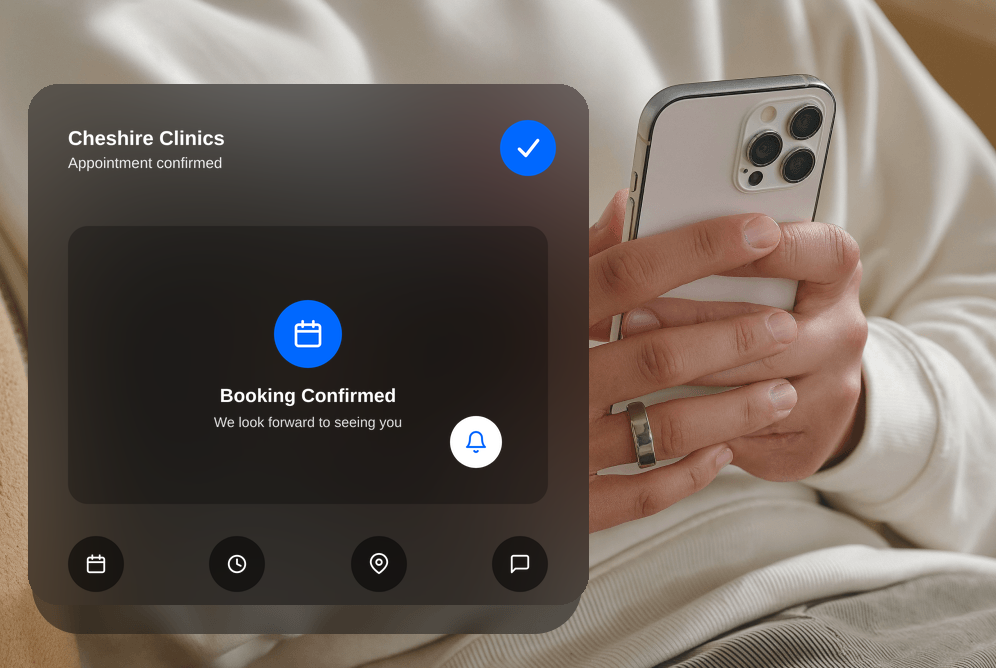
Cheshire Clinics online GP appointment booking confirmation on mobile
01

Book your appointment

Pick a time that suits you — 6am to 10pm, seven days a week, including weekends and bank holidays. £40 for 20 minutes, self-pay, with no insurance to arrange.
5–10 minutes
Online video consultation with a GMC-registered private GP
02

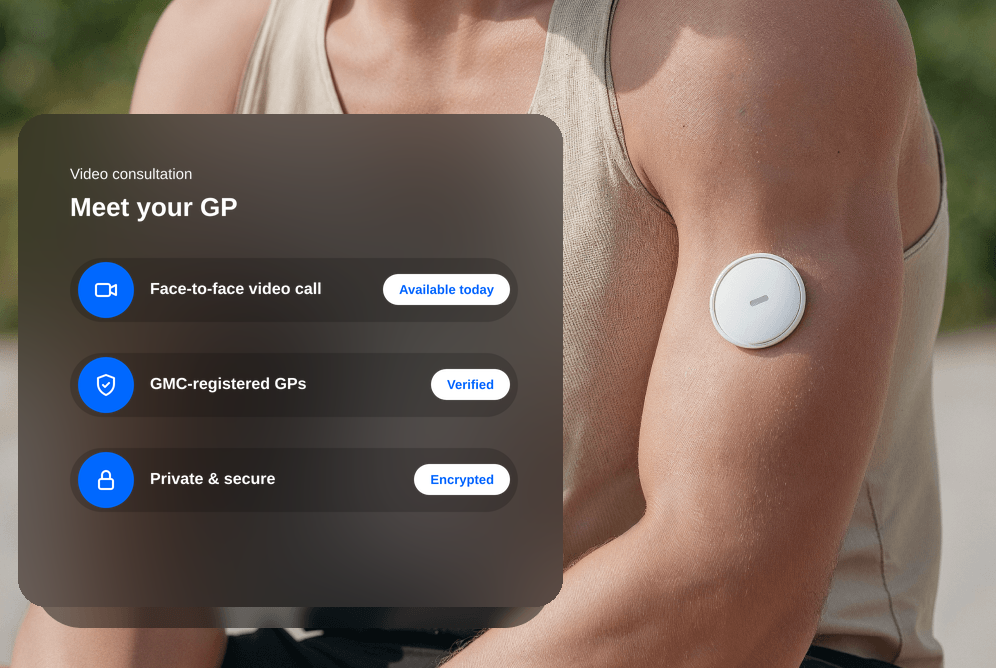
Meet your GP

A 20-minute video or phone consultation with a GMC-registered GP — long enough for a proper conversation about your symptoms, your history and what matters to you.
20 minutes
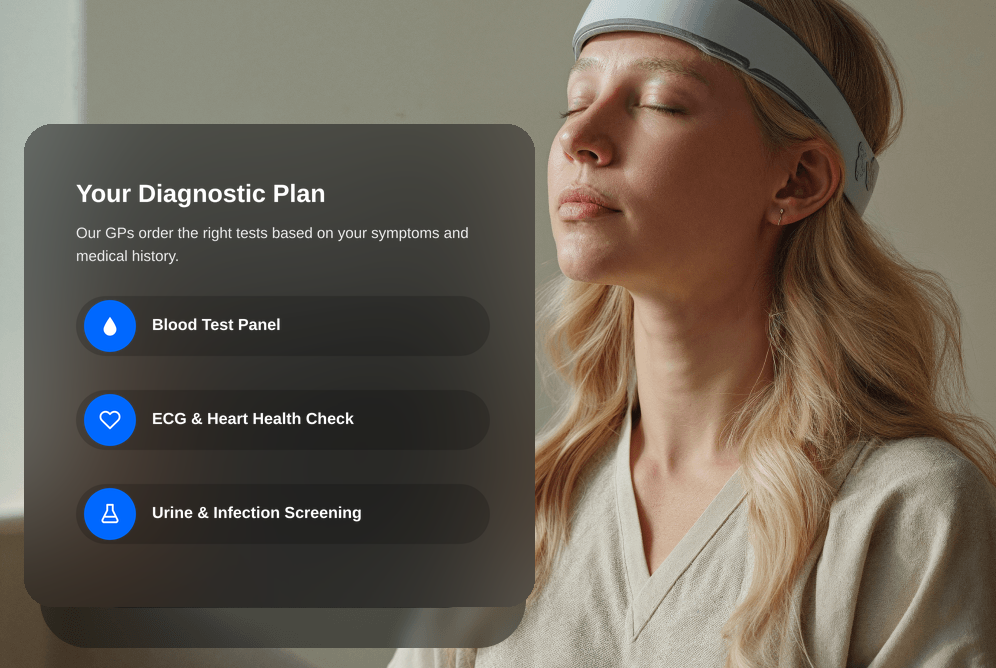
Diagnostic testing plan including blood test panel, ECG and urine screening
03

Tests and referrals, if you need them

Where testing will actually answer the question, we arrange it — blood tests and health screening through our laboratory partner, or a referral for ultrasound, X-ray, CT or MRI through private imaging providers. We will also tell you when a scan is not the right next step.
1–7 days
Personalised results and treatment plan from a private GP consultation
04

Results and next steps

Your GP talks you through what the results mean and agrees the next step with you. Every consultation ends with your treatment plan in writing, and any prescription goes to your own pharmacy.
20 minutes
GP follow-up reminder for ongoing care and progress monitoring
05

Ongoing care and follow-up

Follow-up appointments, progress monitoring and ongoing advice — including saying plainly when something needs in-person or NHS care instead.

Ongoing

How we compare

Time to be seen

Appointment length

Your NHS record in the room

Written treatment plan

Told when a test isn’t needed

Cost

Varies by practice

Typically 10 minutes

Yes, your full record

Not routinely

Usually

Free

Same day

Often 10 to 15 minutes

Usually not

Sometimes charged

Varies by provider

Often a subscription

Questions about our service

How quickly can I be seen?

Same-day access is usually available, from 6am to 10pm, seven days a week. You choose a time that suits you rather than waiting on hold at 8am.

Will I see the same doctor each time?

Yes. Care is led personally by Dr Mohammad Khan, so you are not passed between clinicians. Continuity is the point of a small practice: someone who knows your history and is listening attentively rather than working through a checklist.

Can you see my NHS records?

Yes, with your consent. We can access your Summary Care Record during the consultation, so your current medications, allergies and significant history are in the room. That means fewer questions you have already answered elsewhere, and safer prescribing.

Are you trying to replace my NHS GP?

No. We are not here to replace GPs, only to support them. Your NHS practice remains responsible for your ongoing care, and with your consent we write to them after the consultation. We are useful when you need to be seen sooner, or want more time than a standard appointment allows.

What is included in the appointment?

Twenty unhurried minutes and a comprehensive assessment. A written treatment plan is included, along with any prescription, sick note or referral letter arising from the consultation, at no extra charge.

How much does it cost?

£40 for 20 minutes, self-pay. Membership is optional and never required. Priced for fairness, because we are not here to charge extortionate amounts for access to a doctor.

What does “treatable online” actually mean?

It means the diagnosis can usually be made from your history and photographs, and that treatment can be arranged safely without examining you. Where a condition is not marked treatable online, it is because examination is the diagnosis — listening to a chest, feeling an abdomen, examining an ear or a joint — or because a procedure or device is needed.

Can you prescribe antibiotics?

Yes, where there is a genuine bacterial infection — cellulitis, impetigo, bacterial urine infections, confirmed strep throat. We will also frequently tell you that you do not need one. Most sore throats, coughs, colds and earaches are viral, and an antibiotic gives you the side effects with none of the benefit.

What if the GP cannot help with what I need?

If your problem turns out to be genuinely outside what we can do remotely, the doctor will tell you straight away, point you to the right service, and refund your fee in full. We would rather do that than fill twenty minutes to justify the charge.

What should I do in an emergency?

Call 999 or go to A&E — do not book an online appointment and do not wait for a reply to an email. For urgent problems that are not emergencies, NHS 111 is available 24 hours a day, online or by phone, and can direct you to the right service.

Patient reviews

What our patients say

No reviews published yet.
Ready to see a GP?20 minutes with a GMC-registered doctor. £40, usually same day.
Book a consultation