Home

/

Treatments

/

Wegovy Pill (Oral Semaglutide)

Wegovy Pill (Oral Semaglutide)

A daily tablet form of semaglutide, for people who would rather not inject. Same assessment, same monitoring.

£40 consultation, medication priced separately by your pharmacy

Weight

Assessed and prescribed by a GMC-registered GP

Prescriptions sent electronically to a pharmacy

Monitoring and follow-up included where it is needed

Your NHS records in the room, with your consent

Clinically reviewed by Dr Mohammad Khan · Last reviewed

August 23, 2026

Book a consultation

A 20-minute appointment with a GMC-registered GP for £40. Same-day appointments are usually available, 6am to 10pm, seven days a week.

Private GP care led personally by Dr Mohammad Zubair Khan, GMC 7563469.

Why patients choose Cheshire Clinics

GMC registered doctors badge - every Cheshire Clinics consultation is with a General Medical Council registered GP

GMC-registered

Care led personally by Dr Khan

Royal College of General Practitioners badge - RCGP trained private GP consultations at Cheshire Clinics

RCGP-trained

Attentive, unhurried care that listens properly

Google five star reviews badge - Cheshire Clinics private GP online

Highly rated by patients

Five-star Google reviews from the people we have looked after

Care Quality Commission registered badge - Cheshire Clinics online GP service is registered with the CQC, England's independent regulator of health and social care

CQC-registered

Registered with the Care Quality Commission

Same-Day Appointments
Sick Notes
Private Prescriptions
Blood Tests
Menopause & HRT
Weight Management
Mental Health
Specialist Referrals
Same-Day Appointments
Sick Notes
Private Prescriptions
Blood Tests
Menopause & HRT
Weight Management
Mental Health
Specialist Referrals

Overview

Oral semaglutide is a daily tablet form of the same active ingredient used in Wegovy injections. For people who are uncomfortable with needles, it removes the main practical barrier to treatment.

The assessment, monitoring and safety considerations are the same.

What it is

A daily tablet containing semaglutide. It must be taken on an empty stomach with no more than half a glass of water, and nothing else for at least 30 minutes afterwards — absorption is poor otherwise.

Who it's suitable for

Consider the tablet if

  • You are genuinely uncomfortable with needles, to the point where you would not keep up weekly injections
  • Travel or storage makes refrigerated injections impractical

Consider the injection instead if

  • You would find a strict daily empty-stomach routine hard to maintain
  • You take other medication first thing in the morning
  • You would rather deal with treatment once a week than every day

The comparison page sets out the trade-offs in more detail.

How treatment works

Assessment, baseline bloods where indicated, prescription if appropriate, then scheduled reviews.

Ready to start treatment?

Book a consultation

What's included

  • Full assessment and baseline bloods where indicated
  • A private prescription if appropriate
  • Detailed instruction on how to take it — which matters more here than with any other weight treatment
  • Scheduled reviews

Taking it correctly

On an empty stomach, first thing, with no more than half a glass of water, and nothing else — food, drink or other medication — for at least 30 minutes afterwards.

Absorption is poor otherwise, and this is the single commonest reason the tablet form underperforms.

Safety and side effects

The side effect profile is broadly the same as injectable semaglutide, chiefly gastrointestinal. Effectiveness depends heavily on taking it correctly on an empty stomach.

Not suitable if

Same exclusions as injectable semaglutide: pregnancy, breastfeeding, trying to conceive, personal or family history of medullary thyroid carcinoma or MEN 2, or previous pancreatitis.

Monitoring and follow-up

The first review is largely about technique

With this treatment, how you take it matters as much as the dose. The first review checks the routine in detail — what time, how much water, what gap before anything else — because getting that wrong is the commonest reason it appears not to work.

  • Around four weeks — the routine, tolerance, and whether to increase
  • Every four weeks through titration, since the dose steps up at monthly intervals
  • Every three months once stable

What is checked

  • Exactly how you are taking it — asked in detail rather than in principle, because almost everyone believes they are doing it correctly
  • Other medicines and their timing. Anything else taken in the morning has to move, and levothyroxine in particular needs careful separation
  • Weight and waist, blood pressure, and HbA1c where relevant
  • Kidney function after significant vomiting or diarrhoea
  • What you are eating, and whether protein has fallen away with appetite
  • Mood, including any new low mood or thoughts of self-harm

Protecting muscle

The same applies as with the injection: a substantial share of the weight lost is lean tissue unless you act. Protein at every meal, and resistance training twice a week.

Contact us sooner if

  • Severe or persistent abdominal pain, particularly radiating to the back — possible pancreatitis, needing urgent same-day assessment
  • Vomiting that stops you keeping fluids down
  • Severe right upper abdominal pain, jaundice or pale stools
  • New or worsening visual symptoms with diabetic retinopathy

If it is not working

Before concluding the drug has failed, we check the routine again. A tablet taken with breakfast, or with a full glass of water, or thirty seconds before a coffee, is a tablet that has largely not been absorbed — and that is a fixable problem rather than a reason to switch.

Stopping

Appetite returns and regain is common, as with the injection. Plan the exit at the start rather than on the day the prescription runs out.

Alternatives

The same drug, by injection

Injectable semaglutide (Wegovy) — once weekly rather than daily, no empty-stomach routine, and somewhat greater average weight loss, largely because absorption is reliable.

If needles are the only reason you are considering the tablet, it is worth knowing how small a modern pen needle is. Many people who were certain they could not inject manage it comfortably after being shown once. That said, a tablet you will actually take beats an injection you avoid — which is the honest version of this comparison.

The other injectable

Tirzepatide (Mounjaro) produces the greatest average weight loss of the options currently available, and is also weekly.

The other tablet

Orlistat — a completely different mechanism, blocking fat absorption rather than acting on appetite. Far cheaper, no timing restrictions, and no hormonal action, with side effects tied directly to how much fat you eat.

The comparison page sets out the trade-offs in full.

Free routes worth checking first

  • NHS weight management services, which may fund the injectable form and come with dietetic and psychological support
  • A medication review — some antidepressants, antipsychotics, older antihistamines, insulin and steroids drive weight gain
  • Treating an untreated causeunderactive thyroid, sleep apnoea, PCOS

Where the tablet is the wrong choice

If you take levothyroxine, or several morning medicines, the timing becomes genuinely difficult — and a treatment that disrupts medication you already depend on is not the right one. The weekly injection avoids the problem entirely.

Costs explained

What you pay us

£40 for the consultation, charged whether or not a prescription follows. Reviews are £40 each and are where dose changes are made.

What you pay the pharmacy

We do not dispense and we earn nothing from what is prescribed. Oral semaglutide typically sits between orlistat and the injectables in cost, and the price rises with the dose.

  • Ring around before handing over the prescription — differences between pharmacies are substantial
  • Ask the price at the maintenance dose, not the starting one
  • NHS exemptions do not apply to private prescriptions

A cost specific to this form

A tablet taken incorrectly is a tablet largely wasted. Absorption of oral semaglutide is poor at the best of times and negligible if the empty-stomach routine is not followed.

Paying for a month of tablets and taking them with breakfast is money spent for very little effect, so if the daily routine is not realistic for your mornings, the weekly injection is genuinely the cheaper treatment.

What we will say plainly

  • If you may qualify for NHS treatment, we will tell you
  • If orlistat would be reasonable and it costs a fraction, we will say so
  • If the injection is likely to work better for you, we will say that too, even where you came asking for the tablet

Buying safely

Never buy semaglutide in any form from a source that does not require a proper consultation. Counterfeit products circulate in the UK and the MHRA has issued repeated warnings.

Common questions

Is it the same drug as the injection?

Yes — semaglutide in both cases. The difference is how it is delivered and how reliably it is absorbed.

Does it work as well?

Somewhat less well on average, and the gap widens if it is not taken correctly. Absorption of oral semaglutide is inherently poor, which is why the empty-stomach rules exist.

Taken properly it is a genuinely effective treatment. Taken casually it is close to useless, and that is a much bigger factor than the average difference in the trials.

What exactly is the routine?

First thing in the morning, on a completely empty stomach, with no more than half a glass of water — and nothing else at all for at least 30 minutes. No food, no coffee, no other tablets.

Thirty minutes means thirty minutes. This is the single commonest reason the tablet underperforms, and people routinely believe they are following it when they are not.

Can I take my other tablets at the same time?

No. Everything else has to wait at least 30 minutes, which means morning medicines need rescheduling.

If you take levothyroxine this needs particular care, since it has its own empty-stomach requirement — and two medicines competing for the same window is a real practical problem. Tell the GP everything you take.

What if I forget one?

Skip it and take the next one at the usual time the following morning. Do not double up, and do not take it later in the day with food — it will not be absorbed.

Are the side effects the same?

Broadly yes — nausea, vomiting, diarrhoea and constipation, worst after each dose increase and usually settling.

The serious risks are the same too: pancreatitis, gallbladder problems, and dehydration affecting the kidneys. Severe abdominal pain radiating to the back needs urgent same-day assessment.

Can I switch between the tablet and the injection?

Yes, and people do in both directions. It is a clinical decision about dose equivalence rather than a straight swap, so it is made at a review.

Do I need to refrigerate it?

No, which is one of its genuine advantages — easier for travel, shift work, and anyone without reliable fridge space.

Can I take it if I am trying to conceive?

No. The same exclusions apply as for the injection: not in pregnancy, not while breastfeeding, and stopped at least two months before conceiving.

Is it Ozempic in tablet form?

Same drug, different product and different licence. Rybelsus is the oral semaglutide licensed for type 2 diabetes; products and licensed indications differ, and we prescribe within licence for the condition being treated.

Will I have to stay on it?

For as long as you want to keep the weight off, in most cases. Appetite returns when it stops, and regain is common — the same as with the injection.

Dr Mohammad Zubair Khan, GMC-registered private GP and founder of Cheshire Clinics

Clinically reviewed by Dr Mohammad Zubair Khan, GMC 7563469

Last reviewed

August 23, 2026

How it works

What happens when you book

£40 for a 20-minute appointment with a GMC-registered GP, 6am to 10pm, seven days a week. Membership is optional and never required.
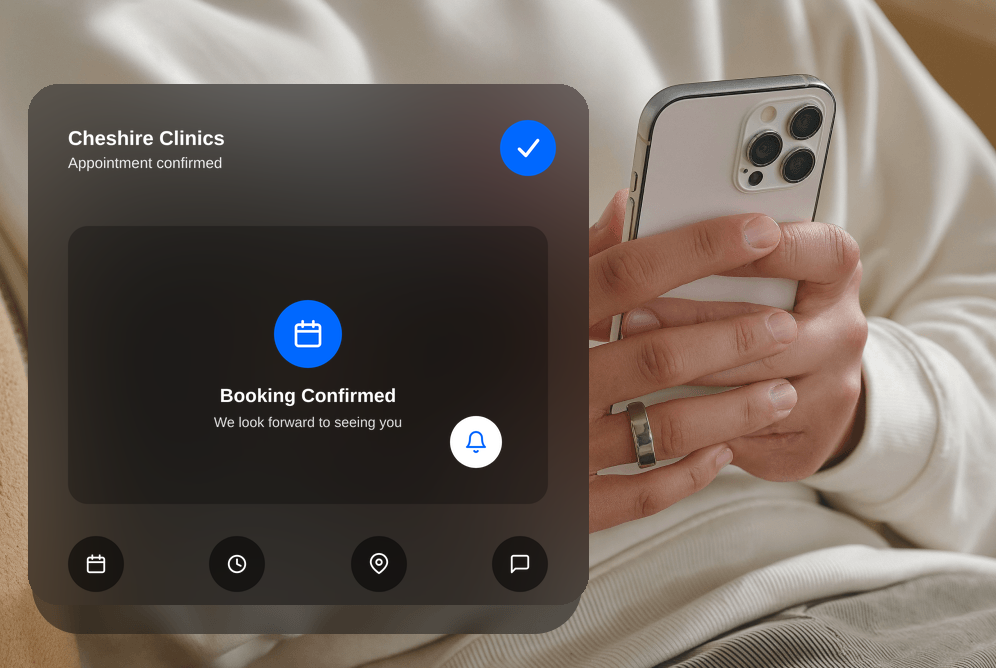
Cheshire Clinics online GP appointment booking confirmation on mobile
01

Book your appointment

Pick a time that suits you — 6am to 10pm, seven days a week, including weekends and bank holidays. £40 for 20 minutes, self-pay, with no insurance to arrange.
5–10 minutes
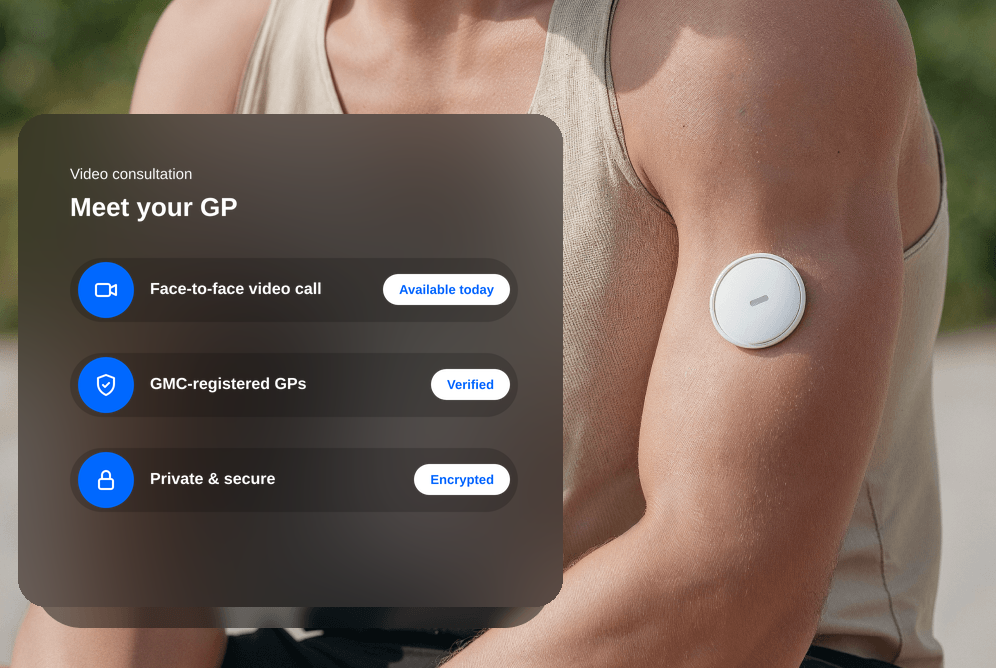
Online video consultation with a GMC-registered private GP
02

Meet your GP

A 20-minute video or phone consultation with a GMC-registered GP — long enough for a proper conversation about your symptoms, your history and what matters to you.
20 minutes
Diagnostic testing plan including blood test panel, ECG and urine screening
03

Tests and referrals, if you need them

Where testing will actually answer the question, we arrange it — blood tests and health screening through our laboratory partner, or a referral for ultrasound, X-ray, CT or MRI through private imaging providers. We will also tell you when a scan is not the right next step.
1–7 days
Personalised results and treatment plan from a private GP consultation
04

Results and next steps

Your GP talks you through what the results mean and agrees the next step with you. Every consultation ends with your treatment plan in writing, and any prescription goes to your own pharmacy.
20 minutes
GP follow-up reminder for ongoing care and progress monitoring
05

Ongoing care and follow-up

Follow-up appointments, progress monitoring and ongoing advice — including saying plainly when something needs in-person or NHS care instead.

Ongoing

How we compare

Time to be seen

Appointment length

Your NHS record in the room

Written treatment plan

Told when a test isn’t needed

Cost

Varies by practice

Typically 10 minutes

Yes, your full record

Not routinely

Usually

Free

Same day

Often 10 to 15 minutes

Usually not

Sometimes charged

Varies by provider

Often a subscription

Questions about our service

How quickly can I be seen?

Same-day access is usually available, from 6am to 10pm, seven days a week. You choose a time that suits you rather than waiting on hold at 8am.

Will I see the same doctor each time?

Yes. Care is led personally by Dr Mohammad Khan, so you are not passed between clinicians. Continuity is the point of a small practice: someone who knows your history and is listening attentively rather than working through a checklist.

Can you see my NHS records?

Yes, with your consent. We can access your Summary Care Record during the consultation, so your current medications, allergies and significant history are in the room. That means fewer questions you have already answered elsewhere, and safer prescribing.

Are you trying to replace my NHS GP?

No. We are not here to replace GPs, only to support them. Your NHS practice remains responsible for your ongoing care, and with your consent we write to them after the consultation. We are useful when you need to be seen sooner, or want more time than a standard appointment allows.

What is included in the appointment?

Twenty unhurried minutes and a comprehensive assessment. A written treatment plan is included, along with any prescription, sick note or referral letter arising from the consultation, at no extra charge.

How much does it cost?

£40 for 20 minutes, self-pay. Membership is optional and never required. Priced for fairness, because we are not here to charge extortionate amounts for access to a doctor.

What does “treatable online” actually mean?

It means the diagnosis can usually be made from your history and photographs, and that treatment can be arranged safely without examining you. Where a condition is not marked treatable online, it is because examination is the diagnosis — listening to a chest, feeling an abdomen, examining an ear or a joint — or because a procedure or device is needed.

Can you prescribe antibiotics?

Yes, where there is a genuine bacterial infection — cellulitis, impetigo, bacterial urine infections, confirmed strep throat. We will also frequently tell you that you do not need one. Most sore throats, coughs, colds and earaches are viral, and an antibiotic gives you the side effects with none of the benefit.

What if the GP cannot help with what I need?

If your problem turns out to be genuinely outside what we can do remotely, the doctor will tell you straight away, point you to the right service, and refund your fee in full. We would rather do that than fill twenty minutes to justify the charge.

What should I do in an emergency?

Call 999 or go to A&E — do not book an online appointment and do not wait for a reply to an email. For urgent problems that are not emergencies, NHS 111 is available 24 hours a day, online or by phone, and can direct you to the right service.

Patient reviews

What our patients say

No reviews published yet.
Ready to see a GP?20 minutes with a GMC-registered doctor. £40, usually same day.
Book a consultation