Home

/

Sleep & Fatigue

/

Sleep Apnoea

Sleep and fatigue icon - tiredness, dizziness and insomnia assessed by an online GP at Cheshire Clinics
Treatable online

Sleep Apnoea

Substantially underdiagnosed, and treating it changes how people feel more than almost anything else.

£40 · 20 minutes

Same-day availability

6am to 10pm, seven days

Assessed and treated by a GMC-registered GP

Prescriptions, sick notes and referral letters included

A written treatment plan after every appointment

Your NHS records in the room, with your consent

Clinically reviewed by Dr Mohammad Khan · Last reviewed

August 23, 2026

Book a consultation

A 20-minute appointment with a GMC-registered GP for £40. No membership required.

Private GP care led personally by Dr Mohammad Zubair Khan, GMC 7563469.

Why patients choose Cheshire Clinics

GMC registered doctors badge - every Cheshire Clinics consultation is with a General Medical Council registered GP

GMC-registered

Care led personally by Dr Khan

Royal College of General Practitioners badge - RCGP trained private GP consultations at Cheshire Clinics

RCGP-trained

Attentive, unhurried care that listens properly

Google five star reviews badge - Cheshire Clinics private GP online

Highly rated by patients

Five-star Google reviews from the people we have looked after

Care Quality Commission registered badge - Cheshire Clinics online GP service is registered with the CQC, England's independent regulator of health and social care

CQC-registered

Registered with the Care Quality Commission

Same-Day Appointments
Sick Notes
Private Prescriptions
Blood Tests
Menopause & HRT
Weight Management
Mental Health
Specialist Referrals
Same-Day Appointments
Sick Notes
Private Prescriptions
Blood Tests
Menopause & HRT
Weight Management
Mental Health
Specialist Referrals

Overview

Obstructive sleep apnoea is repeated collapse of the airway during sleep. Breathing stops for seconds at a time, oxygen falls, and the brain briefly rouses to restart it — sometimes hundreds of times a night. You do not remember any of it. You simply wake unrefreshed.

It is common, it is substantially under-diagnosed, and it matters well beyond tiredness — untreated it raises the risk of high blood pressure, atrial fibrillation, stroke, type 2 diabetes and road traffic accidents.

Three things worth knowing:

1. It is badly under-diagnosed in women, because the textbook picture is a large snoring man. Women more often present with insomnia, fatigue, morning headache, low mood and "brain fog" — and get treated for depression, anaemia or the menopause instead. Risk rises sharply after the menopause. See our article on sleep apnoea in women.

2. There is a legal duty around driving. If you have sleep apnoea causing excessive daytime sleepiness you must not drive, and must notify the DVLA. Treated effectively, most people drive normally again — but the obligation is real, and this is not something to discover later.

3. If your blood pressure needs three or more tablets and still is not controlled, get screened for this. Sleep apnoea is a leading cause of resistant hypertension and is routinely not looked for.

Common symptoms

At night — usually reported by someone else

  • Loud snoring, often interrupted
  • Witnessed pauses in breathing, followed by a gasp, snort or choke — the most specific symptom there is
  • Restless, thrashing sleep
  • Waking suddenly short of breath
  • Getting up repeatedly to pass urine — frequently blamed on the prostate
  • Night sweats, and a dry mouth from mouth breathing

During the day

  • Unrefreshing sleep — waking as tired as you went to bed
  • Excessive sleepiness: dozing off watching television, reading, in meetings
  • Falling asleep, or nearly so, while driving
  • Morning headache
  • Poor concentration and memory
  • Irritability, low mood, reduced libido

How it presents differently in women

The reason so many are missed:

  • Insomnia and frequent waking, rather than obvious sleepiness
  • Fatigue described as exhaustion rather than drowsiness
  • Morning headaches
  • Low mood and anxiety, often treated as depression first
  • Brain fog and poor concentration — commonly attributed to the menopause
  • Snoring that is quieter, or not reported at all if sleeping alone

In children

Snoring, pauses, mouth breathing, restless sleep — and then hyperactivity, irritability and poor concentration rather than sleepiness. Frequently mistaken for behavioural difficulty or ADHD. Usually caused by large tonsils and adenoids, and often curable by removing them.

Features needing urgent attention

  • Falling asleep at the wheel, or a near-miss while driving
  • Waking with chest pain or palpitations
  • Severe morning headaches with confusion
  • Ankle swelling with breathlessness

Causes and risk factors

What happens

During sleep the throat muscles relax. Where the airway is already narrow, it collapses — breathing stops until the brain rouses enough to reopen it. Each rousing fragments sleep without waking you properly, which is why the tiredness is profound and the cause invisible.

What increases the risk

  • Excess weight, particularly around the neck — the strongest single factor, though far from the only one
  • A collar size over about 17 inches in men, 16 in women
  • Male sex — though the gap narrows considerably after the menopause
  • Age
  • Menopause — risk rises sharply, and this is not widely known
  • Large tonsils and adenoids — the usual cause in children
  • A small or set-back jaw, or a crowded airway — which is why slim people get it too
  • Nasal blockage and mouth breathing
  • Alcohol in the evening, and sedatives, which relax the airway muscles further
  • Smoking
  • An underactive thyroid; acromegaly
  • Family history

Why it matters medically

Repeated oxygen dips and surges of adrenaline overnight have consequences:

  • High blood pressure — particularly hypertension that resists three or more drugs
  • Atrial fibrillation and other rhythm disturbances
  • Stroke and heart disease
  • Type 2 diabetes and worsening glucose control
  • Road traffic accidents — a substantially increased risk, and the reason for the legal position on driving
  • Depression, and reduced quality of life

What it is not

Not simply snoring. Plenty of people snore without sleep apnoea. What distinguishes it is the pauses, the gasping, and the daytime consequences — and not simply a matter of being overweight, since airway shape matters as much as size.

How it is diagnosed

Sleep apnoea is suspected from the history and confirmed by a sleep study. The history part suits a video consultation well, and this is one area where a private route can save a long wait.

What we assess

  • Has anyone witnessed you stopping breathing? — the most specific question
  • Snoring, gasping, choking, restless sleep
  • The Epworth Sleepiness Scale — eight situations scored for how likely you are to doze. It turns vague tiredness into a number, and it is what specialist services will ask for
  • Any sleepiness while driving, and any near-misses — asked directly, every time
  • Waking unrefreshed; morning headaches
  • Night-time urination
  • Blood pressure, particularly if hard to control; any AF or heart disease
  • Weight, collar size, nasal blockage
  • Alcohol in the evenings, sedatives, and thyroid symptoms
  • In women: insomnia, fatigue, low mood and brain fog — asked deliberately, because the classic picture will not fit

The sleep study

Diagnosis requires one — usually a home study, wearing a small device overnight in your own bed. It measures breathing, oxygen and heart rate, and produces an index of how many events per hour. Straightforward, done at home, and we can arrange it.

A smartwatch or phone app is not a diagnosis — though if yours is flagging low overnight oxygen or breathing disturbance, that is a perfectly good reason to get properly assessed.

Tests alongside

Thyroid function, HbA1c, cholesterol and full blood count — partly to look for contributors, partly because the cardiovascular and metabolic risks travel together.

The screening most often missed

Anyone with blood pressure needing three or more medications and still not controlled should be screened for sleep apnoea. It is a leading cause of resistant hypertension, and treating it can transform blood pressure control.

How we treat it online

1. CPAP — the main treatment, and it works

A machine delivering gently pressurised air through a mask, holding the airway open. For moderate to severe sleep apnoea it is highly effective, and many people describe the first properly slept night as transformative.

The honest part: the first few weeks are the hard bit, and most people who abandon CPAP do so early. What determines success:

  • Mask fit is everything. There are many types — nasal, pillows, full face. If yours leaks, is uncomfortable or gives you a dry mouth, ask to try a different one rather than giving up
  • Heated humidification for dryness
  • Ramp settings to ease the start
  • Treating nasal blockage first, which makes an enormous difference
  • Persistence — give it several weeks, and use it every night rather than occasionally

2. Mandibular advancement device

A custom-made dental appliance holding the lower jaw forward. Effective for mild to moderate disease, and for people who cannot tolerate CPAP. It must be properly fitted by a dentist experienced in these — shop-bought "anti-snoring" gum shields are not the same thing.

3. Weight, where relevant

A 10% weight reduction can substantially reduce the severity, and in mild cases can resolve it. This is one of the situations where the newer weight loss medications are genuinely relevant, and we can discuss whether you would qualify — see weight management.

4. The practical measures

  • Avoid alcohol in the evening — it relaxes the airway and worsens events markedly
  • Avoid sedatives and sleeping tablets, which do the same
  • Sleep on your side — in some people events occur almost entirely on the back
  • Treat nasal congestion
  • Stop smoking

5. Where we refer

Sleep clinics for CPAP provision, ENT for nasal or tonsil surgery, and paediatric ENT for children, where adenotonsillectomy is frequently curative.

6. Driving — stated plainly

If you have excessive sleepiness, you must not drive, and you must inform the DVLA if diagnosed with sleep apnoea causing it. Failing to do so has legal and insurance consequences. Most people resume driving once treatment is effective, and we will tell you where you stand rather than leaving you to work it out.

7. What we will not do

  • Prescribe sleeping tablets to someone with suspected sleep apnoea — they relax the airway and make it worse
  • Treat the tiredness as depression or menopause without asking about sleep and breathing
  • Diagnose it from a smartwatch
  • Leave the driving question unaddressed
Sleep and fatigue consultation - private GP assessment for insomnia, tiredness and disturbed sleep at Cheshire Clinics

Ready to talk to a GP about this?

Book a consultation
Important

When to seek urgent help

Stop driving immediately and seek urgent advice if:

  • You have fallen asleep, or nearly fallen asleep, while driving
  • You have had a near-miss because of sleepiness
  • You struggle to stay awake at the wheel on familiar journeys

Seek prompt medical attention for:

  • Waking with chest pain, palpitations or severe breathlessness
  • Severe morning headaches with confusion or drowsiness
  • Ankle swelling with worsening breathlessness
  • Falling asleep uncontrollably during conversation or eating

Book an appointment for:

  • Anyone witnessing you stop breathing, gasp or choke in your sleep
  • Loud snoring with daytime tiredness
  • Waking unrefreshed most mornings, however long you sleep
  • Morning headaches
  • Blood pressure not controlled on three or more medications — which warrants screening for this specifically
  • Atrial fibrillation, or type 2 diabetes with poor control and tiredness
  • Getting up repeatedly at night to pass urine
  • Women with unexplained fatigue, insomnia, morning headache or brain fog — particularly around and after the menopause
  • A child who snores, has pauses in breathing, or is hyperactive and struggling to concentrate
  • CPAP you have stopped using — which is worth revisiting rather than abandoning

Prevention and self-care

Ask someone to watch you sleep

The most useful piece of information here comes from a partner: do you stop breathing, and do you gasp or choke? If you sleep alone, a phone recording overnight is genuinely informative — and often the thing that finally prompts someone to get assessed.

Do the Epworth score

Rate how likely you are to doze in eight everyday situations. It converts "I'm just tired" into a number, it is what sleep services use, and bringing a completed score to an appointment moves things along considerably.

The changes that make a measurable difference

  • No alcohol within three to four hours of bed. One of the most immediate improvements available — alcohol relaxes the airway and increases both snoring and apnoeas markedly
  • Avoid sleeping tablets and sedating antihistamines, which do the same
  • Sleep on your side. Some people have apnoea almost exclusively on their back — a tennis ball sewn into the back of a nightshirt is crude but genuinely works
  • Raise the head of the bed slightly
  • Weight loss where relevant — 10% makes a real difference
  • Treat a blocked nose; it improves both sleep and CPAP tolerance
  • Stop smoking
  • Keep regular sleep hours; sleep deprivation worsens airway collapse

Getting on with CPAP

Most people who stop do so in the first few weeks. If it is not working for you, the answer is almost always the mask rather than the machine:

  • Ask to try different mask types — there are many, and the difference is substantial
  • Add humidification if your mouth or nose is dry
  • Use the ramp function
  • Wear it while reading or watching television to get used to it
  • Use it every night, all night — partial use gives partial benefit
  • Take it on holiday; most airlines allow it as extra cabin baggage

Driving

Do not drive if you are excessively sleepy. If you are diagnosed with sleep apnoea causing sleepiness, you must tell the DVLA. Most people return to normal driving once treated — but the duty is legal, and insurance may not cover an accident where it was not declared.

If you are a woman and this does not sound like you

Worth reading twice. Sleep apnoea in women frequently presents as insomnia, exhaustion, morning headache, low mood and brain fog rather than snoring and daytime dozing — and risk rises considerably after the menopause. It is regularly treated as depression, anaemia or the menopause for years. If you wake unrefreshed most mornings, it is worth asking the question.

NHS or private

Sleep apnoea is one of the most under-diagnosed conditions in general practice, and it is entirely treatable — which makes recognising it far more valuable than most things on this site.

NHS sleep services are free, provide home sleep studies, and supply CPAP machines free of charge. That is the right route, and NHS CPAP provision includes the masks, the servicing and the follow-up, which privately purchased machines do not.

The thing most worth knowing is who gets missed. Sleep apnoea is under-recognised in women, in people who are not overweight, and in anyone whose main complaint is fatigue rather than snoring — and it is regularly treated as depression, insomnia or an underactive thyroid for years.

The other consequence people are not told about is driving. Excessive sleepiness affecting driving must be reported to the DVLA, and driving while excessively sleepy is a legal as well as a safety issue. Treated sleep apnoea generally allows driving to continue, which is why diagnosis helps rather than harms.

Where a private consultation adds value is a prompt assessment using the Epworth and STOP-BANG scores and a referral, since NHS sleep clinic waits can be long.

Untreated sleep apnoea raises blood pressure and cardiovascular risk, so this is not simply about feeling tired.

Where money is wasted: anti-snoring devices bought before any diagnosis, and consumer wearables marketed as detecting apnoea.

Evidence and guidelines

NICE NG202, Obstructive sleep apnoea/hypopnoea syndrome and obesity hypoventilation syndrome in over 16s, is the governing guideline. It recommends using the Epworth Sleepiness Scale alongside clinical assessment, and referral to a sleep service for diagnostic testing.

NG202 recommends CPAP as first-line treatment for moderate to severe OSAHS, and for mild disease where symptoms affect quality of life.

NG202 recommends mandibular advancement splints as an option for mild OSAHS or where CPAP is not tolerated.

NG202 addresses driving, requiring clinicians to advise patients of their legal obligation to inform the DVLA where excessive sleepiness affects driving — the basis for the point above.

DVLA guidance sets out that driving must cease until symptoms are controlled, after which licensing is usually restored.

NG202 also covers weight management, which improves severity but does not replace CPAP in established disease.

Common questions

Isn't this just snoring?

No. Plenty of people snore harmlessly. What distinguishes sleep apnoea is the pauses in breathing, the gasping or choking, and the daytime consequences — waking unrefreshed, dozing off, morning headaches. Snoring alone is a nuisance; sleep apnoea raises blood pressure, stroke and accident risk.

I'm not overweight. Can I still have it?

Yes. Airway shape matters as much as size — a small or set-back jaw, a crowded throat, large tonsils or a blocked nose all narrow the airway in people of entirely normal weight. Weight is the strongest single risk factor, not a requirement.

I'm a woman and this doesn't sound like me at all.

That is exactly why women are under-diagnosed. In women it more often looks like insomnia, exhaustion, morning headache, low mood and brain fog than loud snoring and daytime dozing — and it is regularly treated as depression or the menopause for years. Risk rises sharply after the menopause. If you wake unrefreshed most days, ask the question.

Can I still drive?

Not if you are excessively sleepy — and if you are diagnosed with sleep apnoea causing sleepiness, you must notify the DVLA. That is a legal duty, and insurance may not cover an accident where it was not declared. The good news: most people drive normally again once treatment is working, so this is a temporary interruption rather than a permanent loss.

I couldn't tolerate CPAP.

Worth revisiting — the problem is almost always the mask rather than the machine, and there are many types. Ask to try a different one, add humidification for dryness, use the ramp setting, and treat any nasal blockage first. Most people who abandon CPAP do so in the first few weeks, before it has had a chance to work. A mandibular advancement device is also a genuine alternative.

Would losing weight cure it?

It can, particularly in milder cases — a 10% reduction substantially lowers severity. It is one of the situations where the newer weight loss medications are clinically relevant rather than cosmetic, and worth discussing. But do not delay treatment while working on weight; use both.

My watch says I have low oxygen at night. Is that a diagnosis?

No — consumer devices cannot diagnose sleep apnoea, and they produce plenty of false alarms. But if yours is consistently flagging disturbed breathing or low overnight oxygen, that is a perfectly reasonable prompt to arrange a proper home sleep study.

My child snores and is hyperactive at school.

Worth investigating together rather than separately. Children with sleep apnoea often present with hyperactivity, irritability and poor concentration rather than sleepiness, and it is regularly mistaken for behavioural difficulty or ADHD. It is usually caused by large tonsils and adenoids, and removing them is frequently curative.

Dr Mohammad Zubair Khan, GMC-registered private GP and founder of Cheshire Clinics
Clinically reviewed by Dr Mohammad Zubair Khan, GMC 7563469
Last reviewed

August 23, 2026

How it works

What happens when you book

£40 for a 20-minute appointment with a GMC-registered GP, 6am to 10pm, seven days a week. Membership is optional and never required.
Cheshire Clinics online GP appointment booking confirmation on mobile
01

Book your appointment

Pick a time that suits you — 6am to 10pm, seven days a week, including weekends and bank holidays. £40 for 20 minutes, self-pay, with no insurance to arrange.
5–10 minutes
Online video consultation with a GMC-registered private GP
02

Meet your GP

A 20-minute video or phone consultation with a GMC-registered GP — long enough for a proper conversation about your symptoms, your history and what matters to you.
20 minutes
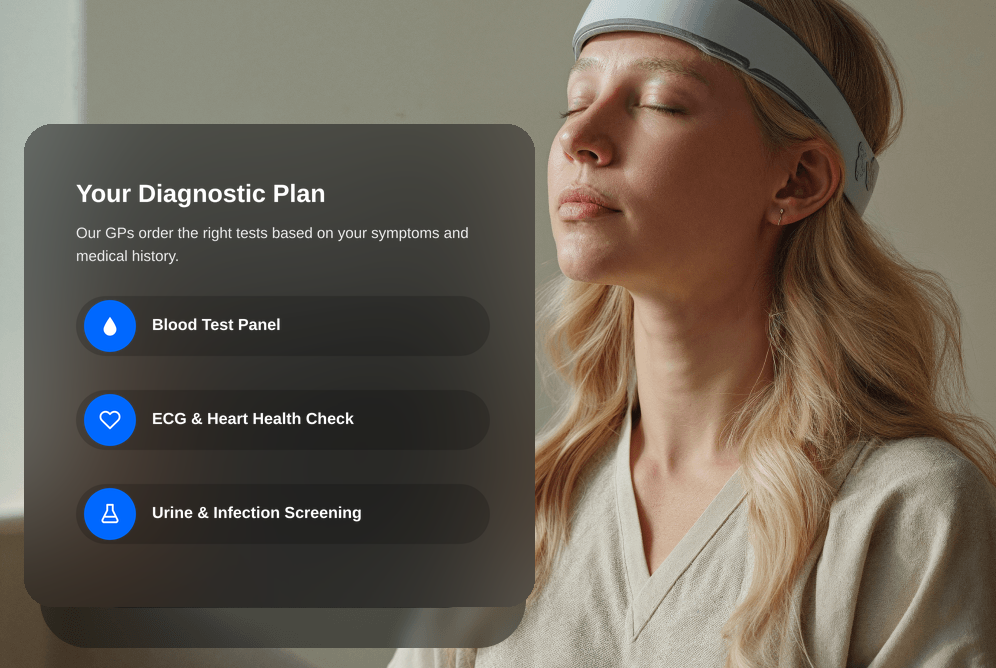
Diagnostic testing plan including blood test panel, ECG and urine screening
03

Tests and referrals, if you need them

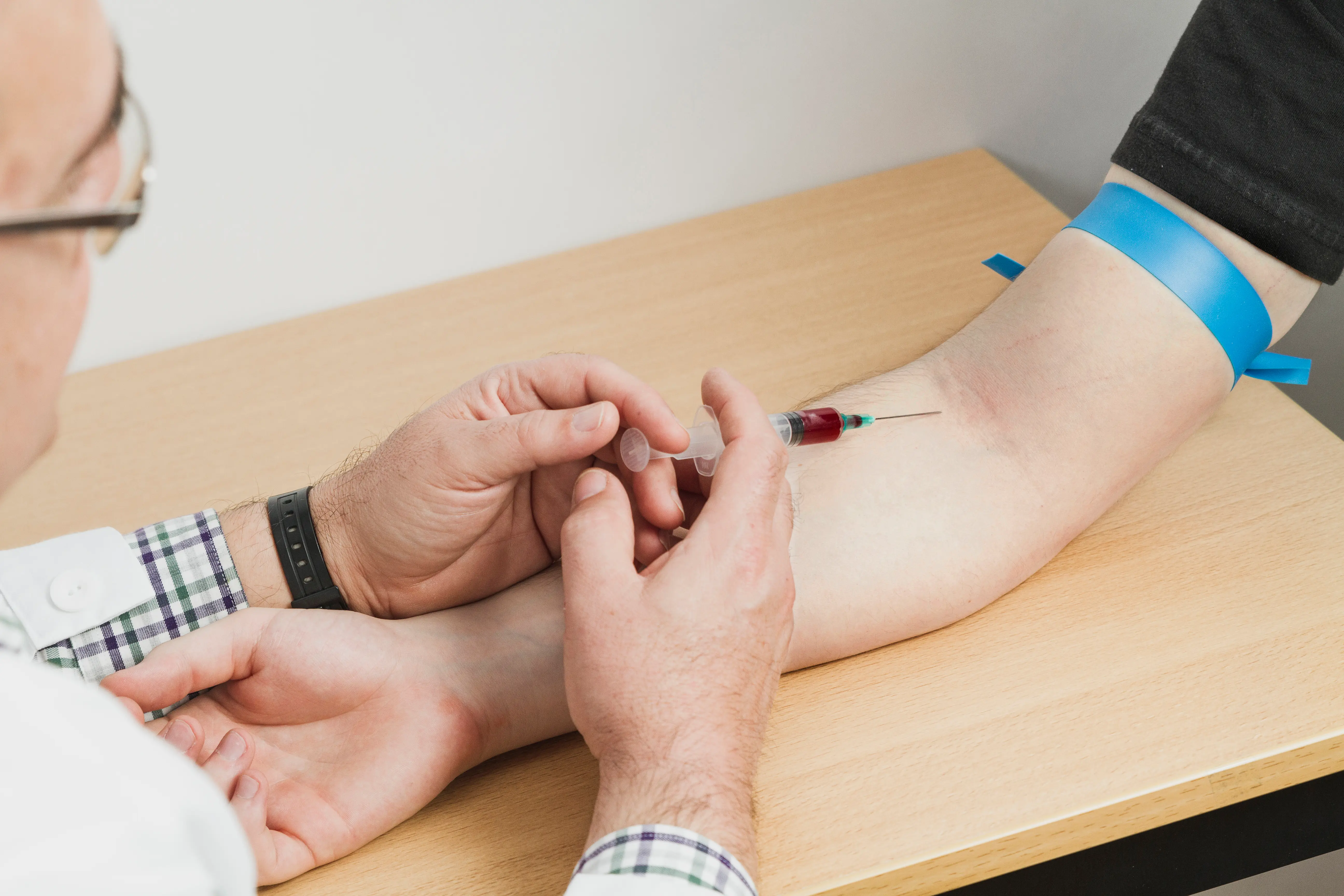
Where testing will actually answer the question, we arrange it — blood tests and health screening through our laboratory partner, or a referral for ultrasound, X-ray, CT or MRI through private imaging providers. We will also tell you when a scan is not the right next step.
1–7 days
Personalised results and treatment plan from a private GP consultation
04

Results and next steps

Your GP talks you through what the results mean and agrees the next step with you. Every consultation ends with your treatment plan in writing, and any prescription goes to your own pharmacy.
20 minutes
GP follow-up reminder for ongoing care and progress monitoring
05

Ongoing care and follow-up

Follow-up appointments, progress monitoring and ongoing advice — including saying plainly when something needs in-person or NHS care instead.

Ongoing

How we compare

Time to be seen

Appointment length

Your NHS record in the room

Written treatment plan

Told when a test isn’t needed

Cost

Varies by practice

Typically 10 minutes

Yes, your full record

Not routinely

Usually

Free

Same day

Often 10 to 15 minutes

Usually not

Sometimes charged

Varies by provider

Often a subscription

Questions about our service

How quickly can I be seen?

Same-day access is usually available, from 6am to 10pm, seven days a week. You choose a time that suits you rather than waiting on hold at 8am.

Will I see the same doctor each time?

Yes. Care is led personally by Dr Mohammad Khan, so you are not passed between clinicians. Continuity is the point of a small practice: someone who knows your history and is listening attentively rather than working through a checklist.

Can you see my NHS records?

Yes, with your consent. We can access your Summary Care Record during the consultation, so your current medications, allergies and significant history are in the room. That means fewer questions you have already answered elsewhere, and safer prescribing.

Are you trying to replace my NHS GP?

No. We are not here to replace GPs, only to support them. Your NHS practice remains responsible for your ongoing care, and with your consent we write to them after the consultation. We are useful when you need to be seen sooner, or want more time than a standard appointment allows.

What is included in the appointment?

Twenty unhurried minutes and a comprehensive assessment. A written treatment plan is included, along with any prescription, sick note or referral letter arising from the consultation, at no extra charge.

How much does it cost?

£40 for 20 minutes, self-pay. Membership is optional and never required. Priced for fairness, because we are not here to charge extortionate amounts for access to a doctor.

What does “treatable online” actually mean?

It means the diagnosis can usually be made from your history and photographs, and that treatment can be arranged safely without examining you. Where a condition is not marked treatable online, it is because examination is the diagnosis — listening to a chest, feeling an abdomen, examining an ear or a joint — or because a procedure or device is needed.

Can you prescribe antibiotics?

Yes, where there is a genuine bacterial infection — cellulitis, impetigo, bacterial urine infections, confirmed strep throat. We will also frequently tell you that you do not need one. Most sore throats, coughs, colds and earaches are viral, and an antibiotic gives you the side effects with none of the benefit.

What if the GP cannot help with what I need?

If your problem turns out to be genuinely outside what we can do remotely, the doctor will tell you straight away, point you to the right service, and refund your fee in full. We would rather do that than fill twenty minutes to justify the charge.

What should I do in an emergency?

Call 999 or go to A&E — do not book an online appointment and do not wait for a reply to an email. For urgent problems that are not emergencies, NHS 111 is available 24 hours a day, online or by phone, and can direct you to the right service.

Patient reviews

What our patients say

No reviews published yet.
Ready to see a GP?20 minutes with a GMC-registered doctor. £40, usually same day.
Book a consultation