Home

/

Conditions

/

Sleep & Fatigue

Sleep and fatigue icon - tiredness, dizziness and insomnia assessed by an online GP at Cheshire Clinics

Sleep & Fatigue

Insomnia, tiredness, sleep apnoea and low energy.

£40 · 20 minutes

Same-day availability

6am to 10pm, seven days

Assessed and treated by a GMC-registered GP

Prescriptions, sick notes and referral letters included

A written treatment plan after every appointment

Your NHS records in the room, with your consent

Clinically reviewed by Dr Mohammad Zubair Khan · Last reviewed

August 29, 2026

Book a consultation

A 20-minute appointment with a GMC-registered GP for £40. Same-day appointments are usually available, 6am to 10pm, seven days a week.

Private GP care led personally by Dr Mohammad Zubair Khan, GMC 7563469.

Why patients choose Cheshire Clinics

GMC registered doctors badge - every Cheshire Clinics consultation is with a General Medical Council registered GP

GMC-registered

Care led personally by Dr Khan

Royal College of General Practitioners badge - RCGP trained private GP consultations at Cheshire Clinics

RCGP-trained

Attentive, unhurried care that listens properly

Google five star reviews badge - Cheshire Clinics private GP online

Highly rated by patients

Five-star Google reviews from the people we have looked after

Care Quality Commission registered badge - Cheshire Clinics online GP service is registered with the CQC, England's independent regulator of health and social care

CQC-registered

Registered with the Care Quality Commission

Same-Day Appointments
Sick Notes
Private Prescriptions
Blood Tests
Menopause & HRT
Weight Management
Mental Health
Specialist Referrals
Same-Day Appointments
Sick Notes
Private Prescriptions
Blood Tests
Menopause & HRT
Weight Management
Mental Health
Specialist Referrals

Overview

"Tired all the time" is one of the commonest reasons people see a GP and one of the most frequently dismissed. Iron deficiency, thyroid disease, B12 deficiency and early diabetes all present this way long before anything else.

For insomnia specifically, the treatment with the best evidence is not a tablet — it is CBT for insomnia, which outperforms medication and keeps working after it stops.

What we can and cannot do

Where a proper look actually helps

  • The blood panel that explains most of it — thyroid, ferritin, B12, folate, vitamin D, full blood count, HbA1c, coeliac screening, inflammatory markers
  • CBT-I taught properly, which is the treatment for long-term insomnia with the best evidence — and it is not a tablet
  • A plan to come off sleeping tablets safely
  • Referral for a sleep study where apnoea is suspected
  • Treating what is found — iron, B12, thyroid

What we cannot do

  • Perform a sleep study, which is what diagnoses sleep apnoea. We assess and refer
  • Examine you, which matters where fatigue comes with signs rather than symptoms alone
  • Diagnose ME/CFS or long COVID, which need specialist services and the exclusion of everything else first

What we will not prescribe

Sleeping tablets — not remotely, as routine treatment for insomnia. They cause dependence and tolerance, stop working within weeks, increase falls and fractures, and impair driving the following day.

Declining is the correct clinical decision rather than an inconvenience, and the answer is the same at 9pm as at midday. If that is what you are looking for, please do not pay for an appointment.

Not sure which condition page you need?

Book a consultation
Important

When to see a GP

Needs assessing rather than enduring

  • Falling asleep while driving, or at the wheel at traffic lights. Stop driving and be assessed — there are legal as well as safety implications, and this is not something to push through
  • Loud snoring with witnessed pauses in breathing, or waking gasping or choking — sleep apnoea, which needs a sleep study rather than sleep advice
  • Fatigue with unexplained weight loss, night sweats, or a lump
  • Fatigue with breathlessness, chest pain or palpitations
  • Fatigue with unexplained bruising or bleeding, or looking pale

Worth an appointment

  • "Tired all the time" for more than a few weeks — one of the commonest reasons people see a GP and one of the most frequently dismissed
  • Being told your bloods were normal while still exhausted. Very often a fraction of the relevant markers were measured
  • Trouble falling or staying asleep most nights, with daytime function suffering
  • Wanting to come off sleeping tablets safely, which is genuinely difficult alone
  • An urge to move the legs at rest, relieved by moving — restless legs, often driven by low ferritin and readily treatable
  • Waking unrefreshed however long you sleep

The reframe worth making

"Tired all the time" is a symptom, not a diagnosis. Iron deficiency, thyroid disease, B12 deficiency, sleep apnoea, coeliac disease, perimenopause, depression and early diabetes all present this way — and all are findable.

It is dismissed far more often than it is investigated, and that is what this category exists to correct.

Self-care and free help

The best treatment for insomnia is free

CBT-I — cognitive behavioural therapy for insomnia — outperforms medication and keeps working after it stops, which medication does not. It is the recommended first-line treatment.

NHS Talking Therapies takes self-referrals in England — no GP letter, no charge — and many services offer CBT-I, alongside free digital programmes in parts of the country.

The rules that do most of the work

  • The same wake time every day, regardless of how the night went. The single most important one — and lying in after a bad night is what perpetuates the cycle
  • Out of bed if awake more than about twenty minutes. Somewhere else, dim light, back when sleepy
  • Bed for sleep and sex only — no working, scrolling or television
  • Spending less time in bed, not more. Counterintuitive, harder for the first fortnight, and the most effective component there is

The two cheapest diagnostic tests

Stop the nightcap for two weeks. Alcohol sends you to sleep and then fragments the second half of the night — for a fair number of people it is the entire explanation.

Ask whoever sleeps near you what your breathing does. Sleep apnoea is usually noticed by a partner before the person themselves, and it is badly under-diagnosed — particularly in women, where it presents as fatigue and insomnia rather than classic snoring.

Where not to spend money

  • Over-the-counter sleep aids. The sedating antihistamines in them build tolerance within days and leave next-day grogginess — and are best avoided over 65, where they raise falls and confusion risk
  • Sleep trackers, which estimate sleep stages unreliably and cause genuine sleep anxiety in people whose sleep was fine. How you function in the day is a better measure than any score
  • "Sleep formulas" and supplements, whose evidence does not approach that for CBT-I
  • Melatonin bought from overseas, where dose and content vary considerably from the label

Common questions

My bloods were normal but I am still exhausted.

Worth looking at what was actually measured rather than the word "normal".

Ferritin in particular: symptoms occur well below 30, and hair and restless legs often need it above 50 — well above the level a lab flags as low. Thyroid antibodies, B12, vitamin D and coeliac screening are frequently not included either.

Bring the actual numbers, which is why we ask for results rather than a summary.

Will you prescribe sleeping tablets?

Not as routine treatment for insomnia, and it is worth knowing before booking.

They cause dependence and tolerance, stop working within weeks, increase falls, and impair driving the next day. Declining is the correct clinical decision — and the answer is the same at 9pm as at midday.

What actually works for insomnia?

CBT-I. It outperforms medication in trials and keeps working after it stops, which medication does not — and it is free through NHS Talking Therapies on self-referral, no GP needed.

Why would spending less time in bed help?

Because lying awake trains your brain to associate bed with being awake. Sleep restriction compresses time in bed to roughly the time you actually sleep, consolidates it, then extends gradually.

It feels wrong, it is harder for the first fortnight, and it is the most effective component there is.

How do I know if it is sleep apnoea?

Loud snoring with witnessed pauses in breathing, waking gasping, waking unrefreshed, and heavy daytime sleepiness. A partner usually notices before you do.

It is badly under-diagnosed in women, in whom it presents more as fatigue and insomnia than as classic snoring — and it is a cardiovascular risk factor in its own right, not only a sleep problem.

Does alcohol help me sleep?

It gets you to sleep and then ruins the second half of the night, fragmenting sleep and suppressing REM.

Stopping the nightcap for two weeks is the cheapest diagnostic test available, and for a fair number of people it is the whole explanation.

Is my sleep tracker telling me anything useful?

Usually not, and it may be making things worse. Consumer trackers estimate sleep stages unreliably, and there is a recognised phenomenon of people developing genuine sleep anxiety from tracker data.

How you function in the day is the better measure.

Could it be perimenopause?

Very possibly, and it is routinely attributed to everything else. Broken sleep and 3am waking are among the earliest perimenopausal symptoms, often arriving years before flushes and before periods change.

What about ME/CFS or long COVID?

Both are real, and both are diagnoses of exclusion — which means the treatable causes should be properly ruled out first, and frequently are not.

Fatigue lasting beyond a few months warrants proper assessment rather than being labelled "post-viral" indefinitely, and specialist services exist for both.

I want to come off sleeping tablets.

One of the more valuable things we do — and never stop abruptly. With benzodiazepines or z-drugs, abrupt withdrawal can cause seizures.

Reduction is gradual and planned, combined with CBT-I, which is what makes it hold. Expect one to two weeks of rebound insomnia, which is not evidence you needed them.

Dr Mohammad Zubair Khan, GMC-registered private GP and founder of Cheshire Clinics

Clinically reviewed by Dr Mohammad Zubair Khan, GMC 7563469

Last reviewed

August 29, 2026

How it works

What happens when you book

£40 for a 20-minute appointment with a GMC-registered GP, 6am to 10pm, seven days a week. Membership is optional and never required.
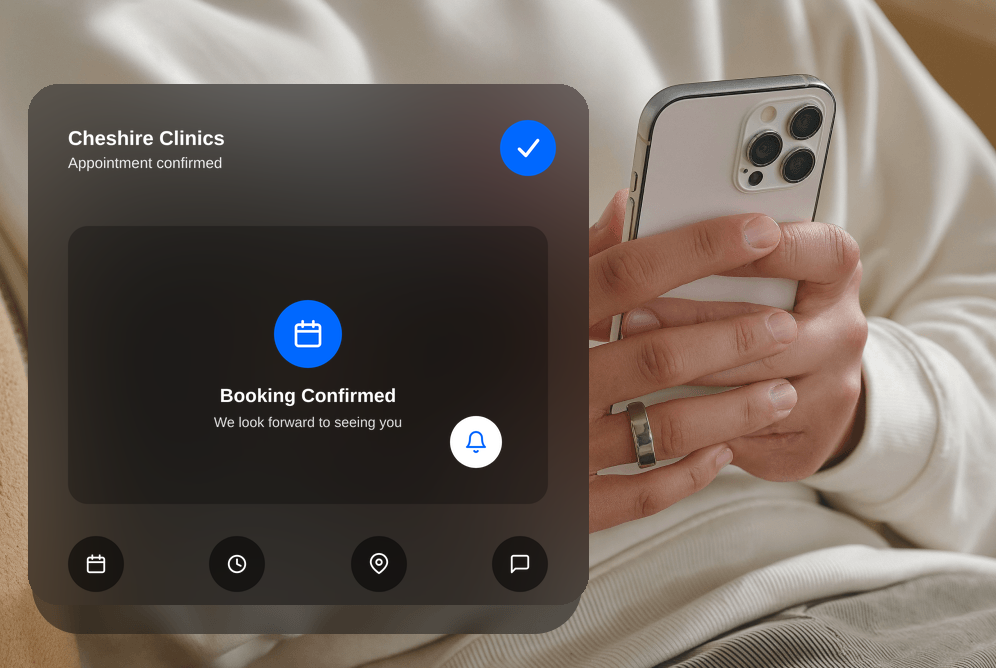
Cheshire Clinics online GP appointment booking confirmation on mobile
01

Book your appointment

Pick a time that suits you — 6am to 10pm, seven days a week, including weekends and bank holidays. £40 for 20 minutes, self-pay, with no insurance to arrange.
5–10 minutes
Online video consultation with a GMC-registered private GP
02

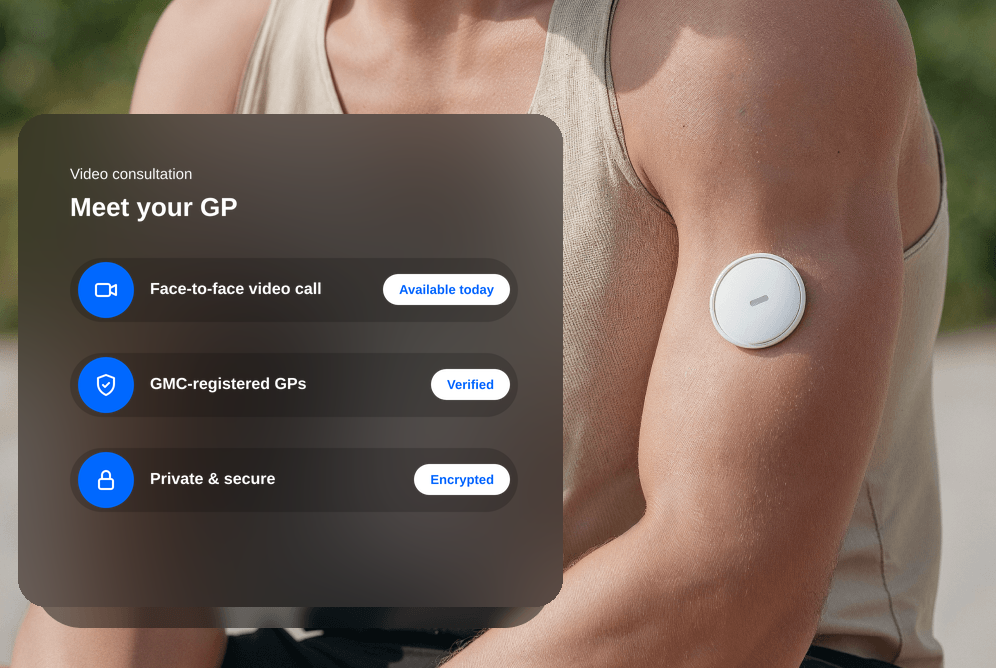
Meet your GP

A 20-minute video or phone consultation with a GMC-registered GP — long enough for a proper conversation about your symptoms, your history and what matters to you.
20 minutes
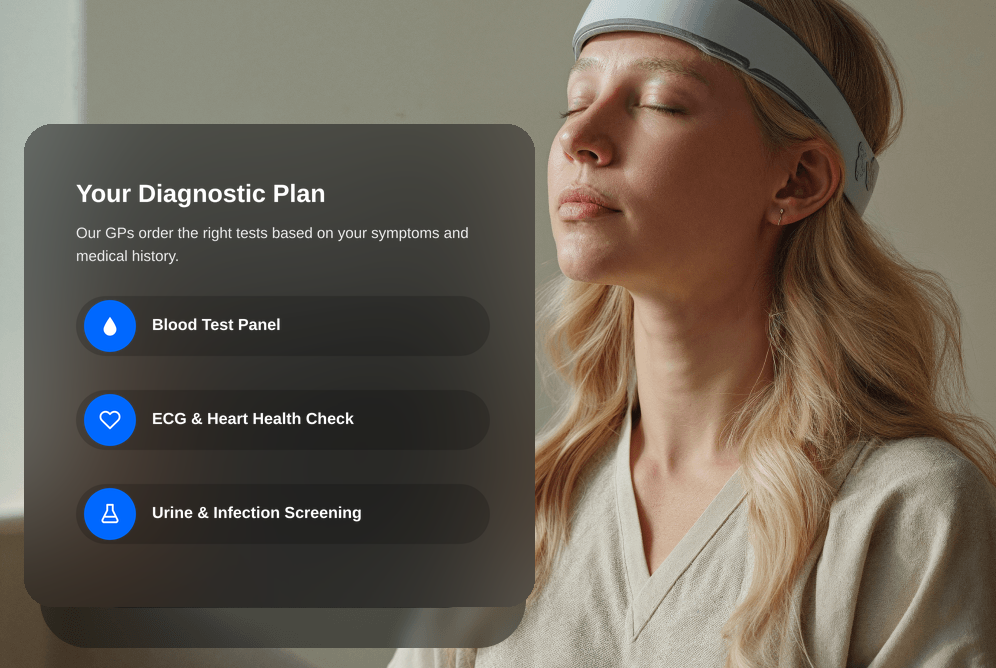
Diagnostic testing plan including blood test panel, ECG and urine screening
03

Tests and referrals, if you need them

Where testing will actually answer the question, we arrange it — blood tests and health screening through our laboratory partner, or a referral for ultrasound, X-ray, CT or MRI through private imaging providers. We will also tell you when a scan is not the right next step.
1–7 days
Personalised results and treatment plan from a private GP consultation
04

Results and next steps

Your GP talks you through what the results mean and agrees the next step with you. Every consultation ends with your treatment plan in writing, and any prescription goes to your own pharmacy.
20 minutes
GP follow-up reminder for ongoing care and progress monitoring
05

Ongoing care and follow-up

Follow-up appointments, progress monitoring and ongoing advice — including saying plainly when something needs in-person or NHS care instead.

Ongoing

How we compare

Time to be seen

Appointment length

Your NHS record in the room

Written treatment plan

Told when a test isn’t needed

Cost

Varies by practice

Typically 10 minutes

Yes, your full record

Not routinely

Usually

Free

Same day

Often 10 to 15 minutes

Usually not

Sometimes charged

Varies by provider

Often a subscription

Questions about our service

How quickly can I be seen?

Same-day access is usually available, from 6am to 10pm, seven days a week. You choose a time that suits you rather than waiting on hold at 8am.

Will I see the same doctor each time?

Yes. Care is led personally by Dr Mohammad Khan, so you are not passed between clinicians. Continuity is the point of a small practice: someone who knows your history and is listening attentively rather than working through a checklist.

Can you see my NHS records?

Yes, with your consent. We can access your Summary Care Record during the consultation, so your current medications, allergies and significant history are in the room. That means fewer questions you have already answered elsewhere, and safer prescribing.

Are you trying to replace my NHS GP?

No. We are not here to replace GPs, only to support them. Your NHS practice remains responsible for your ongoing care, and with your consent we write to them after the consultation. We are useful when you need to be seen sooner, or want more time than a standard appointment allows.

What is included in the appointment?

Twenty unhurried minutes and a comprehensive assessment. A written treatment plan is included, along with any prescription, sick note or referral letter arising from the consultation, at no extra charge.

How much does it cost?

£40 for 20 minutes, self-pay. Membership is optional and never required. Priced for fairness, because we are not here to charge extortionate amounts for access to a doctor.

What does “treatable online” actually mean?

It means the diagnosis can usually be made from your history and photographs, and that treatment can be arranged safely without examining you. Where a condition is not marked treatable online, it is because examination is the diagnosis — listening to a chest, feeling an abdomen, examining an ear or a joint — or because a procedure or device is needed.

Can you prescribe antibiotics?

Yes, where there is a genuine bacterial infection — cellulitis, impetigo, bacterial urine infections, confirmed strep throat. We will also frequently tell you that you do not need one. Most sore throats, coughs, colds and earaches are viral, and an antibiotic gives you the side effects with none of the benefit.

What if the GP cannot help with what I need?

If your problem turns out to be genuinely outside what we can do remotely, the doctor will tell you straight away, point you to the right service, and refund your fee in full. We would rather do that than fill twenty minutes to justify the charge.

What should I do in an emergency?

Call 999 or go to A&E — do not book an online appointment and do not wait for a reply to an email. For urgent problems that are not emergencies, NHS 111 is available 24 hours a day, online or by phone, and can direct you to the right service.

Patient reviews

What our patients say

No reviews published yet.
Ready to see a GP?20 minutes with a GMC-registered doctor. £40, usually same day.
Book a consultation