Home

/

Treatments

/

B12 Injections

B12 Injections

Test before you supplement. Taking B12 first makes the deficiency untestable and can mask a serious cause.

From £40

Everyday & Long-Term

Assessed and prescribed by a GMC-registered GP

Prescriptions sent electronically to a pharmacy

Monitoring and follow-up included where it is needed

Your NHS records in the room, with your consent

Clinically reviewed by Dr Mohammad Khan · Last reviewed

August 23, 2026

Book a consultation

A 20-minute appointment with a GMC-registered GP for £40. Same-day appointments are usually available, 6am to 10pm, seven days a week.

Private GP care led personally by Dr Mohammad Zubair Khan, GMC 7563469.

Why patients choose Cheshire Clinics

GMC registered doctors badge - every Cheshire Clinics consultation is with a General Medical Council registered GP

GMC-registered

Care led personally by Dr Khan

Royal College of General Practitioners badge - RCGP trained private GP consultations at Cheshire Clinics

RCGP-trained

Attentive, unhurried care that listens properly

Google five star reviews badge - Cheshire Clinics private GP online

Highly rated by patients

Five-star Google reviews from the people we have looked after

Care Quality Commission registered badge - Cheshire Clinics online GP service is registered with the CQC, England's independent regulator of health and social care

CQC-registered

Registered with the Care Quality Commission

Same-Day Appointments
Sick Notes
Private Prescriptions
Blood Tests
Menopause & HRT
Weight Management
Mental Health
Specialist Referrals
Same-Day Appointments
Sick Notes
Private Prescriptions
Blood Tests
Menopause & HRT
Weight Management
Mental Health
Specialist Referrals

Overview

B12 deficiency causes fatigue, pins and needles, poor memory, mouth ulcers, a sore tongue and low mood. Left long enough it causes nerve damage that does not fully reverse, which is why it is worth taking seriously rather than treating as a vague tiredness complaint.

The single most useful thing we can tell you: get tested before you start supplementing. Over-the-counter B12 normalises the blood level within days while leaving the underlying cause — which may be pernicious anaemia — undiagnosed and untreated.

What it is

Hydroxocobalamin injections are the UK standard for deficiency caused by absorption failure. Loading doses are given every other day for two weeks, then maintenance every 8–12 weeks, usually for life.

Where nerve symptoms are present, loading continues until improvement stops — a detail routinely omitted.

High-dose oral B12 is effective for dietary deficiency and, at high enough doses, for some absorption problems too. It is not appropriate for pernicious anaemia with neurological signs.

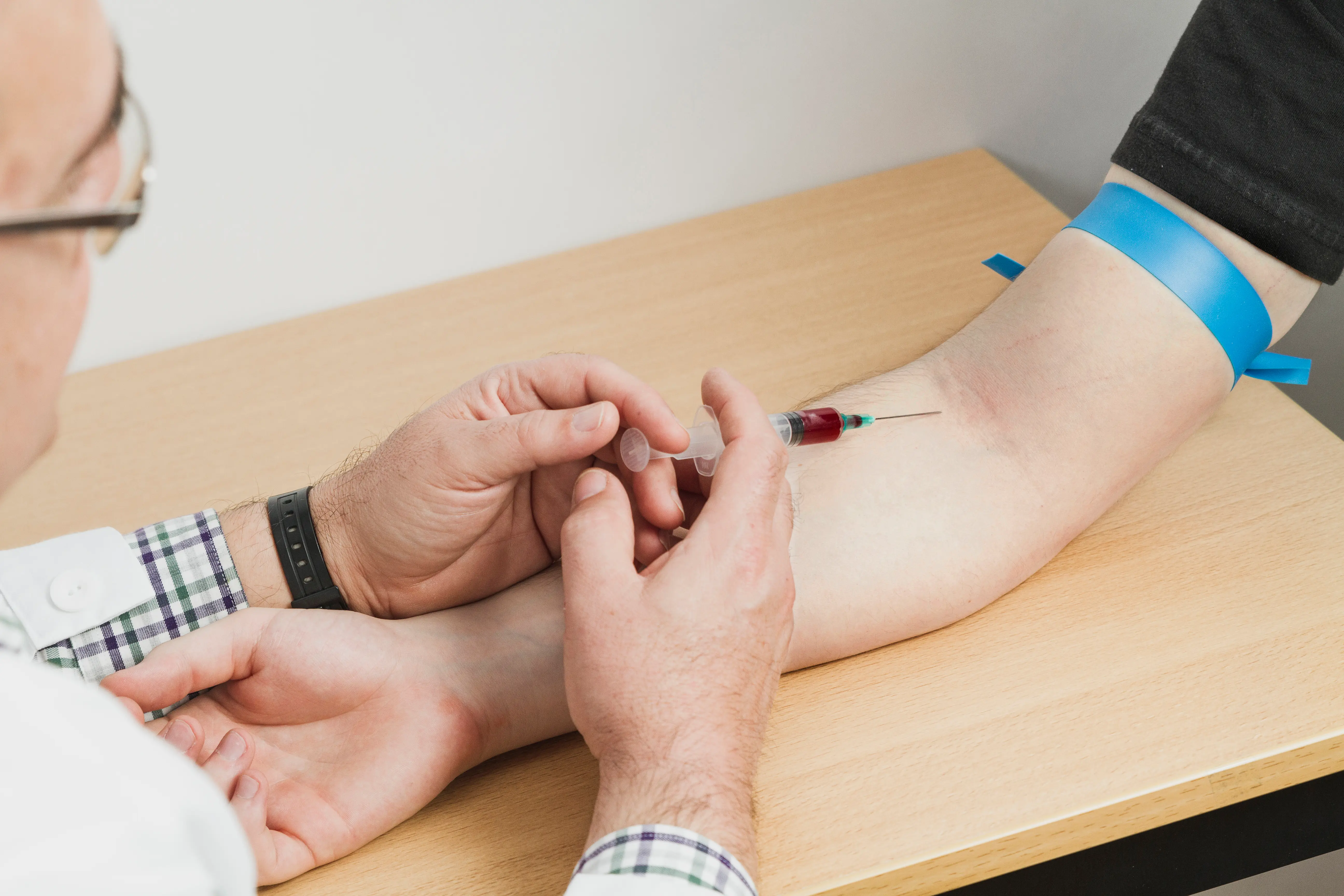
Injections are given by a nurse or, where suitable, self-administered after training. We prescribe and arrange; we do not administer injections ourselves, as we are a remote service.

Who it's suitable for

  • Anyone with a confirmed low B12
  • People with pernicious anaemia — an autoimmune condition and the classic cause
  • Vegans and long-term strict vegetarians
  • People on metformin long term — it reduces B12 absorption and this is under-monitored
  • People on long-term omeprazole or similar — stomach acid is needed to release B12 from food
  • People who have had stomach or bowel surgery, or who have coeliac disease or Crohn's
  • Anyone already on injections whose symptoms return well before the next one is due

How treatment works

1. Test first

B12 and folate with a full blood count. Where B12 is borderline, an active B12 or methylmalonic acid level distinguishes real deficiency from a low-normal reading — borderline results are common and frequently dismissed.

2. Find the cause

Intrinsic factor antibodies to test for pernicious anaemia, coeliac screening, and a proper medication and diet history. This determines whether treatment is lifelong.

3. Check folate and iron together

They interact. Treating folate deficiency while B12 is still low can worsen neurological damage — B12 is always corrected first.

4. Treat and review

Prescription for loading and maintenance, and a review of whether the interval actually suits you.

Ready to start treatment?

Book a consultation

What's included

  • 20-minute consultation with a GMC-registered GP
  • B12, folate, full blood count and, where needed, active B12
  • Intrinsic factor antibodies and coeliac screening where indicated
  • Thyroid function checked, as autoimmune conditions cluster
  • Private prescription for hydroxocobalamin
  • A written plan for loading, maintenance and monitoring

Safety and side effects

B12 is water-soluble and excess is excreted, so it is a very safe treatment. There is no meaningful risk of taking too much.

Injections can cause soreness at the site, and occasionally mild nausea, dizziness or a transient rash. True allergy to hydroxocobalamin is rare but recognised.

Potassium can fall in the first days of treating severe deficiency, as new red cells are produced rapidly. This matters mainly in profound deficiency and is monitored.

Do not expect nerve symptoms to resolve immediately. Improvement over weeks to months is normal, and damage present for a long time may not fully reverse.

Not suitable if

  • You have a known allergy to hydroxocobalamin or cobalt
  • You have Leber's optic atrophy — hydroxocobalamin is avoided

If you have already started B12 supplements, tell us. The blood test will be falsely reassuring, and we will need to interpret it differently or look at the cause directly.

Monitoring and follow-up

The regimen

  • Loading: every other day for two weeks
  • Where nerve symptoms are present, loading continues until improvement stops — a detail routinely omitted, and one that matters
  • Maintenance: every 8–12 weeks, usually for life

What to expect, and when

  • Energy and mood often improve within weeks
  • Nerve symptoms take much longer — weeks to months — and damage present for a long time may not fully reverse. That is precisely why delay matters
  • Blood levels will be high after injections and that is expected. Retesting B12 once treatment has started tells you nothing useful

Once on treatment, the level is not what is monitored

Symptoms are. Full blood count is checked to confirm the response, but repeat B12 levels on treatment are uninformative — and any service selling you regular B12 panels while you are having injections is selling tests.

If symptoms return before the next injection is due

Say so — it is a common and legitimate complaint. Some people genuinely do not last twelve weeks, and the interval can be reviewed.

It is also worth checking the obvious alternatives first: iron, folate, thyroid and vitamin D, which cause identical symptoms and frequently coexist.

Two safety points

  • Potassium can fall in the first days of treating severe deficiency, as new red cells are produced rapidly. This matters mainly in profound deficiency and is monitored
  • Folate is never corrected before B12. Treating folate deficiency while B12 is still low can worsen neurological damage — B12 comes first, always

Who gives the injection

A nurse, or you, after training — self-administration is well established and suits many people.

We prescribe and arrange; we do not administer injections ourselves, since we are a remote service. That is stated plainly so nobody books expecting otherwise.

Where treatment is lifelong

Pernicious anaemia and post-surgical absorption failure mean injections for life. Dietary deficiency does not — it responds to oral treatment and a change of diet, which is one reason establishing the cause matters.

Alternatives

Test before you supplement — the single most useful thing here

Over-the-counter B12 normalises the blood level within days while leaving the cause undiagnosed. If that cause is pernicious anaemia, you have hidden an autoimmune condition needing lifelong treatment.

If you have already started supplements, tell us — the test will be falsely reassuring and needs interpreting differently.

High-dose oral B12

Effective for dietary deficiency, and at high enough doses for some absorption problems too — a portion of B12 is absorbed passively, without needing intrinsic factor.

It is not appropriate for pernicious anaemia with neurological signs, where injections remain the standard. High-dose oral B12 is cheap and available over the counter, and where it is suitable, it is the simpler route.

Causes worth identifying

  • Pernicious anaemia — autoimmune, the classic cause, and confirmed by intrinsic factor antibodies
  • Metformin, taken long term — it reduces B12 absorption, and this is badly under-monitored
  • Omeprazole and similar, long term — stomach acid is needed to release B12 from food
  • Stomach or bowel surgery, coeliac disease, and Crohn's
  • Vegan and strict vegetarian diets, where oral supplementation is the answer and should be routine
  • Nitrous oxide use, which inactivates B12 and causes a severe, sometimes irreversible neurological deficiency. It is increasingly seen in younger people and is worth mentioning without embarrassment

What else causes the same symptoms

Iron deficiency, folate deficiency, thyroid disease, vitamin D deficiency and coeliac disease all produce fatigue, poor concentration and low mood — and they frequently coexist with B12 deficiency. Treating one and leaving the others is why people improve only partly.

What to be wary of

  • Private clinics offering B12 injections as a "wellness" or energy boost, without testing. If you are not deficient, they do nothing, and they obscure any future test
  • B12 patches and sprays, whose absorption claims are not well supported
  • Buying hydroxocobalamin online to self-inject without a diagnosis or monitoring

Costs explained

What you pay us

  • £40 for the consultation
  • B12, folate and full blood count, quoted before arranging — plus active B12 where the result is borderline, and intrinsic factor antibodies and coeliac screening where indicated
  • £40 for review

What you pay elsewhere

  • Hydroxocobalamin itself is inexpensive, and we earn nothing from what is prescribed
  • The administration. A nurse appointment, or self-administration after training, which many people find both cheaper and more convenient

We prescribe and arrange but do not administer injections, so factor that in before booking.

The NHS route matters here

B12 injections for confirmed deficiency are provided free on the NHS, and pernicious anaemia qualifies you for a medical exemption certificate in England — making all your NHS prescriptions free.

If you are registered with a GP, that is the better route for what is usually lifelong treatment, and we will say so.

Where the appointment earns its money

The diagnosis, not the injection.

  • Interpreting a borderline result properly — active B12 or methylmalonic acid distinguishes real deficiency from a low-normal reading, and borderline results are commonly dismissed
  • Testing intrinsic factor antibodies, which determines whether this is lifelong
  • Checking folate, iron and thyroid together, and correcting them in the right order

Where not to spend money

  • "Wellness" B12 injections without testing. If you are not deficient they do nothing, and they make any future test uninterpretable
  • B12 patches and sprays
  • Repeat B12 blood levels while on injections, which are always high and tell you nothing. Anyone selling those is selling tests

We sell nothing — no injections, no supplements, no packages.

Common questions

Should I start B12 supplements while I wait for a test?

No — and this is the most useful thing on the page.

Over-the-counter B12 normalises the blood level within days, which means a test taken afterwards looks reassuring while the underlying cause — possibly pernicious anaemia, needing lifelong treatment — goes undiagnosed.

Test first. If you have already started, tell us.

My B12 is borderline. Does that count?

Possibly, and borderline results are commonly dismissed when they should not be.

An active B12 or methylmalonic acid level distinguishes genuine deficiency from a low-normal reading — particularly where symptoms fit. Symptoms matter alongside the number.

Why injections rather than tablets?

Because in pernicious anaemia and after stomach or bowel surgery, the problem is absorption — tablets cannot get in reliably.

Where the cause is dietary, high-dose oral B12 works perfectly well, and it is cheap and available over the counter. Establishing the cause is what determines which you need.

How long until I feel better?

Energy and mood often improve within weeks. Nerve symptoms take weeks to months, and improve gradually.

Damage present for a long time may not fully reverse, which is why B12 deficiency is worth treating promptly rather than watching.

Will I need injections for life?

Usually yes for pernicious anaemia or after surgery affecting absorption. Dietary deficiency does not require lifelong injections — it responds to oral treatment and a change of diet.

That is another reason the cause matters.

My symptoms come back before the next injection is due.

A common and legitimate complaint — say so. Some people genuinely do not last twelve weeks, and the interval can be reviewed.

It is also worth checking iron, folate, thyroid and vitamin D, which cause identical symptoms and frequently coexist — people often attribute residual fatigue to the B12 interval when something else is contributing.

Do you give the injections?

No — we are a remote service. We prescribe and arrange.

Administration is by a nurse, or self-administered after training, which is well established and suits many people. It is worth knowing this before booking.

I take metformin. Should I be checked?

Yes — long-term metformin reduces B12 absorption, and this is badly under-monitored. Anyone on it for years with fatigue, pins and needles or poor concentration should have their B12 checked.

The same applies to long-term omeprazole and similar acid-suppressing medicines.

Can you take too much B12?

No, in any meaningful sense. B12 is water-soluble and excess is excreted, which makes it a very safe treatment.

Injections can cause soreness at the site and occasionally mild nausea or a transient rash. True allergy is rare.

Should I have my B12 rechecked while on treatment?

No — it will be high, and it tells you nothing. Once on injections, treatment is monitored on symptoms and on the full blood count.

Any service selling regular B12 panels while you are having injections is selling tests.

Are "wellness" B12 injections worth it?

Not if you are not deficient — they do nothing. And they make any subsequent test uninterpretable, which can delay a real diagnosis.

Get tested first. If you are deficient, treatment is inexpensive and often free on the NHS.

I use nitrous oxide recreationally. Does that matter?

Yes, considerably — and please say so, without worrying about the reaction.

Nitrous oxide inactivates B12 and can cause severe, sometimes irreversible nerve damage, and it is increasingly seen in younger people. Knowing about it changes both the urgency and the treatment.

Dr Mohammad Zubair Khan, GMC-registered private GP and founder of Cheshire Clinics

Clinically reviewed by Dr Mohammad Zubair Khan, GMC 7563469

Last reviewed

August 23, 2026

How it works

What happens when you book

£40 for a 20-minute appointment with a GMC-registered GP, 6am to 10pm, seven days a week. Membership is optional and never required.
Cheshire Clinics online GP appointment booking confirmation on mobile
01

Book your appointment

Pick a time that suits you — 6am to 10pm, seven days a week, including weekends and bank holidays. £40 for 20 minutes, self-pay, with no insurance to arrange.
5–10 minutes
Online video consultation with a GMC-registered private GP
02

Meet your GP

A 20-minute video or phone consultation with a GMC-registered GP — long enough for a proper conversation about your symptoms, your history and what matters to you.
20 minutes
Diagnostic testing plan including blood test panel, ECG and urine screening
03

Tests and referrals, if you need them

Where testing will actually answer the question, we arrange it — blood tests and health screening through our laboratory partner, or a referral for ultrasound, X-ray, CT or MRI through private imaging providers. We will also tell you when a scan is not the right next step.
1–7 days
Personalised results and treatment plan from a private GP consultation
04

Results and next steps

Your GP talks you through what the results mean and agrees the next step with you. Every consultation ends with your treatment plan in writing, and any prescription goes to your own pharmacy.
20 minutes
GP follow-up reminder for ongoing care and progress monitoring
05

Ongoing care and follow-up

Follow-up appointments, progress monitoring and ongoing advice — including saying plainly when something needs in-person or NHS care instead.

Ongoing

How we compare

Time to be seen

Appointment length

Your NHS record in the room

Written treatment plan

Told when a test isn’t needed

Cost

Varies by practice

Typically 10 minutes

Yes, your full record

Not routinely

Usually

Free

Same day

Often 10 to 15 minutes

Usually not

Sometimes charged

Varies by provider

Often a subscription

Questions about our service

How quickly can I be seen?

Same-day access is usually available, from 6am to 10pm, seven days a week. You choose a time that suits you rather than waiting on hold at 8am.

Will I see the same doctor each time?

Yes. Care is led personally by Dr Mohammad Khan, so you are not passed between clinicians. Continuity is the point of a small practice: someone who knows your history and is listening attentively rather than working through a checklist.

Can you see my NHS records?

Yes, with your consent. We can access your Summary Care Record during the consultation, so your current medications, allergies and significant history are in the room. That means fewer questions you have already answered elsewhere, and safer prescribing.

Are you trying to replace my NHS GP?

No. We are not here to replace GPs, only to support them. Your NHS practice remains responsible for your ongoing care, and with your consent we write to them after the consultation. We are useful when you need to be seen sooner, or want more time than a standard appointment allows.

What is included in the appointment?

Twenty unhurried minutes and a comprehensive assessment. A written treatment plan is included, along with any prescription, sick note or referral letter arising from the consultation, at no extra charge.

How much does it cost?

£40 for 20 minutes, self-pay. Membership is optional and never required. Priced for fairness, because we are not here to charge extortionate amounts for access to a doctor.

What does “treatable online” actually mean?

It means the diagnosis can usually be made from your history and photographs, and that treatment can be arranged safely without examining you. Where a condition is not marked treatable online, it is because examination is the diagnosis — listening to a chest, feeling an abdomen, examining an ear or a joint — or because a procedure or device is needed.

Can you prescribe antibiotics?

Yes, where there is a genuine bacterial infection — cellulitis, impetigo, bacterial urine infections, confirmed strep throat. We will also frequently tell you that you do not need one. Most sore throats, coughs, colds and earaches are viral, and an antibiotic gives you the side effects with none of the benefit.

What if the GP cannot help with what I need?

If your problem turns out to be genuinely outside what we can do remotely, the doctor will tell you straight away, point you to the right service, and refund your fee in full. We would rather do that than fill twenty minutes to justify the charge.

What should I do in an emergency?

Call 999 or go to A&E — do not book an online appointment and do not wait for a reply to an email. For urgent problems that are not emergencies, NHS 111 is available 24 hours a day, online or by phone, and can direct you to the right service.

Patient reviews

What our patients say

No reviews published yet.
Ready to see a GP?20 minutes with a GMC-registered doctor. £40, usually same day.
Book a consultation