Home

/

Symptoms

/

Lumps and Swellings

Can signal something serious

Lumps and Swellings

The features that matter are how fast it appeared, whether it moves, and whether it hurts.

found a lump, swollen gland, new lump, lump under skin

£40 · 20 minutes

Same-day availability

Assessed by a GMC-registered GP, not a symptom checker

Honest about what needs to be seen in person

Tests and referrals arranged where they are needed

Your NHS records in the room, with your consent

Clinically reviewed by Dr Mohammad Khan · Last reviewed

August 23, 2026

Book a consultation

A 20-minute appointment with a GMC-registered GP for £40. Same-day appointments are usually available, 6am to 10pm, seven days a week.

Private GP care led personally by Dr Mohammad Zubair Khan, GMC 7563469.

Why patients choose Cheshire Clinics

GMC registered doctors badge - every Cheshire Clinics consultation is with a General Medical Council registered GP

GMC-registered

Care led personally by Dr Khan

Royal College of General Practitioners badge - RCGP trained private GP consultations at Cheshire Clinics

RCGP-trained

Attentive, unhurried care that listens properly

Google five star reviews badge - Cheshire Clinics private GP online

Highly rated by patients

Five-star Google reviews from the people we have looked after

Care Quality Commission registered badge - Cheshire Clinics online GP service is registered with the CQC, England's independent regulator of health and social care

CQC-registered

Registered with the Care Quality Commission

Same-Day Appointments
Sick Notes
Private Prescriptions
Blood Tests
Menopause & HRT
Weight Management
Mental Health
Specialist Referrals
Same-Day Appointments
Sick Notes
Private Prescriptions
Blood Tests
Menopause & HRT
Weight Management
Mental Health
Specialist Referrals
Important

When to get urgent help

Arrange prompt assessment for a lump that is:

  • Growing, or has changed
  • Hard, fixed in place, and painless
  • In the breast — any new breast lump, in a woman or a man
  • In a testicle — see testicular lumps
  • In the neck, lasting more than three weeks
  • Accompanied by night sweats, unexplained weight loss or fever
  • Associated with a mole that has changed shape, colour or size

Go to A&E for a rapidly spreading, hot, red swelling with fever, or any swelling causing difficulty breathing or swallowing.

Sudden severe testicular pain needs A&E immediately — torsion is only salvageable within about six hours.

Overview

Finding a lump is frightening, and most lumps are harmless — cysts, lipomas, reactive lymph nodes after an infection.

The features that distinguish them are reasonably consistent. Reassuring: soft, mobile under the skin, appeared quickly, tender, and changing in size. Less reassuring: hard, fixed, painless, and slowly growing.

Those are guides, not guarantees, which is why a lump is assessed rather than watched from home.

What it could be

Very common and benign

  • Lipoma — a soft, mobile fatty lump under the skin. Harmless
  • Sebaceous or epidermoid cyst — a smooth lump, sometimes with a central punctum, occasionally becoming inflamed
  • Reactive lymph nodes — tender swollen glands in the neck, armpit or groin after an infection. Should settle within weeks
  • Skin tags, warts and molluscum

Site-specific

  • Neck — thyroid nodules, salivary gland swelling, persistent lymph nodes
  • Breast — fibroadenomas and cysts are common and benign; every new breast lump is nonetheless assessed
  • Groin — hernias, which bulge on coughing or standing
  • Testicle — cysts, varicoceles, hydroceles, and testicular cancer, which is the commonest cancer in men aged 15 to 45 and highly curable when found early

What you can do now

Measure it and date it — today

What matters clinically is not how big a lump is, but whether it is changing. That can only be judged against a starting point, and memory is unreliable.

  • Compare it to something concrete — a pea, a grape, a 5p coin, a golf ball. Write it down with the date
  • Photograph it with a coin beside it for scale. This is genuinely useful at a video consultation and takes ten seconds
  • Note where exactly it is, and whether there is one or several

Note what it feels like

These four things do most of the diagnostic work:

  • Soft and squashy, or hard? Soft and rubbery is usually benign; stony hard is more significant
  • Does it move under the skin, or feel stuck down? A lump fixed to deeper tissue matters more than a mobile one
  • Painful or painless? Painful lumps are more often infection or inflammation. Painless is not reassuring
  • Any change in the skin over it — redness, dimpling, tethering, ulceration, or a discharge

Leave it alone

  • Stop repeatedly prodding and squeezing it. This is almost universal and it genuinely makes things worse — it inflames the tissue, makes the lump feel larger and more tender, and makes your own week-to-week comparison meaningless
  • Do not try to squeeze, pop or drain anything. An infected cyst treated this way becomes an abscess
  • Do not apply heat, drawing ointments or online remedies for weeks in the hope it goes. That time is the only thing you cannot get back

Where lumps are worth actively checking

  • Testicles — check monthly in a warm shower, rolling each between thumb and fingers. Any painless firm lump in a testicle needs same-week assessment. Testicular cancer overwhelmingly affects younger men, and is one of the most curable cancers there is
  • Breasts — in anyone, of any sex. Look as well as feel: dimpling, nipple change and skin puckering matter as much as a lump
  • Neck, armpit and groin — note whether it followed an obvious infection

The rough timescale

A lump that came up with a cold or sore throat and is shrinking after two or three weeks is behaving as it should. A lump that has not settled after three weeks, or that is growing at all, needs looking at rather than watching.

Not sure what is causing it?

Book a consultation

How we assess it

We will be direct about the limitation: a lump ultimately needs to be felt. A remote consultation cannot palpate it, and pretending otherwise would be unsafe.

What we can do is take a careful history — how long, how fast, whether it moves, whether it hurts, associated symptoms — look at clear photographs, and decide urgency and route quickly, which is often the thing that actually matters.

We arrange ultrasound, which is the usual first investigation for a soft-tissue, testicular or neck lump, alongside blood count and inflammatory markers where indicated, and provide an urgent referral letter the same day where the picture warrants it.

For breast lumps and any lump with concerning features, we will recommend your NHS GP, because the two-week-wait pathway is NHS only and is the right route.

Common questions

How long should I leave a lump before getting it checked?

Three weeks is the usual dividing line. A tender lump in the neck, armpit or groin that appeared alongside an infection and is getting smaller is behaving normally. Anything still present after three weeks, growing, hard, fixed in place, or painless, should be assessed rather than watched.

Two exceptions that should not wait three weeks at all: a lump in a testicle, and a new breast lump.

It doesn't hurt. Isn't that a good sign?

No — and this is the most common misunderstanding about lumps. Pain usually indicates infection or inflammation, both of which tend to be benign and self-limiting. The concerning pattern is the opposite: a painless, hard, gradually enlarging lump that is fixed to what lies beneath it. "It doesn't hurt, so I left it" is a familiar sentence in cancer clinics.

Can I just keep an eye on it?

Watching is reasonable for a short defined period with a clear end date — not indefinitely, and not by repeatedly feeling it, which inflames the area and destroys your own comparison. Set a date three weeks out. If it has not gone by then, get it looked at rather than resetting the clock.

Is it just a cyst?

Very possibly. Sebaceous cysts (soft, mobile, often with a small central dot, sometimes discharging cheesy material) and lipomas (soft, rubbery, doughy fatty lumps that move easily) are extremely common and entirely benign. Both can be left alone or removed if they bother you. What distinguishes them is that they are soft and mobile — a hard, fixed lump is not one of these.

I always get lumps in my neck when I'm ill.

That is reactive lymph node enlargement, and it is exactly what lymph nodes are for. They swell during infection and shrink afterwards. The pattern that matters is a node that keeps growing, is rubbery-hard and painless, sits above the collarbone, or comes with night sweats, fever or weight loss.

I've found a lump in my testicle.

Get it assessed this week — do not wait. Most testicular lumps are benign cysts, but testicular cancer is the commonest cancer in men aged 15–45 and it is highly curable when caught early. It is typically painless, which is exactly why it gets left. An ultrasound settles it quickly.

What about a lump in the groin?

Common causes are enlarged lymph nodes and hernias. A groin lump that bulges when you cough or strain and disappears when you lie down is usually a hernia — which needs a surgical opinion, but not urgently. A groin lump that becomes hard, exquisitely painful and cannot be pushed back is an emergency, because a hernia can strangulate.

What happens at the assessment?

The consultation establishes the history — how long, whether it is changing, whether anything preceded it, and whether there are other symptoms — and the site and behaviour of the lump usually narrow it considerably. We can arrange blood tests and an ultrasound, which is the single most useful investigation for most lumps, and refer where needed.

What we cannot do is feel it, and for lumps that is a real limitation — the texture and mobility of a lump carry a lot of information. We will say so where examination is what decides it, rather than working around it.

Dr Mohammad Zubair Khan, GMC-registered private GP and founder of Cheshire Clinics

Clinically reviewed by Dr Mohammad Zubair Khan, GMC 7563469

Last reviewed

August 23, 2026

How it works

What happens when you book

£40 for a 20-minute appointment with a GMC-registered GP, 6am to 10pm, seven days a week. Membership is optional and never required.
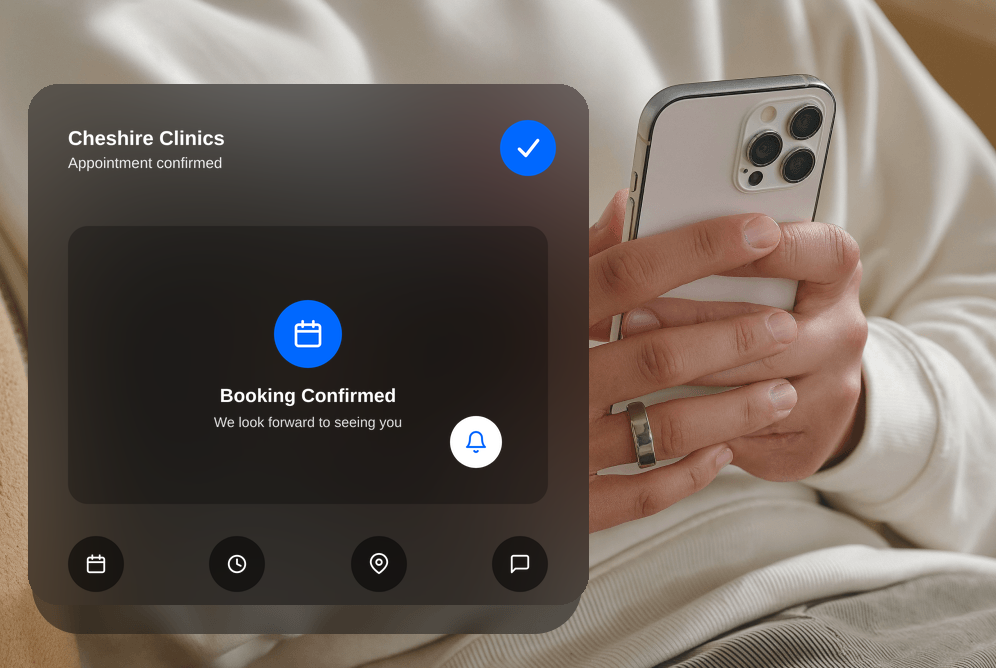
Cheshire Clinics online GP appointment booking confirmation on mobile
01

Book your appointment

Pick a time that suits you — 6am to 10pm, seven days a week, including weekends and bank holidays. £40 for 20 minutes, self-pay, with no insurance to arrange.
5–10 minutes
Online video consultation with a GMC-registered private GP
02

Meet your GP

A 20-minute video or phone consultation with a GMC-registered GP — long enough for a proper conversation about your symptoms, your history and what matters to you.
20 minutes
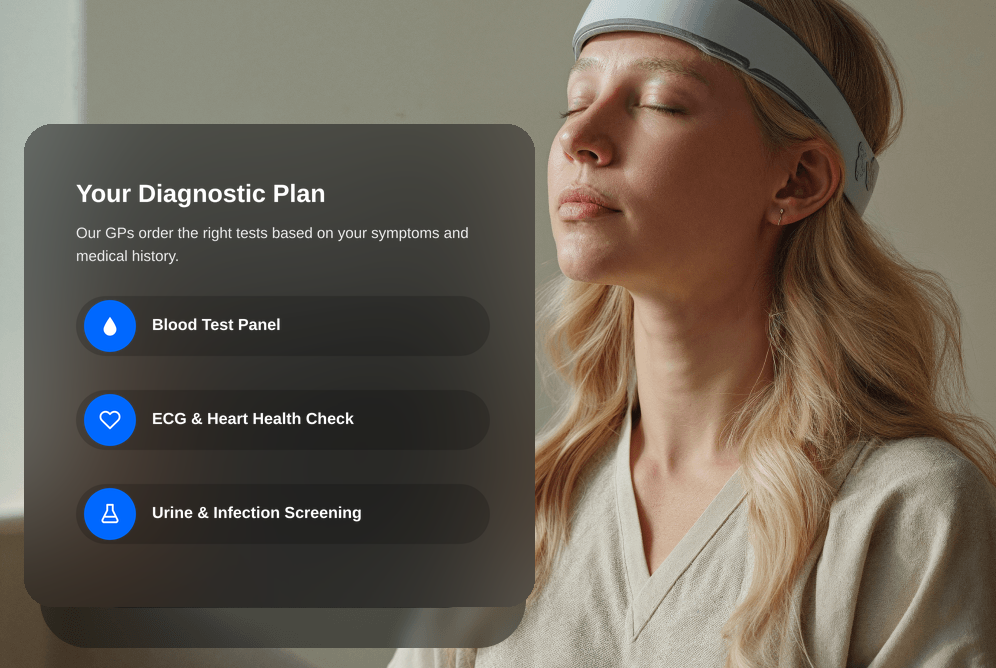
Diagnostic testing plan including blood test panel, ECG and urine screening
03

Tests and referrals, if you need them

Where testing will actually answer the question, we arrange it — blood tests and health screening through our laboratory partner, or a referral for ultrasound, X-ray, CT or MRI through private imaging providers. We will also tell you when a scan is not the right next step.
1–7 days
Personalised results and treatment plan from a private GP consultation
04

Results and next steps

Your GP talks you through what the results mean and agrees the next step with you. Every consultation ends with your treatment plan in writing, and any prescription goes to your own pharmacy.
20 minutes
GP follow-up reminder for ongoing care and progress monitoring
05

Ongoing care and follow-up

Follow-up appointments, progress monitoring and ongoing advice — including saying plainly when something needs in-person or NHS care instead.

Ongoing

How we compare

Time to be seen

Appointment length

Your NHS record in the room

Written treatment plan

Told when a test isn’t needed

Cost

Varies by practice

Typically 10 minutes

Yes, your full record

Not routinely

Usually

Free

Same day

Often 10 to 15 minutes

Usually not

Sometimes charged

Varies by provider

Often a subscription

Questions about our service

How quickly can I be seen?

Same-day access is usually available, from 6am to 10pm, seven days a week. You choose a time that suits you rather than waiting on hold at 8am.

Will I see the same doctor each time?

Yes. Care is led personally by Dr Mohammad Khan, so you are not passed between clinicians. Continuity is the point of a small practice: someone who knows your history and is listening attentively rather than working through a checklist.

Can you see my NHS records?

Yes, with your consent. We can access your Summary Care Record during the consultation, so your current medications, allergies and significant history are in the room. That means fewer questions you have already answered elsewhere, and safer prescribing.

Are you trying to replace my NHS GP?

No. We are not here to replace GPs, only to support them. Your NHS practice remains responsible for your ongoing care, and with your consent we write to them after the consultation. We are useful when you need to be seen sooner, or want more time than a standard appointment allows.

What is included in the appointment?

Twenty unhurried minutes and a comprehensive assessment. A written treatment plan is included, along with any prescription, sick note or referral letter arising from the consultation, at no extra charge.

How much does it cost?

£40 for 20 minutes, self-pay. Membership is optional and never required. Priced for fairness, because we are not here to charge extortionate amounts for access to a doctor.

What does “treatable online” actually mean?

It means the diagnosis can usually be made from your history and photographs, and that treatment can be arranged safely without examining you. Where a condition is not marked treatable online, it is because examination is the diagnosis — listening to a chest, feeling an abdomen, examining an ear or a joint — or because a procedure or device is needed.

Can you prescribe antibiotics?

Yes, where there is a genuine bacterial infection — cellulitis, impetigo, bacterial urine infections, confirmed strep throat. We will also frequently tell you that you do not need one. Most sore throats, coughs, colds and earaches are viral, and an antibiotic gives you the side effects with none of the benefit.

What if the GP cannot help with what I need?

If your problem turns out to be genuinely outside what we can do remotely, the doctor will tell you straight away, point you to the right service, and refund your fee in full. We would rather do that than fill twenty minutes to justify the charge.

What should I do in an emergency?

Call 999 or go to A&E — do not book an online appointment and do not wait for a reply to an email. For urgent problems that are not emergencies, NHS 111 is available 24 hours a day, online or by phone, and can direct you to the right service.

Patient reviews

What our patients say

No reviews published yet.
Ready to see a GP?20 minutes with a GMC-registered doctor. £40, usually same day.
Book a consultation