Home

/

Men's Health

/

Testicular Lumps and Pain

Treatable online

Testicular Lumps and Pain

Most causes are benign. One is not — and it is the most curable cancer there is when found early.

£40 · 20 minutes

Same-day availability

6am to 10pm, seven days

Assessed and treated by a GMC-registered GP

Prescriptions, sick notes and referral letters included

A written treatment plan after every appointment

Your NHS records in the room, with your consent

Clinically reviewed by Dr Mohammad Khan · Last reviewed

August 23, 2026

Book a consultation

A 20-minute appointment with a GMC-registered GP for £40. No membership required.

Private GP care led personally by Dr Mohammad Zubair Khan, GMC 7563469.

Why patients choose Cheshire Clinics

GMC registered doctors badge - every Cheshire Clinics consultation is with a General Medical Council registered GP

GMC-registered

Care led personally by Dr Khan

Royal College of General Practitioners badge - RCGP trained private GP consultations at Cheshire Clinics

RCGP-trained

Attentive, unhurried care that listens properly

Google five star reviews badge - Cheshire Clinics private GP online

Highly rated by patients

Five-star Google reviews from the people we have looked after

Care Quality Commission registered badge - Cheshire Clinics online GP service is registered with the CQC, England's independent regulator of health and social care

CQC-registered

Registered with the Care Quality Commission

Same-Day Appointments
Sick Notes
Private Prescriptions
Blood Tests
Menopause & HRT
Weight Management
Mental Health
Specialist Referrals
Same-Day Appointments
Sick Notes
Private Prescriptions
Blood Tests
Menopause & HRT
Weight Management
Mental Health
Specialist Referrals

Overview

Testicular lumps and pain cover everything from harmless cysts to two situations that are genuinely urgent. This page exists mainly to help you tell them apart quickly — because in both of the serious ones, time is the thing that determines the outcome.

1. Sudden severe testicular pain is an emergency. Testicular torsion — the cord twisting and cutting off the blood supply — is most common in teenagers and young men, often wakes someone in the night, and frequently comes with nausea or vomiting. There is roughly a six-hour window to save the testicle. Go to A&E. Do not wait to see whether it eases, do not wait for a GP appointment, and do not let embarrassment cost you the delay.

2. A painless hard lump needs checking — and the news is better than most men fear. Testicular cancer is the commonest cancer in men aged 15 to 45, and it is one of the most curable cancers there is, with survival well above 95% when caught early. The problem is almost never the treatment. It is the months men spend hoping it will go away.

Most lumps turn out to be harmless — cysts, hydroceles, varicoceles. But we cannot examine you remotely, and this is one of the areas where we will say so directly and arrange for you to be seen and scanned rather than reassuring you over a video call.

Common symptoms

Testicular torsion — the emergency

  • Sudden, severe pain in one testicle, often coming on within minutes
  • Frequently starts at night, or wakes someone from sleep
  • Nausea and vomiting — a very characteristic accompaniment
  • The testicle sitting higher than usual, or lying horizontally
  • Swelling and redness of the scrotum
  • In boys, it can present as abdominal or groin pain with no obvious testicular complaint — which is why any boy with sudden abdominal pain should have his testicles examined

Testicular cancer

  • A painless, firm, hard lump within the body of the testicle
  • A change in size, shape or firmness of one testicle
  • A dull ache or heaviness in the scrotum or lower abdomen
  • Sometimes breast tenderness or enlargement, from hormone production
  • Usually painless — which is precisely why it gets ignored

Epididymo-orchitis — infection

  • Gradual onset over hours to days, rather than sudden
  • Pain and swelling, often behind or above the testicle
  • Fever, and feeling unwell
  • Burning on passing urine, or discharge
  • Often eased by lifting the testicle — unlike torsion

The common harmless findings

  • Epididymal cyst — a smooth lump above and behind the testicle, separate from it
  • Hydrocele — soft, fluid-filled swelling surrounding the testicle; painless and often gradual
  • Varicocele — described as a bag of worms, usually on the left, more obvious standing and disappearing when lying down
  • Inguinal hernia — a swelling extending from the groin into the scrotum

Causes and risk factors

Torsion — who and why

Most common between about 12 and 25, though it can happen at any age including in newborns. It often occurs without any trigger at all — sometimes during sleep, sometimes after exercise or minor injury. Recurrent brief episodes of severe pain that settle on their own are a warning and should be assessed rather than dismissed.

Testicular cancer — risk factors

  • Undescended testicle, even if corrected in childhood — the single strongest risk factor
  • A family history in a father or brother
  • Previous testicular cancer in the other testicle
  • Age 15 to 45
  • Being white European, in whom rates are higher

Injury does not cause testicular cancer — though an injury is often what prompts a man to examine himself and find a lump that was already there.

Epididymo-orchitis

  • Under 35: usually a sexually transmitted infectionchlamydia or gonorrhoea
  • Over 35: usually urinary organisms, particularly with prostate symptoms or after urinary instrumentation
  • This distinction matters, because it determines which antibiotic is correct
  • Mumps can cause orchitis — and is preventable by MMR vaccination

The varicocele detail worth knowing

Varicoceles are common, usually appear on the left, and are generally harmless — though they are associated with reduced fertility. But a varicocele that is new, on the right side, or that does not disappear when you lie down needs imaging, because it can occasionally indicate a kidney tumour obstructing the vein. This is rarely explained, and it is the reason a scan is sometimes arranged for what looks like a trivial finding.

How it is diagnosed

We have to be straightforward here: this is one of the conditions where remote assessment has real limits. Testicular problems are diagnosed by examination and ultrasound, and we can do neither by video.

What we can do

  • Triage urgently and accurately — which is genuinely valuable, because the difference between "A&E now" and "scan next week" is the whole game here
  • Take a full history: onset, speed, pain, fever, urinary and sexual history
  • Arrange scrotal ultrasound, which is the definitive imaging test
  • Arrange STI screening and urine testing where infection is likely
  • Refer urgently on the two-week cancer pathway where a solid lump is suspected
  • Prescribe antibiotics where epididymo-orchitis is clear and torsion has been excluded

What we will not do

We will not attempt to distinguish torsion from infection remotely. The consequence of getting that wrong is losing a testicle, and no history is reliable enough. Sudden severe testicular pain goes to A&E — that is the advice you will get from us, promptly and without hedging.

Tests where cancer is suspected

Ultrasound first, then tumour markers — AFP, beta-hCG and LDH — taken before any surgery. Chest imaging and CT follow through the specialist pathway.

What the scan sorts out

Ultrasound reliably distinguishes a solid lump within the testicle from a cyst, a hydrocele or a varicocele — which is why it is arranged rather than watched and waited on. It is quick, painless, and there is no reason to put it off.

How we treat it online

1. Torsion

Surgery, urgently. The testicle is usually saved if operated on within about six hours, and the chance falls steeply after that. Both sides are normally fixed during the operation to prevent it happening again. Nothing about this is managed remotely, and if the story fits we will tell you to go to A&E immediately.

2. Testicular cancer

Referred urgently. Treatment is removal of the affected testicle, sometimes with chemotherapy or radiotherapy, and cure rates are among the highest of any cancer. Two things worth knowing in advance:

  • Sperm banking should be offered before treatment — ask about it if it is not raised
  • A prosthesis can be fitted, and most men have normal hormone function, sex life and fertility with one remaining testicle

3. Epididymo-orchitis

Antibiotics — and the choice depends on the likely organism, which is why age and sexual history matter:

  • Under 35, or any STI risk: treatment covering chlamydia and gonorrhoea, with partner notification and full STI screening
  • Over 35 with urinary symptoms: a different antibiotic aimed at urinary organisms
  • Supportive measures: scrotal support, rest, ice, anti-inflammatories
  • Improvement should begin within three days. If it does not, that needs reassessing and scanning rather than another course

4. The harmless findings

Epididymal cysts and hydroceles need no treatment unless they are large or uncomfortable, when surgery is an option. Varicoceles are treated where they cause pain or where fertility is affected. Reassurance after a normal scan is a legitimate and often very welcome outcome.

5. What we will not do

  • Treat sudden severe testicular pain remotely
  • Reassure a man about a solid lump without a scan
  • Treat presumed infection in a young man without offering STI screening
  • Keep prescribing antibiotics for pain that has not improved in three days
Men's health consultation - private GP video appointment for prostate, testosterone and men's health concerns at Cheshire Clinics

Ready to talk to a GP about this?

Book a consultation
Important

When to seek urgent help

Go to A&E immediately — do not wait — for:

  • Sudden severe pain in one testicle, particularly with nausea or vomiting, or a testicle that is sitting higher than usual. This is testicular torsion until proven otherwise, and there is roughly a six-hour window to save it
  • Sudden abdominal or groin pain in a boy or young man — torsion can present this way with no testicular complaint at all
  • Testicular pain after an injury, with severe pain or marked swelling
  • A hot, swollen, exquisitely painful scrotum with fever and feeling very unwell

Seek same-day medical advice for:

  • Testicular pain and swelling developing over a day or two, with fever
  • Pain with burning on passing urine or discharge
  • Severe pain that is easing but has happened before — recurrent brief episodes can be intermittent torsion and need assessing

Arrange an urgent appointment for:

  • Any new, firm, painless lump within a testicle
  • A change in the size, shape, firmness or weight of a testicle
  • A persistent dull ache or heaviness in the scrotum
  • A new varicocele, one on the right side, or one that does not disappear when you lie down
  • Breast tenderness or enlargement alongside any testicular change
  • Back pain, cough or breathlessness with a testicular lump

Book a routine consultation for: a longstanding soft lump you would like identified, a swelling that has been present for years, or discussion of fertility where a varicocele has been found.

Prevention and self-care

How to check yourself — and when

Once a month, after a warm bath or shower, when the scrotum is relaxed. This matters: checking when cold makes everything feel tight and abnormal.

  • Hold each testicle between thumb and fingers and roll it gently
  • Feel for anything hard, firm or irregular within the body of the testicle
  • Note the size and weight of each, and compare over time

What is normal and worries people unnecessarily:

  • One testicle sitting lower than the other — usually the left. Entirely normal
  • One being slightly larger than the other
  • The epididymis — a soft, slightly lumpy, comma-shaped structure at the back and top of each testicle. It is meant to be there, and it is the commonest thing men find and panic about

What is not normal: a hard lump within the testicle, a change in firmness, or a testicle that has become noticeably larger or heavier.

Reducing risk

  • Use condoms — the commonest cause of epididymo-orchitis in younger men is a treatable STI
  • Get STI screening between partners
  • Wear a support for contact sport, and a box for cricket, hockey and martial arts
  • Make sure boys have had MMR, which prevents mumps orchitis
  • If you had an undescended testicle as a child, tell us — it remains the strongest risk factor for testicular cancer even after correction

The point about delay

Worth saying plainly. Men wait, on average, several months between finding a testicular lump and seeking help — through embarrassment, or fear of what it might be. That delay is the only part of testicular cancer that regularly changes the outcome, since the disease itself is one of the most treatable there is.

You will not be wasting anyone's time. A scan takes minutes, most lumps are harmless, and finding out is considerably easier than the months of wondering.

NHS or private

The most important thing about a testicular lump is speed, and the NHS urgent pathway is fast and free. Any new, painless, firm lump within the testicle needs urgent assessment and ultrasound — not watchful waiting.

Testicular cancer is highly curable, and the cure rate is excellent even when it has spread — which is precisely why delay is the thing worth avoiding, and why this page pushes toward assessment rather than reassurance.

What we can genuinely do is arrange an urgent ultrasound or referral the same day.

The honest limitation is significant here: we cannot examine you, and examination is central. We will not reassure anyone about a testicular lump remotely — the useful output of a consultation is getting you assessed quickly, not deciding it is nothing.

Free and worth knowing: most testicular lumps are benign — epididymal cysts, varicoceles and hydroceles are all common — but the distinction is made on examination and ultrasound, not on how it feels to you.

Self-examination monthly after a warm bath costs nothing and is how most testicular cancers are found.

What is an emergency: sudden severe testicular pain, often with nausea and vomiting — go to A&E immediately. Testicular torsion needs surgery within hours to save the testicle, and the window is genuinely that short. Do not wait, and do not book a consultation.

Evidence and guidelines

NICE NG12, Suspected cancer: recognition and referral, is the governing guideline. It recommends urgent referral for men with a non-painful enlargement or change in shape or texture of the testis, and direct-access ultrasound for unexplained or persistent testicular symptoms.

NICE CKS, Scrotal pain and swelling, covers the differential diagnosis — epididymo-orchitis, hydrocele, varicocele, epididymal cyst and torsion — and the features distinguishing them.

CKS is explicit that testicular torsion is a surgical emergency requiring immediate hospital assessment, with the testis at risk of infarction within approximately six hours — the basis for the emergency advice above.

CKS notes that a left-sided varicocele of new onset in an older man warrants investigation, as it can indicate a renal mass.

The UK National Screening Committee does not recommend population screening for testicular cancer, making symptom awareness and prompt assessment the strategy.

Common questions

How do I know if this is an emergency?

Speed and severity. Sudden severe pain in one testicle — particularly with nausea or vomiting, or if it woke you — is torsion until proven otherwise, and needs A&E immediately. Pain that has come on gradually over a day or two with fever and urinary symptoms is more likely infection. If you are unsure, go. Nobody will think you overreacted, and the cost of waiting is losing a testicle.

I've found a lump. How worried should I be?

Get it checked promptly — and then, genuinely, try not to spend the wait catastrophising. Most testicular lumps are harmless, and even when it is cancer, testicular cancer is one of the most curable there is, with survival well above 95% caught early. The only part that consistently changes the outcome is delay, and that part is within your control.

Is it normal for one to hang lower than the other?

Yes, completely — usually the left, and one being slightly larger is normal too. The other thing men commonly find and worry about is the epididymis, a soft comma-shaped structure at the back and top of each testicle. It is meant to be there. What matters is a hard lump within the body of the testicle.

When should I examine myself?

Once a month, after a warm bath or shower when everything is relaxed — checking when cold makes normal anatomy feel abnormal and causes needless alarm. Roll each testicle gently between thumb and fingers and note any change in size, weight or firmness over time.

Can you tell me what it is over a video call?

Honestly, no. This is one of the areas where remote assessment genuinely cannot substitute for examination and a scan. What we can do is triage quickly and accurately, arrange an ultrasound and blood tests, and refer urgently where needed — and tell you plainly when you need to be in A&E rather than on a video call.

Will I still be able to have children with one testicle?

Usually, yes — most men have normal hormone levels, sex life and fertility with one remaining testicle. Sperm banking should still be offered before any treatment, and if it is not raised with you, ask. A prosthesis can also be fitted if you want one.

Could an injury have caused this?

Injury does not cause testicular cancer. What often happens is that an injury prompts a man to examine himself and find a lump that was already there — so the timing feels connected when it is not. Either way, a lump found after an injury still needs assessing.

Dr Mohammad Zubair Khan, GMC-registered private GP and founder of Cheshire Clinics
Clinically reviewed by Dr Mohammad Zubair Khan, GMC 7563469
Last reviewed

August 23, 2026

How it works

What happens when you book

£40 for a 20-minute appointment with a GMC-registered GP, 6am to 10pm, seven days a week. Membership is optional and never required.
Cheshire Clinics online GP appointment booking confirmation on mobile
01

Book your appointment

Pick a time that suits you — 6am to 10pm, seven days a week, including weekends and bank holidays. £40 for 20 minutes, self-pay, with no insurance to arrange.
5–10 minutes
Online video consultation with a GMC-registered private GP
02

Meet your GP

A 20-minute video or phone consultation with a GMC-registered GP — long enough for a proper conversation about your symptoms, your history and what matters to you.
20 minutes
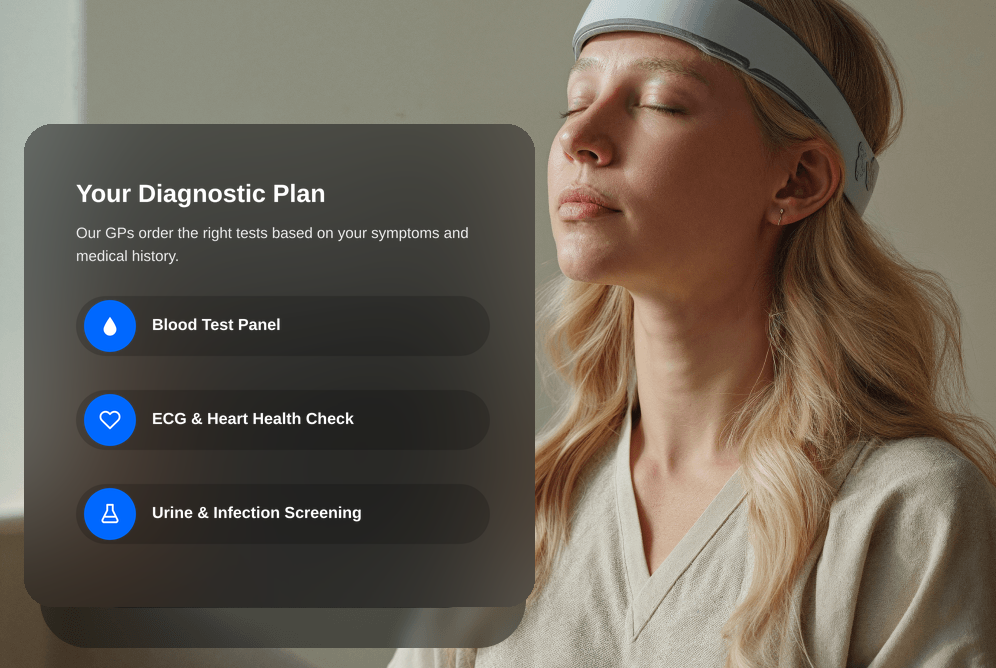
Diagnostic testing plan including blood test panel, ECG and urine screening
03

Tests and referrals, if you need them

Where testing will actually answer the question, we arrange it — blood tests and health screening through our laboratory partner, or a referral for ultrasound, X-ray, CT or MRI through private imaging providers. We will also tell you when a scan is not the right next step.
1–7 days
Personalised results and treatment plan from a private GP consultation
04

Results and next steps

Your GP talks you through what the results mean and agrees the next step with you. Every consultation ends with your treatment plan in writing, and any prescription goes to your own pharmacy.
20 minutes
GP follow-up reminder for ongoing care and progress monitoring
05

Ongoing care and follow-up

Follow-up appointments, progress monitoring and ongoing advice — including saying plainly when something needs in-person or NHS care instead.

Ongoing

How we compare

Time to be seen

Appointment length

Your NHS record in the room

Written treatment plan

Told when a test isn’t needed

Cost

Varies by practice

Typically 10 minutes

Yes, your full record

Not routinely

Usually

Free

Same day

Often 10 to 15 minutes

Usually not

Sometimes charged

Varies by provider

Often a subscription

Questions about our service

How quickly can I be seen?

Same-day access is usually available, from 6am to 10pm, seven days a week. You choose a time that suits you rather than waiting on hold at 8am.

Will I see the same doctor each time?

Yes. Care is led personally by Dr Mohammad Khan, so you are not passed between clinicians. Continuity is the point of a small practice: someone who knows your history and is listening attentively rather than working through a checklist.

Can you see my NHS records?

Yes, with your consent. We can access your Summary Care Record during the consultation, so your current medications, allergies and significant history are in the room. That means fewer questions you have already answered elsewhere, and safer prescribing.

Are you trying to replace my NHS GP?

No. We are not here to replace GPs, only to support them. Your NHS practice remains responsible for your ongoing care, and with your consent we write to them after the consultation. We are useful when you need to be seen sooner, or want more time than a standard appointment allows.

What is included in the appointment?

Twenty unhurried minutes and a comprehensive assessment. A written treatment plan is included, along with any prescription, sick note or referral letter arising from the consultation, at no extra charge.

How much does it cost?

£40 for 20 minutes, self-pay. Membership is optional and never required. Priced for fairness, because we are not here to charge extortionate amounts for access to a doctor.

What does “treatable online” actually mean?

It means the diagnosis can usually be made from your history and photographs, and that treatment can be arranged safely without examining you. Where a condition is not marked treatable online, it is because examination is the diagnosis — listening to a chest, feeling an abdomen, examining an ear or a joint — or because a procedure or device is needed.

Can you prescribe antibiotics?

Yes, where there is a genuine bacterial infection — cellulitis, impetigo, bacterial urine infections, confirmed strep throat. We will also frequently tell you that you do not need one. Most sore throats, coughs, colds and earaches are viral, and an antibiotic gives you the side effects with none of the benefit.

What if the GP cannot help with what I need?

If your problem turns out to be genuinely outside what we can do remotely, the doctor will tell you straight away, point you to the right service, and refund your fee in full. We would rather do that than fill twenty minutes to justify the charge.

What should I do in an emergency?

Call 999 or go to A&E — do not book an online appointment and do not wait for a reply to an email. For urgent problems that are not emergencies, NHS 111 is available 24 hours a day, online or by phone, and can direct you to the right service.

Patient reviews

What our patients say

No reviews published yet.
Ready to see a GP?20 minutes with a GMC-registered doctor. £40, usually same day.
Book a consultation