Home

/

Tests & scans

/

STI & Sexual Health Screening

STI & Sexual Health Screening

Confidential screening covering the main sexually transmitted infections, with treatment arranged if anything is found.

Quoted after consultation

Results usually next working day

Blood sample and urine or swab

Referred by a GMC-registered GP, results reviewed by the same doctor

Taken at a partner site near you

Results explained in plain English, not just a number

Your NHS records in the room, with your consent

Clinically reviewed by Dr Mohammad Khan · Last reviewed

August 23, 2026

Book a consultation

A 20-minute appointment with a GMC-registered GP for £40. Same-day appointments are usually available, 6am to 10pm, seven days a week.

Private GP care led personally by Dr Mohammad Zubair Khan, GMC 7563469.

Why patients choose Cheshire Clinics

GMC registered doctors badge - every Cheshire Clinics consultation is with a General Medical Council registered GP

GMC-registered

Care led personally by Dr Khan

Royal College of General Practitioners badge - RCGP trained private GP consultations at Cheshire Clinics

RCGP-trained

Attentive, unhurried care that listens properly

Google five star reviews badge - Cheshire Clinics private GP online

Highly rated by patients

Five-star Google reviews from the people we have looked after

Care Quality Commission registered badge - Cheshire Clinics online GP service is registered with the CQC, England's independent regulator of health and social care

CQC-registered

Registered with the Care Quality Commission

Same-Day Appointments
Sick Notes
Private Prescriptions
Blood Tests
Menopause & HRT
Weight Management
Mental Health
Specialist Referrals
Same-Day Appointments
Sick Notes
Private Prescriptions
Blood Tests
Menopause & HRT
Weight Management
Mental Health
Specialist Referrals

Overview

STI screening detects infections that frequently cause no symptoms at all. That is the entire reason for testing rather than waiting: most chlamydia in women, and a substantial proportion in men, produces nothing noticeable — while still being transmissible, and still capable of affecting fertility if left.

Testing is confidential, and results are kept separate from your NHS record unless you ask us to share them.

What this test measures

Chlamydia and gonorrhoea — the two commonest bacterial STIs in the UK, both curable with antibiotics, both frequently silent.

HIV — a fourth-generation test measuring the p24 antigen alongside antibodies, which is what allows detection considerably earlier than antibody-only testing.

Syphilis — rising markedly in the UK in recent years, and easily missed because the early sore is often painless and heals on its own while the infection continues.

Hepatitis B and C — both can be silent for years and both are now treatable, hepatitis C curable in most cases.

Window periods are the thing to understand before booking. Testing too early produces a negative result that means nothing. As a guide: chlamydia and gonorrhoea are generally reliable from around two weeks, HIV is conclusive at 45 days with a fourth-generation test, and syphilis at 12 weeks. We will tell you when to test rather than take your money for a result that cannot yet be trusted.

A broader 14-pathogen screen is available where your history warrants it, adding herpes simplex I and II, trichomonas, mycoplasma and ureaplasma.

Why you might need it

  • A new sexual partner, or unprotected sex
  • A partner has been diagnosed with an infection
  • Symptoms — discharge, pain on passing urine, itching, sores, or unusual bleeding
  • Routine screening for peace of mind
  • Before stopping barrier contraception with a new partner
  • Considering PrEP
  • Pregnancy planning

We would rather you knew this than not: NHS sexual health services are free and genuinely excellent, and for many people they are the better route. What we offer is speed, privacy and an appointment that fits around your day — not better clinical care. If the free service suits you, we will say so.

If exposure was within the last 72 hours, do not book a test. Post-exposure prophylaxis for HIV is time-critical and available now from A&E or a sexual health clinic.

What's included

Included: chlamydia · gonorrhoea · HIV 1&2 with p24 antigen · hepatitis B surface antigen · hepatitis C antibodies · syphilis antibodies.

Broader options are available where your history warrants them, including a 14-pathogen screen adding herpes simplex I and II, trichomonas, mycoplasma, ureaplasma and chancroid. A same-day chlamydia and gonorrhoea test is also available.

Ready to arrange this test?

Book a consultation

How the referral works

Partner site:

Randox Health

1. Consultation. Discreet, and focused on which tests are appropriate and when — the timing question matters more here than in almost any other testing we arrange.

2. Referral. To an accredited clinic. Samples are blood, urine, or swabs depending on the infection and the sites involved — which is worth being direct about: throat and rectal swabs are needed to detect infection at those sites, and a urine test alone will miss it.

3. The sample. No fasting. Avoid passing urine for one hour before giving a urine sample, as this dilutes it and can produce a false negative.

4. Results review. Results are discussed with you directly, never by text alone. Where something is found we arrange treatment and talk through partner notification — which can be done anonymously, and which matters both for them and for preventing reinfection.

Preparation required

Window periods apply. HIV testing is conclusive at 45 days after exposure for a fourth-generation test; syphilis at 12 weeks. Avoid urinating for one hour before a urine sample.

Free NHS sexual health services are also available and are excellent — we will say so if that is the better route for you.

Understanding your results

Window periods decide whether the result means anything

Every infection has a period after exposure during which it cannot yet be detected. Test inside it and a negative result tells you nothing.

  • Chlamydia and gonorrhoea — generally reliable from around two weeks
  • HIV — conclusive at 45 days
  • Syphilis — conclusive at 12 weeks

Testing too early is the commonest reason a screen is falsely reassuring. We would rather tell you to wait than sell you a result that cannot be interpreted.

Sampling site matters more than people expect

A urine sample only tests the urethra. If there has been oral or anal sex, throat and rectal swabs are needed — and infection at those sites is frequently present with no genital infection at all.

A negative urine test does not exclude a throat or rectal infection. This is one of the most common gaps in private screening.

A positive result

Chlamydia and gonorrhoea are curable, and syphilis is curable at every stage with the right treatment.

Two things follow. First, gonorrhoea now needs an injection given in a clinic — resistance means oral tablets are no longer reliable, so this cannot be treated remotely. Second, partner notification matters, and sexual health services do it anonymously if you would prefer.

A negative result

Taken outside the window periods and from the right sites, a negative screen is genuinely reassuring.

It does not cover herpes or HPV, neither of which is included in standard screening — which is worth knowing before you take a negative as "all clear".

What this test cannot tell you

What a standard screen does not include

  • Herpes. Not part of the standard screen. The broader 14-pathogen panel does include herpes simplex I and II, but we do not recommend it routinely — herpes blood testing is poorly discriminating and a positive result rarely changes anything. Herpes is properly diagnosed by swabbing an active lesion
  • HPV and genital warts. No blood test exists at all. HPV testing in women happens through cervical screening, which is a separate programme
  • Mycoplasma genitalium, unless specifically requested

People routinely read a clear standard screen as covering herpes and HPV. It does not, and that gap is worth naming plainly.

What it cannot tell you

  • When you acquired an infection, or from whom. No test can date it, and it is worth knowing before drawing conclusions about a relationship
  • Whether a partner is infected — they need their own test
  • Anything about exposures inside the window period

Site limitations

A urine sample tests the urethra and nothing else. Throat and rectal infections are common, frequently symptomless, and missed entirely by urine-only screening.

What we cannot do

We cannot examine you, which matters for lumps, ulcers and rashes — those need to be seen.

And we cannot treat gonorrhoea, which requires an injection in a clinic. NHS sexual health services do all of this free, including partner notification.

Costs explained

What you pay

  • £40 for the consultation
  • The screen, quoted before it is arranged
  • £40 for the results review

The free route is genuinely better here

NHS sexual health services are free, confidential, need no GP referral, and post home testing kits. They also do the things we cannot: examine you, swab the right sites, treat gonorrhoea, and notify partners anonymously.

For sexual health specifically, we will usually point you there — not because we cannot help, but because they can help more completely and it costs nothing.

Where the fee earns its place

Speed and privacy. Waiting lists in some areas are long, and some people would rather not attend a clinic. Both are legitimate.

Where not to spend money

  • Panels testing for a dozen organisms that are not causes of disease. Breadth is marketed as thoroughness; it mostly generates results nobody knows how to act on
  • Herpes blood tests, which are not recommended and produce false positives that cause lasting distress
  • Repeat screening straight after a negative test without a new exposure
  • Urine-only kits when oral or anal exposure means swabs are needed — the cheapest test that misses the infection is not a saving

Common questions

How long should I wait before testing?

It depends on the infection. Chlamydia and gonorrhoea are generally reliable from around two weeks, HIV is conclusive at 45 days, syphilis at 12 weeks.

Testing too early is the commonest reason a screen misses something, and a negative result inside the window means very little.

Is a urine test enough?

Only if the exposure was vaginal. Urine tests the urethra and nothing else.

If there has been oral or anal sex, throat and rectal swabs are needed — infection at those sites is common, usually symptomless, and completely missed by a urine sample.

Does this screen cover herpes?

The standard screen does not. The broader 14-pathogen panel includes herpes simplex I and II, but we will usually advise against adding it.

Herpes blood testing does not tell you where the virus is, when you acquired it, or whether you will ever get symptoms — and a large proportion of the population tests positive for HSV-1 from cold sores in childhood. It generates distress far more often than it changes management.

If you have a sore or blister now, that is the moment to be seen — swabbing an active lesion is the test that actually answers the question, and it needs an in-person examination.

Does it cover HPV or warts?

No — there is no blood test for either. Warts are diagnosed by examination, and HPV testing in women happens through cervical screening, which is a separate programme.

I have no symptoms. Is testing worth it?

Yes — most STIs cause no symptoms at all.

Untreated chlamydia can cause pelvic inflammatory disease and infertility in women silently, and untreated syphilis causes serious problems years later. Absence of symptoms is not absence of infection.

Can you treat it if something is positive?

Chlamydia, yes, in many cases. Gonorrhoea, no.

Gonorrhoea now requires an injection given in a clinic because resistance has made oral treatment unreliable. Syphilis also needs specialist treatment.

All of it is free at NHS sexual health services, and they will treat you faster than we can refer you.

Do I have to tell my partners?

It matters — but you do not have to do it yourself. Sexual health services notify partners anonymously, without naming you.

It is one of the most useful things they do, and one of the least known.

Can a test tell me when I caught it?

No. Nothing in a screen dates an infection or identifies a source.

Chlamydia in particular can be present for years without symptoms, which is worth knowing before drawing conclusions about a current relationship.

How do I prepare?

Do not urinate for at least an hour before giving a urine sample, or the result may be unreliable. No fasting, and no other preparation.

Should I get the HIV test too?

Generally yes. HIV testing alongside is standard practice, and syphilis is rising sharply in the UK.

And if a possible exposure was in the last 72 hours, go to A&E or sexual health today and ask about PEP rather than waiting to test.

Dr Mohammad Zubair Khan, GMC-registered private GP and founder of Cheshire Clinics

Clinically reviewed by Dr Mohammad Zubair Khan, GMC 7563469

Last reviewed

August 23, 2026

How it works

What happens when you book

£40 for a 20-minute appointment with a GMC-registered GP, 6am to 10pm, seven days a week. Membership is optional and never required.
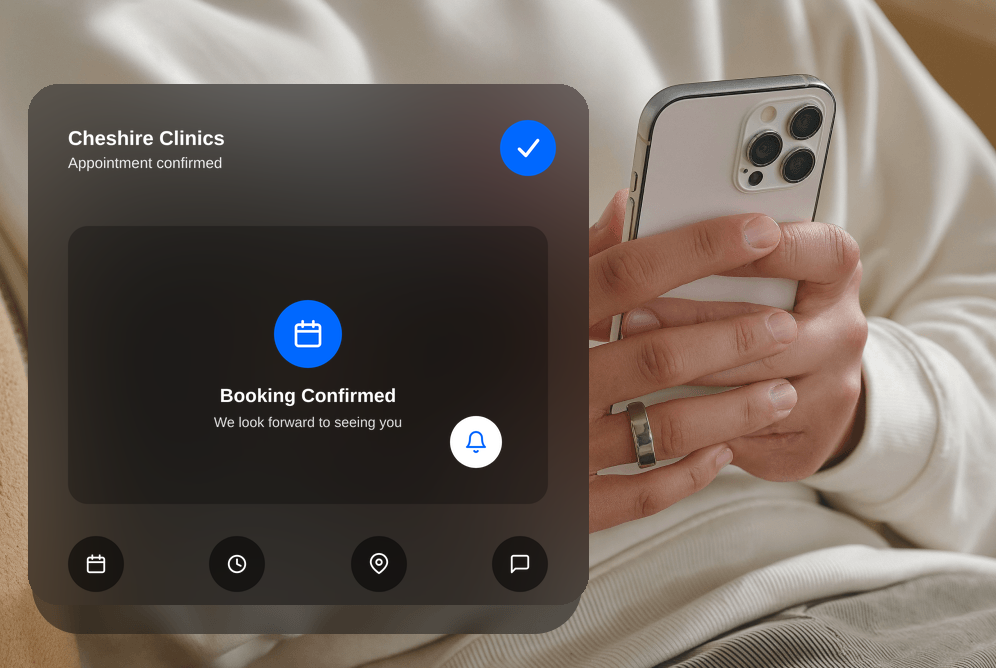
Cheshire Clinics online GP appointment booking confirmation on mobile
01

Book your appointment

Pick a time that suits you — 6am to 10pm, seven days a week, including weekends and bank holidays. £40 for 20 minutes, self-pay, with no insurance to arrange.
5–10 minutes
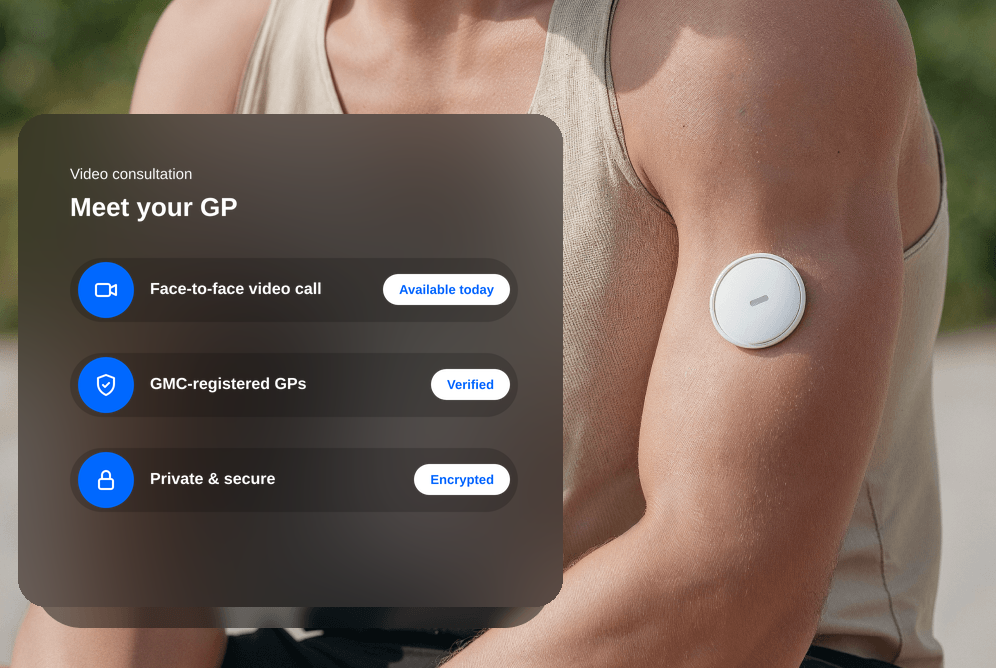
Online video consultation with a GMC-registered private GP
02

Meet your GP

A 20-minute video or phone consultation with a GMC-registered GP — long enough for a proper conversation about your symptoms, your history and what matters to you.
20 minutes
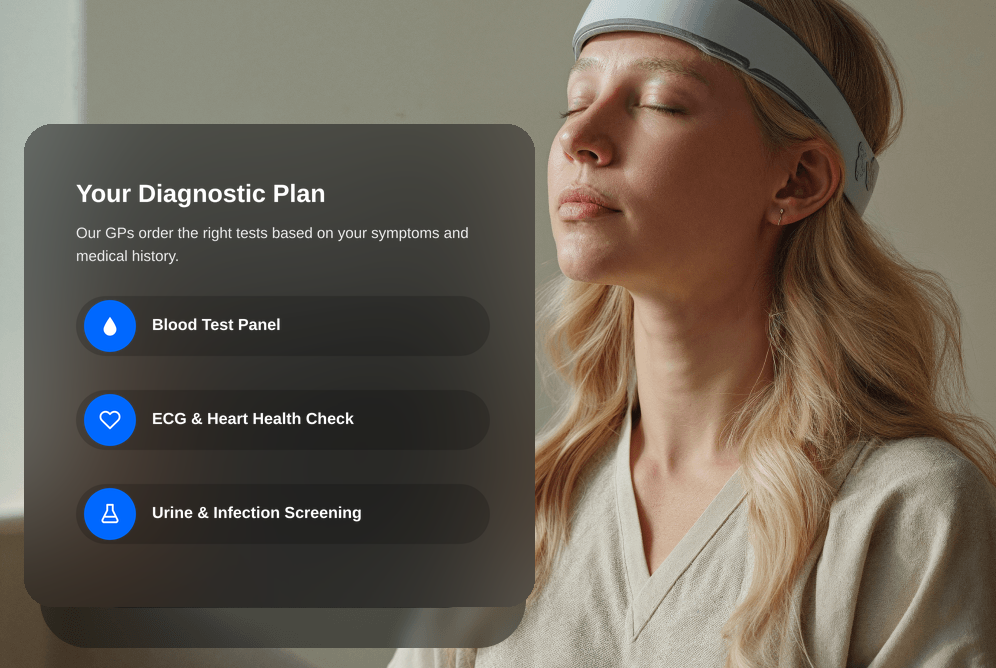
Diagnostic testing plan including blood test panel, ECG and urine screening
03

Tests and referrals, if you need them

Where testing will actually answer the question, we arrange it — blood tests and health screening through our laboratory partner, or a referral for ultrasound, X-ray, CT or MRI through private imaging providers. We will also tell you when a scan is not the right next step.
1–7 days
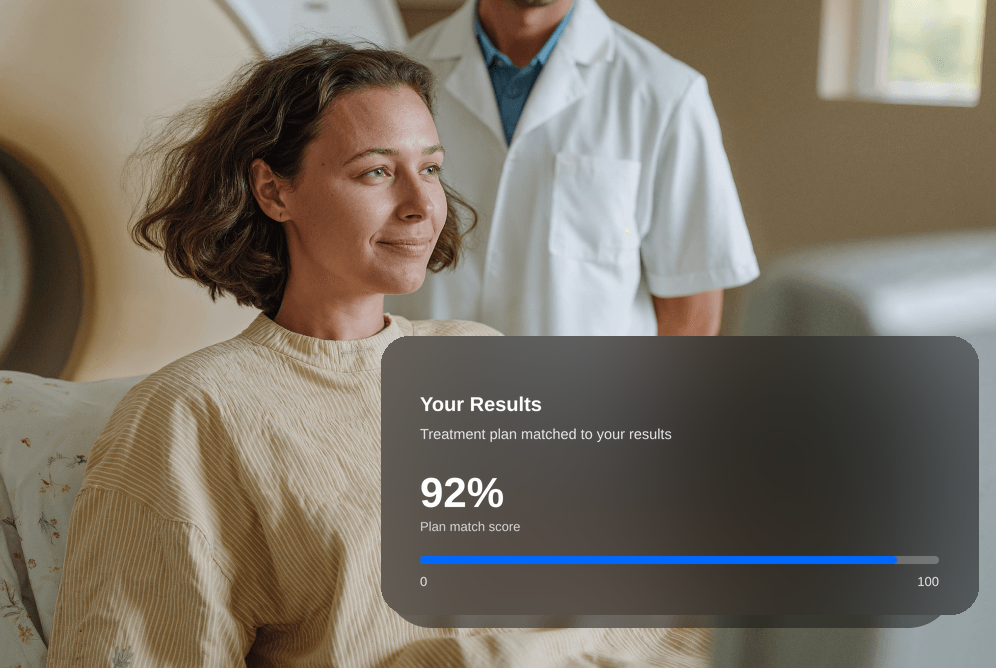
Personalised results and treatment plan from a private GP consultation
04

Results and next steps

Your GP talks you through what the results mean and agrees the next step with you. Every consultation ends with your treatment plan in writing, and any prescription goes to your own pharmacy.
20 minutes
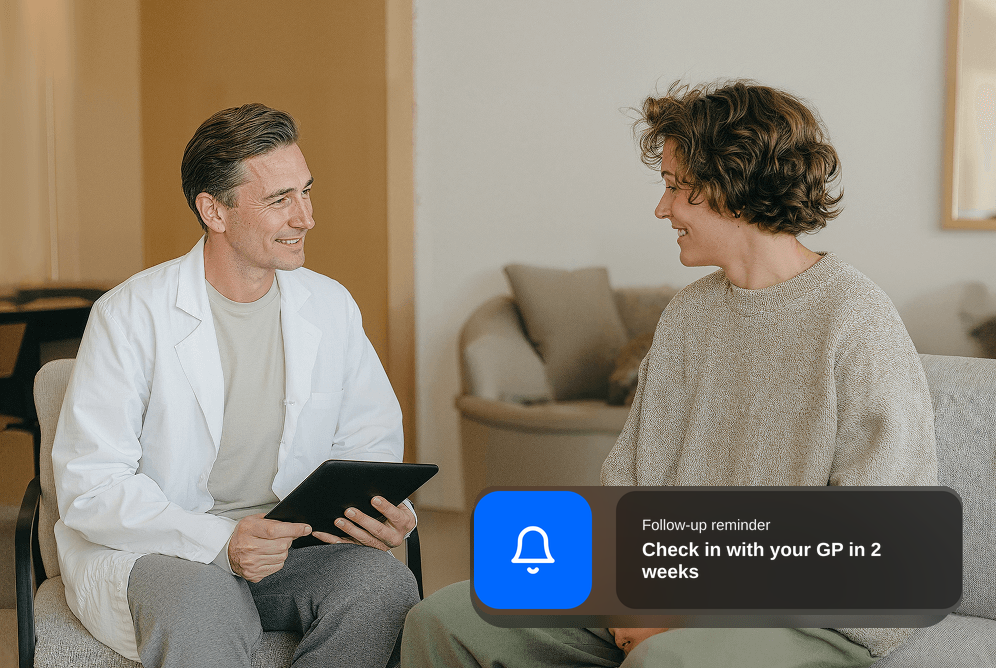
GP follow-up reminder for ongoing care and progress monitoring
05

Ongoing care and follow-up

Follow-up appointments, progress monitoring and ongoing advice — including saying plainly when something needs in-person or NHS care instead.

Ongoing

How we compare

Time to be seen

Appointment length

Your NHS record in the room

Written treatment plan

Told when a test isn’t needed

Cost

Varies by practice

Typically 10 minutes

Yes, your full record

Not routinely

Usually

Free

Same day

Often 10 to 15 minutes

Usually not

Sometimes charged

Varies by provider

Often a subscription

Questions about our service

How quickly can I be seen?

Same-day access is usually available, from 6am to 10pm, seven days a week. You choose a time that suits you rather than waiting on hold at 8am.

Will I see the same doctor each time?

Yes. Care is led personally by Dr Mohammad Khan, so you are not passed between clinicians. Continuity is the point of a small practice: someone who knows your history and is listening attentively rather than working through a checklist.

Can you see my NHS records?

Yes, with your consent. We can access your Summary Care Record during the consultation, so your current medications, allergies and significant history are in the room. That means fewer questions you have already answered elsewhere, and safer prescribing.

Are you trying to replace my NHS GP?

No. We are not here to replace GPs, only to support them. Your NHS practice remains responsible for your ongoing care, and with your consent we write to them after the consultation. We are useful when you need to be seen sooner, or want more time than a standard appointment allows.

What is included in the appointment?

Twenty unhurried minutes and a comprehensive assessment. A written treatment plan is included, along with any prescription, sick note or referral letter arising from the consultation, at no extra charge.

How much does it cost?

£40 for 20 minutes, self-pay. Membership is optional and never required. Priced for fairness, because we are not here to charge extortionate amounts for access to a doctor.

What does “treatable online” actually mean?

It means the diagnosis can usually be made from your history and photographs, and that treatment can be arranged safely without examining you. Where a condition is not marked treatable online, it is because examination is the diagnosis — listening to a chest, feeling an abdomen, examining an ear or a joint — or because a procedure or device is needed.

Can you prescribe antibiotics?

Yes, where there is a genuine bacterial infection — cellulitis, impetigo, bacterial urine infections, confirmed strep throat. We will also frequently tell you that you do not need one. Most sore throats, coughs, colds and earaches are viral, and an antibiotic gives you the side effects with none of the benefit.

What if the GP cannot help with what I need?

If your problem turns out to be genuinely outside what we can do remotely, the doctor will tell you straight away, point you to the right service, and refund your fee in full. We would rather do that than fill twenty minutes to justify the charge.

What should I do in an emergency?

Call 999 or go to A&E — do not book an online appointment and do not wait for a reply to an email. For urgent problems that are not emergencies, NHS 111 is available 24 hours a day, online or by phone, and can direct you to the right service.

Patient reviews

What our patients say

No reviews published yet.
Ready to see a GP?20 minutes with a GMC-registered doctor. £40, usually same day.
Book a consultation