HIV Test

A confidential HIV test with clear advice on window periods, and proper support whatever the result.

Quoted after consultation

Results usually next working day

Blood sample

Referred by a GMC-registered GP, results reviewed by the same doctor

Taken at a partner site near you

Results explained in plain English, not just a number

Your NHS records in the room, with your consent

Clinically reviewed by Dr Mohammad Khan · Last reviewed

August 23, 2026

Book a consultation

A 20-minute appointment with a GMC-registered GP for £40. Same-day appointments are usually available, 6am to 10pm, seven days a week.

Private GP care led personally by Dr Mohammad Zubair Khan, GMC 7563469.

Why patients choose Cheshire Clinics

GMC registered doctors badge - every Cheshire Clinics consultation is with a General Medical Council registered GP

GMC-registered

Care led personally by Dr Khan

Royal College of General Practitioners badge - RCGP trained private GP consultations at Cheshire Clinics

RCGP-trained

Attentive, unhurried care that listens properly

Google five star reviews badge - Cheshire Clinics private GP online

Highly rated by patients

Five-star Google reviews from the people we have looked after

Care Quality Commission registered badge - Cheshire Clinics online GP service is registered with the CQC, England's independent regulator of health and social care

CQC-registered

Registered with the Care Quality Commission

Same-Day Appointments
Sick Notes
Private Prescriptions
Blood Tests
Menopause & HRT
Weight Management
Mental Health
Specialist Referrals
Same-Day Appointments
Sick Notes
Private Prescriptions
Blood Tests
Menopause & HRT
Weight Management
Mental Health
Specialist Referrals

Overview

An HIV test is a single blood sample with a fast, definitive answer. It is also, for many people, the test they put off longest — which is precisely the problem, because HIV treatment today is genuinely transformative and depends entirely on knowing.

The position worth stating plainly: with effective treatment, people with HIV have a normal life expectancy and cannot pass the virus on to sexual partners. That is the settled evidence — undetectable equals untransmittable. Late diagnosis, by contrast, remains the single largest factor in poor outcomes in the UK.

What this test measures

A fourth-generation combined test, measuring both the p24 antigen — a viral protein appearing early in infection — and antibodies to HIV-1 (including group O) and HIV-2.

Detecting the antigen is what makes this generation of test valuable: it appears well before antibodies do, so detection is possible from around 10 days after exposure, where an antibody-only test would still read negative.

The window period is the thing to get right. A test at 45 days after exposure is considered conclusive for a fourth-generation test. Before that, a negative result reduces the likelihood but does not exclude infection, and a repeat is needed. We will tell you when your test will actually be conclusive rather than letting you take false reassurance from an early negative.

A reactive result is not a diagnosis. It always requires a confirmatory test on a second sample, because false positives do occur. We would explain that before you test rather than after a frightening phone call.

Why you might need it

  • Unprotected sex with a new or casual partner
  • A partner has been diagnosed, or their status is unknown
  • A condom failure
  • Sharing needles or injecting equipment
  • Routine screening — particularly for men who have sex with men, where regular testing is recommended
  • Pregnancy, or planning it
  • Before starting PrEP
  • Simply not knowing, and wanting to

Two things that change the urgency entirely.

If exposure was within the last 72 hours, do not book a test — seek post-exposure prophylaxis now. PEP can prevent infection taking hold, it is time-critical, and it is available urgently from A&E or a sexual health clinic. Every hour matters.

And a flu-like illness with fever, rash and sore throat two to four weeks after a possible exposure can represent seroconversion illness — the body's initial response to infection. That is worth mentioning rather than dismissing as a virus.

What's included

Included: a fourth-generation test measuring HIV-1 p24 antigen together with antibodies to HIV-1, including group O, and HIV-2.

Because it detects the p24 antigen, which rises within the first few weeks of infection, early detection is possible from around 10 days after exposure. A test at 45 days after exposure is considered conclusive — before that, a negative result reduces the likelihood but does not exclude infection.

It can be run on its own, or as part of a blood-borne screen adding hepatitis B, hepatitis C and syphilis.

Ready to arrange this test?

Book a consultation

How the referral works

Partner site:

Randox Health

1. Consultation. Confidential, and focused on when to test rather than simply whether. Timing determines whether the result means anything.

2. Referral. To an accredited clinic at a time and location that suits you. Free NHS sexual health services also offer HIV testing, and rapid self-test kits are available — if either is the better route for you, we will say so rather than take the fee.

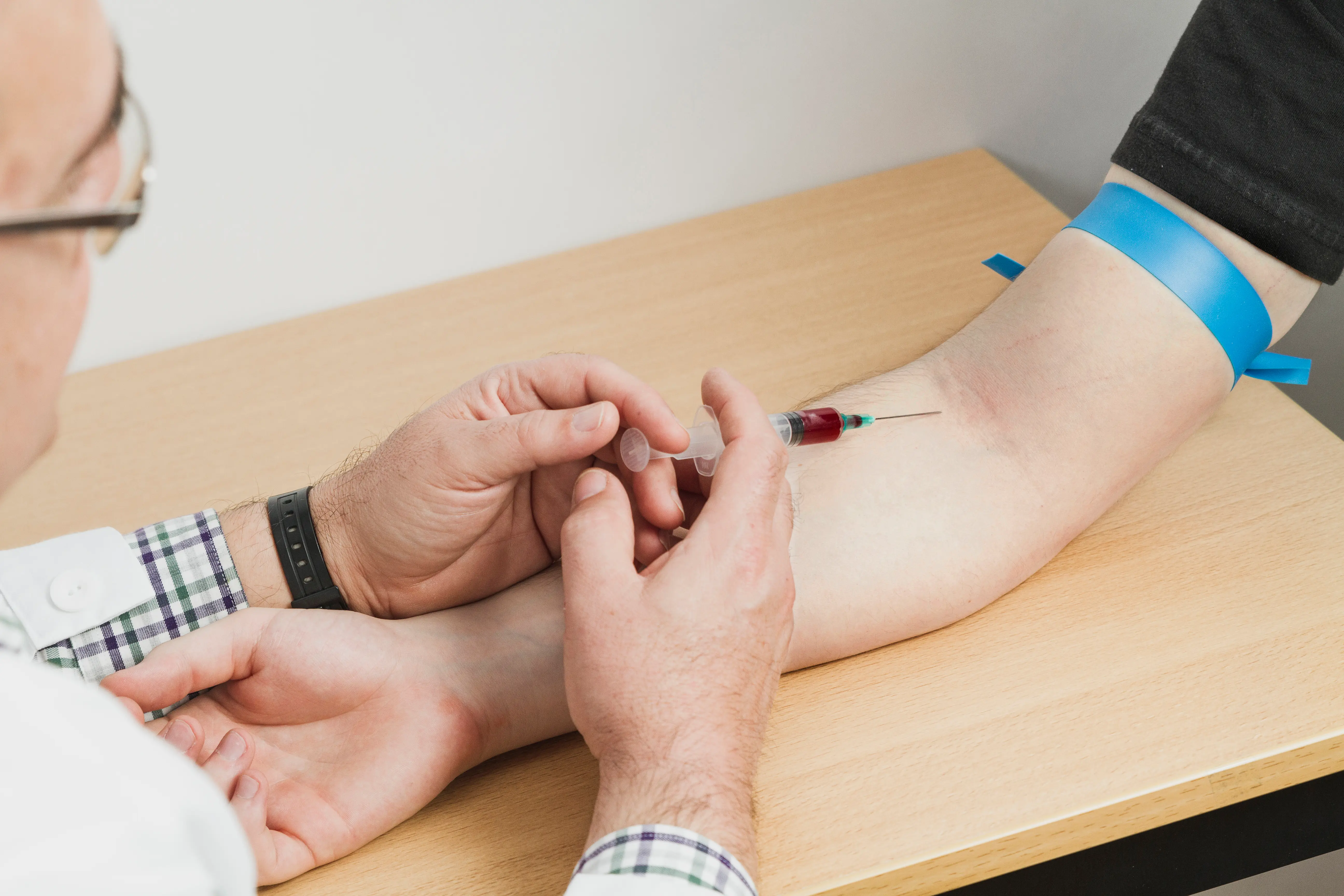
3. The sample. A single blood draw. No fasting.

4. Results review. Discussed with you directly, never by text alone. A reactive result means immediate referral to specialist HIV services, and we would make that connection the same day — modern treatment is usually a single daily tablet and is started promptly. Results stay separate from your NHS record unless you ask us to share them.

Preparation required

No fasting required. If exposure was within the last 72 hours, do not wait for a test — post-exposure prophylaxis is time-critical and available urgently from A&E or a sexual health clinic.

Understanding your results

Read this first if the exposure was recent

If a possible exposure was within the last 72 hours, do not wait for a test. Go to A&E or a sexual health clinic today and ask about PEP — post-exposure prophylaxis, a course of medication that can prevent HIV taking hold.

It is free, it is urgent, and it works best the sooner it is started. Testing now would tell you nothing about that exposure anyway, because it is far too early to show.

What the window period means

A fourth-generation test detects both HIV antibodies and p24 antigen, which is why it turns positive earlier than older antibody-only tests.

  • Most infections are detected by 4 weeks
  • A negative test at 45 days is conclusive for an exposure before that point

A negative result only covers exposures older than the window. It says nothing about last weekend.

A negative result

Taken at the right point, a negative test is genuinely reassuring — this is a highly accurate test.

Worth knowing about PrEP if there is ongoing risk: preventive medication that is extremely effective and free from NHS sexual health services. If your risk is not a one-off, that is a better answer than repeat testing.

A reactive result

A reactive screening test is not a diagnosis — it always needs a confirmatory test, and false positives do occur.

And the thing worth saying plainly: HIV in the UK today is a treatable long-term condition. People on effective treatment have a normal life expectancy and cannot pass it on to sexual partners — undetectable equals untransmittable. Care is free on the NHS regardless of immigration status.

What this test cannot tell you

What this test cannot tell you

  • Anything about an exposure in the last few weeks. This is the whole point of the window period, and the commonest misunderstanding
  • Whether you have any other sexually transmitted infection. HIV testing alone is a narrow answer to a broader question — full screening is usually more useful
  • How long you have had it, or your CD4 count and viral load. Those come afterwards, in specialist care

The window period is the limitation

A negative result covers exposures more than 45 days ago. It does not cover recent ones.

If your risk was last week, testing today produces a negative result that means nothing — and can be falsely reassuring in the way that matters most.

What it cannot replace

PEP within 72 hours of an exposure, and PrEP for ongoing risk. Both are free from NHS sexual health services and both are more effective than testing after the fact.

We cannot prescribe either remotely — they need the specialist services that provide them.

A note on home tests

Self-test kits are legitimate and free from many NHS services. Their limitation is the same window period, plus the fact that a reactive result still needs laboratory confirmation — and finding that out alone, at home, is hard.

Costs explained

What you pay

  • £40 for the consultation
  • The test, quoted before it is arranged
  • £40 for the results review

The free route, which is genuinely better here

HIV testing is free from NHS sexual health services, and free self-test kits are posted to your home across most of England.

Sexual health services do not need a GP referral — you can book directly, and they are confidential.

We say this plainly: for HIV testing specifically, the NHS route is usually the better one. It is free, it is fast, it includes full screening, and it can prescribe PEP and PrEP, which we cannot.

Free and urgent

  • PEP — free, and needed within 72 hours of an exposure. A&E or sexual health, today
  • PrEP — free from NHS sexual health services for ongoing risk, and highly effective
  • All HIV treatment is free on the NHS regardless of immigration status

Where we are useful

Speed and discretion, and having the conversation without a waiting room. Some people will pay for that and it is a legitimate reason.

But nobody should go untested because of cost, and that is the more important point on this page.

Common questions

I had a risk two days ago. Should I test now?

No — go to A&E or a sexual health clinic today and ask about PEP.

PEP can prevent HIV taking hold if started within 72 hours, and the sooner the better. It is free.

A test today would be negative regardless, because it is far too early to show anything. Do not let a test delay you.

How long do I have to wait for a reliable result?

Most infections are picked up by 4 weeks with a fourth-generation test, and a negative result at 45 days is conclusive for exposures before that point.

What does a reactive result mean?

It means a confirmatory test is needed — it is not a diagnosis. False positives happen with screening tests.

If it is positive, what actually happens?

This is worth stating clearly, because the fear is usually worse than the reality.

HIV in the UK is a treatable long-term condition. People diagnosed today and treated effectively have a normal life expectancy, and take medication that is typically one tablet a day.

And they cannot pass it on to sexual partners — undetectable equals untransmittable, which is established beyond doubt. Care is free on the NHS regardless of immigration status.

Can I get PrEP from you?

No — it is prescribed by NHS sexual health services, and it is free there.

If your risk is ongoing rather than a one-off, PrEP is a far better answer than repeated testing. It is worth booking.

Is it confidential?

Yes. NHS sexual health services are confidential and can be accessed without going through your GP, and results are not shared without your consent.

Should I test for anything else?

Usually yes. Full STI screening covers chlamydia, gonorrhoea and syphilis alongside — syphilis in particular is rising in the UK and is easily missed.

Testing for one infection while leaving the others unasked is rarely the right answer.

Are home test kits reliable?

Yes, and many are free from NHS services. The same window period applies, and a reactive result still needs laboratory confirmation.

Do I need to fast?

No. No preparation of any kind, and it can be done at any time of day.

Dr Mohammad Zubair Khan, GMC-registered private GP and founder of Cheshire Clinics

Clinically reviewed by Dr Mohammad Zubair Khan, GMC 7563469

Last reviewed

August 23, 2026

How it works

What happens when you book

£40 for a 20-minute appointment with a GMC-registered GP, 6am to 10pm, seven days a week. Membership is optional and never required.
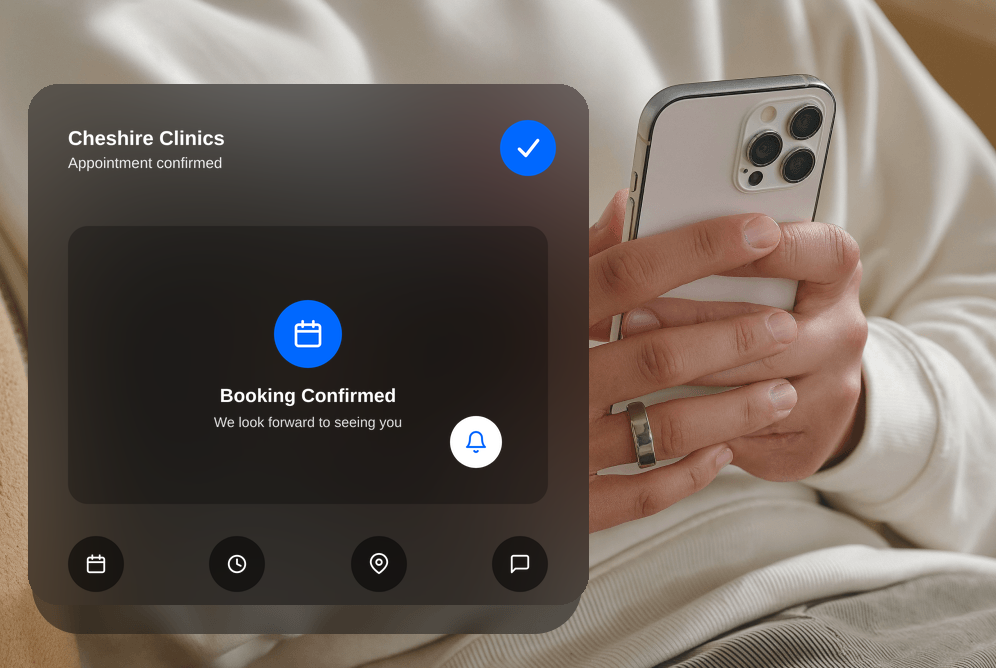
Cheshire Clinics online GP appointment booking confirmation on mobile
01

Book your appointment

Pick a time that suits you — 6am to 10pm, seven days a week, including weekends and bank holidays. £40 for 20 minutes, self-pay, with no insurance to arrange.
5–10 minutes
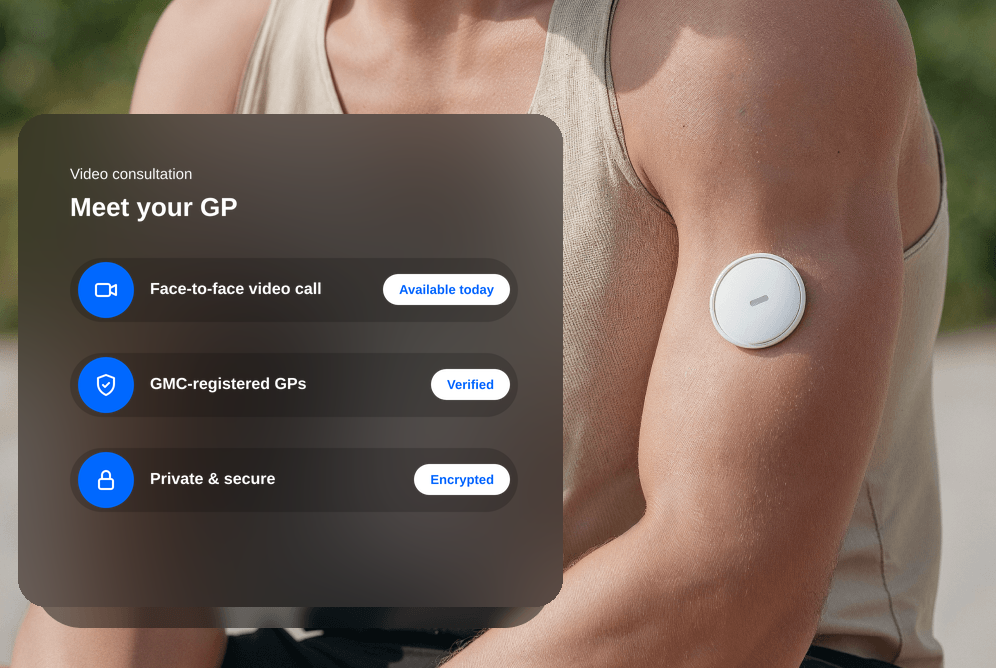
Online video consultation with a GMC-registered private GP
02

Meet your GP

A 20-minute video or phone consultation with a GMC-registered GP — long enough for a proper conversation about your symptoms, your history and what matters to you.
20 minutes
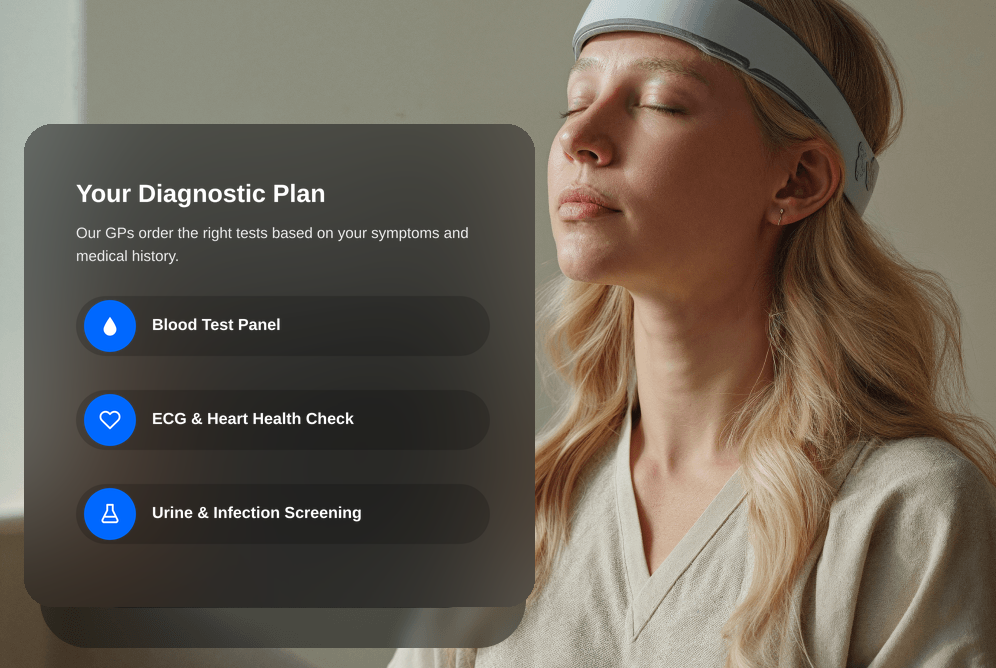
Diagnostic testing plan including blood test panel, ECG and urine screening
03

Tests and referrals, if you need them

Where testing will actually answer the question, we arrange it — blood tests and health screening through our laboratory partner, or a referral for ultrasound, X-ray, CT or MRI through private imaging providers. We will also tell you when a scan is not the right next step.
1–7 days
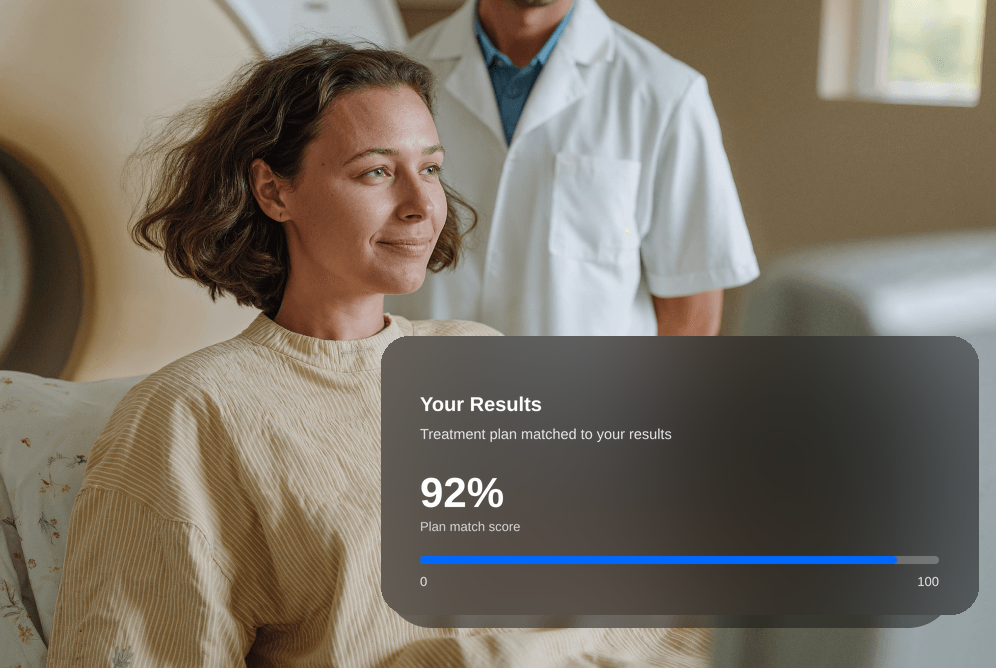
Personalised results and treatment plan from a private GP consultation
04

Results and next steps

Your GP talks you through what the results mean and agrees the next step with you. Every consultation ends with your treatment plan in writing, and any prescription goes to your own pharmacy.
20 minutes
GP follow-up reminder for ongoing care and progress monitoring
05

Ongoing care and follow-up

Follow-up appointments, progress monitoring and ongoing advice — including saying plainly when something needs in-person or NHS care instead.

Ongoing

How we compare

Time to be seen

Appointment length

Your NHS record in the room

Written treatment plan

Told when a test isn’t needed

Cost

Varies by practice

Typically 10 minutes

Yes, your full record

Not routinely

Usually

Free

Same day

Often 10 to 15 minutes

Usually not

Sometimes charged

Varies by provider

Often a subscription

Questions about our service

How quickly can I be seen?

Same-day access is usually available, from 6am to 10pm, seven days a week. You choose a time that suits you rather than waiting on hold at 8am.

Will I see the same doctor each time?

Yes. Care is led personally by Dr Mohammad Khan, so you are not passed between clinicians. Continuity is the point of a small practice: someone who knows your history and is listening attentively rather than working through a checklist.

Can you see my NHS records?

Yes, with your consent. We can access your Summary Care Record during the consultation, so your current medications, allergies and significant history are in the room. That means fewer questions you have already answered elsewhere, and safer prescribing.

Are you trying to replace my NHS GP?

No. We are not here to replace GPs, only to support them. Your NHS practice remains responsible for your ongoing care, and with your consent we write to them after the consultation. We are useful when you need to be seen sooner, or want more time than a standard appointment allows.

What is included in the appointment?

Twenty unhurried minutes and a comprehensive assessment. A written treatment plan is included, along with any prescription, sick note or referral letter arising from the consultation, at no extra charge.

How much does it cost?

£40 for 20 minutes, self-pay. Membership is optional and never required. Priced for fairness, because we are not here to charge extortionate amounts for access to a doctor.

What does “treatable online” actually mean?

It means the diagnosis can usually be made from your history and photographs, and that treatment can be arranged safely without examining you. Where a condition is not marked treatable online, it is because examination is the diagnosis — listening to a chest, feeling an abdomen, examining an ear or a joint — or because a procedure or device is needed.

Can you prescribe antibiotics?

Yes, where there is a genuine bacterial infection — cellulitis, impetigo, bacterial urine infections, confirmed strep throat. We will also frequently tell you that you do not need one. Most sore throats, coughs, colds and earaches are viral, and an antibiotic gives you the side effects with none of the benefit.

What if the GP cannot help with what I need?

If your problem turns out to be genuinely outside what we can do remotely, the doctor will tell you straight away, point you to the right service, and refund your fee in full. We would rather do that than fill twenty minutes to justify the charge.

What should I do in an emergency?

Call 999 or go to A&E — do not book an online appointment and do not wait for a reply to an email. For urgent problems that are not emergencies, NHS 111 is available 24 hours a day, online or by phone, and can direct you to the right service.

Patient reviews

What our patients say

No reviews published yet.
Ready to see a GP?20 minutes with a GMC-registered doctor. £40, usually same day.
Book a consultation