Home

/

Symptoms

/

Heartburn

Can signal something serious

Heartburn

Usually reflux and usually treatable. But food sticking, weight loss or new indigestion over 55 needs a camera, not a tablet.

acid reflux, indigestion, burning chest, GORD, acid coming up, waterbrash

£40 · 20 minutes

Same-day availability

Assessed by a GMC-registered GP, not a symptom checker

Honest about what needs to be seen in person

Tests and referrals arranged where they are needed

Your NHS records in the room, with your consent

Clinically reviewed by Dr Mohammad Khan · Last reviewed

August 30, 2026

Book a consultation

A 20-minute appointment with a GMC-registered GP for £40. Same-day appointments are usually available, 6am to 10pm, seven days a week.

Private GP care led personally by Dr Mohammad Zubair Khan, GMC 7563469.

Why patients choose Cheshire Clinics

GMC registered doctors badge - every Cheshire Clinics consultation is with a General Medical Council registered GP

GMC-registered

Care led personally by Dr Khan

Royal College of General Practitioners badge - RCGP trained private GP consultations at Cheshire Clinics

RCGP-trained

Attentive, unhurried care that listens properly

Google five star reviews badge - Cheshire Clinics private GP online

Highly rated by patients

Five-star Google reviews from the people we have looked after

Care Quality Commission registered badge - Cheshire Clinics online GP service is registered with the CQC, England's independent regulator of health and social care

CQC-registered

Registered with the Care Quality Commission

Same-Day Appointments
Sick Notes
Private Prescriptions
Blood Tests
Menopause & HRT
Weight Management
Mental Health
Specialist Referrals
Same-Day Appointments
Sick Notes
Private Prescriptions
Blood Tests
Menopause & HRT
Weight Management
Mental Health
Specialist Referrals
Important

When to get urgent help

Call 999 if

  • The pain is crushing, spreads to the arm, jaw or back, or comes with sweating, nausea or breathlessness

Heart attacks are regularly mistaken for indigestion, and the mistake goes in the dangerous direction. If there is any doubt, treat it as cardiac. Indigestion that comes on with exertion and eases with rest is a particular warning sign.

Go to A&E for

  • Vomiting blood, or material that looks like coffee grounds
  • Black tarry stools
  • Sudden severe chest or upper abdominal pain
  • Unable to swallow at all, or food completely stuck

Urgent assessment — these need endoscopy, not tablets

  • Difficulty swallowing, or food sticking — an urgent suspected cancer referral criterion at any age
  • Unexplained weight loss
  • New indigestion in anyone over 55 that persists
  • Iron deficiency anaemia alongside it
  • Persistent vomiting
  • An upper abdominal mass

Acid-suppressing medication can mask an oesophageal or stomach cancer while it grows. That is why we will not treat this picture remotely — it needs a camera first.

Overview

Heartburn is a burning sensation behind the breastbone, often rising towards the throat, typically worse after eating, when lying down, or on bending forward. It is caused by stomach acid refluxing into the oesophagus, which has no protective lining against it.

It is extremely common and, for most people, entirely benign and very treatable. Lifestyle measures and acid-suppressing medication resolve or greatly improve the majority.

The reason this page carries a long urgent section is that a small number of people with what looks like ordinary indigestion have something that needs finding early — and acid suppression relieves their symptoms while the underlying problem progresses.

What it could be

Common

  • Gastro-oesophageal reflux disease — the usual explanation
  • Hiatus hernia, which allows reflux more easily
  • Medication — anti-inflammatories, steroids, calcium channel blockers, doxycycline, bisphosphonates. See the list on this page
  • Diet and habit — large late meals, alcohol, smoking, coffee, weight around the middle
  • Pregnancy, where it is very common in the later stages
  • Helicobacter pylori — testable and treatable, and worth considering in persistent symptoms

Less common

  • Peptic ulcer
  • Oesophagitis — inflammation from persistent reflux
  • Barrett's oesophagus — a change in the lining after years of reflux, which needs surveillance
  • Eosinophilic oesophagitis — increasingly recognised, especially in younger people with food sticking
  • Gallstones, which can present as upper abdominal discomfort after fatty food
  • Functional dyspepsia — real symptoms with a normal camera

Important to exclude

  • Cardiac pain — see the urgent section. This is the confusion that causes harm
  • Oesophageal or stomach cancer — suggested by difficulty swallowing, weight loss, anaemia, or new persistent symptoms over 55

What you can do now

The measures that actually work

  • Do not eat within three to four hours of lying down. This is the single most effective change for night-time reflux
  • Raise the head of the bed, or use a wedge under the mattress. Extra pillows do not work — they bend you at the waist and can make it worse
  • Lose weight around the middle if there is any to lose. Genuinely one of the most effective interventions
  • Stop smoking, which weakens the valve directly
  • Reduce alcohol, coffee, and large fatty meals
  • Smaller meals more often

Medication, used properly

  • Antacids and alginates such as Gaviscon — useful for immediate relief, taken after meals and at bedtime
  • A proton pump inhibitor such as omeprazole — available over the counter. Take it 30 to 60 minutes before food, not with it or after. This detail is frequently not explained and accounts for a good number of apparent failures
  • Give it two to four weeks before judging it

Review your medicines

Ibuprofen, naproxen, steroids, amlodipine, doxycycline and bisphosphonates all cause or worsen this. Alternatives sometimes exist, and stopping the cause beats suppressing the symptom.

What not to do

Do not stay on a proton pump inhibitor indefinitely without review. They are among the most commonly continued-without-review medicines in the UK, and long-term use affects absorption of B12, magnesium, calcium and iron.

And do not use them to push through symptoms you have not had assessed — particularly food sticking.

Not sure what is causing it?

Book a consultation

How we assess it

What a consultation covers

  • Screening every alarm feature listed above — the first and most important task
  • Whether this could be cardiac, particularly if it relates to exertion
  • The pattern — timing, triggers, relation to meals and position
  • Any difficulty swallowing, which changes everything
  • Weight change
  • Your full medicine list, since several common medicines cause this
  • Alcohol, smoking, caffeine and weight
  • What you have already tried, and whether it was taken correctly

What we may arrange

Full blood count and ferritin to look for iron deficiency, and Helicobacter pylori testing, which should be done at least two weeks off any proton pump inhibitor or the result is unreliable.

The limits of a video consultation

We cannot examine your abdomen, and we cannot record an ECG — which matters given how often cardiac pain presents as indigestion.

We will not treat reflux remotely in anyone whose main problem is that food is sticking, or who has new persistent indigestion over 55 with weight loss or anaemia. That needs endoscopy, and we will write the referral instead of the prescription.

Where the picture is straightforward reflux in a younger person with no alarm features, this is a good remote consultation.

Common questions

Is this heartburn or my heart?

If there is any doubt, treat it as cardiac and call 999. Pain brought on by exertion and relieved by rest, or pain with sweating, breathlessness or spreading to the arm or jaw, is cardiac until proven otherwise. Heart attacks are mistaken for indigestion regularly.

When do I need a camera test?

Food sticking or difficulty swallowing, at any age. Unexplained weight loss. New persistent indigestion over 55. Iron deficiency anaemia. Persistent vomiting. Any of those means endoscopy rather than tablets.

Why is my omeprazole not working?

Most often because of timing. It must be taken 30 to 60 minutes before food — the acid pumps have to be active for it to block them. Taken with or after a meal it works far less well.

Can I stay on it long term?

Some people need to, but it should be reviewed rather than repeated indefinitely. Long-term use affects absorption of B12, magnesium, calcium and iron. Stepping down to the lowest effective dose, or to on-demand use, is often possible.

Do extra pillows help?

No — they bend you at the waist and can make reflux worse. Raise the whole head of the bed, or use a wedge under the mattress.

Should I be tested for H. pylori?

Worth considering in persistent symptoms. Note that you must be off any proton pump inhibitor for at least two weeks first, or the test is unreliable.

Could my other tablets be causing it?

Frequently. Anti-inflammatories are the biggest culprit, along with steroids, amlodipine and doxycycline. Doxycycline in particular should be taken with a full glass of water sitting upright, or it irritates the oesophagus directly.

Dr Mohammad Zubair Khan, GMC-registered private GP and founder of Cheshire Clinics

Clinically reviewed by Dr Mohammad Zubair Khan, GMC 7563469

Last reviewed

August 30, 2026

How it works

What happens when you book

£40 for a 20-minute appointment with a GMC-registered GP, 6am to 10pm, seven days a week. Membership is optional and never required.
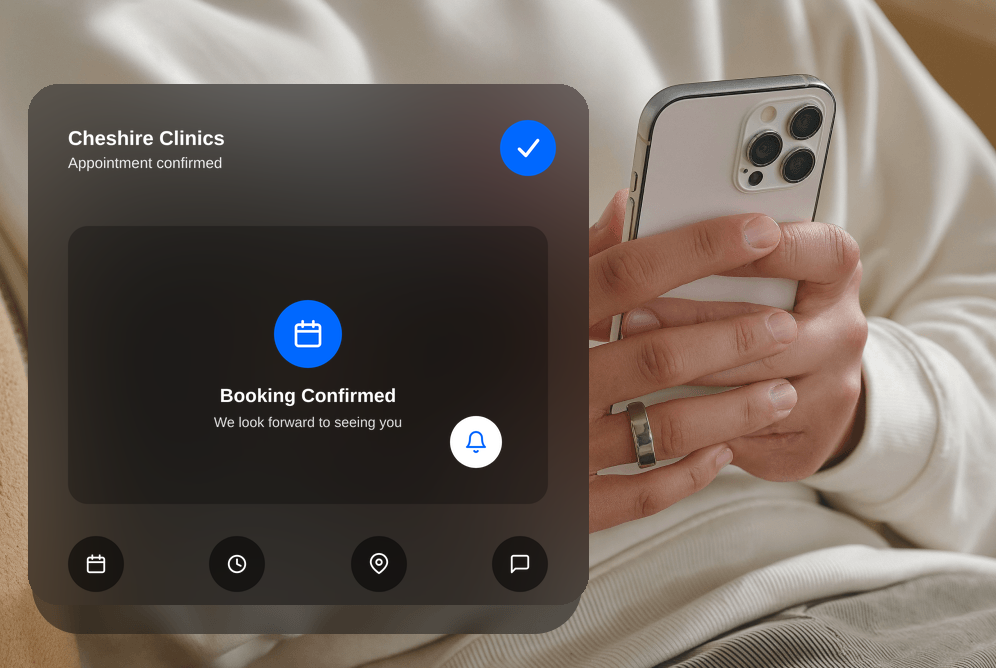
Cheshire Clinics online GP appointment booking confirmation on mobile
01

Book your appointment

Pick a time that suits you — 6am to 10pm, seven days a week, including weekends and bank holidays. £40 for 20 minutes, self-pay, with no insurance to arrange.
5–10 minutes
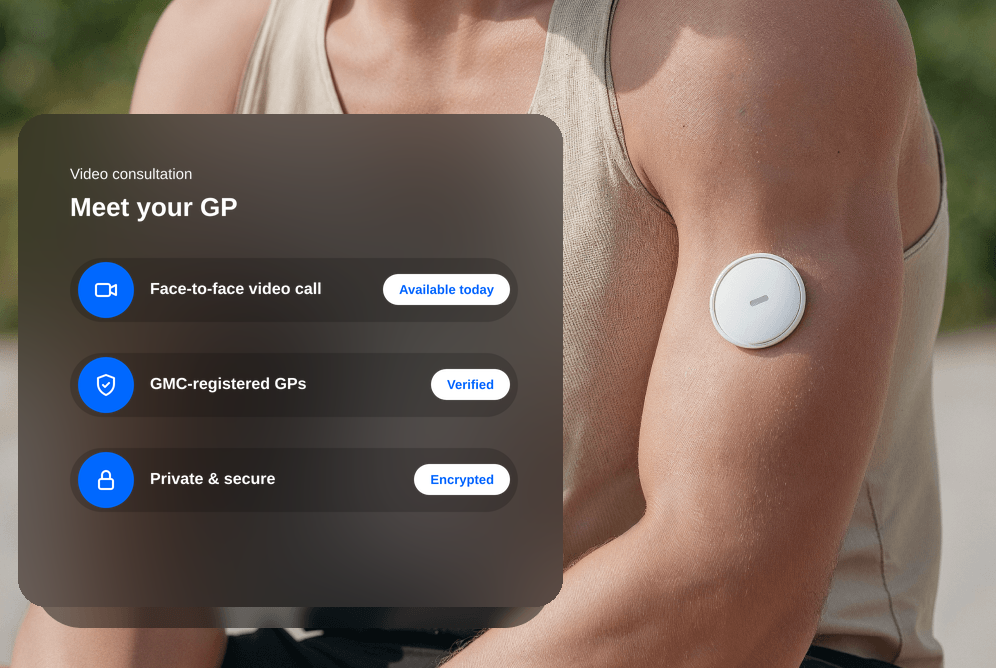
Online video consultation with a GMC-registered private GP
02

Meet your GP

A 20-minute video or phone consultation with a GMC-registered GP — long enough for a proper conversation about your symptoms, your history and what matters to you.
20 minutes
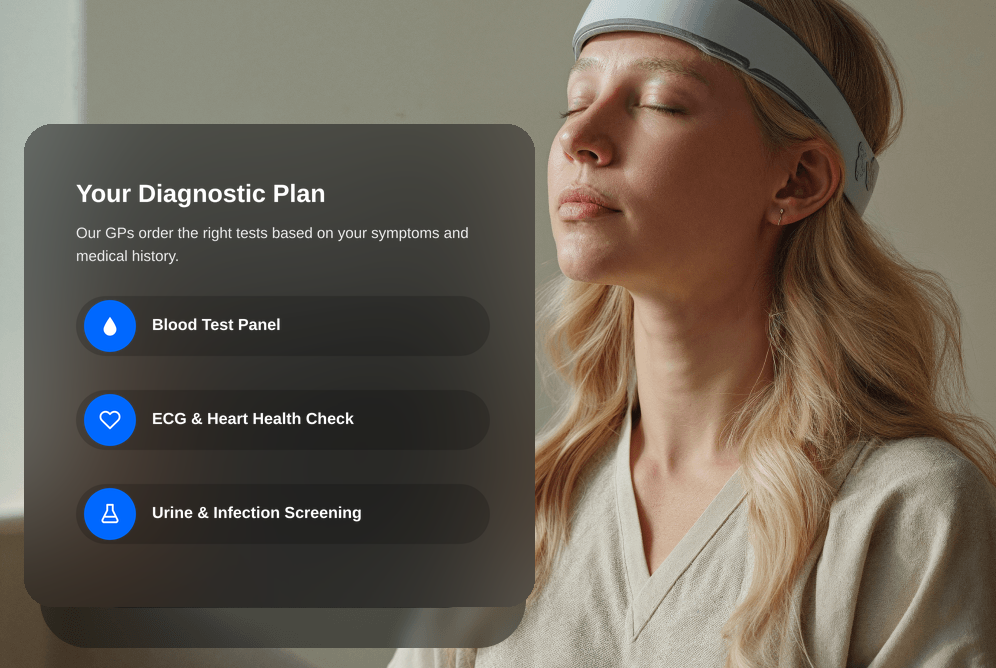
Diagnostic testing plan including blood test panel, ECG and urine screening
03

Tests and referrals, if you need them

Where testing will actually answer the question, we arrange it — blood tests and health screening through our laboratory partner, or a referral for ultrasound, X-ray, CT or MRI through private imaging providers. We will also tell you when a scan is not the right next step.
1–7 days
Personalised results and treatment plan from a private GP consultation
04

Results and next steps

Your GP talks you through what the results mean and agrees the next step with you. Every consultation ends with your treatment plan in writing, and any prescription goes to your own pharmacy.
20 minutes
GP follow-up reminder for ongoing care and progress monitoring
05

Ongoing care and follow-up

Follow-up appointments, progress monitoring and ongoing advice — including saying plainly when something needs in-person or NHS care instead.

Ongoing

How we compare

Time to be seen

Appointment length

Your NHS record in the room

Written treatment plan

Told when a test isn’t needed

Cost

Varies by practice

Typically 10 minutes

Yes, your full record

Not routinely

Usually

Free

Same day

Often 10 to 15 minutes

Usually not

Sometimes charged

Varies by provider

Often a subscription

Questions about our service

How quickly can I be seen?

Same-day access is usually available, from 6am to 10pm, seven days a week. You choose a time that suits you rather than waiting on hold at 8am.

Will I see the same doctor each time?

Yes. Care is led personally by Dr Mohammad Khan, so you are not passed between clinicians. Continuity is the point of a small practice: someone who knows your history and is listening attentively rather than working through a checklist.

Can you see my NHS records?

Yes, with your consent. We can access your Summary Care Record during the consultation, so your current medications, allergies and significant history are in the room. That means fewer questions you have already answered elsewhere, and safer prescribing.

Are you trying to replace my NHS GP?

No. We are not here to replace GPs, only to support them. Your NHS practice remains responsible for your ongoing care, and with your consent we write to them after the consultation. We are useful when you need to be seen sooner, or want more time than a standard appointment allows.

What is included in the appointment?

Twenty unhurried minutes and a comprehensive assessment. A written treatment plan is included, along with any prescription, sick note or referral letter arising from the consultation, at no extra charge.

How much does it cost?

£40 for 20 minutes, self-pay. Membership is optional and never required. Priced for fairness, because we are not here to charge extortionate amounts for access to a doctor.

What does “treatable online” actually mean?

It means the diagnosis can usually be made from your history and photographs, and that treatment can be arranged safely without examining you. Where a condition is not marked treatable online, it is because examination is the diagnosis — listening to a chest, feeling an abdomen, examining an ear or a joint — or because a procedure or device is needed.

Can you prescribe antibiotics?

Yes, where there is a genuine bacterial infection — cellulitis, impetigo, bacterial urine infections, confirmed strep throat. We will also frequently tell you that you do not need one. Most sore throats, coughs, colds and earaches are viral, and an antibiotic gives you the side effects with none of the benefit.

What if the GP cannot help with what I need?

If your problem turns out to be genuinely outside what we can do remotely, the doctor will tell you straight away, point you to the right service, and refund your fee in full. We would rather do that than fill twenty minutes to justify the charge.

What should I do in an emergency?

Call 999 or go to A&E — do not book an online appointment and do not wait for a reply to an email. For urgent problems that are not emergencies, NHS 111 is available 24 hours a day, online or by phone, and can direct you to the right service.

Patient reviews

What our patients say

No reviews published yet.
Ready to see a GP?20 minutes with a GMC-registered doctor. £40, usually same day.
Book a consultation