Home

/

Digestive & Gut

/

Indigestion

Digestive and gut icon - IBS, reflux and inflammatory bowel symptoms assessed by an online GP at Cheshire Clinics
Treatable online

Indigestion

Usually benign — but it is worth knowing which features mean it is not.

£40 · 20 minutes

Same-day availability

6am to 10pm, seven days

Assessed and treated by a GMC-registered GP

Prescriptions, sick notes and referral letters included

A written treatment plan after every appointment

Your NHS records in the room, with your consent

Clinically reviewed by Dr Mohammad Khan · Last reviewed

August 23, 2026

Book a consultation

A 20-minute appointment with a GMC-registered GP for £40. No membership required.

Private GP care led personally by Dr Mohammad Zubair Khan, GMC 7563469.

Why patients choose Cheshire Clinics

GMC registered doctors badge - every Cheshire Clinics consultation is with a General Medical Council registered GP

GMC-registered

Care led personally by Dr Khan

Royal College of General Practitioners badge - RCGP trained private GP consultations at Cheshire Clinics

RCGP-trained

Attentive, unhurried care that listens properly

Google five star reviews badge - Cheshire Clinics private GP online

Highly rated by patients

Five-star Google reviews from the people we have looked after

Care Quality Commission registered badge - Cheshire Clinics online GP service is registered with the CQC, England's independent regulator of health and social care

CQC-registered

Registered with the Care Quality Commission

Same-Day Appointments
Sick Notes
Private Prescriptions
Blood Tests
Menopause & HRT
Weight Management
Mental Health
Specialist Referrals
Same-Day Appointments
Sick Notes
Private Prescriptions
Blood Tests
Menopause & HRT
Weight Management
Mental Health
Specialist Referrals

Overview

Indigestion — dyspepsia — is pain or discomfort in the upper abdomen, often with bloating, fullness after small meals, belching or nausea. It is extremely common, and in most people the stomach lining and gullet are entirely normal when looked at. That does not make the symptoms imaginary; it means the problem is how the stomach is behaving rather than what it looks like.

There are three things this page exists to say.

First: "indigestion" is what a significant number of people call a heart attack. Central chest discomfort with sweating, nausea, or pain into the jaw or left arm — particularly if it comes on with exertion — is cardiac until proven otherwise. People die of this misattribution, and it is more common in women, in people with diabetes, and in anyone who has had indigestion before and assumed this was the same thing.

Second: Helicobacter pylori is the single most useful thing to test for, and it is routinely missed. It is a treatable bacterial infection of the stomach lining, it causes ulcers, and a two-week course of treatment can resolve years of symptoms permanently. Long-term acid suppression without ever testing for it is a common and avoidable mistake.

Third: it is not the same as acid reflux. Reflux is heartburn rising behind the breastbone with an acid taste; indigestion is discomfort centred in the upper abdomen. They overlap and often coexist, but the investigation differs.

Common symptoms

What indigestion feels like

  • Pain or discomfort in the upper abdomen, centrally or slightly to the right, usually related to eating
  • Feeling full very early in a meal, or uncomfortably full long after it — the two most characteristic features
  • Bloating in the upper abdomen
  • Belching, and nausea without vomiting
  • A burning sensation in the stomach area

What tends to come with it

  • Heartburn and an acid taste, where reflux coexists — which it frequently does
  • Symptoms worse with large meals, fatty or spicy food, alcohol, coffee or late eating
  • Worse during stressful periods, which is real rather than dismissive — the gut and the brain share a great deal of wiring

Red flag features — the ones that change everything

Any of these means investigation rather than treatment:

  • Difficulty swallowing, or food sticking — always significant, at any age
  • Unintentional weight loss
  • Persistent vomiting, or vomiting blood, or material like coffee grounds
  • Black tarry stools — which indicate bleeding in the stomach or duodenum
  • Anaemia, or being told you are iron deficient
  • A new lump in the abdomen
  • New indigestion starting over the age of 55, particularly if persistent or unexplained

The features that point at the heart rather than the stomach

  • Discomfort brought on by exertion and relieved by rest — the most important pattern in this whole page
  • Central chest heaviness, tightness or pressure rather than burning
  • Radiating to the jaw, neck, left arm or back
  • With sweating, breathlessness, nausea, or a sense of dread
  • In someone with diabetes, high blood pressure, high cholesterol, or a family history of early heart disease

Causes and risk factors

The common causes

  • Functional dyspepsia — the commonest by far. The stomach empties slowly or is unusually sensitive to normal stretching. Endoscopy is normal. Genuinely uncomfortable, and it responds to treatment
  • Helicobacter pylori infection — present in a substantial minority, more common in people born outside the UK, and the one properly curable cause
  • Peptic ulcer disease — stomach or duodenal ulcers, most often caused by H. pylori or anti-inflammatory drugs
  • Gastro-oesophageal reflux, which overlaps heavily
  • Medication — ibuprofen, naproxen, aspirin and other anti-inflammatories are the leading drug cause; also iron tablets, some antibiotics, bisphosphonates, steroids and SSRIs

Less common but important

  • Gallstones — pain after fatty meals, often in the right upper abdomen and into the right shoulder blade, in episodes lasting hours
  • Coeliac disease — which presents as indigestion or bloating far more often than the classic textbook picture
  • Pancreatic disease — particularly pain going through to the back
  • Stomach cancer — uncommon, and the reason the red flags above exist
  • Cardiac disease presenting as indigestion — covered above, and the reason we ask about exertion

What makes it worse

  • Smoking — which impairs healing and increases acid
  • Alcohol, particularly regular or heavy use
  • Excess weight, especially around the abdomen
  • Large late meals, and lying down within three hours of eating
  • Stress, anxiety and poor sleep — all of which measurably alter gut sensitivity

How it is diagnosed

Most indigestion is diagnosed from the history. A video consultation does this well, and it lets us do the two things that matter most: screen for red flags, and arrange H. pylori testing.

What we ask

  • Where the discomfort is, what it feels like, and its relationship to eating
  • Anything on exertion — asked first, every time
  • All the red flag questions: swallowing, weight, vomiting, stool colour
  • Every medication, including what you buy yourself — anti-inflammatories are the commonest cause people do not think to mention
  • Alcohol, smoking, and what a typical day's eating looks like
  • Where you were born and have lived — relevant to H. pylori likelihood
  • Family history of stomach or oesophageal cancer

Tests we can arrange

  • H. pylori testing — a stool antigen test or urea breath test. The critical practical detail: you must be off any proton pump inhibitor for two weeks, and off antibiotics for four weeks, or the test can be falsely negative. This is the commonest reason a test misses a real infection, and it is rarely explained
  • Full blood count and ferritin — to look for anaemia and iron deficiency, which shift this from a treatment problem to an investigation problem
  • Coeliac screening — and note you must be eating gluten regularly for at least six weeks before the blood test, or it is unreliable
  • Liver function tests, particularly where gallstones are a possibility
  • An abdominal ultrasound for suspected gallstones, which we can refer for

What needs a specialist

Endoscopy is the definitive test and cannot be done remotely. We arrange referral — urgent, on the two-week cancer pathway, where there is difficulty swallowing, weight loss, bleeding, anaemia, or new persistent symptoms over 55. Suspected bleeding or possible cardiac pain goes to hospital the same day, not to a referral letter.

How we treat it online

1. Rule out the heart first

Before anything else. Where the pattern suggests cardiac disease, the correct treatment for indigestion is an ECG and a cardiology assessment — not an antacid. We would rather investigate ten stomachs than miss one heart.

2. Stop what is causing it

Frequently the whole answer. Anti-inflammatories — including the ones you buy yourself — are the commonest treatable cause. We review your medication, and where an anti-inflammatory is genuinely needed, we prescribe stomach protection alongside it.

3. Test and treat H. pylori

The step most worth taking. If the test is positive, eradication is a one to two week course of two antibiotics plus a proton pump inhibitor. It cures the underlying problem rather than suppressing symptoms, and for people who have had indigestion for years it can be the end of it.

Two things determine whether it works: finishing the full course even once you feel better, and a follow-up test at least four weeks later to confirm it has gone — which is routinely skipped, and which we will arrange.

4. Acid suppression, used properly

  • A proton pump inhibitor — a four to eight week course at full dose, then step down. Take it 30 to 60 minutes before breakfast, not at bedtime and not with food: these drugs only work on actively pumping cells, so timing changes the effect substantially. Almost nobody is told this
  • An H2 blocker as an alternative or add-on
  • Antacids or alginates for immediate relief, which do not treat the cause

5. Functional dyspepsia — what actually helps

Where investigation is normal, treatment is still available and worth taking seriously:

  • A trial of acid suppression, and H. pylori eradication if positive
  • A low-dose tricyclic — used at a dose far below the antidepressant range to reduce gut sensitivity. Good evidence, and it works on the nerve signalling rather than the mood
  • Prokinetics where slow stomach emptying and early fullness dominate
  • Smaller, more frequent meals — which is not trivial advice for a stomach that empties slowly

6. What we will not do

  • Prescribe long-term acid suppression without testing for H. pylori. Suppressing symptoms while leaving a curable infection in place is poor medicine
  • Treat red flag symptoms with a prescription instead of a referral
  • Attribute exertional chest discomfort to the stomach without a cardiac assessment
  • Continue a proton pump inhibitor indefinitely without reviewing whether it is still needed
Digestive and gut health consultation - private GP assessment and blood testing for IBS, reflux and bowel symptoms at Cheshire Clinics

Ready to talk to a GP about this?

Book a consultation
Important

When to seek urgent help

Call 999 for:

  • Chest pain or pressure lasting more than 15 minutes, particularly with sweating, breathlessness, nausea, or pain into the jaw, neck, back or arm. Do not assume it is indigestion because you have had indigestion before — heart attacks are frequently mistaken for it, especially in women and in people with diabetes
  • Vomiting blood, or material that looks like coffee grounds
  • Black, tarry, foul-smelling stools — bleeding into the gut
  • Sudden severe abdominal pain with a rigid, board-like abdomen — a possible perforated ulcer
  • Fainting, or feeling faint, alongside abdominal pain

Seek same-day advice for:

  • Severe upper abdominal pain lasting more than a few hours
  • Pain with fever, or with yellowing of the skin or eyes
  • Persistent vomiting and inability to keep fluids down

Arrange an urgent appointment for:

  • Difficulty swallowing, or food sticking — at any age, always
  • Unintentional weight loss with indigestion
  • New, persistent indigestion starting over the age of 55
  • Being told you are anaemic or iron deficient
  • A lump in the abdomen

Book a routine appointment for:

  • Indigestion lasting more than a few weeks, or returning repeatedly
  • Needing antacids most days, or a proton pump inhibitor for months without review
  • Indigestion that has never been tested for H. pylori — which is worth doing before another year of acid suppression
  • Symptoms starting after a new medication

Prevention and self-care

The changes with the most evidence

  • Stop smoking. The single most effective change — it increases acid, impairs ulcer healing and worsens reflux
  • Lose weight if you carry it around the middle. Even a modest reduction lowers pressure on the stomach and measurably reduces symptoms
  • Do not eat within three hours of lying down, and raise the head of the bed on blocks if night symptoms are prominent — extra pillows bend you at the waist and make it worse
  • Smaller meals, more often, rather than one large evening meal
  • Reduce alcohol, and avoid drinking on an empty stomach

Trigger foods — be systematic

Triggers are individual, and blanket elimination diets tend to cost more quality of life than they return. Keep a brief diary for two weeks, identify your triggers, and restrict only those. Common ones: fatty and fried food, spicy food, tomato, citrus, chocolate, coffee, fizzy drinks, mint.

Pain relief without the stomach cost

Use paracetamol rather than ibuprofen for everyday pain if you are prone to indigestion. If you need an anti-inflammatory regularly — for arthritis, for instance — that is a conversation about stomach protection rather than something to manage alone.

Stress and sleep

Not a way of dismissing the symptoms. Stress and poor sleep genuinely alter how the gut senses stretch and pain, which is why functional dyspepsia flares in difficult periods. Anything that reliably reduces your stress load is legitimate treatment here.

What is not worth it

  • Long-term daily antacids masking a symptom you have never had assessed — particularly over 55, or where it is new
  • Cutting out gluten before a coeliac blood test — it makes the test unreliable, and is one of the commonest reasons coeliac disease goes undiagnosed for years
  • Bicarbonate of soda as a regular remedy — a large sodium load with rebound acid
  • IgG "food intolerance" tests, which have no diagnostic validity

NHS or private

Antacids, alginates and low-dose omeprazole are all available over the counter cheaply, and for occasional indigestion that is the right answer. Your NHS GP treats it free.

The question worth asking, and the one most often skipped, is whether Helicobacter pylori has ever been tested for. It is the commonest treatable cause of persistent indigestion and ulcers, the test is non-invasive — a breath or stool test — and eradicating it can end the problem permanently rather than managing it for years.

The practical detail that catches people out: stop any proton pump inhibitor for two weeks before testing, or the result can be falsely negative.

Where a consultation is genuinely worth paying for is arranging that testing promptly, reviewing medicines — anti-inflammatories are a very common cause and are frequently not connected to the symptoms — and, where a PPI has been taken for years without review, planning a proper taper.

What must not simply be treated with acid suppression: difficulty swallowing, unintended weight loss, persistent vomiting, black or tarry stools, anaemia, or new indigestion over the age of 55. Those warrant endoscopy, and acid suppression is very effective at masking them — which is precisely the danger.

NHS endoscopy through the urgent pathway is fast and free, and is the right route where those features are present.

Evidence and guidelines

NICE CG184, Gastro-oesophageal reflux disease and dyspepsia in adults, is the governing guideline. It recommends a test-and-treat approach for H. pylori in uninvestigated dyspepsia, or a trial of full-dose PPI for four weeks.

CG184 advises stopping PPIs two weeks and antibiotics four weeks before H. pylori testing to avoid false negatives — the basis for the practical point above.

CG184 recommends reviewing medication that may cause dyspepsia, including NSAIDs, aspirin, bisphosphonates, calcium antagonists and steroids.

CG184 recommends annual review of long-term acid suppression, with stepping down or stopping where appropriate.

NICE NG12, Suspected cancer, defines urgent direct-access endoscopy criteria — dysphagia at any age, and upper abdominal symptoms with weight loss or aged 55 and over — which underpin the safety advice above.

Common questions

How do I know it is my stomach and not my heart?

You often cannot, and that is the point. The features that should worry you: discomfort brought on by exertion and eased by rest, central pressure rather than burning, radiation to jaw, neck, back or arm, and sweating, breathlessness or nausea alongside. Heart attacks are regularly mistaken for indigestion — more often in women and in people with diabetes. If in doubt, call 999. Nobody will think you wasted their time.

What is H. pylori, and should I be tested?

A bacterium that lives in the stomach lining, causes ulcers, and is curable with a one to two week course. If you have had indigestion for more than a few weeks and never been tested, yes — test. It is the only common cause you can eliminate permanently rather than manage, and it is the step most often skipped.

I had the test and it was negative, but I'm sure something's wrong.

Check the timing. A proton pump inhibitor taken within two weeks of the test, or antibiotics within four weeks, can make it falsely negative. This is the commonest reason a real infection is missed, and it is rarely explained beforehand. If that applies to you, the test is worth repeating properly.

Why isn't my omeprazole working?

Frequently the timing. These drugs only act on acid pumps that are actively working, so they need to be taken 30 to 60 minutes before your first meal of the day — not at bedtime, not with food, not as needed. Taken correctly they are considerably more effective, and most people are never told this.

Is it safe to take a PPI for years?

For many people the benefit outweighs the risk, and some conditions require it long term. But it should be a deliberate decision reviewed periodically, not a repeat prescription nobody has looked at. Long-term use without ever testing for H. pylori is the part worth correcting, and stepping down to the lowest effective dose is often possible.

Is indigestion the same as acid reflux?

No, though they overlap and frequently coexist. Reflux is burning rising behind the breastbone with an acid or bitter taste; indigestion is discomfort in the upper abdomen with fullness, bloating or nausea. The distinction matters because it changes what we test for — see our acid reflux page.

The endoscopy was normal. So why do I still have symptoms?

Most likely functional dyspepsia — a stomach that empties slowly or is unusually sensitive to normal stretching. A normal endoscopy means nothing dangerous is there; it does not mean nothing is wrong. It is a real diagnosis with real treatments, including low-dose tricyclics that work on gut nerve signalling rather than mood.

Should I cut out gluten to see if that helps?

Get tested first. Coeliac blood tests require you to have been eating gluten regularly for at least six weeks; cutting it out beforehand makes the test unreliable and means the diagnosis is either missed or requires months of reintroduction to confirm. Coeliac disease presents as indigestion and bloating far more often than most people realise, so it is worth doing properly.

Could my painkillers be causing this?

Very possibly. Ibuprofen, naproxen and aspirin are the leading drug cause of indigestion and ulcers, including at over-the-counter doses. Tell us about anything you buy yourself — it is the detail most often left out, and sometimes the whole answer. Paracetamol is the safer everyday alternative for the stomach.


Dr Mohammad Zubair Khan, GMC-registered private GP and founder of Cheshire Clinics
Clinically reviewed by Dr Mohammad Zubair Khan, GMC 7563469
Last reviewed

August 23, 2026

How it works

What happens when you book

£40 for a 20-minute appointment with a GMC-registered GP, 6am to 10pm, seven days a week. Membership is optional and never required.
Cheshire Clinics online GP appointment booking confirmation on mobile
01

Book your appointment

Pick a time that suits you — 6am to 10pm, seven days a week, including weekends and bank holidays. £40 for 20 minutes, self-pay, with no insurance to arrange.
5–10 minutes
Online video consultation with a GMC-registered private GP
02

Meet your GP

A 20-minute video or phone consultation with a GMC-registered GP — long enough for a proper conversation about your symptoms, your history and what matters to you.
20 minutes
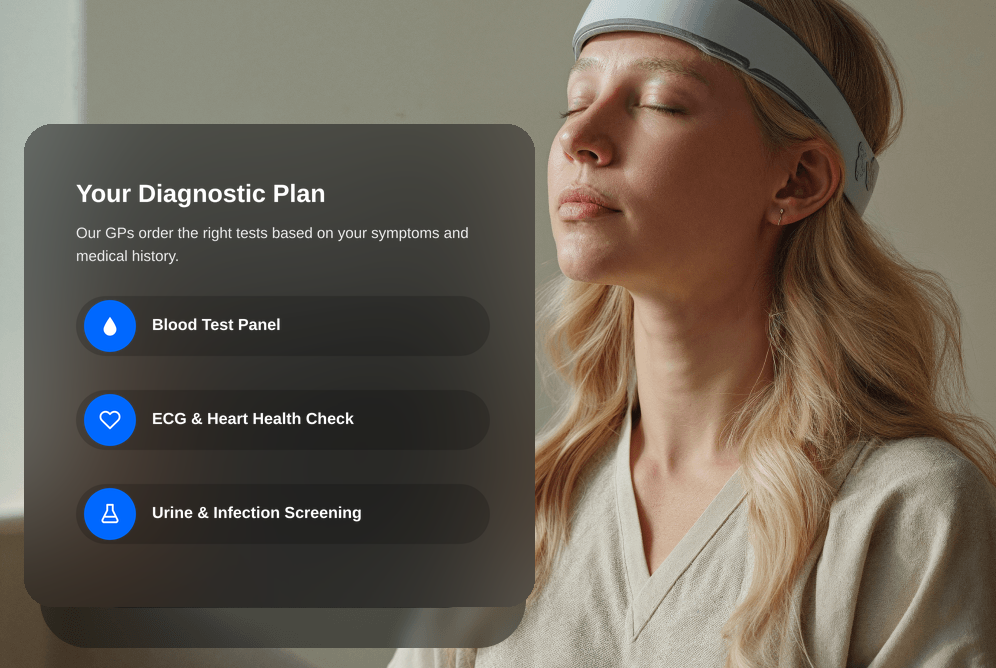
Diagnostic testing plan including blood test panel, ECG and urine screening
03

Tests and referrals, if you need them

Where testing will actually answer the question, we arrange it — blood tests and health screening through our laboratory partner, or a referral for ultrasound, X-ray, CT or MRI through private imaging providers. We will also tell you when a scan is not the right next step.
1–7 days
Personalised results and treatment plan from a private GP consultation
04

Results and next steps

Your GP talks you through what the results mean and agrees the next step with you. Every consultation ends with your treatment plan in writing, and any prescription goes to your own pharmacy.
20 minutes
GP follow-up reminder for ongoing care and progress monitoring
05

Ongoing care and follow-up

Follow-up appointments, progress monitoring and ongoing advice — including saying plainly when something needs in-person or NHS care instead.

Ongoing

How we compare

Time to be seen

Appointment length

Your NHS record in the room

Written treatment plan

Told when a test isn’t needed

Cost

Varies by practice

Typically 10 minutes

Yes, your full record

Not routinely

Usually

Free

Same day

Often 10 to 15 minutes

Usually not

Sometimes charged

Varies by provider

Often a subscription

Questions about our service

How quickly can I be seen?

Same-day access is usually available, from 6am to 10pm, seven days a week. You choose a time that suits you rather than waiting on hold at 8am.

Will I see the same doctor each time?

Yes. Care is led personally by Dr Mohammad Khan, so you are not passed between clinicians. Continuity is the point of a small practice: someone who knows your history and is listening attentively rather than working through a checklist.

Can you see my NHS records?

Yes, with your consent. We can access your Summary Care Record during the consultation, so your current medications, allergies and significant history are in the room. That means fewer questions you have already answered elsewhere, and safer prescribing.

Are you trying to replace my NHS GP?

No. We are not here to replace GPs, only to support them. Your NHS practice remains responsible for your ongoing care, and with your consent we write to them after the consultation. We are useful when you need to be seen sooner, or want more time than a standard appointment allows.

What is included in the appointment?

Twenty unhurried minutes and a comprehensive assessment. A written treatment plan is included, along with any prescription, sick note or referral letter arising from the consultation, at no extra charge.

How much does it cost?

£40 for 20 minutes, self-pay. Membership is optional and never required. Priced for fairness, because we are not here to charge extortionate amounts for access to a doctor.

What does “treatable online” actually mean?

It means the diagnosis can usually be made from your history and photographs, and that treatment can be arranged safely without examining you. Where a condition is not marked treatable online, it is because examination is the diagnosis — listening to a chest, feeling an abdomen, examining an ear or a joint — or because a procedure or device is needed.

Can you prescribe antibiotics?

Yes, where there is a genuine bacterial infection — cellulitis, impetigo, bacterial urine infections, confirmed strep throat. We will also frequently tell you that you do not need one. Most sore throats, coughs, colds and earaches are viral, and an antibiotic gives you the side effects with none of the benefit.

What if the GP cannot help with what I need?

If your problem turns out to be genuinely outside what we can do remotely, the doctor will tell you straight away, point you to the right service, and refund your fee in full. We would rather do that than fill twenty minutes to justify the charge.

What should I do in an emergency?

Call 999 or go to A&E — do not book an online appointment and do not wait for a reply to an email. For urgent problems that are not emergencies, NHS 111 is available 24 hours a day, online or by phone, and can direct you to the right service.

Patient reviews

What our patients say

No reviews published yet.
Ready to see a GP?20 minutes with a GMC-registered doctor. £40, usually same day.
Book a consultation