Home

/

Medicines A-Z

/

Hypromellose Eye Drops

Hypromellose Eye Drops

Artificial tears for dry eye. The commonest mistake is using them occasionally rather than regularly.

Eye & Ear

Artificial tears, Isopto Plain, Tears Naturale

Explained by a GMC-registered GP, not a leaflet

Honest about what we can and cannot prescribe remotely

Side effects given the same weight as benefits

Your NHS records in the room, with your consent

Clinically reviewed by Dr Mohammad Khan · Last reviewed

September 8, 2026

Book a consultation

A 20-minute appointment with a GMC-registered GP for £40. Same-day appointments are usually available, 6am to 10pm, seven days a week.

Private GP care led personally by Dr Mohammad Zubair Khan, GMC 7563469.

Why patients choose Cheshire Clinics

GMC registered doctors badge - every Cheshire Clinics consultation is with a General Medical Council registered GP

GMC-registered

Care led personally by Dr Khan

Royal College of General Practitioners badge - RCGP trained private GP consultations at Cheshire Clinics

RCGP-trained

Attentive, unhurried care that listens properly

Google five star reviews badge - Cheshire Clinics private GP online

Highly rated by patients

Five-star Google reviews from the people we have looked after

Care Quality Commission registered badge - Cheshire Clinics online GP service is registered with the CQC, England's independent regulator of health and social care

CQC-registered

Registered with the Care Quality Commission

Same-Day Appointments
Sick Notes
Private Prescriptions
Blood Tests
Menopause & HRT
Weight Management
Mental Health
Specialist Referrals
Same-Day Appointments
Sick Notes
Private Prescriptions
Blood Tests
Menopause & HRT
Weight Management
Mental Health
Specialist Referrals

What it is

Hypromellose is a lubricant — artificial tears. It is a thickened water-based solution that coats the eye surface, replacing the watery layer of the tear film and easing the grittiness and burning of dry eye.

It replaces tears; it does not make you produce more. That is why it works while it is in the eye and stops working when it drains away, and why frequency matters far more than strength.

It is the thinnest and cheapest of the artificial tears, which makes it a sensible starting point rather than the most powerful option.

What it is used for

  • Dry eye — gritty, burning, tired eyes
  • Screen-related eye strain, where blink rate falls dramatically
  • Dryness from contact lenses, air conditioning or central heating
  • Dry eye associated with blepharitis, the menopause, or medicines that dry the eyes

Watery, streaming eyes are frequently dry eyes. A poor-quality tear film irritates the surface, which triggers reflex watering — so "my eyes water constantly" is often treated with lubricants rather than anything to dry them.

How to take it

  • One drop into each eye, as often as needed — typically four times a day to start, and hourly is entirely acceptable in more severe dry eye
  • Pull the lower lid down, look up, and drop into the pocket formed
  • Close the eye gently for 30 seconds afterwards rather than blinking hard, which pumps the drop straight down the tear duct

The dosing mistake almost everyone makes

People use these when their eyes feel bad, a couple of times a day, and conclude they do not work. Dry eye responds to regular, pre-emptive use — four to six times daily, every day, for several weeks before judging it.

If you use several eye drops

Leave at least five minutes between different drops, or the second simply washes out the first.

Need this reviewed or prescribed?

Book a consultation

Side effects

  • Brief blurred vision for a minute or two after instilling — expected, and a reason not to drive immediately after
  • Mild stinging
  • Sticky lashes

The important issue is preservative, not the lubricant itself. Benzalkonium chloride, the preservative in multi-use bottles, is itself irritating to the eye surface with frequent use.

If you need drops more than four to six times a day, or you have moderate or severe dry eye, use preservative-free single-use vials. Otherwise the preservative can perpetuate the very problem you are treating.

Not suitable if

  • You have had a reaction to hypromellose or to the preservative
  • You wear soft contact lenses and the drops are preserved — use preservative-free, or remove lenses and wait 15 minutes

These need assessment rather than lubricants:

  • Pain rather than discomfort, or true photophobia
  • Reduced vision
  • A red eye with pain and blurring, particularly in a contact lens wearer — that needs same-day attention
  • A foreign body sensation after an injury

Interactions and monitoring

No systemic interactions — essentially nothing is absorbed.

Separate from other eye drops by five minutes.

What is worth checking

Dry eye is often a symptom of something else. Consider an underactive thyroid, autoimmune disease such as Sjögren's or rheumatoid arthritis, the menopause, and — very commonly — medication.

Medicines that dry the eyes: antihistamines, older antidepressants, diuretics, beta blockers, isotretinoin and some blood pressure tablets.

Can we prescribe this?

Yes, though hypromellose costs very little over the counter and rarely needs a prescription.

What a consultation adds is working out why the eyes are dry, which is where the actual treatment usually lies.

  • Blepharitis, which is extremely common and responds to lid hygiene rather than drops
  • Medication review — several common medicines dry the eyes
  • Screening for thyroid or autoimmune causes where the picture fits
  • Escalating sensibly — to preservative-free, then to thicker gels or night ointment

What we cannot do is examine your eye. A painful red eye, reduced vision, or any eye problem in a contact lens wearer needs seeing in person the same day, and we will say so rather than send drops.

A prescription is never guaranteed. This page is information, not an offer to supply.

Cost and supply

Hypromellose is among the cheapest medicines in this A-Z — a bottle costs little more than a pound over the counter, and own-brand is identical.

Preservative-free single-use vials cost noticeably more, but are the right choice if you need drops more than four to six times a day.

NHS prescriptions are free in Wales.

Free, and often more effective than the drops

  • Warm compresses and lid hygiene — where blepharitis or meibomian gland problems are the cause, this treats the disease rather than the symptom, and it is the single most under-done intervention in dry eye
  • Deliberate blinking at screens. Blink rate falls by more than half when concentrating, and the 20-20-20 habit genuinely helps
  • Moving the screen below eye level, which reduces the exposed eye surface
  • Humidifying the room, and avoiding direct air from vents and car heaters

Stopping or switching

There is nothing to stop — use them as long as they help. Artificial tears are not habit-forming and the eye does not become dependent on them.

If they are not enough

Step up in this order:

  • Increase the frequency first — under-use is the usual issue
  • Switch to preservative-free if using them more than four to six times daily
  • Move to a thicker preparation — carbomer gel or sodium hyaluronate, which last longer between doses
  • Add an ointment at night for morning symptoms, accepting that it blurs vision while in
  • Treat the lids — if there is blepharitis, no amount of lubricant will fix it

When to escalate beyond drops

Persistent dry eye despite proper treatment warrants an optometry or ophthalmology assessment. Ciclosporin drops and punctal plugs both exist for more severe disease.

Common questions

How often should I use them?

Far more often than most people do — four to six times a day, every day, not just when the eyes feel bad. Regular pre-emptive use is what works.

My eyes water constantly. Can they be dry?

Yes, and this is one of the most useful things on this page. A poor tear film irritates the eye surface, which triggers reflex watering. Watery eyes are frequently treated with lubricants.

Do I need preservative-free?

If you use drops more than four to six times a day, yes. The preservative in multi-use bottles is itself irritating with frequent use, and can keep the problem going.

Can I use them with contact lenses?

Only preservative-free ones with lenses in. Otherwise take the lenses out, use the drop, and wait 15 minutes.

Why do they blur my vision?

Because they are thicker than tears. It lasts a minute or two. Thicker gels blur more and last longer, which is why they suit bedtime.

When is a dry, gritty eye something more serious?

Pain rather than discomfort, reduced vision, light sensitivity, or a red painful eye — particularly in a contact lens wearer. Those need same-day in-person assessment, not drops.

Dr Mohammad Zubair Khan, GMC-registered private GP and founder of Cheshire Clinics

Clinically reviewed by Dr Mohammad Zubair Khan, GMC 7563469

Last reviewed

September 8, 2026

How it works

What happens when you book

£40 for a 20-minute appointment with a GMC-registered GP, 6am to 10pm, seven days a week. Membership is optional and never required.
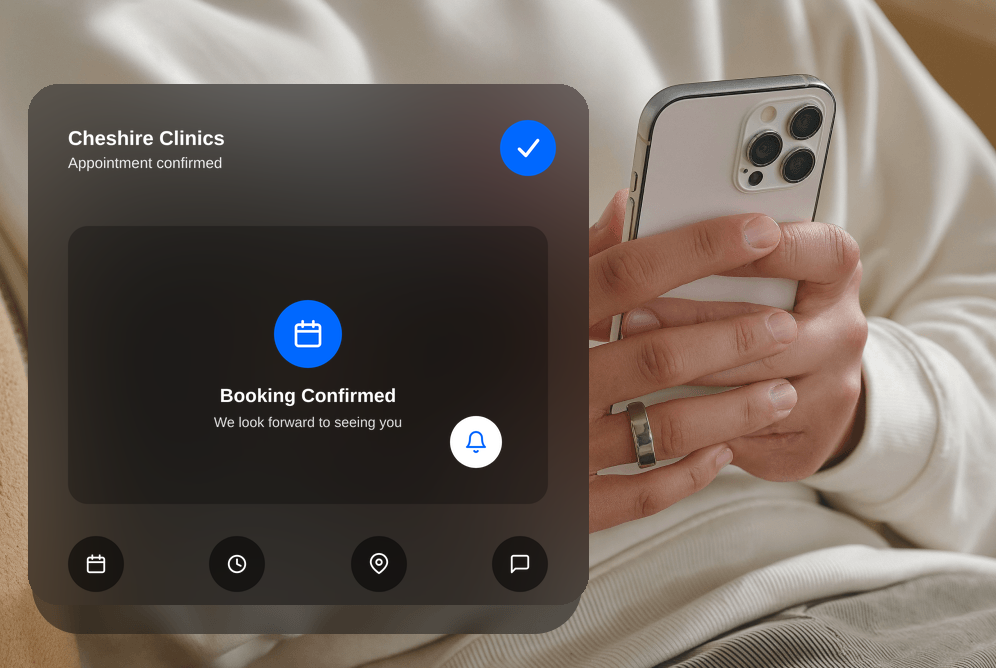
Cheshire Clinics online GP appointment booking confirmation on mobile
01

Book your appointment

Pick a time that suits you — 6am to 10pm, seven days a week, including weekends and bank holidays. £40 for 20 minutes, self-pay, with no insurance to arrange.
5–10 minutes
Online video consultation with a GMC-registered private GP
02

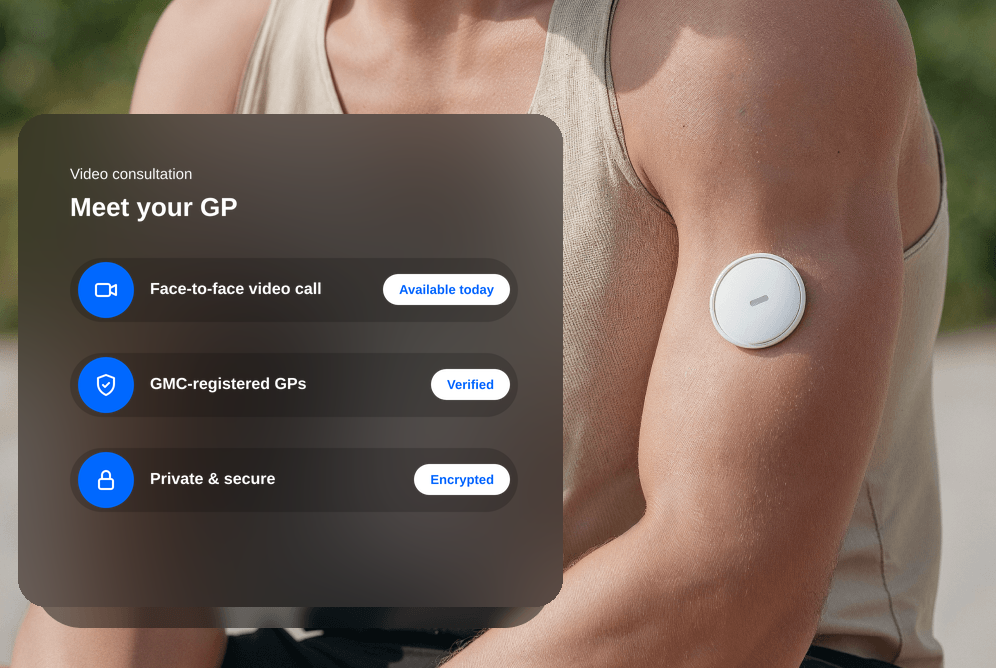
Meet your GP

A 20-minute video or phone consultation with a GMC-registered GP — long enough for a proper conversation about your symptoms, your history and what matters to you.
20 minutes
Diagnostic testing plan including blood test panel, ECG and urine screening
03

Tests and referrals, if you need them

Where testing will actually answer the question, we arrange it — blood tests and health screening through our laboratory partner, or a referral for ultrasound, X-ray, CT or MRI through private imaging providers. We will also tell you when a scan is not the right next step.
1–7 days
Personalised results and treatment plan from a private GP consultation
04

Results and next steps

Your GP talks you through what the results mean and agrees the next step with you. Every consultation ends with your treatment plan in writing, and any prescription goes to your own pharmacy.
20 minutes
GP follow-up reminder for ongoing care and progress monitoring
05

Ongoing care and follow-up

Follow-up appointments, progress monitoring and ongoing advice — including saying plainly when something needs in-person or NHS care instead.

Ongoing

How we compare

Time to be seen

Appointment length

Your NHS record in the room

Written treatment plan

Told when a test isn’t needed

Cost

Varies by practice

Typically 10 minutes

Yes, your full record

Not routinely

Usually

Free

Same day

Often 10 to 15 minutes

Usually not

Sometimes charged

Varies by provider

Often a subscription

Questions about our service

How quickly can I be seen?

Same-day access is usually available, from 6am to 10pm, seven days a week. You choose a time that suits you rather than waiting on hold at 8am.

Will I see the same doctor each time?

Yes. Care is led personally by Dr Mohammad Khan, so you are not passed between clinicians. Continuity is the point of a small practice: someone who knows your history and is listening attentively rather than working through a checklist.

Can you see my NHS records?

Yes, with your consent. We can access your Summary Care Record during the consultation, so your current medications, allergies and significant history are in the room. That means fewer questions you have already answered elsewhere, and safer prescribing.

Are you trying to replace my NHS GP?

No. We are not here to replace GPs, only to support them. Your NHS practice remains responsible for your ongoing care, and with your consent we write to them after the consultation. We are useful when you need to be seen sooner, or want more time than a standard appointment allows.

What is included in the appointment?

Twenty unhurried minutes and a comprehensive assessment. A written treatment plan is included, along with any prescription, sick note or referral letter arising from the consultation, at no extra charge.

How much does it cost?

£40 for 20 minutes, self-pay. Membership is optional and never required. Priced for fairness, because we are not here to charge extortionate amounts for access to a doctor.

What does “treatable online” actually mean?

It means the diagnosis can usually be made from your history and photographs, and that treatment can be arranged safely without examining you. Where a condition is not marked treatable online, it is because examination is the diagnosis — listening to a chest, feeling an abdomen, examining an ear or a joint — or because a procedure or device is needed.

Can you prescribe antibiotics?

Yes, where there is a genuine bacterial infection — cellulitis, impetigo, bacterial urine infections, confirmed strep throat. We will also frequently tell you that you do not need one. Most sore throats, coughs, colds and earaches are viral, and an antibiotic gives you the side effects with none of the benefit.

What if the GP cannot help with what I need?

If your problem turns out to be genuinely outside what we can do remotely, the doctor will tell you straight away, point you to the right service, and refund your fee in full. We would rather do that than fill twenty minutes to justify the charge.

What should I do in an emergency?

Call 999 or go to A&E — do not book an online appointment and do not wait for a reply to an email. For urgent problems that are not emergencies, NHS 111 is available 24 hours a day, online or by phone, and can direct you to the right service.

Patient reviews

What our patients say

No reviews published yet.
Ready to see a GP?20 minutes with a GMC-registered doctor. £40, usually same day.
Book a consultation