Home

/

Medicines A-Z

/

Permethrin

Permethrin

The standard scabies treatment. Most failures come from how it was applied, not from the cream itself.

Skin

Lyclear Dermal Cream

Explained by a GMC-registered GP, not a leaflet

Honest about what we can and cannot prescribe remotely

Side effects given the same weight as benefits

Your NHS records in the room, with your consent

Clinically reviewed by Dr Mohammad Khan · Last reviewed

September 8, 2026

Book a consultation

A 20-minute appointment with a GMC-registered GP for £40. Same-day appointments are usually available, 6am to 10pm, seven days a week.

Private GP care led personally by Dr Mohammad Zubair Khan, GMC 7563469.

Why patients choose Cheshire Clinics

GMC registered doctors badge - every Cheshire Clinics consultation is with a General Medical Council registered GP

GMC-registered

Care led personally by Dr Khan

Royal College of General Practitioners badge - RCGP trained private GP consultations at Cheshire Clinics

RCGP-trained

Attentive, unhurried care that listens properly

Google five star reviews badge - Cheshire Clinics private GP online

Highly rated by patients

Five-star Google reviews from the people we have looked after

Care Quality Commission registered badge - Cheshire Clinics online GP service is registered with the CQC, England's independent regulator of health and social care

CQC-registered

Registered with the Care Quality Commission

Same-Day Appointments
Sick Notes
Private Prescriptions
Blood Tests
Menopause & HRT
Weight Management
Mental Health
Specialist Referrals
Same-Day Appointments
Sick Notes
Private Prescriptions
Blood Tests
Menopause & HRT
Weight Management
Mental Health
Specialist Referrals

What it is

Permethrin is an insecticide applied to the skin. It paralyses and kills the scabies mite and its eggs by acting on the mite's nerve cells.

It is first-line treatment for scabies in the UK, as a 5% cream applied over the whole body.

Very little passes through the skin, which is why it is considered safe in children over 2 months and, on specialist advice, in pregnancy.

What it is used for

  • Scabies — the main use
  • Head lice, as a separate lower-strength product, though dimeticone is now generally preferred

How to take it

Application is the whole treatment

Most treatment failures are application failures. The cream has to reach every part of the skin surface, and the places people miss are the places the mites live.

  1. Apply to cool, dry skin — not after a hot bath, which increases absorption and reduces how long it stays where it is needed
  2. Cover the entire body from the jawline down, including the soles of the feet
  3. Do not miss: between every finger and toe, under every fingernail and toenail, the navel, the genitals, the buttock cleft, behind the ears, and the wrists
  4. In children under 2, the elderly, and anyone immunosuppressed, include the scalp, face, neck and ears, avoiding eyes and mouth
  5. Leave on for 8 to 12 hours — usually overnight — then wash off
  6. Reapply to any area washed during that time, particularly hands after handwashing

Repeat it

A second full application one week later is standard, to catch mites hatched from eggs that survived.

Everyone at once

All household members and any sexual contacts from the previous two months must be treated on the same day, symptoms or not. Scabies is passed on well before it itches.

Need this reviewed or prescribed?

Book a consultation

Side effects

  • Stinging or burning on application — common, and worse on broken or excoriated skin
  • Itching and redness, which often worsen briefly after treatment
  • Dryness
  • Rash

The itching that continues for two to four weeks after successful treatment is not a side effect and not failure. It is an allergic reaction to dead mites and their debris in the skin, and it settles on its own. This causes an enormous amount of unnecessary re-treatment.

Not suitable if

  • You have had a reaction to permethrin or to chrysanthemums
  • The child is under 2 months
  • Skin is extensively broken or infected — that usually needs treating first
  • You are pregnant or breastfeeding, without advice — though permethrin is generally the preferred option where treatment is needed

Interactions and monitoring

No significant drug interactions — almost nothing is absorbed.

No monitoring bloods are required.

What does need review is whether it worked, and that judgement is made at four to six weeks, not at one week — because the itch outlasts the mite by a considerable margin.

Can we prescribe this?

Yes, and scabies is a condition where a video consultation works reasonably well — the burrows, the distribution and the history are usually recognisable, particularly with good photographs of the finger webs and wrists.

Permethrin 5% cream is also available from pharmacies without a prescription, so for a confident diagnosis that is often the quicker route, and we will say so.

What a consultation genuinely adds:

  • Getting the application instructions right, which is where most treatments fail
  • Making sure contacts are treated simultaneously, which is the other place it fails
  • Explaining the post-treatment itch so you do not re-treat unnecessarily
  • Recognising crusted (Norwegian) scabies, which is different and needs urgent specialist input

Where we will send you elsewhere: crusted scabies, extensive secondary infection, or an outbreak in a care home, which is a public health matter.

A prescription is never guaranteed. This page is information, not an offer to supply.

Cost and supply

Permethrin 5% cream is inexpensive and available over the counter. One 30g tube treats one average adult once — so a household of four needing two applications each needs considerably more than people expect, and running out mid-application is a common cause of failure.

Buy enough for everyone, for both applications, before you start.

NHS prescriptions are free in Wales.

Where not to spend

  • Tea tree oil and "natural" scabies treatments. Weak evidence, and they delay effective treatment while you remain infectious
  • Fumigating the house or professional cleaning. Unnecessary — the mite survives only two to three days off a human. Hot-wash bedding and clothing from the last three days, and bag anything that cannot be washed for 72 hours

Stopping or switching

It is two applications a week apart, then you stop.

The itch afterwards is expected

Itching commonly continues for two to four weeks after successful treatment, because your immune system is still reacting to dead mite material. Treat it with emollients, an antihistamine at night, and mild topical steroid if needed — not with more permethrin.

When it genuinely has not worked

Suspect failure only if there are new burrows or new spots appearing more than two weeks after the second application. Before switching, check:

  • Was the whole body covered, including under the nails and between the toes?
  • Was it left on for a full 8 to 12 hours?
  • Was it reapplied to hands after washing?
  • Were all contacts treated on the same day?

Alternatives

  • Malathion 0.5% aqueous lotion — the usual second-line topical
  • Oral ivermectin — used in crusted scabies, outbreaks, or where topical treatment cannot be applied properly. Specialist or considered use

Common questions

Why am I still itching two weeks later?

Because your immune system is still reacting to dead mites, not because the treatment failed. The itch commonly lasts two to four weeks. Re-treating at this point is the commonest mistake, and it just irritates the skin further.

Do I really have to put it everywhere?

Yes — jawline to soles, including between the toes and under the nails. The mites concentrate in finger webs, wrists and genitals, and a missed area is a reservoir that reinfects everything else.

Does everyone in the house need treating?

Yes, on the same day, including anyone without symptoms — scabies is passed on for weeks before it itches. Sexual contacts from the last two months too.

Do I need to clean the whole house?

No. The mite dies within two to three days away from skin. Hot-wash bedding, towels and clothing used in the last three days; bag anything unwashable for 72 hours. Professional cleaning is a waste of money.

Can I take it in pregnancy?

Permethrin is generally the preferred treatment where scabies needs treating in pregnancy, but take advice first rather than starting on your own.

Should I have a hot bath first?

No — that is old advice and it is wrong. Hot skin increases absorption into the bloodstream and reduces how much stays in the skin where the mites are. Apply to cool, dry skin.

Dr Mohammad Zubair Khan, GMC-registered private GP and founder of Cheshire Clinics

Clinically reviewed by Dr Mohammad Zubair Khan, GMC 7563469

Last reviewed

September 8, 2026

How it works

What happens when you book

£40 for a 20-minute appointment with a GMC-registered GP, 6am to 10pm, seven days a week. Membership is optional and never required.
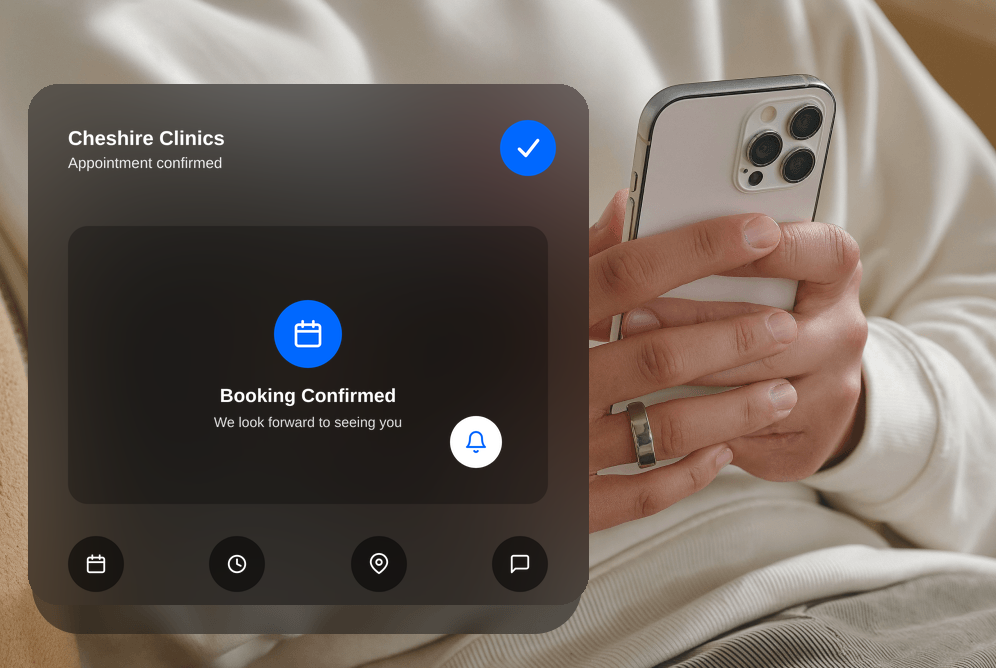
Cheshire Clinics online GP appointment booking confirmation on mobile
01

Book your appointment

Pick a time that suits you — 6am to 10pm, seven days a week, including weekends and bank holidays. £40 for 20 minutes, self-pay, with no insurance to arrange.
5–10 minutes
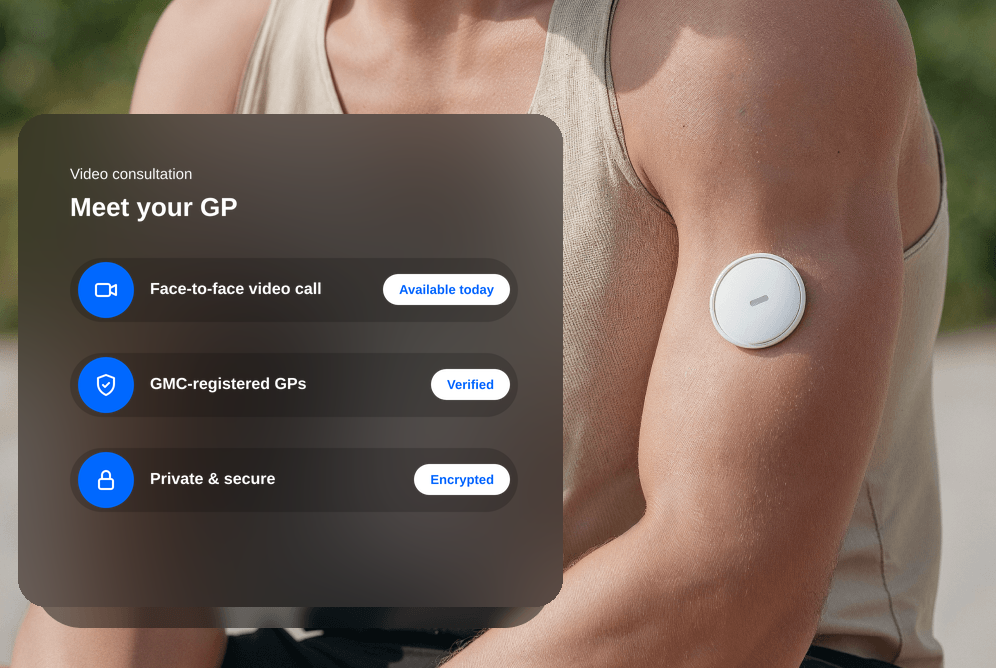
Online video consultation with a GMC-registered private GP
02

Meet your GP

A 20-minute video or phone consultation with a GMC-registered GP — long enough for a proper conversation about your symptoms, your history and what matters to you.
20 minutes
Diagnostic testing plan including blood test panel, ECG and urine screening
03

Tests and referrals, if you need them

Where testing will actually answer the question, we arrange it — blood tests and health screening through our laboratory partner, or a referral for ultrasound, X-ray, CT or MRI through private imaging providers. We will also tell you when a scan is not the right next step.
1–7 days
Personalised results and treatment plan from a private GP consultation
04

Results and next steps

Your GP talks you through what the results mean and agrees the next step with you. Every consultation ends with your treatment plan in writing, and any prescription goes to your own pharmacy.
20 minutes
GP follow-up reminder for ongoing care and progress monitoring
05

Ongoing care and follow-up

Follow-up appointments, progress monitoring and ongoing advice — including saying plainly when something needs in-person or NHS care instead.

Ongoing

How we compare

Time to be seen

Appointment length

Your NHS record in the room

Written treatment plan

Told when a test isn’t needed

Cost

Varies by practice

Typically 10 minutes

Yes, your full record

Not routinely

Usually

Free

Same day

Often 10 to 15 minutes

Usually not

Sometimes charged

Varies by provider

Often a subscription

Questions about our service

How quickly can I be seen?

Same-day access is usually available, from 6am to 10pm, seven days a week. You choose a time that suits you rather than waiting on hold at 8am.

Will I see the same doctor each time?

Yes. Care is led personally by Dr Mohammad Khan, so you are not passed between clinicians. Continuity is the point of a small practice: someone who knows your history and is listening attentively rather than working through a checklist.

Can you see my NHS records?

Yes, with your consent. We can access your Summary Care Record during the consultation, so your current medications, allergies and significant history are in the room. That means fewer questions you have already answered elsewhere, and safer prescribing.

Are you trying to replace my NHS GP?

No. We are not here to replace GPs, only to support them. Your NHS practice remains responsible for your ongoing care, and with your consent we write to them after the consultation. We are useful when you need to be seen sooner, or want more time than a standard appointment allows.

What is included in the appointment?

Twenty unhurried minutes and a comprehensive assessment. A written treatment plan is included, along with any prescription, sick note or referral letter arising from the consultation, at no extra charge.

How much does it cost?

£40 for 20 minutes, self-pay. Membership is optional and never required. Priced for fairness, because we are not here to charge extortionate amounts for access to a doctor.

What does “treatable online” actually mean?

It means the diagnosis can usually be made from your history and photographs, and that treatment can be arranged safely without examining you. Where a condition is not marked treatable online, it is because examination is the diagnosis — listening to a chest, feeling an abdomen, examining an ear or a joint — or because a procedure or device is needed.

Can you prescribe antibiotics?

Yes, where there is a genuine bacterial infection — cellulitis, impetigo, bacterial urine infections, confirmed strep throat. We will also frequently tell you that you do not need one. Most sore throats, coughs, colds and earaches are viral, and an antibiotic gives you the side effects with none of the benefit.

What if the GP cannot help with what I need?

If your problem turns out to be genuinely outside what we can do remotely, the doctor will tell you straight away, point you to the right service, and refund your fee in full. We would rather do that than fill twenty minutes to justify the charge.

What should I do in an emergency?

Call 999 or go to A&E — do not book an online appointment and do not wait for a reply to an email. For urgent problems that are not emergencies, NHS 111 is available 24 hours a day, online or by phone, and can direct you to the right service.

Patient reviews

What our patients say

No reviews published yet.
Ready to see a GP?20 minutes with a GMC-registered doctor. £40, usually same day.
Book a consultation