Home

/

Medicines A-Z

/

Fluticasone Nasal Spray

Fluticasone Nasal Spray

More effective than any antihistamine for a blocked nose — and the treatment most often abandoned before it has had a chance.

Allergy

Flixonase, Avamys, Pirinase, steroid nasal spray

Explained by a GMC-registered GP, not a leaflet

Honest about what we can and cannot prescribe remotely

Side effects given the same weight as benefits

Your NHS records in the room, with your consent

Clinically reviewed by Dr Mohammad Khan · Last reviewed

August 30, 2026

Book a consultation

A 20-minute appointment with a GMC-registered GP for £40. Same-day appointments are usually available, 6am to 10pm, seven days a week.

Private GP care led personally by Dr Mohammad Zubair Khan, GMC 7563469.

Why patients choose Cheshire Clinics

GMC registered doctors badge - every Cheshire Clinics consultation is with a General Medical Council registered GP

GMC-registered

Care led personally by Dr Khan

Royal College of General Practitioners badge - RCGP trained private GP consultations at Cheshire Clinics

RCGP-trained

Attentive, unhurried care that listens properly

Google five star reviews badge - Cheshire Clinics private GP online

Highly rated by patients

Five-star Google reviews from the people we have looked after

Care Quality Commission registered badge - Cheshire Clinics online GP service is registered with the CQC, England's independent regulator of health and social care

CQC-registered

Registered with the Care Quality Commission

Same-Day Appointments
Sick Notes
Private Prescriptions
Blood Tests
Menopause & HRT
Weight Management
Mental Health
Specialist Referrals
Same-Day Appointments
Sick Notes
Private Prescriptions
Blood Tests
Menopause & HRT
Weight Management
Mental Health
Specialist Referrals

What it is

Fluticasone is a corticosteroid delivered directly into the nose, where it reduces the inflammation that causes blockage, sneezing, itching and a runny nose.

It is not the same as a decongestant spray, which works within minutes and causes rebound congestion if used beyond a week. Fluticasone works slowly and can be used for months.

Because it acts locally and very little is absorbed, it carries a small fraction of the risk of steroid tablets — which is the point people most need reassuring about.

What it is used for

  • Hay fever and seasonal allergic rhinitis — the most effective single treatment
  • Perennial allergic rhinitis from dust mites, pets or mould
  • Non-allergic rhinitis
  • Nasal polyps, at higher strengths

Guidelines place steroid nasal sprays above antihistamines for moderate or severe symptoms, particularly where blockage is the dominant problem.

How to take it

Technique is most of the treatment

The commonest mistake is aiming the spray at the middle of the nose. That directs it at the septum, causing irritation and nosebleeds while missing the tissue that needs treating.

  1. Blow your nose gently first
  2. Tilt your head slightly forward, not back
  3. Use the opposite hand — left hand for the right nostril. This angles the spray outwards automatically
  4. Aim towards the outer corner of the eye on that side, away from the septum
  5. Sniff gently, not hard. Sniffing hard sends it straight down the throat and out of the nose
  6. Do not tip your head back afterwards

Timing

  • Usually one or two sprays into each nostril once daily
  • Start two weeks before your season and continue daily throughout
  • Allow two full weeks before judging it. It does very little on day one

Using it only on bad days is the second commonest reason it fails. It is a preventer, not a reliever.

Need this reviewed or prescribed?

Book a consultation

Side effects

Common and usually minor

  • Nasal irritation, dryness or crusting
  • Nosebleeds — usually a sign the spray is hitting the septum, and correcting technique resolves it
  • An unpleasant taste if it runs down the throat
  • Sore throat

Rare

  • Septal perforation, with prolonged incorrect technique
  • Raised eye pressure or cataract, with prolonged high-dose use
  • Systemic steroid effects — very unlikely at nasal doses, but relevant if you also use steroid inhalers and creams

Not suitable if

  • You have an untreated nasal infection
  • You have had recent nasal surgery or injury, until healed
  • You have had a reaction to it before

It is generally considered acceptable in pregnancy, where local treatment is preferred over tablets. Mention it if you are or might be pregnant.

In children, growth is monitored during prolonged use as a precaution, though the effect at nasal doses is minimal.

Interactions and monitoring

  • Ritonavir and ketoconazole — raise steroid levels significantly; avoid together
  • Other steroids — inhalers, creams and tablets all add to total steroid exposure

No routine monitoring for normal use. Prolonged high-dose use, or use alongside other steroids, warrants review — and eye checks where there is glaucoma risk.

Can we prescribe this?

Yes, and this is a good example of where a consultation adds more than the prescription does.

What we add is the part that determines whether it works: technique, timing and expectations. A steroid nasal spray used incorrectly, started too late, or abandoned after five days will fail regardless of which brand it is.

We would also want to check what else is going on. Persistent one-sided nasal blockage, nosebleeds, facial pain or loss of smell that does not recover needs assessment rather than another spray.

Cost and supply

Fluticasone is off patent and generic versions are inexpensive, and own-brand versions cost considerably less than branded ones containing the same drug.

On a private prescription the cost is broadly comparable to the England NHS prescription charge. NHS prescriptions are free in Wales.

Beclometasone and mometasone sprays are also available and work equally well — the choice between them matters far less than whether it is used correctly.

One bottle typically lasts a month or more, which makes it inexpensive for a whole season.

Stopping or switching

Continue through your season rather than stopping when symptoms settle — the symptoms settled because the spray is working.

For year-round symptoms it can be used long term, with periodic review.

If it is not working, check these in order

  1. Technique — opposite hand, aim outward, sniff gently. This alone fixes most failures
  2. Duration — have you given it two full weeks?
  3. Consistency — daily, or only on bad days?
  4. Add an antihistamine for itching, sneezing and eye symptoms
  5. Consider a combined steroid and antihistamine spray, which is more effective than either alone

What to avoid

Decongestant sprays such as xylometazoline must not be used for more than about a week. Beyond that they cause rebound congestion that is worse than the original problem and difficult to escape.

Common questions

Are steroid nasal sprays safe long term?

Yes, for most people. Very little is absorbed, and the risks are nothing like those of steroid tablets. That distinction causes a lot of unnecessary worry and a lot of untreated hay fever.

Why am I getting nosebleeds?

Almost always because the spray is hitting the septum. Use the opposite hand and aim towards the outer corner of the eye. It usually stops within days.

How long before it works?

Some effect in a few days, full effect at two weeks. Most people who say it did not work stopped before then.

Should I use it or an antihistamine?

The spray for a blocked nose; the antihistamine for itching, sneezing and eyes. Most people with significant hay fever benefit from both.

Can I use it in pregnancy?

Generally yes — local treatment is preferred to tablets. Worth confirming with whoever is caring for you.

Do I have to keep using it once I feel better?

Yes, through the season. Feeling better is the treatment working, not the allergy ending.

Dr Mohammad Zubair Khan, GMC-registered private GP and founder of Cheshire Clinics

Clinically reviewed by Dr Mohammad Zubair Khan, GMC 7563469

Last reviewed

August 30, 2026

How it works

What happens when you book

£40 for a 20-minute appointment with a GMC-registered GP, 6am to 10pm, seven days a week. Membership is optional and never required.
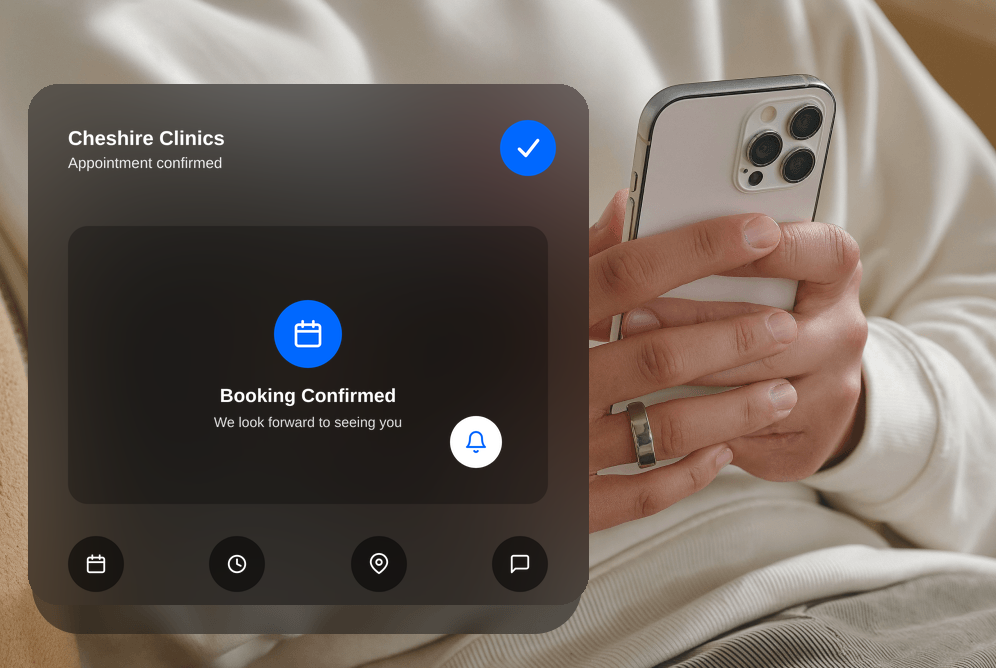
Cheshire Clinics online GP appointment booking confirmation on mobile
01

Book your appointment

Pick a time that suits you — 6am to 10pm, seven days a week, including weekends and bank holidays. £40 for 20 minutes, self-pay, with no insurance to arrange.
5–10 minutes
Online video consultation with a GMC-registered private GP
02

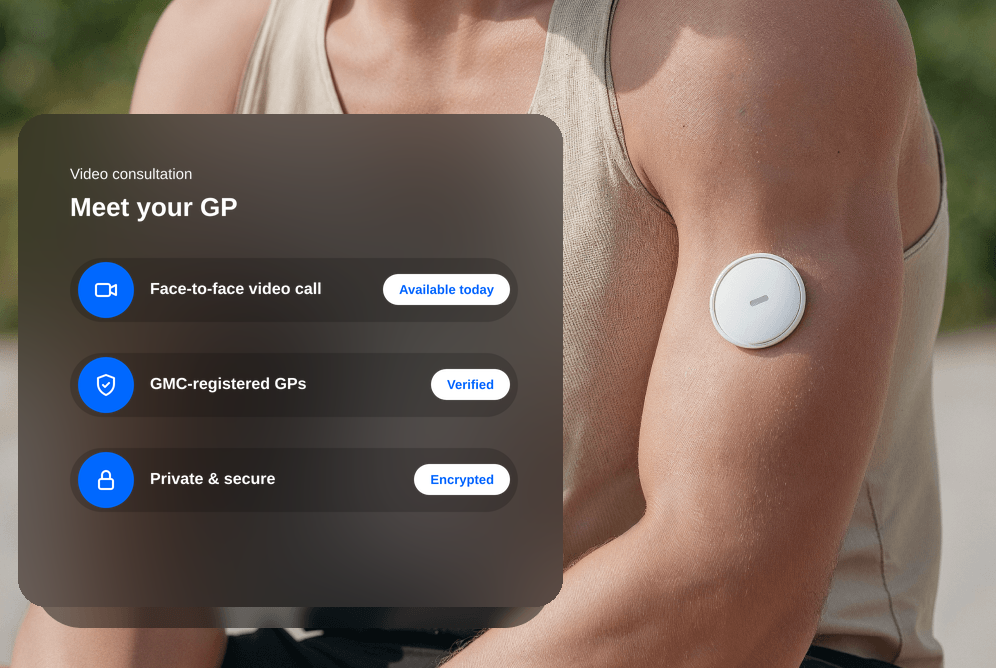
Meet your GP

A 20-minute video or phone consultation with a GMC-registered GP — long enough for a proper conversation about your symptoms, your history and what matters to you.
20 minutes
Diagnostic testing plan including blood test panel, ECG and urine screening
03

Tests and referrals, if you need them

Where testing will actually answer the question, we arrange it — blood tests and health screening through our laboratory partner, or a referral for ultrasound, X-ray, CT or MRI through private imaging providers. We will also tell you when a scan is not the right next step.
1–7 days
Personalised results and treatment plan from a private GP consultation
04

Results and next steps

Your GP talks you through what the results mean and agrees the next step with you. Every consultation ends with your treatment plan in writing, and any prescription goes to your own pharmacy.
20 minutes
GP follow-up reminder for ongoing care and progress monitoring
05

Ongoing care and follow-up

Follow-up appointments, progress monitoring and ongoing advice — including saying plainly when something needs in-person or NHS care instead.

Ongoing

How we compare

Time to be seen

Appointment length

Your NHS record in the room

Written treatment plan

Told when a test isn’t needed

Cost

Varies by practice

Typically 10 minutes

Yes, your full record

Not routinely

Usually

Free

Same day

Often 10 to 15 minutes

Usually not

Sometimes charged

Varies by provider

Often a subscription

Questions about our service

How quickly can I be seen?

Same-day access is usually available, from 6am to 10pm, seven days a week. You choose a time that suits you rather than waiting on hold at 8am.

Will I see the same doctor each time?

Yes. Care is led personally by Dr Mohammad Khan, so you are not passed between clinicians. Continuity is the point of a small practice: someone who knows your history and is listening attentively rather than working through a checklist.

Can you see my NHS records?

Yes, with your consent. We can access your Summary Care Record during the consultation, so your current medications, allergies and significant history are in the room. That means fewer questions you have already answered elsewhere, and safer prescribing.

Are you trying to replace my NHS GP?

No. We are not here to replace GPs, only to support them. Your NHS practice remains responsible for your ongoing care, and with your consent we write to them after the consultation. We are useful when you need to be seen sooner, or want more time than a standard appointment allows.

What is included in the appointment?

Twenty unhurried minutes and a comprehensive assessment. A written treatment plan is included, along with any prescription, sick note or referral letter arising from the consultation, at no extra charge.

How much does it cost?

£40 for 20 minutes, self-pay. Membership is optional and never required. Priced for fairness, because we are not here to charge extortionate amounts for access to a doctor.

What does “treatable online” actually mean?

It means the diagnosis can usually be made from your history and photographs, and that treatment can be arranged safely without examining you. Where a condition is not marked treatable online, it is because examination is the diagnosis — listening to a chest, feeling an abdomen, examining an ear or a joint — or because a procedure or device is needed.

Can you prescribe antibiotics?

Yes, where there is a genuine bacterial infection — cellulitis, impetigo, bacterial urine infections, confirmed strep throat. We will also frequently tell you that you do not need one. Most sore throats, coughs, colds and earaches are viral, and an antibiotic gives you the side effects with none of the benefit.

What if the GP cannot help with what I need?

If your problem turns out to be genuinely outside what we can do remotely, the doctor will tell you straight away, point you to the right service, and refund your fee in full. We would rather do that than fill twenty minutes to justify the charge.

What should I do in an emergency?

Call 999 or go to A&E — do not book an online appointment and do not wait for a reply to an email. For urgent problems that are not emergencies, NHS 111 is available 24 hours a day, online or by phone, and can direct you to the right service.

Patient reviews

What our patients say

No reviews published yet.
Ready to see a GP?20 minutes with a GMC-registered doctor. £40, usually same day.
Book a consultation