Home

/

Medicines A-Z

/

Mebendazole

Mebendazole

A single tablet that treats threadworm — but the household measures around it are what stop it coming straight back.

Infection

Ovex, Vermox

Explained by a GMC-registered GP, not a leaflet

Honest about what we can and cannot prescribe remotely

Side effects given the same weight as benefits

Your NHS records in the room, with your consent

Clinically reviewed by Dr Mohammad Khan · Last reviewed

September 8, 2026

Book a consultation

A 20-minute appointment with a GMC-registered GP for £40. Same-day appointments are usually available, 6am to 10pm, seven days a week.

Private GP care led personally by Dr Mohammad Zubair Khan, GMC 7563469.

Why patients choose Cheshire Clinics

GMC registered doctors badge - every Cheshire Clinics consultation is with a General Medical Council registered GP

GMC-registered

Care led personally by Dr Khan

Royal College of General Practitioners badge - RCGP trained private GP consultations at Cheshire Clinics

RCGP-trained

Attentive, unhurried care that listens properly

Google five star reviews badge - Cheshire Clinics private GP online

Highly rated by patients

Five-star Google reviews from the people we have looked after

Care Quality Commission registered badge - Cheshire Clinics online GP service is registered with the CQC, England's independent regulator of health and social care

CQC-registered

Registered with the Care Quality Commission

Same-Day Appointments
Sick Notes
Private Prescriptions
Blood Tests
Menopause & HRT
Weight Management
Mental Health
Specialist Referrals
Same-Day Appointments
Sick Notes
Private Prescriptions
Blood Tests
Menopause & HRT
Weight Management
Mental Health
Specialist Referrals

What it is

Mebendazole is an anthelmintic — a medicine that kills intestinal worms. It stops the worm absorbing glucose, so it runs out of energy and dies over a day or two.

Very little is absorbed into your bloodstream, which is why it acts almost entirely in the gut and is generally well tolerated.

It kills the worms but not the eggs. That single fact explains everything else on this page — the repeat dose, the hygiene week, and why treating one person alone almost always fails.

What it is used for

  • Threadworm — by far the commonest use, and extremely common in school-age children
  • Roundworm, whipworm and hookworm

Threadworm is not a sign of a dirty house. It is spread by microscopic eggs on fingers and surfaces and it goes round schools continuously. It carries a stigma it does not deserve, and that stigma is the main reason people do not treat it promptly.

How to take it

The dose

  • A single 100mg tablet or 5ml of suspension, chewed or swallowed
  • A second identical dose two weeks later — this catches worms hatched from eggs that survived the first dose

The part people skip

Treat every member of the household on the same day, whether or not they have symptoms. Most people carrying threadworm have no itching at all, and an untreated adult reinfects the treated child within days.

This is the single commonest reason threadworm keeps coming back, and it is entirely avoidable.

The hygiene week

For two weeks after the dose:

  • Wash all bedding, nightwear and towels on the first morning — hot wash, and do not shake them out
  • Shower or bathe first thing every morning, which removes eggs laid overnight
  • Keep nails short, and discourage nail-biting and thumb-sucking
  • Wash hands and scrub under the nails before eating and after the toilet
  • Damp-dust and vacuum bedrooms; wear close-fitting underwear at night

Need this reviewed or prescribed?

Book a consultation

Side effects

Generally very well tolerated, because almost none of it is absorbed.

  • Abdominal pain or cramping
  • Diarrhoea, wind
  • Nausea

Uncommon but worth knowing: rash, and rarely a more serious skin reaction — stop and seek advice for any blistering rash, or a rash with mouth ulcers or fever.

Very rarely, effects on the blood count with the prolonged high doses used for other worm infections — not with the single doses used for threadworm.

Not suitable if

  • You are pregnant, particularly in the first trimester — hygiene measures alone are usually recommended instead, and threadworm is harmless to the pregnancy
  • You are breastfeeding, without advice
  • The child is under 2, unless specifically advised
  • You have had a reaction to it before
  • You have significant liver disease

Interactions and monitoring

  • Metronidazole — avoid the combination; rare reports of serious skin reactions
  • Carbamazepine and phenytoin reduce mebendazole levels
  • Cimetidine raises them

No monitoring is needed for the single doses used in threadworm.

Can we prescribe this?

Yes — but you almost certainly do not need us to, and we would rather say so.

Mebendazole is available over the counter as Ovex from any pharmacy for a few pounds, including packs sized for a whole family. For straightforward threadworm that is faster and cheaper than any consultation.

Where a consultation is genuinely useful:

  • It keeps coming back despite treatment — usually a household or hygiene issue rather than a resistant worm, and worth unpicking properly
  • You are pregnant or breastfeeding, where the advice is different
  • The child is under 2
  • You are not certain it is threadworm — itching at night has other causes

A prescription is never guaranteed. This page is information, not an offer to supply.

Cost and supply

Ovex and generic mebendazole cost a few pounds over the counter, and family packs are available. It is one of the cheapest treatments in this A-Z.

Buy the family pack rather than a single tablet. Treating one person is usually wasted money, because the household reinfects them.

NHS prescriptions are free in Wales, and free for children in England.

Where not to spend

  • "Parasite cleanse" supplements and herbal worming products. No evidence, and they delay a treatment that costs less than a coffee
  • Specialist disinfectant sprays — a hot wash and a vacuum do the same job

Stopping or switching

There is nothing to stop — it is one dose, repeated once at two weeks.

If it comes back

Reinfection is far more likely than treatment failure. Work through these before assuming the medicine did not work:

  • Was everyone in the household treated, on the same day?
  • Was the second dose at two weeks actually taken?
  • Was the bedding washed on the morning of treatment?
  • Are nails short, and is there thumb-sucking or nail-biting?

Persistent symptoms despite all of that warrant assessment rather than a third round — night-time itching also comes from eczema, other causes, and skin conditions around the anus.

Common questions

Does everyone in the house really need treating?

Yes, and this is the step people skip. Most people carrying threadworm have no symptoms whatsoever, so an untreated adult quietly reinfects the treated child within days. Treat everyone on the same day.

Why do I need a second dose?

Because mebendazole kills the worms but not the eggs. The dose at two weeks catches anything that hatched after the first one.

Does it mean my house is dirty?

No, and this genuinely matters. Threadworm spreads through schools continuously via microscopic eggs on fingers. It has nothing to do with hygiene standards, and the embarrassment around it is the main reason people delay treating it.

Can I take it in pregnancy?

Generally it is avoided, particularly in the first trimester. Hygiene measures alone usually clear it, and threadworm does no harm to the pregnancy. Ask before taking anything.

How long until the itching stops?

Usually within a few days. Itching that persists beyond a week or two, despite the full household being treated, is worth having looked at — it may not be threadworm.

Do I need to boil-wash everything, every day?

No. One thorough hot wash of bedding and nightwear on the morning of treatment, then a normal routine plus a morning shower and short nails. The morning shower matters more than the laundry.

Dr Mohammad Zubair Khan, GMC-registered private GP and founder of Cheshire Clinics

Clinically reviewed by Dr Mohammad Zubair Khan, GMC 7563469

Last reviewed

September 8, 2026

How it works

What happens when you book

£40 for a 20-minute appointment with a GMC-registered GP, 6am to 10pm, seven days a week. Membership is optional and never required.
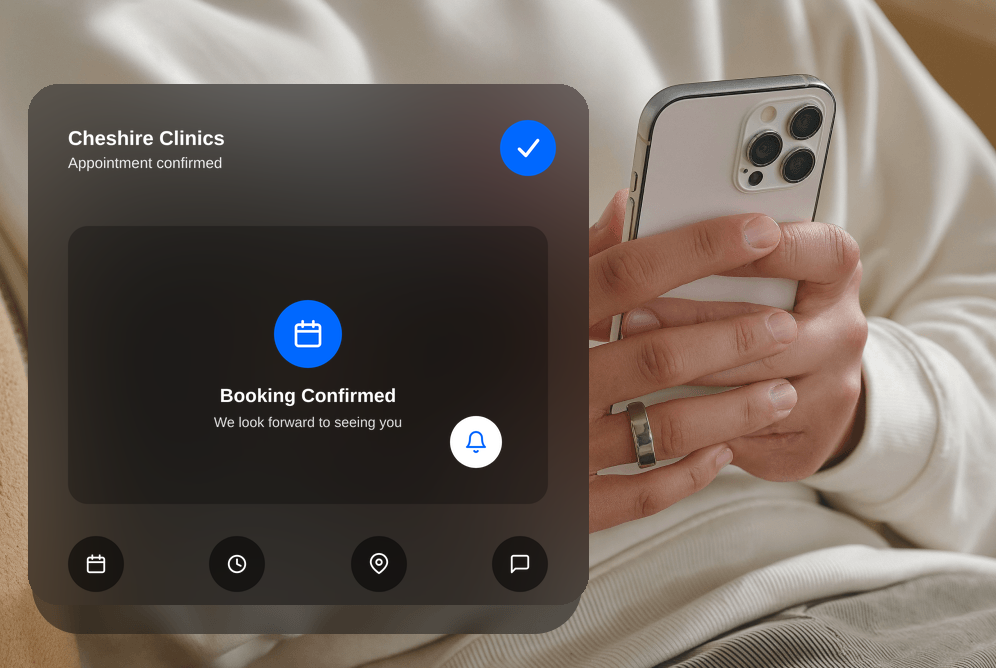
Cheshire Clinics online GP appointment booking confirmation on mobile
01

Book your appointment

Pick a time that suits you — 6am to 10pm, seven days a week, including weekends and bank holidays. £40 for 20 minutes, self-pay, with no insurance to arrange.
5–10 minutes
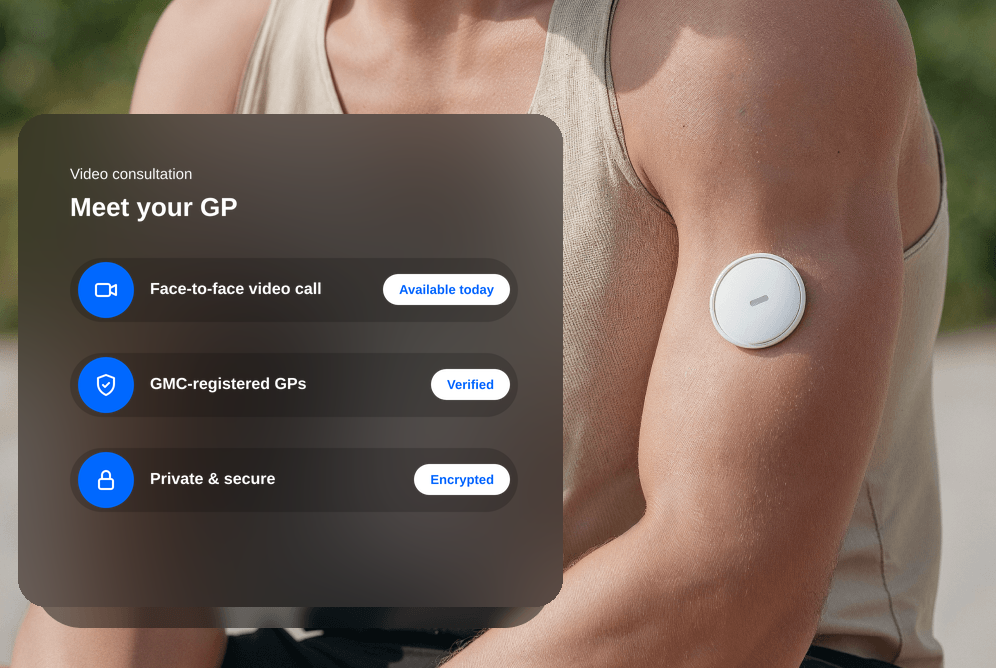
Online video consultation with a GMC-registered private GP
02

Meet your GP

A 20-minute video or phone consultation with a GMC-registered GP — long enough for a proper conversation about your symptoms, your history and what matters to you.
20 minutes
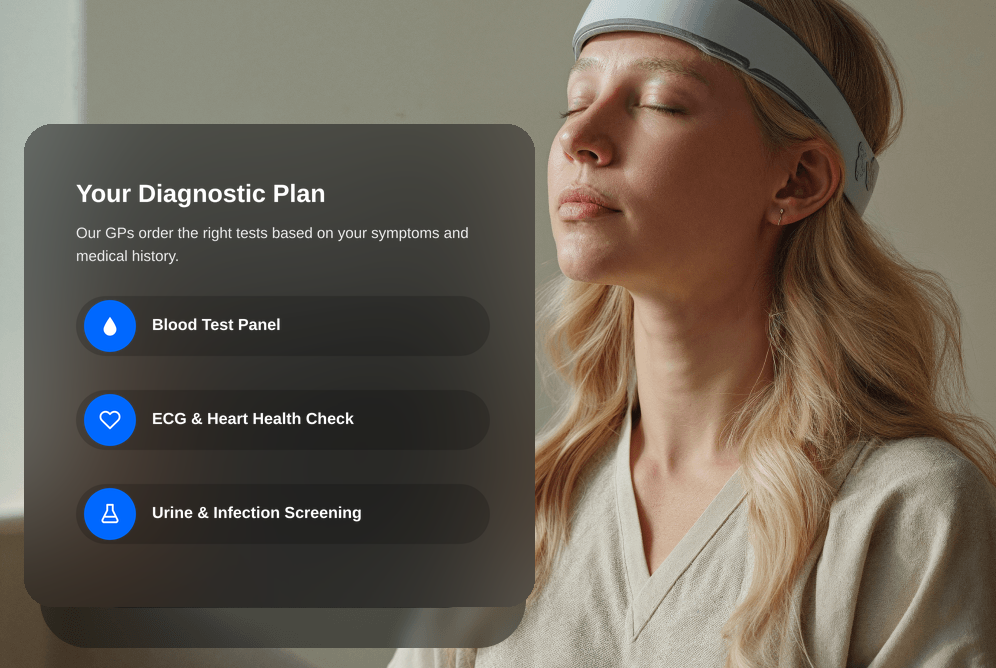
Diagnostic testing plan including blood test panel, ECG and urine screening
03

Tests and referrals, if you need them

Where testing will actually answer the question, we arrange it — blood tests and health screening through our laboratory partner, or a referral for ultrasound, X-ray, CT or MRI through private imaging providers. We will also tell you when a scan is not the right next step.
1–7 days
Personalised results and treatment plan from a private GP consultation
04

Results and next steps

Your GP talks you through what the results mean and agrees the next step with you. Every consultation ends with your treatment plan in writing, and any prescription goes to your own pharmacy.
20 minutes
GP follow-up reminder for ongoing care and progress monitoring
05

Ongoing care and follow-up

Follow-up appointments, progress monitoring and ongoing advice — including saying plainly when something needs in-person or NHS care instead.

Ongoing

How we compare

Time to be seen

Appointment length

Your NHS record in the room

Written treatment plan

Told when a test isn’t needed

Cost

Varies by practice

Typically 10 minutes

Yes, your full record

Not routinely

Usually

Free

Same day

Often 10 to 15 minutes

Usually not

Sometimes charged

Varies by provider

Often a subscription

Questions about our service

How quickly can I be seen?

Same-day access is usually available, from 6am to 10pm, seven days a week. You choose a time that suits you rather than waiting on hold at 8am.

Will I see the same doctor each time?

Yes. Care is led personally by Dr Mohammad Khan, so you are not passed between clinicians. Continuity is the point of a small practice: someone who knows your history and is listening attentively rather than working through a checklist.

Can you see my NHS records?

Yes, with your consent. We can access your Summary Care Record during the consultation, so your current medications, allergies and significant history are in the room. That means fewer questions you have already answered elsewhere, and safer prescribing.

Are you trying to replace my NHS GP?

No. We are not here to replace GPs, only to support them. Your NHS practice remains responsible for your ongoing care, and with your consent we write to them after the consultation. We are useful when you need to be seen sooner, or want more time than a standard appointment allows.

What is included in the appointment?

Twenty unhurried minutes and a comprehensive assessment. A written treatment plan is included, along with any prescription, sick note or referral letter arising from the consultation, at no extra charge.

How much does it cost?

£40 for 20 minutes, self-pay. Membership is optional and never required. Priced for fairness, because we are not here to charge extortionate amounts for access to a doctor.

What does “treatable online” actually mean?

It means the diagnosis can usually be made from your history and photographs, and that treatment can be arranged safely without examining you. Where a condition is not marked treatable online, it is because examination is the diagnosis — listening to a chest, feeling an abdomen, examining an ear or a joint — or because a procedure or device is needed.

Can you prescribe antibiotics?

Yes, where there is a genuine bacterial infection — cellulitis, impetigo, bacterial urine infections, confirmed strep throat. We will also frequently tell you that you do not need one. Most sore throats, coughs, colds and earaches are viral, and an antibiotic gives you the side effects with none of the benefit.

What if the GP cannot help with what I need?

If your problem turns out to be genuinely outside what we can do remotely, the doctor will tell you straight away, point you to the right service, and refund your fee in full. We would rather do that than fill twenty minutes to justify the charge.

What should I do in an emergency?

Call 999 or go to A&E — do not book an online appointment and do not wait for a reply to an email. For urgent problems that are not emergencies, NHS 111 is available 24 hours a day, online or by phone, and can direct you to the right service.

Patient reviews

What our patients say

No reviews published yet.
Ready to see a GP?20 minutes with a GMC-registered doctor. £40, usually same day.
Book a consultation