Mental health icon - anxiety, depression and low mood assessed by a GMC-registered online GP at Cheshire Clinics
Treatable online

Stress

Normal in short bursts. Damaging when it never switches off.

£40 · 20 minutes

Same-day availability

6am to 10pm, seven days

Assessed and treated by a GMC-registered GP

Prescriptions, sick notes and referral letters included

A written treatment plan after every appointment

Your NHS records in the room, with your consent

Clinically reviewed by Dr Mohammad Khan · Last reviewed

August 23, 2026

Book a consultation

A 20-minute appointment with a GMC-registered GP for £40. No membership required.

Private GP care led personally by Dr Mohammad Zubair Khan, GMC 7563469.

Why patients choose Cheshire Clinics

GMC registered doctors badge - every Cheshire Clinics consultation is with a General Medical Council registered GP

GMC-registered

Care led personally by Dr Khan

Royal College of General Practitioners badge - RCGP trained private GP consultations at Cheshire Clinics

RCGP-trained

Attentive, unhurried care that listens properly

Google five star reviews badge - Cheshire Clinics private GP online

Highly rated by patients

Five-star Google reviews from the people we have looked after

Care Quality Commission registered badge - Cheshire Clinics online GP service is registered with the CQC, England's independent regulator of health and social care

CQC-registered

Registered with the Care Quality Commission

Same-Day Appointments
Sick Notes
Private Prescriptions
Blood Tests
Menopause & HRT
Weight Management
Mental Health
Specialist Referrals
Same-Day Appointments
Sick Notes
Private Prescriptions
Blood Tests
Menopause & HRT
Weight Management
Mental Health
Specialist Referrals

Overview

Stress is the body's response to demand. In short bursts it is useful — adrenaline and cortisol sharpen attention, raise heart rate and mobilise energy, which is exactly what you want when something needs dealing with.

The problem is when the response does not switch off. A system designed for short emergencies, running continuously for months, produces real physical consequences: raised blood pressure, disturbed sleep, gut symptoms, skin flares, headaches, and a measurably increased cardiovascular risk.

That is worth stating plainly, because the physical symptoms of stress are frequently dismissed — by patients and clinicians — as "just stress", as though that made them imaginary. The chest tightness, the IBS, the palpitations and the exhaustion are physiological events, not a failure of perspective.

Two distinctions are worth drawing:

Stress versus burnout. Stress is too much — urgency, over-engagement, a system running hot. Burnout is nothing left — detachment, emptiness, blunting.

Stress versus anxiety disorder. Stress is proportionate to an identifiable pressure and eases when that pressure lifts. Anxiety persists, generalises, and continues after the trigger has gone.

Common symptoms

Physical — and these are real physiology

  • Headaches and jaw or neck tension; teeth grinding
  • Palpitations and chest tightness
  • Gut symptomsIBS, reflux, nausea, appetite change in either direction
  • Fatigue, and disturbed sleep
  • Skin flareseczema, psoriasis, hives
  • More frequent minor infections
  • Muscle aches; dizziness; sweating
  • Reduced libido; disrupted periods

Emotional and cognitive

  • Irritability, and a shorter fuse than usual
  • Feeling overwhelmed or unable to switch off
  • Racing thoughts, particularly at night
  • Difficulty concentrating and making decisions
  • Tearfulness

Behavioural

  • Drinking more — the commonest coping response and the one that most reliably makes things worse
  • Smoking or vaping more
  • Withdrawing from people, at exactly the point that contact would help
  • Procrastination alongside a sense of urgency

What tells you it has moved beyond ordinary stress

  • It persists after the pressure has lifted
  • It has generalised — you worry about everything, not the specific thing
  • You are avoiding work, social contact or situations
  • Enjoyment has gone from things unrelated to the stressor
  • Alcohol use is climbing

Causes and risk factors

Common sources

  • Work — volume, deadlines, insecurity, relationships, or a lack of control
  • Money and housing
  • Relationships, separation, and family conflict
  • Caring responsibilities — for children, ageing parents, or a partner who is unwell. Carers are among the most stressed and least supported groups, and rarely present about themselves
  • Bereavement
  • Illness — your own or someone else's
  • Major life change, including positive ones

What determines the impact

The same pressure affects people differently, and it is not about toughness:

  • Control. Demand without control is far more damaging than demand alone — this is one of the most consistent findings in occupational health research
  • Predictability — unpredictable stress is harder than the same amount you can anticipate
  • Support — social connection is genuinely protective, not a nicety
  • Sleep, physical health, and previous experience

What chronic stress actually does

Sustained cortisol and adrenaline raise blood pressure, promote abdominal fat storage, worsen blood sugar control, suppress immune function and increase inflammation. Chronic stress is an independent cardiovascular risk factor, which is the reason it is worth treating as a medical matter rather than a mood.

What is not going on

"Adrenal fatigue" is not a recognised medical condition. The theory — that chronic stress exhausts the adrenal glands — has been examined and is not supported by evidence. Saliva cortisol tests sold to diagnose it are not clinically validated, and the supplements sold alongside treat nothing. Genuine adrenal insufficiency is a real and serious condition, diagnosed quite differently, and we will test for it where the picture warrants.

How it is diagnosed

Stress is assessed clinically. The purpose of investigation is to make sure the physical symptoms are not something else — because attributing symptoms to stress without checking is exactly how conditions get missed.

What is assessed

  • The stressors themselves, and whether they are modifiable
  • How long it has gone on, and whether it persists between pressures
  • Screening for depression and anxiety, which frequently coexist and change the treatment
  • Alcohol intake, honestly. Rising alcohol use is the commonest complication of stress, and the least volunteered
  • Sleep
  • Risk — asked directly where relevant

Blood tests, where symptoms warrant them

  • Thyroid function — an overactive thyroid produces palpitations, tremor, irritability and sleeplessness indistinguishable from stress
  • Ferritin and full blood count
  • HbA1c, and liver function where alcohol is a factor
  • Hormone assessment where perimenopause is plausible — irritability, poor sleep and reduced tolerance in a woman in her forties is very frequently hormonal and labelled stress
  • Blood pressure, which chronic stress raises

Tests we will not arrange

Saliva cortisol testing for "adrenal fatigue" — not clinically validated, and the results do not guide any legitimate treatment. If a service has offered you one, that is worth questioning.

Symptoms that get investigated on their own merits

Chest pain, palpitations with fainting, unexplained weight loss, and persistent gut symptoms with bleeding are assessed as symptoms, not attributed to stress — however stressed you are.

How we treat it online

1. Separate what can change from what cannot

The most useful early step is dividing the pressures into those you can influence and those you cannot. Problem-focused effort works for the first group; emotion-focused coping is the right tool for the second, and applying either to the wrong category is exhausting and futile.

Twenty minutes is generally enough to do that properly, which a ten-minute appointment is not.

2. Exercise — the strongest single intervention

Regular physical activity reduces cortisol reactivity and improves mood and sleep, with better evidence than any other self-directed measure. It does not need to be much; consistency beats intensity.

3. Sleep

Stress disrupts sleep and poor sleep amplifies stress, which is a loop worth breaking early. Where insomnia has become established, CBT for insomnia is more effective than anything else — and we do not prescribe sleeping tablets remotely.

4. Alcohol

Worth an honest conversation. Alcohol reduces anxiety for a couple of hours and then produces rebound anxiety the following day, along with fragmented sleep. People frequently arrive believing stress is causing their poor sleep and low mood, when the drinking they took up to manage it has become the larger factor. No lecture attached — but it is worth looking at.

5. Talking therapy

You can self-refer to NHS Talking Therapies free, without a GP. CBT is effective for stress-related difficulty, and stress management and problem-solving approaches have good evidence.

6. Medication — where it fits

  • We do not prescribe diazepam or similar for stress. They provide short-term relief, tolerance develops within weeks, and they do not address anything. This applies to everyone
  • Where an anxiety disorder or depression has developed, an SSRI may be appropriate — that is a different situation from stress and treated as such
  • Beta blockers occasionally have a role for physical symptoms in specific circumstances
  • Treating the physical consequences — blood pressure, reflux, IBS, skin flares — in their own right

7. Practical support

A fit note where time away is genuinely needed; a supporting letter for workplace adjustments; and referral where appropriate. Employers have a legal duty to assess and manage work-related stress, which is worth knowing before assuming nothing can change.

Mental health and wellbeing consultation - private GP appointment for anxiety, depression and low mood at Cheshire Clinics

Ready to talk to a GP about this?

Book a consultation
Important

When to seek urgent help

Seek urgent help now — call 999, or the Samaritans on 116 123, free at any hour — if:

  • You have thoughts of harming yourself, or of not wanting to be here
  • You feel unable to keep yourself safe, or unable to cope at all
  • You are concerned about your ability to keep someone in your care safe

Call 999 for chest pain with sweating, nausea, breathlessness, or pain spreading to the jaw or arm. Do not assume chest pain is stress — being under pressure does not protect you from heart disease, and stress-related chest tightness and cardiac pain can feel identical.

Seek prompt assessment for:

  • Alcohol or drug use that is climbing, or drinking to get through the day
  • Low mood persisting more than two weeks, or loss of enjoyment in everything
  • Panic attacks
  • Being unable to function — not working, not eating, not managing basic care
  • Palpitations with fainting, or weight loss with tremor — which need assessing rather than attributing

Book a routine consultation if:

  • Stress has persisted for months, or is affecting work, relationships or health
  • You have physical symptoms that have never been properly checked
  • You need a fit note or support for workplace adjustments
  • Sleep has broken down
  • You are in your forties or fifties and irritability and poor sleep began alongside cycle changes
  • You are caring for someone else and have not thought about your own health for a while — which is extremely common and a legitimate reason to book

Prevention and self-care

The three with the strongest evidence

  • Exercise. The best-evidenced self-directed intervention for stress. Regular and moderate beats occasional and heroic
  • Sleep. Protecting it is protective of everything else
  • Social contact. Genuinely protective, and the first thing people drop when stressed — which is precisely backwards

Practical measures

  • Write the worries down. Fifteen minutes in the early evening, listing what is on your mind and one next action for each. Unexpectedly effective at preventing the 3am version
  • Reduce decisions. Stress consumes decision-making capacity, so removing small choices frees capacity for the ones that matter
  • Do one thing at a time — switching between tasks increases the feeling of overload without increasing output
  • Turn off notifications outside working hours. The most effective boundary most people can set
  • Time outdoors, and daylight in the morning

Breathing, done properly

Breathe out for longer than you breathe in — in for four, out for six. The long out-breath activates the parasympathetic system directly; it is a physiological effect rather than a distraction, and it works within a minute or two.

Mindfulness, honestly assessed

Moderate evidence for stress and anxiety, and worth trying — but it is not a substitute for reducing the actual demand, and it will not fix an unmanageable situation. Free NHS-recommended apps exist; there is no need to pay.

What makes it worse

  • Alcohol — relief for two hours, rebound anxiety for the following day
  • Caffeine, particularly if you are already wound up
  • Cutting exercise and social contact to make time — which removes the two things helping most
  • Scrolling news or social media, particularly late

NHS or private

There is no medication for stress, and that is worth saying first — because a great deal of what is sold for it does nothing.

What has evidence is free. NHS Talking Therapies takes self-referrals without a GP appointment, and CBT-based approaches work. Regular physical activity has a genuine and reproducible effect on stress and mood. Sleep, alcohol reduction and structured problem-solving do more than any supplement.

Your NHS GP will help free, including with a fit note where work is the problem.

Where a private consultation genuinely helps is separating stress from something else. Persistent stress symptoms are frequently depression, an anxiety disorder, burnout, or a physical condition — an overactive thyroid and anaemia both present as feeling wired and exhausted. That distinction changes what helps.

The other genuinely useful output is documentation. A letter for an employer, or an occupational health letter supporting adjustments, is often more use than anything prescribed — and is a legitimate reason to pay.

What we will not do is prescribe benzodiazepines or z-drugs for stress. They cause dependence quickly, and they do not address anything.

Where money is wasted: cortisol saliva testing, “adrenal fatigue” panels — which is not a recognised diagnosis — and stress supplement protocols.

Evidence and guidelines

Stress is not a clinical diagnosis in itself, and there is no NICE guideline for it as such. Assessment is therefore about identifying what underlies it.

NICE NG222, Depression in adults, and NICE CG113, Generalised anxiety disorder and panic disorder, apply where symptoms meet diagnostic criteria, and both recommend psychological therapy as a first-line option.

NICE NG212, Mental wellbeing at work, covers workplace factors, organisational interventions and support for employees experiencing work-related stress — relevant where the source is occupational.

NICE guidance on physical activity supports exercise for mental wellbeing.

NICE and the Society for Endocrinology do not recognise “adrenal fatigue” as a diagnosis, and salivary cortisol testing has no validated role in assessing everyday stress — the basis for the position above.

Common questions

Can stress actually make me physically ill?

Yes — this is measurable physiology rather than a figure of speech. Sustained cortisol and adrenaline raise blood pressure, worsen blood sugar control, suppress immune function and increase inflammation. Chronic stress is an independent cardiovascular risk factor. The gut symptoms, skin flares and headaches are real consequences, not imagination.

Should I get my cortisol tested?

Almost certainly not. "Adrenal fatigue" is not a recognised condition, and the saliva cortisol tests sold to diagnose it are not clinically validated. The supplements sold alongside them treat nothing. Genuine adrenal insufficiency is a real and serious condition diagnosed quite differently, and we will test properly where the clinical picture warrants it.

Is this stress or anxiety?

Stress is proportionate to an identifiable pressure and eases when it lifts. Anxiety persists, generalises and continues after the trigger has gone. If you are worrying about everything rather than the specific thing, and it has not settled with the situation, it has probably moved beyond stress — which is treatable in its own right.

Is it the same as burnout?

No, and the difference is useful. Stress is having too much — urgency, over-engagement. Burnout is having nothing left — detachment, emptiness, cynicism. Burnout is also specifically occupational. They need different responses, and stress-management techniques applied to burnout tend not to work.

Would a drink not help me relax?

For about two hours, then it works against you. Alcohol fragments the second half of the night and produces rebound anxiety the following day, so the net effect over a week is more stress rather than less. It is the commonest coping response and the one that most reliably backfires.

Can you give me something for it?

Not benzodiazepines — they help briefly, tolerance develops within weeks, and they address nothing. If stress has developed into depression or an anxiety disorder, medication may well be appropriate for that. Otherwise the effective interventions are exercise, sleep, therapy and changing what can be changed.

Does mindfulness work?

It has moderate evidence and is worth trying. What it will not do is fix an unmanageable workload or an impossible situation — and being told to be more mindful about circumstances that need to change is understandably irritating. Free NHS-recommended apps exist, so there is no need to pay for one.

Could my hormones be involved?

Quite possibly, particularly in your forties or fifties. Falling oestrogen reduces stress tolerance, disrupts sleep and increases irritability, and a great deal of what gets labelled stress at that age is perimenopause. It is worth raising, because treating that may change how everything else feels.


Dr Mohammad Zubair Khan, GMC-registered private GP and founder of Cheshire Clinics
Clinically reviewed by Dr Mohammad Zubair Khan, GMC 7563469
Last reviewed

August 23, 2026

How it works

What happens when you book

£40 for a 20-minute appointment with a GMC-registered GP, 6am to 10pm, seven days a week. Membership is optional and never required.
Cheshire Clinics online GP appointment booking confirmation on mobile
01

Book your appointment

Pick a time that suits you — 6am to 10pm, seven days a week, including weekends and bank holidays. £40 for 20 minutes, self-pay, with no insurance to arrange.
5–10 minutes
Online video consultation with a GMC-registered private GP
02

Meet your GP

A 20-minute video or phone consultation with a GMC-registered GP — long enough for a proper conversation about your symptoms, your history and what matters to you.
20 minutes
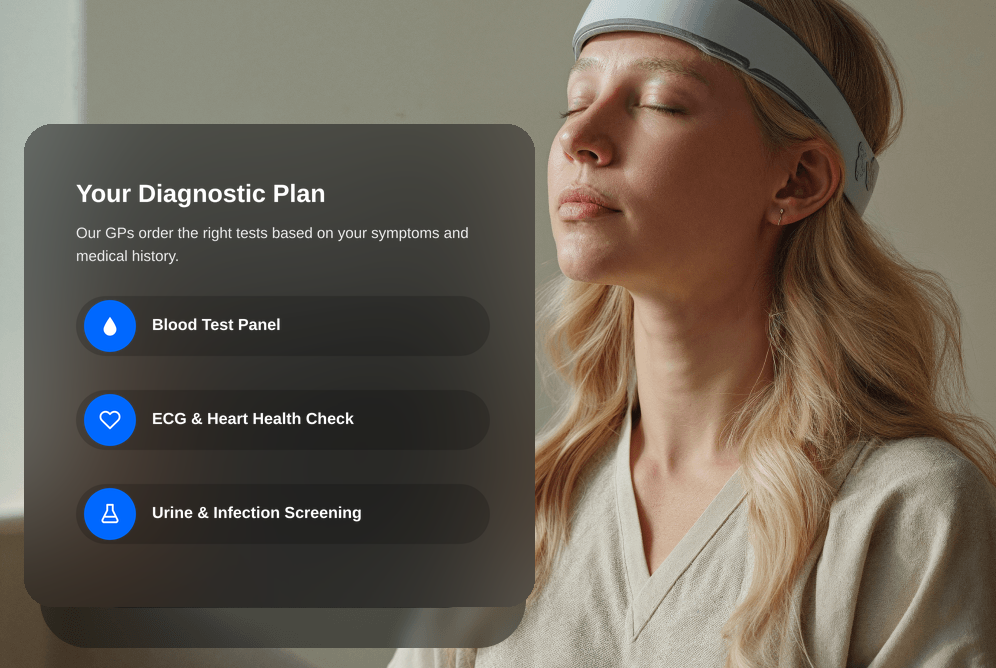
Diagnostic testing plan including blood test panel, ECG and urine screening
03

Tests and referrals, if you need them

Where testing will actually answer the question, we arrange it — blood tests and health screening through our laboratory partner, or a referral for ultrasound, X-ray, CT or MRI through private imaging providers. We will also tell you when a scan is not the right next step.
1–7 days
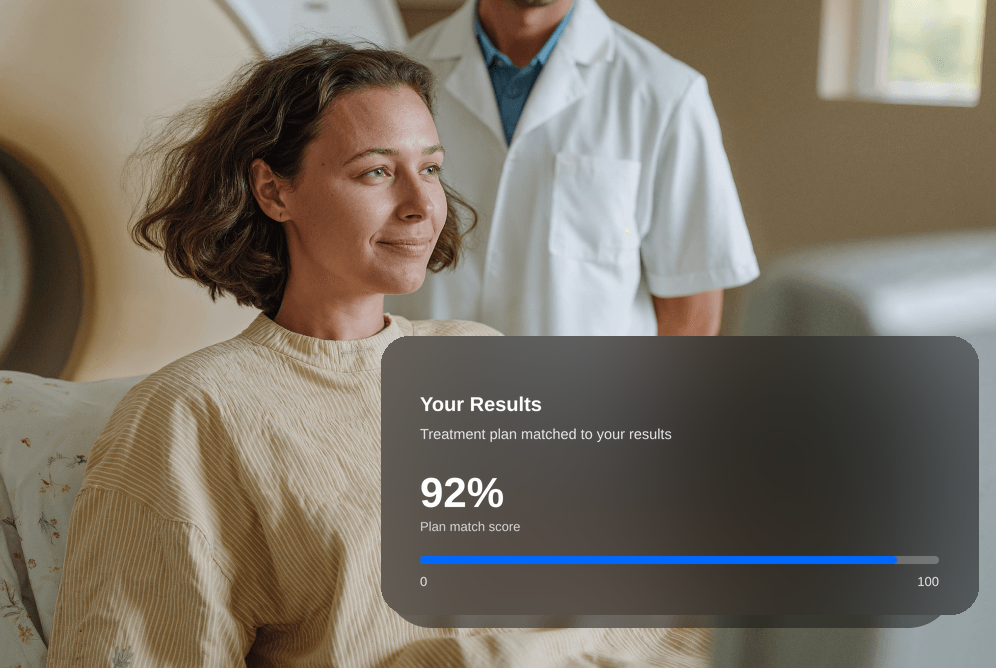
Personalised results and treatment plan from a private GP consultation
04

Results and next steps

Your GP talks you through what the results mean and agrees the next step with you. Every consultation ends with your treatment plan in writing, and any prescription goes to your own pharmacy.
20 minutes
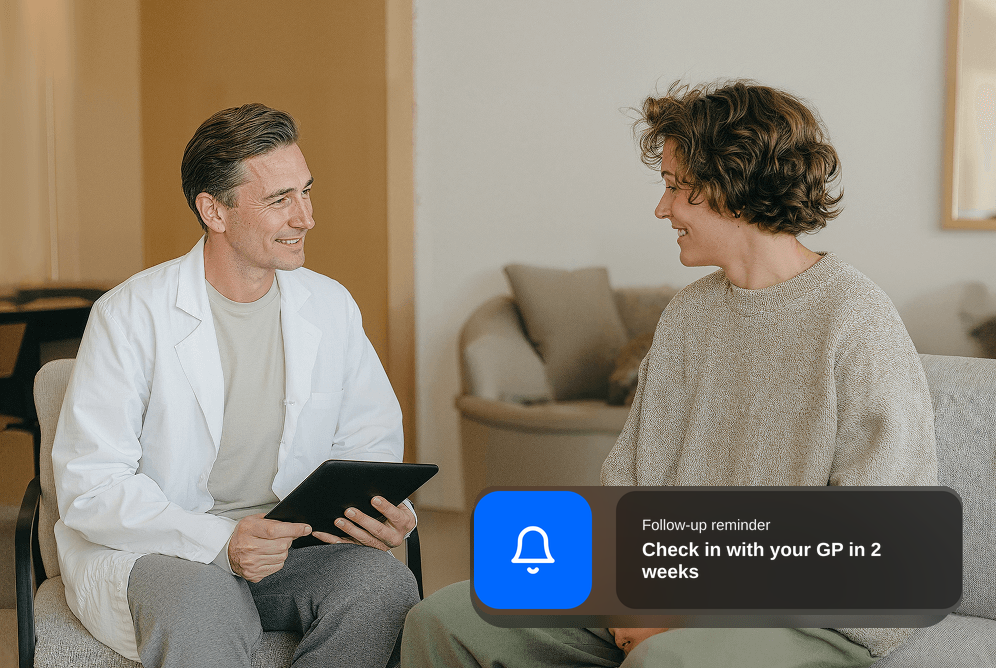
GP follow-up reminder for ongoing care and progress monitoring
05

Ongoing care and follow-up

Follow-up appointments, progress monitoring and ongoing advice — including saying plainly when something needs in-person or NHS care instead.

Ongoing

How we compare

Time to be seen

Appointment length

Your NHS record in the room

Written treatment plan

Told when a test isn’t needed

Cost

Varies by practice

Typically 10 minutes

Yes, your full record

Not routinely

Usually

Free

Same day

Often 10 to 15 minutes

Usually not

Sometimes charged

Varies by provider

Often a subscription

Questions about our service

How quickly can I be seen?

Same-day access is usually available, from 6am to 10pm, seven days a week. You choose a time that suits you rather than waiting on hold at 8am.

Will I see the same doctor each time?

Yes. Care is led personally by Dr Mohammad Khan, so you are not passed between clinicians. Continuity is the point of a small practice: someone who knows your history and is listening attentively rather than working through a checklist.

Can you see my NHS records?

Yes, with your consent. We can access your Summary Care Record during the consultation, so your current medications, allergies and significant history are in the room. That means fewer questions you have already answered elsewhere, and safer prescribing.

Are you trying to replace my NHS GP?

No. We are not here to replace GPs, only to support them. Your NHS practice remains responsible for your ongoing care, and with your consent we write to them after the consultation. We are useful when you need to be seen sooner, or want more time than a standard appointment allows.

What is included in the appointment?

Twenty unhurried minutes and a comprehensive assessment. A written treatment plan is included, along with any prescription, sick note or referral letter arising from the consultation, at no extra charge.

How much does it cost?

£40 for 20 minutes, self-pay. Membership is optional and never required. Priced for fairness, because we are not here to charge extortionate amounts for access to a doctor.

What does “treatable online” actually mean?

It means the diagnosis can usually be made from your history and photographs, and that treatment can be arranged safely without examining you. Where a condition is not marked treatable online, it is because examination is the diagnosis — listening to a chest, feeling an abdomen, examining an ear or a joint — or because a procedure or device is needed.

Can you prescribe antibiotics?

Yes, where there is a genuine bacterial infection — cellulitis, impetigo, bacterial urine infections, confirmed strep throat. We will also frequently tell you that you do not need one. Most sore throats, coughs, colds and earaches are viral, and an antibiotic gives you the side effects with none of the benefit.

What if the GP cannot help with what I need?

If your problem turns out to be genuinely outside what we can do remotely, the doctor will tell you straight away, point you to the right service, and refund your fee in full. We would rather do that than fill twenty minutes to justify the charge.

What should I do in an emergency?

Call 999 or go to A&E — do not book an online appointment and do not wait for a reply to an email. For urgent problems that are not emergencies, NHS 111 is available 24 hours a day, online or by phone, and can direct you to the right service.

Patient reviews

What our patients say

No reviews published yet.
Ready to see a GP?20 minutes with a GMC-registered doctor. £40, usually same day.
Book a consultation