Home

/

Digestive & Gut

/

Crohn's Disease

Digestive and gut icon - IBS, reflux and inflammatory bowel symptoms assessed by an online GP at Cheshire Clinics

Crohn's Disease

Can affect anywhere from mouth to anus. Diagnosis is frequently delayed, and stopping smoking genuinely changes the course.

£40 · 20 minutes

Same-day availability

6am to 10pm, seven days

Assessed and treated by a GMC-registered GP

Prescriptions, sick notes and referral letters included

A written treatment plan after every appointment

Your NHS records in the room, with your consent

Clinically reviewed by Dr Mohammad Khan · Last reviewed

September 8, 2026

Book a consultation

A 20-minute appointment with a GMC-registered GP for £40. No membership required.

Private GP care led personally by Dr Mohammad Zubair Khan, GMC 7563469.

Why patients choose Cheshire Clinics

GMC registered doctors badge - every Cheshire Clinics consultation is with a General Medical Council registered GP

GMC-registered

Care led personally by Dr Khan

Royal College of General Practitioners badge - RCGP trained private GP consultations at Cheshire Clinics

RCGP-trained

Attentive, unhurried care that listens properly

Google five star reviews badge - Cheshire Clinics private GP online

Highly rated by patients

Five-star Google reviews from the people we have looked after

Care Quality Commission registered badge - Cheshire Clinics online GP service is registered with the CQC, England's independent regulator of health and social care

CQC-registered

Registered with the Care Quality Commission

Same-Day Appointments
Sick Notes
Private Prescriptions
Blood Tests
Menopause & HRT
Weight Management
Mental Health
Specialist Referrals
Same-Day Appointments
Sick Notes
Private Prescriptions
Blood Tests
Menopause & HRT
Weight Management
Mental Health
Specialist Referrals

Overview

Crohn's disease is a lifelong inflammatory bowel disease that can affect any part of the digestive tract, from the mouth to the anus.

Three features distinguish it from ulcerative colitis: it occurs in patches with normal bowel in between, it involves the full thickness of the bowel wall rather than just the lining, and it most often affects the end of the small bowel and the start of the colon.

Because it goes through the whole wall, it causes complications colitis does not — strictures that narrow the bowel, fistulas that tunnel between the bowel and other structures, and abscesses.

Diagnosis is frequently delayed, often by years. The symptoms overlap with IBS, the bleeding that prompts investigation in colitis is often absent, and small bowel disease is not visible on a standard colonoscopy.

Smoking makes Crohn's significantly worse — more flares, more surgery, worse outcomes. That is the opposite of ulcerative colitis, and it is the most powerful thing a patient can change.

Common symptoms

  • Persistent diarrhoea, often without blood — which is why it is missed
  • Abdominal pain, classically in the right lower abdomen
  • Weight loss, and reduced appetite
  • Fatigue, frequently from anaemia
  • Fever during active disease
  • Mouth ulcers — common and easily dismissed
  • Nausea and vomiting, particularly with a stricture

Perianal disease — often the giveaway

Skin tags, fissures, abscesses and fistulas around the anus are strongly suggestive of Crohn's, and are sometimes the first sign. They are also the symptom people are most reluctant to mention, which contributes to the delay in diagnosis.

In children

Poor growth or delayed puberty may be the only sign, without much in the way of bowel symptoms.

Outside the bowel

  • Joint pain and swelling
  • Red, painful eyes
  • Tender red nodules on the shins
  • Gallstones and kidney stones, which are commoner in Crohn's

Causes and risk factors

An abnormal immune response to gut bacteria in someone genetically susceptible. The specific cause is not known.

  • Smoking — both a risk factor for developing it and the strongest modifiable factor in how it behaves
  • Family history — the risk is higher than in ulcerative colitis
  • Age — onset most often between 15 and 30
  • Previous gut infection
  • NSAIDs, which can provoke flares

Smoking, plainly

Smoking roughly doubles the risk of needing surgery in Crohn's, increases relapse, and reduces how well treatment works.

Stopping smoking has been described as being about as effective as some drug treatments in Crohn's, and it is free. If you take one thing from this page, take that one.

What does not cause it

Diet and stress do not cause Crohn's disease. They can influence symptoms; they did not give you the condition.

How it is diagnosed

Faecal calprotectin first

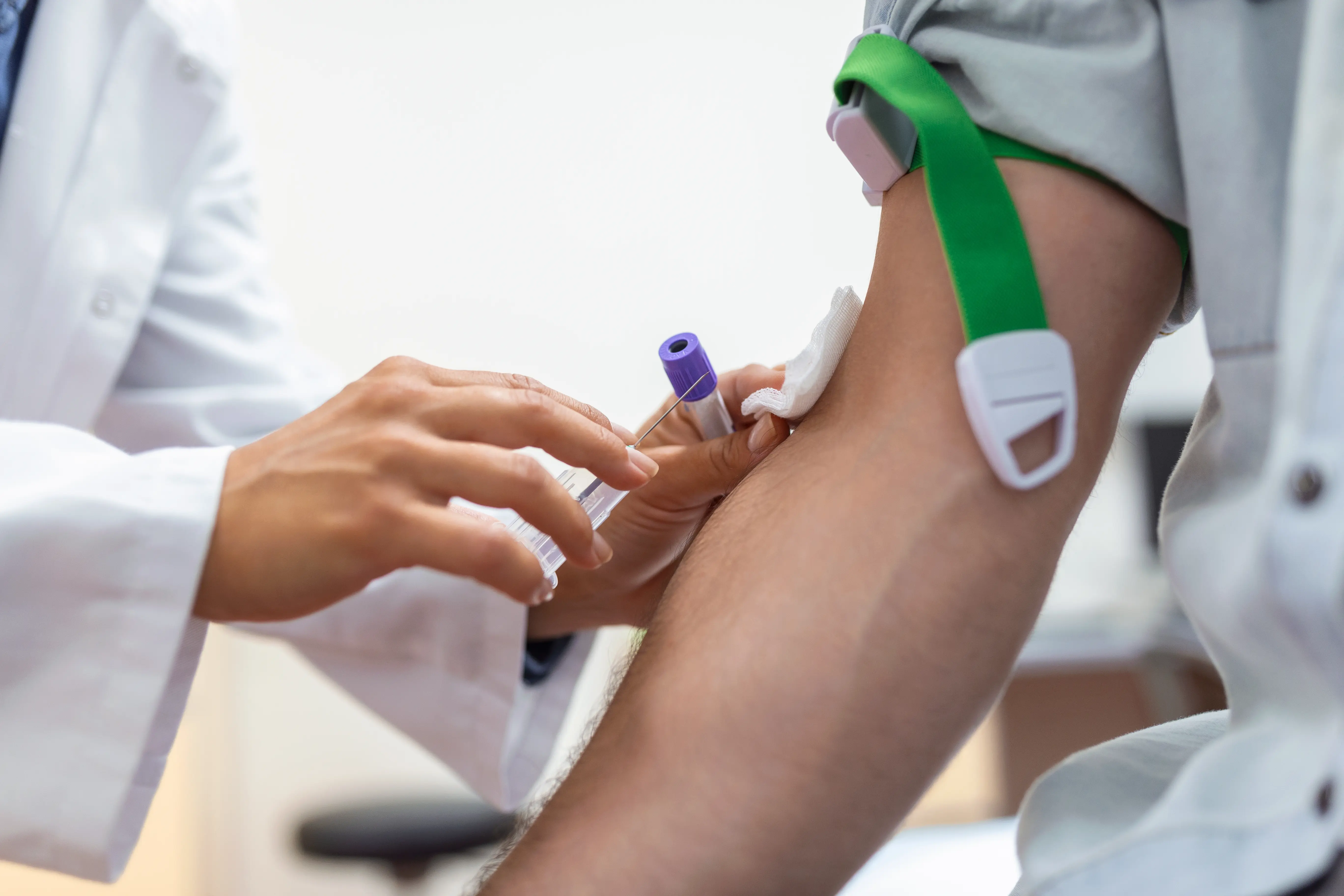
A stool test measuring bowel inflammation, and the key test in primary care. A raised result in someone with these symptoms warrants referral rather than an IBS label. NICE supports its use precisely to make this distinction.

Blood tests

  • Full blood count — anaemia is very common
  • CRP and ESR — though they can be normal in active small bowel disease, and a normal CRP does not exclude Crohn's
  • Ferritin, B12 and folate — B12 specifically, because the part of the bowel that absorbs it is commonly affected
  • Coeliac serology, and vitamin D

Confirming it

  • Colonoscopy with biopsies, showing patchy inflammation
  • MRI or capsule endoscopy for the small bowel, which a colonoscopy cannot reach — and a normal colonoscopy therefore does not rule Crohn's out
  • MRI of the pelvis where there is perianal disease

How we treat it online

We have marked this as not treatable online. Crohn's is diagnosed with endoscopy and cross-sectional imaging and managed by gastroenterology, frequently with immunosuppressants, biologics and surgery. It is not a condition for a remote GP service to manage.

Where we are genuinely useful — and here it is substantial

  • Shortening the delay to diagnosis. This is the single biggest problem in Crohn's. We can arrange faecal calprotectin and the full blood panel within days and refer with a clear history
  • Asking about perianal symptoms, which people rarely volunteer and which strongly point to the diagnosis
  • Not accepting a normal CRP as reassurance where the story fits — it is commonly normal in small bowel disease
  • Iron and B12 deficiency, both very common and both frequently undertreated
  • Smoking cessation support, which changes the course of the disease more than almost anything else
  • Fit notes and workplace adjustments

Safety points

We will avoid NSAIDs where Crohn's is suspected or known, and we will not suppress diarrhoea with loperamide in an undiagnosed or flaring picture.

A prescription is never guaranteed. This page is information, not an offer to supply.

Digestive and gut health consultation - private GP assessment and blood testing for IBS, reflux and bowel symptoms at Cheshire Clinics
Important

When to seek urgent help

Go to A&E for

  • Severe abdominal pain with vomiting and no wind or stool passing — possible bowel obstruction from a stricture
  • Severe pain with fever and a tender, rigid abdomen — possible perforation or abscess
  • Heavy rectal bleeding, dizziness or fainting
  • Being unable to keep fluids down

Urgent same-day assessment for

  • A painful, swollen, hot lump near the anus — a perianal abscess needs draining promptly, not antibiotics alone
  • Fever or any infection in anyone on immunosuppressants or biologics
  • A flare not settling within a few days
  • New severe eye pain or visual change

Arrange assessment for

  • Persistent diarrhoea with weight loss, with or without blood
  • Any perianal fissure, abscess or fistula, particularly if recurrent
  • Unexplained anaemia with bowel symptoms
  • Mouth ulcers with diarrhoea and weight loss
  • Poor growth or delayed puberty in a child with gut symptoms

Prevention and self-care

Stopping smoking — the single most effective thing

Fewer flares, less surgery, better response to treatment. In Crohn's specifically, this is not general health advice — it directly changes the course of the disease. NHS stop smoking services are free.

Take maintenance treatment as prescribed

Stopping when well is the commonest avoidable cause of a flare, and repeated flares mean more bowel damage over time.

Medicines to be careful with

  • NSAIDs such as ibuprofen and naproxen can provoke flares — use paracetamol where possible

Nutrition

  • Deficiencies are common and worth actively checking — iron, B12, folate, vitamin D and calcium
  • B12 in particular, because the part of the small bowel that absorbs it is often affected or removed
  • With a known stricture, a lower-fibre diet reduces the risk of obstruction — this is one of the few situations where restricting fibre is genuinely indicated
  • Otherwise there is no Crohn's diet, and restrictive eating causes real harm in a condition already prone to deficiency

Staying on top of things

  • Vaccinations — flu, pneumococcal, COVID. Live vaccines must be avoided on immunosuppressants
  • Bone protection, particularly with repeated steroids — Crohn's carries a meaningful osteoporosis risk
  • Skin checks if on long-term immunosuppression
  • Know your IBD nurse helpline number

NHS or private

Crohn's is NHS territory, and the NHS does it well. Endoscopy, MRI, gastroenterology, IBD specialist nurses, biologics, dietitians and surgery are all free, and biologic drugs are not obtainable outside specialist pathways at any price that makes sense.

The IBD specialist nurse helpline is genuinely one of the best things about NHS IBD care — direct access during a flare without a GP appointment in between.

Exclusive enteral nutrition, which can induce remission particularly in children, is provided free with dietetic support and has no private equivalent worth buying.

Where private care genuinely helps:

  • Getting diagnosed sooner. Given that delay is measured in years for many people with Crohn's, a consultation that arranges calprotectin and bloods within days and writes a proper referral is the clearest value we can offer
  • Private endoscopy or MRI where waits are long
  • Treating iron and B12 deficiency promptly where it has been overlooked

Where not to spend

  • Food intolerance and IgG testing. No evidence, and actively harmful here — it drives dietary restriction in people already at risk of malnutrition
  • "Leaky gut" and gut-healing supplement protocols
  • Direct-to-consumer microbiome tests, which do not change management
  • Private nutritional therapy that is not from a registered dietitian

Evidence and guidelines

This page follows NICE NG129 on Crohn's disease: management, including the approach to inducing and maintaining remission and the role of enteral nutrition.

Faecal calprotectin to distinguish inflammatory bowel disease from irritable bowel syndrome follows NICE DG11.

The emphasis on smoking cessation reflects consistent evidence that smoking worsens disease course, relapse rate and surgical risk in Crohn's — in contrast to ulcerative colitis — and it is stated prominently because it is the most effective modifiable factor available to patients.

The caution that a normal CRP and a normal colonoscopy do not exclude small bowel Crohn's reflects standard gastroenterology practice and is included because it is a recognised contributor to diagnostic delay.

Bone protection with repeated corticosteroid courses follows NICE guidance on osteoporosis risk assessment.

Common questions

How is it different from ulcerative colitis?

Crohn's can affect anywhere from mouth to anus, in patches, through the full bowel wall. Ulcerative colitis affects only the colon, continuously, and only the lining. That difference is why Crohn's causes strictures and fistulas and why surgery is not curative.

Why did it take so long to diagnose?

Because bleeding is often absent, CRP can be normal, symptoms overlap with IBS, and small bowel disease does not show on a standard colonoscopy. Delays of several years are common and well documented.

Does a normal colonoscopy rule it out?

No. A colonoscopy cannot see most of the small bowel. If the story fits, MRI or capsule endoscopy may be needed.

Does smoking really matter that much?

Yes — more than almost anything else you can control. Smoking increases flares, roughly doubles the likelihood of needing surgery, and reduces treatment response. Stopping is the most powerful single change available.

Should I cut out foods?

Not without dietetic advice. There is no Crohn's diet, and restrictive eating causes real harm in a condition already associated with deficiency. A known stricture is the exception, where lower fibre reduces obstruction risk.

Why do I need B12 checked?

Because the part of the small bowel that absorbs B12 is commonly affected or surgically removed in Crohn's. It is a frequently missed and easily treated cause of fatigue.

Should I mention symptoms around my bottom?

Please do — they matter a great deal. Fissures, abscesses, skin tags and fistulas strongly suggest Crohn's and often make the diagnosis. Embarrassment about mentioning them is a genuine cause of delay.


Dr Mohammad Zubair Khan, GMC-registered private GP and founder of Cheshire Clinics
Clinically reviewed by Dr Mohammad Zubair Khan, GMC 7563469
Last reviewed

September 8, 2026

How it works

What happens when you book

£40 for a 20-minute appointment with a GMC-registered GP, 6am to 10pm, seven days a week. Membership is optional and never required.
Cheshire Clinics online GP appointment booking confirmation on mobile
01

Book your appointment

Pick a time that suits you — 6am to 10pm, seven days a week, including weekends and bank holidays. £40 for 20 minutes, self-pay, with no insurance to arrange.
5–10 minutes
Online video consultation with a GMC-registered private GP
02

Meet your GP

A 20-minute video or phone consultation with a GMC-registered GP — long enough for a proper conversation about your symptoms, your history and what matters to you.
20 minutes
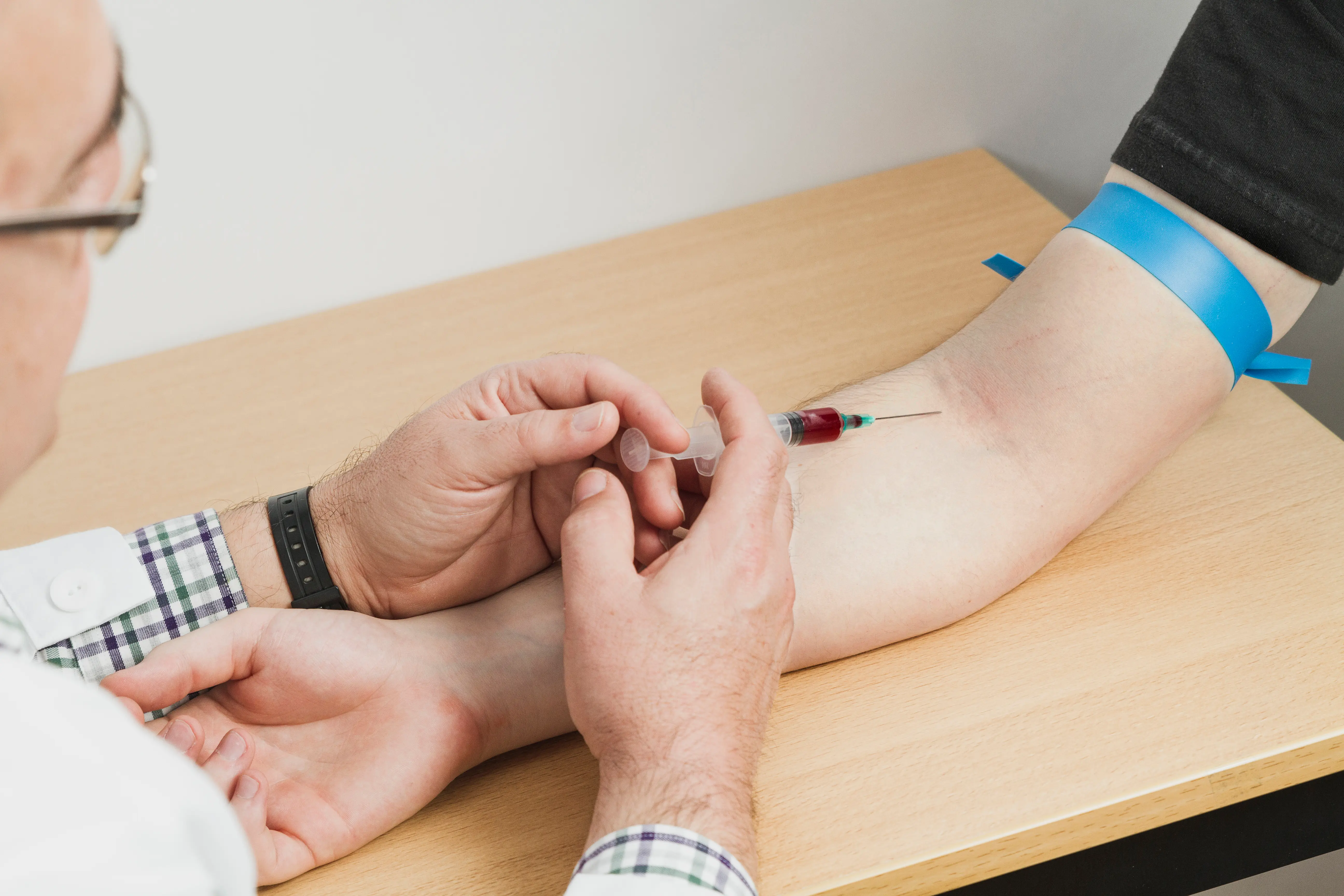
Diagnostic testing plan including blood test panel, ECG and urine screening
03

Tests and referrals, if you need them

Where testing will actually answer the question, we arrange it — blood tests and health screening through our laboratory partner, or a referral for ultrasound, X-ray, CT or MRI through private imaging providers. We will also tell you when a scan is not the right next step.
1–7 days
Personalised results and treatment plan from a private GP consultation
04

Results and next steps

Your GP talks you through what the results mean and agrees the next step with you. Every consultation ends with your treatment plan in writing, and any prescription goes to your own pharmacy.
20 minutes
GP follow-up reminder for ongoing care and progress monitoring
05

Ongoing care and follow-up

Follow-up appointments, progress monitoring and ongoing advice — including saying plainly when something needs in-person or NHS care instead.

Ongoing

How we compare

Time to be seen

Appointment length

Your NHS record in the room

Written treatment plan

Told when a test isn’t needed

Cost

Varies by practice

Typically 10 minutes

Yes, your full record

Not routinely

Usually

Free

Same day

Often 10 to 15 minutes

Usually not

Sometimes charged

Varies by provider

Often a subscription

Questions about our service

How quickly can I be seen?

Same-day access is usually available, from 6am to 10pm, seven days a week. You choose a time that suits you rather than waiting on hold at 8am.

Will I see the same doctor each time?

Yes. Care is led personally by Dr Mohammad Khan, so you are not passed between clinicians. Continuity is the point of a small practice: someone who knows your history and is listening attentively rather than working through a checklist.

Can you see my NHS records?

Yes, with your consent. We can access your Summary Care Record during the consultation, so your current medications, allergies and significant history are in the room. That means fewer questions you have already answered elsewhere, and safer prescribing.

Are you trying to replace my NHS GP?

No. We are not here to replace GPs, only to support them. Your NHS practice remains responsible for your ongoing care, and with your consent we write to them after the consultation. We are useful when you need to be seen sooner, or want more time than a standard appointment allows.

What is included in the appointment?

Twenty unhurried minutes and a comprehensive assessment. A written treatment plan is included, along with any prescription, sick note or referral letter arising from the consultation, at no extra charge.

How much does it cost?

£40 for 20 minutes, self-pay. Membership is optional and never required. Priced for fairness, because we are not here to charge extortionate amounts for access to a doctor.

What does “treatable online” actually mean?

It means the diagnosis can usually be made from your history and photographs, and that treatment can be arranged safely without examining you. Where a condition is not marked treatable online, it is because examination is the diagnosis — listening to a chest, feeling an abdomen, examining an ear or a joint — or because a procedure or device is needed.

Can you prescribe antibiotics?

Yes, where there is a genuine bacterial infection — cellulitis, impetigo, bacterial urine infections, confirmed strep throat. We will also frequently tell you that you do not need one. Most sore throats, coughs, colds and earaches are viral, and an antibiotic gives you the side effects with none of the benefit.

What if the GP cannot help with what I need?

If your problem turns out to be genuinely outside what we can do remotely, the doctor will tell you straight away, point you to the right service, and refund your fee in full. We would rather do that than fill twenty minutes to justify the charge.

What should I do in an emergency?

Call 999 or go to A&E — do not book an online appointment and do not wait for a reply to an email. For urgent problems that are not emergencies, NHS 111 is available 24 hours a day, online or by phone, and can direct you to the right service.

Patient reviews

What our patients say

No reviews published yet.
Ready to see a GP?20 minutes with a GMC-registered doctor. £40, usually same day.
Book a consultation