Home

/

Conditions

/

Skin, Hair & Nails

Skin, hair and nails icon - eczema, psoriasis and rashes assessed by an online GP at Cheshire Clinics

Skin, Hair & Nails

Acne, eczema, psoriasis, rashes and hair loss.

£40 · 20 minutes

Same-day availability

6am to 10pm, seven days

Assessed and treated by a GMC-registered GP

Prescriptions, sick notes and referral letters included

A written treatment plan after every appointment

Your NHS records in the room, with your consent

Clinically reviewed by Dr Mohammad Zubair Khan · Last reviewed

August 29, 2026

Book a consultation

A 20-minute appointment with a GMC-registered GP for £40. Same-day appointments are usually available, 6am to 10pm, seven days a week.

Private GP care led personally by Dr Mohammad Zubair Khan, GMC 7563469.

Conditions in this category

Every condition below has its own page covering symptoms, causes, how it is diagnosed, whether it can be treated online, and when to seek urgent help.

Why patients choose Cheshire Clinics

GMC registered doctors badge - every Cheshire Clinics consultation is with a General Medical Council registered GP

GMC-registered

Care led personally by Dr Khan

Royal College of General Practitioners badge - RCGP trained private GP consultations at Cheshire Clinics

RCGP-trained

Attentive, unhurried care that listens properly

Google five star reviews badge - Cheshire Clinics private GP online

Highly rated by patients

Five-star Google reviews from the people we have looked after

Care Quality Commission registered badge - Cheshire Clinics online GP service is registered with the CQC, England's independent regulator of health and social care

CQC-registered

Registered with the Care Quality Commission

Same-Day Appointments
Sick Notes
Private Prescriptions
Blood Tests
Menopause & HRT
Weight Management
Mental Health
Specialist Referrals
Same-Day Appointments
Sick Notes
Private Prescriptions
Blood Tests
Menopause & HRT
Weight Management
Mental Health
Specialist Referrals

Overview

Skin is among the few things that assess genuinely well remotely, provided the photographs are good. Natural light, one wide shot, one close-up.

The exception is moles. Anything new, changing, itching or bleeding needs seeing in person, and we will refer rather than reassure from an image.

What we can and cannot do

Skin is one of the best things to assess remotely

Provided the photographs are good. A well-taken image is arguably better than a live camera, because it can be looked at twice and compared against a later one.

Daylight, flash off, no filters or make-up. One wide shot showing the distribution and one close-up. Take them near a window rather than under a bathroom light.

  • Acne, eczema, psoriasis, rosacea, dermatitis, fungal infections, hives and most rashes
  • Prescriptions with steroid potency matched to the site, and — more importantly — clear instructions on how much and for how long, which is what most treatment failures come down to
  • Blood tests for the reversible causes of hair loss: ferritin, thyroid, vitamin D
  • Dermatology referral

What we cannot do

  • Assess moles. Anything new, changing, itching or bleeding needs seeing in person, and we will refer rather than reassure from an image. This is the firmest limit on the page
  • Feel a lesion, or assess texture and depth
  • Perform dermoscopy, biopsy, cryotherapy or any procedure
  • Prescribe isotretinoin. It requires dermatology supervision, blood monitoring and a pregnancy prevention programme — no remote service can do it safely, and any that offers to should concern you
  • Patch testing for contact allergy, which we refer for

Not sure which condition page you need?

Book a consultation
Important

When to see a GP

Call 999 or go to A&E

  • A rash that does not fade when pressed with a glass, particularly with fever, headache or feeling very unwell
  • Swelling of the lips, tongue or throat, or difficulty breathing — anaphylaxis
  • Widespread blistering or skin peeling away, particularly after starting a new medicine
  • Rapidly spreading redness with fever

Urgent — needs seeing, not photographing

  • A mole that is new, changing, growing, itching, bleeding or has an irregular border or uneven colour. We will refer rather than reassure from an image
  • Any lesion that will not heal, or a persistent lump, ulcer or crusted patch — particularly on sun-exposed skin
  • Eczema herpeticum — clustered painful blisters, punched-out sores, fever. A medical emergency
  • Shingles affecting the eye, eyelid or the tip of the nose — same-day ophthalmology
  • Scarring alopecia — hair loss with redness, scaling or scalp pain, which is permanent if untreated

Worth an appointment

  • Acne that over-the-counter treatment has not cleared — and especially if it is leaving marks, since early treatment reduces scarring
  • Eczema that never fully settles, or keeps returning the moment treatment stops
  • Facial redness treated as acne for years without improving — rosacea is routinely misdiagnosed
  • Hair thinning where iron and thyroid have never been checked
  • Skin that is affecting your sleep, your work or your confidence, which is a legitimate reason on its own

Self-care and free help

What you can buy without any appointment

  • Benzoyl peroxide and adapalene for acne — both available over the counter, both genuinely effective. If you have not given either a proper twelve-week trial, start there rather than paying for an appointment
  • Emollients for eczema — and far more than you think. An adult with widespread eczema needs around 500g a week. Ask for a large tub, not small tubes
  • Coal tar preparations for psoriasis, cheap and effective for some people
  • Aciclovir cream for cold sores — but only at the tingling stage, before the blister forms
  • Minoxidil for pattern hair loss, which needs no prescription at all

Free things that make a real difference

  • Stopping soap, bubble bath and shower gel in eczema — use an emollient wash. This alone transforms some people's skin and costs nothing
  • Non-biological detergent, no fabric conditioner
  • Daily SPF 30+ in rosacea, which is treatment rather than general advice
  • NHS dermatology referral, which is free and is the right route for isotretinoin, biologics, phototherapy and anything suspicious

Where not to spend money

  • "Natural" eczema and psoriasis creams — several sold in the UK have been found to contain undeclared potent steroids, which is exactly what the buyer was avoiding
  • Expensive cosmetic "acne systems", usually weaker versions of what a pharmacy sells for a fraction
  • Hair growth supplements and gummies — and note that high-dose biotin interferes with thyroid and cardiac blood tests, producing genuinely misleading results
  • Sunbeds, which are not phototherapy and raise skin cancer risk
  • Subscription "hair plans", which are usually cheap generic drugs at a substantial markup

Common questions

Can skin really be assessed from photographs?

Yes — it is one of the things remote care does best, provided the photographs are good. Daylight, no flash, no filters, one wide shot and one close-up.

The exception is moles, and that exception is absolute.

Why will you not look at my mole?

Because assessing a mole properly needs dermoscopy and someone examining the skin in person, and the cost of getting it wrong is not one worth taking.

Anything new, changing, growing, itching, bleeding, or with an irregular border or uneven colour needs seeing. We will refer rather than reassure from an image — and a reassuring photograph is worth nothing if it is wrong.

Am I using enough cream?

Almost certainly not — it is the single commonest reason eczema treatment fails. An adult with widespread eczema needs around 500g of emollient a week. If a tube is lasting a month, that is a fraction of what is needed.

Are steroid creams safe?

Used correctly, yes — and fear of them causes more harm than the steroids do.

Undertreatment is far commoner than overtreatment. A short burst of an adequate steroid is safer and more effective than weeks of a weak one used timidly, which is why the plan specifies where, how strong and for how long.

How long before acne treatment works?

Twelve weeks — not four. And with retinoids it commonly gets worse for the first four to six weeks before improving.

That initial flare is the point at which most people stop, and it is precisely the point worth pushing through.

My facial redness has been treated as acne for years.

Worth revisiting — rosacea is routinely mistaken for acne or for sensitive skin, and getting it wrong costs years.

Rosacea: background redness, flushing, visible small blood vessels, stinging — and no blackheads. If you have been given a steroid cream for facial redness, say so: steroids improve rosacea briefly and then make it considerably worse.

Is my hair loss definitely genetic?

Not necessarily, and that is exactly why we test first. Iron deficiency, thyroid disease, PCOS and shedding after illness or childbirth all cause hair loss, all are treatable, and none respond to minoxidil.

And "your bloods were normal" is often not the whole answer — hair is affected at ferritin levels well above the anaemia threshold.

Can you prescribe Roaccutane?

No — and nor can any remote service. Isotretinoin requires dermatology supervision, blood monitoring, pregnancy prevention and mental health review.

We can refer, and NHS dermatology referral is free.

Does diet cause acne or eczema?

Far less than the internet suggests. There is modest evidence for high glycaemic index diets in acne and weak evidence around dairy; food allergy drives a minority of infant eczema and almost no adult eczema.

Do not restrict a child's diet without allergy assessment — it causes nutritional harm and can paradoxically cause genuine allergy to develop.

Can you see my child?

From three months, with a parent present. Skin problems in children assess well remotely.

But any unwell or feverish infant under one needs in-person assessment the same day, and infected eczema in a small child needs seeing rather than photographing.


Dr Mohammad Zubair Khan, GMC-registered private GP and founder of Cheshire Clinics

Clinically reviewed by Dr Mohammad Zubair Khan, GMC 7563469

Last reviewed

August 29, 2026

How it works

What happens when you book

£40 for a 20-minute appointment with a GMC-registered GP, 6am to 10pm, seven days a week. Membership is optional and never required.
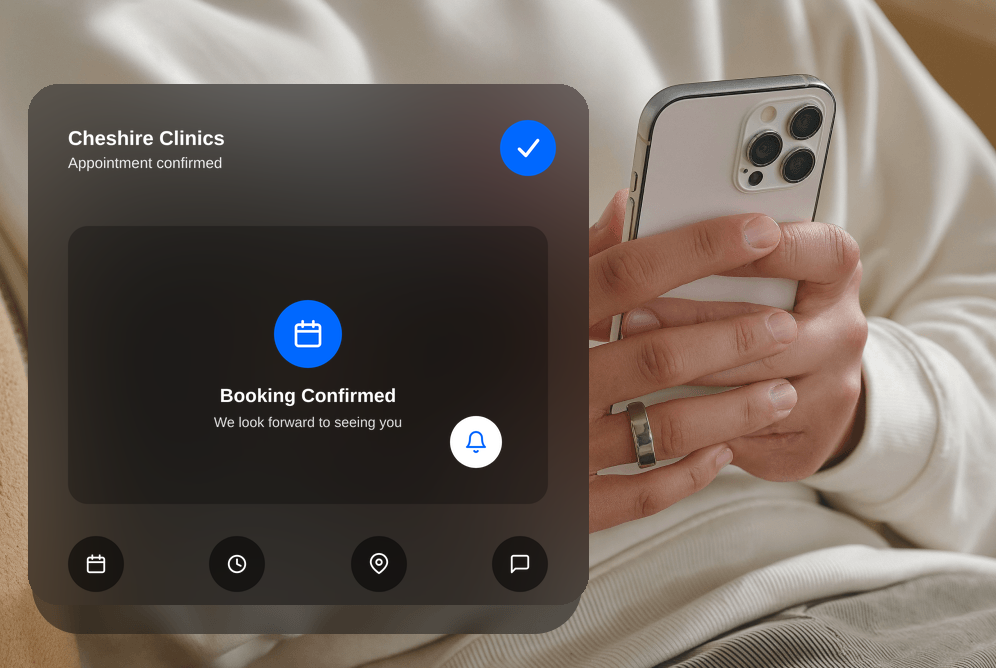
Cheshire Clinics online GP appointment booking confirmation on mobile
01

Book your appointment

Pick a time that suits you — 6am to 10pm, seven days a week, including weekends and bank holidays. £40 for 20 minutes, self-pay, with no insurance to arrange.
5–10 minutes
Online video consultation with a GMC-registered private GP
02

Meet your GP

A 20-minute video or phone consultation with a GMC-registered GP — long enough for a proper conversation about your symptoms, your history and what matters to you.
20 minutes
Diagnostic testing plan including blood test panel, ECG and urine screening
03

Tests and referrals, if you need them

Where testing will actually answer the question, we arrange it — blood tests and health screening through our laboratory partner, or a referral for ultrasound, X-ray, CT or MRI through private imaging providers. We will also tell you when a scan is not the right next step.
1–7 days
Personalised results and treatment plan from a private GP consultation
04

Results and next steps

Your GP talks you through what the results mean and agrees the next step with you. Every consultation ends with your treatment plan in writing, and any prescription goes to your own pharmacy.
20 minutes
GP follow-up reminder for ongoing care and progress monitoring
05

Ongoing care and follow-up

Follow-up appointments, progress monitoring and ongoing advice — including saying plainly when something needs in-person or NHS care instead.

Ongoing

How we compare

Time to be seen

Appointment length

Your NHS record in the room

Written treatment plan

Told when a test isn’t needed

Cost

Varies by practice

Typically 10 minutes

Yes, your full record

Not routinely

Usually

Free

Same day

Often 10 to 15 minutes

Usually not

Sometimes charged

Varies by provider

Often a subscription

Questions about our service

How quickly can I be seen?

Same-day access is usually available, from 6am to 10pm, seven days a week. You choose a time that suits you rather than waiting on hold at 8am.

Will I see the same doctor each time?

Yes. Care is led personally by Dr Mohammad Khan, so you are not passed between clinicians. Continuity is the point of a small practice: someone who knows your history and is listening attentively rather than working through a checklist.

Can you see my NHS records?

Yes, with your consent. We can access your Summary Care Record during the consultation, so your current medications, allergies and significant history are in the room. That means fewer questions you have already answered elsewhere, and safer prescribing.

Are you trying to replace my NHS GP?

No. We are not here to replace GPs, only to support them. Your NHS practice remains responsible for your ongoing care, and with your consent we write to them after the consultation. We are useful when you need to be seen sooner, or want more time than a standard appointment allows.

What is included in the appointment?

Twenty unhurried minutes and a comprehensive assessment. A written treatment plan is included, along with any prescription, sick note or referral letter arising from the consultation, at no extra charge.

How much does it cost?

£40 for 20 minutes, self-pay. Membership is optional and never required. Priced for fairness, because we are not here to charge extortionate amounts for access to a doctor.

What does “treatable online” actually mean?

It means the diagnosis can usually be made from your history and photographs, and that treatment can be arranged safely without examining you. Where a condition is not marked treatable online, it is because examination is the diagnosis — listening to a chest, feeling an abdomen, examining an ear or a joint — or because a procedure or device is needed.

Can you prescribe antibiotics?

Yes, where there is a genuine bacterial infection — cellulitis, impetigo, bacterial urine infections, confirmed strep throat. We will also frequently tell you that you do not need one. Most sore throats, coughs, colds and earaches are viral, and an antibiotic gives you the side effects with none of the benefit.

What if the GP cannot help with what I need?

If your problem turns out to be genuinely outside what we can do remotely, the doctor will tell you straight away, point you to the right service, and refund your fee in full. We would rather do that than fill twenty minutes to justify the charge.

What should I do in an emergency?

Call 999 or go to A&E — do not book an online appointment and do not wait for a reply to an email. For urgent problems that are not emergencies, NHS 111 is available 24 hours a day, online or by phone, and can direct you to the right service.

Patient reviews

What our patients say

No reviews published yet.
Ready to see a GP?20 minutes with a GMC-registered doctor. £40, usually same day.
Book a consultation