Skin, hair and nails icon - eczema, psoriasis and rashes assessed by an online GP at Cheshire Clinics
Treatable online

Head Lice

Common, harmless and treatable at home. For most families this needs a pharmacist rather than a GP appointment.

£40 · 20 minutes

Same-day availability

6am to 10pm, seven days

Assessed and treated by a GMC-registered GP

Prescriptions, sick notes and referral letters included

A written treatment plan after every appointment

Your NHS records in the room, with your consent

Clinically reviewed by Dr Mohammad Khan · Last reviewed

August 24, 2026

Book a consultation

A 20-minute appointment with a GMC-registered GP for £40. No membership required.

Private GP care led personally by Dr Mohammad Zubair Khan, GMC 7563469.

Why patients choose Cheshire Clinics

GMC registered doctors badge - every Cheshire Clinics consultation is with a General Medical Council registered GP

GMC-registered

Care led personally by Dr Khan

Royal College of General Practitioners badge - RCGP trained private GP consultations at Cheshire Clinics

RCGP-trained

Attentive, unhurried care that listens properly

Google five star reviews badge - Cheshire Clinics private GP online

Highly rated by patients

Five-star Google reviews from the people we have looked after

Care Quality Commission registered badge - Cheshire Clinics online GP service is registered with the CQC, England's independent regulator of health and social care

CQC-registered

Registered with the Care Quality Commission

Same-Day Appointments
Sick Notes
Private Prescriptions
Blood Tests
Menopause & HRT
Weight Management
Mental Health
Specialist Referrals
Same-Day Appointments
Sick Notes
Private Prescriptions
Blood Tests
Menopause & HRT
Weight Management
Mental Health
Specialist Referrals

Overview

Let us start with the honest bit: most people do not need to pay a doctor for head lice. Treatment is available over the counter, your pharmacist can advise for free, and the great majority of cases are dealt with at home in a fortnight. We would rather say that than take a booking fee for it.

Head lice are small insects that live on the scalp and feed on blood. They spread by head-to-head contact, not by hats, brushes or bedding, and they are not a sign of poor hygiene — they are, if anything, slightly happier on clean hair. They do not carry disease.

Where a consultation earns its keep is when treatment keeps failing, when the scalp has become infected from scratching, or when what looks like lice turns out to be something else entirely.

Common symptoms

  • Itching of the scalp, particularly behind the ears and at the nape of the neck — though many people have no itch at all
  • A tickling or moving sensation in the hair
  • Small pale eggs (nits) glued firmly to the hair shaft near the scalp, which cannot be flicked off like dandruff
  • Live lice, grey-brown and about the size of a sesame seed
  • Sores or crusting from scratching
  • Difficulty sleeping, since lice are more active in the dark

Only treat if you see a living, moving louse. Eggs alone, particularly white empty shells further down the hair, mean a past infestation rather than a current one — and treating on nits alone is the commonest reason families end up applying product repeatedly for no reason.

Causes and risk factors

  • Direct head-to-head contact, most often between children aged 4 to 11
  • Siblings and other household members, who should all be checked on the same day
  • Nothing to do with cleanliness, hair type or housekeeping

How it is diagnosed

Only a living, moving louse confirms it

This is the single most important point on the page, and it is the one most often got wrong. Nits — the empty eggshells glued to the hair — stay stuck for months after treatment has worked.

Finding nits does not mean an active infestation. It is the commonest reason children are treated repeatedly for something they no longer have.

Detection combing is the reliable method

  1. Wet the hair and apply plenty of conditioner. This stops lice moving, which is what makes them findable
  2. Comb with a proper detection comb — teeth 0.2–0.3mm apart. An ordinary nit comb is too coarse
  3. Comb from the scalp to the end of the hair, section by section, wiping the comb onto white kitchen paper after each stroke
  4. Look for moving lice. Repeat over the whole head

This is more accurate than looking through dry hair, which misses most infestations.

Why a photograph rarely settles it

Lice move away from light and are only about 3mm long, so they photograph poorly. A photograph usually shows nits rather than lice.

Detection combing at home is more reliable than any consultation, and it costs nothing.

When it is worth a consultation

When treatment has genuinely failed despite correct technique, when the scalp is infected, or when the diagnosis is in doubt — eczema, dandruff and hair casts are all mistaken for lice.

How we treat it online

What to do first — no appointment needed

  • Wet combing with a fine-toothed detection comb on wet, conditioned hair. Comb the whole head in sections every three to four days for a fortnight, which covers the hatching cycle. Done properly this works on its own and costs almost nothing
  • Dimeticone-based lotions, available from any pharmacy. These smother the lice physically rather than poisoning them, so resistance is not an issue. Two applications, seven days apart — and the second one is not optional, because it kills the lice that hatch after the first
  • Check everyone in the household on the same day, and treat only those with live lice
  • Children do not need to stay off school. By the time lice are found they have usually been there for weeks, and exclusion helps nobody

What does not work

Tea tree oil, mayonnaise, vinegar, hot air treatments and repellent sprays have no reliable evidence behind them. Nor does washing bedding at high temperature — lice die within a day off the scalp.

When a consultation is worth it

  • Two properly completed courses have failed, which usually means the technique or the timing rather than resistance
  • Signs of a secondary skin infection from scratching — weeping, crusting, spreading redness or swollen glands, which may need antibiotics
  • Severe scalp itch with no lice found, where the answer may be eczema, psoriasis, seborrhoeic dermatitis, scabies or scalp ringworm instead
  • Treatment in pregnancy, in babies under six months, or alongside asthma — where product choice needs care
Skin, hair and nails consultation - private GP assessment for rashes, acne, eczema and hair loss at Cheshire Clinics

Ready to talk to a GP about this?

Book a consultation
Important

When to seek urgent help

Head lice are not dangerous and are almost never urgent. Seek prompt medical assessment if:

  • The scalp is spreading red, hot, weeping or crusted with fever, or there are tender swollen glands in the neck — that is a secondary bacterial infection rather than the lice themselves
  • Your child is generally unwell with a scalp problem
  • There are patches of hair loss with scaling, which suggests scalp ringworm and needs oral treatment
  • An intensely itchy rash appears elsewhere — between the fingers, on the wrists, around the waist — which points to scabies
  • A treatment lotion has caused a significant skin reaction or breathing difficulty

Also worth a routine consultation if scalp itching persists after lice have genuinely been cleared, since the cause is then something else and continuing to apply lice treatment will only irritate the skin further.

Prevention and self-care

Treatment that works without medication

Wet combing is a complete treatment in its own right, and it is free.

Comb thoroughly with conditioner on days 1, 5, 9 and 13, then check on day 17. That schedule is not arbitrary — it catches lice hatching from eggs the first comb missed, before they are old enough to lay their own.

Skipping sessions is the commonest reason it fails.

If you use a treatment lotion

  • Use a physical treatment such as dimeticone, which suffocates lice rather than poisoning them. Resistance cannot develop to it
  • Apply a second dose seven days later, without exception — nothing kills every egg, and missing the second dose is why treatment fails
  • Use enough to coat all the hair to the scalp. Under-dosing long hair is very common
  • Check with combing afterwards rather than assuming it worked

What does not work, and what not to spend money on

  • Treating the whole household when only one person has lice — treat only those with confirmed live lice
  • Washing bedding, hot-washing clothes, bagging soft toys, spraying furniture. Lice die within a day off the head; they do not live in fabric
  • Tea tree oil, mayonnaise, vinegar and similar remedies — no good evidence
  • Repellent sprays and "preventive" shampoos — no evidence, and they are widely sold
  • Keeping a child off school. Not necessary, and not recommended

Reducing the chance of getting them

Regular detection combing is the only measure with real value, because catching an infestation early keeps it small. Tied-back long hair may help slightly.

Head lice have nothing to do with cleanliness, and no amount of washing prevents them.

NHS or private

Head lice treatment is entirely over the counter and inexpensive, and there is no reason to pay a doctor for it. We would say so rather than take a fee.

The cheapest effective method needs no chemicals at all. Wet combing with conditioner and a fine-toothed detection comb, done thoroughly every three to four days for two weeks, works — and it works when insecticides have failed, because there is no resistance to a comb.

The advice that changes outcomes is free and routinely ignored: only treat people who actually have live lice, since treating a whole household prophylactically drives resistance; repeat any chemical treatment after seven days to catch newly hatched lice, which is the step most often skipped and the commonest reason treatment fails; and do not keep children off school — lice are not a public health risk and exclusion is not recommended.

Where money is wasted: electronic combs, tea tree and other repellent products, and treating bedding, furniture and soft toys, which is unnecessary — lice do not survive long off the scalp.

A consultation is worth it only if the scalp is genuinely infected, if treatment has failed repeatedly despite correct technique, or if there is real doubt about the diagnosis — an itchy scalp is far more often eczema or seborrhoeic dermatitis than lice.

Evidence and guidelines

NICE Clinical Knowledge Summary, Head lice, is the principal reference. It is explicit that treatment should only be given where living, moving lice are found, and that prophylactic treatment of contacts is not recommended.

CKS recommends either wet combing or a physical insecticide such as dimeticone, and specifies that chemical treatments require a second application after seven days to kill lice emerging from eggs.

CKS notes growing resistance to traditional neurotoxic insecticides, which is why dimeticone-based physical treatments and wet combing are now generally preferred.

UK Health Security Agency guidance on infection control in schools is explicit that children with head lice should not be excluded from school, and that no time off is required.

CKS advises that laundering of bedding and clothing is unnecessary, since head lice cannot survive away from the scalp for long.

Common questions

How do I know they are still there?

You have to find a living, moving louse. Nits — the pale empty shells — remain glued to the hair for months after successful treatment.

Treating on the basis of nits alone is the commonest mistake, and it means repeated treatment for an infestation that has already gone.

Do I need to treat the whole family?

No. Check everyone by combing, and treat only those with live lice.

Treating people who do not have them wastes money and achieves nothing.

Do I need to wash all the bedding?

No, and this is where most of the effort is wasted. Lice die within about a day away from a scalp.

No hot washes, no bagging toys, no spraying furniture — none of it changes the outcome.

Can my child go to school?

Yes. Exclusion is not recommended and does not reduce spread.

Tell the school so other parents can check, but there is no need to keep them home.

Does it mean their hair is dirty?

No, and it is worth saying clearly. Lice are spread by head-to-head contact and are entirely unrelated to hygiene.

Clean hair is no protection whatsoever.

The treatment did not work — are they resistant?

Usually not. Failure is almost always one of three things: only one dose was applied, too little lotion was used for the hair length, or nits were mistaken for live lice.

If you used a traditional insecticide, resistance is possible — switch to dimeticone, which works physically and cannot be resisted.

Do I really need a second dose?

Yes, seven days later, every time. No treatment reliably kills every egg, and the second dose kills what hatches afterwards.

Missing it is the single most common cause of apparent treatment failure.

Is wet combing as good as lotion?

Done properly it works, and it is free. The schedule matters — days 1, 5, 9 and 13, then a check on day 17.

It fails when sessions are skipped or rushed, not because the method is weak.

Should I use a repellent spray?

There is no good evidence they work. Regular detection combing is more useful and costs nothing.

Dr Mohammad Zubair Khan, GMC-registered private GP and founder of Cheshire Clinics
Clinically reviewed by Dr Mohammad Zubair Khan, GMC 7563469
Last reviewed

August 24, 2026

How it works

What happens when you book

£40 for a 20-minute appointment with a GMC-registered GP, 6am to 10pm, seven days a week. Membership is optional and never required.
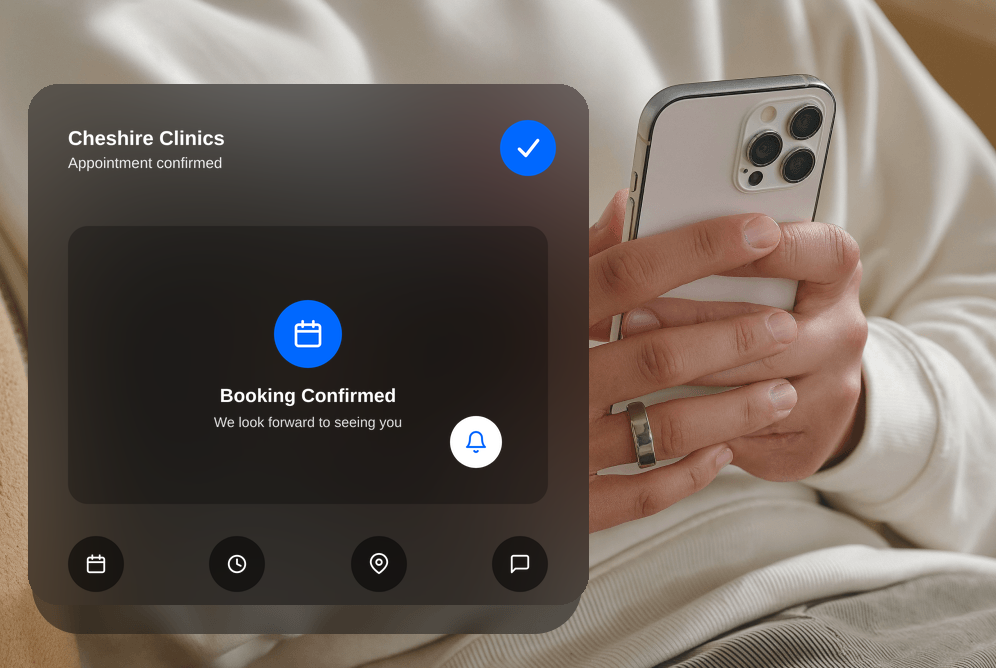
Cheshire Clinics online GP appointment booking confirmation on mobile
01

Book your appointment

Pick a time that suits you — 6am to 10pm, seven days a week, including weekends and bank holidays. £40 for 20 minutes, self-pay, with no insurance to arrange.
5–10 minutes
Online video consultation with a GMC-registered private GP
02

Meet your GP

A 20-minute video or phone consultation with a GMC-registered GP — long enough for a proper conversation about your symptoms, your history and what matters to you.
20 minutes
Diagnostic testing plan including blood test panel, ECG and urine screening
03

Tests and referrals, if you need them

Where testing will actually answer the question, we arrange it — blood tests and health screening through our laboratory partner, or a referral for ultrasound, X-ray, CT or MRI through private imaging providers. We will also tell you when a scan is not the right next step.
1–7 days
Personalised results and treatment plan from a private GP consultation
04

Results and next steps

Your GP talks you through what the results mean and agrees the next step with you. Every consultation ends with your treatment plan in writing, and any prescription goes to your own pharmacy.
20 minutes
GP follow-up reminder for ongoing care and progress monitoring
05

Ongoing care and follow-up

Follow-up appointments, progress monitoring and ongoing advice — including saying plainly when something needs in-person or NHS care instead.

Ongoing

How we compare

Time to be seen

Appointment length

Your NHS record in the room

Written treatment plan

Told when a test isn’t needed

Cost

Varies by practice

Typically 10 minutes

Yes, your full record

Not routinely

Usually

Free

Same day

Often 10 to 15 minutes

Usually not

Sometimes charged

Varies by provider

Often a subscription

Questions about our service

How quickly can I be seen?

Same-day access is usually available, from 6am to 10pm, seven days a week. You choose a time that suits you rather than waiting on hold at 8am.

Will I see the same doctor each time?

Yes. Care is led personally by Dr Mohammad Khan, so you are not passed between clinicians. Continuity is the point of a small practice: someone who knows your history and is listening attentively rather than working through a checklist.

Can you see my NHS records?

Yes, with your consent. We can access your Summary Care Record during the consultation, so your current medications, allergies and significant history are in the room. That means fewer questions you have already answered elsewhere, and safer prescribing.

Are you trying to replace my NHS GP?

No. We are not here to replace GPs, only to support them. Your NHS practice remains responsible for your ongoing care, and with your consent we write to them after the consultation. We are useful when you need to be seen sooner, or want more time than a standard appointment allows.

What is included in the appointment?

Twenty unhurried minutes and a comprehensive assessment. A written treatment plan is included, along with any prescription, sick note or referral letter arising from the consultation, at no extra charge.

How much does it cost?

£40 for 20 minutes, self-pay. Membership is optional and never required. Priced for fairness, because we are not here to charge extortionate amounts for access to a doctor.

What does “treatable online” actually mean?

It means the diagnosis can usually be made from your history and photographs, and that treatment can be arranged safely without examining you. Where a condition is not marked treatable online, it is because examination is the diagnosis — listening to a chest, feeling an abdomen, examining an ear or a joint — or because a procedure or device is needed.

Can you prescribe antibiotics?

Yes, where there is a genuine bacterial infection — cellulitis, impetigo, bacterial urine infections, confirmed strep throat. We will also frequently tell you that you do not need one. Most sore throats, coughs, colds and earaches are viral, and an antibiotic gives you the side effects with none of the benefit.

What if the GP cannot help with what I need?

If your problem turns out to be genuinely outside what we can do remotely, the doctor will tell you straight away, point you to the right service, and refund your fee in full. We would rather do that than fill twenty minutes to justify the charge.

What should I do in an emergency?

Call 999 or go to A&E — do not book an online appointment and do not wait for a reply to an email. For urgent problems that are not emergencies, NHS 111 is available 24 hours a day, online or by phone, and can direct you to the right service.

Patient reviews

What our patients say

No reviews published yet.
Ready to see a GP?20 minutes with a GMC-registered doctor. £40, usually same day.
Book a consultation