Home

/

Digestive & Gut

/

Bowel Cancer

Digestive and gut icon - IBS, reflux and inflammatory bowel symptoms assessed by an online GP at Cheshire Clinics

Bowel Cancer

The symptoms that need checking, and the fastest route to being seen. Bowel screening is free and it saves lives.

£40 · 20 minutes

Same-day availability

6am to 10pm, seven days

Assessed and treated by a GMC-registered GP

Prescriptions, sick notes and referral letters included

A written treatment plan after every appointment

Your NHS records in the room, with your consent

Clinically reviewed by Dr Mohammad Khan · Last reviewed

August 30, 2026

Book a consultation

A 20-minute appointment with a GMC-registered GP for £40. No membership required.

Private GP care led personally by Dr Mohammad Zubair Khan, GMC 7563469.

Why patients choose Cheshire Clinics

GMC registered doctors badge - every Cheshire Clinics consultation is with a General Medical Council registered GP

GMC-registered

Care led personally by Dr Khan

Royal College of General Practitioners badge - RCGP trained private GP consultations at Cheshire Clinics

RCGP-trained

Attentive, unhurried care that listens properly

Google five star reviews badge - Cheshire Clinics private GP online

Highly rated by patients

Five-star Google reviews from the people we have looked after

Care Quality Commission registered badge - Cheshire Clinics online GP service is registered with the CQC, England's independent regulator of health and social care

CQC-registered

Registered with the Care Quality Commission

Same-Day Appointments
Sick Notes
Private Prescriptions
Blood Tests
Menopause & HRT
Weight Management
Mental Health
Specialist Referrals
Same-Day Appointments
Sick Notes
Private Prescriptions
Blood Tests
Menopause & HRT
Weight Management
Mental Health
Specialist Referrals

Overview

Bowel cancer is one of the most common cancers in the UK, and one of the most treatable when it is found early. Caught at the earliest stage, the great majority of people are still alive five years later. Caught late, that figure falls sharply.

That difference is almost entirely about how quickly it is found — which is why the symptoms below are worth acting on rather than watching, and why the free screening programme matters more than anything sold privately.

What we can and cannot do here

We do not diagnose or treat cancer. Diagnosis needs colonoscopy and biopsy; treatment needs a specialist team. Neither happens remotely.

What a consultation can do is take the history properly and get you moving. If your symptoms warrant urgent investigation, we will say so plainly, write to your NHS GP the same day, and tell you exactly what to ask for.

Common symptoms

The symptoms that matter

  • Blood in your stool, or bleeding from the back passage — particularly if it is persistent, or mixed through the stool rather than only on the paper
  • A persistent change in bowel habit, especially looser stools or going more often, lasting three weeks or more
  • Unexplained weight loss
  • Abdominal pain or bloating that is new and persistent
  • Extreme tiredness for no obvious reason — often from iron deficiency caused by slow bleeding you cannot see
  • A lump in your abdomen, or a feeling that your bowel does not empty fully

The one people dismiss most

Iron deficiency anaemia in a man of any age, or in a woman past the menopause, needs the bowel investigating. It is not something to treat with iron tablets and leave there.

This is missed regularly, because tiredness feels like a soft symptom and iron tablets make it better for a while.

What these symptoms usually turn out to be

Most people with these symptoms do not have cancer. Piles, anal fissures, IBS and infection are all far commoner.

That is a reason to get checked rather than a reason not to — because the checking is what separates the two, and it is quick.

Causes and risk factors

What raises the risk

  • Age — risk rises substantially from 50 onwards, though bowel cancer in younger adults is increasing and should not be dismissed on age alone
  • A family history, particularly a parent, sibling or child diagnosed under 50, or several affected relatives
  • Inflammatory bowel disease — long-standing ulcerative colitis or Crohn's
  • Inherited conditions such as Lynch syndrome or familial adenomatous polyposis
  • Previous bowel polyps

What you can influence

  • Smoking and alcohol, both of which raise risk
  • Processed meat — the association is real, if modest at typical intakes
  • Being overweight, and physical inactivity
  • A diet low in fibre

None of these causes it on its own, and plenty of people with none of them are diagnosed. Risk factors explain populations, not individuals — which is why symptoms are investigated regardless of how healthy someone's habits are.

How it is diagnosed

The tests that actually make the diagnosis

FIT — the faecal immunochemical test. A stool sample looking for tiny amounts of blood invisible to the eye. It is used both for screening and to help decide how urgently symptoms need investigating.

Colonoscopy. A camera examination of the whole bowel, and the definitive test — it both looks and takes biopsies, and can remove polyps in the same procedure.

CT colonography where colonoscopy is not suitable.

Blood tests — a full blood count and ferritin, looking for iron deficiency from slow bleeding. These support the picture; they do not diagnose or exclude cancer.

What a normal blood test does not mean

Normal bloods do not rule out bowel cancer. Plenty of people are diagnosed with an entirely normal full blood count.

If your symptoms fit, you need the bowel looked at — not more blood tests.

How we treat it online

We do not treat cancer, and we will not pretend otherwise

Diagnosis requires colonoscopy and biopsy. Treatment requires surgery, oncology and a multidisciplinary team. None of that can be delivered remotely, and no private GP consultation changes it.

What a consultation is actually for

  • Taking the history properly — twenty minutes rather than ten, which for symptoms this easy to normalise makes a genuine difference
  • Telling you plainly whether this needs urgent investigation, without softening it
  • Writing to your NHS GP the same day with the findings, so the urgent referral can be made
  • Telling you exactly what to ask for, which matters if you have already been reassured once

The referral point nobody mentions

A private GP generally cannot refer you directly into the NHS urgent suspected cancer pathway. That referral normally has to come from your own NHS GP.

So the fastest route is usually your NHS GP, not us, and we will say so. Where we help is in making that conversation impossible to dismiss — a written summary from a GMC-registered doctor setting out the findings and the reason for urgency.

If you are being fobbed off

Ask for the FIT test, and ask for your symptoms to be recorded. Being told you are too young is not a clinical reason — bowel cancer in younger adults is rising.

Digestive and gut health consultation - private GP assessment and blood testing for IBS, reflux and bowel symptoms at Cheshire Clinics
Important

When to seek urgent help

Go to A&E or call 999 now if you have

  • Heavy rectal bleeding, or bleeding with dizziness or feeling faint
  • Severe abdominal pain with vomiting and no bowel movement or wind — this can be a bowel obstruction and is an emergency
  • A swollen, tender abdomen with fever

See your NHS GP urgently — within days — if you have

  • Blood in your stool that has not settled
  • A change in bowel habit lasting three weeks or more
  • Unexplained weight loss
  • Iron deficiency with no obvious cause
  • A new abdominal lump

Ask specifically whether you need an urgent suspected cancer referral. It is free, it is fast, and it exists precisely for this.

Do not wait for a private appointment to raise any of the above. We would tell you to contact your NHS GP anyway.

Prevention and self-care

The single most valuable thing you can do

Return your bowel screening kit. It arrives by post from age 50 in most of the UK, it takes minutes, and it is one of very few screening tests with proven mortality benefit.

A large proportion are never returned, most often by men, and most often in the areas where bowel cancer outcomes are worst. If you do one thing after reading this page, do that.

Screening finds polyps before they become cancer — so it does not only detect the disease, it prevents it.

What reduces risk

  • Stopping smoking, and keeping alcohol within limits
  • Staying physically active, and maintaining a healthy weight
  • More fibre, less processed meat

What does not help

Colon cleanses, detox regimes and coffee enemas do nothing for cancer risk and occasionally cause harm.

Nor do IgG food intolerance tests, which are sometimes sold to people with exactly these symptoms and delay the investigation that would actually answer the question.

NHS or private

The NHS Bowel Cancer Screening Programme is free, it is posted to your home, and it saves lives. It uses a faecal immunochemical test and is being extended down to age 50 across England. Doing the kit when it arrives is the single most valuable thing on this page — more than any private test, and it costs nothing but a few minutes of mild inconvenience.

Uptake is the whole problem. A substantial proportion of kits are never returned, and screen-detected cancers are found earlier and are more treatable.

NHS care beyond screening is free and fast. Suspected bowel cancer goes down the urgent two-week-wait pathway to colonoscopy, and FIT is now also used to prioritise symptomatic patients.

Private colonoscopy can shorten a wait for non-urgent investigation, which is a legitimate reason to pay. It does not jump the urgent pathway, which is already fast.

Where we add genuine value is recognising the pattern and referring the same day — and specifically not accepting the two explanations that delay this diagnosis most: attributing rectal bleeding to haemorrhoids, and attributing a change in bowel habit to IBS in someone over 50.

Unexplained iron deficiency anaemia in a man, or in a woman past the menopause, warrants bowel investigation — that is a blood test we can arrange quickly and it is frequently the first clue.

Evidence and guidelines

NICE NG12, Suspected cancer: recognition and referral, is the governing guideline, defining urgent referral for abdominal or rectal mass, unexplained rectal bleeding with change in bowel habit, and unexplained iron deficiency anaemia.

NICE DG56, Quantitative faecal immunochemical testing to guide colorectal cancer pathway referral, recommends FIT to guide referral in symptomatic people — the basis for the point above about symptomatic testing.

The NHS Bowel Cancer Screening Programme, on UK National Screening Committee advice, offers FIT every two years, with the eligible age range being extended to start at 50.

NICE NG151, Colorectal cancer, covers diagnosis, staging and management within specialist services.

NICE DG30 and NG151 also cover Lynch syndrome testing, and NICE CG164-equivalent familial guidance covers surveillance for those with a significant family history.

Common questions

I have blood in my stool. Is it cancer?

Probably not — piles and fissures are far commoner.

But persistent bleeding needs checking, and the check is straightforward. Being reassured by a doctor who has actually assessed it is worth having; reassuring yourself is not.

I am in my thirties. Am I too young?

No, and this is worth pushing back on. Bowel cancer in adults under 50 has been rising, and "too young" is not a clinical assessment.

Ask for your symptoms to be documented and for a FIT test.

My bloods were normal. Does that rule it out?

No. Many people are diagnosed with an entirely normal full blood count.

If the symptoms fit, the bowel needs looking at — more blood tests will not answer it.

Should I pay for a private colonoscopy?

Usually not as a first step, and we would rather say so.

The NHS urgent suspected cancer pathway is free and fast — typically faster than arranging it privately, and it comes with the specialist team attached.

Where private makes sense is a non-urgent question with a long local wait. Ask what happens if something is found, and whether onward care is included.

Can you refer me on the urgent cancer pathway?

Generally no — that referral usually has to come from your NHS GP.

What we can do is write to them the same day with a clear clinical summary, which makes the case difficult to set aside.

What is the FIT test?

A stool sample looking for invisible blood. It is used both in screening and to prioritise symptomatic patients.

A negative FIT lowers the likelihood considerably but does not exclude cancer — strong symptoms still warrant investigation.

I have IBS. Could I still get bowel cancer?

Yes — having IBS does not protect you.

The thing to watch for is a change from your usual pattern, particularly bleeding, weight loss or waking at night with symptoms. Those are not IBS features and should be assessed.

Does a family history change what I should do?

It can, considerably. A close relative diagnosed young, or several affected relatives, may mean earlier and more frequent screening — free on the NHS, through genetics or gastroenterology.

It is worth raising specifically, because it is not always asked about.

Dr Mohammad Zubair Khan, GMC-registered private GP and founder of Cheshire Clinics
Clinically reviewed by Dr Mohammad Zubair Khan, GMC 7563469
Last reviewed

August 30, 2026

How it works

What happens when you book

£40 for a 20-minute appointment with a GMC-registered GP, 6am to 10pm, seven days a week. Membership is optional and never required.
Cheshire Clinics online GP appointment booking confirmation on mobile
01

Book your appointment

Pick a time that suits you — 6am to 10pm, seven days a week, including weekends and bank holidays. £40 for 20 minutes, self-pay, with no insurance to arrange.
5–10 minutes
Online video consultation with a GMC-registered private GP
02

Meet your GP

A 20-minute video or phone consultation with a GMC-registered GP — long enough for a proper conversation about your symptoms, your history and what matters to you.
20 minutes
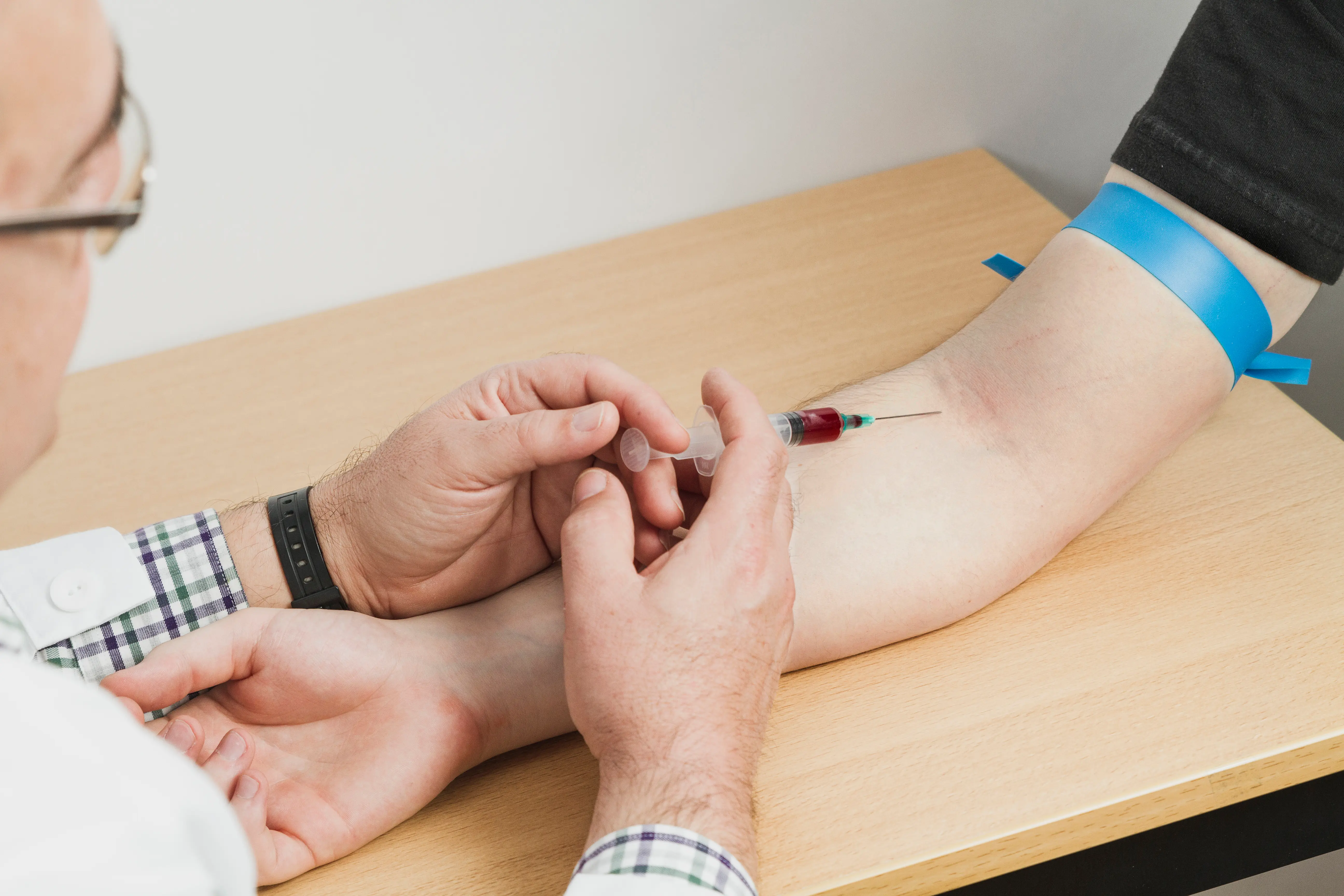
Diagnostic testing plan including blood test panel, ECG and urine screening
03

Tests and referrals, if you need them

Where testing will actually answer the question, we arrange it — blood tests and health screening through our laboratory partner, or a referral for ultrasound, X-ray, CT or MRI through private imaging providers. We will also tell you when a scan is not the right next step.
1–7 days
Personalised results and treatment plan from a private GP consultation
04

Results and next steps

Your GP talks you through what the results mean and agrees the next step with you. Every consultation ends with your treatment plan in writing, and any prescription goes to your own pharmacy.
20 minutes
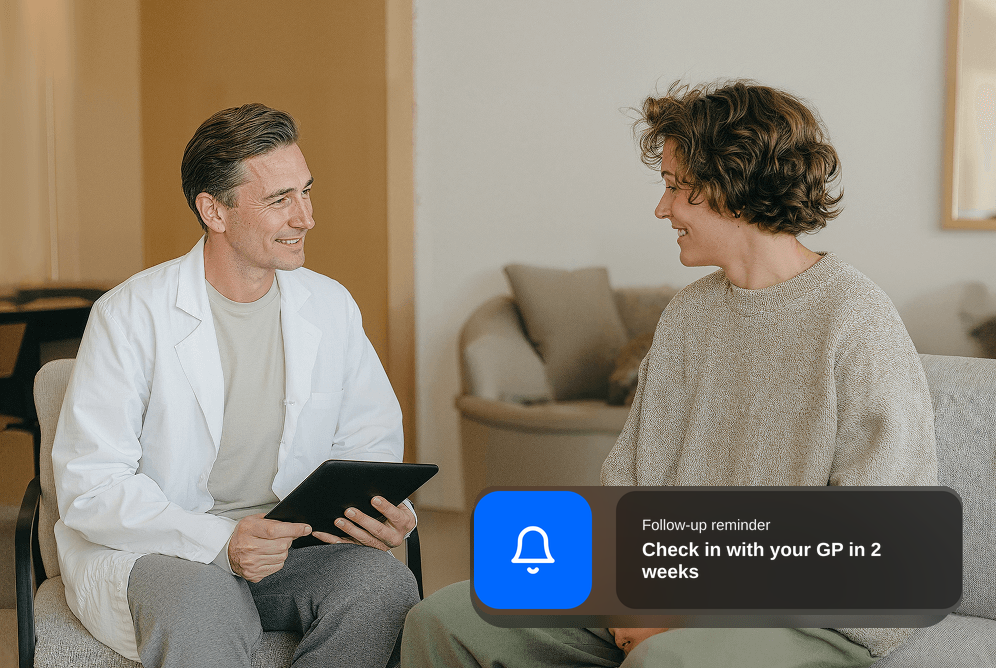
GP follow-up reminder for ongoing care and progress monitoring
05

Ongoing care and follow-up

Follow-up appointments, progress monitoring and ongoing advice — including saying plainly when something needs in-person or NHS care instead.

Ongoing

How we compare

Time to be seen

Appointment length

Your NHS record in the room

Written treatment plan

Told when a test isn’t needed

Cost

Varies by practice

Typically 10 minutes

Yes, your full record

Not routinely

Usually

Free

Same day

Often 10 to 15 minutes

Usually not

Sometimes charged

Varies by provider

Often a subscription

Questions about our service

How quickly can I be seen?

Same-day access is usually available, from 6am to 10pm, seven days a week. You choose a time that suits you rather than waiting on hold at 8am.

Will I see the same doctor each time?

Yes. Care is led personally by Dr Mohammad Khan, so you are not passed between clinicians. Continuity is the point of a small practice: someone who knows your history and is listening attentively rather than working through a checklist.

Can you see my NHS records?

Yes, with your consent. We can access your Summary Care Record during the consultation, so your current medications, allergies and significant history are in the room. That means fewer questions you have already answered elsewhere, and safer prescribing.

Are you trying to replace my NHS GP?

No. We are not here to replace GPs, only to support them. Your NHS practice remains responsible for your ongoing care, and with your consent we write to them after the consultation. We are useful when you need to be seen sooner, or want more time than a standard appointment allows.

What is included in the appointment?

Twenty unhurried minutes and a comprehensive assessment. A written treatment plan is included, along with any prescription, sick note or referral letter arising from the consultation, at no extra charge.

How much does it cost?

£40 for 20 minutes, self-pay. Membership is optional and never required. Priced for fairness, because we are not here to charge extortionate amounts for access to a doctor.

What does “treatable online” actually mean?

It means the diagnosis can usually be made from your history and photographs, and that treatment can be arranged safely without examining you. Where a condition is not marked treatable online, it is because examination is the diagnosis — listening to a chest, feeling an abdomen, examining an ear or a joint — or because a procedure or device is needed.

Can you prescribe antibiotics?

Yes, where there is a genuine bacterial infection — cellulitis, impetigo, bacterial urine infections, confirmed strep throat. We will also frequently tell you that you do not need one. Most sore throats, coughs, colds and earaches are viral, and an antibiotic gives you the side effects with none of the benefit.

What if the GP cannot help with what I need?

If your problem turns out to be genuinely outside what we can do remotely, the doctor will tell you straight away, point you to the right service, and refund your fee in full. We would rather do that than fill twenty minutes to justify the charge.

What should I do in an emergency?

Call 999 or go to A&E — do not book an online appointment and do not wait for a reply to an email. For urgent problems that are not emergencies, NHS 111 is available 24 hours a day, online or by phone, and can direct you to the right service.

Patient reviews

What our patients say

No reviews published yet.
Ready to see a GP?20 minutes with a GMC-registered doctor. £40, usually same day.
Book a consultation