Home

/

Children's Health

/

Hand, Foot and Mouth Disease

Children's health icon - sore throat, tonsillitis and childhood illness assessed by an online GP at Cheshire Clinics
Treatable online

Hand, Foot and Mouth Disease

Common, viral and self-limiting. The thing to watch is fluids, because the mouth ulcers make drinking hurt.

£40 · 20 minutes

Same-day availability

6am to 10pm, seven days

Assessed and treated by a GMC-registered GP

Prescriptions, sick notes and referral letters included

A written treatment plan after every appointment

Your NHS records in the room, with your consent

Clinically reviewed by Dr Mohammad Khan · Last reviewed

August 30, 2026

Book a consultation

A 20-minute appointment with a GMC-registered GP for £40. No membership required.

Private GP care led personally by Dr Mohammad Zubair Khan, GMC 7563469.

Why patients choose Cheshire Clinics

GMC registered doctors badge - every Cheshire Clinics consultation is with a General Medical Council registered GP

GMC-registered

Care led personally by Dr Khan

Royal College of General Practitioners badge - RCGP trained private GP consultations at Cheshire Clinics

RCGP-trained

Attentive, unhurried care that listens properly

Google five star reviews badge - Cheshire Clinics private GP online

Highly rated by patients

Five-star Google reviews from the people we have looked after

Care Quality Commission registered badge - Cheshire Clinics online GP service is registered with the CQC, England's independent regulator of health and social care

CQC-registered

Registered with the Care Quality Commission

Same-Day Appointments
Sick Notes
Private Prescriptions
Blood Tests
Menopause & HRT
Weight Management
Mental Health
Specialist Referrals
Same-Day Appointments
Sick Notes
Private Prescriptions
Blood Tests
Menopause & HRT
Weight Management
Mental Health
Specialist Referrals

Overview

Hand, foot and mouth disease is a common viral infection of young children, usually caused by a coxsackie virus. It produces mouth ulcers alongside small spots or blisters on the hands, feet and often the nappy area.

It is unpleasant and it looks alarming, but it is self-limiting and settles in seven to ten days without treatment.

The only thing that genuinely needs watching is fluid intake. Mouth ulcers make drinking painful, and a child who refuses fluids for a day or two can become dehydrated — that is the complication which actually brings children to hospital, not the rash.

It has nothing whatever to do with foot and mouth disease in farm animals, despite the name causing regular alarm.

Common symptoms

  • A day or two of feeling unwell first — mild fever, sore throat, off food, tired
  • Painful ulcers in the mouth, on the tongue, gums and inside the cheeks. These are usually the most distressing part
  • Small spots or blisters on the palms, soles, and often the buttocks and nappy area
  • Spots that may be flat or raised, sometimes with a small blister in the centre, and are more sore than itchy
  • Refusing food and drink because swallowing hurts
  • Dribbling more than usual in a toddler

On darker skin

The spots may look brown, grey or simply skin-coloured rather than red, and can be easier to feel than to see. Check the palms, soles and mouth, where the pattern is most typical.

Something that happens weeks later

Fingernails and toenails sometimes lift and shed a few weeks after the illness. It looks alarming, it is painless, the nails grow back normally, and it needs no treatment. Almost nobody is warned about it.

Causes and risk factors

  • Coxsackie A16 and enterovirus 71, most commonly
  • Spread through coughs and sneezes, saliva, blister fluid, and stool — which is why nappy changing and handwashing matter
  • Children under five, particularly at nursery
  • Late summer and early autumn, though it occurs all year
  • Adults can catch it, and often have it more severely than children do

The virus can be carried in stool for several weeks after recovery, which is why hygiene matters longer than the illness lasts.

How it is diagnosed

By where the spots are

The distribution is the diagnosis: mouth ulcers plus spots on the palms, soles and nappy area. That combination is characteristic and needs no test.

Swabs and blood tests are not required and are reserved for unusual or severe cases.

What it is confused with

  • Chickenpox — the important distinction. Chickenpox spreads over the whole body including the scalp, is intensely itchy, and shows spots at several different stages at once. Hand, foot and mouth concentrates on hands, feet and mouth, and is more sore than itchy
  • Herpes gingivostomatitis — a first cold sore infection, which causes severe mouth ulcers and swollen gums but no spots on hands and feet
  • Impetigo, with golden crusting
  • Mouth ulcers from other causes, where there is no rash at all

The one to rule out

Any rash that does not fade when pressed under a glass is not this, and needs emergency assessment.

How we treat it online

Hand, foot and mouth assesses well by video and photograph — the distribution of spots is characteristic and easy to capture. See our guide to photographing a skin problem.

What a consultation covers

  • Confirming it, and distinguishing it from chickenpox, which is the commonest confusion and matters because chickenpox has different implications for pregnant and immunosuppressed contacts
  • Practical advice on the mouth ulcers, which is the part that determines whether the week is bearable
  • Assessing hydration, and being specific about what to watch for
  • Nursery, school and work advice, which is frequently got wrong in both directions
  • Advice in pregnancy, where the risk is generally low but the worry is high

What we will not do

There is no antiviral treatment for this and antibiotics do nothing. Anyone offering a prescription to cure it is selling you something that does not exist. The honest answer is comfort, fluids and time.

A child who is not drinking, or who is drowsy, needs to be seen in person rather than assessed on a screen.

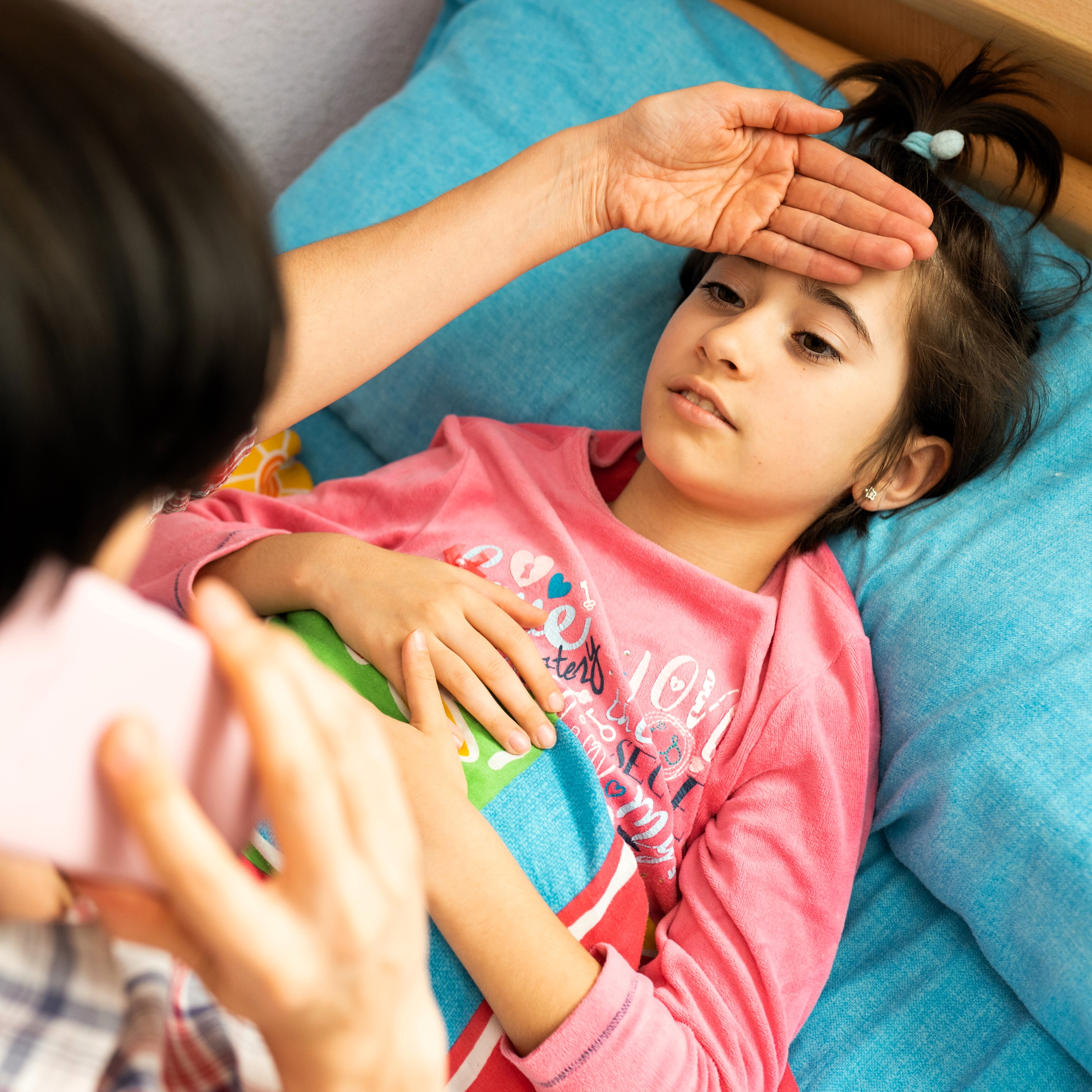
Children's health online GP appointment - private video consultation for a child with a GMC-registered GP at Cheshire Clinics

Ready to talk to a GP about this?

Book a consultation
Important

When to seek urgent help

Seek urgent assessment if your child:

  • Has not passed urine for eight hours or more, has no tears when crying, a dry mouth, or a sunken soft spot in a baby — these are signs of dehydration and are the main reason children with this illness need hospital care
  • Is refusing all fluids
  • Is drowsy, floppy, or difficult to rouse
  • Has a fever lasting more than five days, or a fever that returns after settling
  • Has a stiff neck, severe headache, or dislike of bright light
  • Has spots that become hot, spreading, painful or filled with pus
  • Is under three months old with any fever

Book a routine consultation if: you want the diagnosis confirmed, the mouth pain is not manageable with what you have tried, you are pregnant and have been exposed, or you need advice for nursery or work.

Prevention and self-care

Getting fluids in is the whole job

A painful mouth is the reason children stop drinking, so treat the pain in order to protect the fluids.

  • Paracetamol or ibuprofen, at the right dose for weight, given regularly rather than only when they complain — and timed about 30 minutes before meals and drinks
  • Cold things help most — ice lollies, ice cream, cold milk, yoghurt, smoothies. An ice lolly is both fluid and anaesthetic
  • Avoid salty, spicy, acidic or crunchy food — crisps, citrus, tomato and toast all sting
  • A straw can help by bypassing the sorest areas
  • Small amounts, often, beats trying to get a full cup down at once

Not eating for a few days is fine. Not drinking is not.

Stopping it spreading

  • Handwashing with soap, especially after nappy changes and before food
  • Do not share cups, cutlery or towels
  • Wash bedding and soiled clothing normally, and clean surfaces and toys
  • Bin used tissues straight away

Nursery and school

There is no formal exclusion period. Children can return once they are well enough to take part, even if a few spots remain.

Keeping a well child at home until every spot has gone is unnecessary, partly because the virus is shed in stool for weeks afterwards regardless.

If you are pregnant

The risk is generally considered low, but infection around the time of delivery is worth discussing. Mention it rather than worrying quietly — and note that the similar-looking chickenpox is a different and more important matter.

NHS or private

What the NHS does, free

  • Assessment and advice, including through 111 and a pharmacist
  • Urgent care for a dehydrated child, including fluids in hospital if needed
  • Free prescriptions for all children, though there is little to prescribe here

A pharmacist can advise on mouth pain relief free of charge, and for a straightforward case that is a perfectly good first stop. We would rather say that than take a fee for an illness with no specific treatment.

Where paying helps

  • Telling it apart from chickenpox today, which genuinely matters if there is a pregnant woman, a newborn or someone immunosuppressed in the household
  • When you cannot get the pain under control and the child is starting to refuse drinks — that conversation is worth having before dehydration sets in
  • A nursery or work letter, included in the fee, where you are being asked to keep a well child at home unnecessarily
  • Reassurance about the nail shedding, which alarms parents weeks later when the illness is long forgotten

Evidence and guidelines

This page follows NICE Clinical Knowledge Summaries on hand, foot and mouth disease, and UKHSA guidance on exclusion from schools and nurseries.

What the guidance actually says

  • Management is supportive. There is no specific antiviral treatment, and antibiotics have no role
  • Maintain fluid intake, using analgesia to make drinking tolerable. Dehydration is the main complication
  • Exclusion from school or nursery is not required. Children may return once they are well enough to participate, regardless of remaining spots
  • Advise on hygiene, noting that the virus is excreted in stool for several weeks after symptoms resolve
  • Seek urgent review for signs of dehydration, a child under three months with fever, or a fever lasting more than five days

On pregnancy

Infection in pregnancy is generally considered low risk, though infection close to delivery warrants discussion. UKHSA advises against routine exclusion of pregnant staff from settings with cases.

Reviewed against NICE CKS and UKHSA guidance current at the date shown above.

Common questions

How is it different from chickenpox?

Location and itch. Hand, foot and mouth concentrates on the palms, soles, nappy area and mouth, and is sore rather than itchy.

Chickenpox spreads everywhere including the scalp, itches intensely, and shows spots at several stages at once.

Do they need to stay off nursery?

No formal exclusion is required. They can go back once well enough to join in, even with spots remaining.

Keeping a well child home until the last spot fades achieves nothing — the virus is shed for weeks either way.

Is there any treatment?

No, and be wary of anyone who says otherwise. It is viral and self-limiting.

Everything useful is about comfort and fluids, which is genuinely the treatment rather than a consolation prize.

They will not drink. What do I do?

Give pain relief about half an hour before offering drinks, and use cold things — ice lollies, ice cream, cold milk.

Small amounts frequently. If they still refuse everything, or have not passed urine for eight hours, get them seen.

Can adults catch it?

Yes, and adults often have it worse. Mouth ulcers in an adult after a child in the house has had it are a common story.

Their nails are falling off weeks later. Is that related?

Yes, and it is harmless. Nail shedding a few weeks after the illness is well recognised.

The nails grow back normally and nothing needs doing — though almost no one is warned it may happen.

Can they get it more than once?

Yes. Several different viruses cause it, so immunity to one does not prevent the others.

I am pregnant and my child has it. Should I worry?

The risk is generally considered low, and routine exclusion of pregnant women is not advised.

Do mention it, particularly near your due date — and make sure it is not chickenpox, which is a different matter entirely.

Is it related to foot and mouth in animals?

No, not at all. Completely different viruses, completely different species.

The similar name causes regular and unnecessary alarm.

Dr Mohammad Zubair Khan, GMC-registered private GP and founder of Cheshire Clinics
Clinically reviewed by Dr Mohammad Zubair Khan, GMC 7563469
Last reviewed

August 30, 2026

How it works

What happens when you book

£40 for a 20-minute appointment with a GMC-registered GP, 6am to 10pm, seven days a week. Membership is optional and never required.
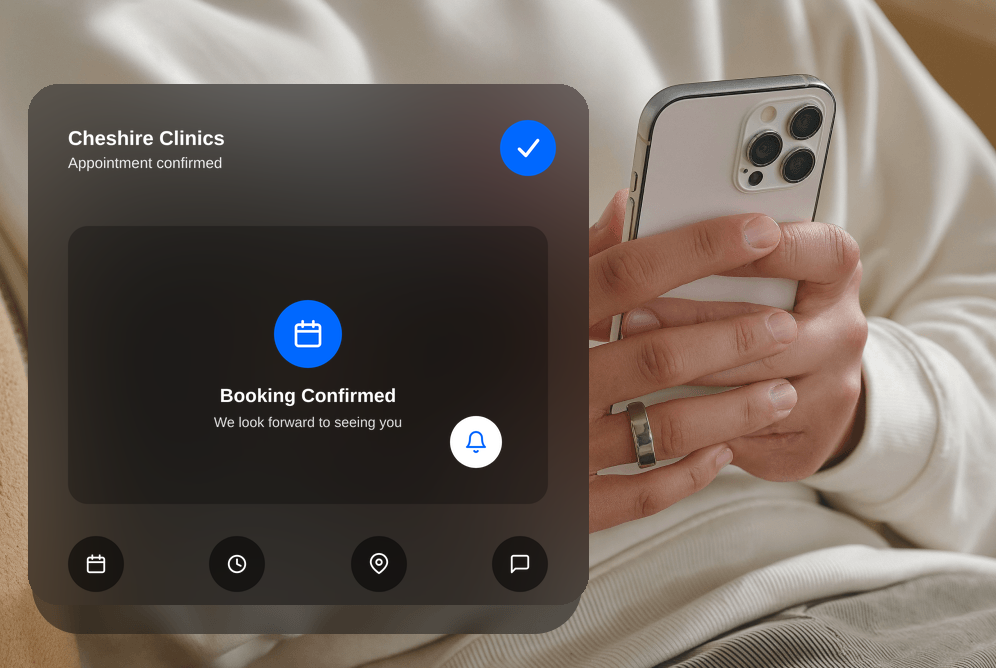
Cheshire Clinics online GP appointment booking confirmation on mobile
01

Book your appointment

Pick a time that suits you — 6am to 10pm, seven days a week, including weekends and bank holidays. £40 for 20 minutes, self-pay, with no insurance to arrange.
5–10 minutes
Online video consultation with a GMC-registered private GP
02

Meet your GP

A 20-minute video or phone consultation with a GMC-registered GP — long enough for a proper conversation about your symptoms, your history and what matters to you.
20 minutes
Diagnostic testing plan including blood test panel, ECG and urine screening
03

Tests and referrals, if you need them

Where testing will actually answer the question, we arrange it — blood tests and health screening through our laboratory partner, or a referral for ultrasound, X-ray, CT or MRI through private imaging providers. We will also tell you when a scan is not the right next step.
1–7 days
Personalised results and treatment plan from a private GP consultation
04

Results and next steps

Your GP talks you through what the results mean and agrees the next step with you. Every consultation ends with your treatment plan in writing, and any prescription goes to your own pharmacy.
20 minutes
GP follow-up reminder for ongoing care and progress monitoring
05

Ongoing care and follow-up

Follow-up appointments, progress monitoring and ongoing advice — including saying plainly when something needs in-person or NHS care instead.

Ongoing

How we compare

Time to be seen

Appointment length

Your NHS record in the room

Written treatment plan

Told when a test isn’t needed

Cost

Varies by practice

Typically 10 minutes

Yes, your full record

Not routinely

Usually

Free

Same day

Often 10 to 15 minutes

Usually not

Sometimes charged

Varies by provider

Often a subscription

Questions about our service

How quickly can I be seen?

Same-day access is usually available, from 6am to 10pm, seven days a week. You choose a time that suits you rather than waiting on hold at 8am.

Will I see the same doctor each time?

Yes. Care is led personally by Dr Mohammad Khan, so you are not passed between clinicians. Continuity is the point of a small practice: someone who knows your history and is listening attentively rather than working through a checklist.

Can you see my NHS records?

Yes, with your consent. We can access your Summary Care Record during the consultation, so your current medications, allergies and significant history are in the room. That means fewer questions you have already answered elsewhere, and safer prescribing.

Are you trying to replace my NHS GP?

No. We are not here to replace GPs, only to support them. Your NHS practice remains responsible for your ongoing care, and with your consent we write to them after the consultation. We are useful when you need to be seen sooner, or want more time than a standard appointment allows.

What is included in the appointment?

Twenty unhurried minutes and a comprehensive assessment. A written treatment plan is included, along with any prescription, sick note or referral letter arising from the consultation, at no extra charge.

How much does it cost?

£40 for 20 minutes, self-pay. Membership is optional and never required. Priced for fairness, because we are not here to charge extortionate amounts for access to a doctor.

What does “treatable online” actually mean?

It means the diagnosis can usually be made from your history and photographs, and that treatment can be arranged safely without examining you. Where a condition is not marked treatable online, it is because examination is the diagnosis — listening to a chest, feeling an abdomen, examining an ear or a joint — or because a procedure or device is needed.

Can you prescribe antibiotics?

Yes, where there is a genuine bacterial infection — cellulitis, impetigo, bacterial urine infections, confirmed strep throat. We will also frequently tell you that you do not need one. Most sore throats, coughs, colds and earaches are viral, and an antibiotic gives you the side effects with none of the benefit.

What if the GP cannot help with what I need?

If your problem turns out to be genuinely outside what we can do remotely, the doctor will tell you straight away, point you to the right service, and refund your fee in full. We would rather do that than fill twenty minutes to justify the charge.

What should I do in an emergency?

Call 999 or go to A&E — do not book an online appointment and do not wait for a reply to an email. For urgent problems that are not emergencies, NHS 111 is available 24 hours a day, online or by phone, and can direct you to the right service.

Patient reviews

What our patients say

No reviews published yet.
Ready to see a GP?20 minutes with a GMC-registered doctor. £40, usually same day.
Book a consultation