Children's health icon - sore throat, tonsillitis and childhood illness assessed by an online GP at Cheshire Clinics
Treatable online

Colic

Prolonged crying in a well, thriving baby. Most remedies do not work — and looking after the parent matters as much as the baby.

£40 · 20 minutes

Same-day availability

6am to 10pm, seven days

Assessed and treated by a GMC-registered GP

Prescriptions, sick notes and referral letters included

A written treatment plan after every appointment

Your NHS records in the room, with your consent

Clinically reviewed by Dr Mohammad Khan · Last reviewed

August 30, 2026

Book a consultation

A 20-minute appointment with a GMC-registered GP for £40. No membership required.

Private GP care led personally by Dr Mohammad Zubair Khan, GMC 7563469.

Why patients choose Cheshire Clinics

GMC registered doctors badge - every Cheshire Clinics consultation is with a General Medical Council registered GP

GMC-registered

Care led personally by Dr Khan

Royal College of General Practitioners badge - RCGP trained private GP consultations at Cheshire Clinics

RCGP-trained

Attentive, unhurried care that listens properly

Google five star reviews badge - Cheshire Clinics private GP online

Highly rated by patients

Five-star Google reviews from the people we have looked after

Care Quality Commission registered badge - Cheshire Clinics online GP service is registered with the CQC, England's independent regulator of health and social care

CQC-registered

Registered with the Care Quality Commission

Same-Day Appointments
Sick Notes
Private Prescriptions
Blood Tests
Menopause & HRT
Weight Management
Mental Health
Specialist Referrals
Same-Day Appointments
Sick Notes
Private Prescriptions
Blood Tests
Menopause & HRT
Weight Management
Mental Health
Specialist Referrals

Overview

Colic describes prolonged, intense crying in a baby who is otherwise healthy, feeding well and gaining weight. The usual definition is crying for more than three hours a day, more than three days a week, for more than three weeks.

It affects roughly one baby in five, typically starts at two to three weeks, peaks at around six weeks, and has resolved in the great majority by three to four months.

Nobody knows what causes it. It has been blamed on wind, immature guts, feeding technique and maternal anxiety, and none of those has held up well. The most honest description is that some babies cry a great deal for a period of weeks, and then stop.

That is not a satisfying answer when you are the one awake at 2am, which is why this page gives as much attention to the parent as to the baby. Relentless crying is genuinely one of the hardest things new parents face, and the support around it matters as much as any remedy.

Common symptoms

  • Intense, inconsolable crying that is difficult to soothe by the usual means
  • Often worse in the late afternoon and evening, which is the classic pattern
  • Drawing the knees up, clenching fists, arching the back, going red in the face
  • A tense or bloated-looking tummy, and passing wind
  • Episodes lasting from a few minutes to several hours
  • A baby who is otherwise well — feeding, gaining weight, and content between episodes

The features that make it not colic

These matter, and they are the reason a well baby is still worth having assessed:

  • Poor weight gain, or falling off the growth chart
  • Vomiting that is forceful, projectile, or green
  • Blood or mucus in the stool
  • Fever, or a baby who seems unwell rather than distressed
  • Persistent diarrhoea, or eczema alongside the crying
  • Crying that has changed in character, or started suddenly after twelve weeks

Causes and risk factors

The honest position is that the cause is unknown, and any page telling you otherwise with confidence is overstating it. Theories that remain plausible:

  • An immature gut and developing gut bacteria
  • Normal developmental crying, simply at the upper end of the range — all babies cry more in the first three months
  • Temperament and sensitivity to stimulation
  • Cow's milk protein allergy, in a minority — usually with other clues such as eczema, reflux, diarrhoea or blood in the stool
  • Reflux, though this is diagnosed far more often than it occurs
  • Feeding technique, tongue tie, or overfeeding, in some cases

What does not cause it

Not anything you have done. Not anxiety, not inexperience, not the way you hold your baby. Colic occurs at the same rate in first and later children, and in breastfed and formula-fed babies alike.

How it is diagnosed

By the pattern, and by what is absent

Colic is diagnosed in a baby who cries excessively but is otherwise entirely well — growing along their centile, feeding, and settled between episodes.

There is no test. The assessment is a careful history, a look at the growth chart, and an examination to exclude the specific things that mimic it.

What is looked for

  • Weight and growth, from the red book. A thriving baby is powerfully reassuring
  • Feeding history — method, volumes, frequency, positioning, winding
  • Vomiting, stool pattern, and any blood or mucus
  • Skin, since eczema alongside crying raises the possibility of cow's milk protein allergy
  • A hernia or testicular problem, which can cause sudden inconsolable crying and is easily missed

What else causes a baby to cry inconsolably

Cow's milk protein allergy, reflux, infection including urine infection, constipation, a hair tourniquet wrapped around a toe or finger, an eye scratch, or an incarcerated hernia.

The hair tourniquet is worth knowing about — it is genuinely a cause of unexplained screaming in small babies, it is easy to find if you look, and almost nobody thinks to check.

How we treat it online

Colic assesses reasonably well remotely, because the useful information is the pattern of crying, the feeding history and the weight trend — all of which you can describe, and the weight comes from the red book.

What a consultation covers

  • Excluding the things colic is not, which is the main clinical task. Weight trajectory, vomiting, stool, skin and how the baby is between episodes
  • Reviewing feeding — positioning, attachment, volumes, winding, and whether there is a tongue tie worth assessing
  • Considering cow's milk protein allergy where the pattern fits, and discussing a properly supervised trial rather than an open-ended dairy exclusion
  • Being straight about what the remedies do and do not do, so you are not spending money each week on the next thing
  • Asking how you are. Genuinely — not as a formality. Parental exhaustion and low mood are the most under-treated part of this, and they are treatable

What we will not do

Prescribe reflux medication for a thriving, crying baby without good reason. Acid-suppressing drugs are widely given for colic, and the evidence that they help is poor.

Children's health online GP appointment - private video consultation for a child with a GMC-registered GP at Cheshire Clinics

Ready to talk to a GP about this?

Book a consultation
Important

When to seek urgent help

Seek urgent assessment if your baby:

  • Has a fever — any temperature of 38°C or above under three months is urgent
  • Is vomiting forcefully, repeatedly, or bringing up green fluid
  • Has blood in the stool, or stools that look like redcurrant jelly
  • Is drowsy, floppy, difficult to rouse, or unusually quiet after a period of crying
  • Has a rash that does not fade under pressure
  • Is refusing feeds, or has had fewer wet nappies
  • Has a swollen, tense tummy, or a lump in the groin
  • Has a cry that sounds different from usual — high-pitched, weak or moaning

And one more

If you feel you are reaching the end of what you can cope with, that is also a reason to ask for help today. It is not a failure and it is far commoner than anyone admits. Speak to your health visitor, your GP, or call 111.

Prevention and self-care

Things worth trying

  • Holding and movement — carrying, rocking, a sling, a walk outdoors. Motion helps more than most remedies
  • White noise, or the sound of a hairdryer or washing machine
  • A warm bath
  • Tummy massage, gently and clockwise
  • Winding during and after feeds, and keeping the baby upright afterwards
  • Reducing stimulation in the evening — dim lights, less handling, quiet
  • Checking feeding technique with a health visitor or infant feeding team, which is free and often useful

An honest word on the remedies

Simeticone drops, gripe water and lactase drops are widely sold and widely bought, and the evidence that any of them work is weak. They are unlikely to do harm, and if one seems to help, there is no reason to stop — but do not feel you are failing by not finding the right product. There may not be one.

Probiotic drops containing Lactobacillus reuteri have some supporting evidence, mainly in breastfed babies. They are the one over-the-counter option with a reasonable case behind it.

Do not cut dairy from your own diet, or switch formula, without advice. Where cow's milk protein allergy is genuinely suspected it is worth a properly supervised trial — done blindly it just adds difficulty.

Looking after yourself, which is not optional

If the crying is overwhelming you, put your baby down somewhere safe — their cot, on their back — leave the room, and take a few minutes. A baby crying alone in a cot for five minutes comes to no harm. A parent at the end of their rope, holding a screaming baby, is the situation to avoid.

Never shake a baby. It causes catastrophic and permanent brain injury, and it almost always happens to ordinary parents at the end of an ordinary bad night.

Ask for help early. Share the nights, accept offers, tell your health visitor how you are actually doing. Postnatal depression and anxiety are commoner in parents of babies with colic, and both are treatable.

NHS or private

What the NHS does, free

  • Health visitors, who are the right service for this and are frequently under-used. They will observe a feed, weigh the baby, and talk through settling
  • Infant feeding teams and breastfeeding support, free and specialist
  • GP assessment to exclude the conditions colic mimics
  • Specialist referral and prescribed hypoallergenic formula where cow's milk protein allergy is confirmed — this is expensive to buy privately and free on prescription
  • Perinatal mental health support for parents, which is where the real need often sits
  • Free prescriptions for children

Start with your health visitor. For colic specifically they often have more practical time and expertise than a ten-minute GP appointment.

Where paying helps

  • Twenty minutes rather than ten, when you have been up for weeks and want someone to take the whole story properly
  • A clear steer on the remedies, so you stop spending £10 a week on the next thing the internet suggests
  • Assessment of possible cow's milk protein allergy without a wait, where the pattern fits
  • Being asked how you are, and having somewhere to say the answer honestly

Evidence and guidelines

This page follows NICE Clinical Knowledge Summaries on colic, alongside NICE NG143 for assessing an unwell infant.

What the guidance actually says

  • Colic is a diagnosis made in a thriving, otherwise well infant, after excluding other causes of excessive crying
  • Reassure parents that colic is common, self-limiting, and resolves by around three to four months
  • Advise on holding, motion, white noise and reducing stimulation, and review feeding technique
  • Simeticone and lactase drops are not recommended routinely, as evidence of benefit is lacking
  • Do not routinely prescribe acid-suppressing medication for crying alone in an otherwise well infant
  • Consider cow's milk protein allergy where there are supporting features, and manage any dietary exclusion with appropriate support
  • Assess parental wellbeing and coping, and provide support — this is part of the guidance rather than an optional extra

On safe coping

UK safeguarding guidance is explicit that parents should be advised it is acceptable to put a crying baby down safely and take a short break, and that a baby must never be shaken. Abusive head trauma most often occurs in response to inconsolable crying.

Reviewed against NICE CKS and NG143 current at the date shown above.

Common questions

Is my baby in pain?

Honestly, nobody knows. Babies with colic look uncomfortable, but no clear physical cause has ever been established.

What is known is that they are otherwise healthy and that it resolves — which is not much comfort at 2am, but it is true.

When will it stop?

It peaks around six weeks and has usually settled by three to four months.

Almost all colic ends on its own, regardless of what was tried.

Does Infacol or gripe water work?

The evidence is weak for both. They are unlikely to harm, and if one seems to help you there is no reason to stop.

But you are not failing by not finding the right product. There may not be one.

Should I cut out dairy?

Not without advice. Cow's milk protein allergy causes a minority of cases, usually with other features such as eczema, diarrhoea or blood in the stool.

An unsupervised exclusion diet makes life harder and rarely answers the question.

Is it something I am doing wrong?

No. Colic occurs at the same rate in experienced and first-time parents, and in breastfed and formula-fed babies.

It is not caused by anxiety, inexperience, or how you hold your baby.

Could it be reflux?

Sometimes, but reflux is diagnosed far more often than it occurs.

Acid-suppressing medicine is not recommended for a thriving baby who simply cries, and it is prescribed for this a great deal.

What if I cannot cope?

Put your baby down safely in their cot, leave the room, and take a few minutes. That is the correct thing to do, not a failure.

Never shake a baby. And tell someone how you are — your health visitor, your GP, a friend. This is where help genuinely exists.

When should I worry?

Fever, forceful or green vomiting, blood in the stool, poor weight gain, or a baby who seems unwell rather than distressed.

Also a cry that sounds different — high-pitched, weak or moaning. That is not colic.

Does anything actually help?

Movement, holding, white noise and reducing evening stimulation help most, and cost nothing.

Probiotic drops containing Lactobacillus reuteri have the best evidence of the shop-bought options, mainly in breastfed babies.


Dr Mohammad Zubair Khan, GMC-registered private GP and founder of Cheshire Clinics
Clinically reviewed by Dr Mohammad Zubair Khan, GMC 7563469
Last reviewed

August 30, 2026

How it works

What happens when you book

£40 for a 20-minute appointment with a GMC-registered GP, 6am to 10pm, seven days a week. Membership is optional and never required.
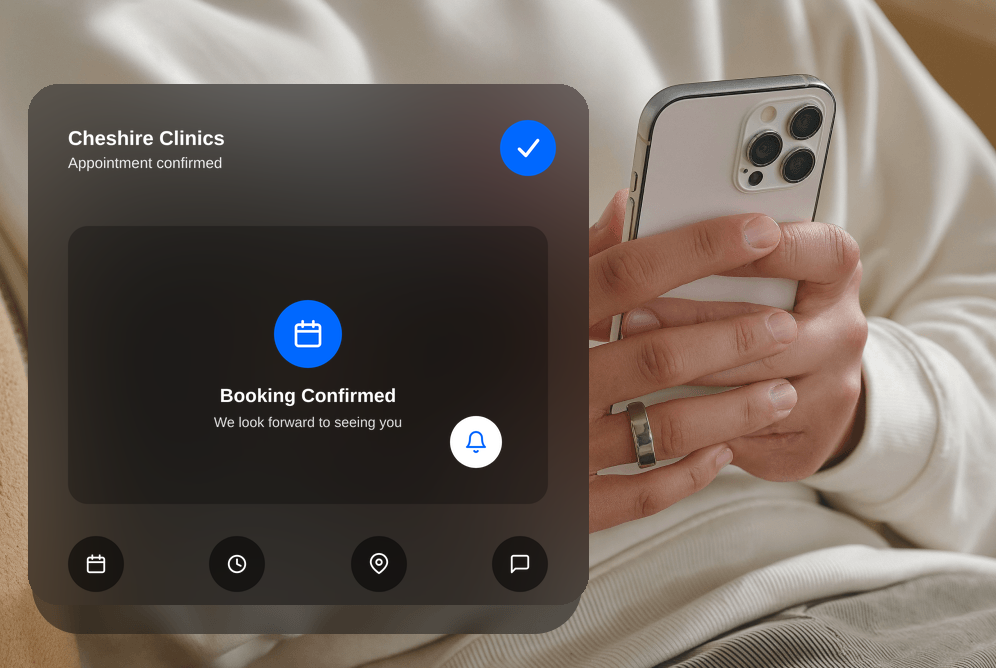
Cheshire Clinics online GP appointment booking confirmation on mobile
01

Book your appointment

Pick a time that suits you — 6am to 10pm, seven days a week, including weekends and bank holidays. £40 for 20 minutes, self-pay, with no insurance to arrange.
5–10 minutes
Online video consultation with a GMC-registered private GP
02

Meet your GP

A 20-minute video or phone consultation with a GMC-registered GP — long enough for a proper conversation about your symptoms, your history and what matters to you.
20 minutes
Diagnostic testing plan including blood test panel, ECG and urine screening
03

Tests and referrals, if you need them

Where testing will actually answer the question, we arrange it — blood tests and health screening through our laboratory partner, or a referral for ultrasound, X-ray, CT or MRI through private imaging providers. We will also tell you when a scan is not the right next step.
1–7 days
Personalised results and treatment plan from a private GP consultation
04

Results and next steps

Your GP talks you through what the results mean and agrees the next step with you. Every consultation ends with your treatment plan in writing, and any prescription goes to your own pharmacy.
20 minutes
GP follow-up reminder for ongoing care and progress monitoring
05

Ongoing care and follow-up

Follow-up appointments, progress monitoring and ongoing advice — including saying plainly when something needs in-person or NHS care instead.

Ongoing

How we compare

Time to be seen

Appointment length

Your NHS record in the room

Written treatment plan

Told when a test isn’t needed

Cost

Varies by practice

Typically 10 minutes

Yes, your full record

Not routinely

Usually

Free

Same day

Often 10 to 15 minutes

Usually not

Sometimes charged

Varies by provider

Often a subscription

Questions about our service

How quickly can I be seen?

Same-day access is usually available, from 6am to 10pm, seven days a week. You choose a time that suits you rather than waiting on hold at 8am.

Will I see the same doctor each time?

Yes. Care is led personally by Dr Mohammad Khan, so you are not passed between clinicians. Continuity is the point of a small practice: someone who knows your history and is listening attentively rather than working through a checklist.

Can you see my NHS records?

Yes, with your consent. We can access your Summary Care Record during the consultation, so your current medications, allergies and significant history are in the room. That means fewer questions you have already answered elsewhere, and safer prescribing.

Are you trying to replace my NHS GP?

No. We are not here to replace GPs, only to support them. Your NHS practice remains responsible for your ongoing care, and with your consent we write to them after the consultation. We are useful when you need to be seen sooner, or want more time than a standard appointment allows.

What is included in the appointment?

Twenty unhurried minutes and a comprehensive assessment. A written treatment plan is included, along with any prescription, sick note or referral letter arising from the consultation, at no extra charge.

How much does it cost?

£40 for 20 minutes, self-pay. Membership is optional and never required. Priced for fairness, because we are not here to charge extortionate amounts for access to a doctor.

What does “treatable online” actually mean?

It means the diagnosis can usually be made from your history and photographs, and that treatment can be arranged safely without examining you. Where a condition is not marked treatable online, it is because examination is the diagnosis — listening to a chest, feeling an abdomen, examining an ear or a joint — or because a procedure or device is needed.

Can you prescribe antibiotics?

Yes, where there is a genuine bacterial infection — cellulitis, impetigo, bacterial urine infections, confirmed strep throat. We will also frequently tell you that you do not need one. Most sore throats, coughs, colds and earaches are viral, and an antibiotic gives you the side effects with none of the benefit.

What if the GP cannot help with what I need?

If your problem turns out to be genuinely outside what we can do remotely, the doctor will tell you straight away, point you to the right service, and refund your fee in full. We would rather do that than fill twenty minutes to justify the charge.

What should I do in an emergency?

Call 999 or go to A&E — do not book an online appointment and do not wait for a reply to an email. For urgent problems that are not emergencies, NHS 111 is available 24 hours a day, online or by phone, and can direct you to the right service.

Patient reviews

What our patients say

No reviews published yet.
Ready to see a GP?20 minutes with a GMC-registered doctor. £40, usually same day.
Book a consultation