Home

/

Children's Health

/

Febrile Convulsions

Children's health icon - sore throat, tonsillitis and childhood illness assessed by an online GP at Cheshire Clinics

Febrile Convulsions

A seizure with a fever in a young child. Frightening to watch and usually harmless — and paracetamol does not prevent them.

£40 · 20 minutes

Same-day availability

6am to 10pm, seven days

Assessed and treated by a GMC-registered GP

Prescriptions, sick notes and referral letters included

A written treatment plan after every appointment

Your NHS records in the room, with your consent

Clinically reviewed by Dr Mohammad Khan · Last reviewed

August 30, 2026

Book a consultation

A 20-minute appointment with a GMC-registered GP for £40. No membership required.

Private GP care led personally by Dr Mohammad Zubair Khan, GMC 7563469.

Why patients choose Cheshire Clinics

GMC registered doctors badge - every Cheshire Clinics consultation is with a General Medical Council registered GP

GMC-registered

Care led personally by Dr Khan

Royal College of General Practitioners badge - RCGP trained private GP consultations at Cheshire Clinics

RCGP-trained

Attentive, unhurried care that listens properly

Google five star reviews badge - Cheshire Clinics private GP online

Highly rated by patients

Five-star Google reviews from the people we have looked after

Care Quality Commission registered badge - Cheshire Clinics online GP service is registered with the CQC, England's independent regulator of health and social care

CQC-registered

Registered with the Care Quality Commission

Same-Day Appointments
Sick Notes
Private Prescriptions
Blood Tests
Menopause & HRT
Weight Management
Mental Health
Specialist Referrals
Same-Day Appointments
Sick Notes
Private Prescriptions
Blood Tests
Menopause & HRT
Weight Management
Mental Health
Specialist Referrals

Overview

A febrile convulsion is a seizure that happens in a young child during a fever. It affects roughly one child in twenty between the ages of six months and five years, and it is one of the most frightening things a parent can witness.

The two things worth knowing before anything else: they are usually harmless, and they are not caused by anything you did or failed to do.

A typical febrile convulsion lasts a couple of minutes, the child is drowsy and confused afterwards, and they are back to themselves within an hour or two. They do not cause brain damage, and the great majority of children who have one never develop epilepsy.

The point that surprises most parents is that giving paracetamol or ibuprofen does not prevent them. This has been studied properly, and lowering the temperature does not reduce the chance of a seizure. Treat the child's discomfort by all means — but not in the belief that it prevents a fit.

Common symptoms

During the seizure, a child may:

  • Become stiff, then jerk their arms and legs rhythmically
  • Lose consciousness, and be unresponsive
  • Have eyes rolling back, and go red or blue around the face
  • Wet or soil themselves
  • Vomit, or froth at the mouth

Afterwards, they are usually drowsy, irritable and confused for anything up to an hour. That is normal and expected.

Simple versus complex

A simple febrile convulsion — which is the great majority — involves the whole body, lasts under 15 minutes, happens only once in a 24-hour period, and the child recovers fully.

A complex febrile convulsion affects one side or one limb, lasts longer than 15 minutes, or happens more than once in 24 hours. These need more careful assessment, though most still turn out well.

Causes and risk factors

  • A fever, usually from an ordinary viral infection — a cold, flu, tonsillitis, an ear infection, or a tummy bug
  • Age six months to five years, with a peak between 12 and 18 months. The developing brain in this window is simply more prone to it
  • Family history, which is strong — a parent or sibling who had febrile convulsions considerably raises the chance
  • The speed at which the temperature rises appears to matter more than how high it gets, which is part of why lowering it does not prevent them
  • Occasionally following a vaccination that causes fever — the seizure comes from the fever, not from the vaccine itself, and it is not a reason to avoid future immunisations

They are not caused by letting a fever go untreated, and no parent should be left thinking they are.

How it is diagnosed

The diagnosis is really about excluding something else

A febrile convulsion is diagnosed by the picture — a seizure, in a feverish child of the right age, who recovers. There is no confirmatory test.

The clinical work is finding the source of the fever and, above all, excluding meningitis and encephalitis. That is the reason a first seizure is assessed in person and often in hospital.

What is usually done

  • A full examination looking for the source of infection — ears, throat, chest, urine
  • A urine sample, since urinary infection is a common and easily missed cause of fever in small children
  • Blood glucose
  • Blood tests only where the child is unwell or the source is unclear

When more is needed

  • Lumbar puncture, considered particularly in babies under 12 months, in any child with signs of meningitis, or where the child remains drowsy
  • EEG and brain imaging are not routine. They are reserved for complex or recurrent seizures, or where there are neurological concerns — an EEG after a simple febrile convulsion does not predict epilepsy and is not recommended

What else causes a fit in a child

Meningitis, encephalitis, a low blood sugar, a head injury, or epilepsy presenting for the first time. Breath-holding attacks and faints are also mistaken for seizures, and a video helps distinguish them.

How we treat it online

A child who has had a seizure needs to be seen in person, not on a video call. We will say that immediately rather than work around it.

A first febrile convulsion always warrants same-day face-to-face assessment — partly to check the child, and mainly to make sure the fever is not from something serious such as meningitis. Call 999 during a seizure, or 111 straight afterwards.

Where a consultation genuinely helps

Its role here is afterwards, and it is not a small one.

  • Explaining what happened. Parents who have watched their child have a seizure are frequently traumatised by it and are rarely given enough time to ask what they actually want to ask
  • What the risk of it happening again really is, and what that means for holidays, nursery and leaving the child with grandparents
  • The epilepsy question, which almost every parent is silently worried about and few are given a straight answer on
  • Correcting the paracetamol myth, which otherwise leaves parents feeling responsible for something they could not have prevented
  • Rehearsing what to do next time, calmly, when nobody is panicking. That is worth twenty minutes
  • Managing the illness that caused the fever, where that is still ongoing
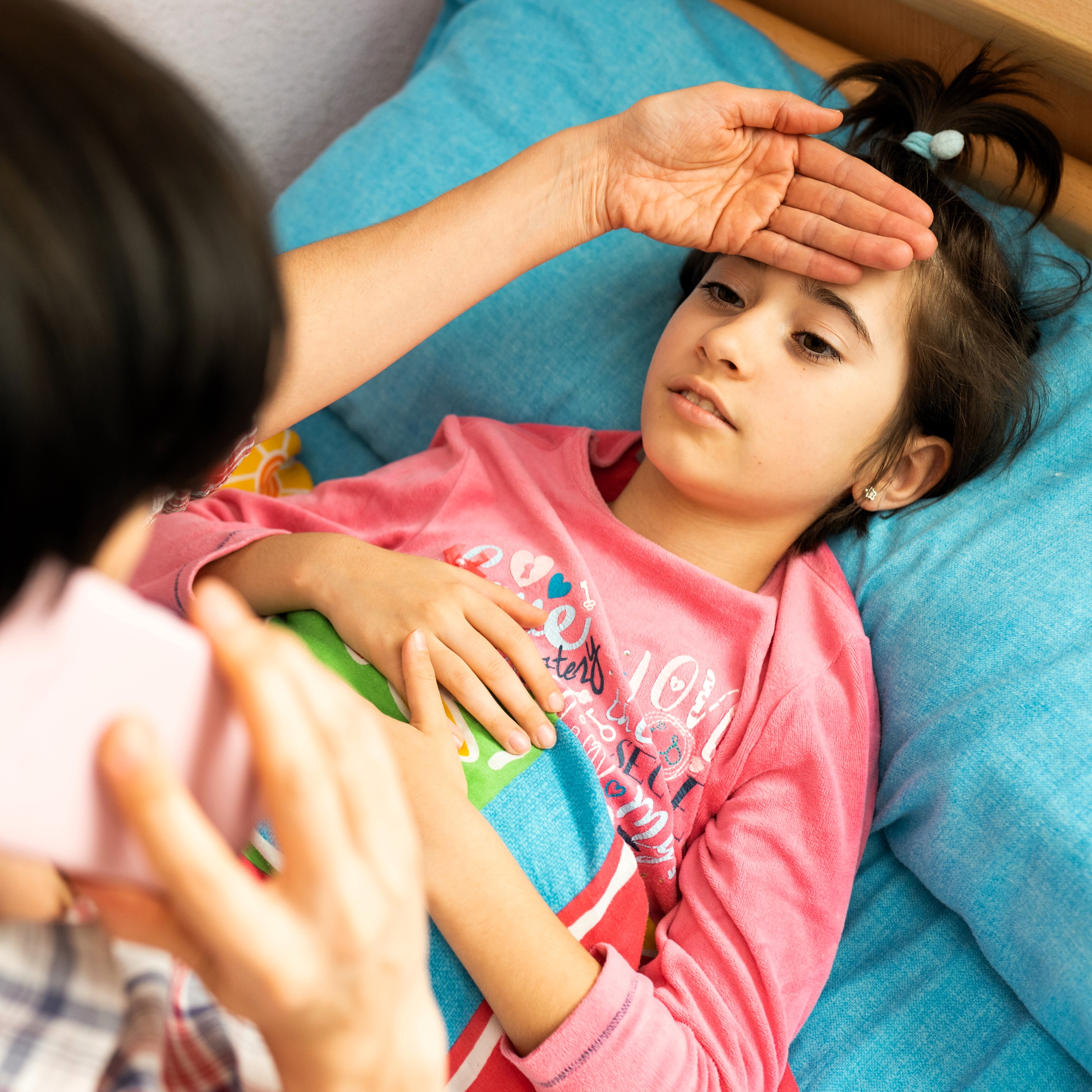
Children's health online GP appointment - private video consultation for a child with a GMC-registered GP at Cheshire Clinics
Important

When to seek urgent help

Call 999 immediately if:

  • The seizure lasts longer than five minutes
  • It is the child's first seizure
  • Another seizure begins soon after the first
  • The child is having difficulty breathing, or stays blue after the seizure stops
  • They do not wake up properly afterwards
  • They are under six months old
  • There is a rash that does not fade under pressure, a stiff neck, or dislike of bright light

What to do during a seizure

  1. Note the time it starts. Duration is the single most useful piece of information
  2. Move furniture and hard objects away, and put something soft under the head
  3. Do not restrain them, and do not put anything in the mouth — they cannot swallow their tongue, and objects cause injury
  4. Once the jerking stops, roll them onto their side in the recovery position
  5. Stay with them, and film it if someone else can — a short video is genuinely useful to the clinician afterwards

Seek same-day assessment even after a short seizure in a child who has had them before, if they are more unwell than usual, drowsy, or you are not happy.

Prevention and self-care

The honest answer about prevention

Paracetamol and ibuprofen do not prevent febrile convulsions. Trials have looked at this carefully, and giving antipyretics does not reduce the chance of a seizure.

Give them because your child is uncomfortable or miserable with a fever — that is a good reason. Do not give them believing you are preventing a fit, and do not blame yourself if one happens anyway.

Nor is sponging, fanning or cold bathing recommended. It makes children shiver and distressed, and it does not help.

What to do about a fever

  • Keep them comfortable, dressed lightly, in a room that is not too warm
  • Offer fluids regularly — drinking matters far more than eating
  • Watch how they are in themselves rather than watching the thermometer. An alert child with a temperature of 39°C is less concerning than a listless one at 38°C

Preparing for next time

  • Know the plan. Time it, keep them safe, recovery position afterwards, 999 if it passes five minutes
  • Tell whoever looks after your child — nursery, grandparents, childminders. A written note of what to do is genuinely reassuring for them
  • Some children with prolonged seizures are prescribed emergency medication to be given at home. If that applies, make sure everyone who cares for your child knows where it is and how to use it

Vaccinations

Keep them up to date. A fever after a vaccine can trigger a seizure in a susceptible child, but the illnesses vaccines prevent cause far more fevers, and far worse outcomes.

NHS or private

This is an NHS pathway

  • 999 and emergency care during or immediately after a seizure. There is no private alternative and no reason to look for one
  • Paediatric assessment after a first febrile convulsion, including any tests needed to exclude meningitis
  • Paediatric follow-up for complex or recurrent seizures
  • Emergency rescue medication where it is indicated, prescribed and supplied free
  • Free prescriptions for all children

If your child has had a seizure, call 999 or 111 — not us. That is the clearest thing on this page.

Where paying genuinely helps — and it does here

The gap after a febrile convulsion is not medical care. It is explanation.

  • Time to ask everything you did not get to ask in a busy emergency department when you were still shaking
  • A straight answer on the epilepsy question, with the actual numbers rather than reassurance
  • Practical planning — what to tell nursery, whether to travel, how to brief grandparents
  • Reassurance that you did not cause it, which a surprising number of parents carry silently for months

Evidence and guidelines

This page follows NICE Clinical Knowledge Summaries on febrile seizure and NICE NG143, Fever in under 5s.

What the guidance actually says

  • Do not use antipyretics with the specific aim of preventing febrile seizures. Paracetamol and ibuprofen may be used to relieve distress from fever, but they do not reduce recurrence
  • Do not use tepid sponging to reduce fever, and do not underdress or overwrap a feverish child
  • Admit children with a first febrile seizure for assessment, and any child with features of a complex seizure or suspected serious infection
  • Consider lumbar puncture in infants under 12 months, and in any child with signs suggesting meningitis
  • EEG is not indicated after a simple febrile seizure, and does not predict later epilepsy
  • Call an ambulance if a seizure lasts more than five minutes

On what happens next

Around a third of children who have one febrile convulsion will have another, most within a year. The risk of later epilepsy is only slightly above the background population risk after a simple febrile seizure — higher where seizures are complex, where there is a family history of epilepsy, or where there is pre-existing neurological difference.

Reviewed against NICE CKS and NG143 current at the date shown above.

Common questions

Could I have prevented it with Calpol?

No, and this matters. Paracetamol and ibuprofen do not prevent febrile convulsions — that has been studied properly.

Nothing you did or did not do caused this. Give them for discomfort, not for prevention.

Does it mean my child has epilepsy?

Almost certainly not. After a simple febrile convulsion the chance of developing epilepsy is only slightly above the background risk for any child.

Febrile convulsions and epilepsy are different things, and one rarely leads to the other.

Will it have damaged their brain?

No. Simple febrile convulsions do not cause brain damage, learning difficulties or developmental problems.

Children who have them develop exactly as they would have done.

Will it happen again?

Around a third of children have another, usually within a year, and the chance is higher if the first one was before 18 months or there is a family history.

Most children stop having them by the age of five.

What do I actually do if it happens?

Note the time. Clear the space. Do not restrain them and put nothing in their mouth. Roll them on their side once it stops.

Call 999 if it passes five minutes, or if it is their first.

Should I film it?

If someone else can, yes. A short video is genuinely useful to the clinician and often clarifies what type of event it was.

Do not do it at the expense of keeping your child safe.

Can they still have their vaccinations?

Yes, and they should. A post-vaccine fever can occasionally trigger a seizure, but the diseases vaccines prevent are far more dangerous.

Mention the history so you can be advised what to expect.

Do they need a brain scan or an EEG?

Not after a simple febrile convulsion. An EEG does not predict epilepsy in this situation and is not recommended.

Complex or recurrent seizures are assessed differently.

Can I leave them with a babysitter now?

Yes — with a clear written plan. Time it, keep them safe, recovery position, 999 at five minutes.

Most parents find that having the plan written down is what makes normal life possible again.

Dr Mohammad Zubair Khan, GMC-registered private GP and founder of Cheshire Clinics
Clinically reviewed by Dr Mohammad Zubair Khan, GMC 7563469
Last reviewed

August 30, 2026

How it works

What happens when you book

£40 for a 20-minute appointment with a GMC-registered GP, 6am to 10pm, seven days a week. Membership is optional and never required.
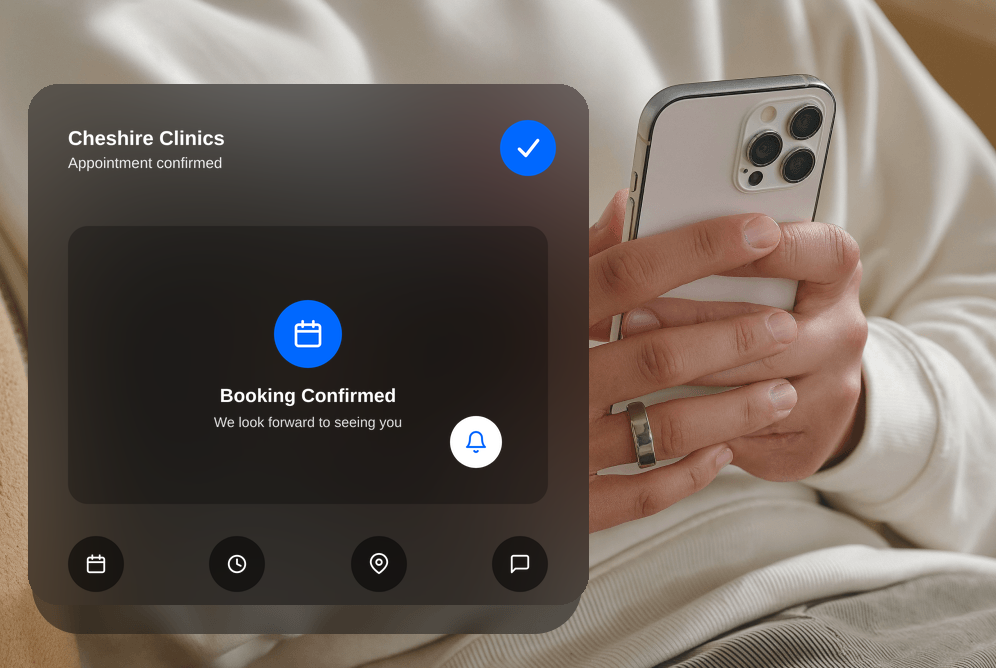
Cheshire Clinics online GP appointment booking confirmation on mobile
01

Book your appointment

Pick a time that suits you — 6am to 10pm, seven days a week, including weekends and bank holidays. £40 for 20 minutes, self-pay, with no insurance to arrange.
5–10 minutes
Online video consultation with a GMC-registered private GP
02

Meet your GP

A 20-minute video or phone consultation with a GMC-registered GP — long enough for a proper conversation about your symptoms, your history and what matters to you.
20 minutes
Diagnostic testing plan including blood test panel, ECG and urine screening
03

Tests and referrals, if you need them

Where testing will actually answer the question, we arrange it — blood tests and health screening through our laboratory partner, or a referral for ultrasound, X-ray, CT or MRI through private imaging providers. We will also tell you when a scan is not the right next step.
1–7 days
Personalised results and treatment plan from a private GP consultation
04

Results and next steps

Your GP talks you through what the results mean and agrees the next step with you. Every consultation ends with your treatment plan in writing, and any prescription goes to your own pharmacy.
20 minutes
GP follow-up reminder for ongoing care and progress monitoring
05

Ongoing care and follow-up

Follow-up appointments, progress monitoring and ongoing advice — including saying plainly when something needs in-person or NHS care instead.

Ongoing

How we compare

Time to be seen

Appointment length

Your NHS record in the room

Written treatment plan

Told when a test isn’t needed

Cost

Varies by practice

Typically 10 minutes

Yes, your full record

Not routinely

Usually

Free

Same day

Often 10 to 15 minutes

Usually not

Sometimes charged

Varies by provider

Often a subscription

Questions about our service

How quickly can I be seen?

Same-day access is usually available, from 6am to 10pm, seven days a week. You choose a time that suits you rather than waiting on hold at 8am.

Will I see the same doctor each time?

Yes. Care is led personally by Dr Mohammad Khan, so you are not passed between clinicians. Continuity is the point of a small practice: someone who knows your history and is listening attentively rather than working through a checklist.

Can you see my NHS records?

Yes, with your consent. We can access your Summary Care Record during the consultation, so your current medications, allergies and significant history are in the room. That means fewer questions you have already answered elsewhere, and safer prescribing.

Are you trying to replace my NHS GP?

No. We are not here to replace GPs, only to support them. Your NHS practice remains responsible for your ongoing care, and with your consent we write to them after the consultation. We are useful when you need to be seen sooner, or want more time than a standard appointment allows.

What is included in the appointment?

Twenty unhurried minutes and a comprehensive assessment. A written treatment plan is included, along with any prescription, sick note or referral letter arising from the consultation, at no extra charge.

How much does it cost?

£40 for 20 minutes, self-pay. Membership is optional and never required. Priced for fairness, because we are not here to charge extortionate amounts for access to a doctor.

What does “treatable online” actually mean?

It means the diagnosis can usually be made from your history and photographs, and that treatment can be arranged safely without examining you. Where a condition is not marked treatable online, it is because examination is the diagnosis — listening to a chest, feeling an abdomen, examining an ear or a joint — or because a procedure or device is needed.

Can you prescribe antibiotics?

Yes, where there is a genuine bacterial infection — cellulitis, impetigo, bacterial urine infections, confirmed strep throat. We will also frequently tell you that you do not need one. Most sore throats, coughs, colds and earaches are viral, and an antibiotic gives you the side effects with none of the benefit.

What if the GP cannot help with what I need?

If your problem turns out to be genuinely outside what we can do remotely, the doctor will tell you straight away, point you to the right service, and refund your fee in full. We would rather do that than fill twenty minutes to justify the charge.

What should I do in an emergency?

Call 999 or go to A&E — do not book an online appointment and do not wait for a reply to an email. For urgent problems that are not emergencies, NHS 111 is available 24 hours a day, online or by phone, and can direct you to the right service.

Patient reviews

What our patients say

No reviews published yet.
Ready to see a GP?20 minutes with a GMC-registered doctor. £40, usually same day.
Book a consultation