Bones, joints and muscles icon - arthritis, sprains and joint pain assessed by an online GP at Cheshire Clinics
Treatable online

Osteoarthritis

Not simple wear and tear, and not a reason to stop moving. The most effective treatment is the one people are most afraid of.

£40 · 20 minutes

Same-day availability

6am to 10pm, seven days

Assessed and treated by a GMC-registered GP

Prescriptions, sick notes and referral letters included

A written treatment plan after every appointment

Your NHS records in the room, with your consent

Clinically reviewed by Dr Mohammad Khan · Last reviewed

August 30, 2026

Book a consultation

A 20-minute appointment with a GMC-registered GP for £40. No membership required.

Private GP care led personally by Dr Mohammad Zubair Khan, GMC 7563469.

Why patients choose Cheshire Clinics

GMC registered doctors badge - every Cheshire Clinics consultation is with a General Medical Council registered GP

GMC-registered

Care led personally by Dr Khan

Royal College of General Practitioners badge - RCGP trained private GP consultations at Cheshire Clinics

RCGP-trained

Attentive, unhurried care that listens properly

Google five star reviews badge - Cheshire Clinics private GP online

Highly rated by patients

Five-star Google reviews from the people we have looked after

Care Quality Commission registered badge - Cheshire Clinics online GP service is registered with the CQC, England's independent regulator of health and social care

CQC-registered

Registered with the Care Quality Commission

Same-Day Appointments
Sick Notes
Private Prescriptions
Blood Tests
Menopause & HRT
Weight Management
Mental Health
Specialist Referrals
Same-Day Appointments
Sick Notes
Private Prescriptions
Blood Tests
Menopause & HRT
Weight Management
Mental Health
Specialist Referrals

Overview

Osteoarthritis is the commonest form of arthritis, affecting the knees, hips, hands and spine most often. It is not simply wear and tear — the whole joint is involved, and the body is actively remodelling it rather than passively eroding.

The single most damaging sentence in this field is "you're bone on bone". People hear it, conclude the joint is finished, stop using it, lose muscle, and get worse. It is worth knowing that X-ray findings correlate poorly with how much pain someone is in. Plenty of people have severe changes on a scan and no symptoms at all; plenty of people are in real pain with a near-normal X-ray.

Which is why NICE now says: do not routinely order imaging to diagnose osteoarthritis. In someone 45 or over with activity-related joint pain and either no morning stiffness or stiffness lasting under half an hour, the diagnosis can be made without a scan. Scanning tends to produce a frightening picture that does not change the treatment.

And the treatment, unglamorously, is exercise. It is more effective than any tablet, it does not wear the joint out, and it is the thing people are most reluctant to do because they have been told the joint is worn away.

Common symptoms

The pattern

  • Pain that is worse with activity and better with rest, at least early on
  • Morning stiffness lasting less than 30 minutes — this timing matters, and separates it from inflammatory arthritis
  • Stiffness after sitting still, easing once you get going — sometimes called gelling
  • Reduced movement in the joint
  • Grating or crunching — crepitus. Noisy joints are not damaged joints, and this frightens people unnecessarily
  • Swelling, either firm and bony or softer
  • Joints giving way or feeling unstable, particularly the knee
  • Pain at night in more advanced disease

By joint

  • Knee — pain on stairs, getting up from a chair, kneeling
  • Hip — groin pain, sometimes referred to the knee, and difficulty with socks and shoes
  • Hands — bony swellings at the finger joints, pain at the base of the thumb, weakened grip
  • Spine — neck and lower back pain and stiffness

What suggests it is something else

  • Morning stiffness lasting more than 30 minutes, or hours — that points to rheumatoid arthritis
  • Hot, red, very swollen joints
  • Fever, weight loss, feeling unwell generally
  • Symmetrical small joint involvement with prolonged stiffness
  • Onset under 45 without an obvious cause such as a previous injury

What people report as worst

Not the pain, usually — the loss of confidence. Avoiding stairs, no longer walking as far, giving up an activity. That withdrawal accelerates the whole thing, which is why it is worth naming early.

Causes and risk factors

What is actually happening

Cartilage thins, the underlying bone thickens and forms spurs, the joint lining becomes mildly inflamed, and the surrounding ligaments and muscles change. It is an active process in the whole joint, not simply erosion from use.

What increases risk

  • Age — the strongest factor
  • Being overweight — major for knees and hips, and also relevant for hands, which suggests it is not only about load
  • Previous joint injury — a torn cartilage or ligament, or a fracture through a joint
  • Genetics, particularly for hand and hip osteoarthritis
  • Female sex, especially after the menopause
  • Occupations involving heavy lifting, kneeling or repetitive strain
  • Muscle weakness around the joint — which is both a cause and a consequence
  • Joint abnormalities present from birth or childhood

What does not cause it

  • Running, in people with healthy joints. Recreational runners have lower rates of knee osteoarthritis than non-runners. This surprises people and is worth stating clearly
  • Cracking your knuckles
  • Cold or damp weather. It may make symptoms feel worse; it does not cause the condition
  • Using the joint. Movement nourishes cartilage, which has no blood supply of its own and depends on loading to exchange nutrients

That last point matters most. Resting a joint to protect it is precisely the wrong instinct.

How it is diagnosed

Clinically — and NICE says so explicitly

Diagnose osteoarthritis without imaging if the person is 45 or over, has activity-related joint pain, and has either no morning stiffness or morning stiffness lasting no longer than 30 minutes.

That is the whole test. An X-ray is not required, and NICE advises against routine imaging because it does not change management and frequently produces alarming-sounding findings that do not match how someone feels.

Why X-rays mislead

  • Many people with marked changes on X-ray have no pain whatsoever
  • Many people with significant pain have minimal changes
  • The relationship between what a scan shows and what someone experiences is weak
  • Being told the joint is "worn out" reduces activity, and reduced activity makes osteoarthritis worse

Imaging is worth doing when the diagnosis is genuinely uncertain, when something else is suspected, or when surgery is being planned. Not to confirm what the history already tells you.

Blood tests

Not needed to diagnose osteoarthritis, and there is no blood test for it. CRP, ESR and rheumatoid factor are done to exclude inflammatory arthritis where the pattern suggests it — prolonged morning stiffness, symmetrical small joint swelling, feeling systemically unwell.

What else it might be

  • Rheumatoid arthritis — prolonged morning stiffness, symmetrical, systemic features. Needs urgent referral
  • Gout — sudden, severe, hot, often the big toe
  • Psoriatic arthritis — with psoriasis or nail changes
  • Polymyalgia rheumatica — over 50, shoulder and hip girdle stiffness, marked and prolonged
  • Septic arthritis — the emergency
  • Bursitis or tendinopathy, which are around the joint rather than in it
  • Referred pain — hip osteoarthritis frequently presents as knee pain, and this catches people out
  • Fibromyalgia, which causes widespread pain without joint damage

How we treat it online

This is well suited to remote care, and more so than most people assume — because NICE says the diagnosis is clinical and does not require a scan.

What we do

  • Diagnose it properly. Age 45 or over, activity-related joint pain, and morning stiffness under 30 minutes is enough. No X-ray needed
  • Undo the "bone on bone" conversation. This is often the single most useful thing in the consultation — explaining what an X-ray does and does not tell you, and why the joint is not finished
  • Get you moving safely, with a specific exercise plan for your joint, and honest warning that it may ache for the first fortnight before it improves
  • Get the painkillers right. Topical anti-inflammatories first for knee and hand osteoarthritis, which many people have never been offered. Oral NSAIDs at the lowest effective dose with stomach protection where needed
  • Explain what NICE no longer recommends — including routine paracetamol, glucosamine and chondroitin, and strong opioids
  • Refer to physiotherapy, and for joint injection or surgical opinion where appropriate
  • Weight management support, where it applies, without lecturing
  • Sick notes and workplace adjustment letters
  • Exclude inflammatory arthritis where the pattern does not fit, and refer urgently if it does

What we will not do

Prescribe opioids. Not codeine, not tramadol, not morphine — for this or anything else. NICE specifically advises against strong opioids in osteoarthritis, because the benefit is minimal and the harm is not. That coincides with our position, which is that we do not prescribe them at all.

Bones, joints and muscles consultation - private GP assessment for musculoskeletal pain and sports injury at Cheshire Clinics

Ready to talk to a GP about this?

Book a consultation
Important

When to seek urgent help

Same-day assessment

  • A hot, red, acutely swollen and very painful joint, particularly with fever — septic arthritis is an emergency and can destroy a joint within days
  • Sudden severe joint pain with an inability to bear weight
  • A joint locking, or giving way and causing falls
  • Any joint symptoms in someone immunosuppressed, or with a prosthetic joint

Urgent appointment

  • Morning stiffness lasting more than 30 minutes, particularly in the small joints of the hands — suspected rheumatoid arthritis should be referred within three days of presenting, and early treatment changes the outcome permanently
  • Multiple swollen joints with fatigue or feeling unwell
  • Unexplained weight loss, night sweats or fever with joint pain
  • Night pain that is unremitting, or bone pain not related to movement
  • New back pain with leg weakness, numbness in the saddle area, or bladder or bowel changes

Book an appointment if

  • Pain is limiting what you can do day to day
  • Current treatment is not working, or is causing side effects
  • You have been told you are too heavy or too old to be referred for a joint replacement — see below, because that is not what the guidance says

Prevention and self-care

Exercise — the core treatment

NICE recommends therapeutic exercise as a first-line treatment for everyone with osteoarthritis, and its effect on pain and function is larger than that of any medication.

  • Strengthening the muscles around the joint — quadriceps for the knee, glutes for the hip, grip exercises for the hands
  • Aerobic exercise — walking, cycling, swimming
  • Range of movement work, daily
  • Start small and build up. Consistency beats intensity by a wide margin
  • Expect some discomfort in the first two weeks. NICE says to warn people about this specifically, because it is when most people stop — assuming they are causing damage. You are not
  • Water-based exercise, if land-based is too painful to start with

The benefit stops when you stop. This is maintenance, not a course of treatment.

Weight

Where you are overweight, losing 5 to 10% produces a clear improvement in pain and function — and any loss helps, so this is not all-or-nothing.

Medication — what NICE now says

  • Topical NSAIDs first for knee and hand osteoarthritis. Effective, and with far less systemic risk than tablets. Many people have never been offered them
  • Oral NSAIDs at the lowest effective dose for the shortest time, with stomach protection where indicated
  • Paracetamol is no longer routinely recommended — only for infrequent short-term use. This has changed and many people have not been told
  • Do not use glucosamine or chondroitin. NICE says so; the evidence does not support them, and they are not cheap
  • Do not use strong opioids. Minimal benefit, real harm
  • Steroid injections give short-term relief — a few weeks — and are best used to get you through a flare so you can exercise, rather than as an end in themselves

Other things that help

  • Heat for stiffness, cold for a flare
  • A walking stick, held in the opposite hand to the affected leg
  • Supportive, cushioned footwear
  • Occupational therapy — grips, jar openers, tap turners, raised seating
  • Pacing activity rather than doing everything on a good day

On joint replacement — know this

NICE says do not use scoring tools, or arbitrary thresholds for age, weight or smoking status, to decide whether to refer someone for joint replacement.

Referral should be considered when symptoms substantially affect quality of life and non-surgical treatment has not worked. If you have been refused a referral on the basis of your BMI or your age alone, that is not consistent with the guideline, and it is reasonable to say so.

NHS or private

What the NHS provides

  • Diagnosis, medication and physiotherapy are all NHS care, and many areas allow self-referral to physiotherapy without seeing a GP first — worth checking, because it is faster
  • Steroid injections, in primary care or musculoskeletal clinics
  • Joint replacement, though waits are long in many areas
  • Weight management services, free
  • Versus Arthritis publishes free exercise guides that are genuinely good

Where a private consultation is worth it

  • Having the diagnosis explained without the "bone on bone" framing. This changes how people behave, and behaviour is what determines the outcome. It is the most valuable half hour available in this condition
  • A treatment review against current guidance. Many people are on paracetamol and glucosamine, and have never been offered a topical anti-inflammatory — which is the opposite of what NICE now recommends
  • Confidence to start exercising, with a plan and someone to check back with
  • Being told you are too heavy or too old for referral. We can give you a written opinion citing the guideline, which explicitly rules out arbitrary thresholds
  • Excluding inflammatory arthritis quickly where the pattern is atypical — and referring urgently if it is
  • Work letters and sick notes
  • Private physiotherapy or an orthopaedic opinion, where waits are long

We will not sell you a scan you do not need. For most people with typical osteoarthritis, an X-ray adds worry and nothing else.

Evidence and guidelines

This page follows NICE guideline NG226 on osteoarthritis in over 16s: diagnosis and management, published in 2022, alongside NICE Clinical Knowledge Summaries and NICE NG100 on rheumatoid arthritis for the differential.

What the guidance actually says

  • Diagnose osteoarthritis clinically without imaging in people 45 or over with activity-related joint pain and either no morning joint-related stiffness or morning stiffness lasting no longer than 30 minutes
  • Do not routinely offer imaging to diagnose osteoarthritis unless there are atypical features or features suggesting an alternative diagnosis
  • Offer therapeutic exercise tailored to the person's needs, including strengthening and aerobic exercise, as a core treatment
  • Explain that exercise may initially cause discomfort but that continuing is safe and beneficial in the longer term
  • Offer weight management advice where relevant, explaining that any amount of weight loss is likely to help
  • Consider topical NSAIDs for knee osteoarthritis, and use them ahead of oral options
  • Consider oral NSAIDs at the lowest effective dose for the shortest possible time, with gastroprotection where appropriate
  • Do not routinely offer paracetamol alone; consider it only for infrequent short-term use
  • Do not offer glucosamine or strong opioids for osteoarthritis
  • Consider intra-articular corticosteroid injections for short-term relief where other treatments are ineffective
  • Do not use scoring tools, or thresholds for age, sex, smoking status or BMI, to determine referral for joint replacement

On imaging and symptoms

NICE notes that radiographic findings correlate poorly with symptoms, and that imaging may lead to inappropriate concern about structural damage without altering management.

Reviewed against NICE NG226, NG100 and NICE CKS guidance current at the date shown above.

Common questions

I was told I am bone on bone. Is the joint finished?

No — and this phrase does a great deal of harm. X-ray appearances match symptoms poorly: many people with severe changes have no pain, and many with real pain have near-normal scans.

What the joint can do matters far more than what it looks like, and strengthening the muscles around it improves both pain and function regardless of the X-ray.

Do I need a scan?

Usually not. NICE says do not routinely image to diagnose osteoarthritis. Age 45 or over, activity-related pain, and short-lived morning stiffness is enough.

Scans are for when the picture is atypical or surgery is being planned — not to confirm what the history already shows.

Will exercise wear my joints out faster?

No — the opposite. Cartilage has no blood supply and depends on movement to get its nutrients. Resting a joint weakens the muscles supporting it and makes things worse.

Expect some ache for the first fortnight, which NICE specifically advises warning people about, because that is when most people give up.

Should I stop running?

Recreational runners actually have lower rates of knee osteoarthritis than non-runners. Running does not cause it in healthy joints.

If you already have it, running may or may not suit you, but you do not need to give it up as a precaution.

Why has my paracetamol been stopped?

Because NICE no longer recommends it routinely for osteoarthritis — only for infrequent short-term use. The benefit turned out to be very small.

Topical anti-inflammatory gel is now first line for knee and hand osteoarthritis, and it is what many people should have been offered instead.

What about glucosamine?

NICE says do not offer it. The evidence does not support a meaningful benefit, and it is not cheap.

The money is better spent on decent shoes, or a few physiotherapy sessions.

Can I have something stronger for the pain?

Not opioids. NICE advises against strong opioids in osteoarthritis — the benefit is minimal and the harms are real — and we do not prescribe them at all.

Topical and oral anti-inflammatories, exercise, and injections during a flare are what genuinely help.

I was refused a referral for a knee replacement because of my weight. Is that right?

Not according to the guideline. NICE explicitly says not to use thresholds for BMI, age, sex or smoking status to determine referral for joint replacement.

Referral should be based on how much symptoms affect your life and whether non-surgical treatment has worked. That is worth raising directly, in writing.

My knee makes a grinding noise. Is that damage?

No. Noisy joints are extremely common and are not a marker of damage.

Crepitus without pain needs nothing done about it, and worrying about the sound leads people to move less, which does cause harm.

How do I know it is not rheumatoid arthritis?

The clearest clue is morning stiffness. Under 30 minutes suggests osteoarthritis; an hour or more suggests inflammatory arthritis.

Symmetrical swollen small joints, fatigue and feeling unwell point the same way — and suspected rheumatoid arthritis should be referred urgently, because early treatment changes the long-term outcome.

Dr Mohammad Zubair Khan, GMC-registered private GP and founder of Cheshire Clinics
Clinically reviewed by Dr Mohammad Zubair Khan, GMC 7563469
Last reviewed

August 30, 2026

How it works

What happens when you book

£40 for a 20-minute appointment with a GMC-registered GP, 6am to 10pm, seven days a week. Membership is optional and never required.
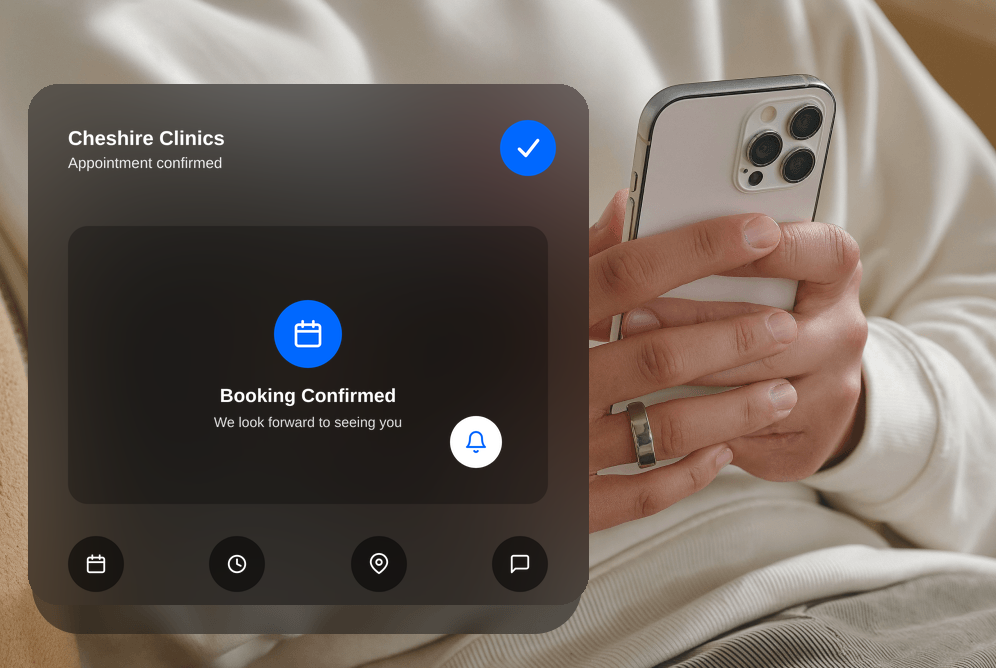
Cheshire Clinics online GP appointment booking confirmation on mobile
01

Book your appointment

Pick a time that suits you — 6am to 10pm, seven days a week, including weekends and bank holidays. £40 for 20 minutes, self-pay, with no insurance to arrange.
5–10 minutes
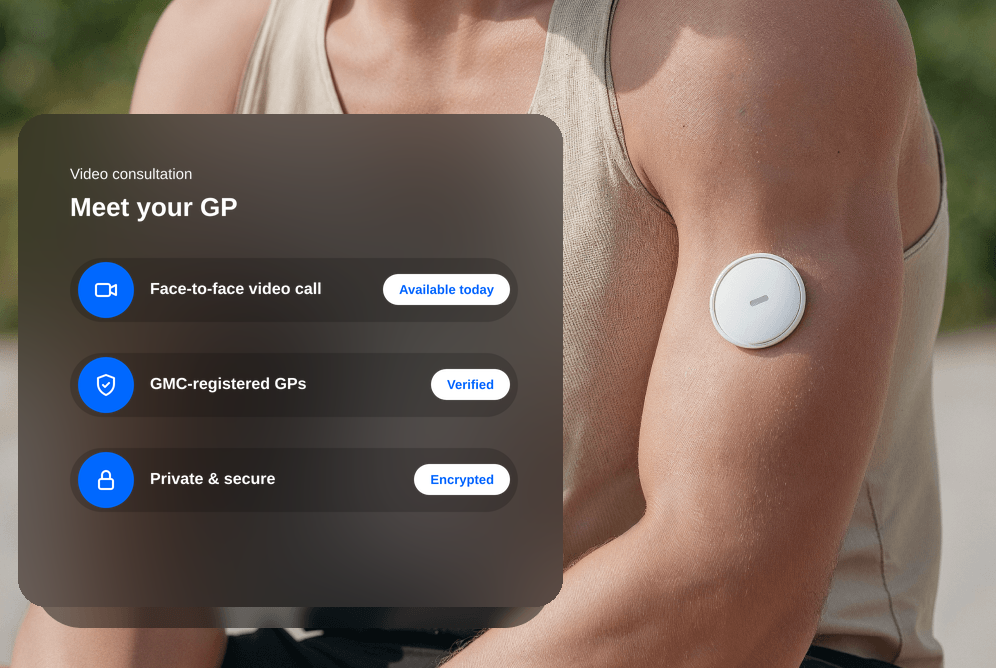
Online video consultation with a GMC-registered private GP
02

Meet your GP

A 20-minute video or phone consultation with a GMC-registered GP — long enough for a proper conversation about your symptoms, your history and what matters to you.
20 minutes
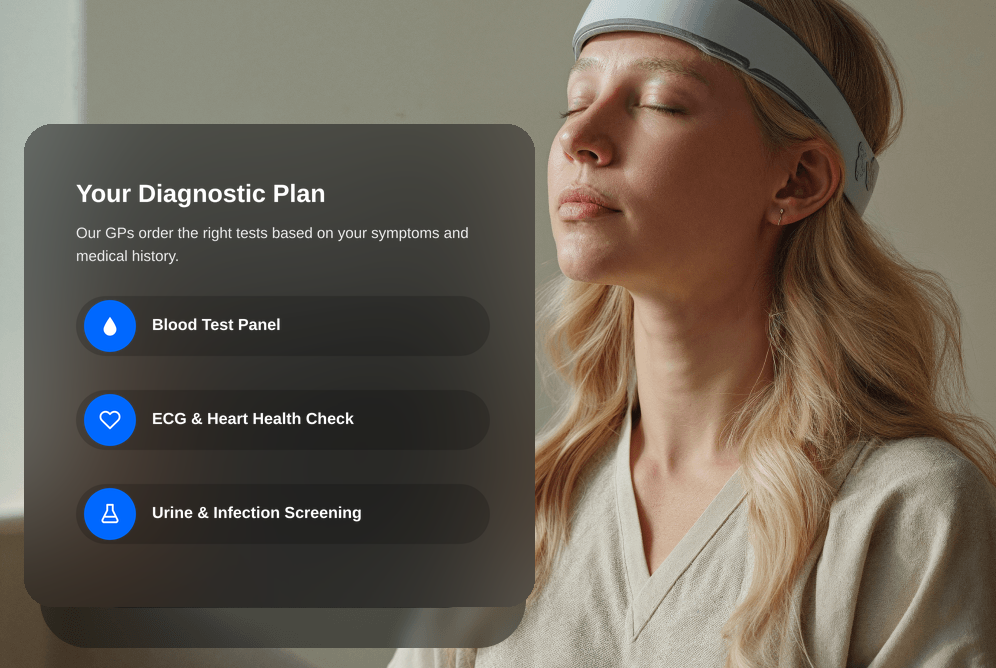
Diagnostic testing plan including blood test panel, ECG and urine screening
03

Tests and referrals, if you need them

Where testing will actually answer the question, we arrange it — blood tests and health screening through our laboratory partner, or a referral for ultrasound, X-ray, CT or MRI through private imaging providers. We will also tell you when a scan is not the right next step.
1–7 days
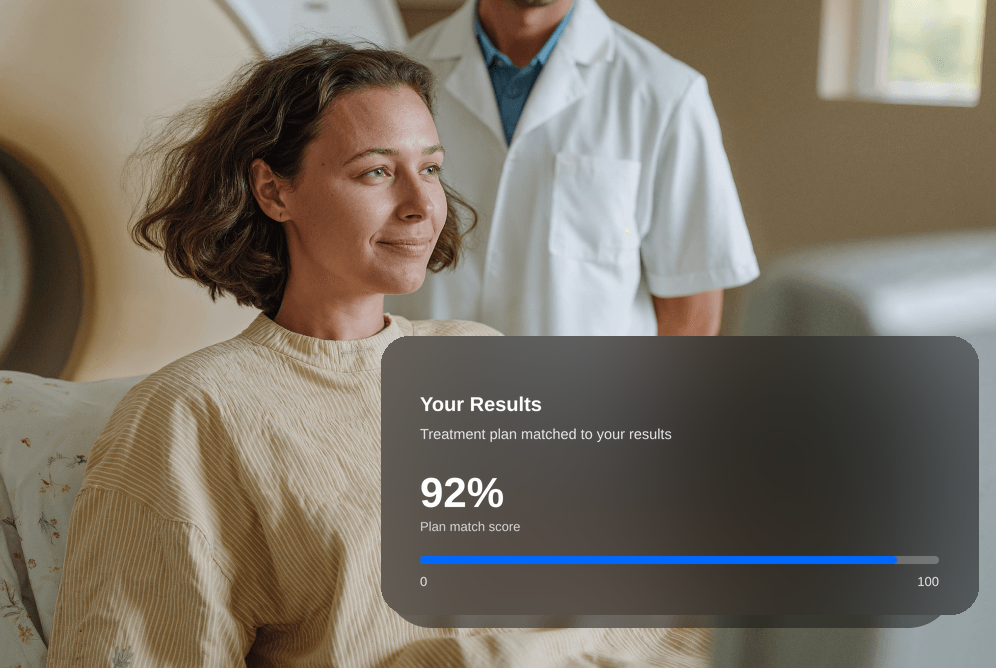
Personalised results and treatment plan from a private GP consultation
04

Results and next steps

Your GP talks you through what the results mean and agrees the next step with you. Every consultation ends with your treatment plan in writing, and any prescription goes to your own pharmacy.
20 minutes
GP follow-up reminder for ongoing care and progress monitoring
05

Ongoing care and follow-up

Follow-up appointments, progress monitoring and ongoing advice — including saying plainly when something needs in-person or NHS care instead.

Ongoing

How we compare

Time to be seen

Appointment length

Your NHS record in the room

Written treatment plan

Told when a test isn’t needed

Cost

Varies by practice

Typically 10 minutes

Yes, your full record

Not routinely

Usually

Free

Same day

Often 10 to 15 minutes

Usually not

Sometimes charged

Varies by provider

Often a subscription

Questions about our service

How quickly can I be seen?

Same-day access is usually available, from 6am to 10pm, seven days a week. You choose a time that suits you rather than waiting on hold at 8am.

Will I see the same doctor each time?

Yes. Care is led personally by Dr Mohammad Khan, so you are not passed between clinicians. Continuity is the point of a small practice: someone who knows your history and is listening attentively rather than working through a checklist.

Can you see my NHS records?

Yes, with your consent. We can access your Summary Care Record during the consultation, so your current medications, allergies and significant history are in the room. That means fewer questions you have already answered elsewhere, and safer prescribing.

Are you trying to replace my NHS GP?

No. We are not here to replace GPs, only to support them. Your NHS practice remains responsible for your ongoing care, and with your consent we write to them after the consultation. We are useful when you need to be seen sooner, or want more time than a standard appointment allows.

What is included in the appointment?

Twenty unhurried minutes and a comprehensive assessment. A written treatment plan is included, along with any prescription, sick note or referral letter arising from the consultation, at no extra charge.

How much does it cost?

£40 for 20 minutes, self-pay. Membership is optional and never required. Priced for fairness, because we are not here to charge extortionate amounts for access to a doctor.

What does “treatable online” actually mean?

It means the diagnosis can usually be made from your history and photographs, and that treatment can be arranged safely without examining you. Where a condition is not marked treatable online, it is because examination is the diagnosis — listening to a chest, feeling an abdomen, examining an ear or a joint — or because a procedure or device is needed.

Can you prescribe antibiotics?

Yes, where there is a genuine bacterial infection — cellulitis, impetigo, bacterial urine infections, confirmed strep throat. We will also frequently tell you that you do not need one. Most sore throats, coughs, colds and earaches are viral, and an antibiotic gives you the side effects with none of the benefit.

What if the GP cannot help with what I need?

If your problem turns out to be genuinely outside what we can do remotely, the doctor will tell you straight away, point you to the right service, and refund your fee in full. We would rather do that than fill twenty minutes to justify the charge.

What should I do in an emergency?

Call 999 or go to A&E — do not book an online appointment and do not wait for a reply to an email. For urgent problems that are not emergencies, NHS 111 is available 24 hours a day, online or by phone, and can direct you to the right service.

Patient reviews

What our patients say

No reviews published yet.
Ready to see a GP?20 minutes with a GMC-registered doctor. £40, usually same day.
Book a consultation