Home

/

Urinary & Kidney

/

Kidney Stones

Urinary and kidney icon - UTI, cystitis and bladder symptoms treated online by a GMC-registered GP at Cheshire Clinics
Treatable online

Kidney Stones

Severe loin-to-groin pain. Anti-inflammatories work better than morphine, and half of people get another within a decade.

£40 · 20 minutes

Same-day availability

6am to 10pm, seven days

Assessed and treated by a GMC-registered GP

Prescriptions, sick notes and referral letters included

A written treatment plan after every appointment

Your NHS records in the room, with your consent

Clinically reviewed by Dr Mohammad Khan · Last reviewed

August 30, 2026

Book a consultation

A 20-minute appointment with a GMC-registered GP for £40. No membership required.

Private GP care led personally by Dr Mohammad Zubair Khan, GMC 7563469.

Why patients choose Cheshire Clinics

GMC registered doctors badge - every Cheshire Clinics consultation is with a General Medical Council registered GP

GMC-registered

Care led personally by Dr Khan

Royal College of General Practitioners badge - RCGP trained private GP consultations at Cheshire Clinics

RCGP-trained

Attentive, unhurried care that listens properly

Google five star reviews badge - Cheshire Clinics private GP online

Highly rated by patients

Five-star Google reviews from the people we have looked after

Care Quality Commission registered badge - Cheshire Clinics online GP service is registered with the CQC, England's independent regulator of health and social care

CQC-registered

Registered with the Care Quality Commission

Same-Day Appointments
Sick Notes
Private Prescriptions
Blood Tests
Menopause & HRT
Weight Management
Mental Health
Specialist Referrals
Same-Day Appointments
Sick Notes
Private Prescriptions
Blood Tests
Menopause & HRT
Weight Management
Mental Health
Specialist Referrals

Overview

Kidney stones form when minerals in the urine crystallise. Small stones pass unnoticed. A stone that moves into the ureter causes renal colic — a pain widely described as among the most severe there is, and which women who have experienced both often rate above childbirth.

The pain has a characteristic quality: it comes in waves, runs from the loin round to the groin, and you cannot find a position that helps. That last part is genuinely diagnostic. People with peritonitis lie completely still; people with renal colic pace, writhe and cannot settle.

Two practical points worth knowing.

Anti-inflammatories are more effective than opioids for renal colic, and are what national guidance recommends first. Being offered morphine before an NSAID is common and is not what the evidence supports.

A stone with a fever is a urological emergency. An obstructed, infected kidney can become life-threatening within hours and needs immediate drainage — not antibiotics and a wait.

Common symptoms

  • Sudden severe pain in the loin or side, coming in waves, often radiating down to the groin, testicle or labia
  • Restlessness — an inability to get comfortable in any position. This distinguishes it from most other abdominal emergencies
  • Nausea and vomiting, which are very common
  • Blood in the urine, sometimes visible, more often detected only on testing
  • Pain on passing urine, urgency and frequency as the stone reaches the bladder
  • Sweating, pallor and general distress

Where the pain sits tells you where the stone is

High in the loin suggests the kidney or upper ureter. Radiating to the groin suggests the mid-ureter. Urinary urgency and frequency with pain at the tip suggests the stone is near the bladder — and stones that far down usually pass.

Red flags

Fever, shivering, feeling systemically unwell, or confusion alongside the pain — this suggests an infected obstructed kidney and is a surgical emergency.

Also urgent: a single kidney, known kidney impairment, pregnancy, or being unable to keep fluids down.

Causes and risk factors

  • Not drinking enough — the single biggest factor. Concentrated urine allows crystals to form
  • A high-salt diet, which increases calcium excretion into the urine
  • Previous stones. Around half of people form another within five to ten years
  • Family history
  • Obesity, type 2 diabetes and gout
  • Hot climates, and occupations with heavy sweating and limited access to fluids
  • Some medicines and supplements, including high-dose vitamin C and certain diuretics
  • Recurrent urinary infection, which is associated with a specific stone type
  • Inflammatory bowel disease and bowel surgery, which increase oxalate absorption
  • Rarely, an overactive parathyroid gland — worth excluding in recurrent stone formers

Types

Calcium oxalate is much the commonest. Others include calcium phosphate, uric acid (associated with gout), struvite (associated with infection) and cystine (inherited).

Knowing the type changes the prevention advice, which is why catching the stone matters.

How it is diagnosed

Imaging, and quickly

A low-dose CT of the kidneys, ureters and bladder is the standard investigation and should be done within 24 hours of arrival. It shows the stone, its size, its position, and whether the kidney is obstructed — all of which determine what happens next.

  • Ultrasound is used first in pregnancy and in children, and is reasonable in young adults, though it misses smaller ureteric stones
  • Plain X-ray is not adequate for diagnosis, though it helps track a known stone

Blood and urine

  • Urine dipstick — blood is present in most cases, but its absence does not exclude a stone
  • Kidney function and calcium
  • Urate, and parathyroid hormone in recurrent stone formers
  • Urine culture where infection is possible

Catch the stone

Strain your urine and keep whatever you pass. Analysing the stone identifies its type, and the type determines the prevention strategy. It is easily done, costs nothing, and is very often forgotten.

The mimics that matter

A leaking abdominal aortic aneurysm presents as loin pain in an older adult and is the most important thing not to miss. Also: appendicitis, ectopic pregnancy, ovarian torsion, testicular torsion, diverticulitis, and a kidney infection without a stone.

How we treat it online

Acute renal colic needs to be assessed in person, and usually needs a scan the same day. If you are in severe pain now, go to A&E or call 111 — not because we are being cautious, but because you need imaging and injectable pain relief that no video call provides.

Where a consultation is genuinely valuable

The gap in stone care is not the acute episode. It is everything afterwards, and it is a real gap.

  • Preventing the next one. Half of people form another stone within a decade, and most are discharged from hospital with no prevention plan at all beyond "drink more"
  • Metabolic assessment — calcium, urate, kidney function, and parathyroid hormone where recurrent. An overactive parathyroid gland is a treatable cause that is regularly missed
  • Specific dietary advice based on stone type, which is quite different for oxalate, urate and calcium phosphate stones
  • Reviewing medicines that contribute
  • Interpreting a scan report that found a stone incidentally, and deciding whether it needs anything
  • Ongoing pain relief and a plan while a small stone passes, once you have been assessed and imaged

What we will not do

Prescribe opioids remotely, under any circumstances. Severe pain needs assessment, not a prescription issued at a distance.

Urinary and kidney health - private GP consultation and diagnostic testing for urine infections and kidney symptoms at Cheshire Clinics

Ready to talk to a GP about this?

Book a consultation
Important

When to seek urgent help

Call 999 or go to A&E immediately if you have loin pain with:

  • Fever or shivering — an infected obstructed kidney is a surgical emergency and can deteriorate within hours
  • Feeling faint, confused, or very unwell
  • A rapid heartbeat with clammy skin
  • Sudden severe pain in an older adult, where a leaking aortic aneurysm can mimic renal colic exactly and is the classic dangerous mistake

Seek same-day assessment for:

  • Any first episode of suspected renal colic — you need imaging
  • Pain not controlled by anti-inflammatories
  • Persistent vomiting, or inability to keep fluids down
  • Pregnancy, a single kidney, a transplanted kidney, or known kidney impairment
  • Not passing urine
  • Pain lasting more than a few hours without settling

Prevention and self-care

Fluid is the whole strategy

Aim for 2.5 to 3 litres a day, spread out, enough to produce around 2 to 2.5 litres of urine. The target you can actually check is the colour: pale straw, all day.

Drink through the evening too, since urine concentrates overnight and that is when many stones form.

The counterintuitive one

Do not cut down on dietary calcium. This is the commonest mistake people make, and it makes things worse. Calcium in food binds oxalate in the gut so it is excreted in stool rather than urine. A low-calcium diet increases stone risk.

Calcium supplements are different and should be discussed rather than assumed safe.

What genuinely helps

  • Reduce salt. High salt drives calcium into the urine and is second only to fluid in importance
  • Add citrate — lemon or lime juice in water. Citrate inhibits stone formation, and it is a cheap intervention with a real basis
  • Moderate animal protein, particularly for urate stones
  • For calcium oxalate stones specifically, moderate very high-oxalate foods — spinach, rhubarb, beetroot, nuts, black tea — but eat them with calcium-containing food rather than eliminating them
  • Lose weight if overweight, and treat diabetes and gout

While a stone is passing

  • Regular anti-inflammatories, taken to a schedule rather than when the pain peaks
  • Keep drinking, though flooding yourself with fluid does not flush a stone out faster
  • Strain your urine and keep the stone
  • An alpha blocker such as tamsulosin may be offered for stones in the lower ureter, where it improves the chance of passing spontaneously

NHS or private

The acute episode is NHS territory

  • Emergency assessment, injectable pain relief and same-day CT. This is what you need in the first 24 hours and there is no sensible private substitute
  • Urgent drainage of an obstructed infected kidney — a time-critical procedure
  • Shockwave lithotripsy, ureteroscopy and surgical stone removal, all free at the point of use and expensive privately
  • Urology follow-up and stone analysis
  • Metabolic investigation for recurrent stone formers

If you are in acute renal colic, go to A&E. We will say that plainly rather than book you in.

Where paying genuinely helps

The gap is prevention, and it is a wide one.

  • A proper prevention plan after a first stone. Most people leave hospital with the stone dealt with and nothing else — no dietary assessment, no metabolic bloods, no follow-up. Given a 50% recurrence rate, that is the most cost-effective consultation on this page
  • Metabolic bloods including calcium and parathyroid hormone, where recurrent stones warrant looking for a treatable cause
  • Advice tailored to your stone type, rather than generic advice
  • An incidental stone found on a scan, where you want to know whether it matters
  • Correcting the calcium myth, which is worth the appointment on its own for anyone who has cut out dairy

Evidence and guidelines

This page follows NICE NG118 on renal and ureteric stones.

What the guidance actually says

  • Offer a non-steroidal anti-inflammatory drug as first-line pain relief for renal colic, by any route. Opioids are second-line, offered only where NSAIDs are contraindicated or insufficient
  • Offer low-dose non-contrast CT of the kidneys, ureters and bladder to adults with suspected renal colic, performed within 24 hours of presentation
  • Use ultrasound first in pregnant women, and consider it first in children and young people
  • Consider an alpha blocker for adults with distal ureteric stones smaller than 10mm, to aid spontaneous passage
  • Treat urgently where there is infection with obstruction — this requires urgent decompression of the collecting system alongside antibiotics
  • Offer stone analysis, and consider metabolic investigation in recurrent stone formers
  • Advise fluid intake of 2.5 to 3 litres daily, adding fresh lemon juice, and reducing salt intake
  • Do not restrict dietary calcium — NICE advises maintaining normal calcium intake of 700–1,200mg daily

On recurrence

Recurrence is common, with a substantial proportion of people forming a further stone within five to ten years. This is the basis for the guidance on prevention advice and follow-up, which is the part of stone care most frequently omitted.

Reviewed against NICE NG118 current at the date shown above.

Common questions

How bad is the pain, really?

Severe. It is routinely described as among the worst pains people experience, and it comes in waves.

The distinguishing feature is restlessness — you cannot lie still or find any position that helps, which is the opposite of most abdominal emergencies.

Should I be given morphine?

Not first. NICE recommends an anti-inflammatory as first-line, because it works better for this specific pain.

Opioids are second-line, for where NSAIDs cannot be used or are not enough.

When is it an emergency?

Stone pain with a fever or shivering. That means a possible obstructed, infected kidney, which can become life-threatening within hours.

It needs urgent drainage, not antibiotics and a wait. Go to A&E.

Will it pass on its own?

Most stones under 5mm do, usually within a few weeks. Between 5 and 10mm it is less certain, and an alpha blocker may help.

Larger stones, or an obstructed kidney, usually need a procedure.

Should I cut out dairy?

No — and this is the commonest and most counterproductive mistake. Dietary calcium binds oxalate in the gut so it leaves in the stool rather than the urine.

Cutting calcium increases your stone risk. Keep a normal intake.

How much should I drink?

Two and a half to three litres a day, spread through the day and into the evening.

Judge it by urine colour: pale straw all day. That is a more useful target than counting glasses.

Does lemon juice help?

Yes, and it is not folklore. Citrate inhibits stone formation, and fresh lemon juice in water is specifically recommended in the guidance.

Will I get another one?

Around half of people do within five to ten years. That is precisely why prevention matters.

Most people are never given a plan, which is the most fixable part of stone care.

Why should I keep the stone?

Because the type determines the prevention advice, and the advice differs substantially between oxalate, urate and infection stones.

Strain your urine and keep whatever you pass — it costs nothing and it is very commonly forgotten.

Dr Mohammad Zubair Khan, GMC-registered private GP and founder of Cheshire Clinics
Clinically reviewed by Dr Mohammad Zubair Khan, GMC 7563469
Last reviewed

August 30, 2026

How it works

What happens when you book

£40 for a 20-minute appointment with a GMC-registered GP, 6am to 10pm, seven days a week. Membership is optional and never required.
Cheshire Clinics online GP appointment booking confirmation on mobile
01

Book your appointment

Pick a time that suits you — 6am to 10pm, seven days a week, including weekends and bank holidays. £40 for 20 minutes, self-pay, with no insurance to arrange.
5–10 minutes
Online video consultation with a GMC-registered private GP
02

Meet your GP

A 20-minute video or phone consultation with a GMC-registered GP — long enough for a proper conversation about your symptoms, your history and what matters to you.
20 minutes
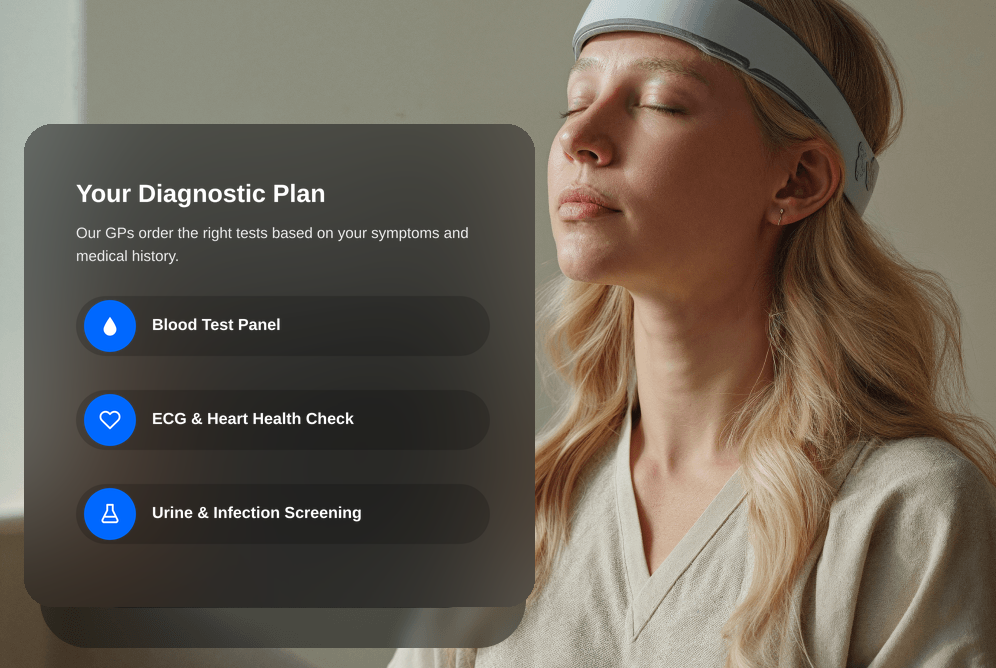
Diagnostic testing plan including blood test panel, ECG and urine screening
03

Tests and referrals, if you need them

Where testing will actually answer the question, we arrange it — blood tests and health screening through our laboratory partner, or a referral for ultrasound, X-ray, CT or MRI through private imaging providers. We will also tell you when a scan is not the right next step.
1–7 days
Personalised results and treatment plan from a private GP consultation
04

Results and next steps

Your GP talks you through what the results mean and agrees the next step with you. Every consultation ends with your treatment plan in writing, and any prescription goes to your own pharmacy.
20 minutes
GP follow-up reminder for ongoing care and progress monitoring
05

Ongoing care and follow-up

Follow-up appointments, progress monitoring and ongoing advice — including saying plainly when something needs in-person or NHS care instead.

Ongoing

How we compare

Time to be seen

Appointment length

Your NHS record in the room

Written treatment plan

Told when a test isn’t needed

Cost

Varies by practice

Typically 10 minutes

Yes, your full record

Not routinely

Usually

Free

Same day

Often 10 to 15 minutes

Usually not

Sometimes charged

Varies by provider

Often a subscription

Questions about our service

How quickly can I be seen?

Same-day access is usually available, from 6am to 10pm, seven days a week. You choose a time that suits you rather than waiting on hold at 8am.

Will I see the same doctor each time?

Yes. Care is led personally by Dr Mohammad Khan, so you are not passed between clinicians. Continuity is the point of a small practice: someone who knows your history and is listening attentively rather than working through a checklist.

Can you see my NHS records?

Yes, with your consent. We can access your Summary Care Record during the consultation, so your current medications, allergies and significant history are in the room. That means fewer questions you have already answered elsewhere, and safer prescribing.

Are you trying to replace my NHS GP?

No. We are not here to replace GPs, only to support them. Your NHS practice remains responsible for your ongoing care, and with your consent we write to them after the consultation. We are useful when you need to be seen sooner, or want more time than a standard appointment allows.

What is included in the appointment?

Twenty unhurried minutes and a comprehensive assessment. A written treatment plan is included, along with any prescription, sick note or referral letter arising from the consultation, at no extra charge.

How much does it cost?

£40 for 20 minutes, self-pay. Membership is optional and never required. Priced for fairness, because we are not here to charge extortionate amounts for access to a doctor.

What does “treatable online” actually mean?

It means the diagnosis can usually be made from your history and photographs, and that treatment can be arranged safely without examining you. Where a condition is not marked treatable online, it is because examination is the diagnosis — listening to a chest, feeling an abdomen, examining an ear or a joint — or because a procedure or device is needed.

Can you prescribe antibiotics?

Yes, where there is a genuine bacterial infection — cellulitis, impetigo, bacterial urine infections, confirmed strep throat. We will also frequently tell you that you do not need one. Most sore throats, coughs, colds and earaches are viral, and an antibiotic gives you the side effects with none of the benefit.

What if the GP cannot help with what I need?

If your problem turns out to be genuinely outside what we can do remotely, the doctor will tell you straight away, point you to the right service, and refund your fee in full. We would rather do that than fill twenty minutes to justify the charge.

What should I do in an emergency?

Call 999 or go to A&E — do not book an online appointment and do not wait for a reply to an email. For urgent problems that are not emergencies, NHS 111 is available 24 hours a day, online or by phone, and can direct you to the right service.

Patient reviews

What our patients say

No reviews published yet.
Ready to see a GP?20 minutes with a GMC-registered doctor. £40, usually same day.
Book a consultation